Olive Egger
Author: Elliott Garber, DVM · Published
An Olive Egger is a chicken bred for olive-colored eggs, usually by combining blue-egg and dark-brown-egg ancestry. It is a crossbred type, not one standardized breed with a fixed color, comb or body size. The useful buying question is what this particular cross produces. Start with the parents and the breeder’s egg records, then use chicken egg production records to follow what your own hens actually lay. You can start a chicken profile without an account; a free account keeps it.
| Identity | Crossbred egg-color type, not one standardized breed |
|---|---|
| Main interest | Olive or green-toned eggs |
| Appearance | Variable with parent stock |
| Egg-color basis | Blue shell background with brown outer pigment |
| Breeding question | Which parents and generation produced these birds? |
| Care | Normal chicken care adapted to the actual cross |
| Buying evidence | Identified hens, mating details and honest egg records |
Browse listings, public profiles, breeders, or add your animal.
Why the eggs look olive
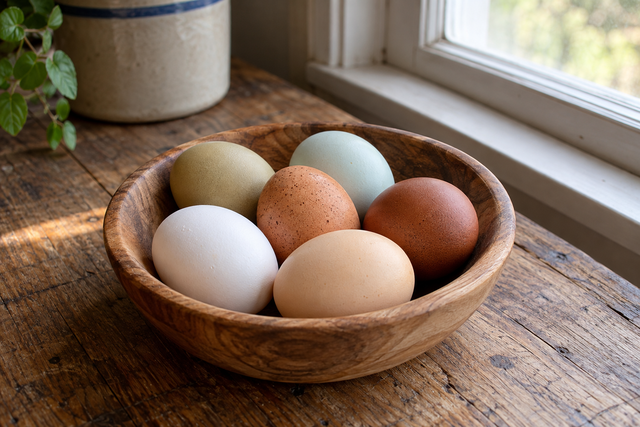
Olive combines a blue shell background with brown pigment on the outside. Wisconsin Extension’s egg guide explains the blue-and-brown cross behind olive eggs. The result can be a muted green, gray-green or darker olive rather than one standardized paint color. An egg photograph helps you understand a flock, but lighting, camera settings and the individual hen matter when comparing shades.
The label does not tell you the exact mating. A breeder might use a blue-egg line such as Cream Legbar or Araucana and a dark-brown-egg line. Ask for the actual parents and the generation, rather than assuming that every Olive Egger is the same cross. Our live guide to chickens that lay green eggs compares the wider group.
Do not buy the claim that a hen’s feather color, beard or comb proves her eventual shell shade. In crosses descended from pea-combed blue-egg breeds, a pea comb can be a useful clue because the pea-comb and blue-shell genes are closely linked, as Wang and colleagues explain. Linkage is not proof of the blue-shell allele, its copy number or a future olive shade. A rooster does not lay an example egg for inspection, so his contribution must be understood through his known breeding history and appropriate evidence, not by looking for a green feather.
Appearance and identity
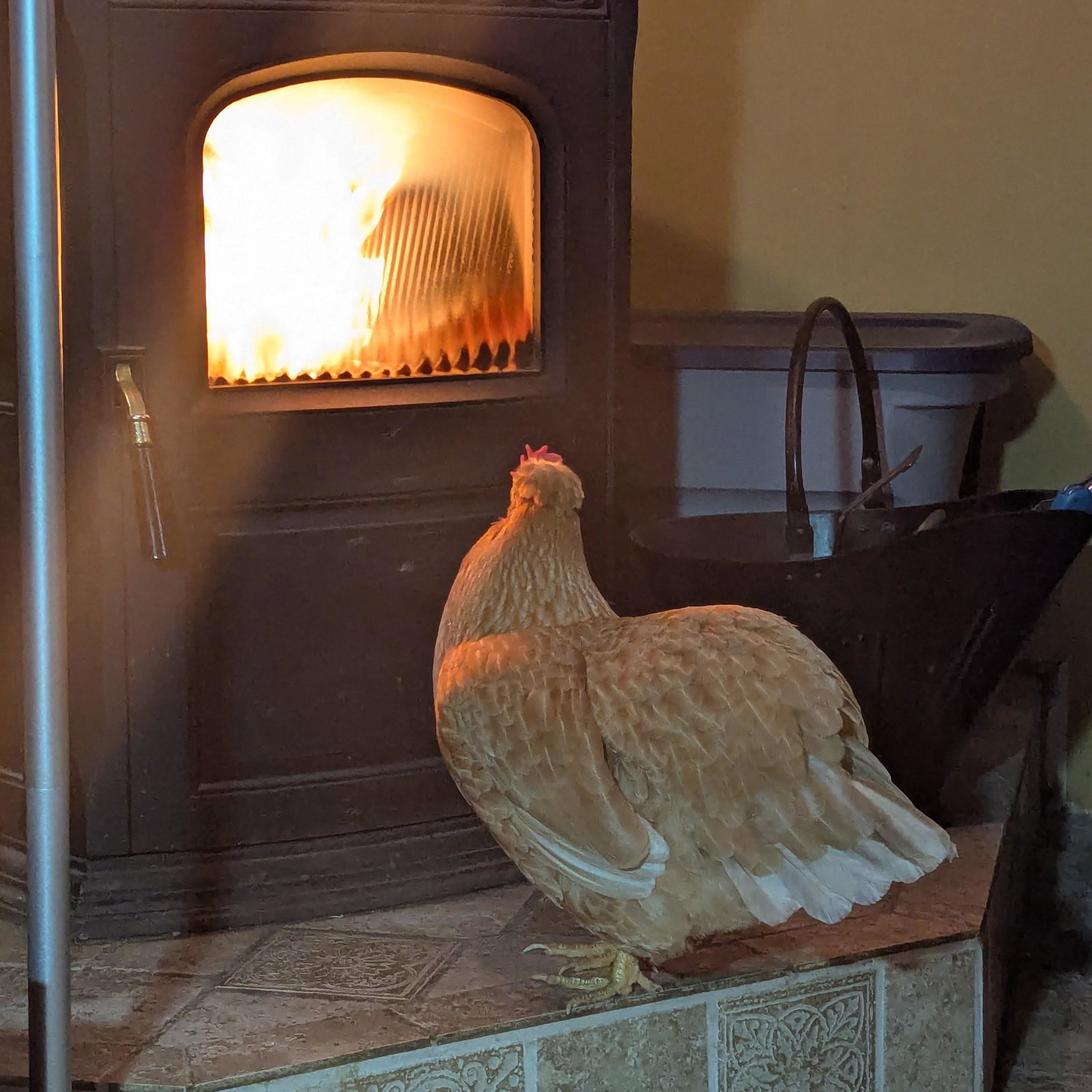
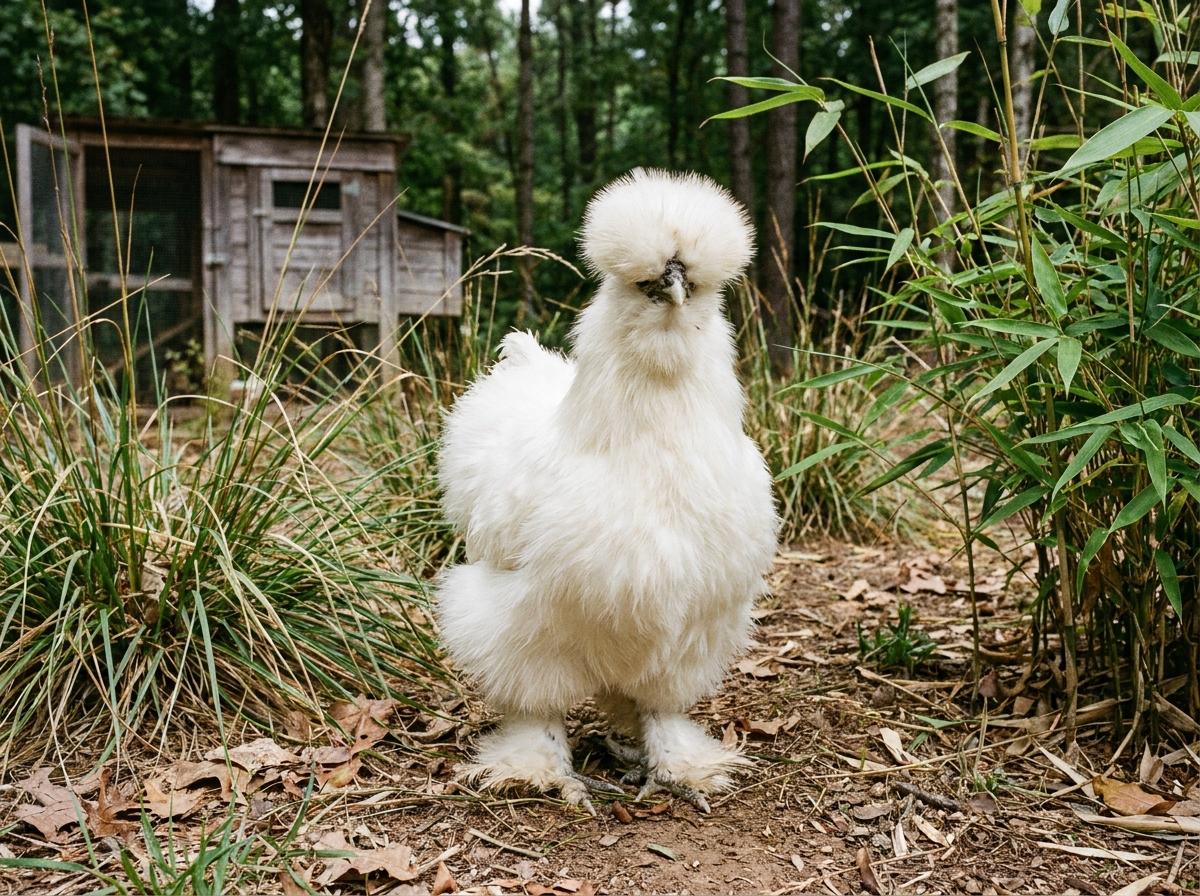
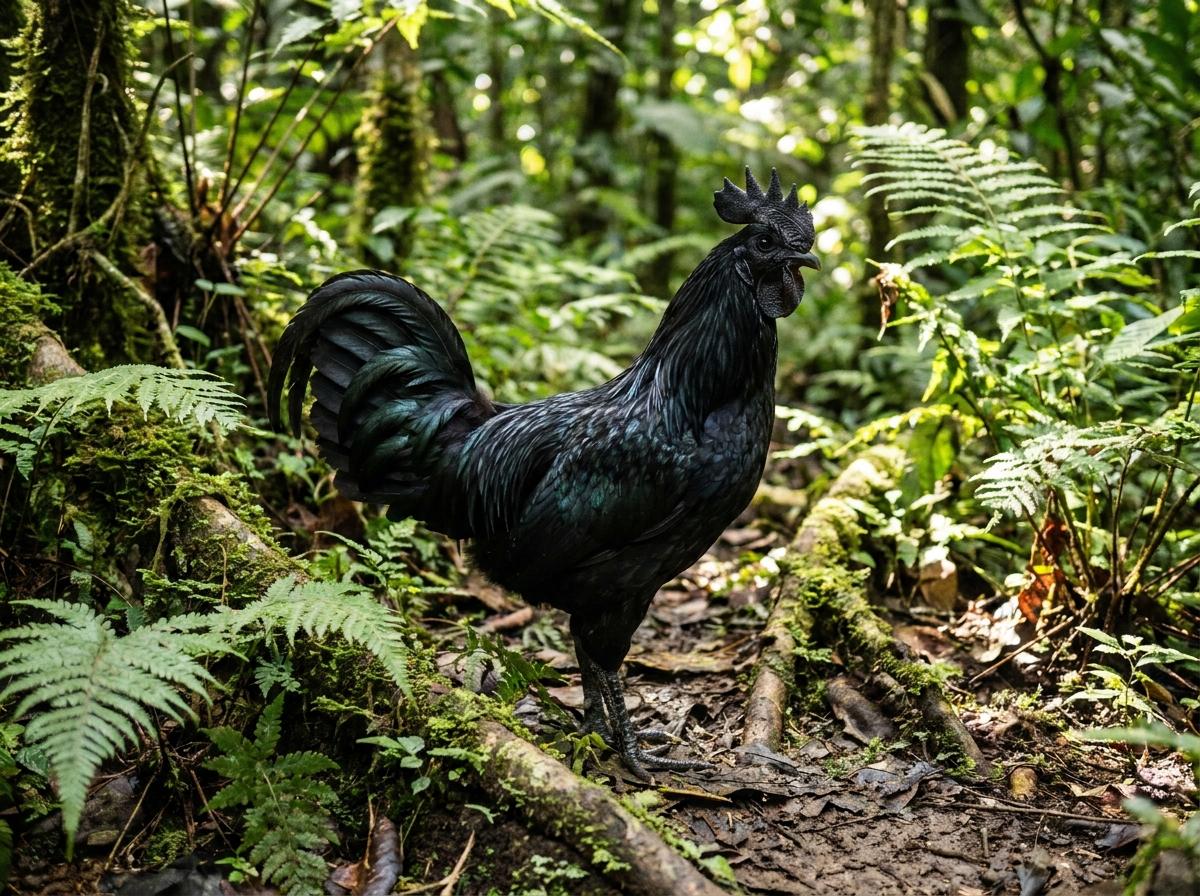
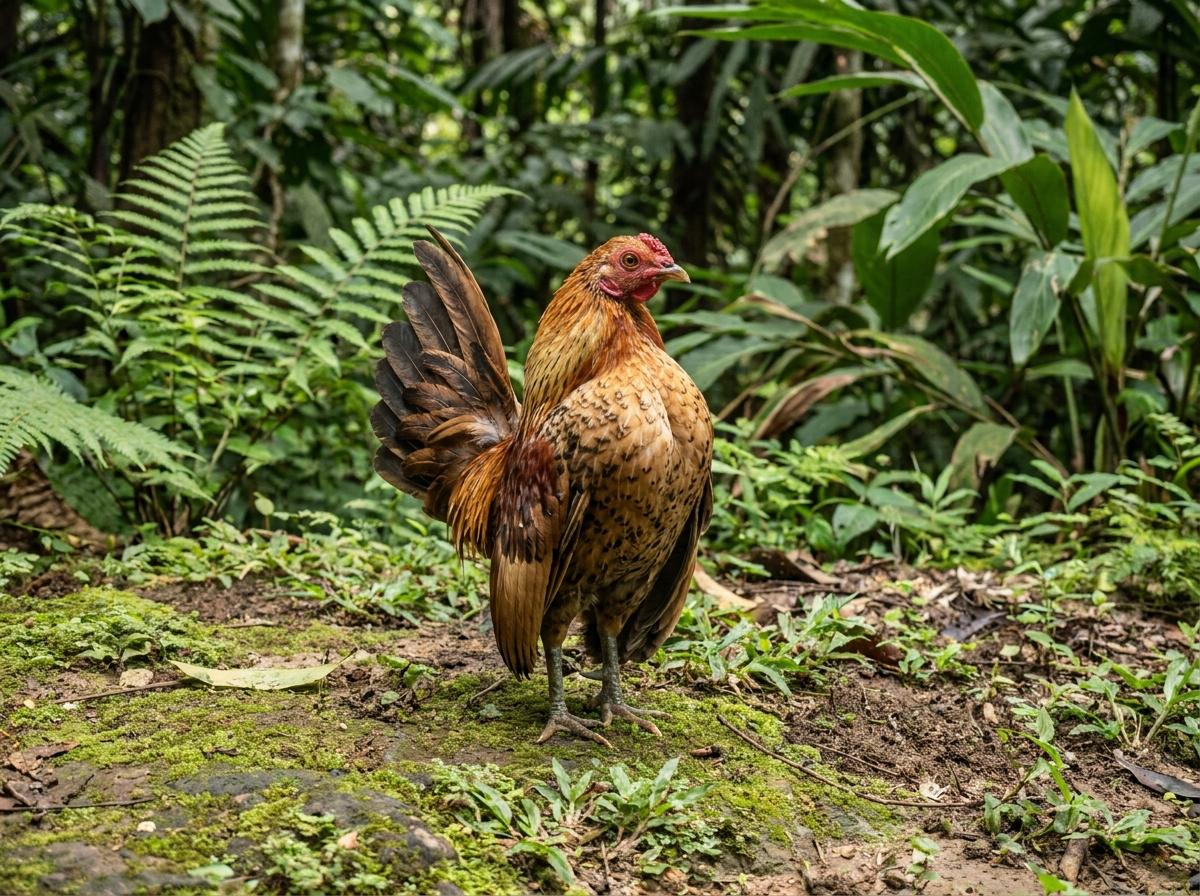
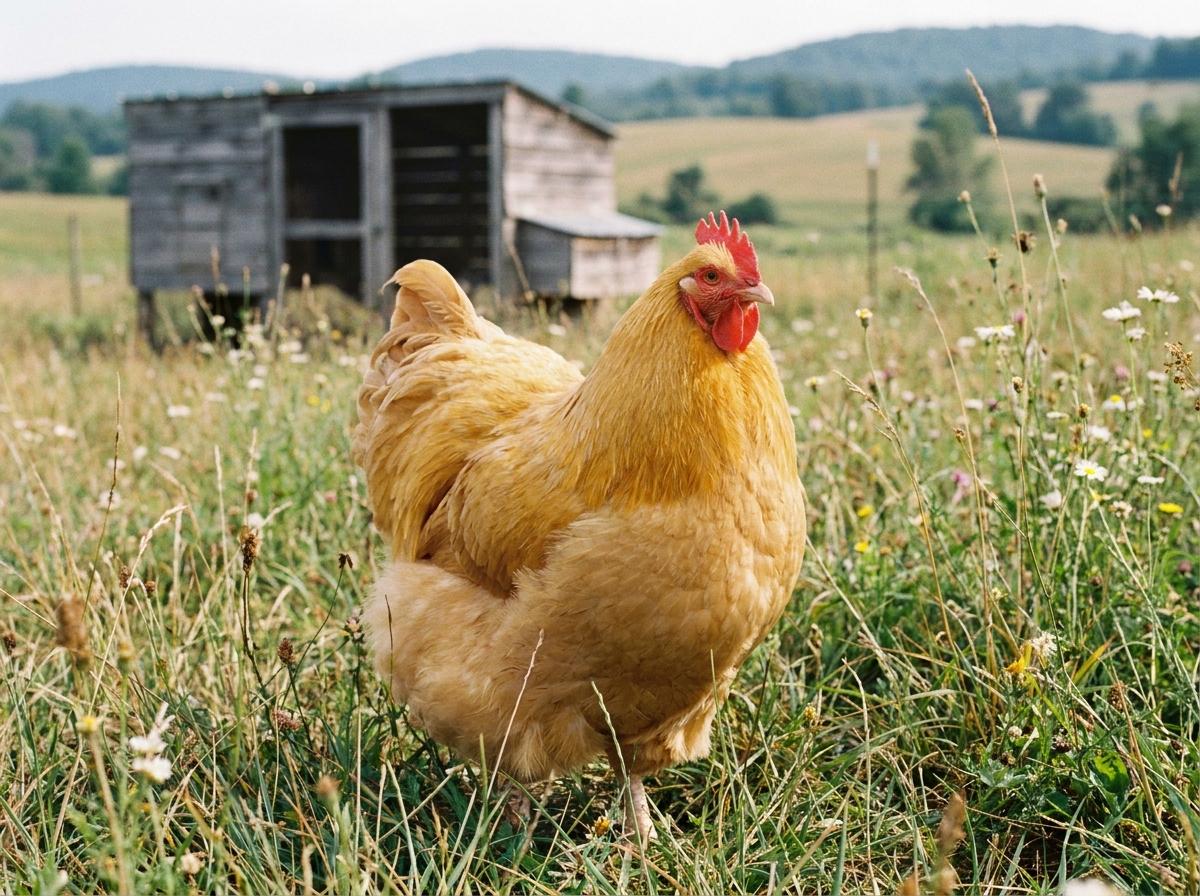
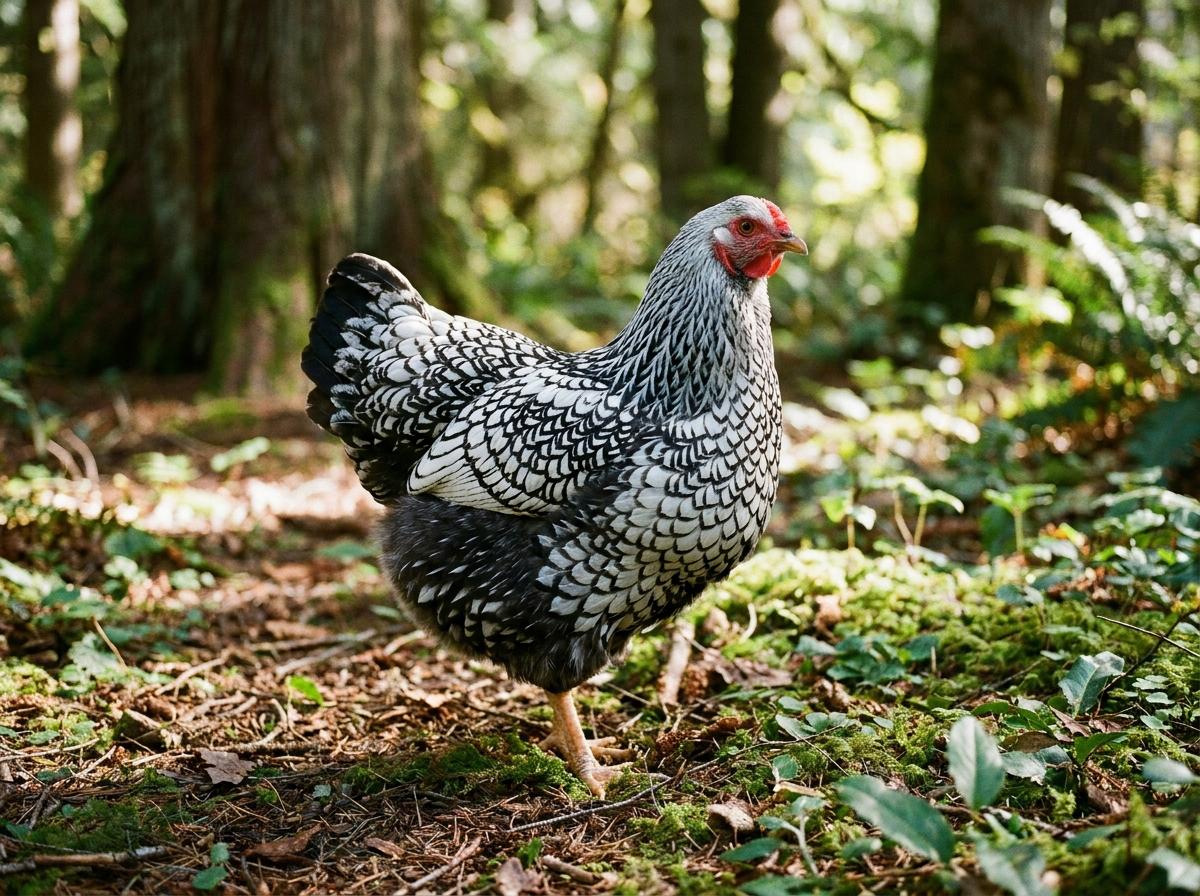
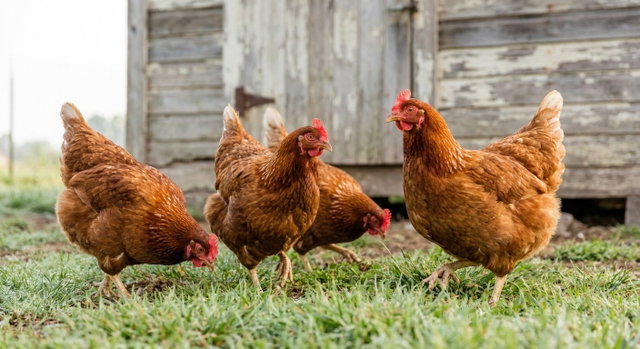
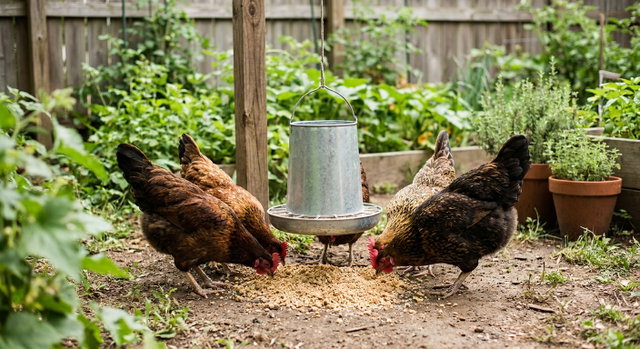
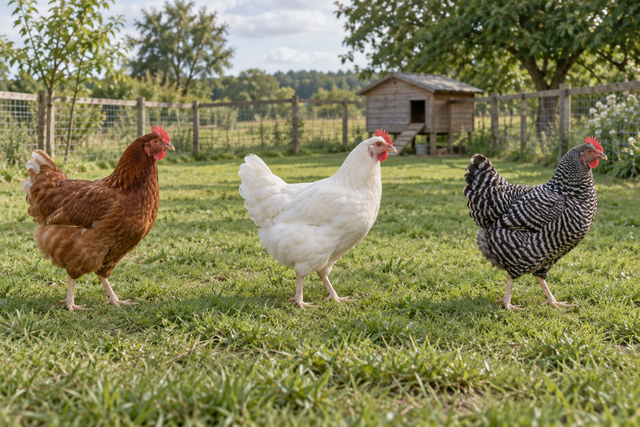
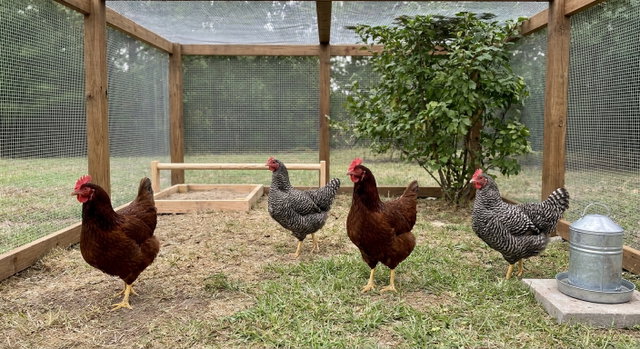
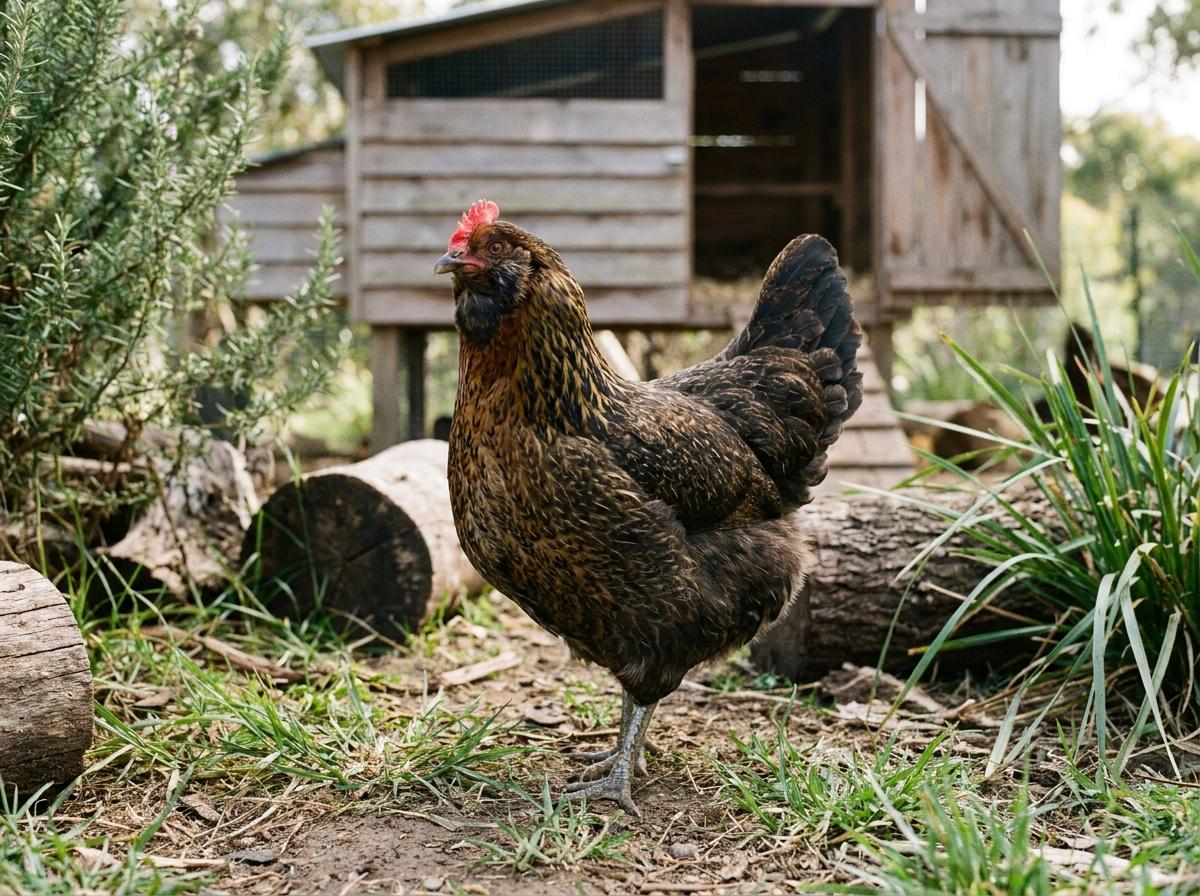
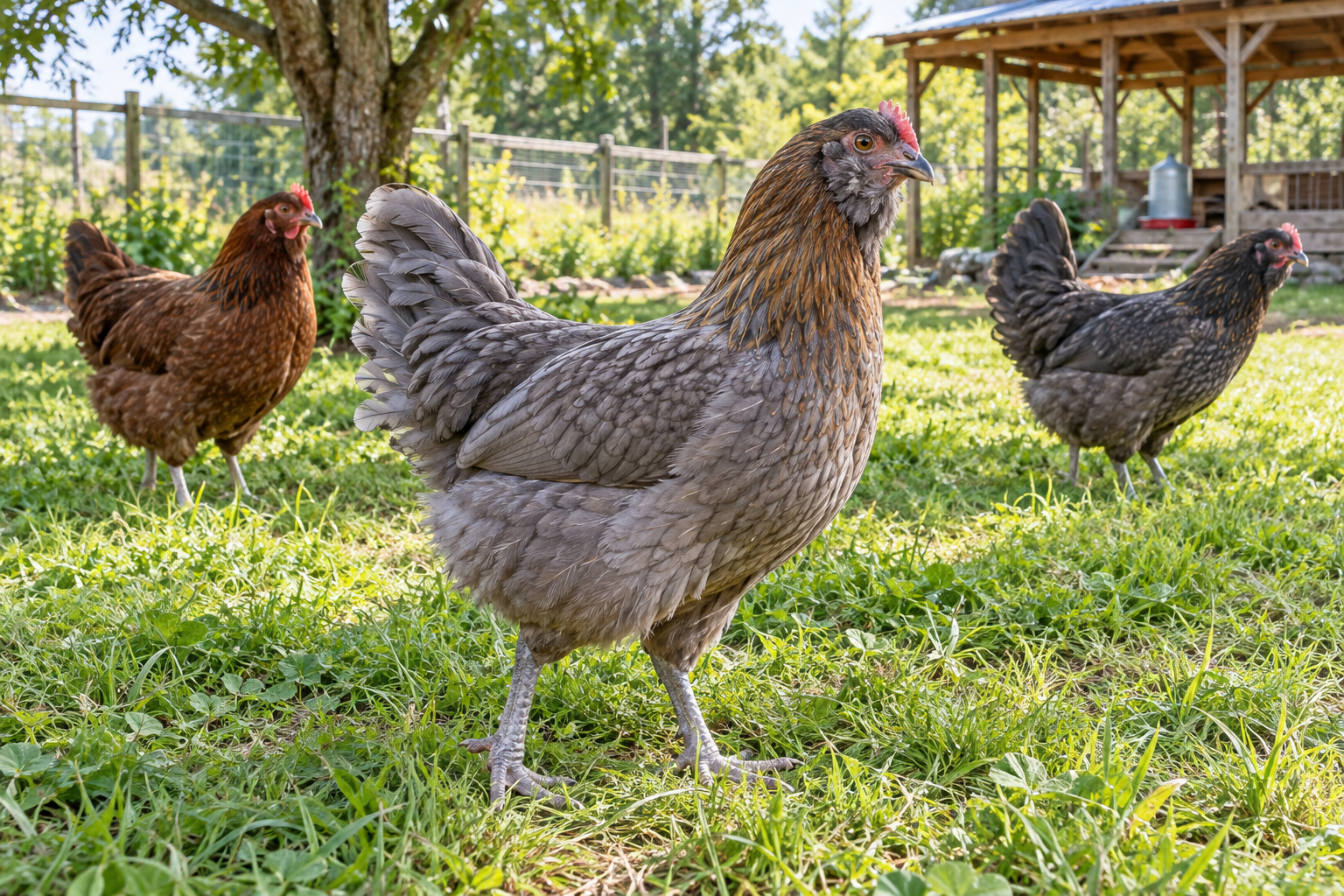
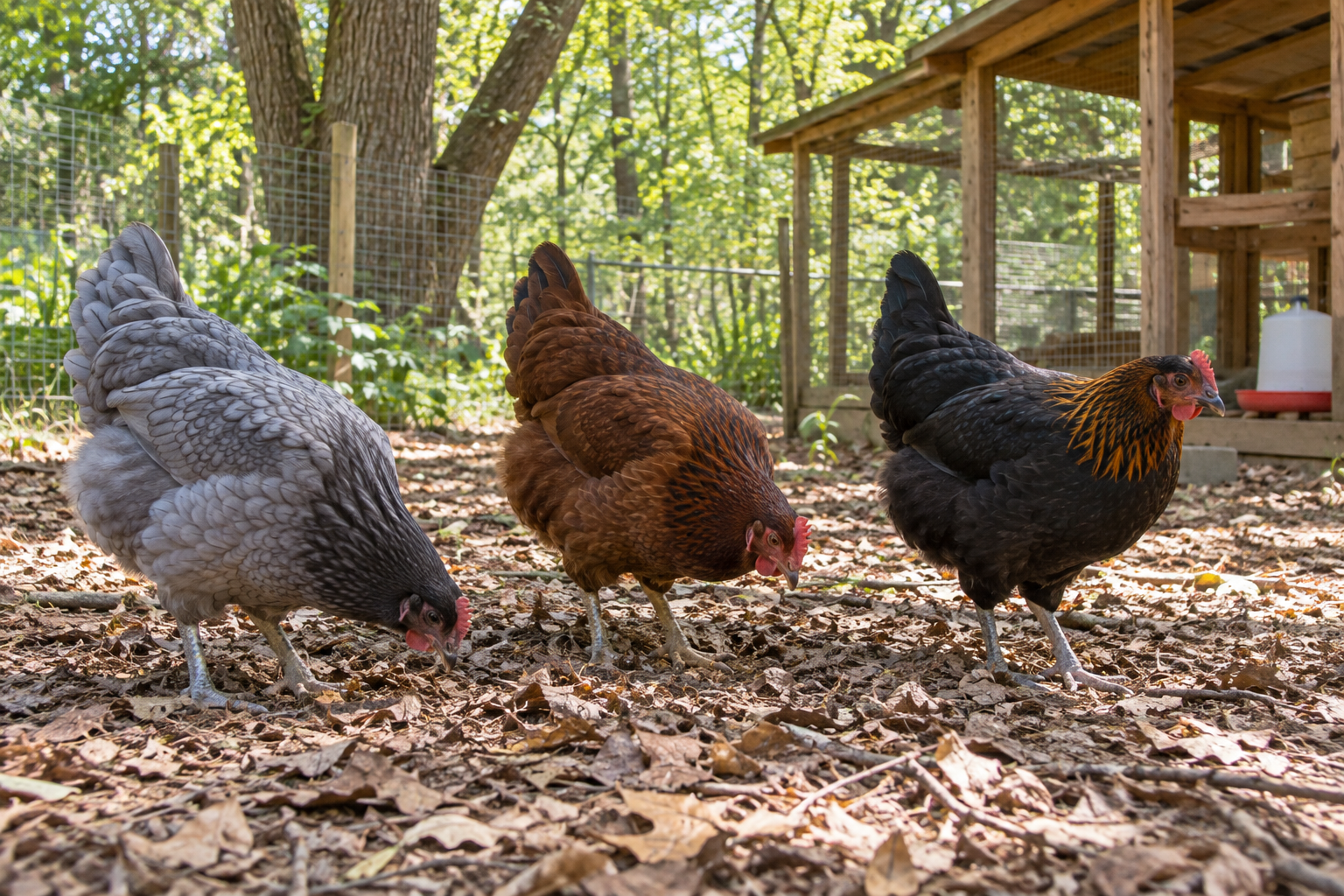
There is no single Olive Egger show standard to use as a universal checklist. Plumage, leg feathering, comb, crest, size and behavior depend on the stock used. The hens pictured here illustrate possible mixed-breed appearances; they are not a breed-identification key. A gray bird is not automatically an Olive Egger, and an Olive Egger need not be gray.
An Easter Egger is another broad label associated with colored eggs rather than one uniform breed. It may overlap with how sellers describe an olive-egg project. Ask what the seller means. By contrast, standard-bred Araucanas and Cream Legbars have their own breed identities. Crossing one with another chicken does not make every descendant a purebred example of the parent breed.
Use the chicken species hub to compare alternatives around your real goal. Choose ISA Brown if you are investigating a named commercial brown-egg hybrid, or Jersey Giant if body size and a large dual-purpose breed are central. These are different breeding objectives, not alternate names for Olive Eggers.
What egg color can you reasonably expect?
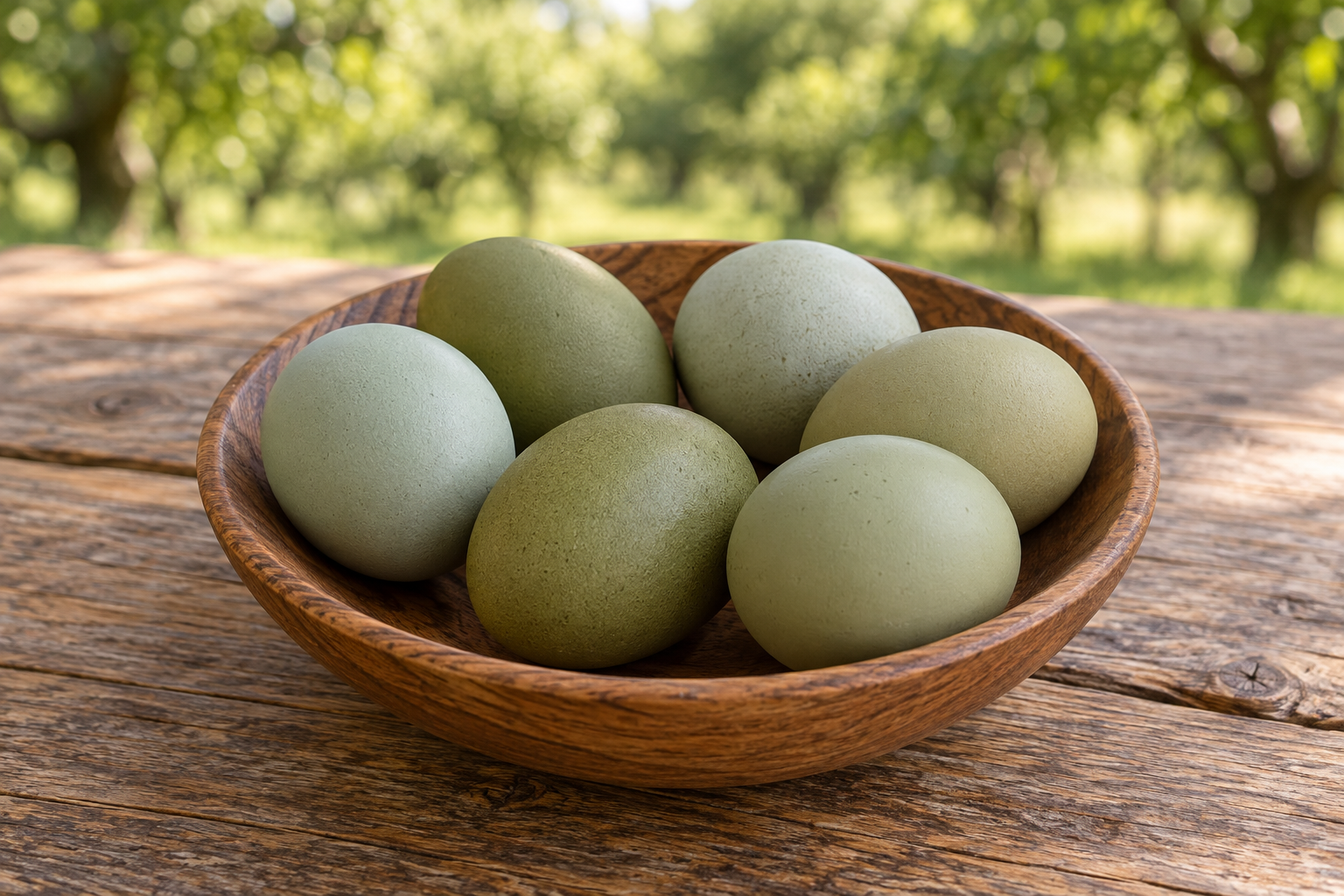
Ask whether the bird is a chick, an unproven pullet or a hen already laying. A photograph of eggs from the flock is not proof that one particular pullet will lay that shade. A laying hen’s own identified records offer a more direct answer than a mixed basket photographed beside her.
For a chick or hatching egg, ask what the breeder has observed from the same mating. A first cross, a backcross and a later mixed flock are not interchangeable descriptions. Wang and colleagues’ primary study establishes that the blue-shell base has a single autosomal dominant factor, conventionally called O. One copy is enough for a blue-based shell; the brown pigment that can make it look olive is a separate, multigene trait. In the notation below, O is the blue-shell allele and o is the non-blue allele.
With a confirmed two-copy blue-shell parent (O/O) and a non-blue brown-egg parent (o/o), every daughter inherits O/o and has a blue-shell base. The study’s corresponding first-cross hens all laid blue-shelled eggs. With a known one-copy parent (O/o) mated to a non-blue parent (o/o), the simple inheritance expectation is half the daughters O/o and half o/o across many offspring. The latter have no blue base and may lay brown or tinted eggs, depending on their other pigment genes. A backcross to O/O instead gives every daughter a blue-shell allele. “Backcross” alone therefore does not predict the result. None of these O-locus examples guarantees dark olive: ask separately about the parents’ brown-pigment background, confirmed genotypes and actual daughters’ eggs.
Shell color is also not a nutrition rating. Oklahoma State Extension explains that shell color itself does not make an egg nutritionally superior. Buy for the flock and eggs you want, while applying the same sensible food handling to every shell color.
Keep a record of the hen, date, shell appearance and any notable change. Photograph eggs under similar neutral lighting if color is part of a breeding project. Do not interpret a laying change from color alone: feed, season, molt, age and health belong in the picture. The egg-records guide explains useful flock counts and the limits of assigning an egg to a particular hen.
Housing and feeding the actual birds
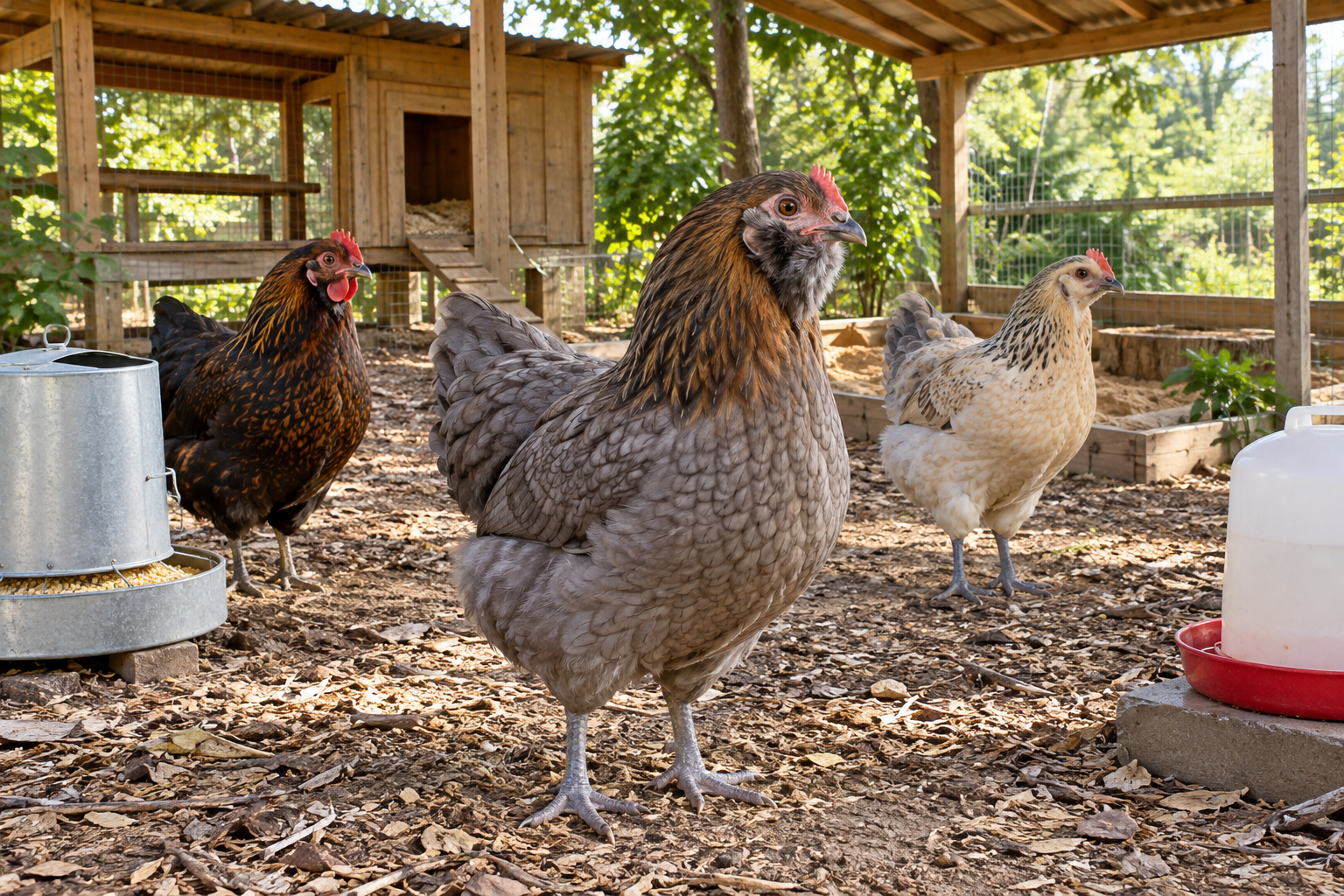
Care for the chickens you have, rather than a hypothetical average Olive Egger. Ask the breeder about adult size, feathering and how the source flock behaves in its climate. A large feather-legged cross may need a different practical setup from a light clean-legged cross, even if both lay olive eggs.
Provide secure night housing, ventilation without damp stagnant air, dry bedding, usable nest boxes and roosts, and a protected area to scratch and dust bathe. Make sure quieter birds can reach feed and water. Poultry Extension’s housing guidance emphasizes protection, space, ventilation and access rather than one design for every flock. Our coop planning guide helps translate those needs into a working layout.
Use a complete prepared feed appropriate to age and laying stage, with continual clean water. Scraps and scratch are extras, not a balanced ration. University of Minnesota Extension covers balanced feeding, water and daily care. Follow the feed label and ask a poultry adviser about calcium and grit for your flock; do not add a collection of supplements simply because the eggs are colored. No special additive turns an unknown cross into a reliable olive layer.
If raising chicks, use the separate baby-chick guide for brooding preparation. Adult layer care is not a substitute for chick care. Plan flock companions and enough resources for all of them before collecting a single impulse-purchase chick.
Health and welfare
The Olive Egger label is not a health clearance. Buy from a source that can explain vaccination, disease testing and any flock problems, then arrange a cautious introduction to your existing chickens. Keep new birds separate for observation and obtain local advice on quarantine and disease prevention. The flock introduction guide gives the management context.
Watch your own birds every day. Appetite, drinking, breathing, movement and social behavior tell you more than whether a chicken fits an attractive photograph. Minnesota Extension recommends knowing normal activity and investigating changes such as not coming to feed or respiratory signs. Seek veterinary advice promptly for persistent lameness, difficulty breathing, marked lethargy or a bird unable to eat and drink normally. Records can describe the change; they cannot diagnose it.
There is no defensible Olive-Egger-wide lifespan or personality guarantee. Parentage, individual behavior and care matter. A calm source flock is useful to see, but it does not make every rooster safe to handle or every hen tolerant of children. Plan handling and supervision around the actual bird.
Breeding and hatch records
A breeding project needs more than saving the darkest eggs in the basket. Record which hens and male formed the mating group, when eggs were collected, what was set and what hatched. Keep shell-color observations tied to identified laying hens when possible. If parentage is unknown, say so rather than filling in a pedigree from plumage.
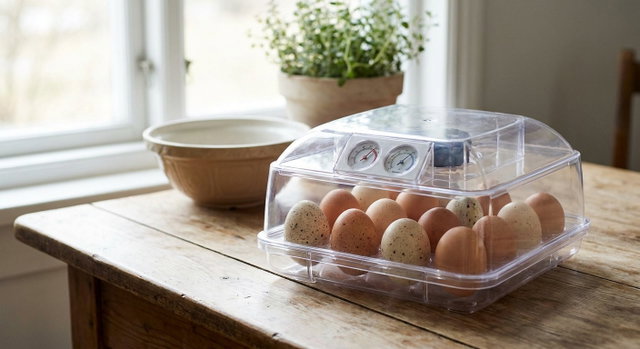
The chicken hatch-records guide follows a batch from set eggs to identified chicks. Creatures’ signed-in clutch workflow lets you record a set and its outcomes; it does not control the incubator or prove parentage. The chicken name generator can help label individual profiles, but names do not substitute for a reliable identification method.
If your purpose is simply a varied egg basket, you do not need to breed. Buying well-described pullets can be a clearer route than maintaining males, separate breeding groups and uncertain offspring. If you do hatch, decide in advance how every chick, including males and birds outside your egg-color goal, will be cared for.
Availability, cost and buyer questions
Compare offers with the same age, sexing basis and evidence. A low chick price does not cover brooding, feed until maturity, shelter, shipping, veterinary care or an unwanted male. A laying hen and a hatching egg are different purchases with different uncertainty. Obtain current quotes; there is no sound universal price for this variable cross.
Ask the seller:
- What are the actual sire and dam lines, and is this a first cross or later generation?
- Are the pictured eggs from this hen, this mating group or a mixed flock?
- What shell colors have mature daughters of the same mating laid?
- How were the chicks sexed, and what happens if that identification is wrong?
- What are the hatch date, vaccination history and disease-test details?
- What care conditions and adult size should I plan for?
Our chicken buying guide explains the difference between chicks, pullets and hatching eggs. Treat a directory entry as a lead to investigate. It does not certify genetics or guarantee that Olive Eggers are available today.
Frequently asked questions
Is an Olive Egger a breed?
It is a crossbred egg-color type rather than one standardized breed. Ask for parentage and the breeder’s actual results.
Will every Olive Egger lay dark olive eggs?
The label alone cannot guarantee a shade. For a laying hen, ask for eggs reliably assigned to her. For chicks, ask about results from the same mating and the limits of the seller’s promise.
Can I identify one by a beard or feather color?
No. Those features may reflect some parent lines, but they do not prove ancestry or egg color. A pea comb can be a clue in crosses from pea-combed blue-egg stock because of genetic linkage, but it is not a test for the blue-shell allele or an olive shade. Olive Eggers can have varied appearances.
Are olive eggs healthier?
Shell color itself does not confer a nutritional advantage. Feed and ordinary egg quality and handling matter more than a fashionable shell shade.
Do I need a rooster for olive eggs?
No rooster is needed for a hen to lay eating eggs. Fertile eggs for hatching require a suitable mating, but a rooster’s appearance cannot establish the egg color his daughters will lay.
Do this next on Creatures
- Keep your chickens’ details together. Start an Olive Egger profile. No account is needed to start; a free account keeps it. See adding an animal.
- Keep observations. Add an egg, weight or health note. Opens for visitors; a free account saves it. Read adding a record.
- Wait for suitable birds. Save an Olive Egger search for future matching listings. This does not establish current stock. See saved searches and your watchlist.
- Check current offers. Browse filtered Olive Egger listings, then ask the source the questions above.
- Research sources. Browse breeder and farm profiles. Profiles are information to investigate, not a stock, genetic-identity or endorsement guarantee.
- Describe your operation. Start an organization profile. No account is needed to start. Read creating an organization and adding your team for the workflow.