
Red Angus
Red Angus are Angus cattle with a red coat. They come from the same Scottish Aberdeen-Angus foundation as black Angus, they are naturally polled, and their color comes from a recessive gene, so two red parents always produce a red calf. What sets them apart in the United States is paperwork as much as pigment: the American Angus Association will not register a red animal, so since 1954 red Angus have had their own herd book, kept by the Red Angus Association of America (RAAA). In Canada, by contrast, red and black Angus share one herd book.
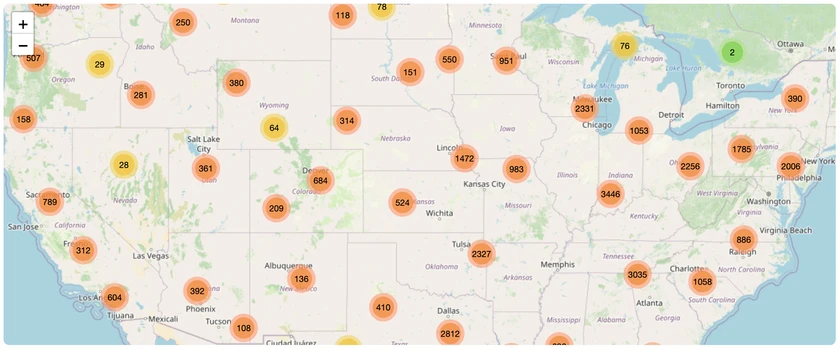
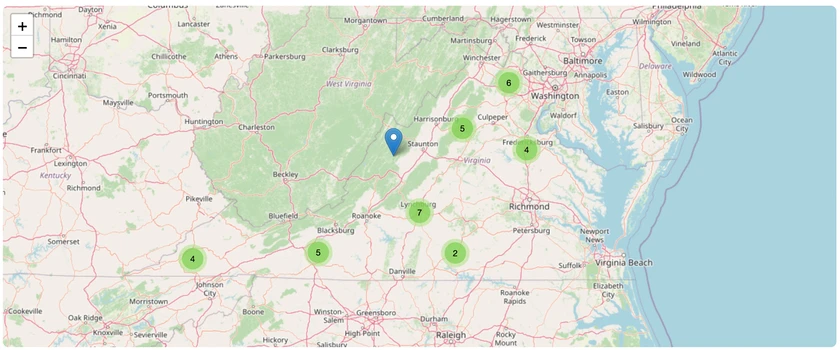
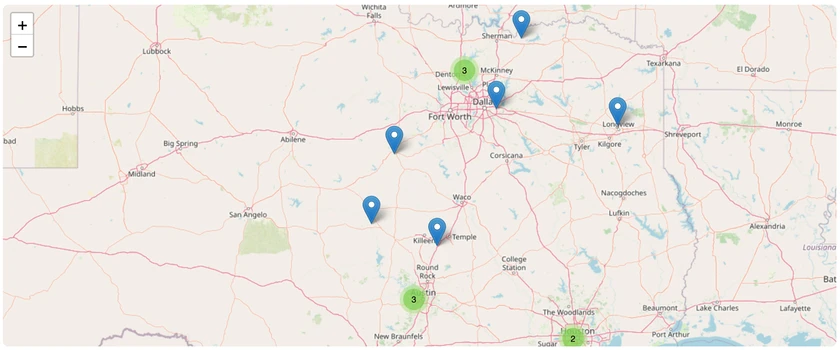
The Creatures breeder directory lists Red Angus breeders by state, but Red Angus rarely appear as live listings on the Creatures marketplace, so the easiest way to hear about one is to set a free Red Angus listing alert (no account needed to start). If you are already comparing animals, the free cattle pedigree chart maker lists Red Angus in its breed menu and prints a three-generation chart from a seller’s papers.

| Origin | The same Aberdeen-Angus foundation as black Angus, from northeast Scotland |
|---|---|
| Coat and horns | Solid red and naturally polled (hornless) |
| Color genetics | Red is recessive to black, so red bred to red always gives red calves |
| US registry | Red Angus Association of America, founded 1954 as a performance registry |
| Elsewhere | The Canadian Angus Association registers red and black Angus in one herd book |
| Top registry categories | 1A (100% Angus) and 1B (87 to 99.9%): solid red, polled, no white on the legs, in front of the navel or above the underline |
| Monitored genetic conditions | AM, CA, DD, MA, NH and OS (all recessive) |
| Main uses | Commercial cow-calf herds, registered seedstock and crossbreeding |
Browse listings, public profiles, breeders, or add your animal.
What is a Red Angus?
A Red Angus is an Angus that inherited two copies of the recessive red gene. The breed association puts it in four words on its history page: “Red Angus are Angus.” The same page credits the red strain with the traditional Angus strengths, naming carcass quality, maternal traits, calving ease and moderate size, along with uniformity and good disposition. Those are the association’s own descriptions, and individual herds differ a great deal, so treat them as the breed’s selection goals rather than as promises about a particular animal.
Coat color is the visible difference. The bigger practical difference for a US buyer is the registry. A black Angus is registered with the American Angus Association; a red one cannot be, because that association’s registration rules (Rule 103) make an animal red in color ineligible. A registered Red Angus therefore carries RAAA papers, with RAAA’s categories, performance data and genetic-condition codes, and those papers read differently from American Angus papers. This guide covers the red side of the breed; the Black Angus guide covers the black herd book, Certified Angus Beef and the American Angus Association’s genetic testing.
For the care every beef animal needs, whatever its color, start with the Creatures cattle guide, which covers housing, feeding, health, breeding and costs for the whole species.
Red Angus history: from culled calves to a herd book of their own
Red was there from the start. The RAAA’s history brochure gives the account most breeders know. The first Aberdeen-Angus herd book, published in Scotland in 1862, entered red and black cattle without distinction. Hugh Watson of Keillor, usually called the father of the modern breed, began selecting his herd for black after he started farming in 1808, and black became the fashionable color. Because red is recessive, though, it never left the gene pool, and red calves kept turning up in black herds.
The American ban. Angus reached the United States in the 1870s. According to the same brochure, the first American herd books, published in 1886 and 1888, did not record color at all; in 1890, 22 reds were registered among some 2,700 animals entered that year, and in 1917 the American Aberdeen-Angus association barred reds and other colors from registration altogether. From then on, red calves born in registered black herds were discarded from breeding. In a 1920 University of Wisconsin publication quoted in the brochure, the researchers Leon Cole and Sara Jones argued that these red calves were just as purebred as their black relatives and that black had won simply because it became the fashion.
The Red Angus Association of America. From 1945, a number of cattlemen began collecting red calves cropped from good black herds. In 1954 seven breeders founded the RAAA, with Waldo Forbes Sr. as its first president. The association built its registry around performance testing from the start, and its history page calls it the industry’s first performance registry: performance data was required to register an animal. Its brochure lists the firsts the association claims since then, among them unrestricted artificial insemination from 1954, a performance-based show in 1956, a category registration system in 1980 and inventory-based Total Herd Reporting in 1995.
Canada went a different way. The Canadian Angus Association’s breed history says its first herd book, published in 1908, excluded red males but accepted red females, and that in 1921 its bylaws were changed to exclude all red animals. Red cattle became eligible again on April 3, 1968, with the approval of Canada’s Minister of Agriculture. Today the association registers both red and black Angus, and the color is shown on the papers.
Why red Angus always breed red: the color genetics
The red-or-black switch in cattle is a single gene. A 1995 study in Mammalian Genome by Klungland and colleagues identified it as the melanocyte-stimulating hormone receptor gene (now usually called MC1R). They described three versions: a dominant allele that gives black, a recessive allele that gives red when an animal carries two copies, and a wild-type allele that allows a range of colors in other breeds. Within Angus, the useful shorthand is the one the RAAA brochure uses: B for the dominant black gene and b for the recessive red gene.
A black Angus can be BB (pure for black) or Bb (black, but carrying red). A Red Angus is always bb. The rest is simple Punnett-square math, with each parent passing on one copy at random:
- Red x red (bb x bb): every calf gets b from each parent, so 100 percent of calves are red.
- Red x black carrier (bb x Bb): half the calves get B from the black parent and are black carriers; half get b and are red. Expect 50 percent red and 50 percent black.
- Black carrier x black carrier (Bb x Bb): the four equally likely combinations are BB, Bb, bB and bb. Expect 25 percent red calves, 50 percent black carriers and 25 percent black calves that carry no red.
- Red x pure black (bb x BB): every calf gets B and b, so all are black, and every one of them carries red.
These are odds per calf, not a fixed share of every calf crop. A carrier pair can throw two red calves in a row, or none in ten years.
This is why red calves still appear in black herds, and why the American Angus Association’s rules go further than banning reds. Under its Rule 103, a black animal with a purebred but red-colored Angus ancestor must be DNA tested and proven homozygous black (BB) before it can be registered. If you buy black Angus semen or bulls to use on Red Angus cows and want red calves, ask for the bull’s red-carrier test result; a BB bull will never sire a red calf.
Red Angus in crosses. Red is recessive in crosses with other breeds too, so a Red Angus bred to a black animal of another breed will often give black calves. Other genes then add their own effects. The white face of the Hereford is the best-known example: the American Hereford Association and the RAAA run a joint Premium Red Baldy tagging program for replacement heifers that are roughly 25 to 75 percent Red Angus and Hereford, red-bodied with a bald (white) or brockle (speckled) face. The program admits no black-hided cattle, whatever their genetics.
Polled genetics. Hornlessness follows a separate gene. The Irish Cattle Breeding Federation’s explainer on polledness sets out the standard model: the polled gene (P) is dominant to horned (p), so a bull carrying two polled copies (PP) sires polled calves even out of horned cows, while a Pp bull bred to horned cows sires about half horned calves. Scurs, the loose horn-like growths some polled cattle grow, are inherited separately and show more readily in males. The RAAA keeps scurred animals, and animals whose scurs were removed, out of its top categories.
What a registered Red Angus looks like
The most precise public description of a Red Angus is in the RAAA’s Rules and Regulations (revised November 19, 2025), which define what an animal must look like to sit in the top two registry categories.

Categories 1A and 1B. Category 1A is for 100 percent Angus blood content and Category 1B for 87 percent up to (but not including) 100 percent. In both, the sire and dam must be registered with an association that belongs to the World Angus Secretariat, and the animal must be solid red and polled, with an actual birth date and an actual weaning weight taken between 90 and 310 days of age. The exact Angus percentage of a 1B animal is printed on its certificate.
What disqualifies an animal from 1A and 1B. The rules list:
- Scurs or horns, including any sign that scurs or “buttons” were removed.
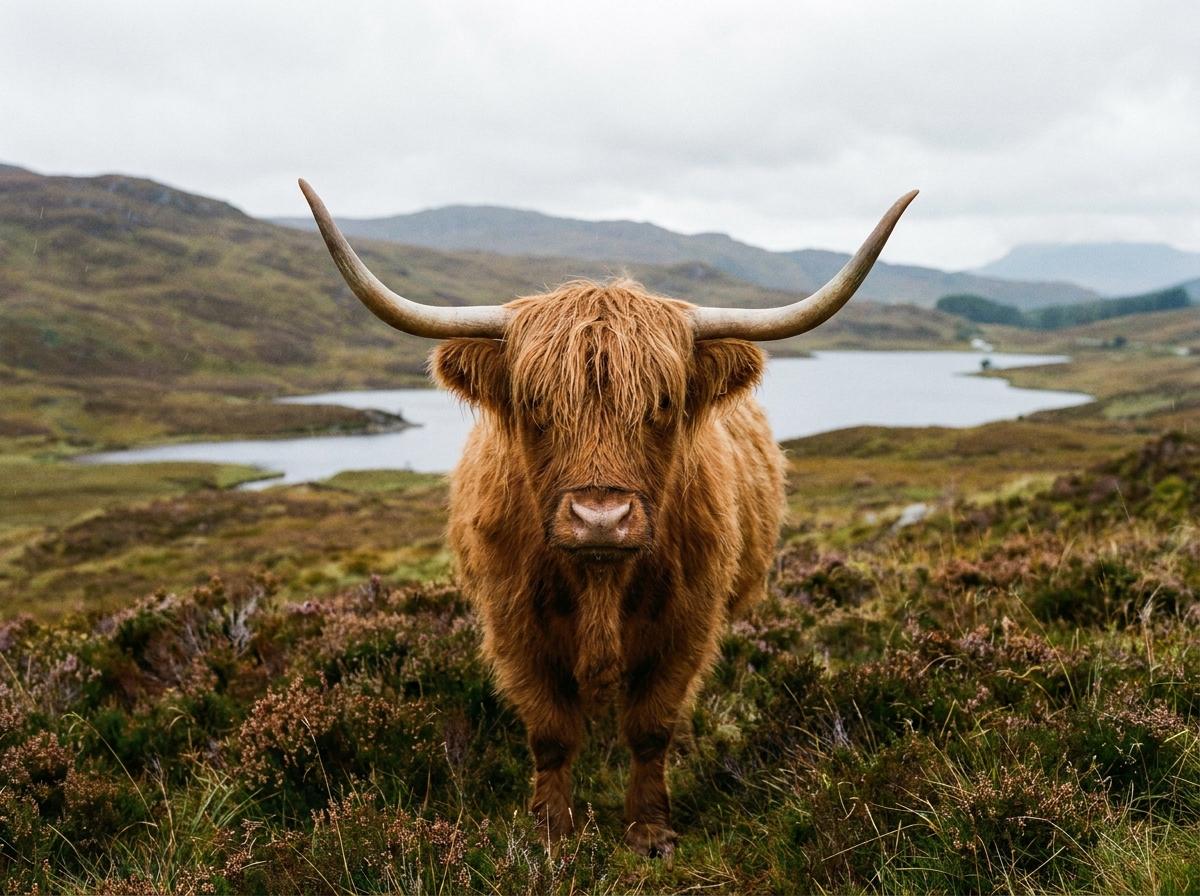
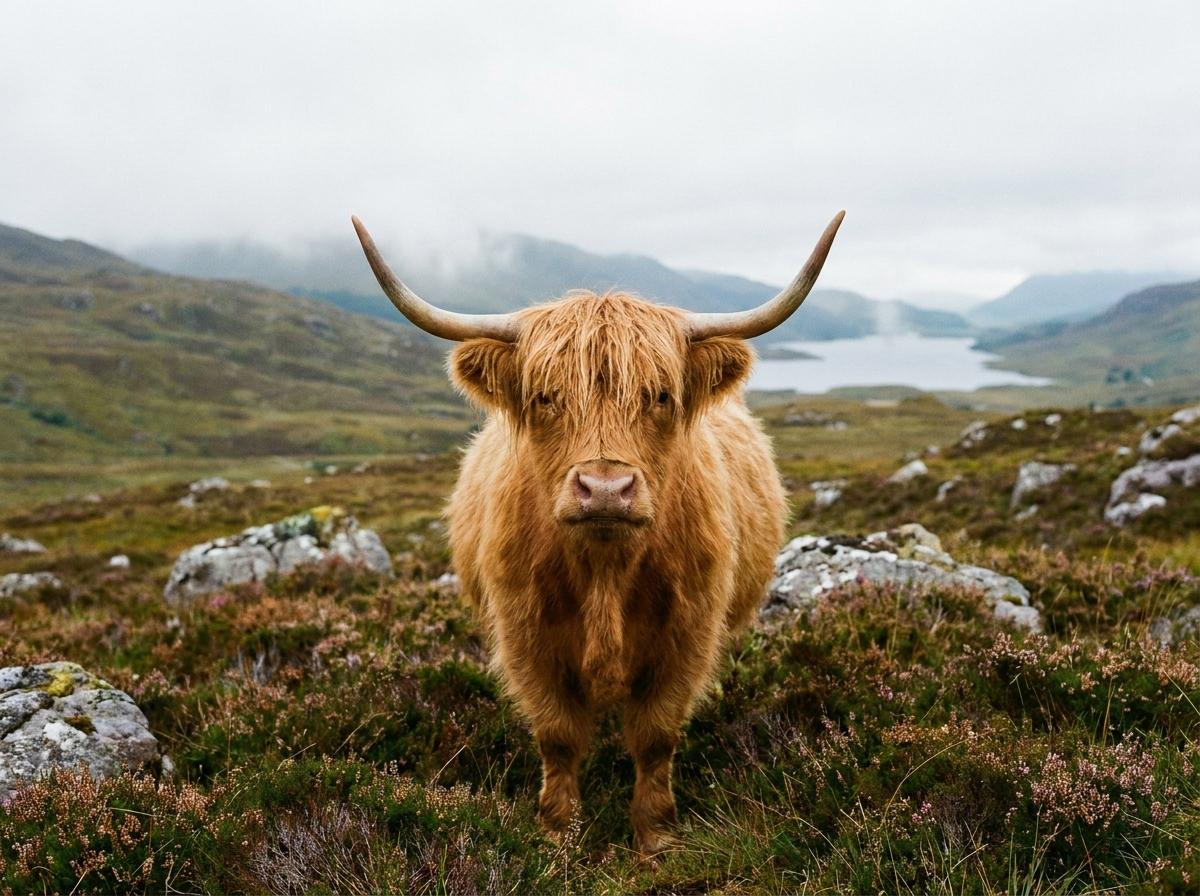
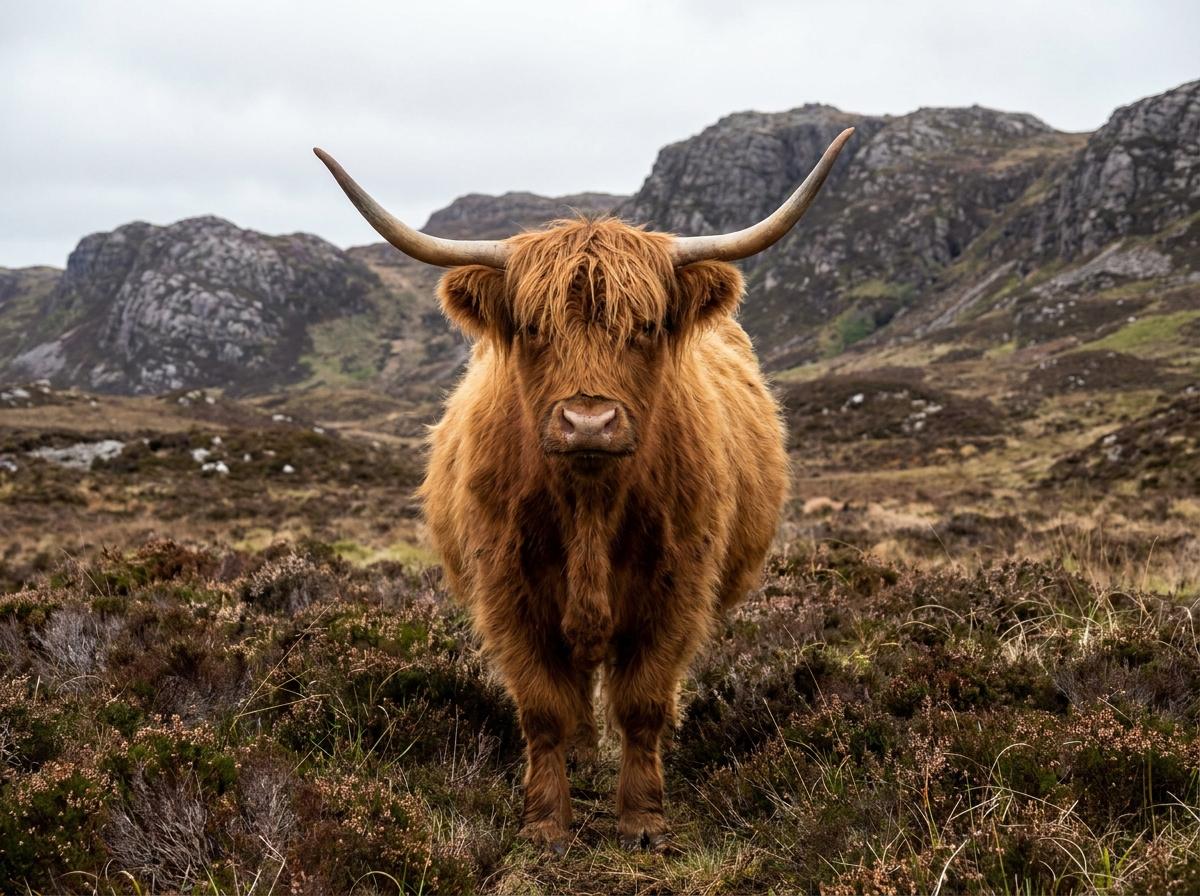
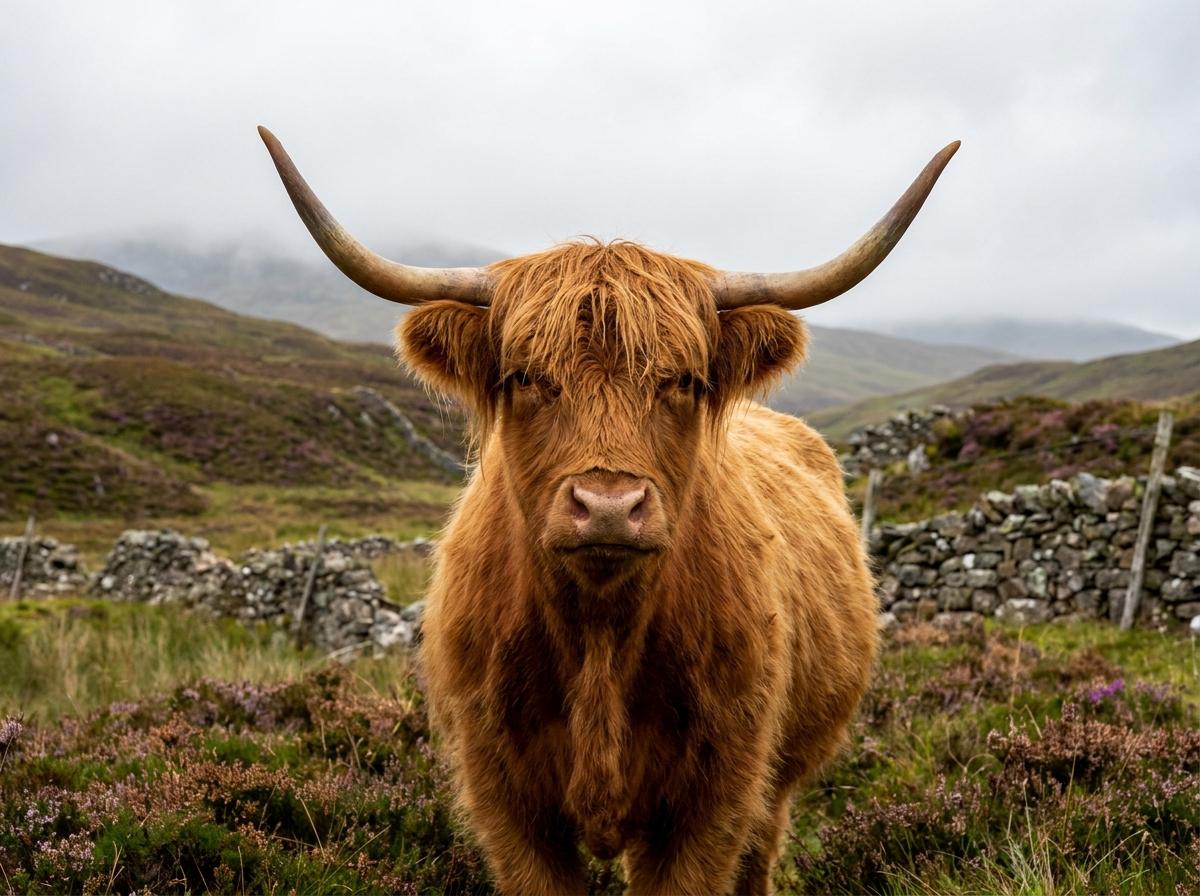
- Ineligible white: white hair and white skin on the underline in front of the navel scar, on the legs, or anywhere above the underline. Birthmarks with white or black hair over normally pigmented skin are allowed. In practice, apart from birthmarks over pigmented skin, a correct 1A or 1B animal shows no white on the face, legs or body, and any white is confined to the underline behind the navel.
- Black pigment: black pigmentation on the nose, around the eyes and at the anus.
- Calves from multiple-sire groups, where the sire cannot be known.
- Missing records: no actual birth date or no weaning weight and date.
An animal with a disqualification moves to Category II, which covers cattle of 87 to 100 percent Angus blood that fail one or more of those requirements. Category III holds cattle under 87 percent Angus, including the association’s Angus Plus (Brahman and Angus derivatives) and HybRED crossbreds.
An open herd book. The RAAA’s FAQ says it is an open herd book: a calf with at least one registered parent can be registered regardless of the other parent’s breed, and its category reflects its Angus percentage and any disqualifying features. That flexibility is useful to breeders, but it means “registered Red Angus” on a sale bill can describe anything from a 1A purebred to a Category III crossbred. Always read the category and percentage on the certificate.
Size. The RAAA rules set no weight or height, and Red Angus herds vary widely in frame. One comparison does exist. A 2021 analysis of more than 5,000 crossbred cows in the USDA Meat Animal Research Center’s germplasm evaluation program, published in the Journal of Animal Science, estimated breed effects on mature cow weight. After adjusting for the particular sires used, Red Angus influence came out about 45 kg (roughly 100 lb) lighter at maturity than Angus influence, 10th of the 16 breeds compared, though the authors note that many breeds were close together. The useful lesson for a buyer is that cow size is a herd trait, not a breed constant: ask for actual mature weights in the cow family you are buying from. If you have no scale, the free cattle weight calculator estimates live weight from heart girth and body length, and our guide to measuring cattle for weight explains where to put the tape.
Performance records: Total Herd Reporting and EPDs
Performance data is the RAAA’s founding idea, and it shapes what you can learn about a registered Red Angus before you buy one.
Total Herd Reporting (THR). Under the RAAA’s rules and FAQ, every active registered female more than 16 months old must be reported each year, whether she raised a registered calf, a commercial calf, a dead calf or no calf at all (with a reason code). Calves out of active registered cows must be recorded even if they are sold commercially. A cow whose year goes unreported is inactivated. For a buyer, that means a registered Red Angus cow comes with an annual record of whether she calved, which is exactly the fertility history most cattle sales cannot show.
The EPDs and indexes. Expected progeny differences (EPDs) predict how a bull’s or cow’s calves will compare with calves of other animals in the same evaluation. The RAAA’s guide to EPDs and indexes lists:
- Calving: Calving Ease Direct (CED) and Birth Weight (BW) for the calf; Calving Ease Maternal (CEM) for a bull’s daughters as 2-year-olds.
- Growth: Weaning Weight (WW), Yearling Weight (YW), Average Daily Gain (ADG) and Dry Matter Intake (DMI).
- Maternal: Milk, Heifer Pregnancy (HPG, the chance a bull’s daughters conceive and calve at 2 years old), Stayability (STAY, the chance his daughters are still calving every year at 6) and Maintenance Energy (ME, the feed energy his daughters need to hold condition).
- Carcass: Marbling, Yield Grade, Carcass Weight, Ribeye Area and backfat.
- Dollar indexes: HerdBuilder (a maternal index for herds that keep replacement heifers and sell calves at weaning), GridMaster (a terminal index for calves fed out and sold on a quality grid) and ProS (an all-purpose index combining the two).
The association’s EPD averages page publishes current breed averages and ranges for sires, dams and young animals, and the RAAA also publishes percentile tables, so you can see where a bull ranks within the breed rather than just reading a number.
Do not compare EPDs across herd books. A Red Angus EPD is calculated in the RAAA’s evaluation, and an American Angus EPD in that association’s, so the same number does not mean the same thing in both. Purdue University’s explainer on across-breed EPDs shows how the annual adjustment factors published by the USDA Meat Animal Research Center convert EPDs from different breeds to a common base, using a Red Angus bull as its worked example.
Red x black is not a crossbreed. If you are hoping for hybrid vigor, note that the Meat Animal Research Center scientists in the 2021 mature-weight study treated Red Angus and Angus as the same breed when calculating heterosis. A red-by-black Angus mating changes the calf’s color odds, not its breed makeup. Hybrid vigor comes from crossing Red Angus with genuinely different breeds, which the cattle guide covers.
Genetic conditions the RAAA monitors
The RAAA’s rules name six recessive genetic conditions it monitors: arthrogryposis multiplex (AM), contractural arachnodactyly (CA), developmental duplication (DD), alpha-mannosidosis (MA), neuropathic hydrocephalus (NH) and osteopetrosis (OS). An animal that shows one of these conditions cannot be registered, but a confirmed carrier, with one copy of the gene, can be. Any animal applying for registration whose parents or grandparents include a tested carrier, without a tested-free animal in between, must itself be tested at an RAAA-approved laboratory, and its registration is held until the result arrives.
The association’s DNA testing page and FAQ add the parentage rules: every sire (AI, natural service or embryo transfer) and every donor dam must have a DNA sample on file. The RAAA’s registration status codes tell you where an animal stands. Only animals coded R (registered) or I (incomplete: registered, but no weaning weight yet on a calf under a year) can be transferred. A U code means the animal is on hold for genetic-condition testing, Z means a parent’s DNA is missing, B means a DNA test excluded a listed parent, and C (compute) means the animal was recorded only to satisfy herd reporting and is not registered.
A carrier is normal itself; the risk comes when two carriers are mated, because each calf of a carrier x carrier mating has a one-in-four chance of being affected. Ask for the actual test results on both parents of anything you buy for breeding, and have your veterinarian or the registry explain any code you are unsure of. The American Angus Association works from a longer list of conditions, described in our Black Angus guide, so expect black Angus papers to show different codes.
Red hide in the beef market
Is Red Angus beef “Angus beef”? In the USDA sense, it can be. USDA’s Agricultural Marketing Service certifies branded beef programs that claim Angus influence, and it publishes two live-animal specifications for them. The American Angus Association specification qualifies cattle by a solid black main body or by traceable Angus parentage. The Red Angus Association specification (July 10, 2025) qualifies cattle by a main body that is solid red, red tint or smoky, with no other color behind the shoulder, above the flanks or breaking the midline, or by traceable Red Angus parentage. Each branded program decides which specification it accepts; the RAAA’s Red Angus beef page invites programs to add Red Angus to their USDA schedule. So whether red cattle qualify for a particular brand, including the best-known black-hide brand, Certified Angus Beef, is a question for that program, not something the word “Angus” settles.
Black hides still sell for more. Feeder cattle are still priced partly on color. In a 2022 survey the RAAA conducted of 252 cattle feeders and other industry participants (Genetics Valued Over Hide Color, with comments from economists at Kansas State, Oklahoma State and the University of Nebraska), 94 percent agreed that black-hided feeder cattle frequently bring more than non-black cattle of equal weight, quality, sex and health history, while 75 percent disagreed that black cattle are actually superior. The survey was run by the red breed’s own association, so read its conclusions with that in mind, but the price gap it describes is the reason red-calf sellers lean on documentation.
Process-verified calves. The RAAA’s Feeder Calf Certification Program, which became the first program certified under USDA’s Quality System Verification Programs in 1995, was renamed Angus Access in 2025. According to the association’s value-added programs overview, enrolled calves carry three verified claims: at least 50 percent registered Angus bloodlines (through a sire or dam registered with the RAAA, or two registered grandparents), source back to the ranch of origin, and group age. A companion program, Allied Access, verifies source and age only. From January 1, 2026, 840-series electronic ID tags are the only program-compliant tags issued, and older dangle tags can be used until July 1, 2027. Our cattle ear tags guide explains EID and visual tag systems.
Heat, sun and the red coat
Red cattle are often promoted as cooler than black ones, and the RAAA’s own history brochure says red is more heat tolerant than black. The research supports a narrower version of that claim.

The USDA Meat Animal Research Center’s page on cattle heat-stress risk factors explains that dark colors absorb more heat than light ones, and it lists a black or dark red coat as a risk factor, alongside 100 percent European breeding, poor health, finished weight and excitable temperament. A light tan or white animal is less at risk than either. In a 2021 Canadian Journal of Animal Science study that used drones to count breathing rates in 925 feedlot cattle, black cattle breathed fastest, red cattle next and white cattle slowest; on pasture, where it was cooler, coat color made no difference to breathing rate in the cows studied. The red cattle in that study were other breeds, not Red Angus.
So a red coat may help a little in a hot feedlot, but a dark-red Red Angus is still a European-type beef animal with a heat-absorbing coat. Shade, plenty of clean water and calm, early-morning handling in hot weather matter far more than color. Our cattle waterer guide covers water systems, and the cattle guide covers summer and winter care.
Buying Red Angus: what to check
Start with the papers. Ask which association issued them. Registered red cattle in the US carry RAAA papers; in Canada they carry Canadian Angus Association papers, which show color. Read the category (1A, 1B, II or III), the Angus percentage and the status code, and check that the registration is in the seller’s name and that the transfer to you will be completed. The RAAA’s FAQ says its preferred permanent ID is a tattoo of the herd prefix plus the animal’s own ID, in one or both ears; brands carrying the same characters are also accepted, and an 840 EID counts only alongside a second identifier such as a DNA sample on file. Match the tattoo or brand to the certificate. Our guide to checking cattle pedigree papers walks through the parts of a breed-association certificate, and the free cattle pedigree chart maker turns a seller’s three generations into a printable chart you can check against the registry’s online animal search.
Ask for the records THR produces. For a cow or bred heifer, ask for her calving history, calving dates and any assistance, her calves’ weaning weights, and who confirmed a stated pregnancy and when. For a bull, ask for his EPDs and percentile ranks, his genetic-condition status and parentage DNA, and a current breeding soundness examination by a veterinarian. University of Georgia Extension’s Bull Buyer’s Guide is a practical checklist. A heifer bull is chosen on calving ease (CED) and birth weight EPDs, not on the seller’s word.
Ask about herd health. Ask for the herd’s vaccination program, any disease testing, and the dates of each, and plan a quarantine and introduction with your own veterinarian. The cattle vaccination guide explains the routine shots by age and stage, and the cattle guide covers new-arrival quarantine.
Price. We could not find a reliable published price range for Red Angus specifically. Prices follow the cattle market, the animal’s age, sex and pregnancy status, its EPDs and whether it is registered, so a commercial red heifer and a registered 1A bull are priced in different worlds. The Creatures cattle auction price guide has only 11 qualified Red Angus sales on record (sales through August 25, 2026), too few to publish a Red Angus median, so use it for the wider market. The free livestock value calculator gives a directional range from auction-sale statistics with a 25-sale minimum, so for Red Angus it will draw on a broader cattle tier too. Our cow cost guide gives current ranges for commercial beef cows, pairs and calves, which are a sensible starting point for commercial red cattle. If you plan to buy semen rather than a bull, see what a straw of bull semen costs.
Raising Red Angus
Red Angus need the same care as any beef cattle: company, grass and hay, minerals, clean water, sound fencing, a vaccination and parasite plan with a veterinarian, and good handling facilities. The breed changes the color of the calves and the paperwork, not the list of jobs.

Keep them with herd mates. Cattle are herd animals, so plan on at least two; the cattle guide explains why a lone cow is a stressed cow. A polled breed is not a harmless one, either. A bull of any breed deserves respect and a proper chute, and our cattle chute guide covers working facilities.
Grass, condition and fences. Build the diet on pasture and hay, as the cattle feeding guide explains, and match the number of cows to your land with the stocking rate guide. Score body condition rather than going by the calendar; the cattle guide explains the 1 to 9 scale and the 5 to 6 target at calving (6 for heifers). For fence types, see the cattle fencing guide.
Breeding and calving. Red Angus calving follows the cattle averages. The free cattle gestation calculator has no separate Red Angus setting; it uses 283 days for cattle in general and 279 days for its Angus preset, so treat either as an estimate and let a pregnancy check refine it. Our cow gestation guide explains why Angus pregnancies tend to run a few days short, and the calving guide covers the signs of labor and when to call for help. On Creatures you can record the breeding on the cow’s profile and it projects the calving date and window for you.
Records that fit the registry. Registration in Categories 1A and 1B needs an actual birth date and a weaning weight taken between 90 and 310 days of age, and THR asks for something on every cow every year. Keeping those numbers as you go is easier than reconstructing them at registration time. The cattle record keeping guide shows what to record from breeding to sale, the calf growth chart guide shows how to read a weight trend, and the weaning guide covers low-stress weaning methods and timing.
Red Angus and other red beef breeds
These are the beef breeds most often confused or compared with Red Angus:
- Black Angus. The same breed in the other color, registered separately in the US. See the Black Angus guide.
- Hereford. A red-bodied British breed with a white face (see the Hereford breed page); a Red Angus x Hereford cross is the “red baldy” described above, with a white or brockle face that a purebred Red Angus never has.
- Red Poll. An English dual-purpose breed that, like the Red Angus, is solid red and always polled (Red Poll breed page). The Livestock Conservancy’s Red Poll page traces it to the Norfolk and Suffolk breeds of eastern England and lists it as threatened. Red Poll cows were selected for milk as well as beef.
- Limousin. A French breed whose traditional coat is golden red with lighter hair around the eyes and muzzle; the registered Lim-Flex hybrid combines Limousin with Angus or Red Angus. See the Limousin guide.
- Brangus. A Brahman and Angus composite, described in our Brangus guide; the RAAA’s own Angus Plus designation covers registered Brahman and Angus derivatives.
- Murray Grey. An Australian polled breed whose first grey calves appeared in a herd of black Angus in 1905. See the Murray Grey guide.
If you are weighing a different beef animal altogether, the Shorthorn guide covers another British breed, and the Beefalo guide covers a cattle breed registered as part bison by pedigree.
Red Angus questions
Are Red Angus and Black Angus the same breed?
Yes. They share one origin and differ by a single color gene. In the United States they are registered by different associations (the RAAA for red, the American Angus Association for black), while the Canadian Angus Association registers both in one herd book.
Can two Black Angus have a red calf?
Yes, if both parents carry the recessive red gene. Each calf of two carriers has a 25 percent chance of being red. Two red parents, on the other hand, always have red calves.
Do Red Angus have horns?
No. Red Angus are naturally polled. Scurs or horns, or signs that scurs were removed, keep an animal out of the RAAA’s top registry categories, 1A and 1B.
Can a Red Angus have white markings?
Very little. Apart from birthmarks over normally pigmented skin, white hair and skin on the legs, on the underline in front of the navel or anywhere above the underline is disqualifying in Categories 1A and 1B, so a white face rules an animal out of the top categories. The red baldy, a Red Angus x Hereford cross, is the classic red animal with a white face.
Are Red Angus more heat tolerant than Black Angus?
Possibly a little, in a hot feedlot, but red is not a light color. USDA researchers list a black or dark red coat as a heat-stress risk factor, and a drone study of feedlot cattle found red cattle breathing slower than black ones and faster than white ones. Shade and water matter more than coat color.
How big do Red Angus get?
The RAAA sets no weight, and herds vary. In a 2021 analysis of crossbred cows from the USDA Meat Animal Research Center, Red Angus influence was about 45 kg (roughly 100 lb) lighter at maturity than Angus influence. Ask a seller for actual mature cow weights in the line you are buying.
Is Red Angus beef the same as Angus beef?
Genetically it is Angus beef, and USDA publishes a Red Angus live-animal specification for certified programs that claim Angus influence. Whether red cattle qualify for a particular brand depends on that brand’s own specification.
Do this next on Creatures
Whether you are still looking for your first Red Angus or already keep a registered herd, Creatures keeps the search, the records and your ranch profile in one place.
Get alerted. Red Angus listings are rare, so set a free Red Angus listing alert and we will email you when one is posted. No account needed to start. See saving searches and using your watchlist for how alerts work.
Find breeders. Search the Red Angus breeders listed by state or the full Creatures breeder directory, and check Red Angus on the Creatures marketplace for new listings.
Add your animal. Already have a Red Angus? Create a free Red Angus profile with its RAAA registration number, category, tattoo and photos, no account needed to start. The walkthrough is in adding an animal to Creatures.
Keep the records. Add a birth weight, weaning weight, vaccination or breeding record. The record sheet opens for any visitor to look around, and a free account saves what you enter. See adding a record and health and medical records.
List your herd. Breed registered Red Angus? Create a free ranch or breeder profile so buyers looking for documented Red Angus can find you, no account needed to start. Read getting listed in the breeder directory and creating an organization and adding your team.
Plan and name. Work out calving dates with the cattle gestation calculator, print a pedigree with the cattle pedigree chart maker, and find names for this year’s calves with the cattle name generator.