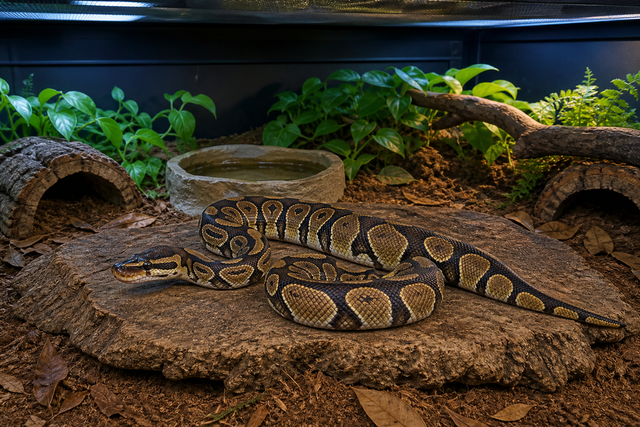
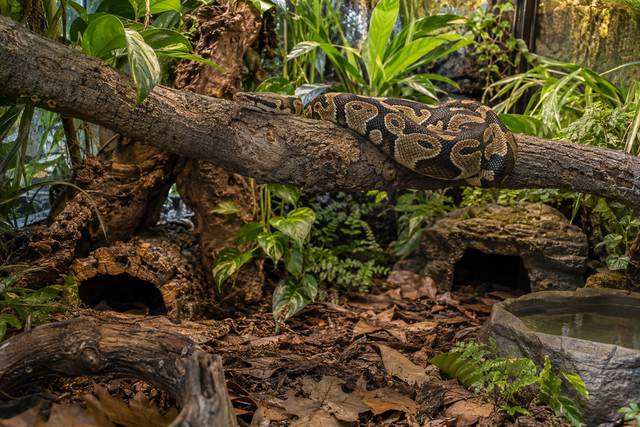
Piebald
Gene
Author: Elliott Garber, DVM · Published
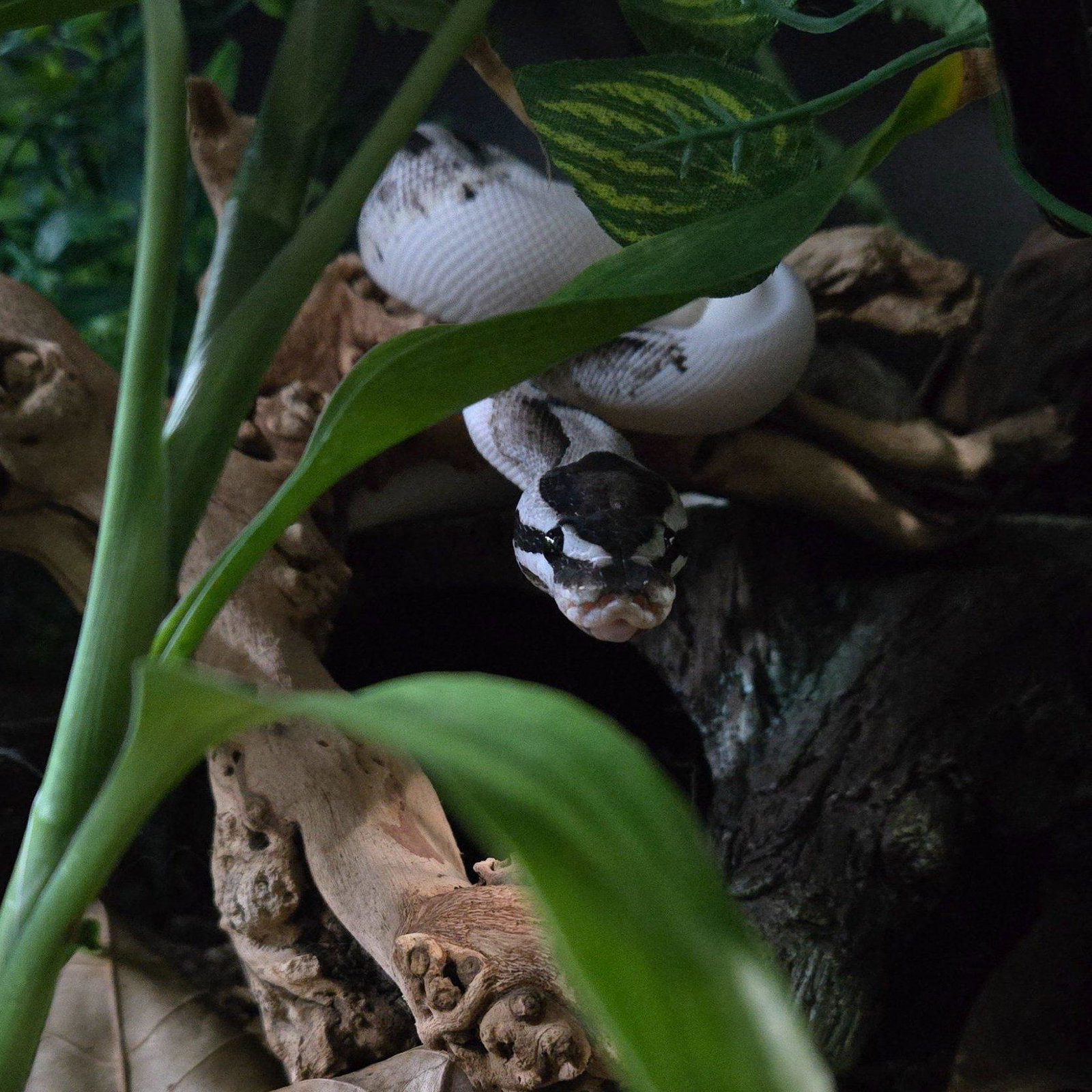
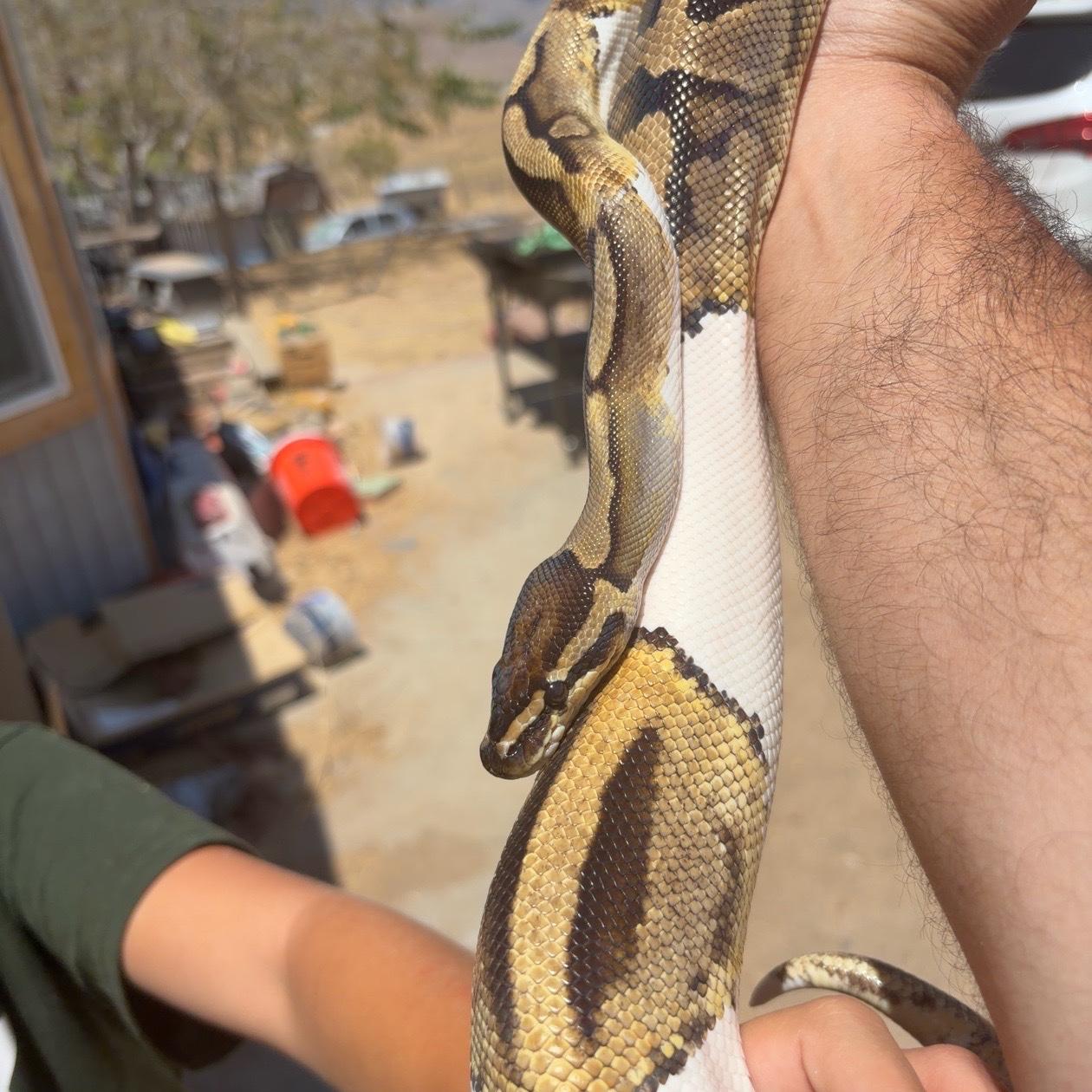
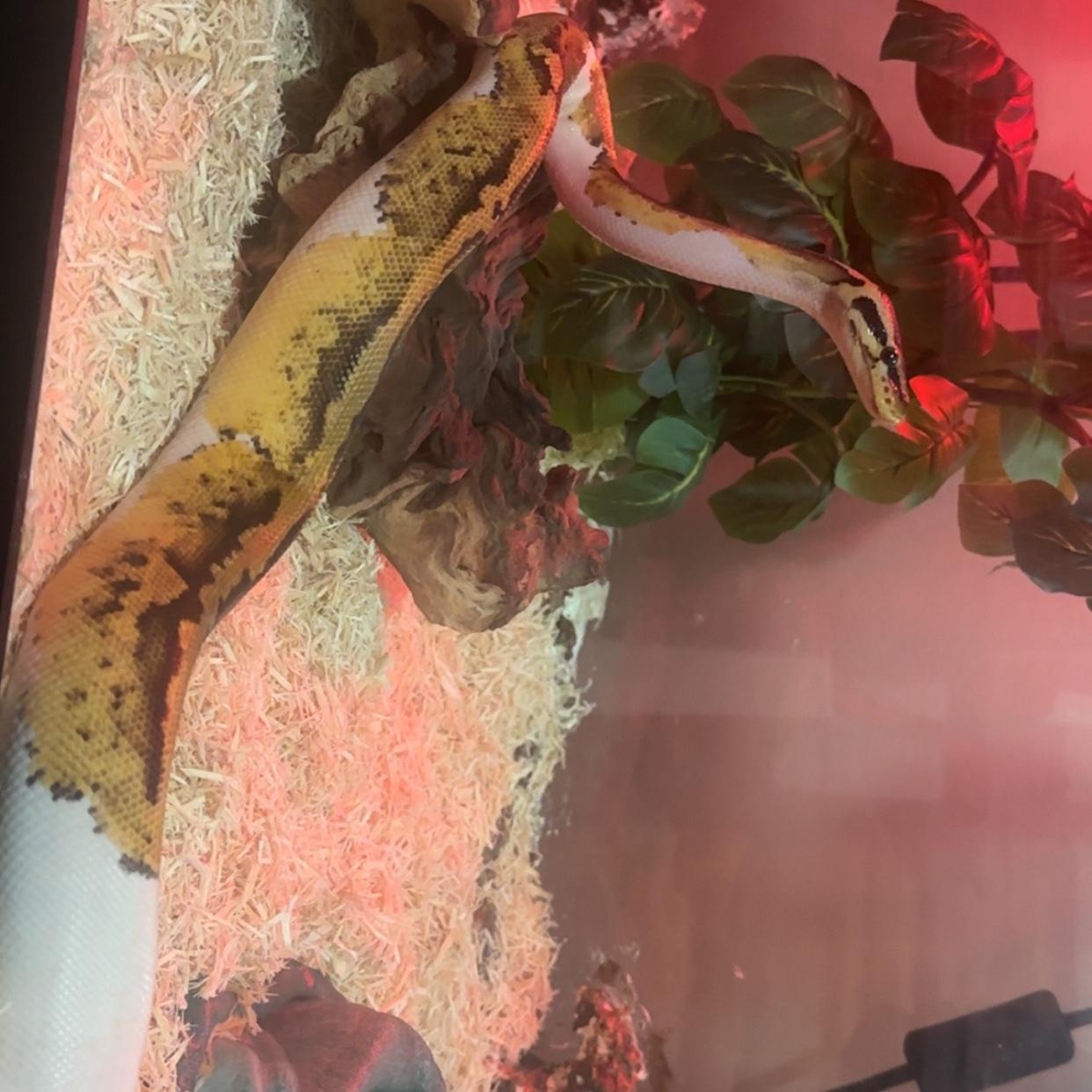
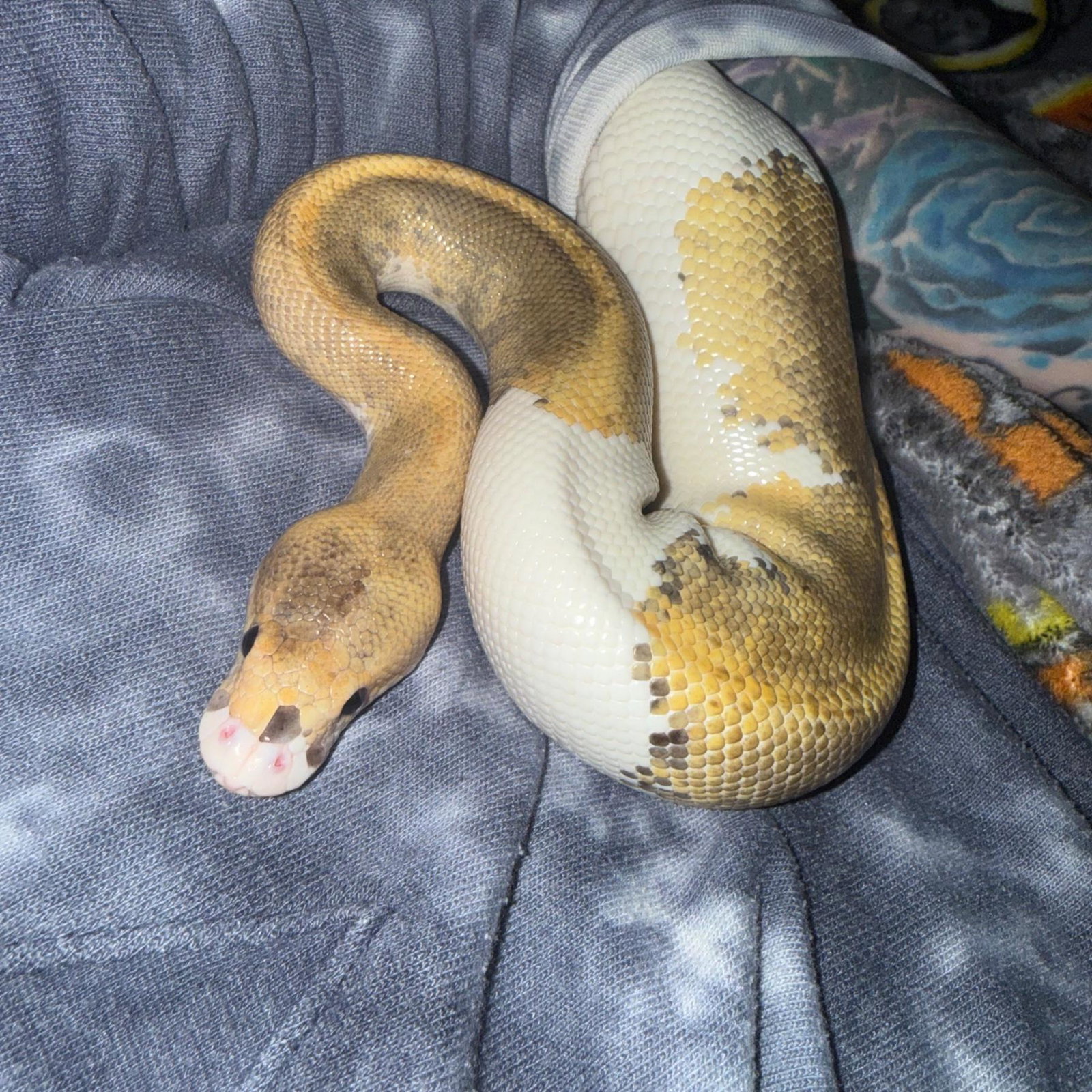
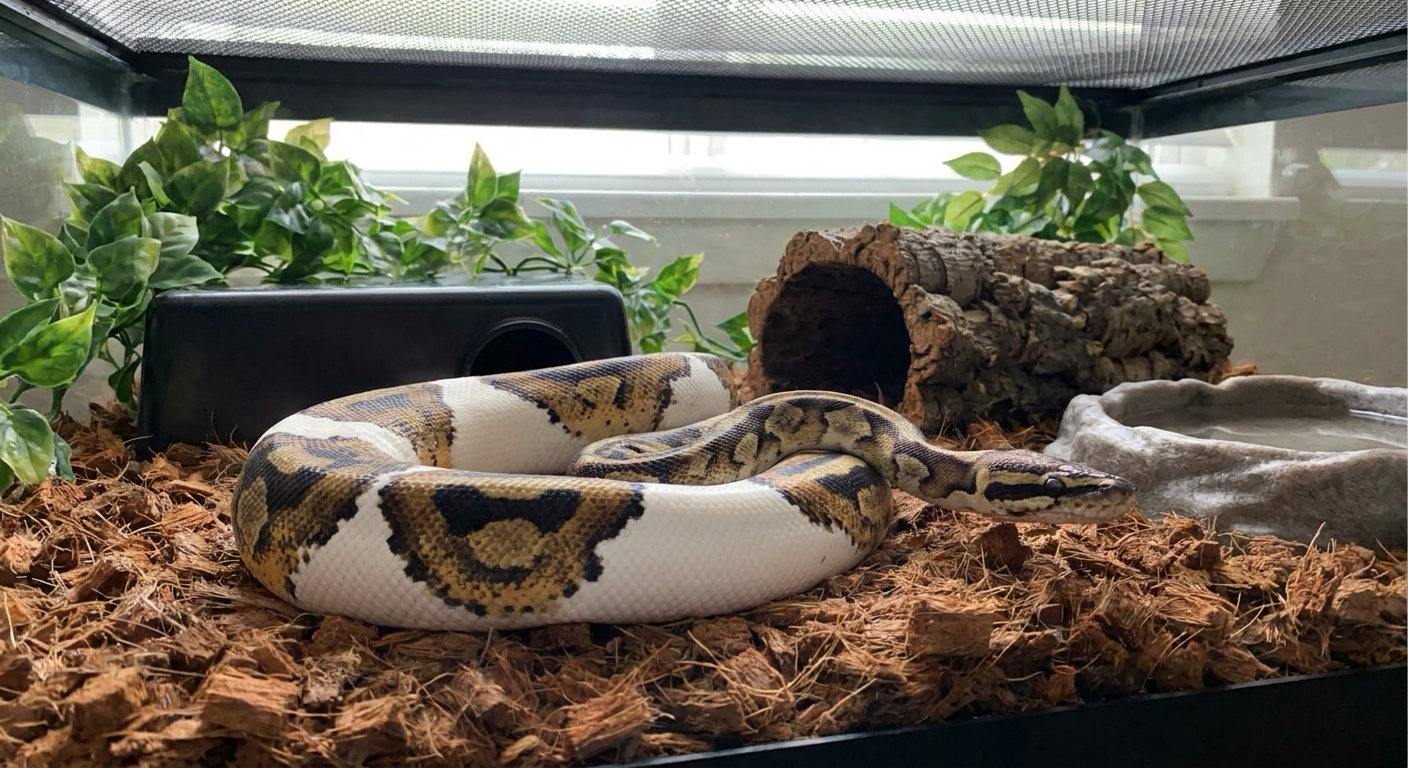
A piebald ball python, usually shortened to pied, is a Python regius with patches of unpigmented white skin breaking up an otherwise normal ball python pattern. It is a recessive morph: a snake has to inherit the gene from both parents to look piebald, and a snake carrying one copy (a het) looks normal. Piebald is one of the few ball python morphs with a published gene association, a variant in the tfec gene. Before you pay a premium for a het or plan a pairing, run the parents through the free ball python morph calculator, which shows the odds per egg from the genes you enter. It predicts outcomes; it cannot tell you what a particular snake actually carries.
| Species | Python regius, the ball or royal python |
|---|---|
| Type | Color and pattern morph, not a separate species or breed |
| Look | Unpigmented white patches beside normally patterned areas; the amount of white varies |
| Inheritance | Recessive: a visual pied has two copies, a het has one and looks normal |
| Gene association | Nonsense variant in tfec (Garcia-Elfring and colleagues, Current Biology, 2023) |
| Het x het odds | 1 in 4 eggs piebald, on average |
| Care | Standard ball python husbandry; the white skin does not change it |
| Lifespan | Can live longer than 20 years in captivity (RSPCA) |
Browse listings, public profiles, breeders, or add your animal.
What a piebald ball python looks like
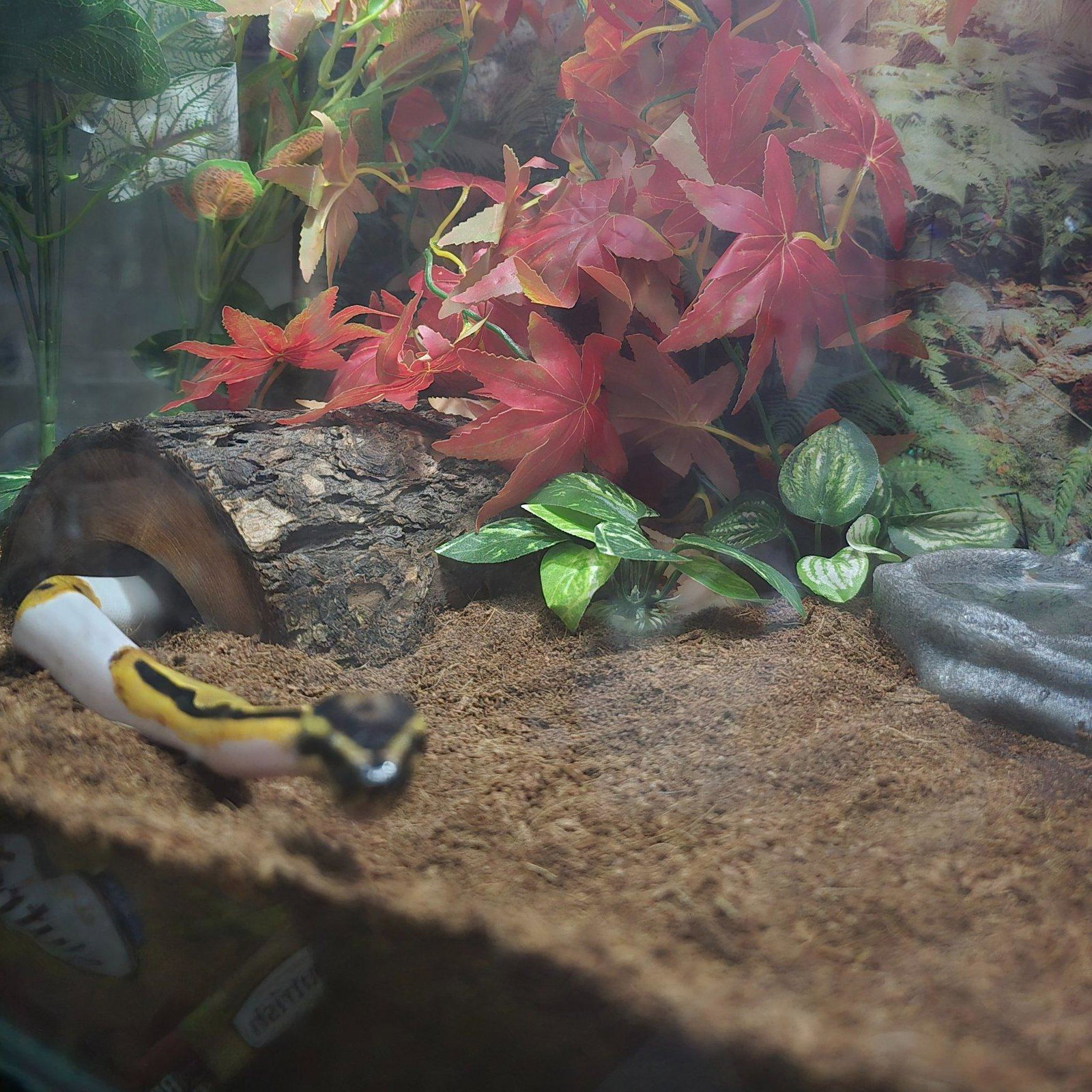
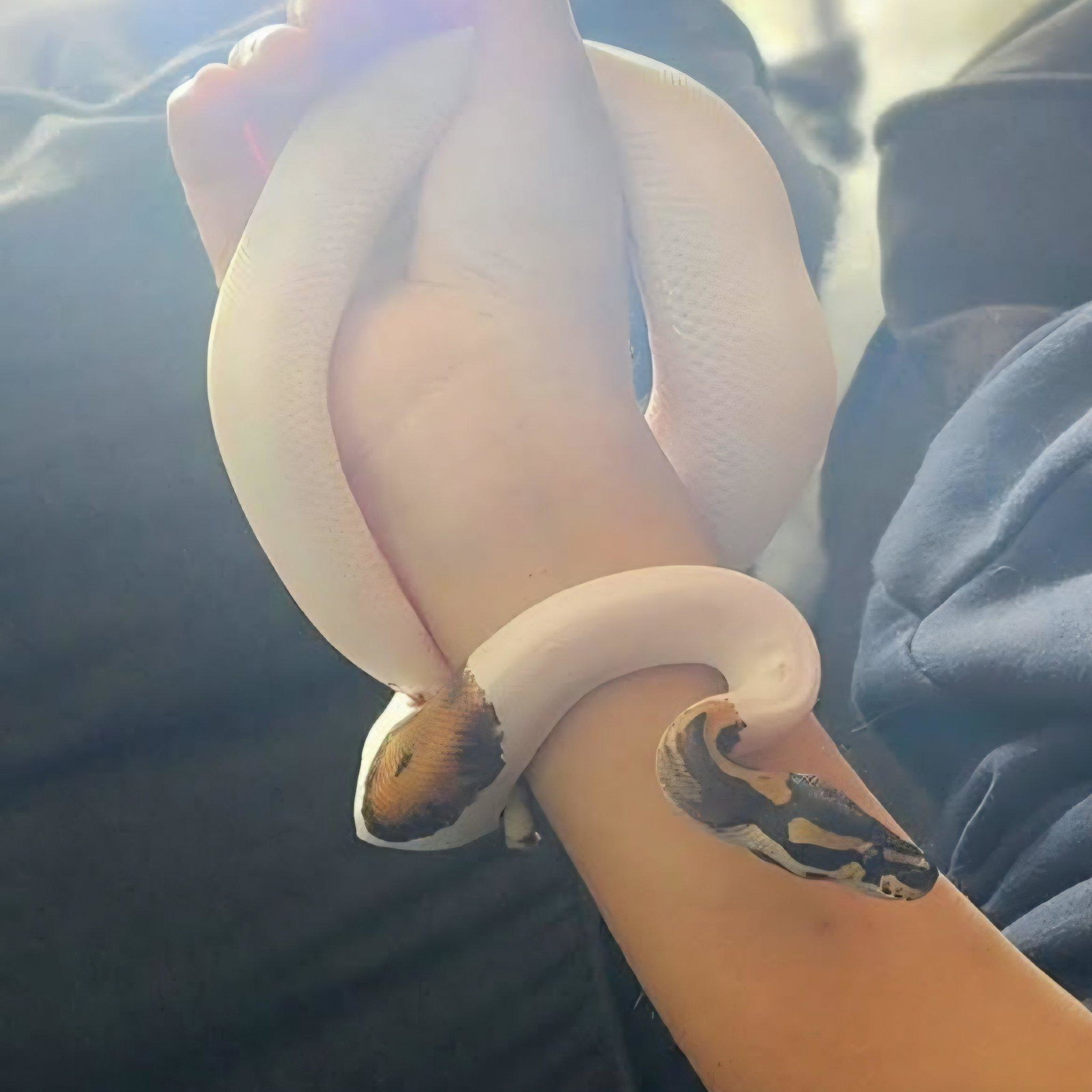
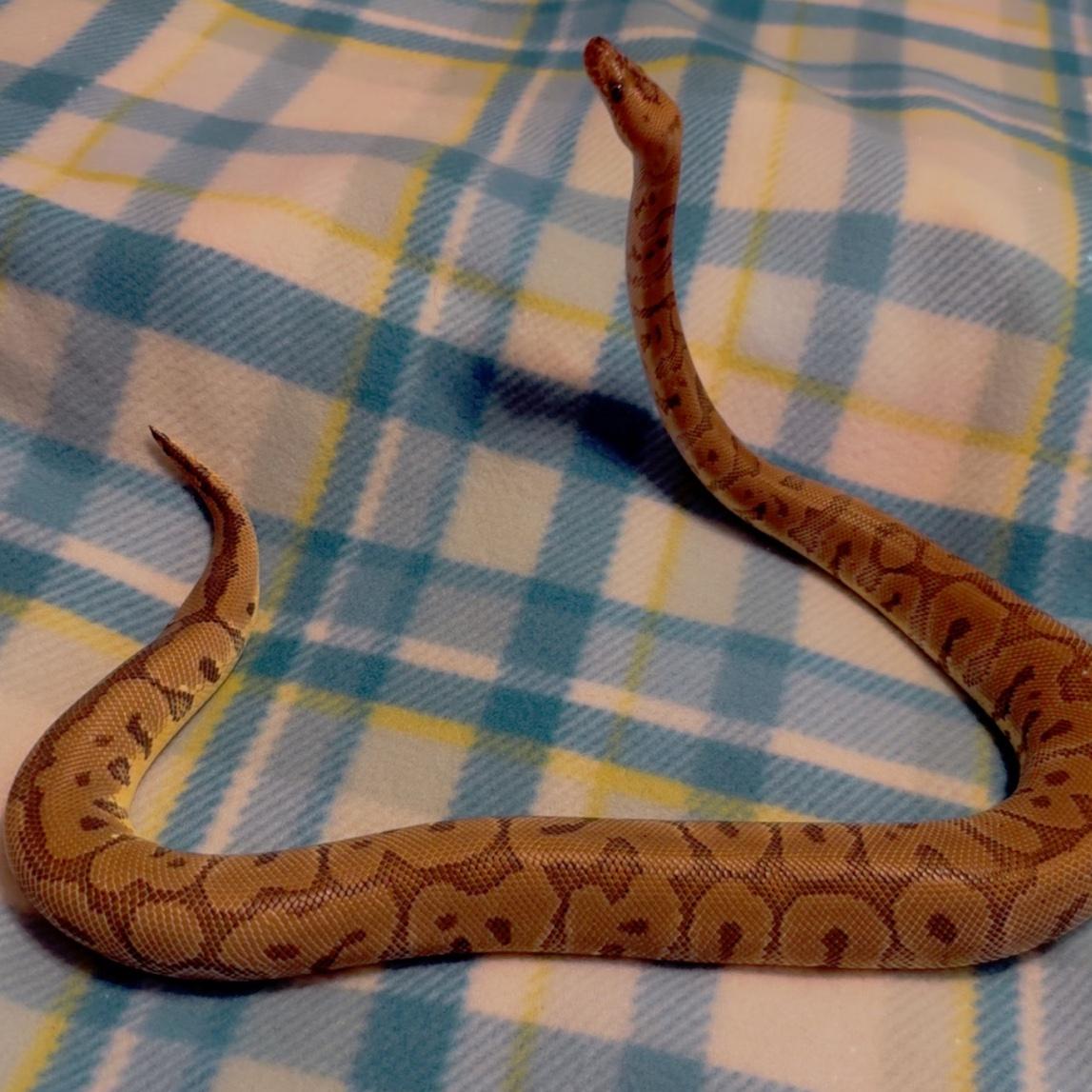
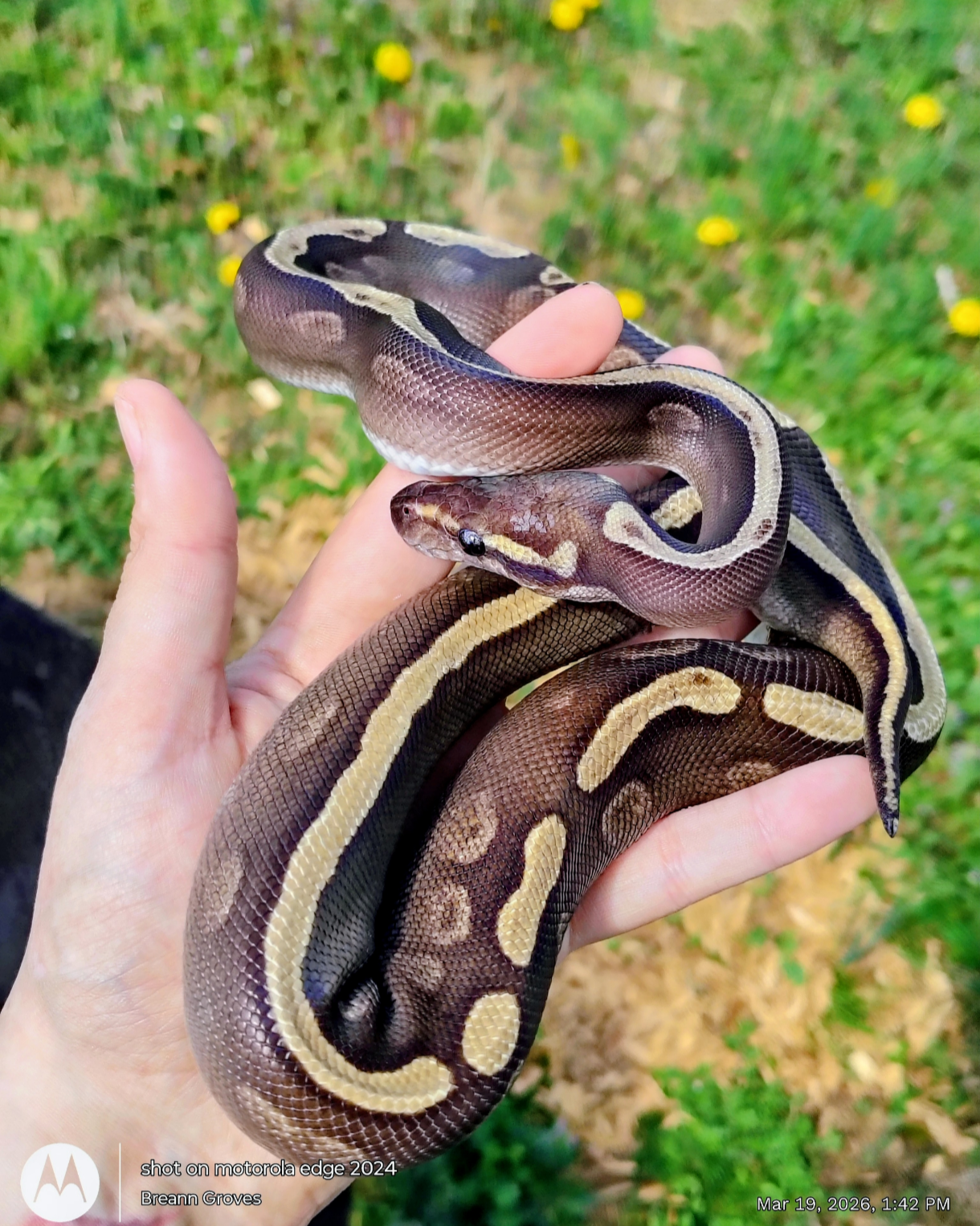
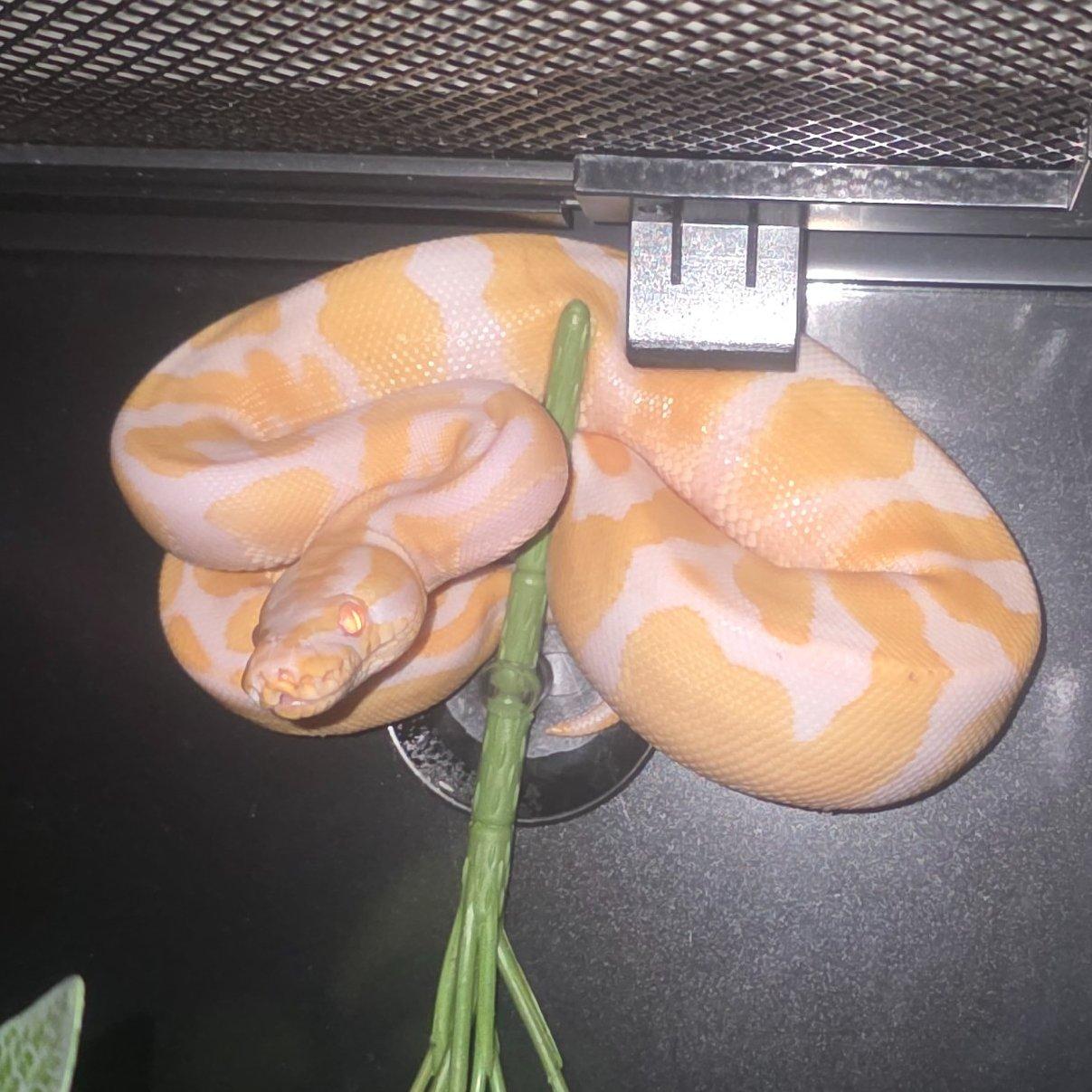
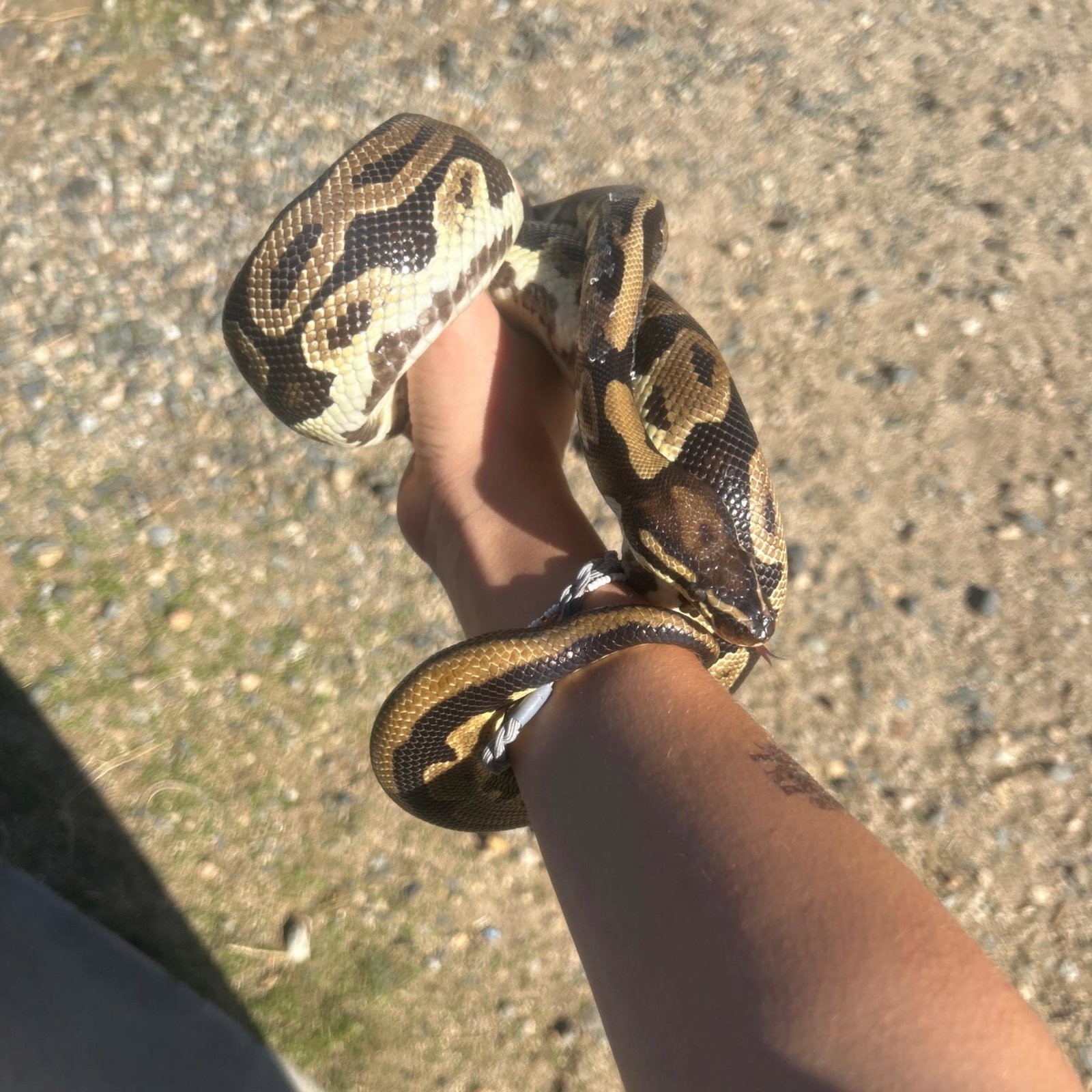
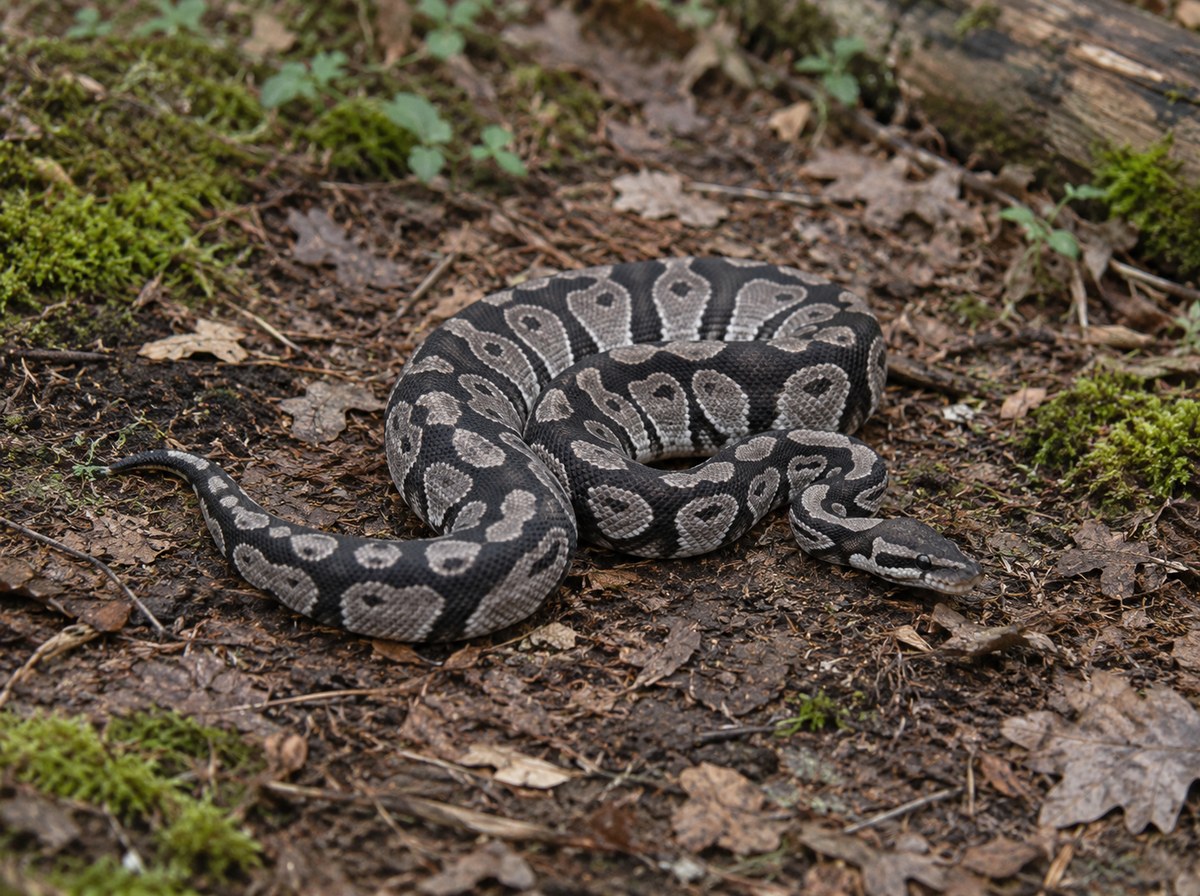
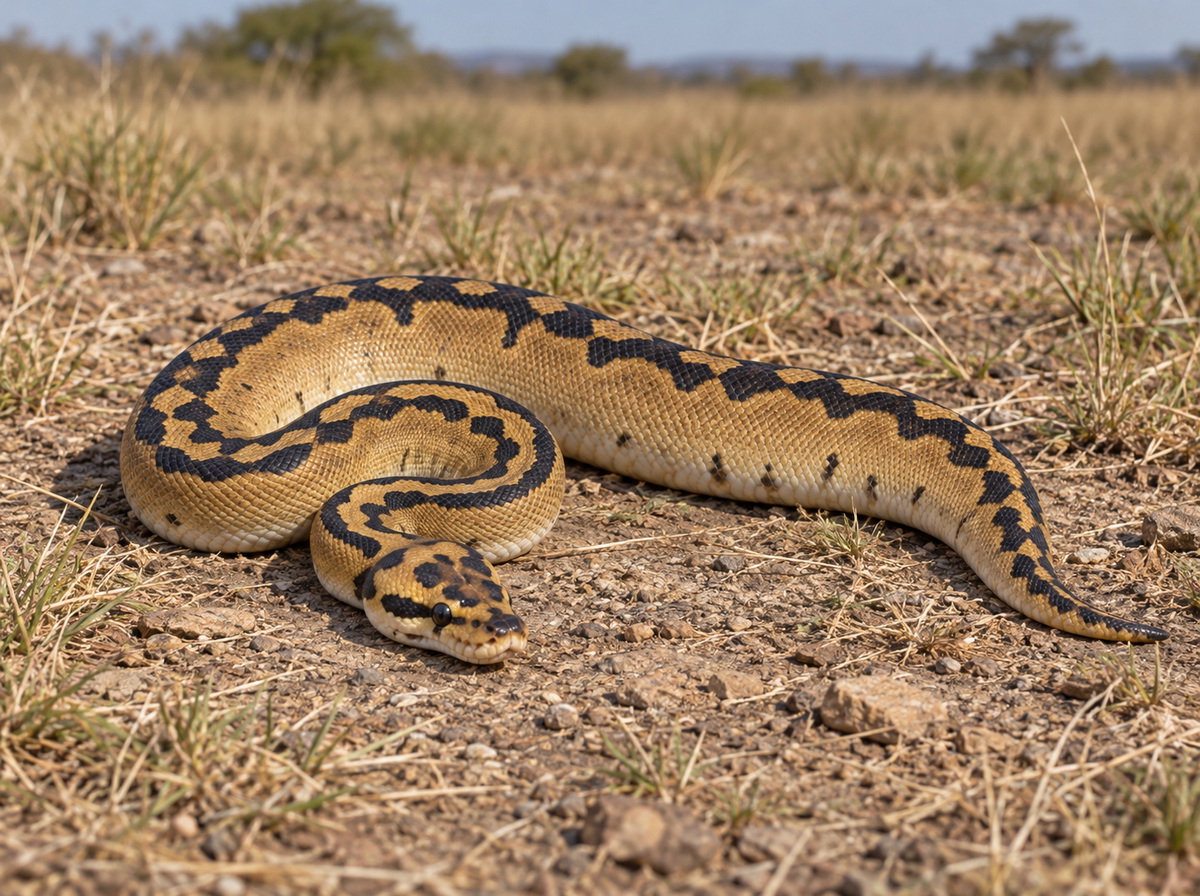
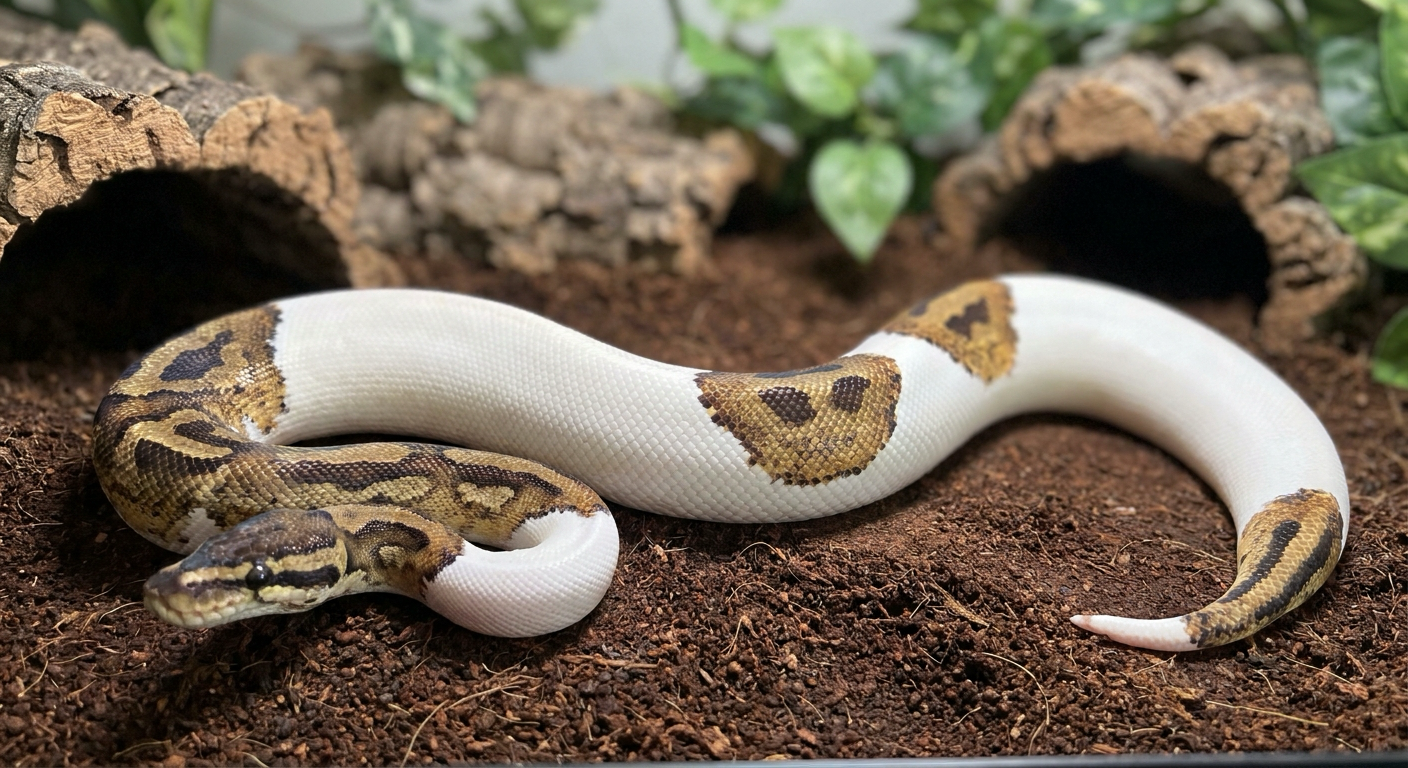
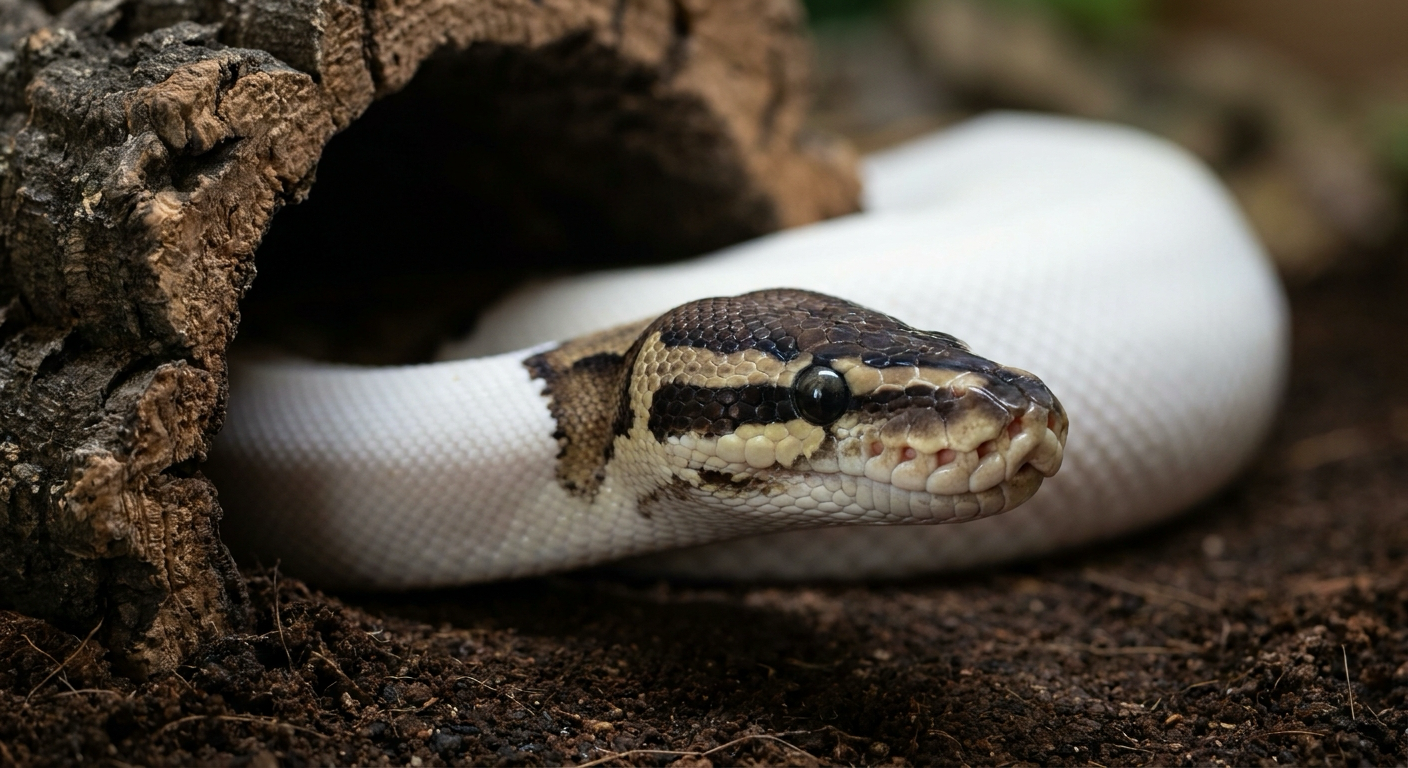
A pied keeps the ball python’s body plan: a heavy, muscular body, a broad head and small heat pits along the lips. What changes is the skin. Parts of the body have no pigment at all and read as clean, bright white, and the rest shows ordinary ball python pattern, the dark brown and golden blotches of a normal, or the colors of whatever other morphs the snake carries. The head and neck often keep their pattern, with the white starting behind them.
How much white a pied shows varies a lot. Some have a few white bands across the body; others are mostly white with a handful of patterned islands. Sellers often describe them as “high white” or “low white”. Those are descriptions, not separate genes, and there is no published standard for where one ends and the other begins.
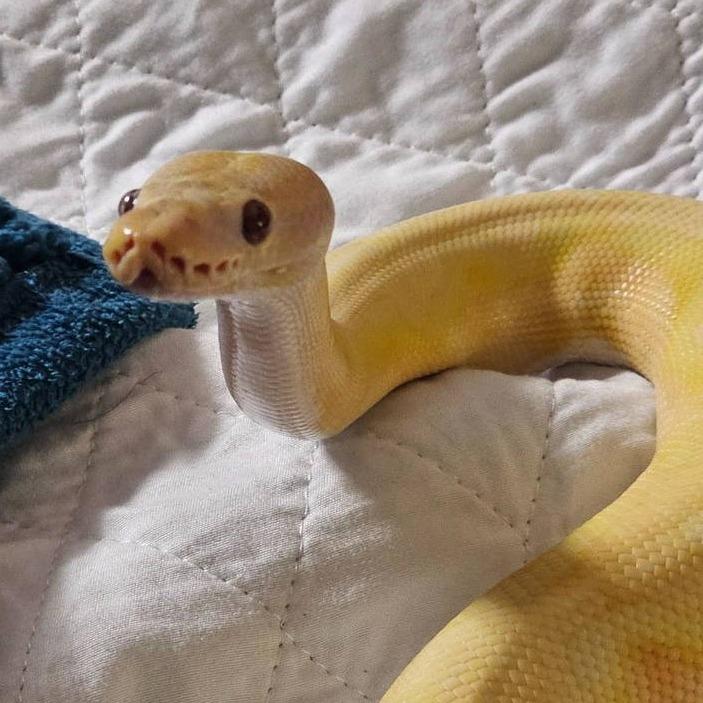
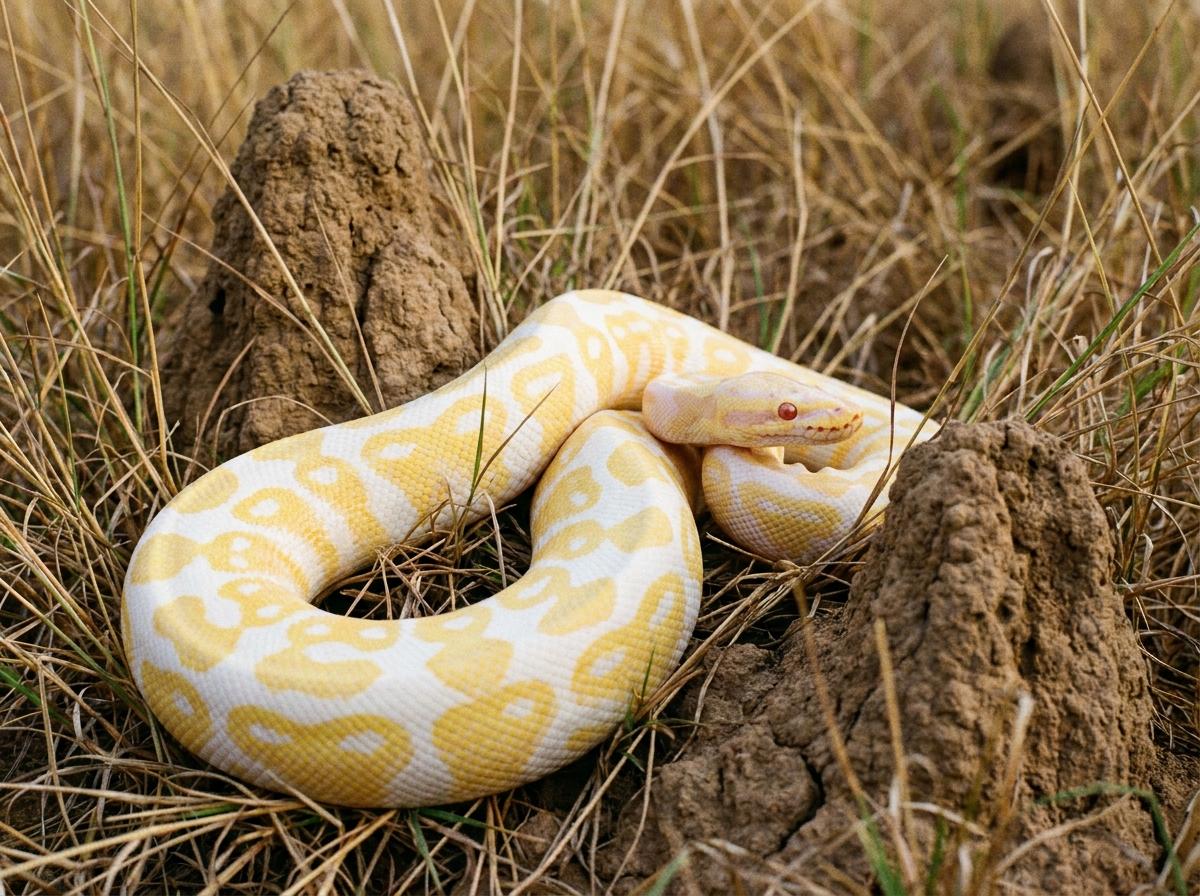
Piebald is not albino and not leucistic. The white areas lack pattern, but the eyes and the patterned sections keep normal pigment unless other genes are involved. A white snake with red or pink eyes, or one that is white from nose to tail with blue eyes, is a different genetic route; the blue-eyed leucistic ball python guide and the Ivory guide explain two of them. Compare morphs side by side on the ball python species page.
Piebald genetics: recessive, with a known gene
In 2023, Garcia-Elfring and colleagues, from McGill University and the University of Georgia, published the first gene association for the morph. Working from shed skin that breeders supplied, they compiled ten years of clutch records from one commercial breeder and found the proportion of piebald hatchlings consistent with a recessive Mendelian trait. Whole-genome sequencing then pointed to a nonsense mutation in tfec, a gene for a transcription factor involved in pigment cell development, and gene editing of tfec in brown anole lizards changed their coloration (Current Biology paper, full text on PubMed Central). The study answers why pied is recessive. It does not provide a commercial genetic test for buyers, and it does not explain why one pied is mostly white and its clutchmate is not.
Recessive inheritance gives three kinds of snake:
- Visual piebald. Two copies. It shows the white patches.
- Het piebald. One copy. It looks like whatever else it carries, and passes the gene to half its offspring on average.
- Possible het (pos het). A normal-looking snake whose parents make a het likely but not certain. When two hets are paired, two out of three of the normal-looking babies are expected to carry the gene, which is why sellers label them “66% possible het”.
Average odds per egg for the common pairings:
- Het x het: 1 in 4 piebald, 1 in 2 het, 1 in 4 carrying no pied.
- Piebald x het: 1 in 2 piebald, the rest het.
- Piebald x normal (non-carrier): no visual pieds, every baby het.
- Piebald x piebald: every baby piebald.
Those are odds per egg, not promises per clutch, so a real clutch from two hets can hatch with no pieds or with several. The ball python morph calculator does this arithmetic for real pairings, including multi-gene snakes, possible hets and named combinations, and it flags sourced health notes for any gene that has them. Use it before you buy a “66% het” as a breeder, and read using the ball python morph calculator for how it treats possible hets. A result is a prediction from the genes you type in; only breeding results or a test can show what a snake carries.
Keepers sometimes point to small belly marks or odd pattern breaks as signs that a normal-looking snake is a het. There is no published evidence that any marking identifies a het pied. A het claim rests on the parents and, ideally, on a proven breeding.
Piebald combinations
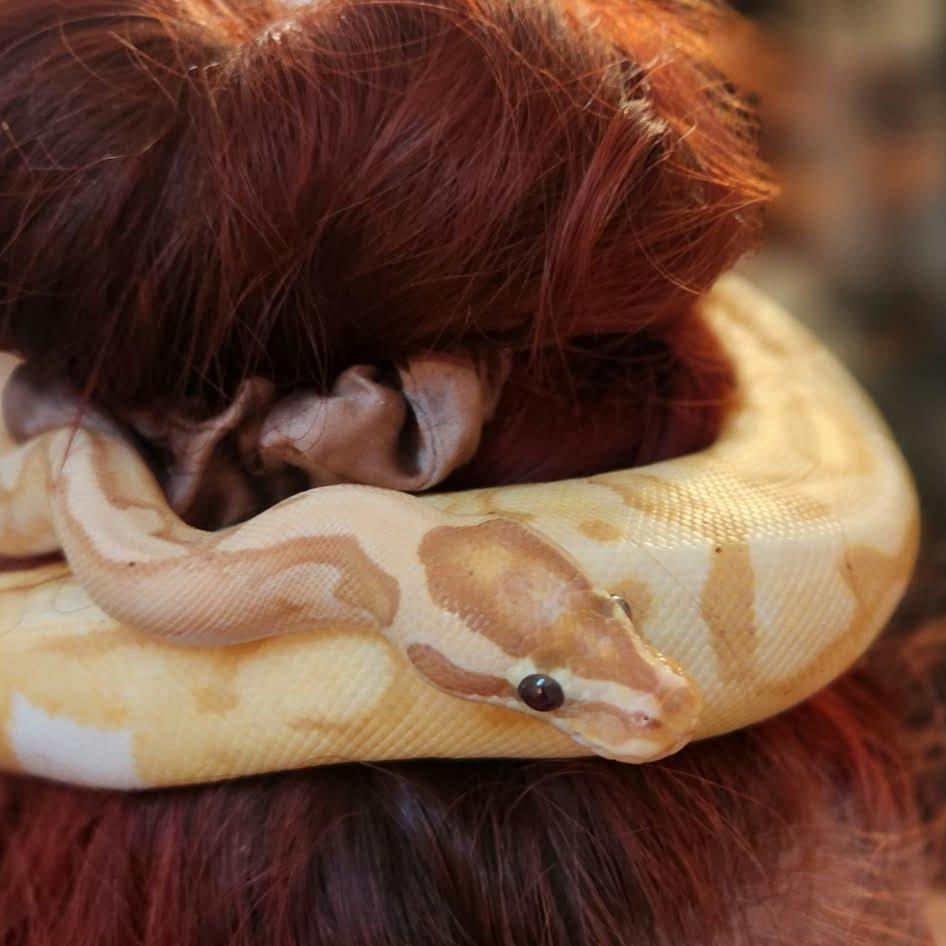
Because pied is recessive and works on top of other genes, it shows up in a great many combinations. The Current Biology paper itself pictures a banana piebald and a pastel piebald among its examples of captive-bred variation. A banana pied pairs pied white with Banana’s yellow and lavender in the patterned areas, which is why the same white can sit beside very different colors.
Every added gene is another claim to check. Ask which genes are visual, which are het and which are only possible, and record each one separately. Some genes common in combinations carry welfare questions of their own, such as the neurological wobble linked to Spider and related genes, which the Bumblebee guide covers. Piebald itself has no widely documented health problem in the published sources we checked, but a combination is only as sound as each of its parts. The ball python morphs guide explains het terms and welfare checks across the species.
Care: a pied is a ball python first
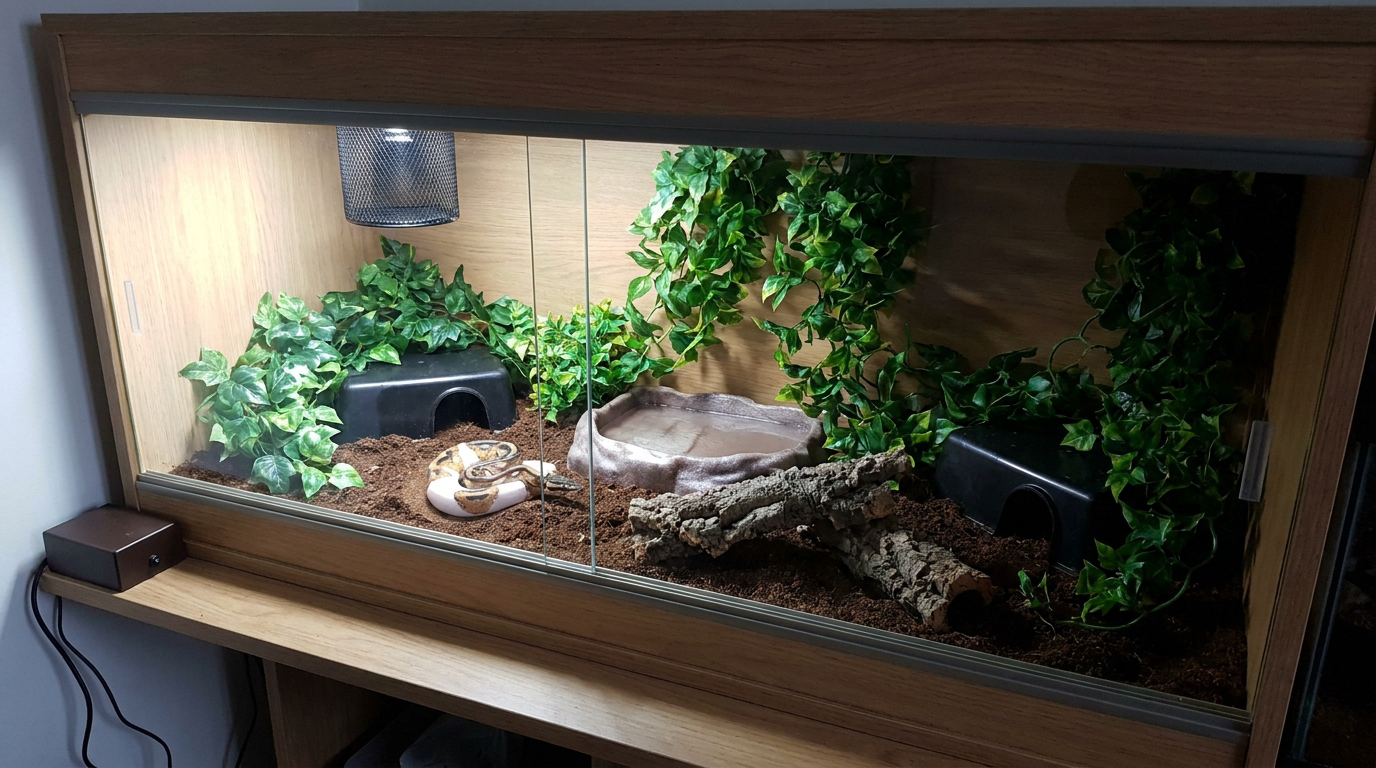
White skin does not change what the snake needs. The RSPCA’s royal python guidance is a clear reference:
- Space. The vivarium should be at least as long as the snake, with width and height each at least one third of its length, so a 120 cm snake needs at least 120 by 40 by 40 cm. Adults can reach around 150 cm. Hatchlings can start smaller and move up.
- Heat. A guarded basking zone of 30 to 32 C and a cool end of 24 to 26 C, every heat source on a thermostat, and temperatures checked at snake level at both ends. Never use a heat rock: the Merck Veterinary Manual says they frequently cause burns.
- Humidity. Normally 50 to 60 percent at the cool end, raised to around 80 percent at times and allowed to drop in between, with ventilation so the enclosure does not stay wet.
- Light. A 12 hour day. RSPCA recommends a low-output UVB tube with a maximum UV index of 1.0 at the basking spot. It gives albinos as an example of morphs that need a lower maximum of 0.7 and does not list the others. A pied has large unpigmented areas, so ask a reptile vet which limit to use.
- Furnishing. Several snug hides at both ends, including one humid hide with damp moss, organic reptile soil rather than sand, and sturdy branches.
- Company. Royal pythons are solitary and should be housed alone.
The ball python care guide goes deeper on setup, humidity and shedding, and the ball python lifespan guide explains why a hatchling bought today can still be with you in twenty years.
Feeding and shedding records
RSPCA describes feeding young snakes every five or six days and adults every 7 to 14 days depending on weight, on frozen-thawed prey slightly wider than the widest part of the snake, and weighing the snake regularly. Merck’s snake nutrition chapter recommends thawing prey under refrigeration and not handling for three days after a meal. White areas make shedding easy to watch: a healthy snake sheds in one piece, and retained eye caps need a reptile vet. Log each meal, refusal, weight and shed, and use the ball python feeding and shed log for how to record events without guessing at their cause.
Health and hygiene
Merck’s owner guidance says no vaccinations are required for reptiles, that an initial exam soon after you get the animal establishes a record of it in healthy condition, and that an annual check helps confirm it is well nourished and free from disease and parasites. Find a reptile vet before you need one; how to find a reptile vet walks through it. If you keep other reptiles, Merck recommends quarantining new arrivals for 3 to 6 months.
RSPCA lists the signs to act on: weight loss or diarrhea that may mean parasites, a snake spending long periods in its water that may mean mites, and whistling, gasping or reaching the head upward that may mean a respiratory infection. A sudden refusal to feed is a reason to call a reptile vet. Do not attempt force-feeding at home.
Reptiles and frozen feeder rodents can carry Salmonella while looking healthy, and freezing does not kill it. The CDC advises washing hands after handling the snake, its food or its equipment, and suggests another pet for households with children under 5, adults 65 and older or people with weakened immune systems.
Buying a piebald ball python
There is no published price index for pieds. Asking prices move with the amount of white, the other genes in the snake, its sex, its age and its feeding record, so treat any figure you see as one seller’s ask on one day. A normal-looking het costs less than a visual, and a possible het should cost less than a proven het. For dated store prices, rescue fees, setup and lifetime running costs, see how much a ball python costs.
Ask the seller:
- Is the pictured snake the one for sale, and when was the photo taken?
- What are its hatch date, sex and parents’ identities?
- Which genes are visual, which are proven het and which are only possible het? How was any het proven?
- Is it eating frozen-thawed prey reliably, and can I see the last several feedings and weights?
- Any history of retained shed, mites, regurgitation or respiratory signs?
- What are the terms if the snake arrives unwell?
If you are choosing between recessive projects, the in-batch guides to clown ball pythons and axanthic ball pythons cover two more. Once the snake is home, the ball python name generator has ideas, and the pedigree chart maker prints a three-generation chart from the seller’s records.
Frequently asked questions
Is a piebald ball python a different species?
No. It is a Python regius with a recessive color and pattern morph. Its housing, feeding and lifespan are those of any ball python.
How can two normal-looking ball pythons produce a piebald?
If both are hets, each egg has a 1 in 4 chance of being piebald. The parents look normal because one copy of a recessive gene does not show.
Can you tell a het pied by looking at it?
No. There is no published marking that identifies a het. The parents’ genetics and proven breedings are the evidence.
Do piebald ball pythons have health problems because of the white skin?
The published sources we checked document no health problem specific to piebald. Combinations with other genes can carry their own warnings, so check each gene, and take any concern to a reptile vet.
Does the amount of white get passed on?
The tfec study explains the pied gene itself, not why the amount of white differs between snakes. Breeders select for high white, but no published study gives odds for it, so treat it as a tendency, not a prediction.
Do this next on Creatures
Get told when a pied is listed. Creatures has no ball python listings right now, so an alert is the way to hear about one. Set a piebald ball python listing alert and Creatures emails you when a matching snake is posted. No account needed to start. See saving searches and using your watchlist.
Check current listings. Browse piebald ball pythons on the marketplace, and confirm the individual snake, its records and the sale terms with the seller.
Add your snake. Create a free piebald ball python profile and record its morphs and genes, visual, het or possible het, on the profile. No account needed to start. The steps are in adding an animal to Creatures and recording your animal’s morphs and genes.
Log meals, weights and sheds. Add a feeding, weight or shed record. The sheet opens for visitors; a free account saves it. See adding a record and setting up feeding and logging feedings.
Find breeders. Search the breeder directory by species and state. A listing is a starting point, not a health certification or a guarantee of current stock.
Breed pieds? Create a free breeder profile so buyers looking for ball pythons can find you. No account needed to start. Read creating an organization.