Bumblebee
Combination
Author: Elliott Garber, DVM · Published
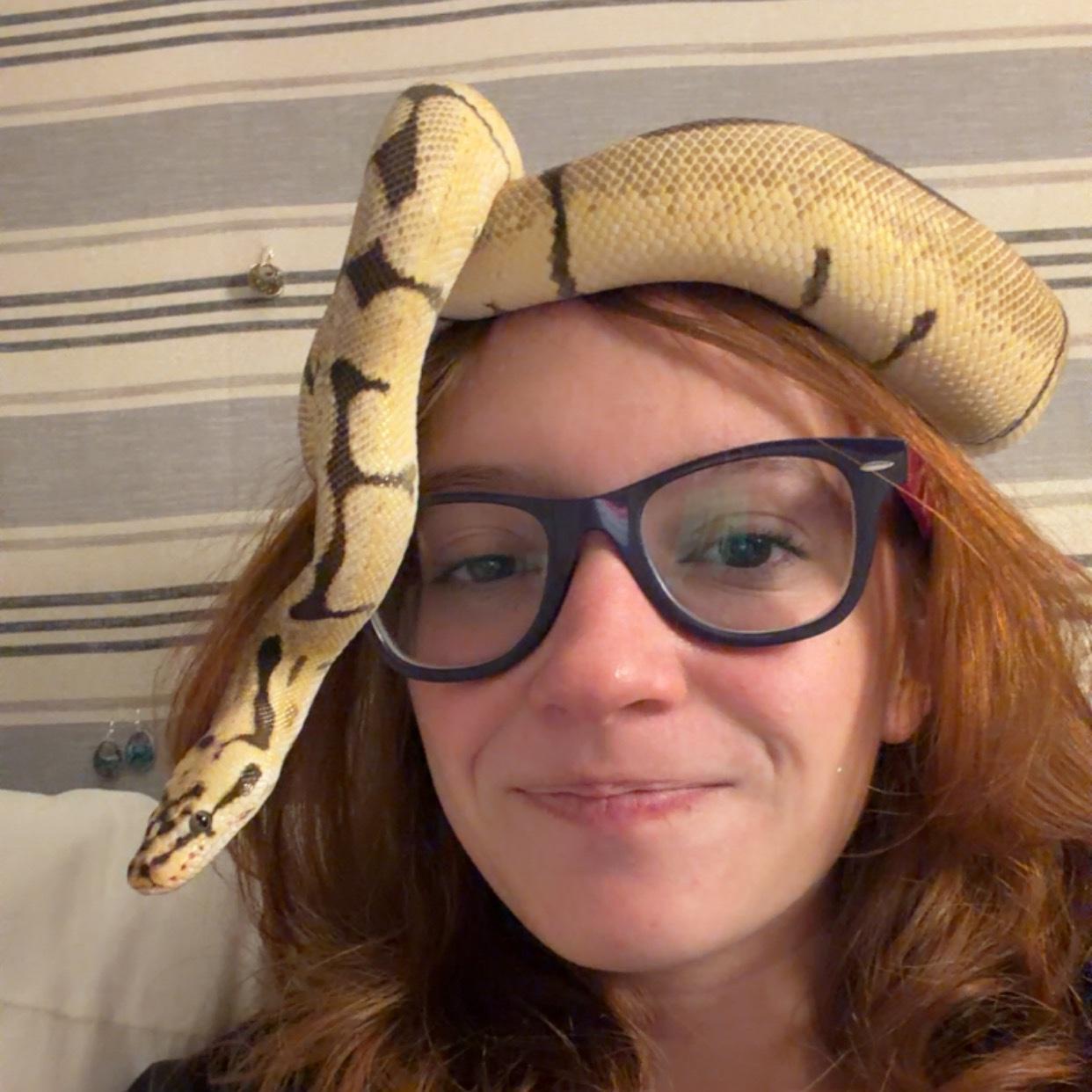
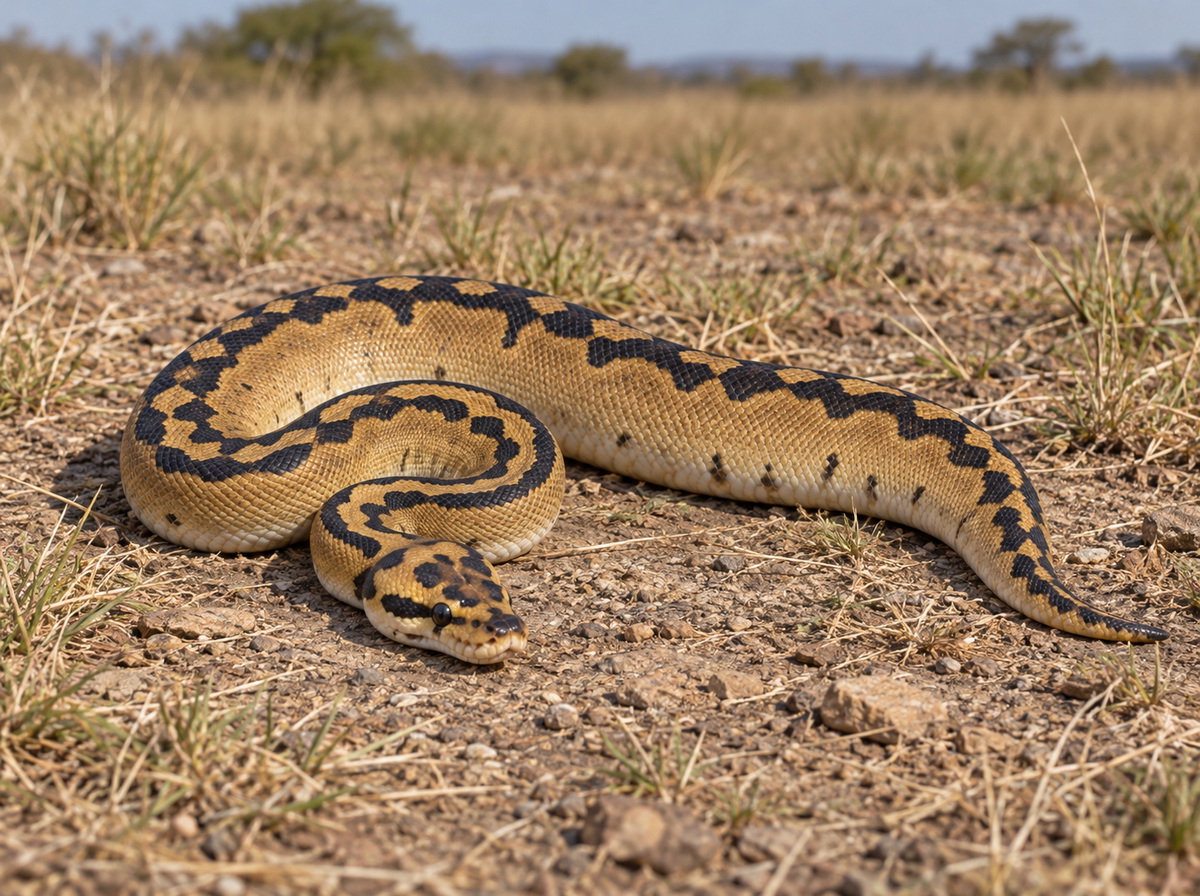
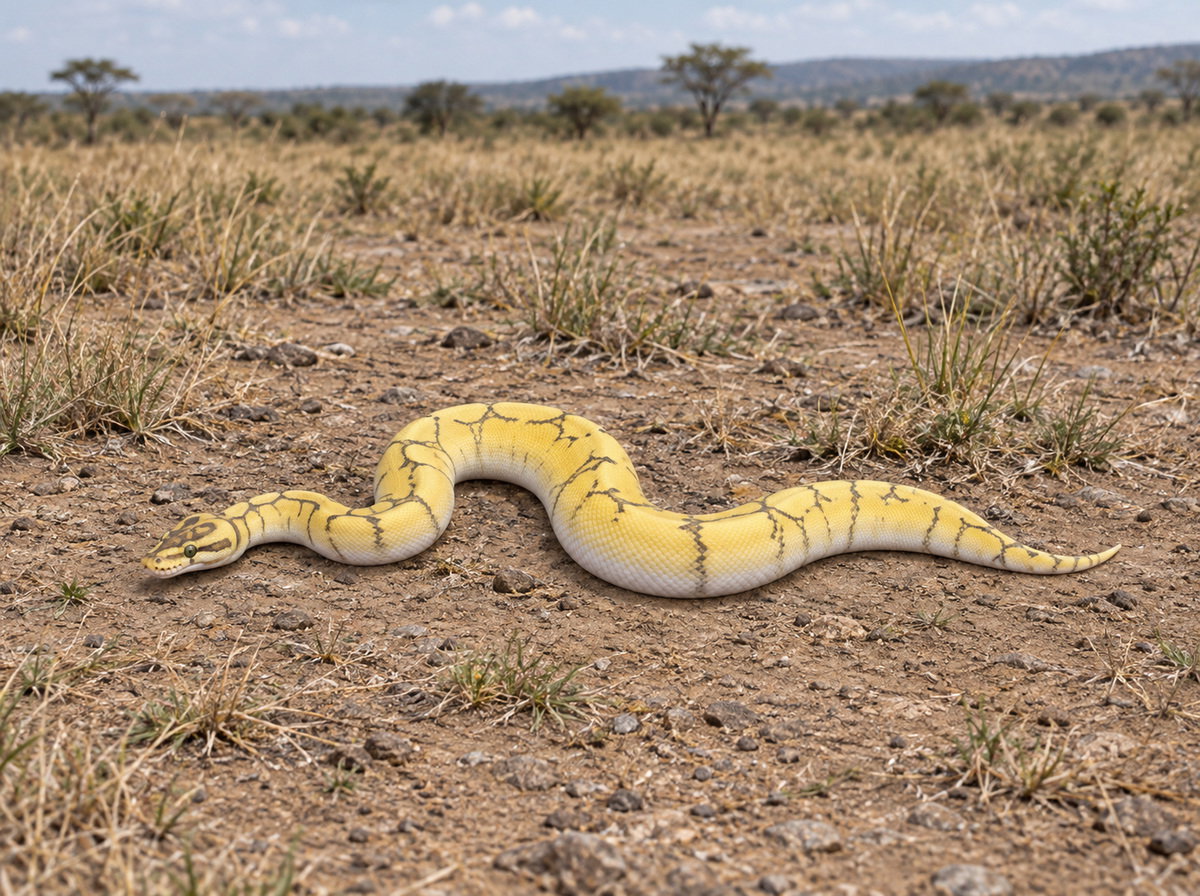
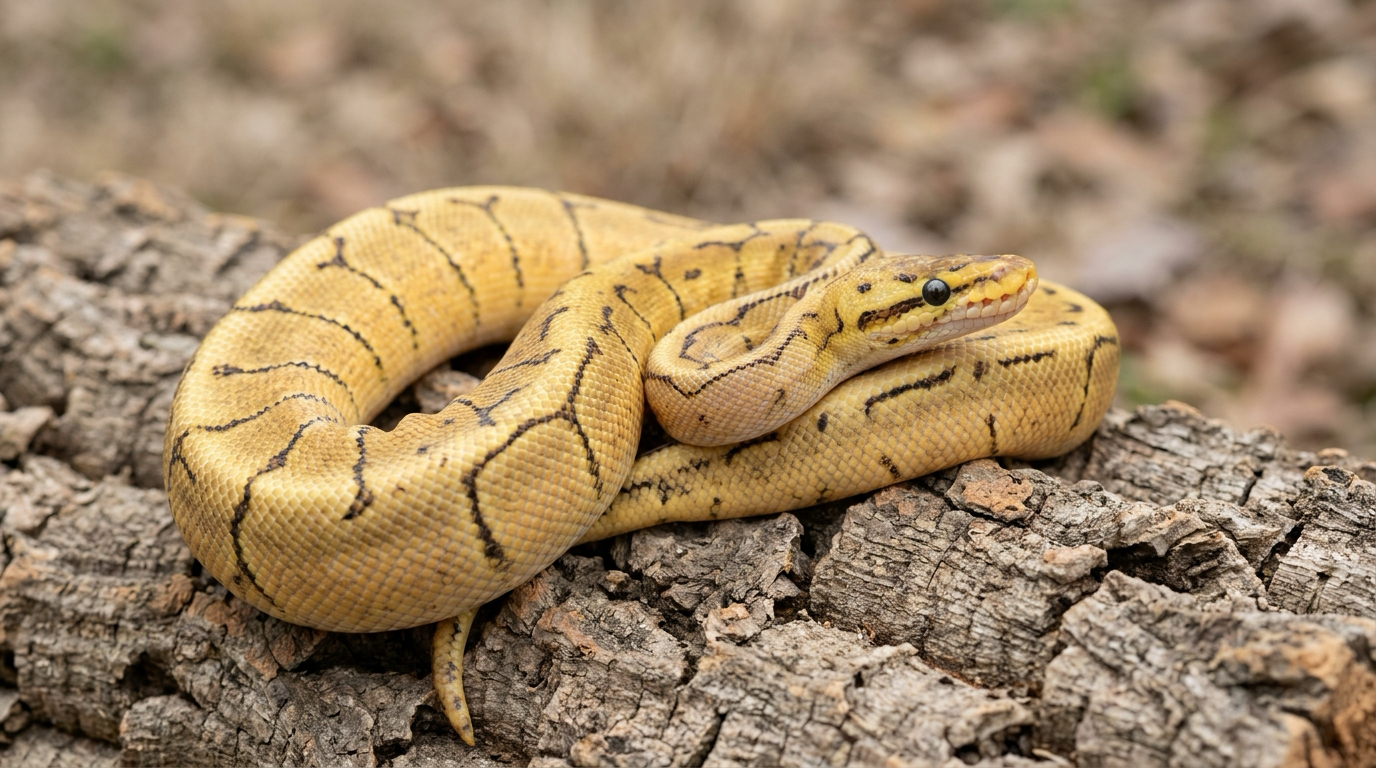
A bumblebee ball python is not a separate breed or a single gene. It is a hobby name for a ball python that carries two visible morph genes at once: Pastel and Spider. Pastel pushes the yellow, Spider breaks the pattern into thin dark lines, and together they give the bright yellow and black snake the name describes.
That combination comes with a cost every buyer should hear before the price. Spider is the morph that published research ties to the neurological “wobble” in ball pythons, and a bumblebee carries Spider. Researchers have linked the wobble to malformed inner ear structures in spider morph snakes, so this is a welfare question about the individual animal, not a cosmetic quirk. Below you will find how the genetics work, what a bumblebee looks like next to its look-alikes, what the research says about wobble, what clutches from common pairings produce, how to care for one, and how to buy with your eyes open.
If you already keep one, you can start a free bumblebee ball python profile with no account needed to start, and keep its parents, feeding and shed history in one place. If you are looking for one, there are no bumblebee listings on the Creatures marketplace as of October 2026, so a free listing alert (further down) is the practical way to hear when one is posted.
| Species | Ball python (royal python), Python regius |
|---|---|
| What the name means | A combination morph: at least one Pastel gene plus one Spider gene |
| First produced | 2001, according to the World of Ball Pythons morph database |
| Typical look | Bright yellow with a heavily reduced, broken black pattern |
| Main welfare concern | Spider is linked to the wobble, a balance problem tied to inner ear malformation |
| Pastel x Spider pairing | About one egg in four is a bumblebee, on average |
| Care | Same as any ball python: warm end 30 to 32°C, cool end 24 to 26°C (RSPCA) |
| Lifespan | Can exceed 20 years in captivity (RSPCA) |
Browse listings, public profiles, breeders, or add your animal.
What a bumblebee ball python is
Every ball python carries two copies of each gene, one from each parent. A morph name describes what a snake looks like because of the gene copies it carries. Some names stand for one gene, such as Pastel or Spider. Others, called designer or combination morphs, are shorthand for several genes stacked in one snake. Bumblebee is one of these: the World of Ball Pythons morph database lists it under the entry “Pastel Spider (Bumble Bee)” as a designer morph first produced in 2001, credited to New England Reptile Distributors, the same breeder the database credits with the first Pastel (1997) and the first Spider (1999).
The two ingredients behave in a similar way, which is why the combination is so easy to produce.
- Pastel. One copy is enough to show. World of Ball Pythons classes Pastel as incomplete dominant, meaning two copies give a stronger version of the same change, sold as a super pastel. The database describes Pastels as having intense yellow color as babies that tends to turn browner with age.
- Spider. One copy is enough to show. Breeders commonly call Spider dominant, and World of Ball Pythons lists it as incomplete dominant. The database describes Spider as an extremely reduced pattern of faint black lines resembling a web, with white speckling coming up from the belly onto the sides.
You will often see these genes called “codominant” in sale listings. That is hobby shorthand rather than the textbook meaning of the word, and the blue-eyed leucistic ball python guide explains the difference in detail. For a bumblebee, the practical point is simple: the snake needs at least one copy of Pastel and one copy of Spider, and it shows both.
One thing to set aside early: neither gene has been mapped in published, peer-reviewed research that we could find. The genetics studies on pet ball pythons so far have identified variants behind morphs such as Albino, Lavender Albino, Ultramel and the Yellow Belly series that produces the Ivory, but not Pastel or Spider. The inheritance rules above come from decades of breeding results in the hobby, which are strong evidence but not the same as a mapped gene.
What a bumblebee looks like, and its look-alikes
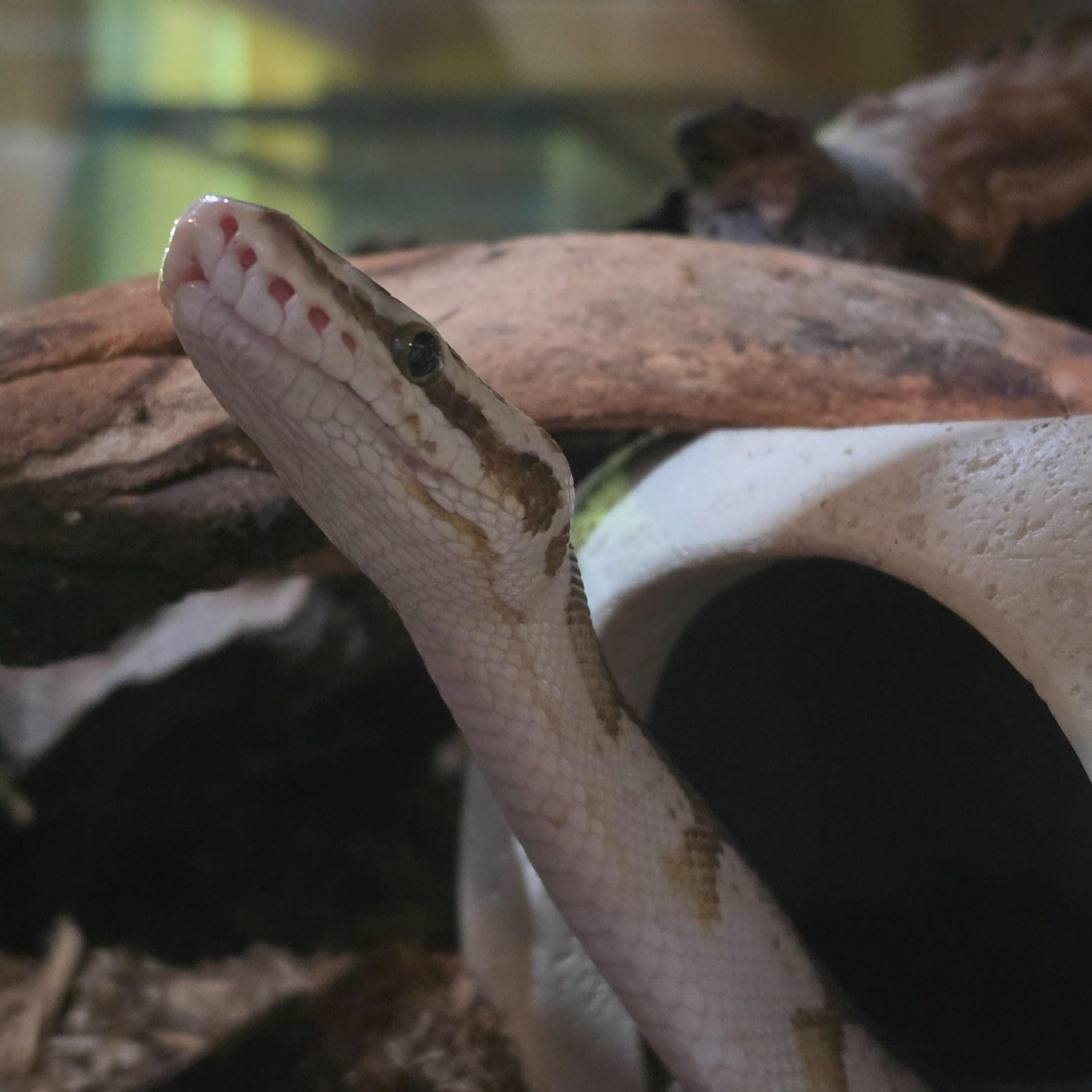
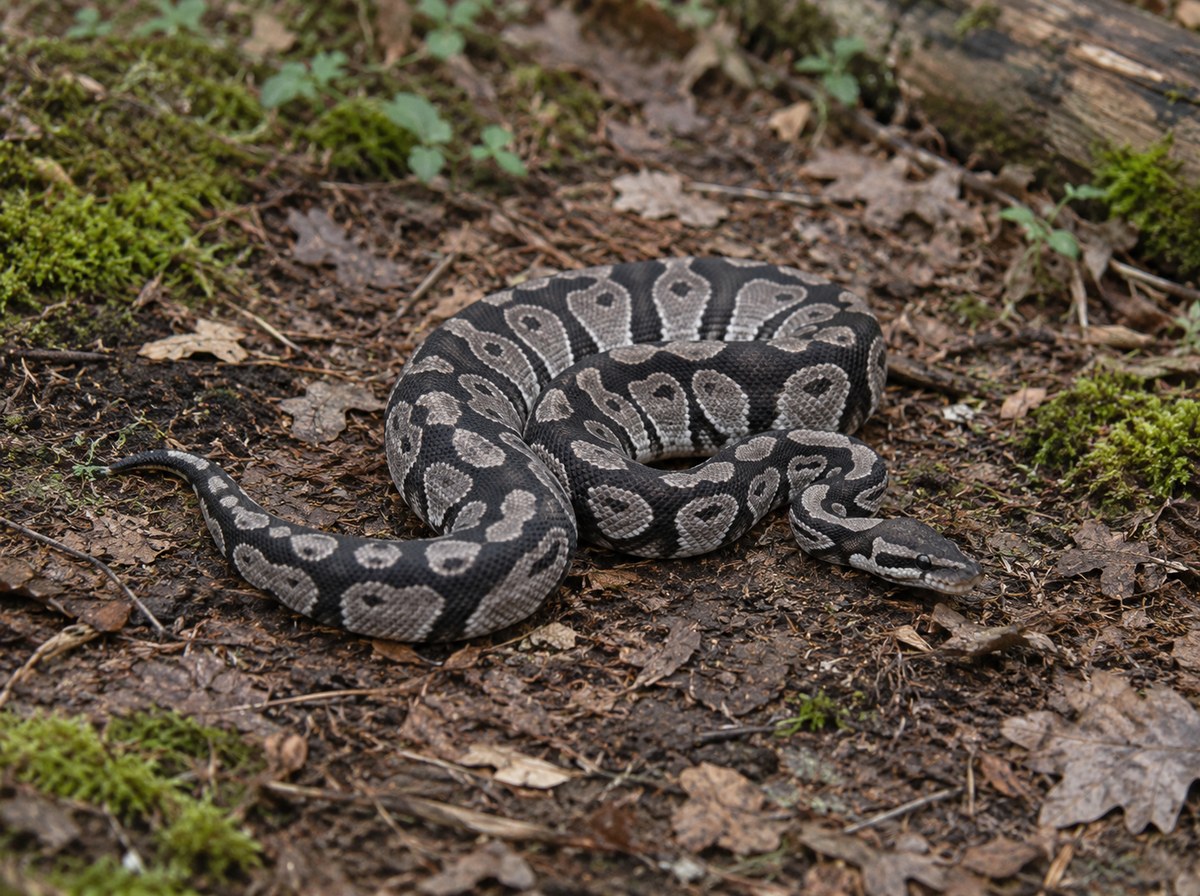
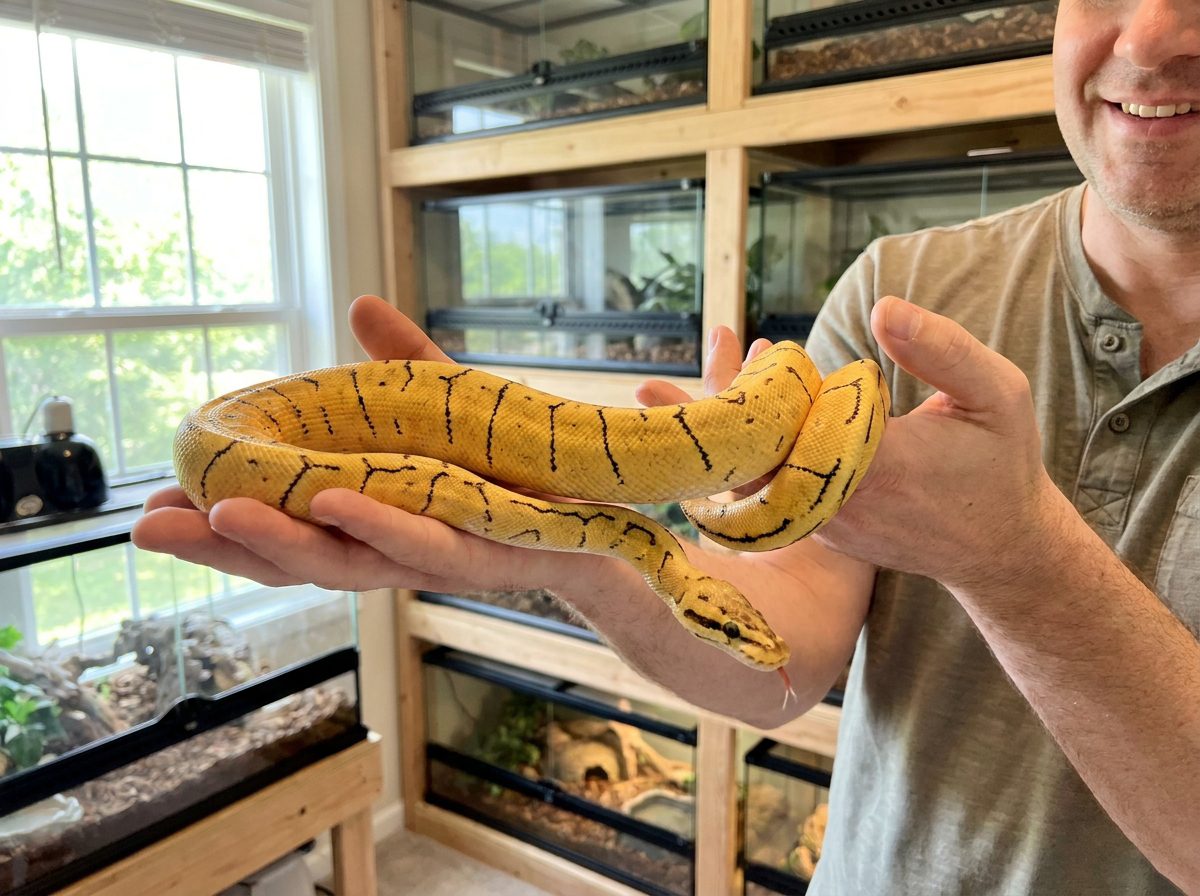
A typical bumblebee is a bright, warm yellow snake whose dark pattern has been reduced to thin lines, small marks and a broken dorsal pattern. Compared with a normal ball python, the large brown blotches are mostly gone. Compared with a plain Spider, the yellow is stronger and cleaner. Individual snakes vary a lot, and because Pastel yellow tends to brown with age, a bumblebee’s baby photos can look brighter than the adult.
Those are visual clues, not proof. Several other snakes can look close in a phone photo:
- A plain Spider. The same webbed pattern, usually with more brown and less yellow. A bright young Spider can pass for a bumblebee in warm light.
- A Pastel. Strong yellow, but the full ball python pattern is still there.
- Killer bee. World of Ball Pythons lists this as Spider plus super pastel: two Pastel copies and one Spider. It is usually paler and cleaner again, and it still carries Spider.
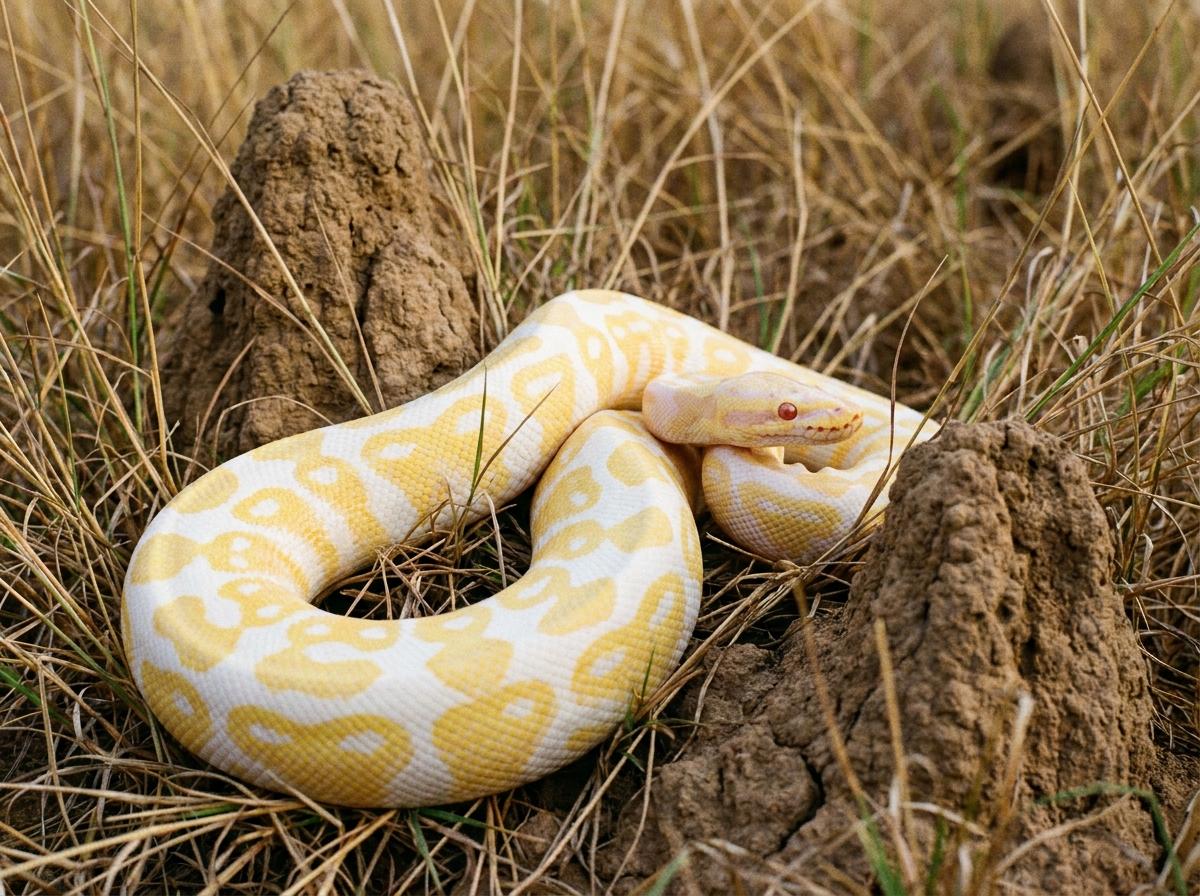
- Albino bumblebee and banana bumblebee. These are bumblebees that carry a third morph. A 2022 community-science study in PLOS ONE tied the Albino morph to variants in the TYR gene, the enzyme that starts melanin production, so an albino bumblebee loses the black from its pattern and its eyes. Banana is another color morph often stacked on top. Each extra name is a separate claim to check against the parents.
The only reliable way to know what a snake carries is its breeding record: which two snakes produced it and what each of those snakes is proven to carry. A seller who can name both parents and show them is giving you far more than a seller with one bright photo.
The spider wobble: what the research shows
The wobble is the reason the bumblebee name comes with a warning. In spider morph ball pythons, the condition has been described as twisting or side-to-side movements of the head, impaired movement, and difficulty striking or constricting prey. Researchers also report head tilt, tremor, corkscrewing, reduced striking accuracy and a weaker righting reflex.
Three published papers are worth knowing:
- 2014, Journal of Exotic Pet Medicine. Rose and Williams, “Neurological dysfunction in a ball python (Python regius) colour morph and implications for welfare”, described the wobble in the spider morph and raised its welfare implications. As summarized by later researchers, that work found all spider morph pythons were affected to some variable degree.
- 2022, PLOS ONE. Starck and colleagues used high-resolution CT scans to compare the inner ears of wild type ball pythons with spider morph snakes. All of the spider morph snakes in the study showed the wobble, and the spiders had deviant semicircular canals, ampullae and sacculus, the parts of the inner ear that sense balance, with considerable variation from snake to snake. The authors note that the sample was small (four spiders and five wild type snakes) and that the spiders were brought to a veterinary clinic because their owners had already seen neurological symptoms, so the study cannot say how common or how severe the wobble is across all spiders. They did conclude the anatomical evidence is strong enough to support a link between the wobble and the inner ear malformation.
- 2022, Journal of Comparative Pathology. The same research group used CT and MRI imaging of five living spider ball pythons and three wild type snakes, and found distinctive inner ear structures in the spiders that they judged highly likely to be related to wobble syndrome.
What this means for a bumblebee: the studies looked at spider morph snakes, not at bumblebees specifically. A bumblebee carries the Spider gene, though, so the same concern applies, and we found no evidence that adding Pastel protects against it. Expect the wobble to range from barely noticeable to obvious, and watch closely at feeding time, when striking and constricting put balance to the test.
The hobby is divided on what to do about it. World of Ball Pythons, a morph database published by a genetic-testing lab, now states on its Spider page that spiders have severe wobbles and should not be reproduced anymore. Other keepers and breeders still work with Spider and its combinations and argue that mildly affected animals live normal lives. Creatures does not take sides on whether to keep one. We do think buyers deserve the facts before they choose, and that a bumblebee with a pronounced wobble should be treated as an animal with a disability that needs managing, not a sale defect to be hidden.
Clutch odds from common pairings
Because Pastel and Spider each show with one copy, the odds for most bumblebee pairings are simple Mendelian math. The odds below assume each parent carries one copy of a gene unless it says “super”, and that Pastel and Spider are inherited independently of each other, which has not been tested in published research. The percentages are averages over many eggs.
- Pastel x Spider: 25% bumblebee, 25% Pastel, 25% Spider, 25% normal.
- Bumblebee x normal: 25% bumblebee, 25% Pastel, 25% Spider, 25% normal.
- Super pastel x Spider: 50% bumblebee, 50% Pastel.
- Bumblebee x Pastel: 25% bumblebee, 12.5% killer bee, 12.5% Spider, 25% Pastel, 12.5% super pastel, 12.5% normal.
A single clutch can land well away from these numbers. The University of Michigan’s Animal Diversity Web gives a ball python clutch as 1 to 11 eggs, and with so few eggs, chance does a lot of the work.
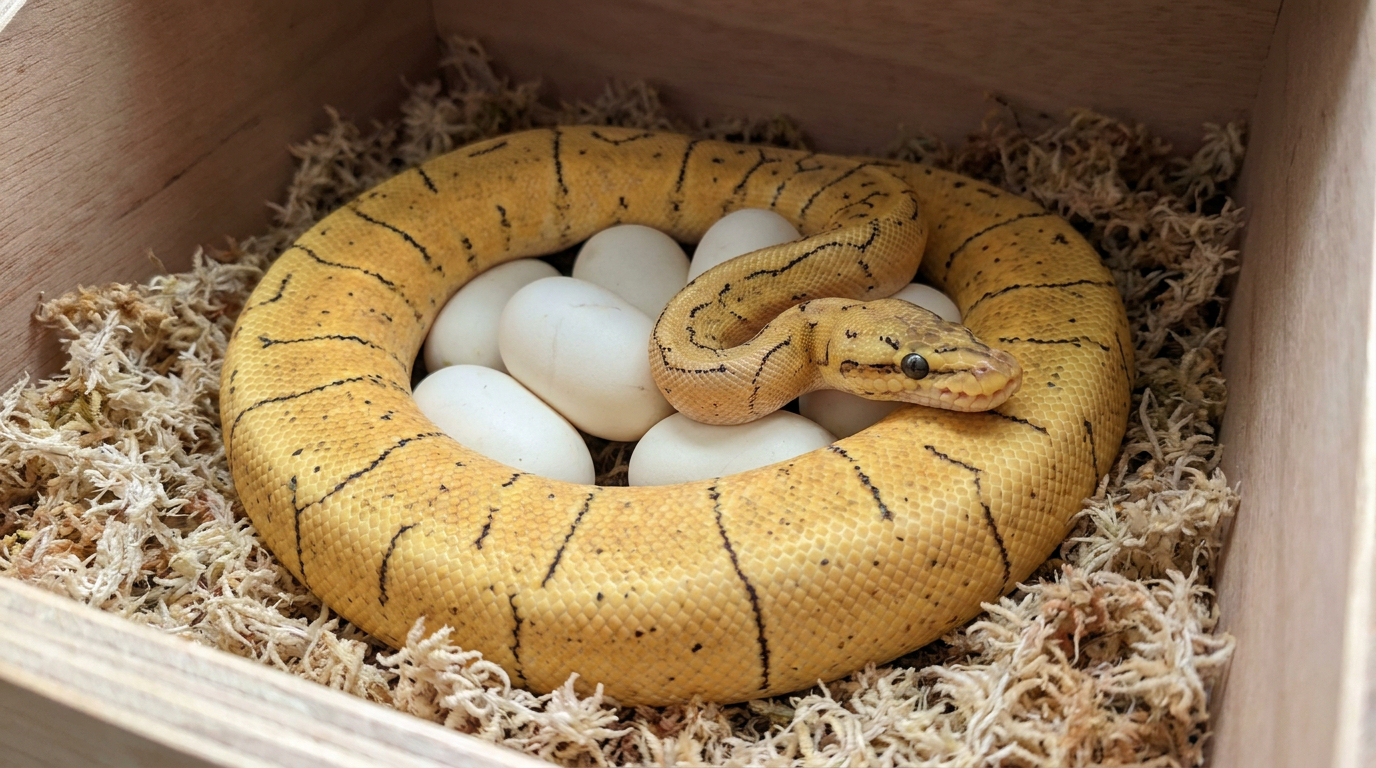
Read those odds from the welfare side as well. Every Spider-carrying hatchling, including a bumblebee, carries the wobble concern; the chance of producing one depends on the pairing. If you breed, keep a clear record of which snakes went into each pairing, how many eggs were laid, and what hatched. On Creatures you can record a breeding on the female’s profile, then track the eggs themselves in an egg clutch (a free account is needed): set the eggs, note candling results per egg, and keep a receipt of each hatch. When the babies hatch, recording births and creating a litter gives each hatchling its own profile with both parents already attached.
Care: a bumblebee is still a ball python
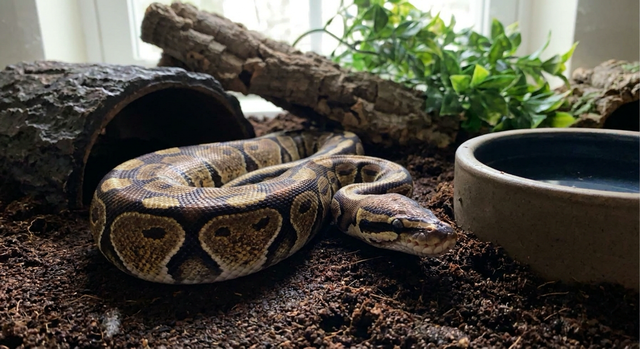
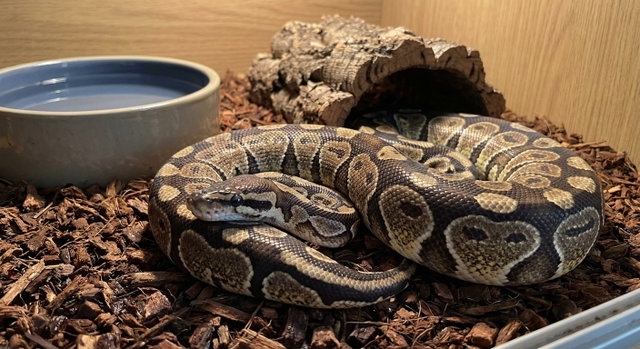
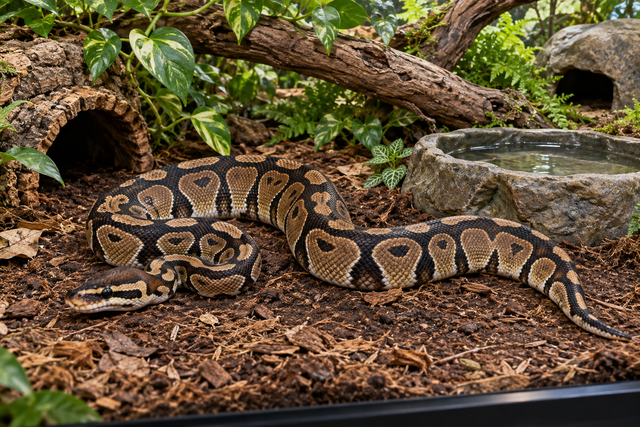
Morph names do not change the enclosure. The RSPCA’s royal python care guidance describes a snake from West Africa that can grow to around 150 cm and live longer than 20 years in captivity. The setup it describes applies to a bumblebee exactly as it does to a normal ball python:
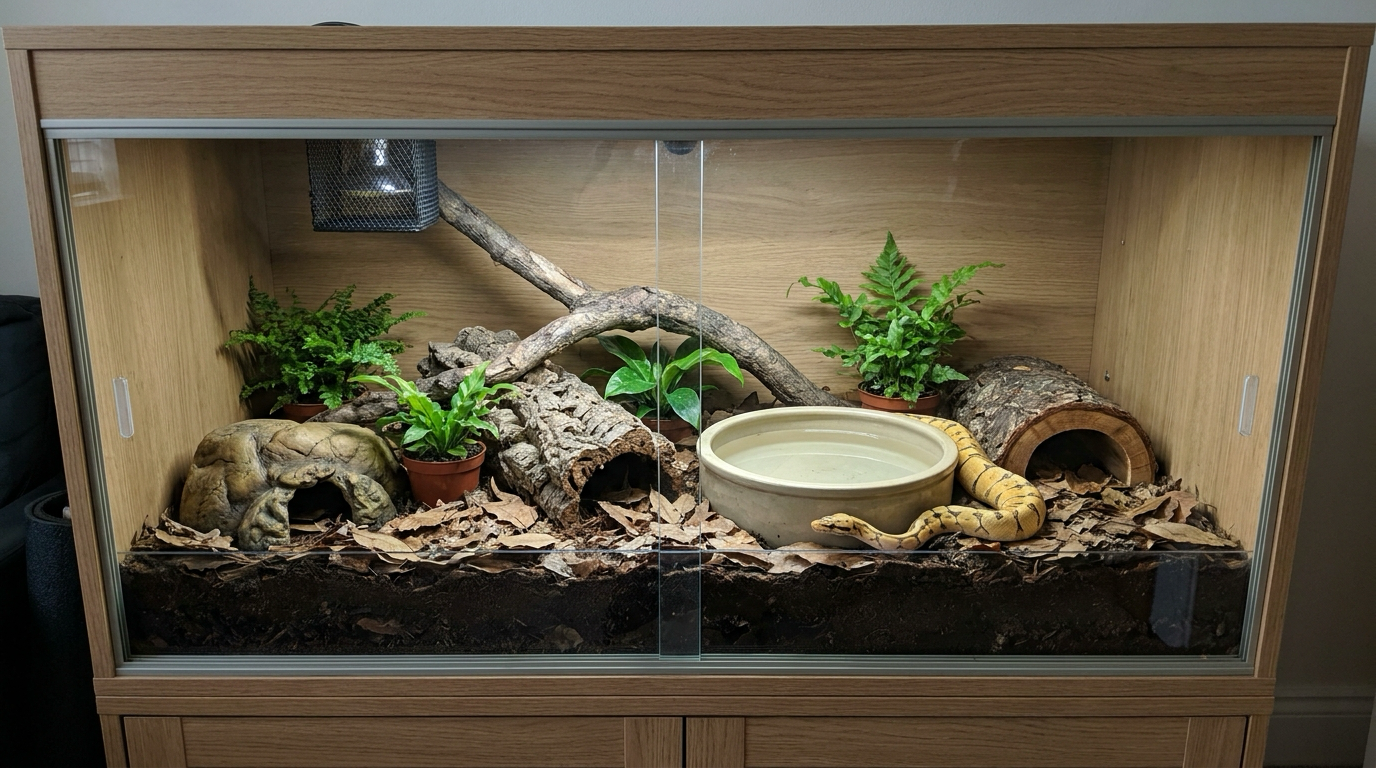
- Space. A vivarium big enough for the snake to stretch out fully. The RSPCA’s example is a minimum of 120 cm long, 40 cm wide and 40 cm deep for a 120 cm snake.
- Cover. Ball pythons get stressed in large, open, bare spaces, so give plenty of cover and several hides at both ends, so the snake can pick a temperature without giving up feeling secure.
- Heat. A temperature gradient with a basking zone of 30 to 32°C at one end and a cool end of 24 to 26°C. The heat source should be guarded so the snake cannot be burned and wired to a thermostat, and both ends checked with thermometers at the snake’s level.
- Humidity. Around 50 to 60 percent at the cool end, misted up to about 80 percent and allowed to drop in between.
- Light. A gradient from light to shade, with a low-output UVB tube at the warm end giving up to UVI 1.0 in the basking zone and zero in the shade, and lights off at night. The RSPCA notes that some morphs, such as albinos, need lower UVB, with a maximum of UVI 0.7, which matters if you keep an albino bumblebee.
- Food and water. Frozen then thawed rodents offered with tongs, prey slightly wider than the widest part of the snake’s body. The RSPCA puts young snakes at a meal every five or six days and adults at around every 7 to 14 days depending on weight, and advises weighing the snake regularly.
Our ball python care guide covers setup, humidity, feeding and shedding in more depth.
A snake with a noticeable wobble may need a few practical adjustments, and a reptile veterinarian is the right person to tailor them. Things keepers commonly watch: whether the snake strikes and holds prey reliably, whether it misses or wraps poorly, whether it can right itself if it rolls, and whether climbing branches or tall furniture create a fall risk. Keep feeding calm and quiet, and offer prey on tongs so you can see how well the snake strikes. If the snake refuses meals or loses weight, do not wait it out: book a reptile vet. If you do not have one yet, our guide to finding a reptile vet before you need one is worth reading now.
The single most useful habit is a simple log. Note every meal offered and whether it was taken, every shed and whether it came off in one piece, the snake’s weight in grams, and any wobble episodes you see, with the date and what was happening. Over a few months that log tells you and your vet far more than memory does. The ball python feeding and shed log guide explains how to record events without guessing at their cause.
Buying a bumblebee: what to check
Buying a bumblebee is mostly about two questions: is this really a Pastel and Spider snake, and how is this particular snake doing? A pretty photo answers neither.
Identity. Ask for both parents: their morphs, photos, and how each was proven (for example, a parent that has itself produced Pastel and Spider babies). World of Ball Pythons lists a genetic test for Spider, offered by the lab that publishes the database, and, as of October 2026, none for Pastel, so a Spider claim can sometimes be backed by a lab result while a Pastel claim rests on looks and parentage. If the seller adds more names, such as albino, banana or “het” for a recessive gene, each one deserves its own evidence.
Movement. Ask for a short, unedited video of the snake moving freely on a flat surface and, ideally, taking a meal. Watch the head as it explores. A seller who refuses to show the snake moving is telling you something.
Feeding record. The RSPCA advises finding out how a snake has been feeding before you take it on and avoiding one that has not been feeding well. Ask for dated feeding records, prey type and size, recent weights and the last few sheds. A wobbly snake that eats reliably from tongs is a very different prospect from one that keeps missing.
Housing. Look at how the seller keeps the snake, not just the snake. A 2020 study in the journal Animals looked at more than 5,000 ball pythons at six exotic pet expos and in 113 online videos and found breeders and vendors typically used small, restrictive enclosures that stopped the snakes stretching to their full length, short of RSPCA minimum guidelines. The container a snake travels or sits in at a show is not a model for its home.
Price. We could not find dated, public, attributable sale prices for bumblebees that meet our sourcing standard, so we do not quote a number. What moves the price is easy to list: any extra morphs stacked on top, sex, size, a solid feeding record, documented parents, and how visible the wobble is. For the wider picture of snake costs, see how much is a snake. Keeping a python is also regulated in some places, so check your local rules before you buy.
Keeping a bumblebee’s records on Creatures
A morph name is a claim, and records are what back it up. On Creatures, a bumblebee gets a free animal profile under the ball python species with the morph set to bumblebee. From there:
- Parents and lineage. Add the sire and dam on the Pedigree tab, even if you do not own them, so the Pastel and Spider claims trace back to named snakes. Pedigree, family and lineage walks through it.
- Feeding and sheds. Ball pythons get their own Feeding and Shed / Molt record types, so each meal and each shed is a dated entry rather than a note in your phone. Adding a record covers the form, and the animal records tab shows how to search the history later.
- Weights. Physical measurement records keep a weight in the unit you entered, grams included, and chart it over time.
- Vet visits and wobble notes. Record examinations and health checks, and note what you saw and when. Health and medical records explains what each type is for.
- Reminders. Set a repeating reminder for feeding day or a weigh-in. See reminders and upcoming care.
When you sell or rehome the snake, transfer it on Creatures and its records go with it, so the next keeper gets the feeding history instead of a guess. Still choosing a name? The free ball python name generator will give you a list, and you can start the profile straight from it. For more on the species itself, the ball python species page gathers the morph pages, profiles and guides, including our guide to how long ball pythons live.
Frequently asked questions
What two morphs make a bumblebee ball python?
Pastel and Spider. A bumblebee carries at least one copy of each. A snake with two Pastel copies and one Spider is usually sold as a killer bee.
Do all bumblebee ball pythons wobble?
Bumblebees carry the Spider gene, and research on spider morph ball pythons has linked the wobble to malformed inner ear structures. The published studies are small and looked at spiders rather than bumblebees, but the earlier work found all spiders affected to some degree. Severity varies from barely visible to obvious, and difficulty striking or holding prey is one of the documented effects.
Is a bumblebee ball python a good first snake?
It needs the same care as any ball python, which many first-time keepers manage well. The extra question is the wobble: a mildly affected snake may live a normal life, but a strongly affected one can struggle to strike and hold prey and needs a keeper ready to work with a reptile vet. Decide whether you are prepared for that before you buy.
What are the odds of a bumblebee from a Pastel and a Spider?
About one egg in four on average, with the rest split between Pastel, Spider and normal. A single clutch can be quite different, since ball python clutches are small.
Can a bumblebee be tested to confirm its genes?
Partly. World of Ball Pythons lists a genetic test for Spider, offered by the lab that publishes the database, but, as of October 2026, none for Pastel. The parents and their breeding results remain the main evidence.
How long do bumblebee ball pythons live?
As long as other ball pythons. The RSPCA says royal pythons can live longer than 20 years in captivity, so treat any ball python as a long commitment.
Do this next on Creatures
Whether you are hunting for a bumblebee, already keep one, or breed Pastel and Spider projects, these are the next steps that fit this page. Supply is thin right now, so the listing alert is the place to start if you are buying.
Get alerted. Set a free bumblebee ball python listing alert and we will email you when one is posted. No account needed to start. See saving searches and using your watchlist.
Browse what is listed. Check bumblebee ball pythons on the marketplace, and look up keepers and breeders in the Creatures breeder directory.
Add your snake. Already keep a bumblebee? Create a free bumblebee ball python profile, no account needed to start, and add its sire and dam. The walkthrough is in adding an animal to Creatures.
Start its log. Add a feeding, shed or weight record. The record form opens for any visitor to look around, and you need a free account to save what you enter. See adding a record.
List your breeding operation. Breed ball pythons? Create a free breeder profile so buyers can find you, and read getting listed in the breeder directory and creating an organization and adding your team.