Clown
Gene
Author: Elliott Garber, DVM · Published
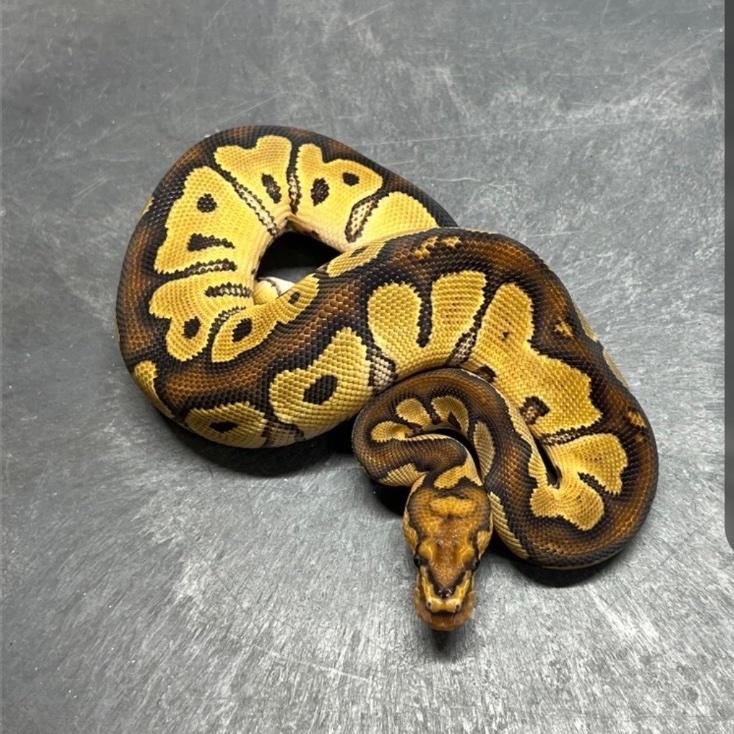
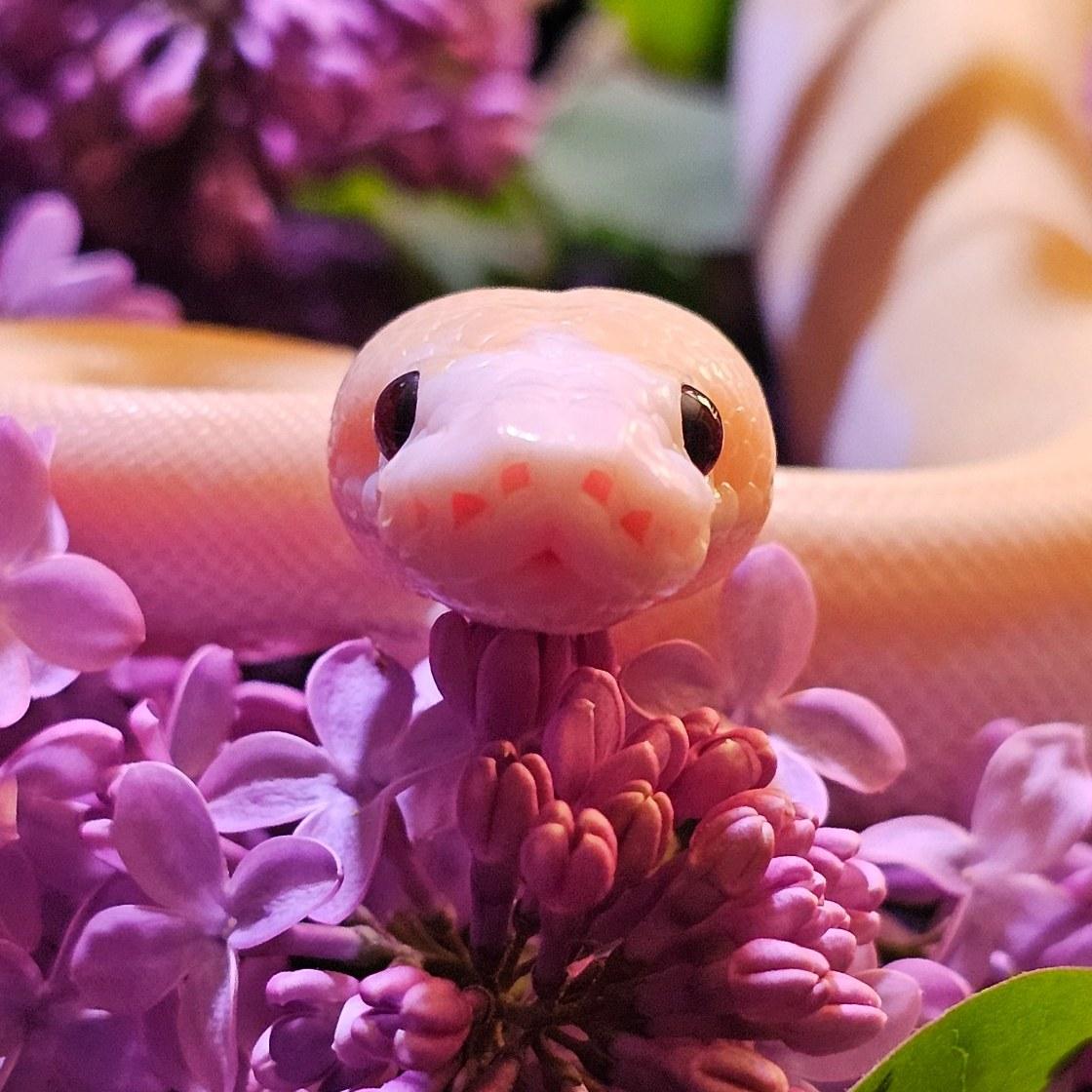
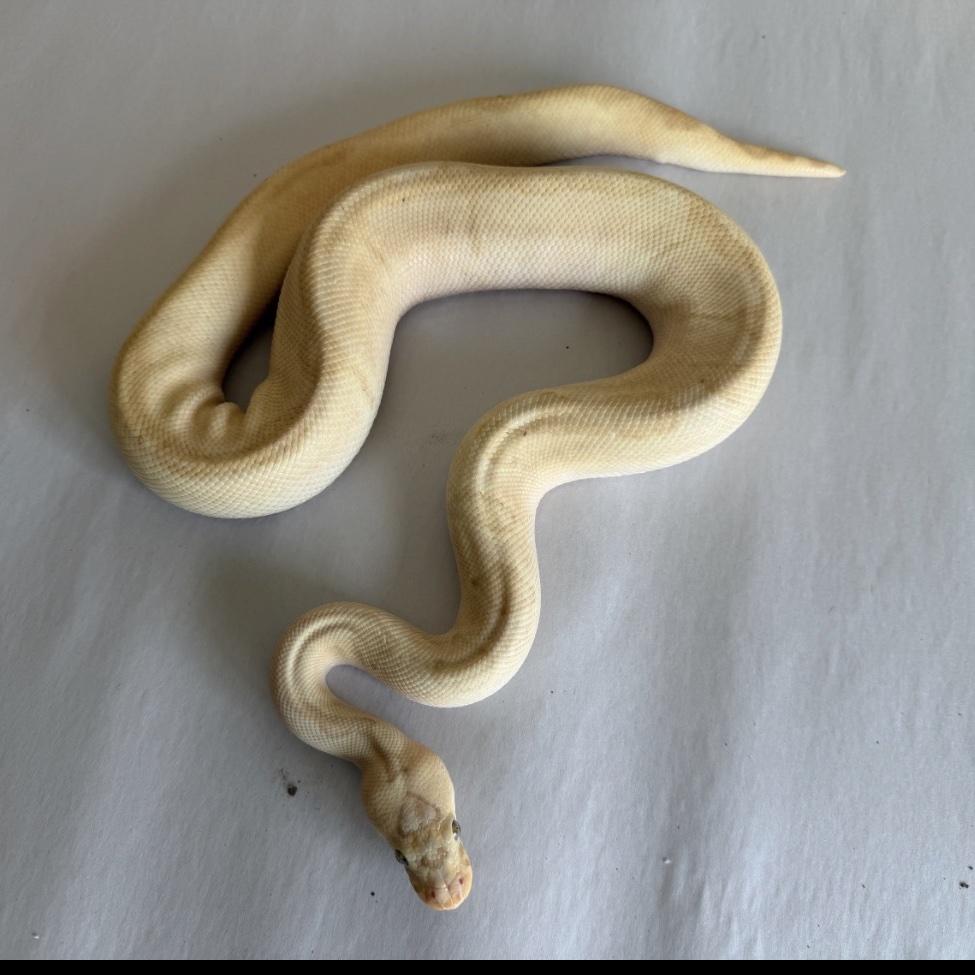
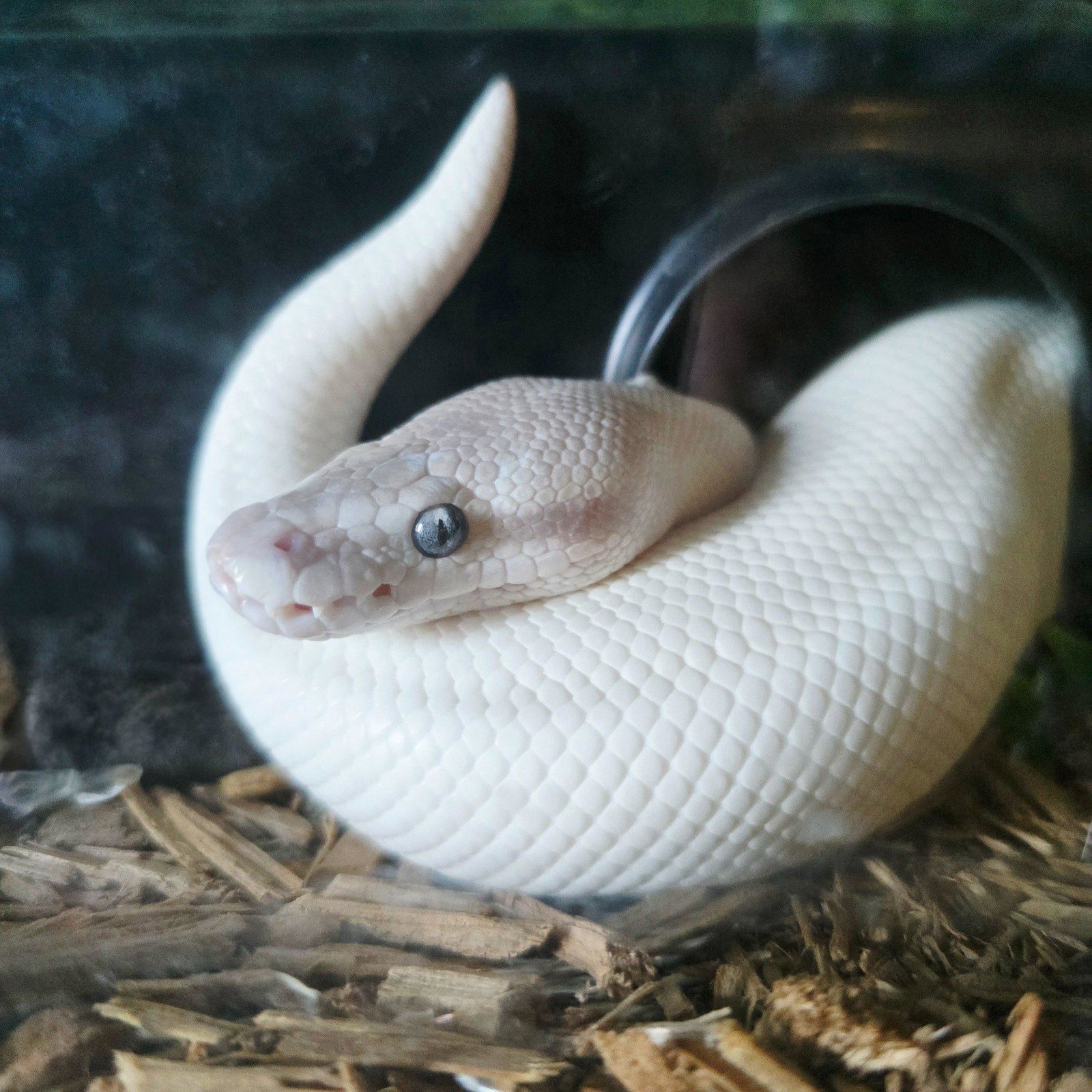
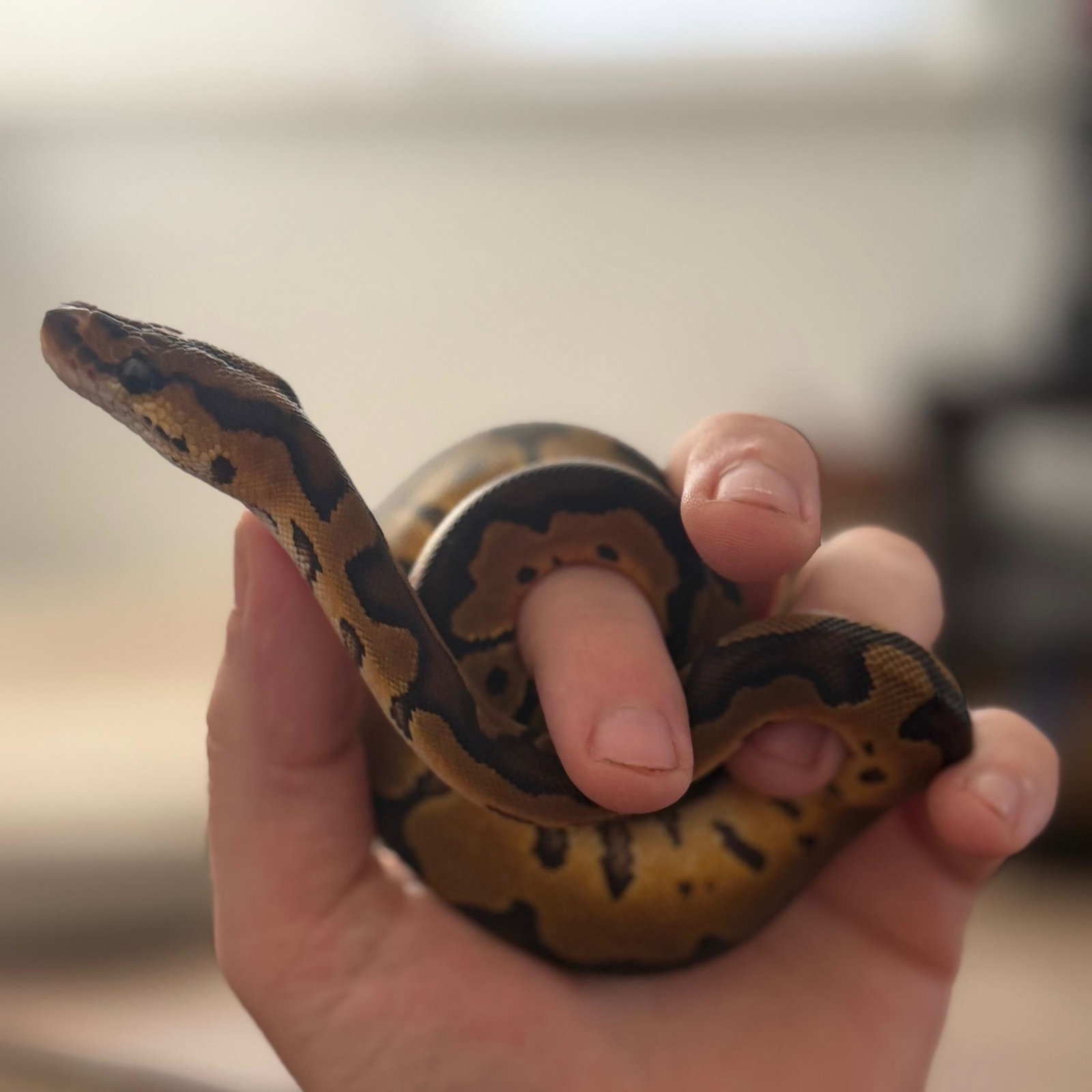
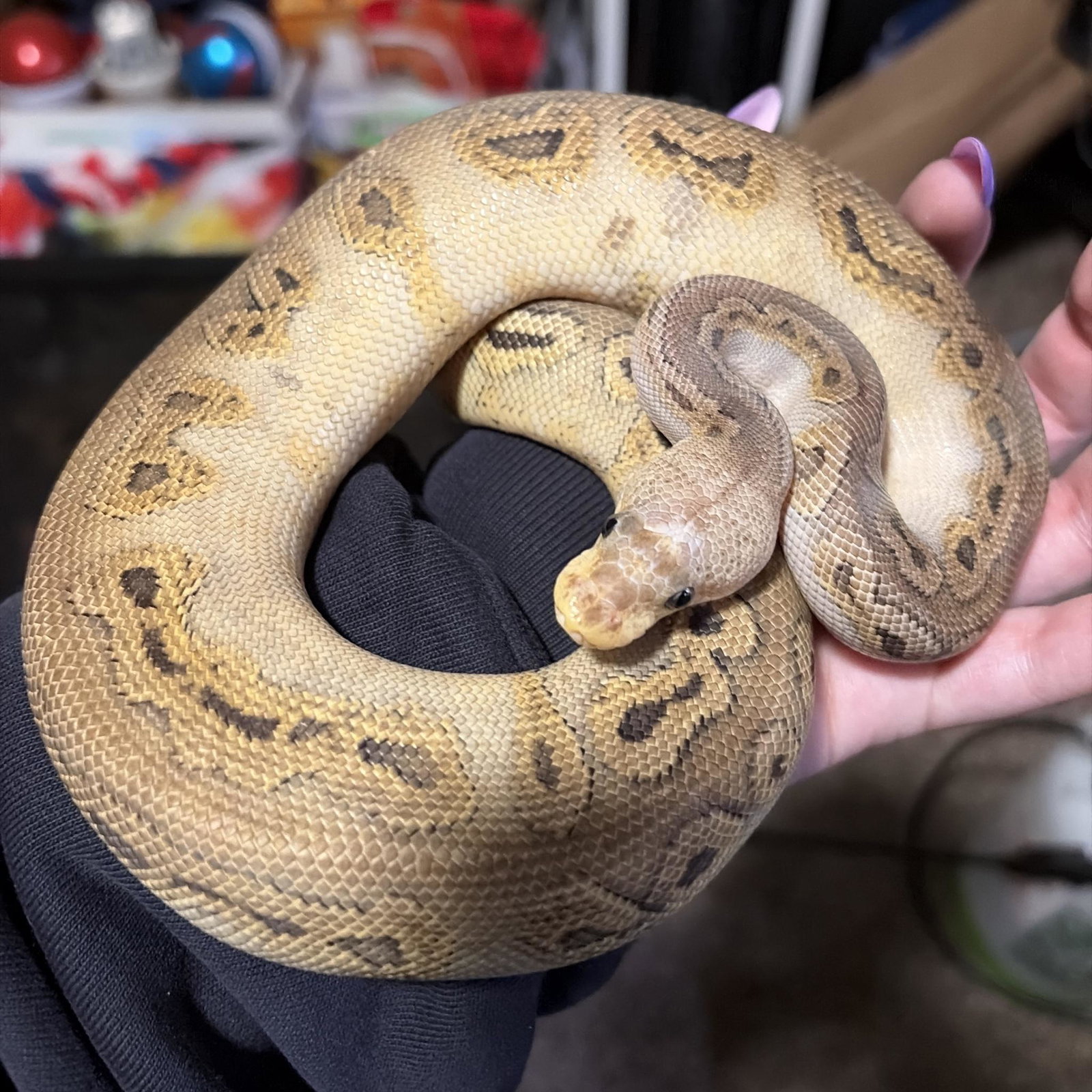
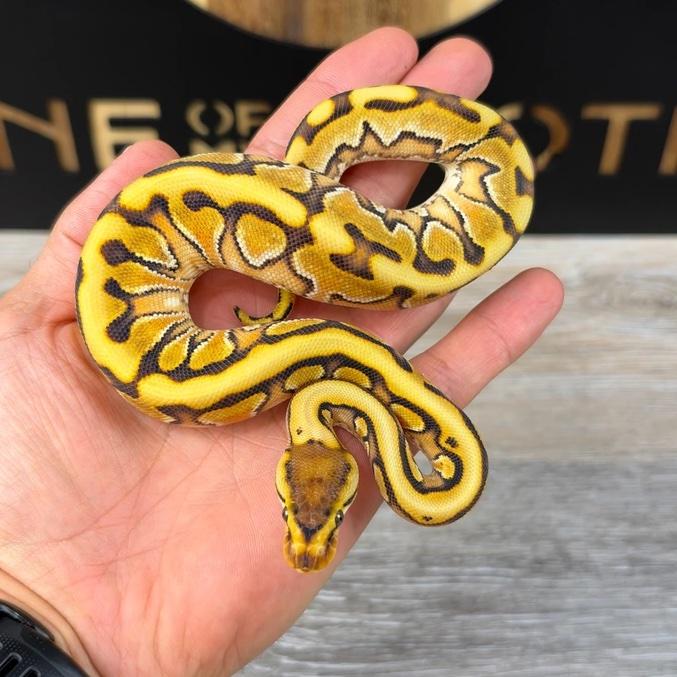
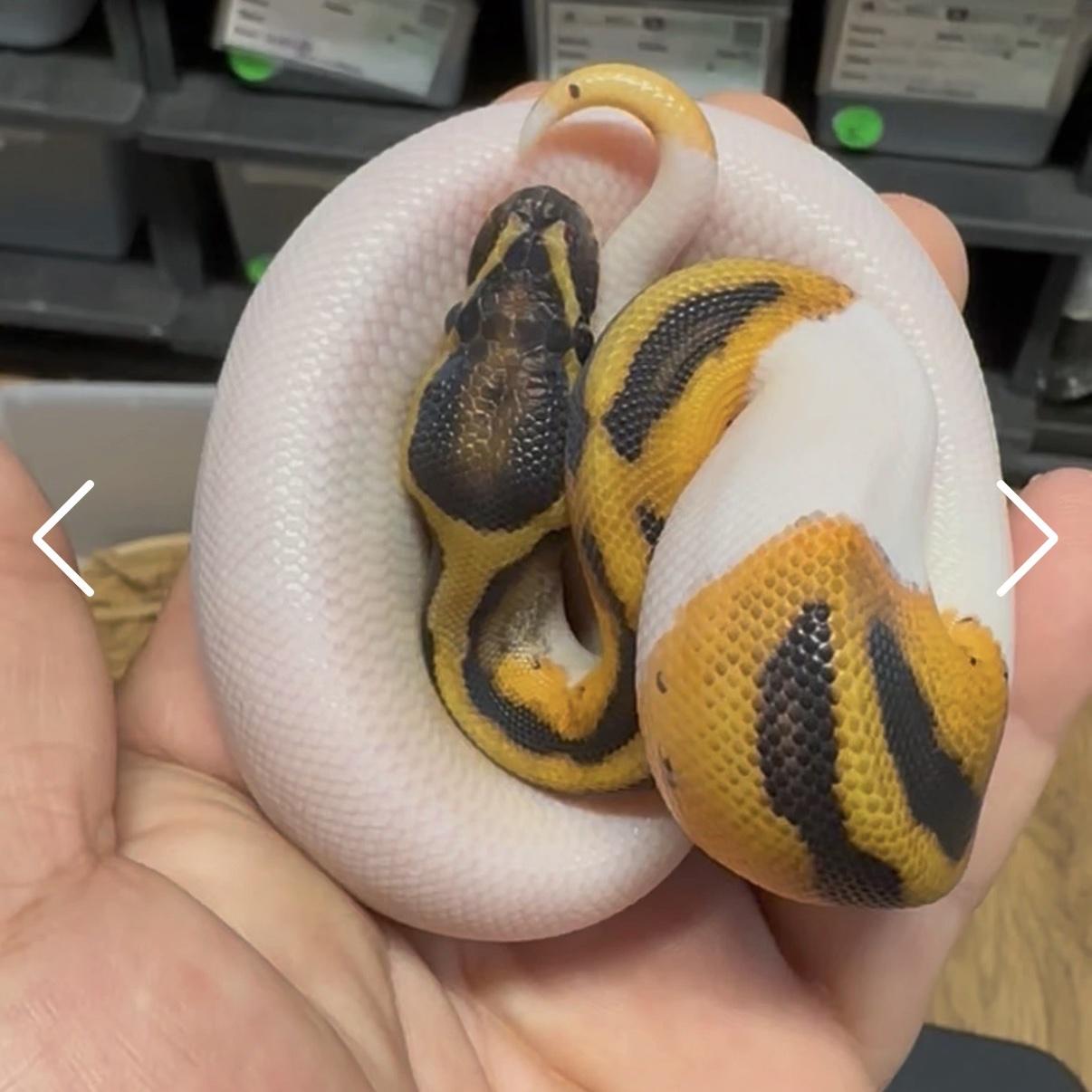
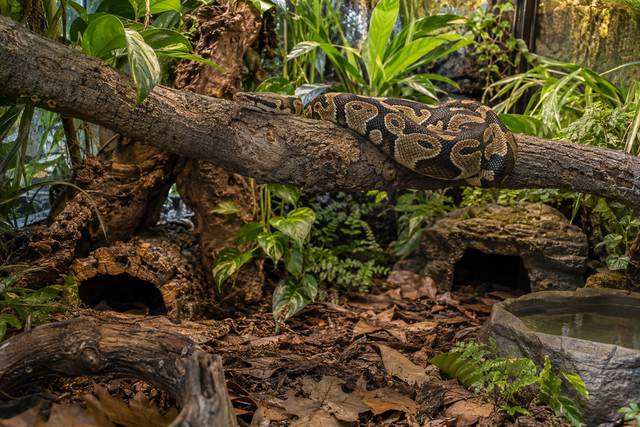
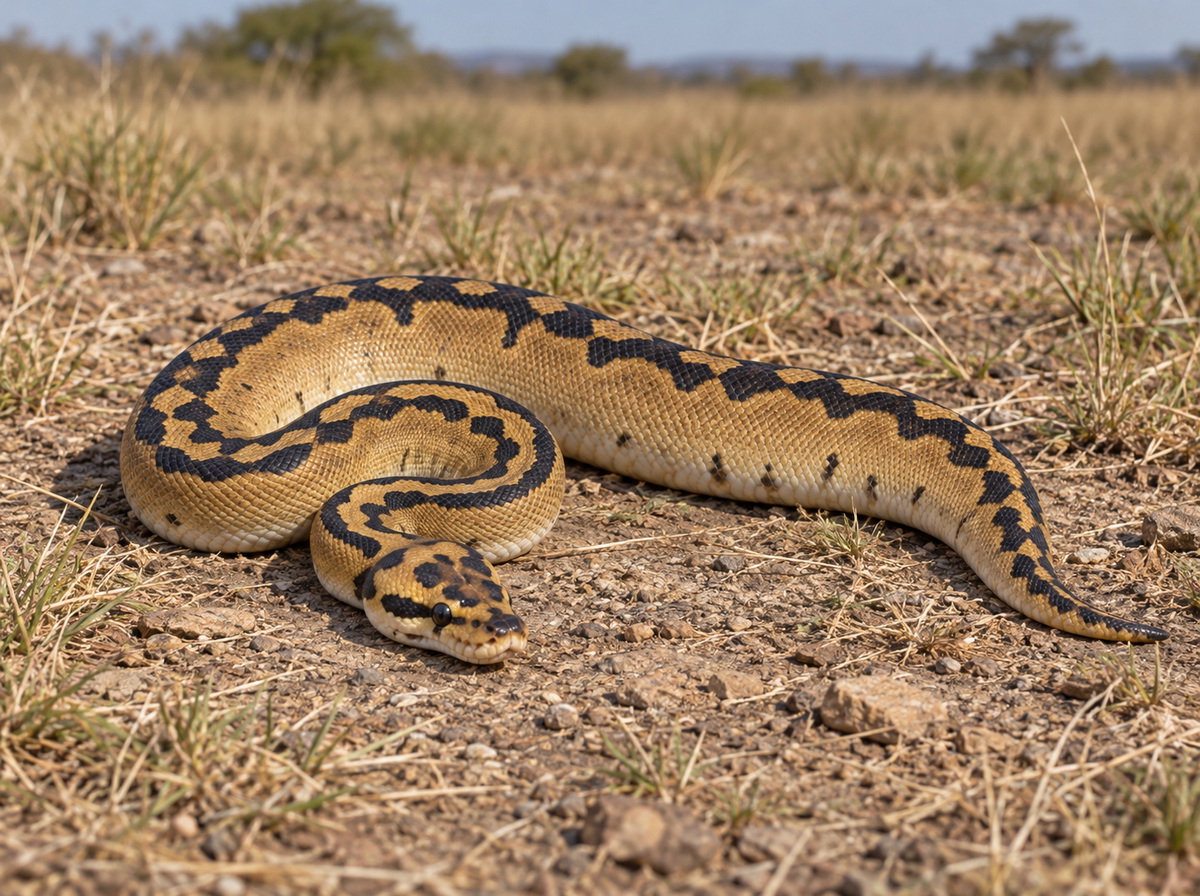
A clown ball python is a Python regius with a recessive morph that rearranges its pattern: the sides lose most of their usual blotches, the back often carries a dark stripe or a busy dorsal pattern, and the head has a distinctive marking. A snake must inherit Clown from both parents to show it, so a het clown looks normal. In 2025 researchers linked the morph to a variant in the MC1R gene. To see what a pairing can produce, enter both parents in the free ball python morph calculator. It gives odds per egg from the genes you enter, and it cannot prove what any one snake carries.
| Species | Python regius, the ball or royal python |
|---|---|
| Type | Pattern and color morph, not a separate species or breed |
| Look | Reduced side pattern, a dark stripe or busy pattern along the back, a marked head |
| Inheritance | Recessive: a visual clown has two copies, a het has one and looks normal |
| Gene association | Missense variant in MC1R (Garcia-Elfring and colleagues, 2025) |
| Het x het odds | 1 in 4 eggs clown, on average |
| Care | Standard ball python husbandry |
| Lifespan | Can live longer than 20 years in captivity (RSPCA) |
Browse listings, public profiles, breeders, or add your animal.
What a clown ball python looks like
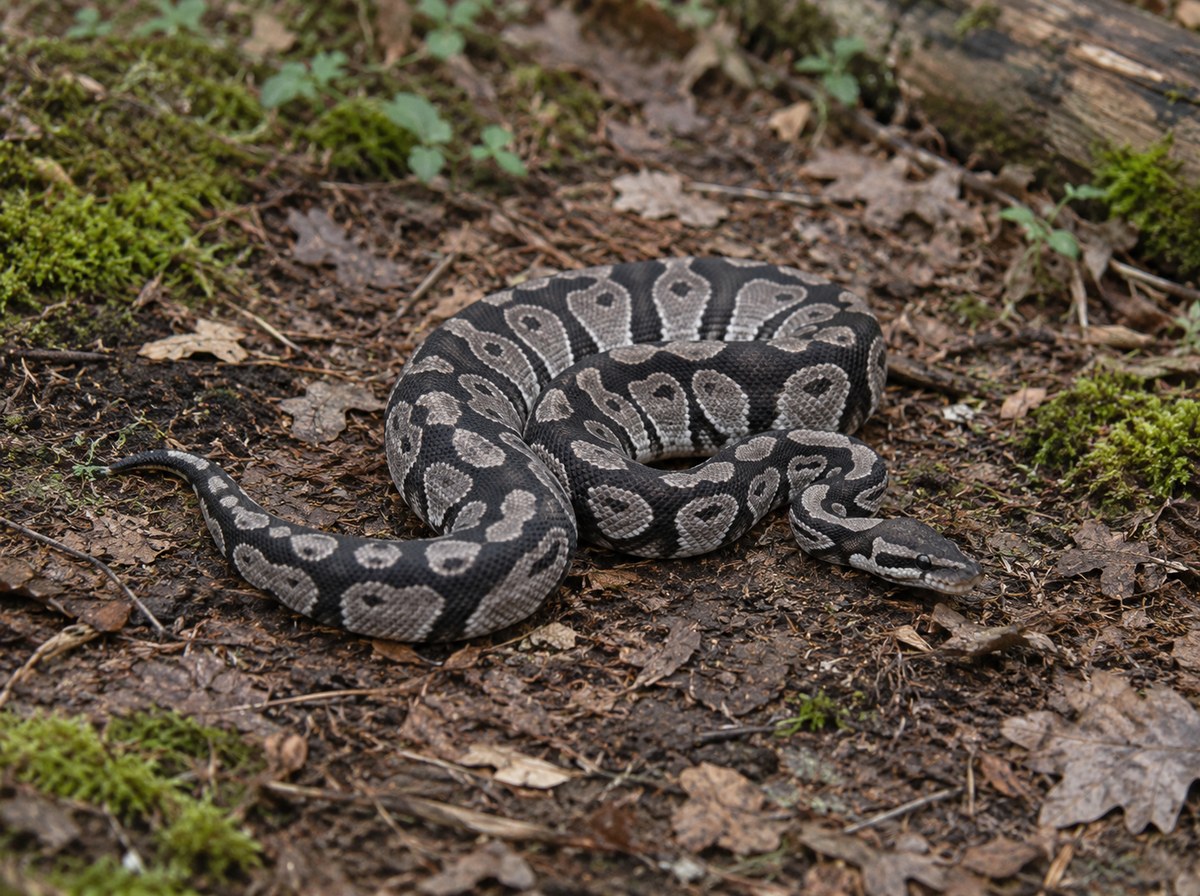
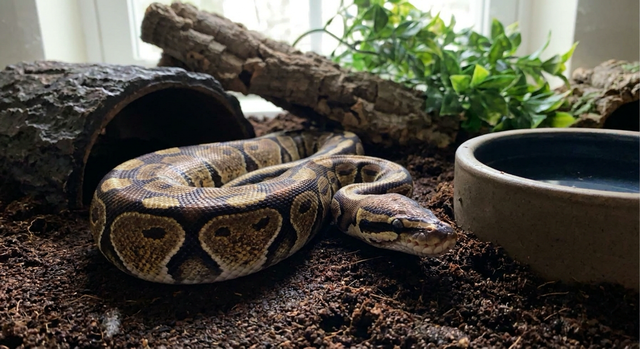
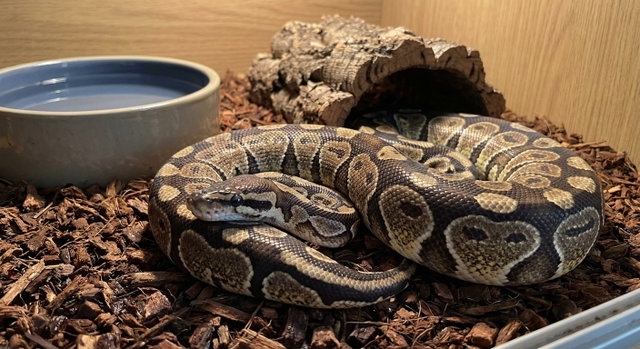
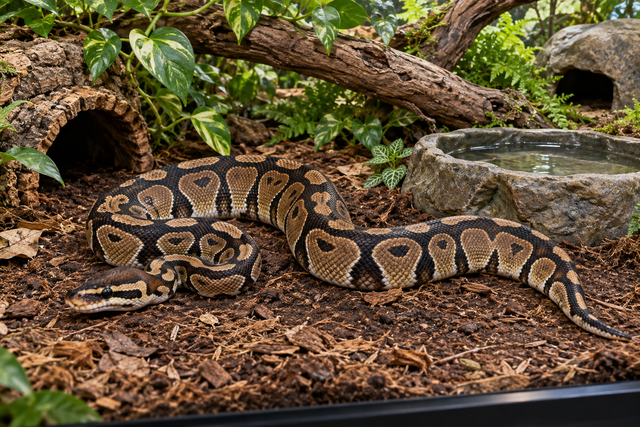
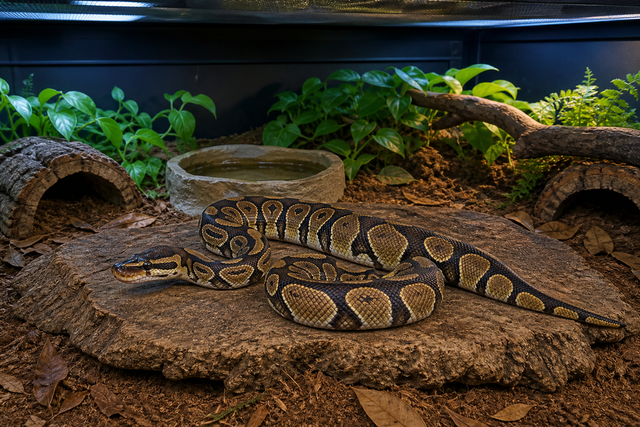
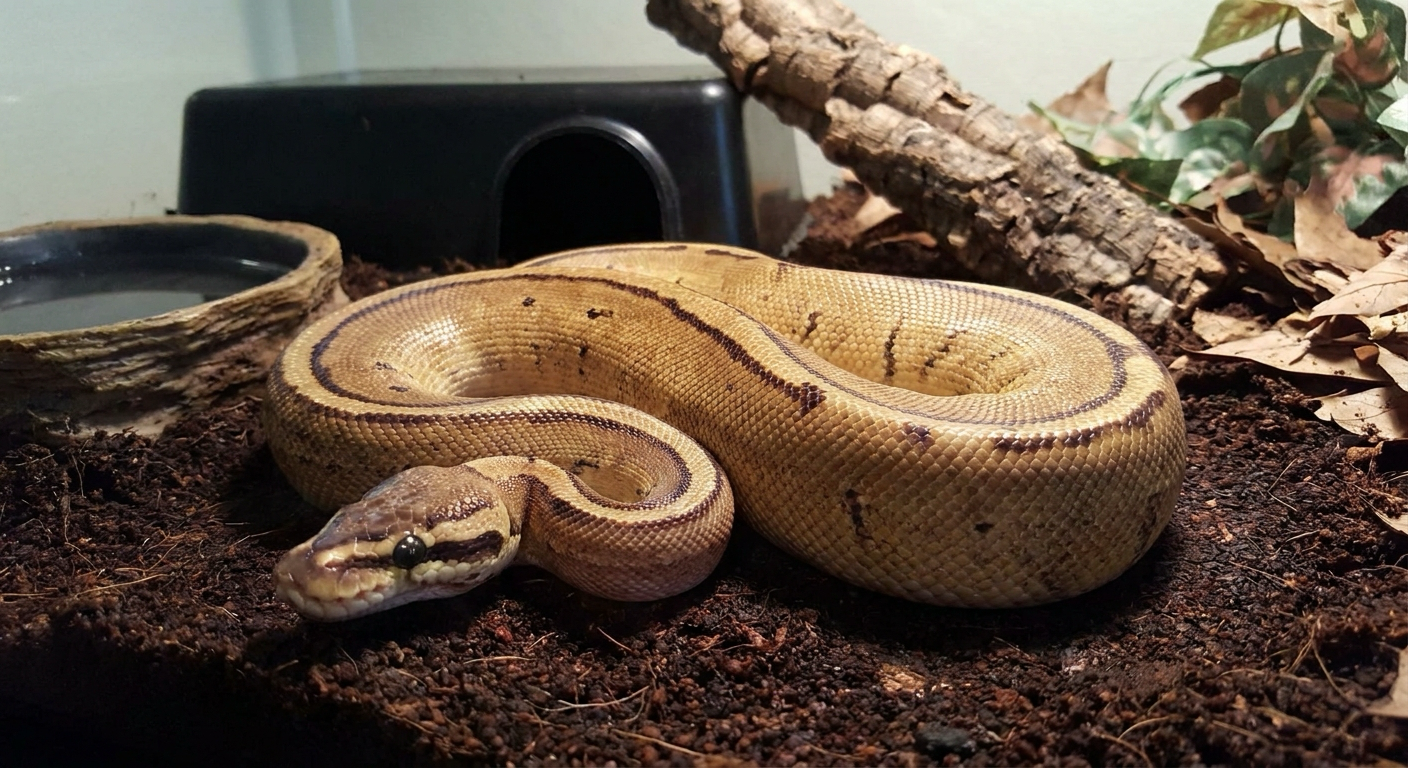
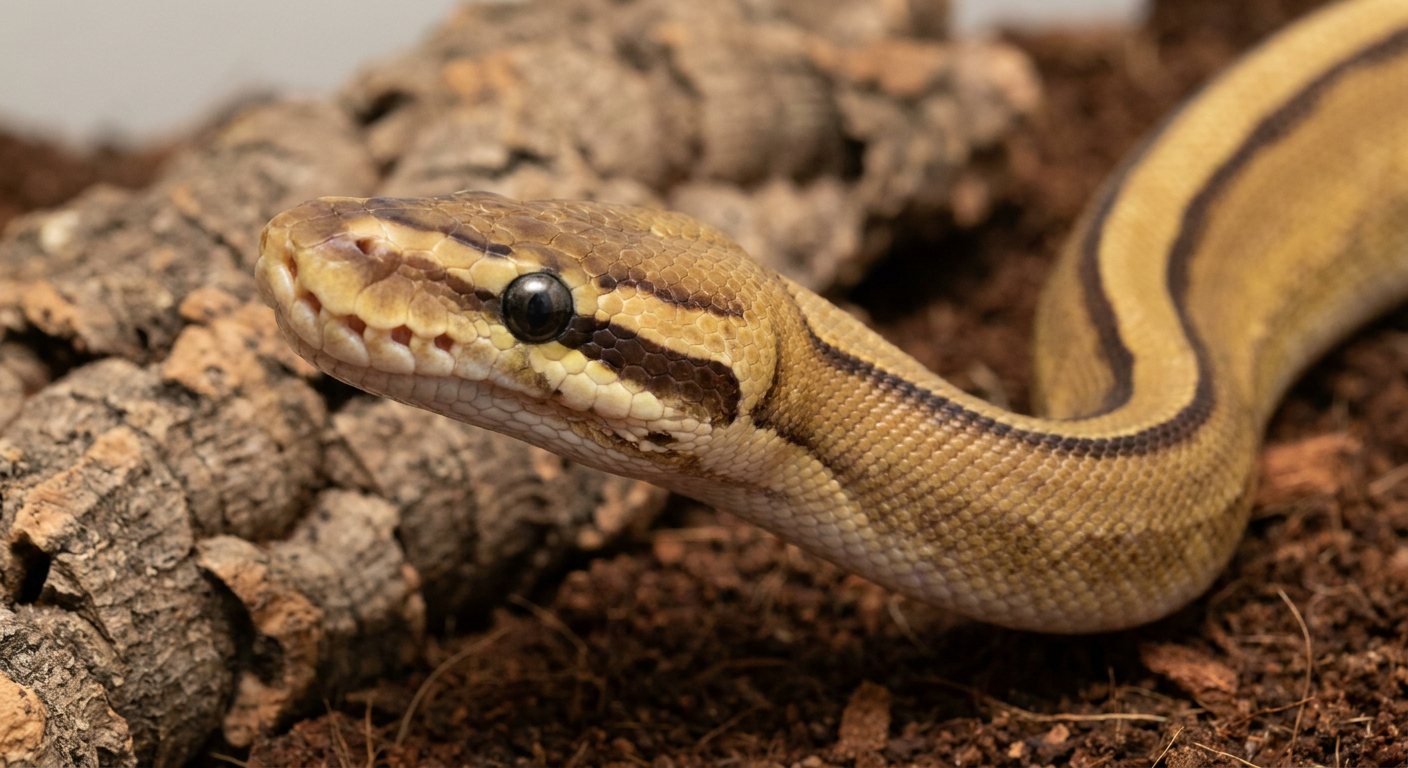
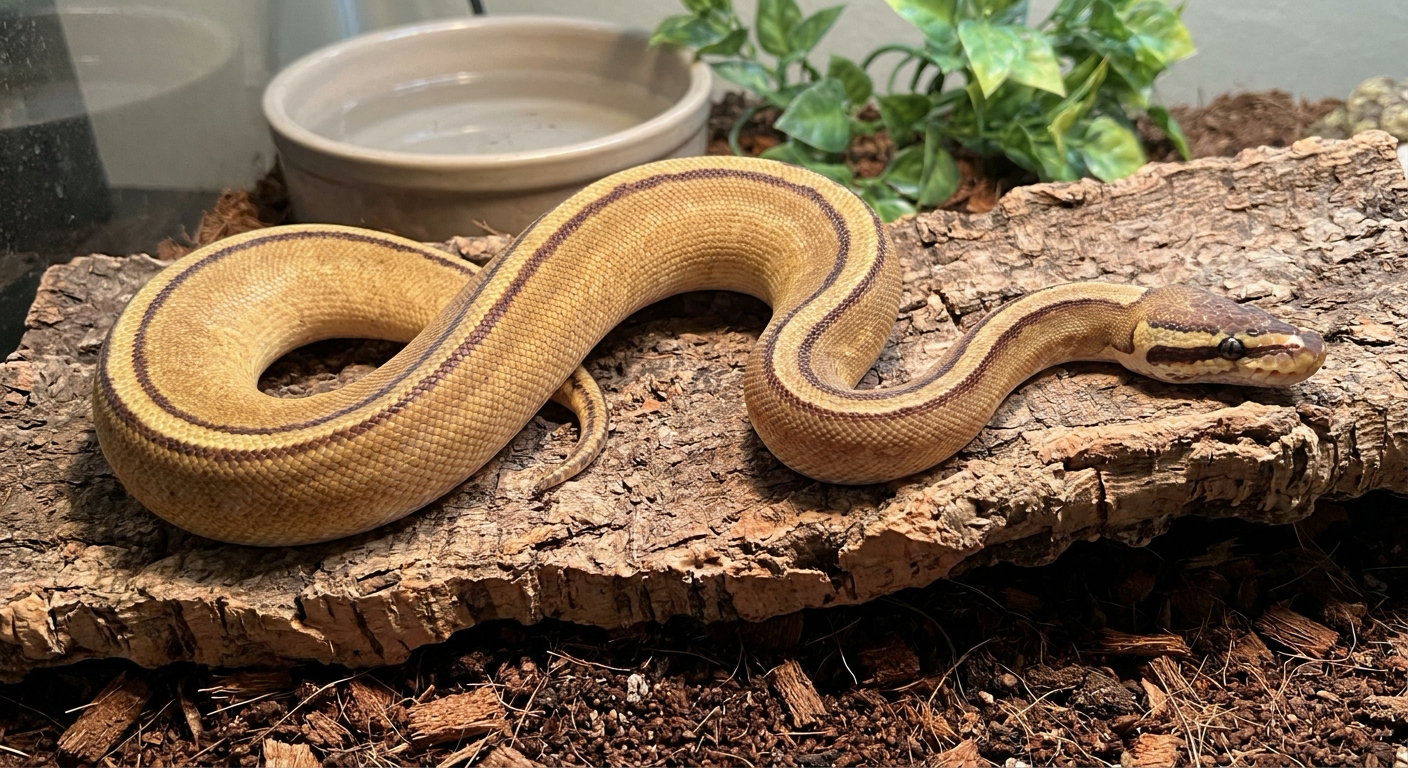
A normal ball python carries dark brown to black ground color with golden blotches, the “alien heads”, running down its sides. A clown keeps the heavy body and broad head of the species but loses most of that side pattern. The flanks turn into an open field of warm tan, gold or brown, depending on the other genes present, and the pattern concentrates along the spine as a dark stripe or a busier band of markings. The belly edge is usually clean.
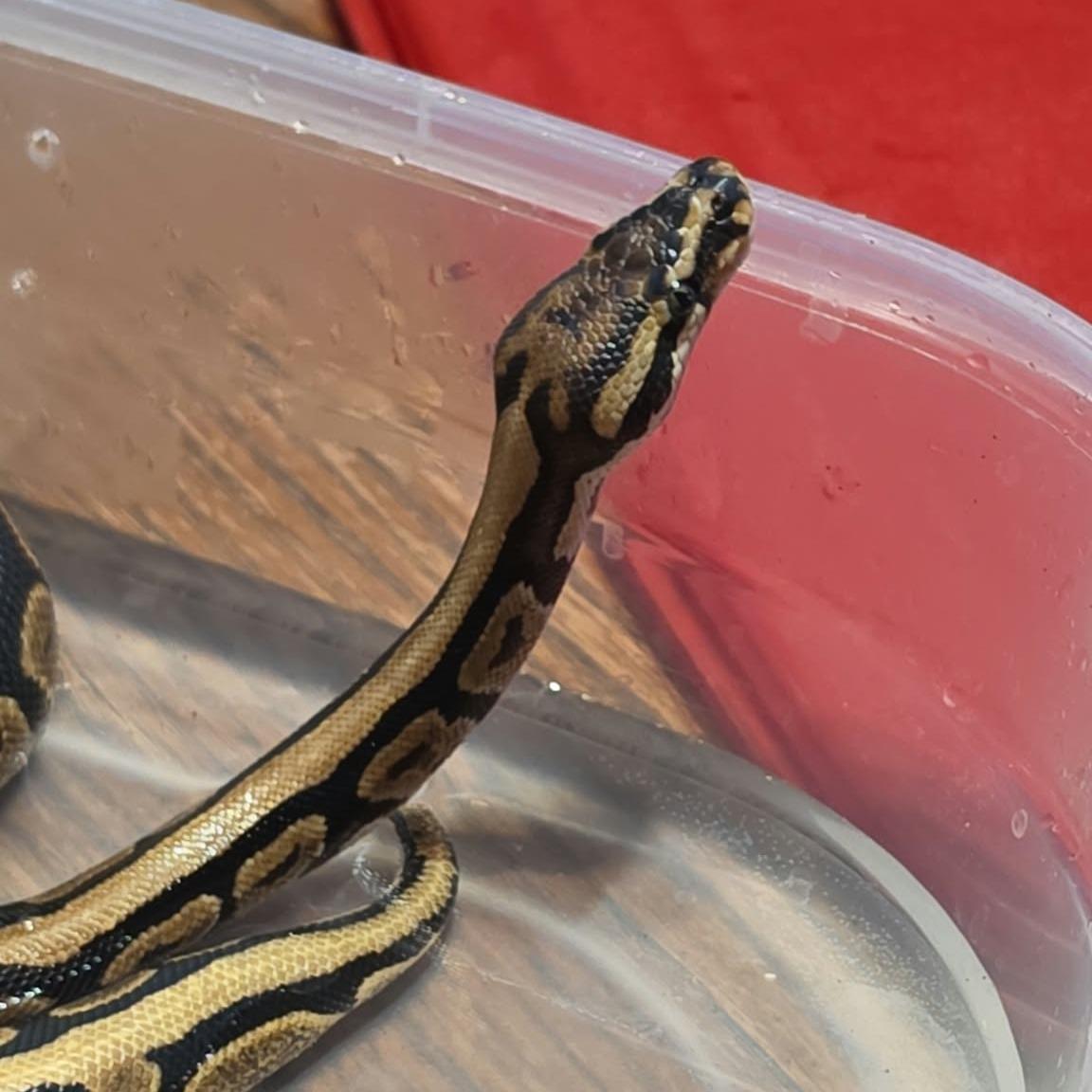
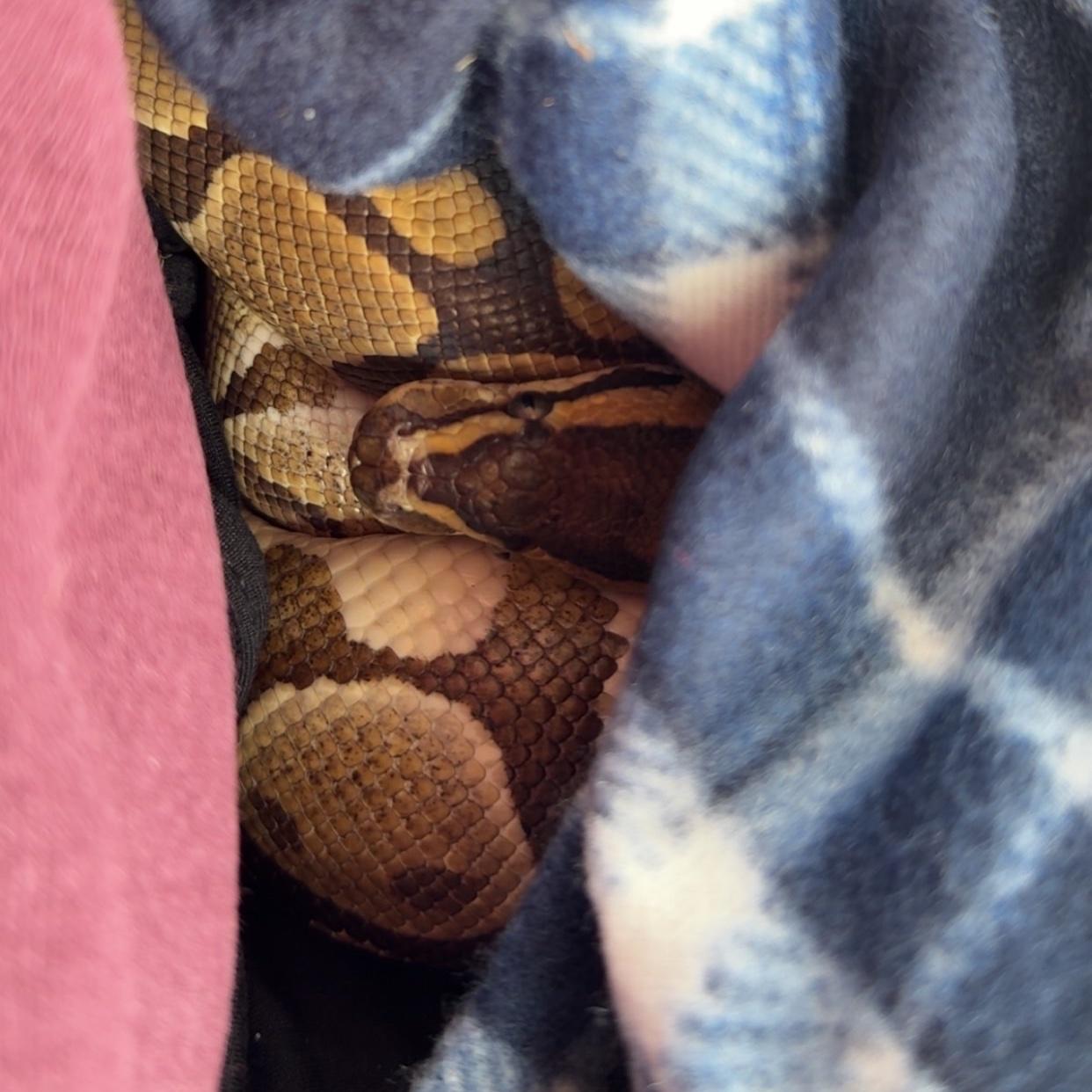
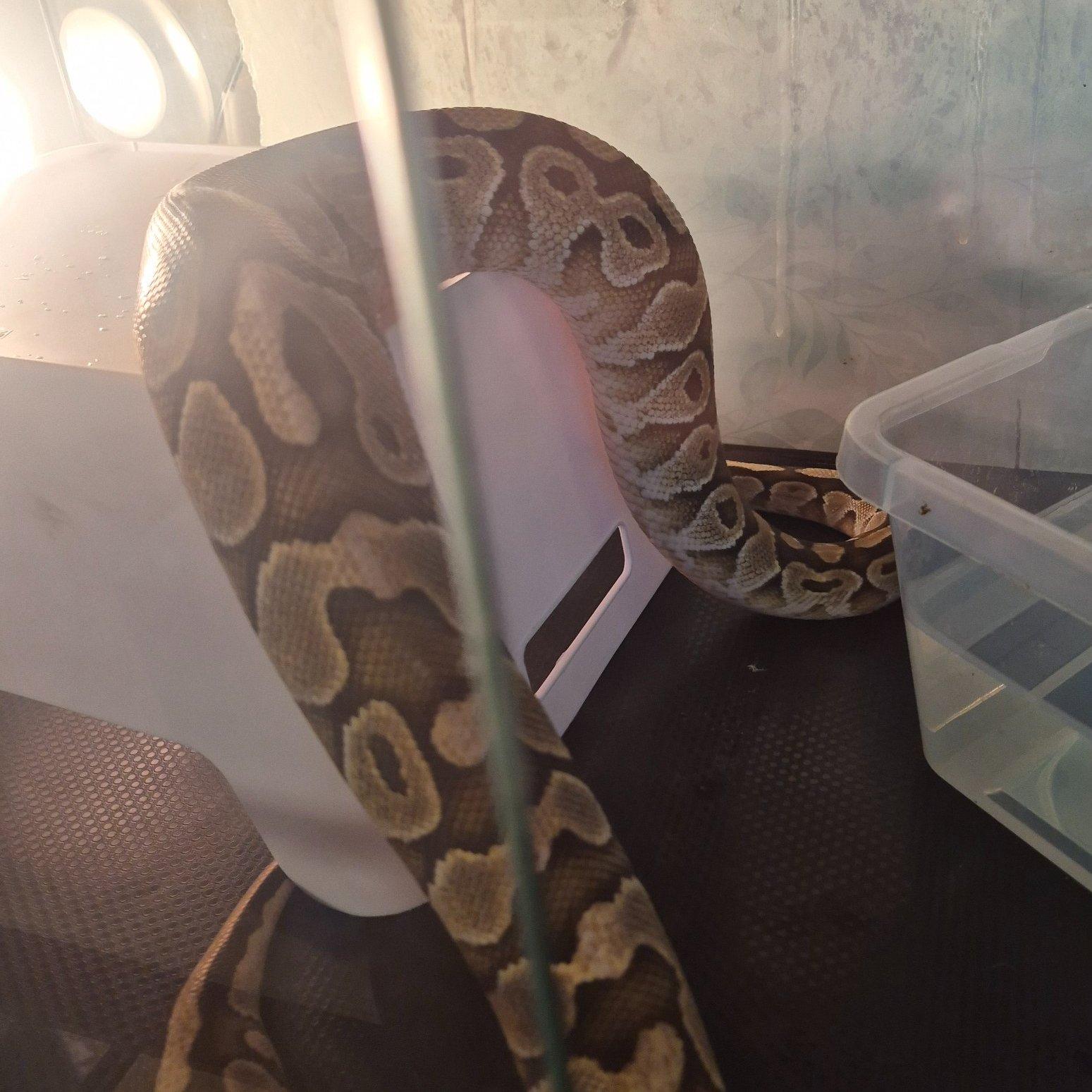
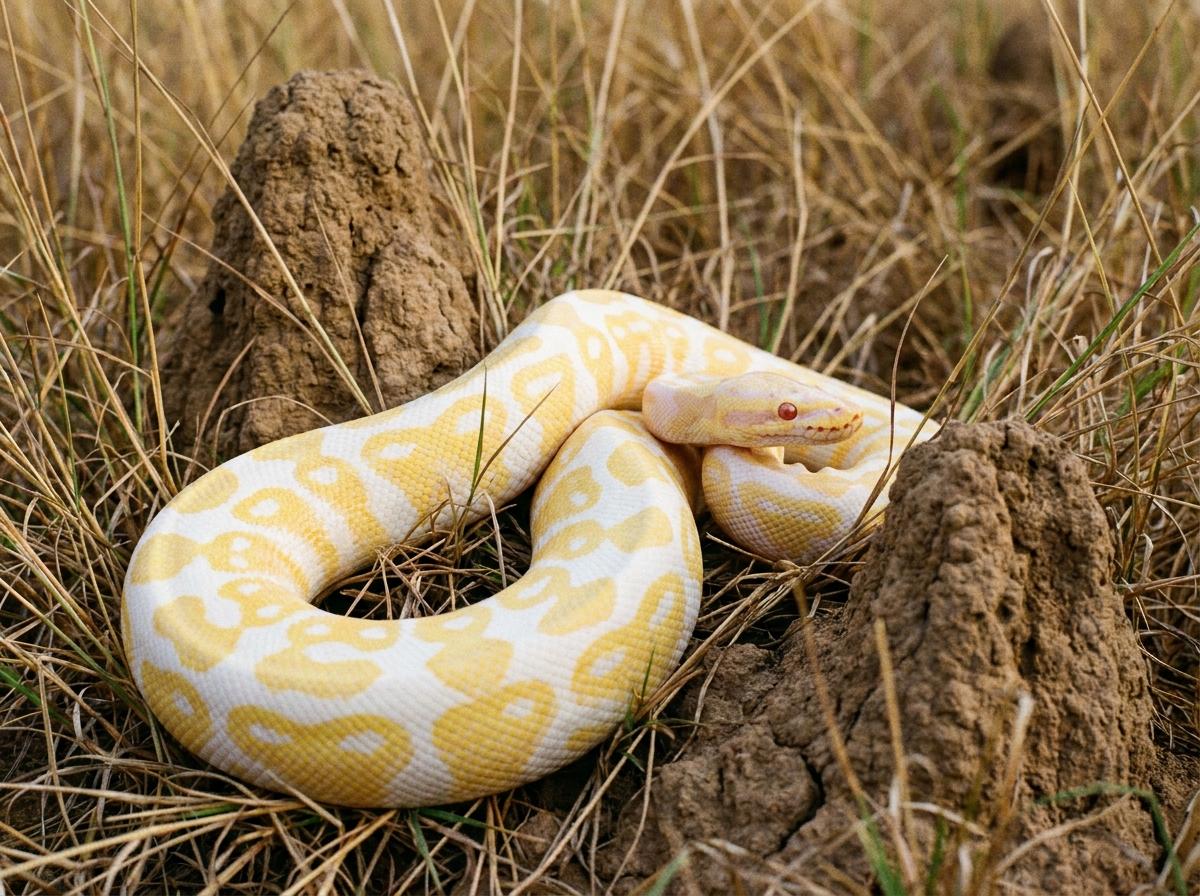
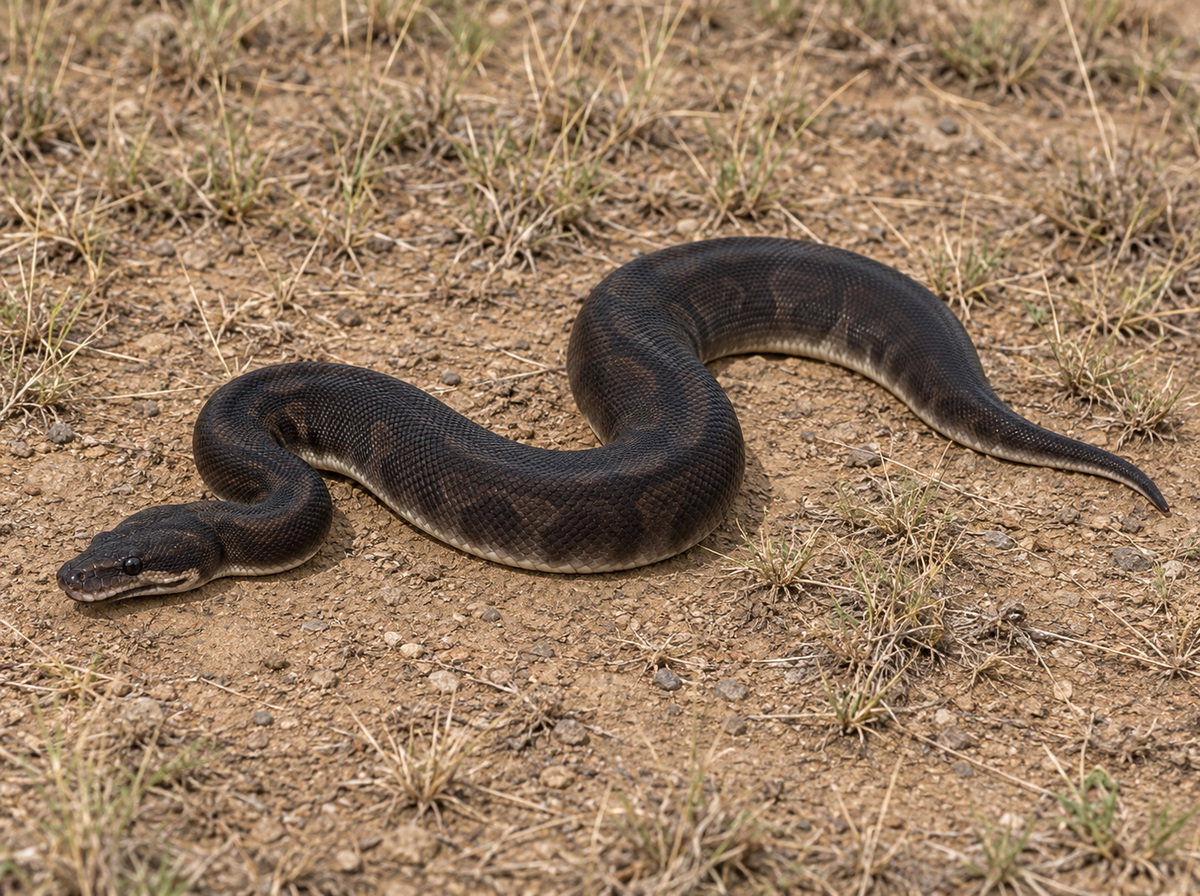
The head is the easiest place to start. Clowns tend to have a bold head marking, often a dark band through the eye and a paler patch below it, and a head stamp that differs from a normal’s. Treat those as descriptions, not a test. Some other morphs and combinations reduce side pattern or add dorsal stripes too, and a snake’s colors change with lighting, age and shed stage. Ask for the parents’ genetics rather than identifying a clown from one photograph, and compare other morphs on the ball python species page.
Clown genetics: recessive, linked to MC1R
Breeders treat Clown as a simple recessive trait, and the Creatures morph calculator models it that way. In 2025, Garcia-Elfring and colleagues reported in Pigment Cell and Melanoma Research that the Clown phenotype is associated with a missense mutation in a transmembrane region of the melanocortin-1 receptor, MC1R, using shed skin crowdsourced from breeders and hobbyists (study abstract on PubMed). MC1R is best known in birds and mammals for controlling the type and amount of melanin. The authors’ results suggest that in ball pythons it plays a part in pattern formation, affecting how the dark and yellow pigment cells are distributed, which fits a morph that moves pattern rather than simply lightening it.
Recessive inheritance gives three kinds of snake:
- Visual clown. Two copies. It shows the clown pattern.
- Het clown. One copy. It looks like whatever else it carries and passes Clown to about half its offspring.
- Possible het. A normal-looking snake whose parents make a het likely but not certain. Two thirds of the normal-looking babies from a het x het pairing are expected to be hets, hence “66% possible het”.
Average odds per egg:
- Het x het: 1 in 4 clown, 1 in 2 het, 1 in 4 with no clown.
- Clown x het: 1 in 2 clown, the rest het.
- Clown x normal (non-carrier): no visual clowns; every baby het.
- Clown x clown: every baby clown.
These are averages per egg. A clutch from two hets can hatch with no clowns at all. The ball python morph calculator runs the arithmetic for real snakes with several genes, possible hets and named combinations, and shows sourced health notes for genes that have them. The help article on using the ball python morph calculator explains how it treats a 66% possible het. Whatever it predicts, the actual genotype of a snake is shown by breeding results or a test, not by the calculator.
Why het claims need paperwork
A het clown is worth more to a breeder than a normal and looks identical to one. That makes the het label the claim most worth documenting. Ask whether the het is proven (the snake has produced visual clowns) or inferred from its parents, and if it is a possible het, what the percentage is based on. Record the source of each claim with the animal, including the seller’s name and the date.
Clown combinations
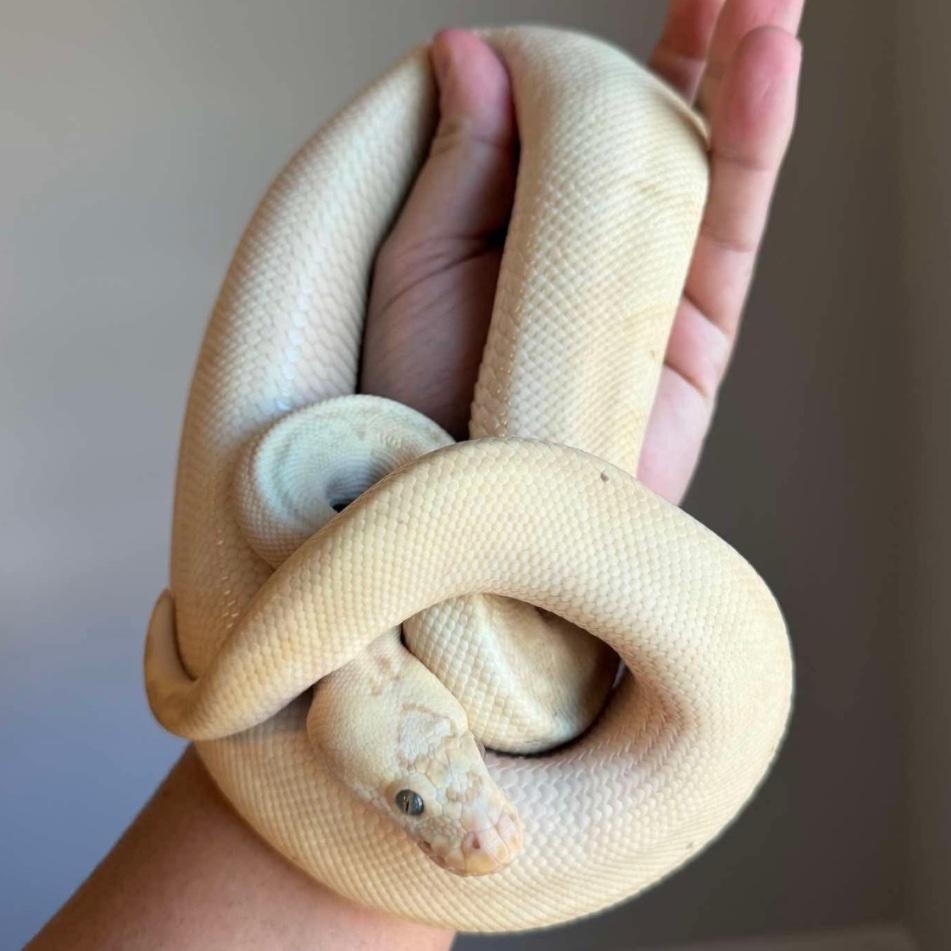
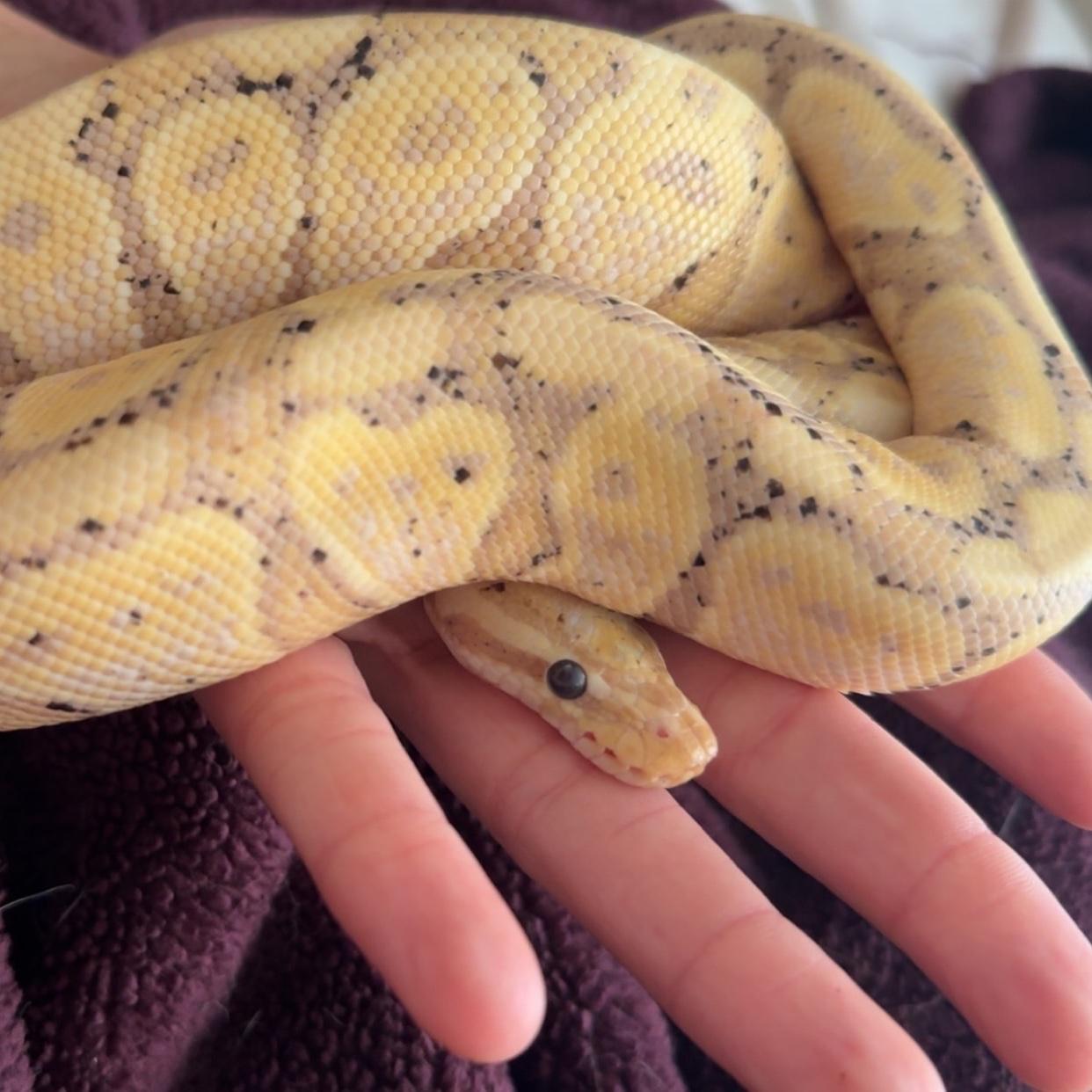
Clown is popular in combinations because it changes pattern while other genes change color. Paired with Pastel, Banana, Piebald or an albino gene, it can produce snakes that look very little like either parent. Each extra gene is another claim to check, and some genes common in combinations carry their own welfare questions, such as the neurological wobble associated with Spider and related genes, explained in the Bumblebee ball python guide. The published sources we checked document no health problem specific to Clown, but that says nothing about the other genes in a combination. The ball python morphs guide covers het terms and welfare checks across the species, and the Banana guide explains why Banana is a special case in any pairing plan.
If you are weighing recessive projects, the other in-batch guides cover piebald ball pythons, linked to tfec, and axanthic ball pythons, where the line name decides which snakes can be paired.
Housing a clown ball python
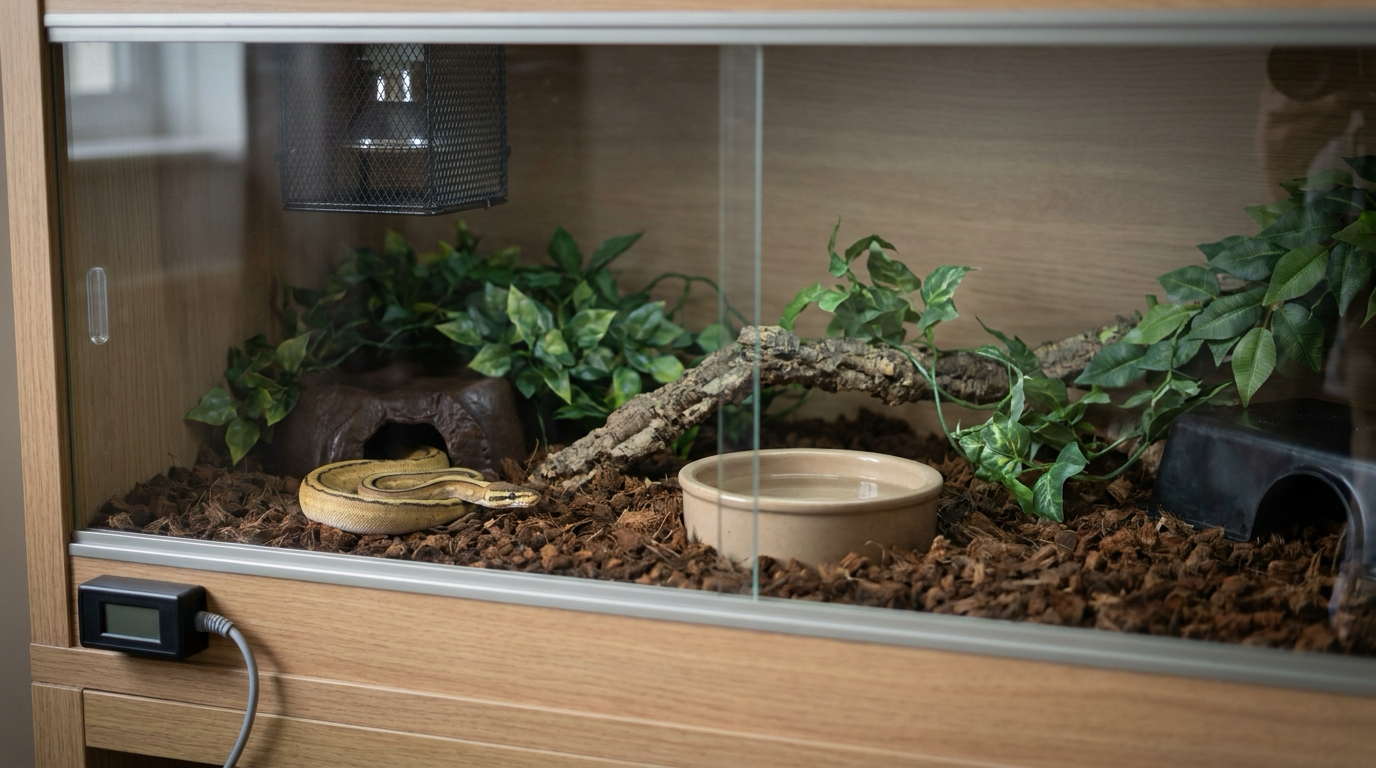
A clown needs nothing a normal ball python does not. The RSPCA’s royal python guidance sets out the essentials:
- Size. A vivarium at least as long as the snake, with width and height each at least one third of its length; a 120 cm snake needs 120 by 40 by 40 cm or more. Adults can reach around 150 cm. Hatchlings can start smaller.
- Heat. A guarded basking zone at 30 to 32 C and a cool end at 24 to 26 C, each heater on a thermostat, readings taken at snake level. Merck warns that heat rocks frequently cause burns and should be avoided.
- Humidity. 50 to 60 percent at the cool end, raised to around 80 percent at times and allowed to fall between, with enough ventilation to stop mold.
- Light. A 12 hour day and a low-output UVB tube, with a maximum UV index of 1.0 in the basking zone.
- Furnishing. Snug hides at both ends, one kept humid with damp moss, organic reptile soil, sturdy branches.
- Housing. One snake per enclosure; RSPCA describes royal pythons as solitary.
The ball python care guide covers setup and shedding in more depth.
Feeding
RSPCA describes feeding young snakes every five or six days and adults every 7 to 14 days depending on weight, on frozen-thawed prey slightly wider than the snake’s widest point, and weighing regularly to catch weight loss or obesity. Merck’s snake nutrition chapter recommends thawing in the refrigerator, serving prey at room temperature or warmer, and leaving the snake unhandled for three days after a meal to reduce regurgitation. Write down every meal and refusal. The ball python feeding and shed log shows what to record and why a single missed meal is not a diagnosis.
Health and hygiene
Reptiles need no vaccinations, according to Merck’s owner guidance, but an initial exam soon after purchase gives you a record of the snake in good health, and an annual check helps confirm it is well nourished and free of parasites. How to find a reptile vet is worth reading before you buy. If you already keep reptiles, Merck recommends a 3 to 6 month quarantine for new arrivals.
RSPCA lists signs that need a reptile vet: weight loss or diarrhea, long periods soaking (a possible sign of mites), whistling or gasping with the head raised (possible respiratory infection) and a sudden refusal to feed. A healthy snake sheds in one piece; retained eye caps are a job for the vet, not tweezers at home.
Ball pythons and their frozen feeder rodents can carry Salmonella without looking ill, and freezing does not kill it. The CDC advises washing hands after handling the snake, its food, its waste or its equipment, and suggests another pet for homes with children under 5, adults 65 and older or people with weakened immune systems.
Buying a clown ball python
No published index tracks clown prices. What a seller asks depends on whether the snake is visual or het, the other genes it carries, its sex, its size and its feeding history, so compare like with like and get a written description of the exact animal. A proven het should be documented as such; a possible het should cost less than a proven one. For dated store prices, rescue fees, setup and lifetime costs, see how much a ball python costs.
Questions for the seller:
- Is this the exact snake, and how recent is the photo?
- Hatch date, sex and both parents’ identities and genetics?
- Which genes are visual, proven het or possible het, and how was each established?
- Is it feeding reliably on frozen-thawed prey? Can I see recent feeding and weight records?
- Any retained shed, mites, regurgitation or breathing problems?
- What happens if it arrives unwell?
Once it is home, the ball python lifespan guide puts the commitment in years, the pedigree chart maker prints a three-generation chart from the seller’s records, and the ball python name generator helps with the name.
Frequently asked questions
Is a clown ball python rare?
We found no published count of how many are bred. There are no ball python listings on Creatures right now, so a listing alert is the easiest way to hear about one.
Can a het clown be identified by looking at it?
No. One copy of a recessive gene does not show. The evidence is the parents’ genetics and any visual clowns the snake has produced.
What gene causes the clown morph?
A 2025 study associated Clown with a missense mutation in MC1R, a gene involved in pigment cell signaling, and suggested it affects how pattern forms in ball pythons.
Do clown ball pythons need different care?
No. They need the same secure, warm, humid, well-furnished enclosure and feeding routine as any ball python.
What do two het clowns produce?
On average, 1 in 4 eggs are visual clowns, 1 in 2 are hets and 1 in 4 carry no clown. Use the morph calculator for pairings that involve other genes.
Do this next on Creatures
Hear about clowns as they are listed. There are no ball python listings on Creatures right now, so set a clown ball python listing alert and Creatures emails you when one is posted. No account needed to start. See saving searches and using your watchlist.
Browse what is listed now. Clown ball pythons on the marketplace shows any current listings. Confirm the snake, its records and the terms with the seller.
Add your snake. Create a free clown ball python profile and record its genes, visual, het or possible het, on the profile. No account needed to start. See adding an animal to Creatures and recording your animal’s morphs and genes.
Keep the feeding and shed history. Add a feeding, weight or shed record. It opens for visitors; a free account saves it. Read adding a record.
Find breeders. The breeder directory filters by species and state. A listing is a lead to follow up, not a guarantee of stock or health.
Breed clowns? Create a free breeder profile so ball python buyers can find you. No account needed to start. See getting listed in the breeder directory.