Banana
Gene
Author: Elliott Garber, DVM · Updated
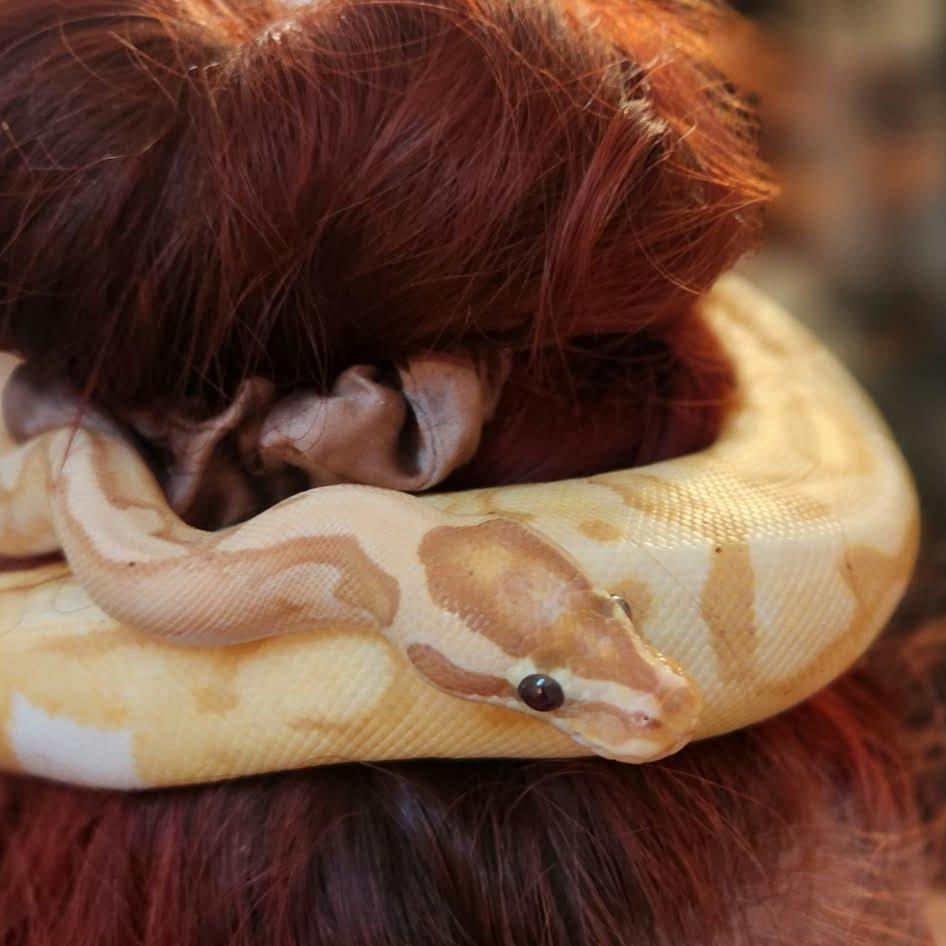
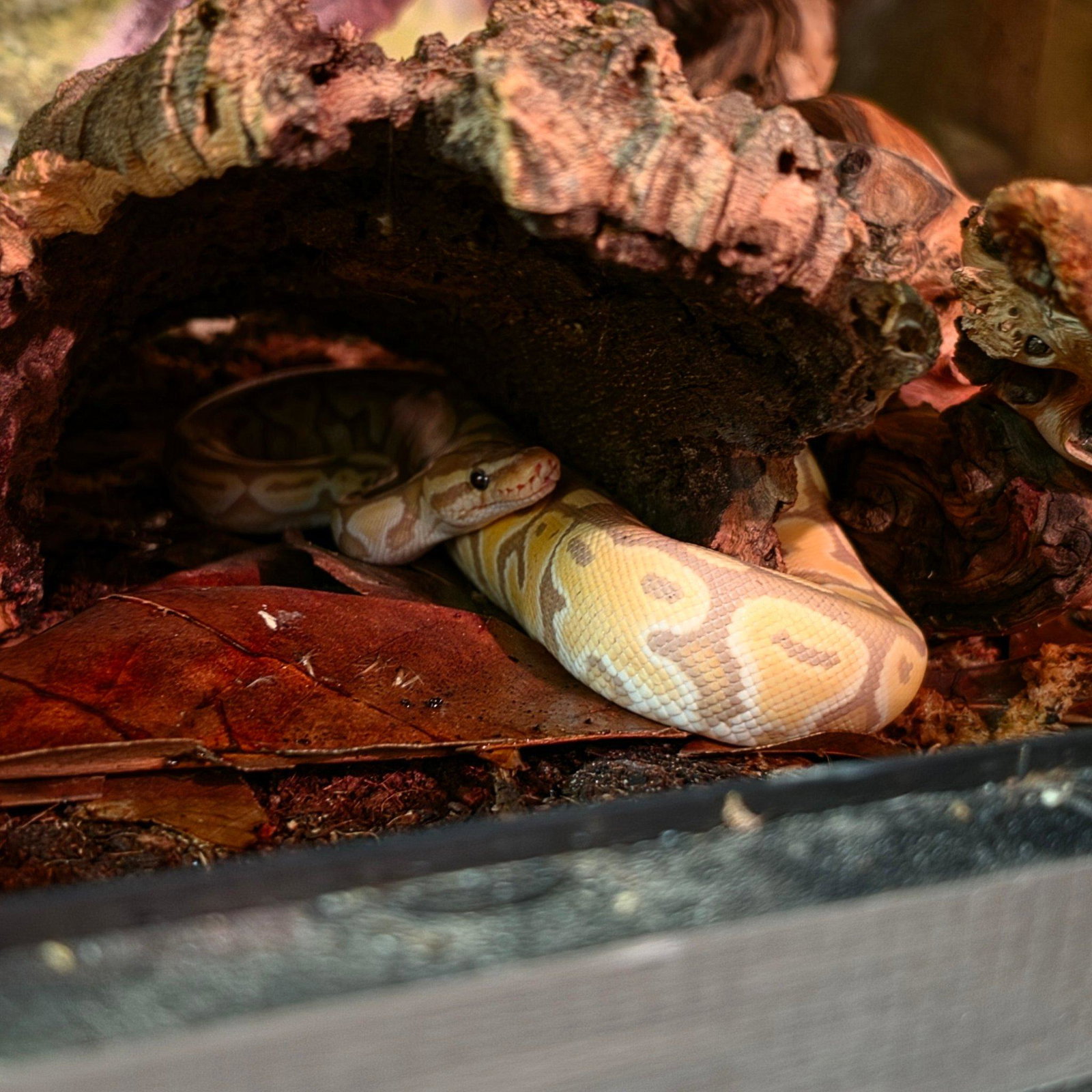
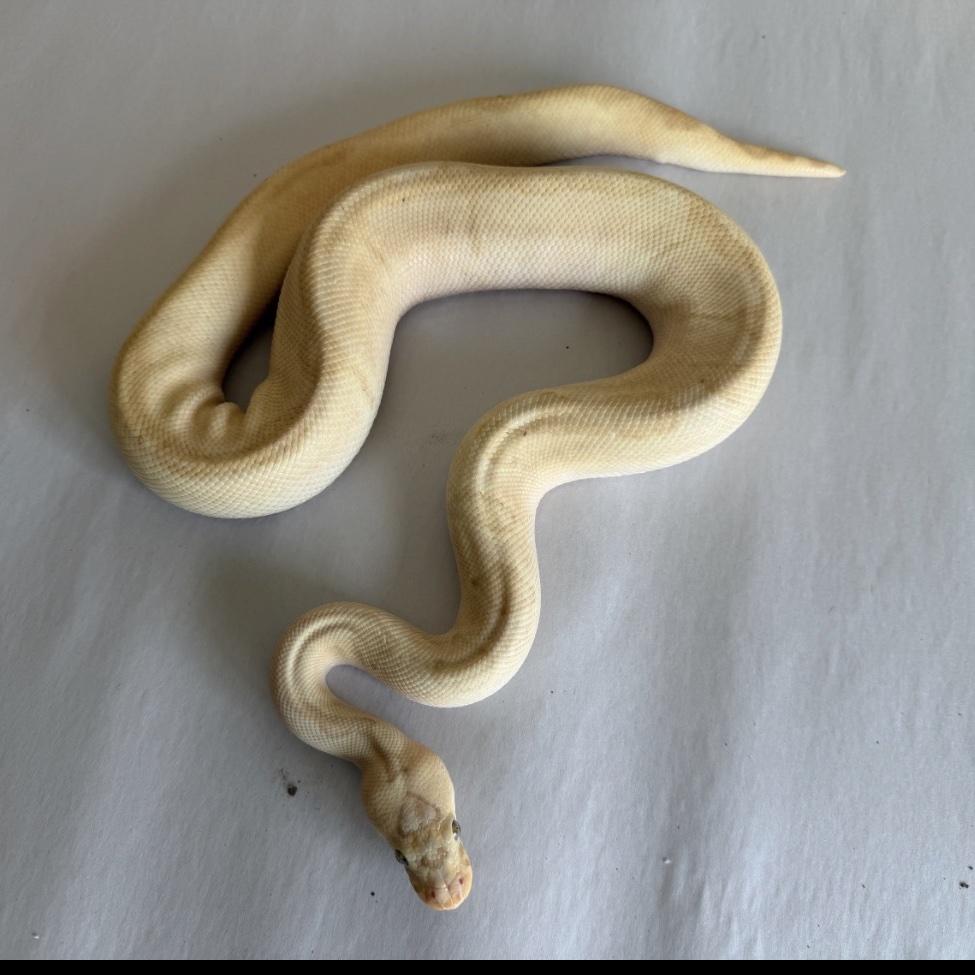
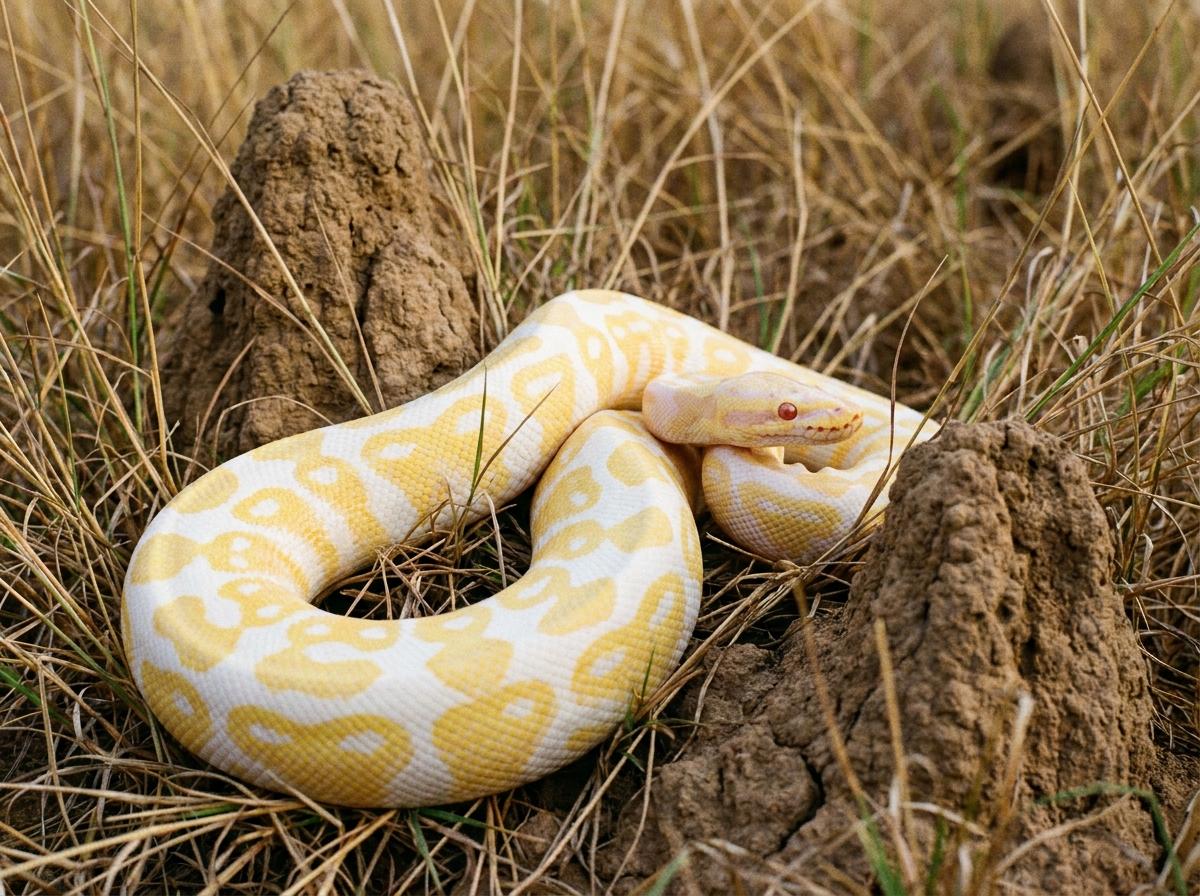
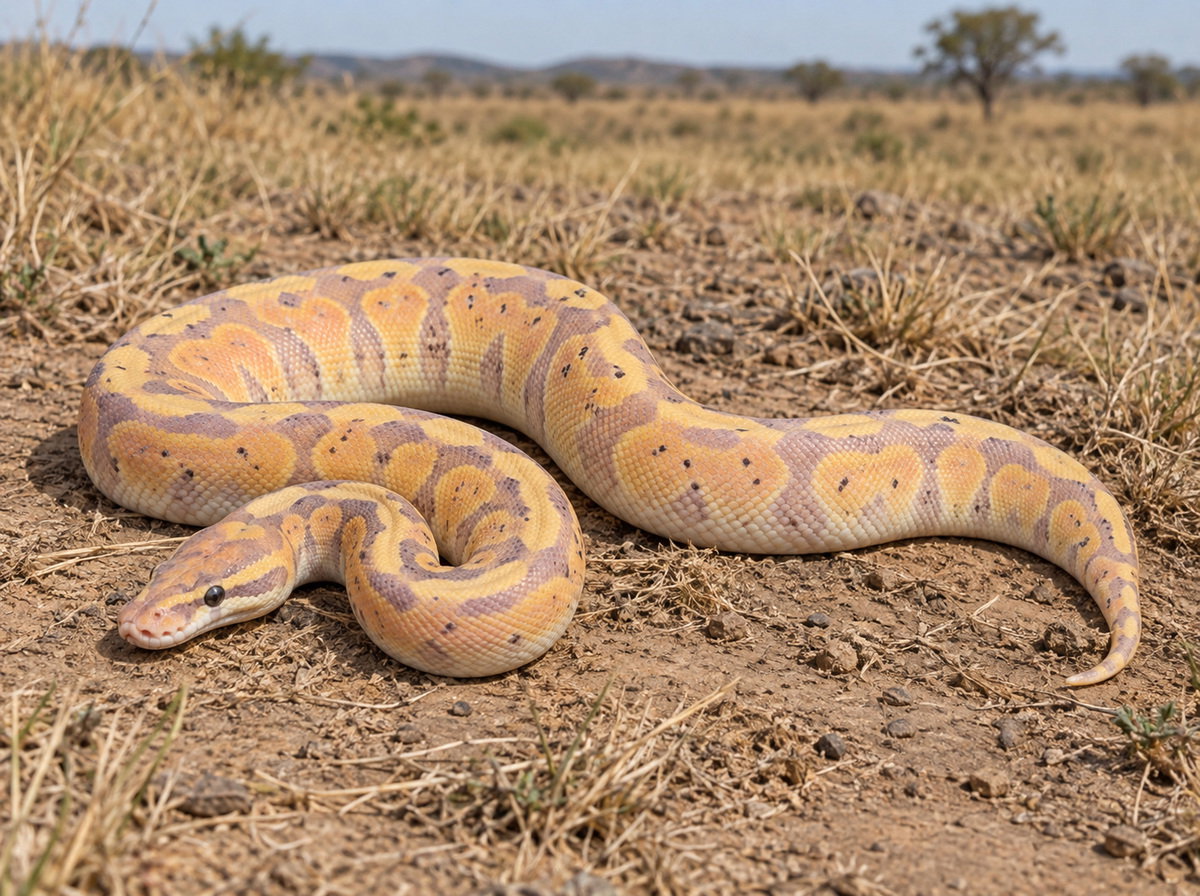
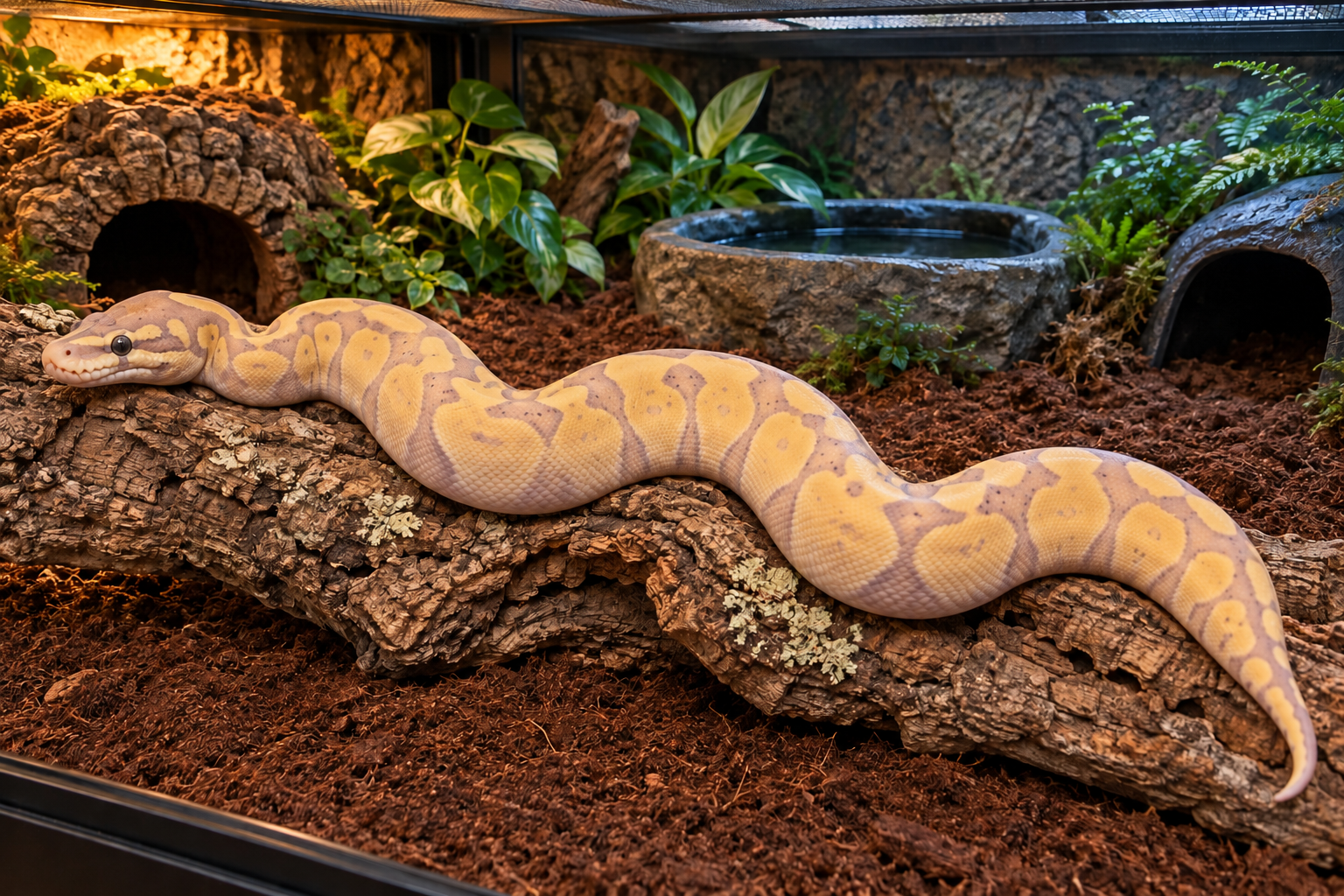
A Banana ball python is a color morph of Python regius, the ball or royal python. Its yellow and lavender tones do not make it a different species, a boa or a special size of python. Banana is closely associated with the Coral Glow name, and its breeding history needs more care than a simple color label suggests. The ball python morph calculator can explore possible outcomes from entered parents, but it does not prove a snake’s maker status, sex or ancestry.
| Species | Python regius, ball or royal python |
|---|---|
| Type | Color morph, not a separate breed or species |
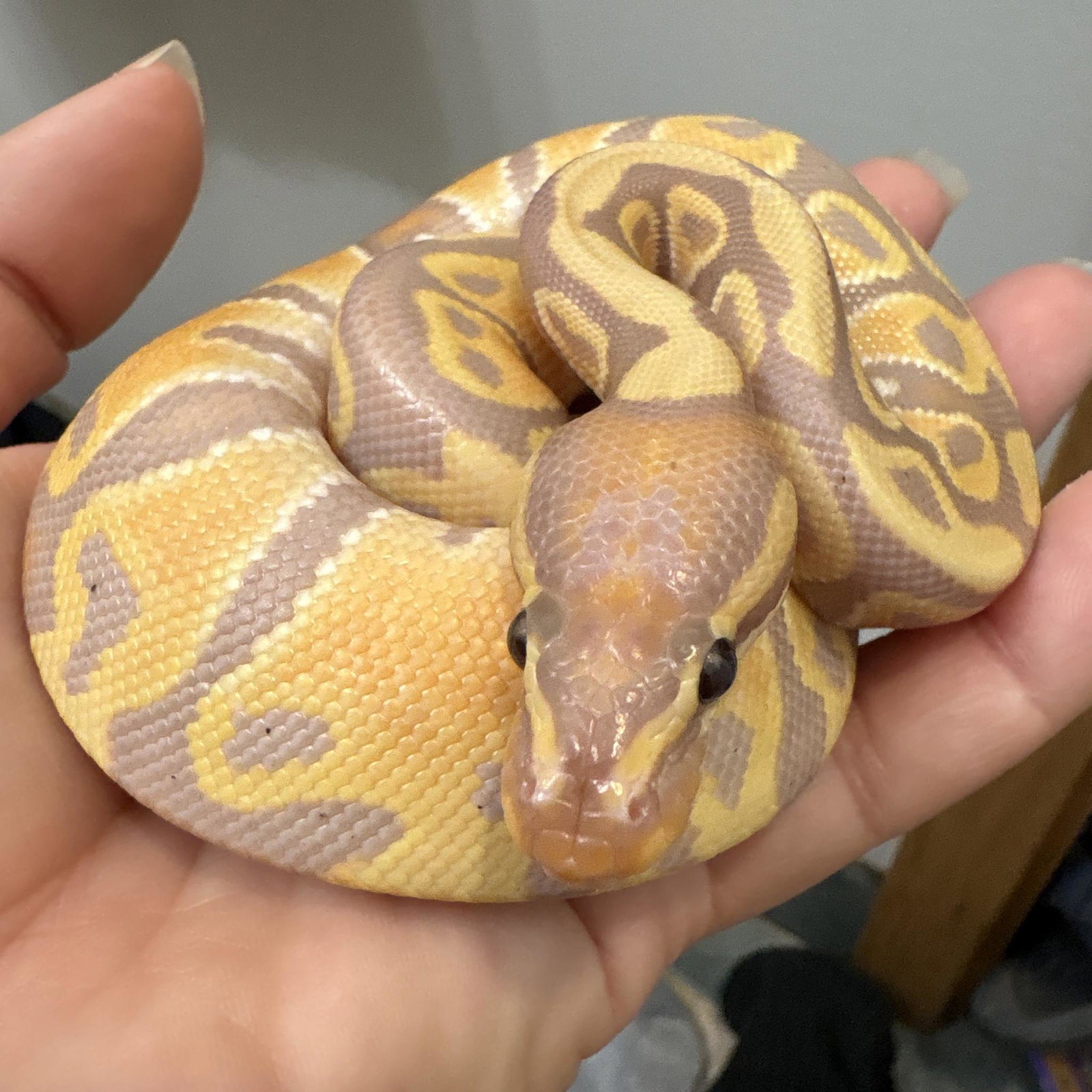
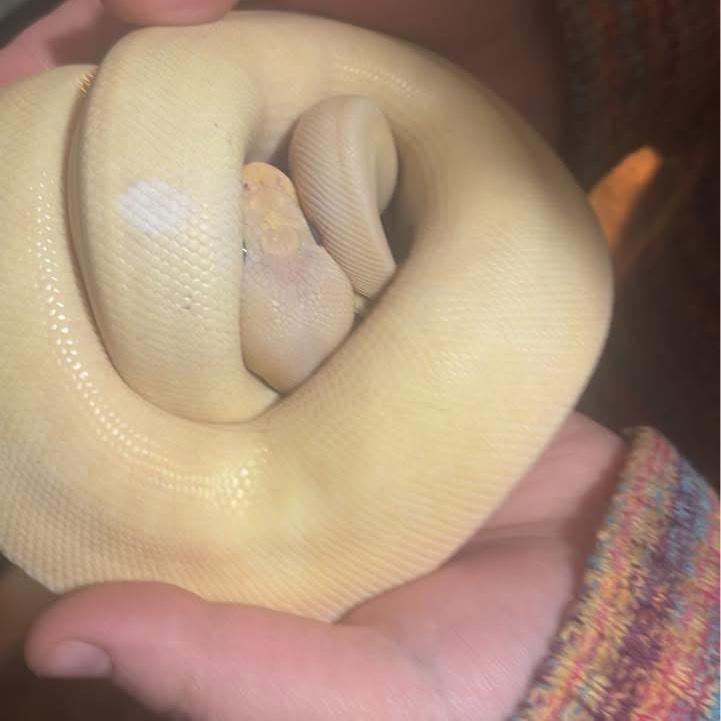
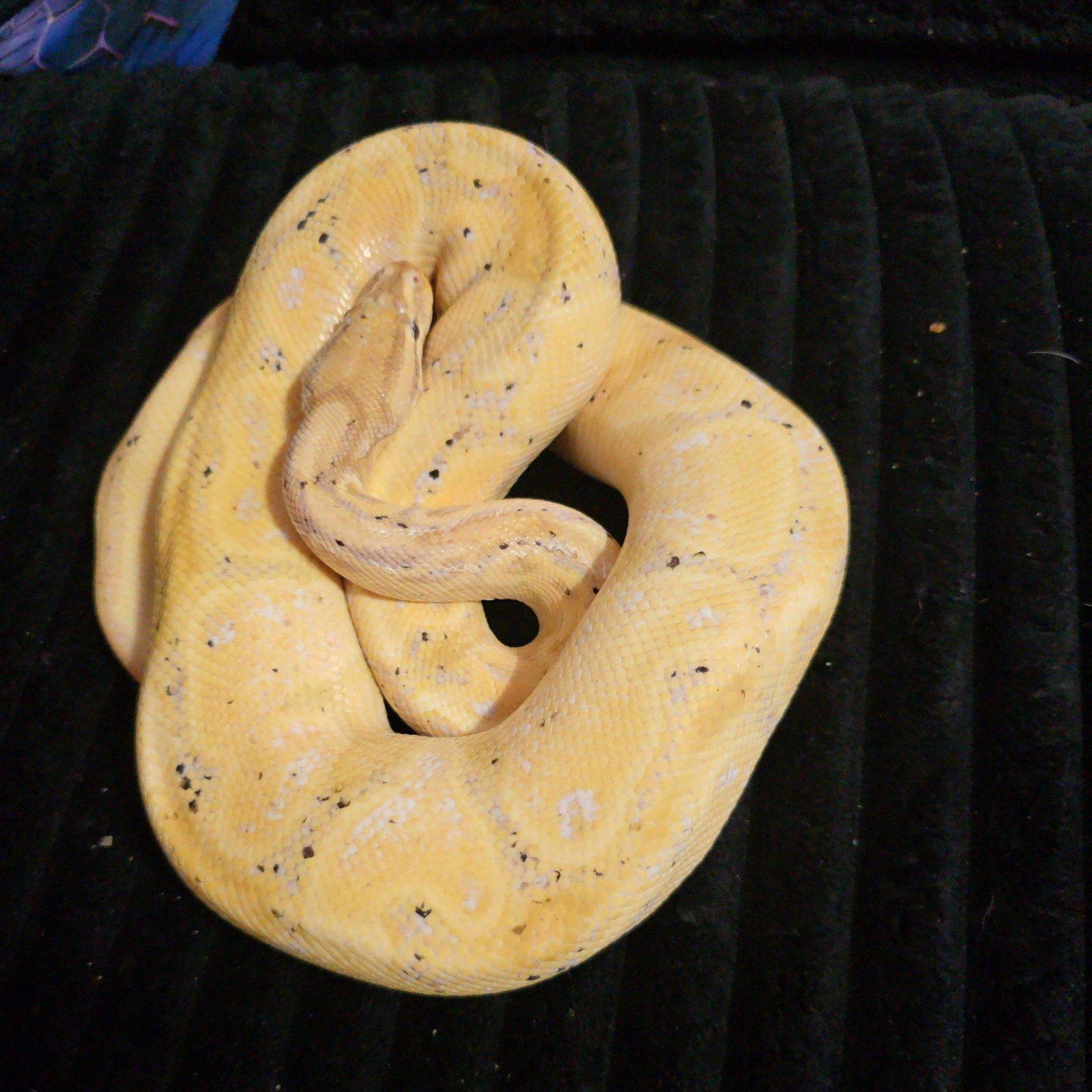
| Appearance | Yellow and muted lavender with possible dark spots |
| Related name | Coral Glow |
| Inheritance | Sex-linked incomplete dominance in the studied lineages |
| Maker label | Needs lineage evidence; recombination occurs |
| Housing | Individual secure furnished vivarium |
Browse listings, public profiles, breeders, or add your animal.
Banana and Coral Glow: what the names describe
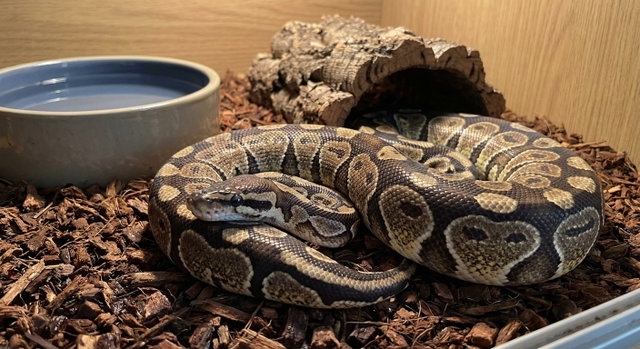
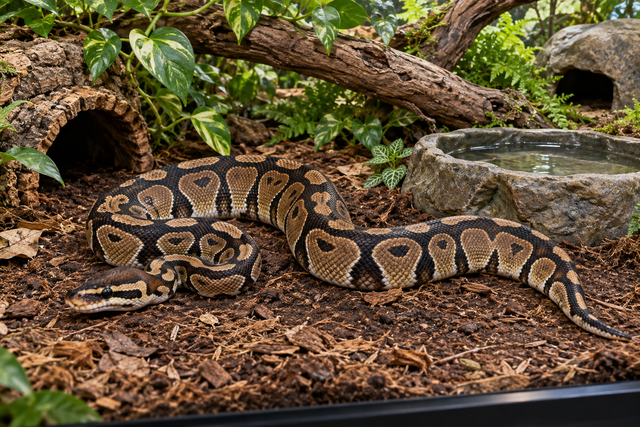
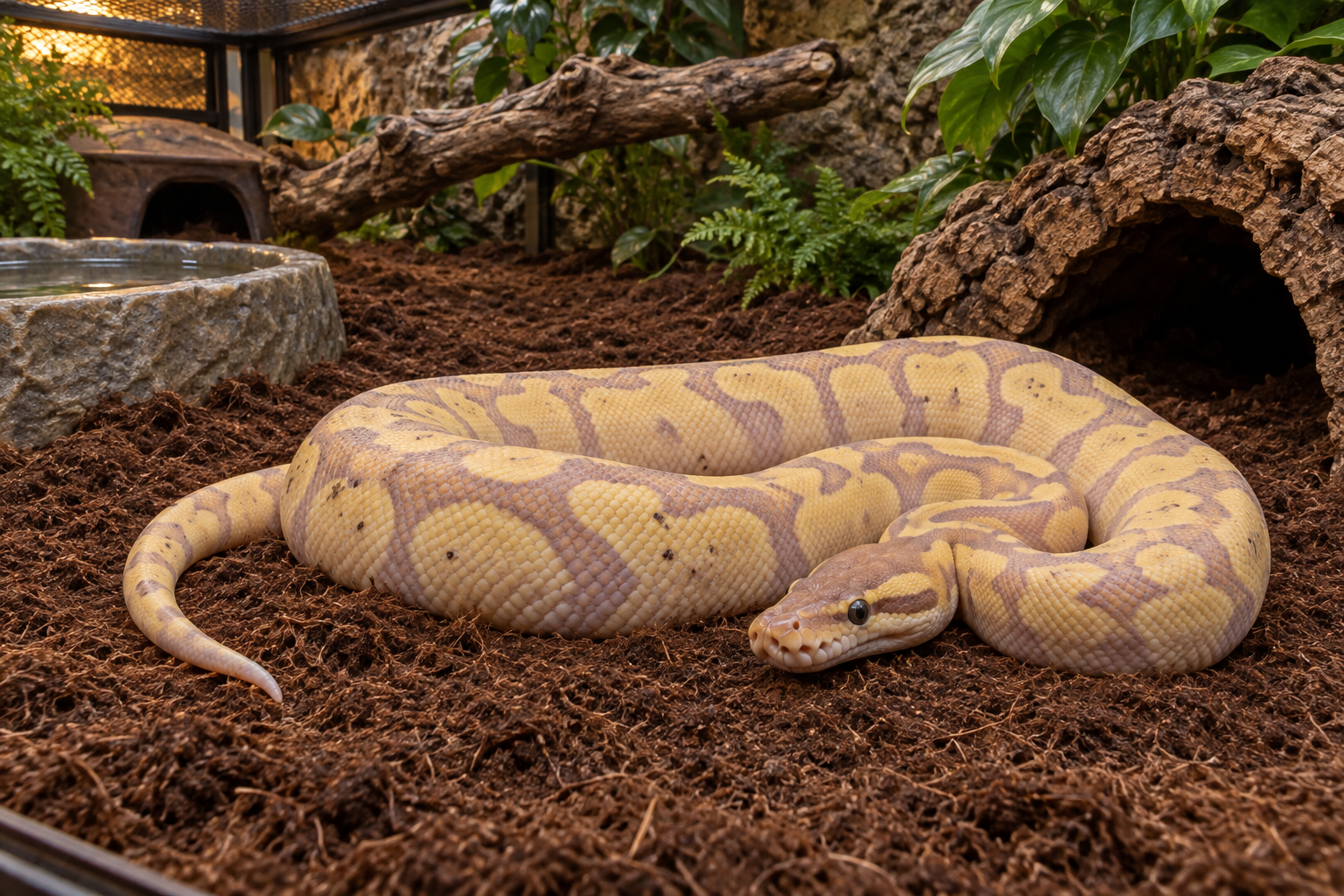
The primary Coral Glow sex-linkage study by Mallery and Carrillo describes the Banana and Coral Glow names arising from separately established examples of the same phenotype. The studied snakes had pale yellow-orange and faded magenta-gray coloration with small dark spots. In everyday buying, ask the breeder which name and line they have recorded rather than assuming a name supplies a complete genetic history.
A Banana can also carry other color or pattern traits. Clown is a common partner, and the clown ball python guide explains its recessive odds. A multi-morph label therefore needs evidence for each part. Appearance is useful for describing the animal, but it does not reveal all recessive carrier states. Do not accept an unusually pale snake as proof of every gene in its advertisement.
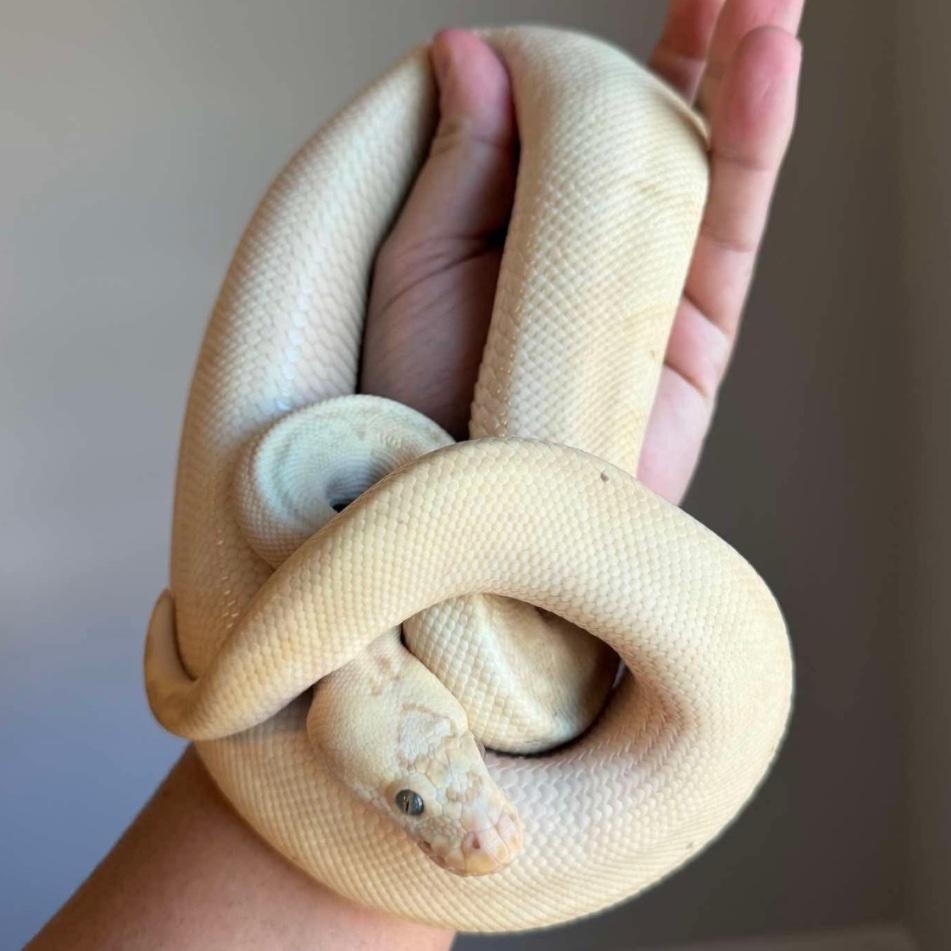
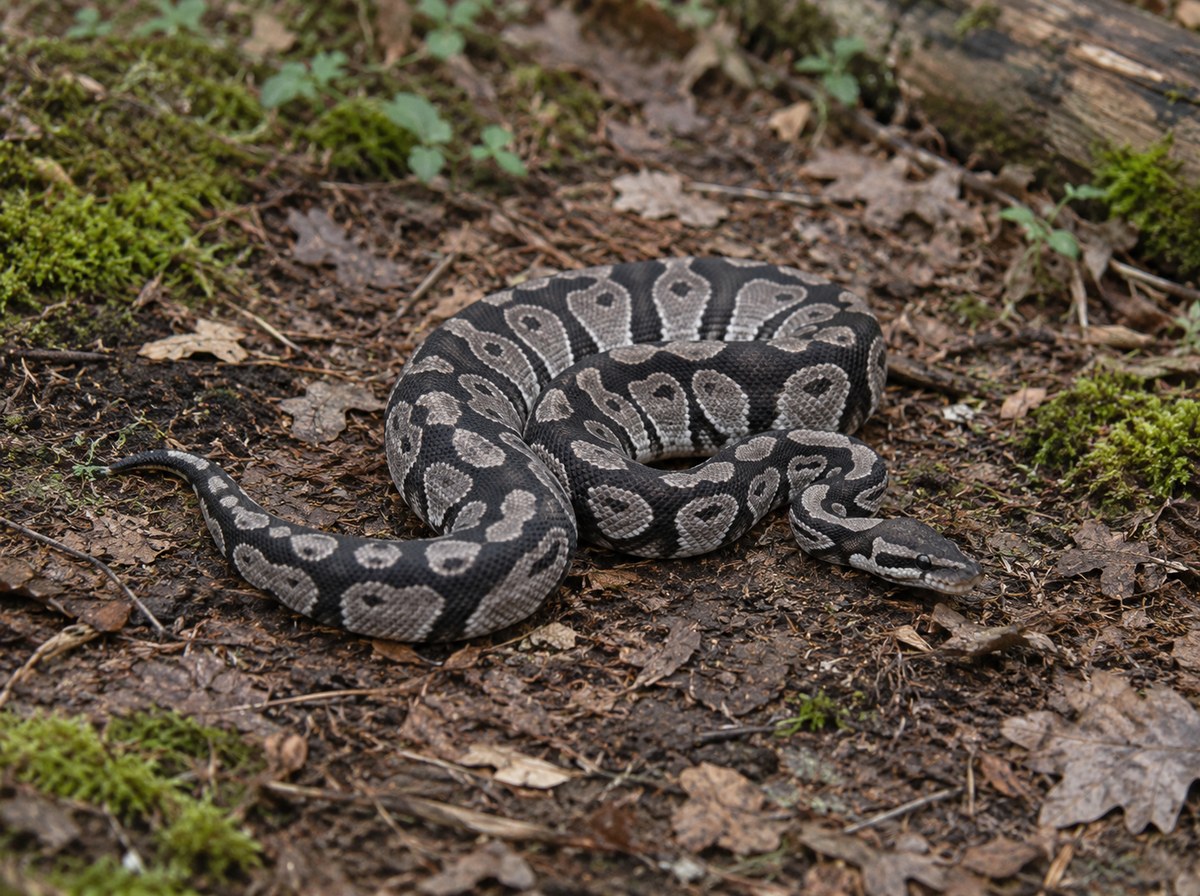
Compare morphs within the ball python species hub. The Ivory ball python guide explains a different genetic route to a pale animal. Similar color does not make Ivory, Banana and other pale morphs genetically interchangeable.
What to expect from its appearance
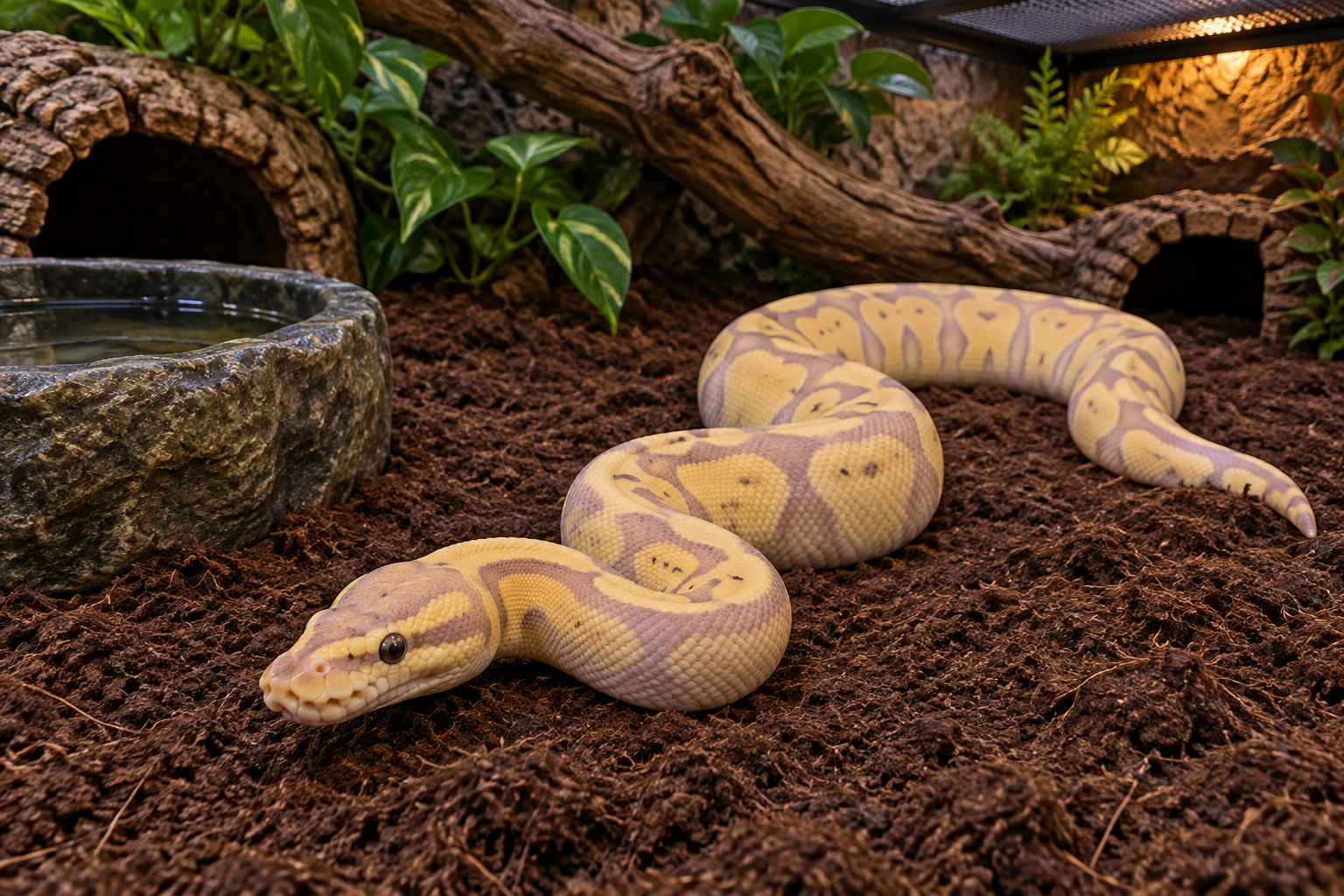
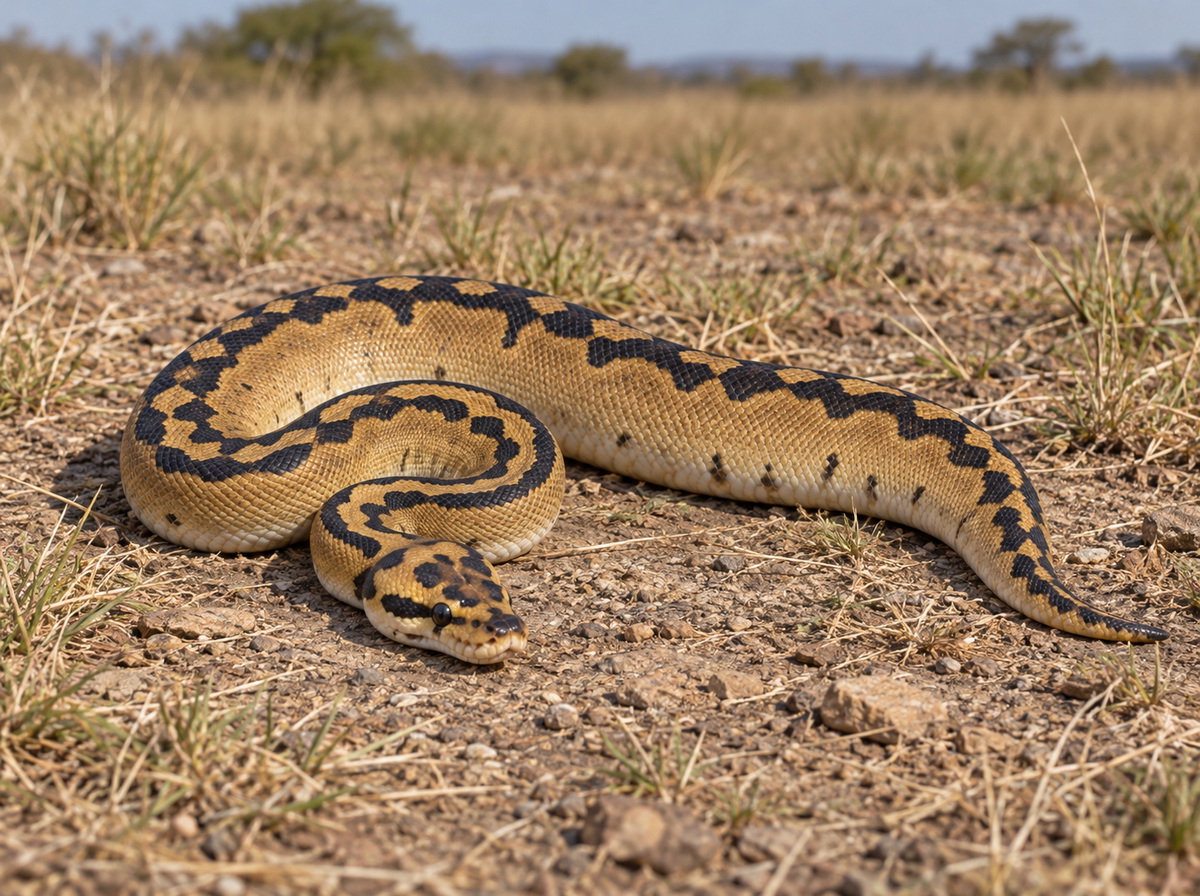
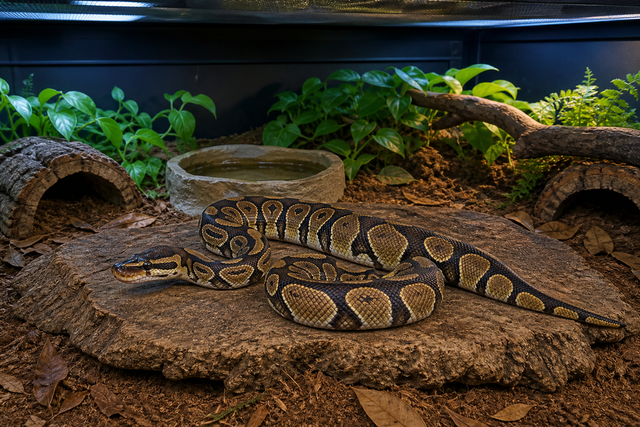
Look for a ball python’s substantial body and compact head, with the morph’s altered colors rather than a different body plan. The shades in a photograph depend on lighting, white balance, shed stage and any other morphs present. Ask for a recent photograph in ordinary neutral light and a clear identification of the animal being offered.
Tiny dark marks can be part of the morph’s pigmentation. A new raised, crusted, spreading or otherwise abnormal mark still deserves attention; a color label is not a diagnosis. Inspect the individual and its history rather than explaining every skin change as Banana freckles.
The useful purchase question is not whether the animal is the brightest yellow. It is whether its identity, feeding record, body condition and the seller’s claims agree.
Male-maker and female-maker, without the myth
The Mallery and Carrillo study found strong association between Coral Glow expression and sex in breeding records, consistent with sex-linked incomplete dominance and recombination. In the studied lineages, Coral Glow males sired by Coral Glow males mainly produced male Coral Glow offspring, while Coral Glow males born to Coral Glow females mainly produced female Coral Glow offspring. Offspring produced by Coral Glow females showed no evidence of the same morph-associated sex bias, so male-maker and female-maker describe males. These are tendencies among morph offspring, not a promise that a male-maker produces only male snakes.
The authors also documented recombination, so parental origin does not create an absolute rule. A yellow coat cannot show the chromosome linkage history. Ask for the sire, dam, the relevant parent’s origin and actual offspring records behind a maker claim. A seller’s label alone cannot supply that evidence.
Incomplete dominance also distinguishes the heterozygous form from a homozygous, or super, form. Do not use this case study as a blanket health clearance for every Banana combination or as a guarantee of a particular clutch. The practical lesson is to retain the lineage and uncertainty, not to advertise a fixed sex ratio.
A spacious, secure ball python enclosure
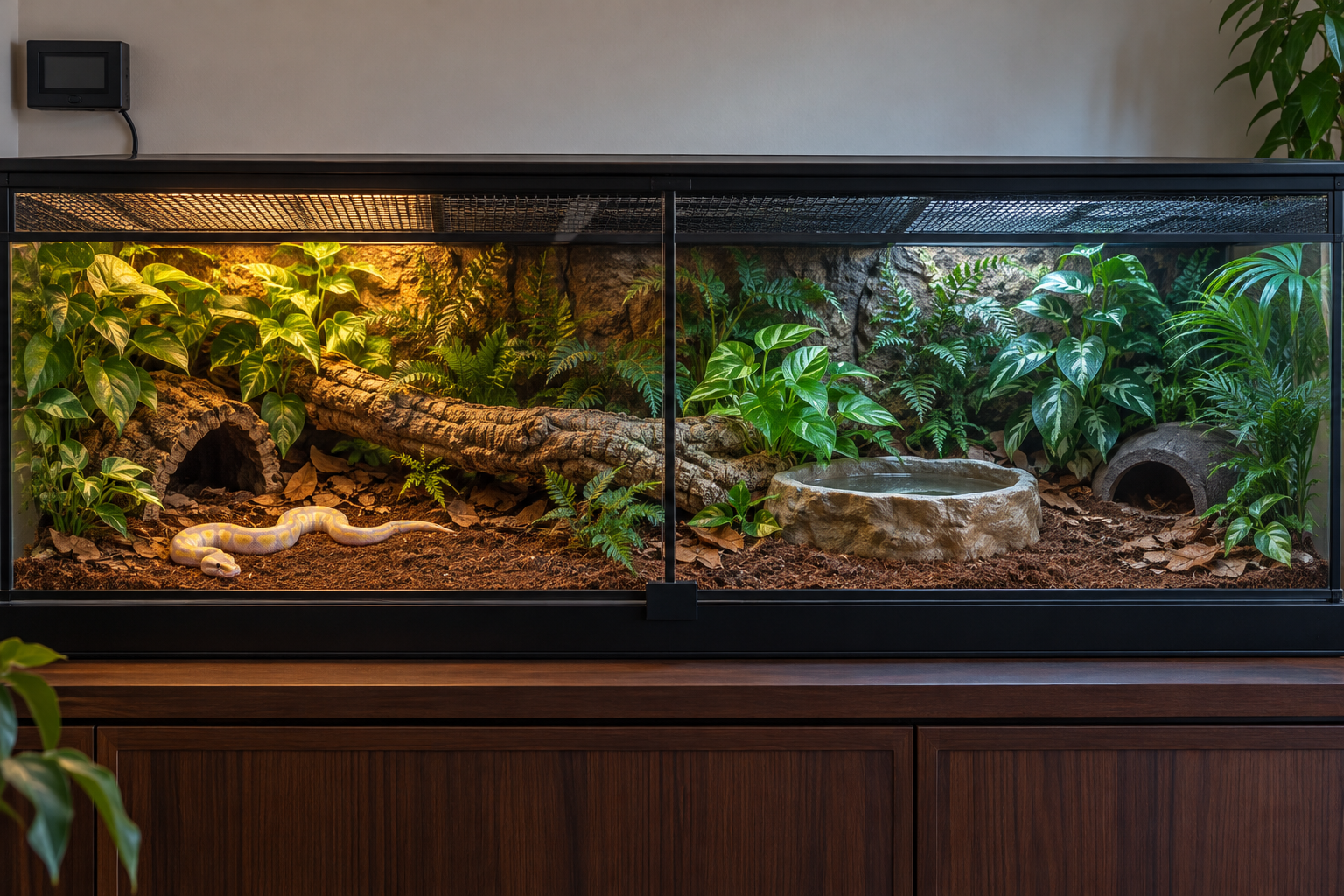
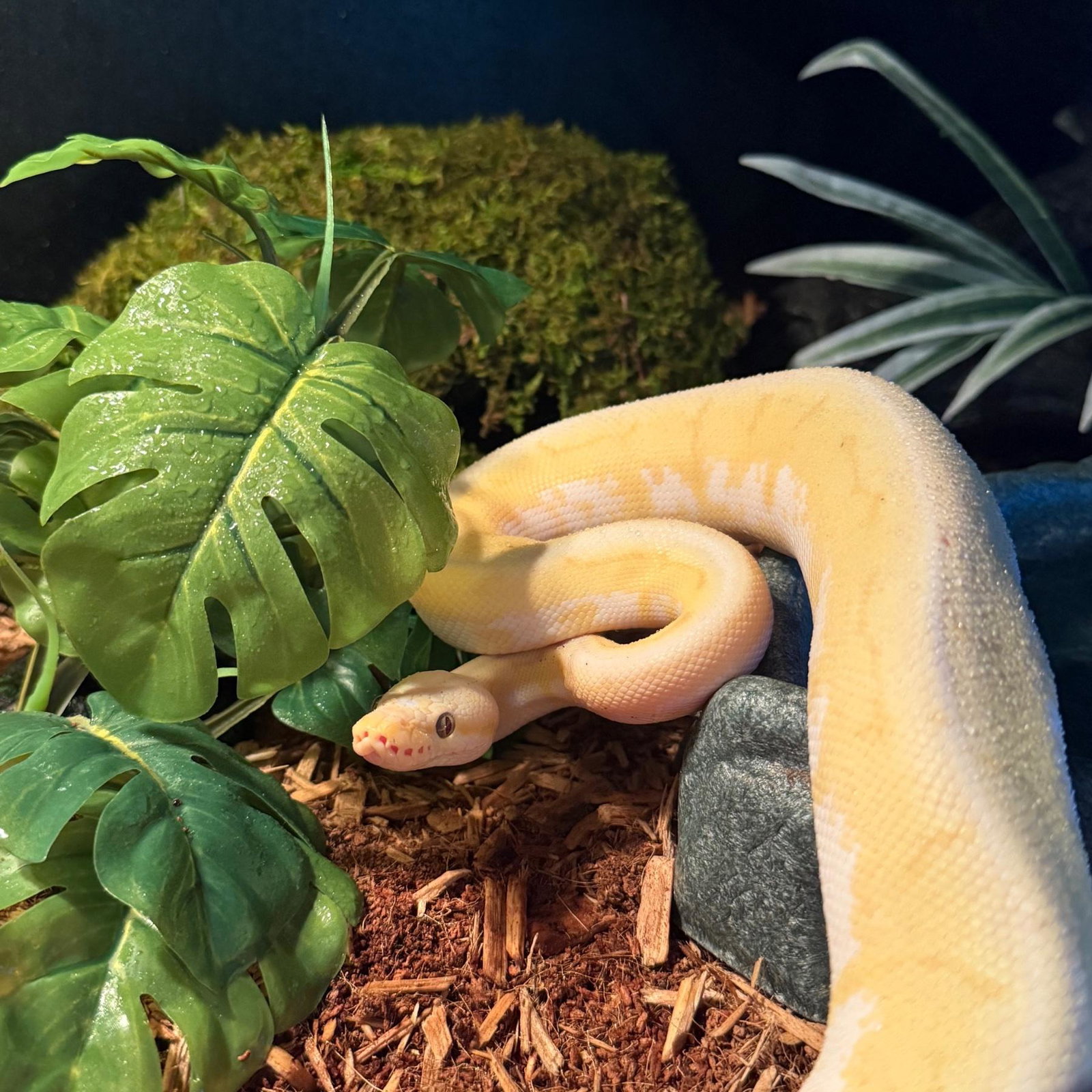
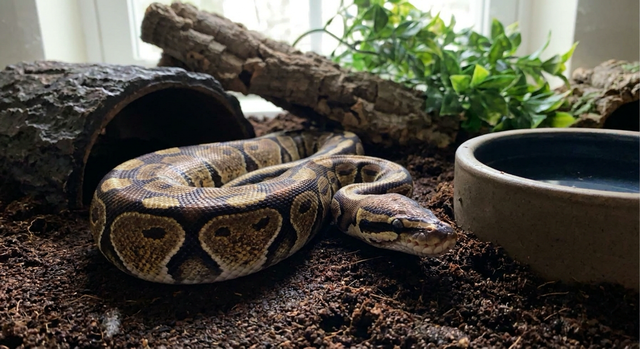
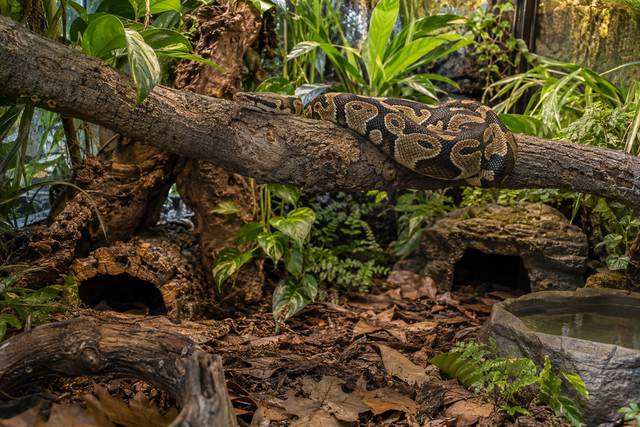
Banana needs ball python husbandry. The RSPCA’s royal python guidance calls for an enclosure at least as long as the snake, with width and height each at least one-third of its length, so it can stretch fully. Provide plentiful cover, hides at both ends, burrowing substrate, water and sturdy climbing opportunities. Keep the snake alone. A large furnished enclosure gives security without confining it to a bare box.
Use a thermostat on each heat source and guard hot equipment against contact. Measure temperatures at snake level rather than trusting the control dial. RSPCA specifies a 30 to 32 C basking zone and a 24 to 26 C cool end. RSPCA recommends normal humidity around 50 to 60 percent, measured at the cool end with a hygrometer, with temporary increases around 80 percent and a drop between them. Provide a humid retreat and maintain ventilation instead of leaving the whole floor wet. Lighting needs a day-night cycle and shaded retreats. RSPCA’s separate lower-UVB recommendation is for light-sensitive morphs such as albinos, not an instruction to treat every pale Banana as albino. Plan suitable UVB placement with species guidance and your reptile veterinarian.
The ball python care guide covers the setup in more detail. Assemble and test it before the animal arrives, including the door locks, secured probe and the places the snake can hide at different temperatures.
Do not copy a corn snake’s settings because both animals are sold as colorful pet snakes. The Lavender corn snake guide covers a different species and a different inheritance pattern.
Feeding and records that help
Feed appropriately sized whole prey under a plan suited to the snake’s age, body condition and history. Ask the seller exactly what it eats, how prey is prepared and when it last fed reliably. The Merck Veterinary Manual’s snake nutrition guidance discusses frozen-thawed prey and cautions against handling after meals. Avoid repeated unnecessary disturbance during digestion.
Keep the date, prey type and size, whether it was accepted, weight trend and shed outcome together. A missed meal alone does not tell you the cause. Our ball python feeding and shed log explains how to record observations without turning them into an invented diagnosis.
Do not try force-feeding or a home procedure because a feeding calendar is overdue. Contact a reptile veterinarian when the pattern changes, especially if weight or other signs are changing too. The feeding history is useful evidence to bring to that appointment.
Health, handling and household hygiene
Choose a reptile veterinarian before you need one. Look for wounds, swelling, abnormal movement, visible parasites or troublesome shedding, and ask about any previous illness or treatment. The Merck reptile examination reference emphasizes skin, retained shed, body condition and respiratory assessment. Open-mouth breathing can signal severe respiratory trouble and needs urgent veterinary advice.
Support the snake’s body during brief calm handling and allow it to settle after arrival. Do not grab it by the tail or repeatedly pull it from a hide. A snake curling into a ball is displaying its defensive response, not asking to be handled longer.
Reptiles and feeder rodents can carry Salmonella even when they look healthy. CDC guidance calls for handwashing and keeping animals, feed and equipment away from food-preparation areas. It also advises against reptile pets in households with people at higher risk of serious infection. Consider the whole household before choosing a snake.
Price and buyer questions
There is no single reliable Banana price: sex, documented genetics, age, feeding history and additional morphs can change an asking price. Obtain a current written quote, not a number copied from an old morph list. The enclosure, heating controls, monitoring equipment, food and veterinary reserve belong in the budget before considering a premium for color.
Ask the breeder:
- Which exact animal is pictured, and when was the image taken?
- Is it captive-bred, and what are its hatch date and parent identities?
- Which traits are visually expressed, documented carriers or only possible carriers?
- How was sex established, and who did that assessment?
- If a maker label affects the sale, what lineage and offspring records support it?
- Is it eating frozen-thawed prey reliably, and can I see the recent log?
- Have there been regurgitation, breathing, mite, shed or treatment concerns?
- What support and return terms apply after collection or shipping?
A pet buyer does not need breeding credentials for the animal to be worthwhile. A healthy, well-matched snake with a clear feeding history is a better starting point than an unsupported promise about future offspring. Use the ball python name generator for a name once you have chosen the individual, keeping its existing identifier in the records.
Frequently asked questions
Is Banana a breed of ball python?
It is a morph within Python regius. It changes coloration, not the species’ basic housing and feeding needs.
Are Banana and Coral Glow the same?
The primary study describes two names for the same phenotype from separately established animals. Ask how the breeder records the particular lineage and any additional traits.
Does male-maker mean every baby will be male?
No. It describes a tendency involving morph expression and sex in a lineage. The study observed recombination, and the overall clutch includes more than just the Banana offspring.
Can I identify maker status from a photograph?
No. Color is not a visible record of parental origin or linkage. Ask for evidence and retain unknowns.
Does Banana need a different enclosure from a normal-colored ball python?
It still needs a secure, appropriately furnished ball python environment. Individual medical or lighting advice belongs with a reptile veterinarian; do not improvise morph-specific treatment from its pale color.
Do this next on Creatures
Start with your animal. Start an animal profile, no account needed to start. See adding an animal to Creatures for the steps.
Keep the evidence. Add a care or health record. The sheet opens for visitors; a free account saves it. Read adding a record and retain the original documents beside your observations.
Wait for a suitable match. Set a Banana ball python listing alert for future matching listings. No account needed to start. An alert does not establish that an animal is available now. The guide to saved searches and the watchlist explains the workflow.
Check current listings. Browse Banana ball python marketplace results and verify the individual, records and sale terms with the seller.
Research people and organizations. Use the breeder directory as a starting point. A profile is not a health certification, endorsement or guarantee of current stock.
Represent your organization. If you run a breeding operation, start an organization profile. No account needed to start. Review creating an organization; starting a profile does not verify breeding claims.