Axanthic
Gene
Author: Elliott Garber, DVM · Published
An axanthic ball python is a Python regius that lacks the yellow and warm brown tones of a normal, so its pattern shows in black, charcoal, gray, silver and white. It is a recessive morph, so a snake must inherit it from both parents to show it. The catch is that “axanthic” is a description shared by several separately established lines, and breeders report that a snake from one line paired with a snake from another produces normal-looking babies. Before you buy or pair, find out the line and enter it in the free ball python morph calculator, which lists the named lines separately and will not guess for an axanthic with no line. It predicts from the genes you enter and never proves what a snake carries.
| Species | Python regius, the ball or royal python |
|---|---|
| Type | Color morph; “axanthic” means without yellow |
| Look | Normal pattern in black, gray, silver and white; no yellow |
| Inheritance | Recessive within a line; a visual has two copies, a het looks normal |
| Lines | VPI, TSK, GCR, Jolliff, MJ and others, treated by breeders as separate genes |
| Gene association | Premature stop codon in gch2 in one lineage (Animal Genetics, 2025) |
| Care | Standard ball python husbandry |
| Lifespan | Can live longer than 20 years in captivity (RSPCA) |
Browse listings, public profiles, breeders, or add your animal.
What an axanthic ball python looks like
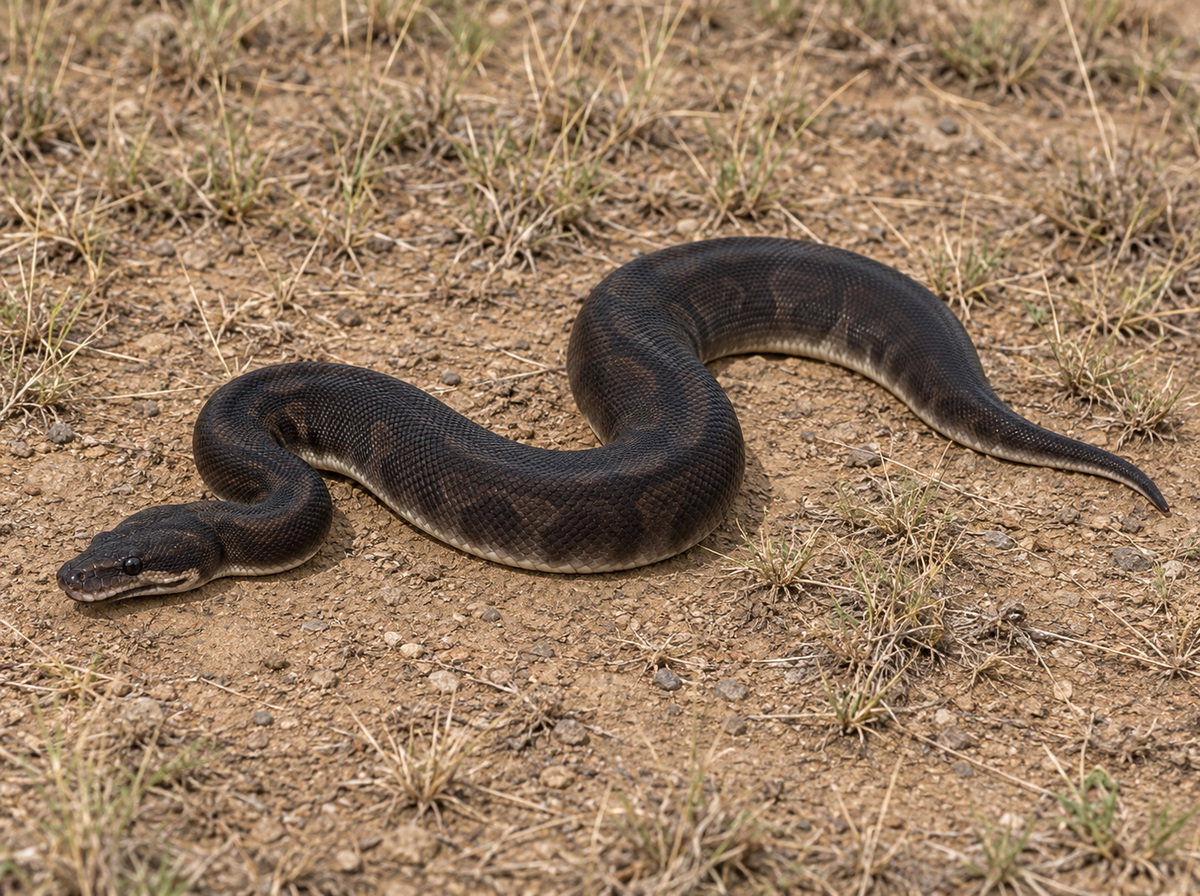
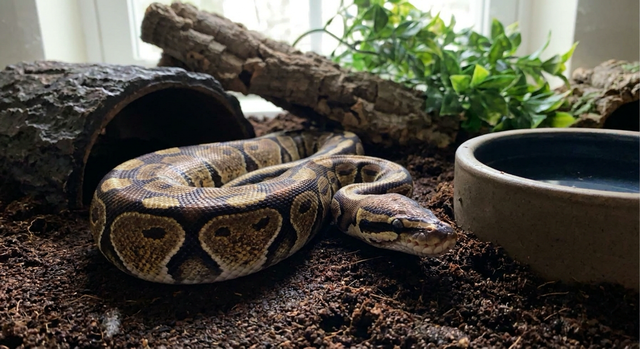
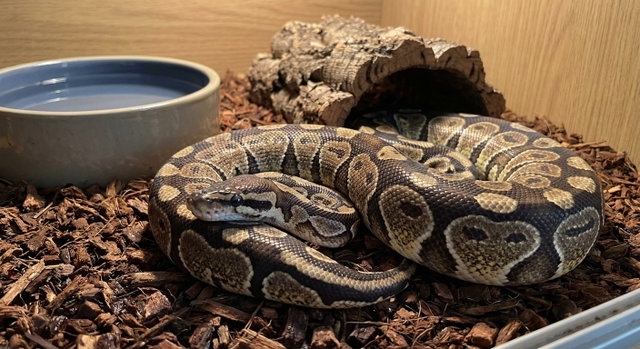
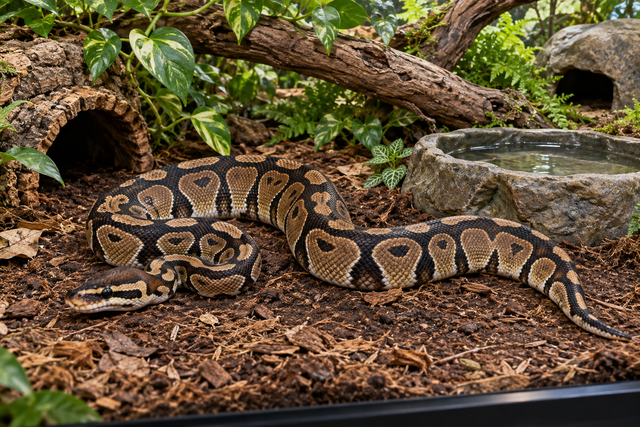
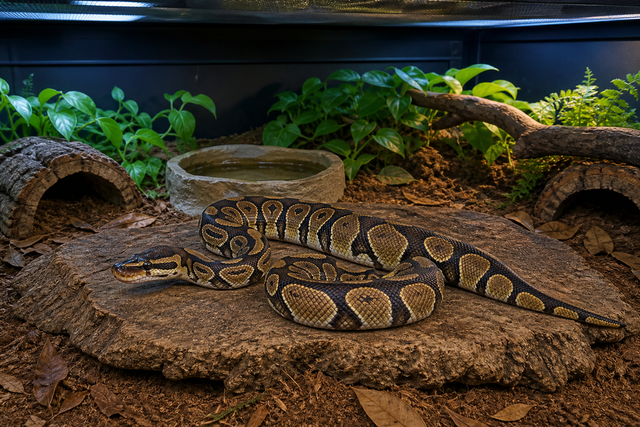
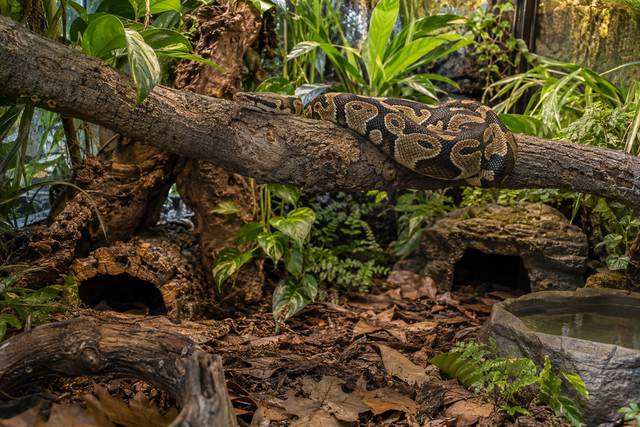
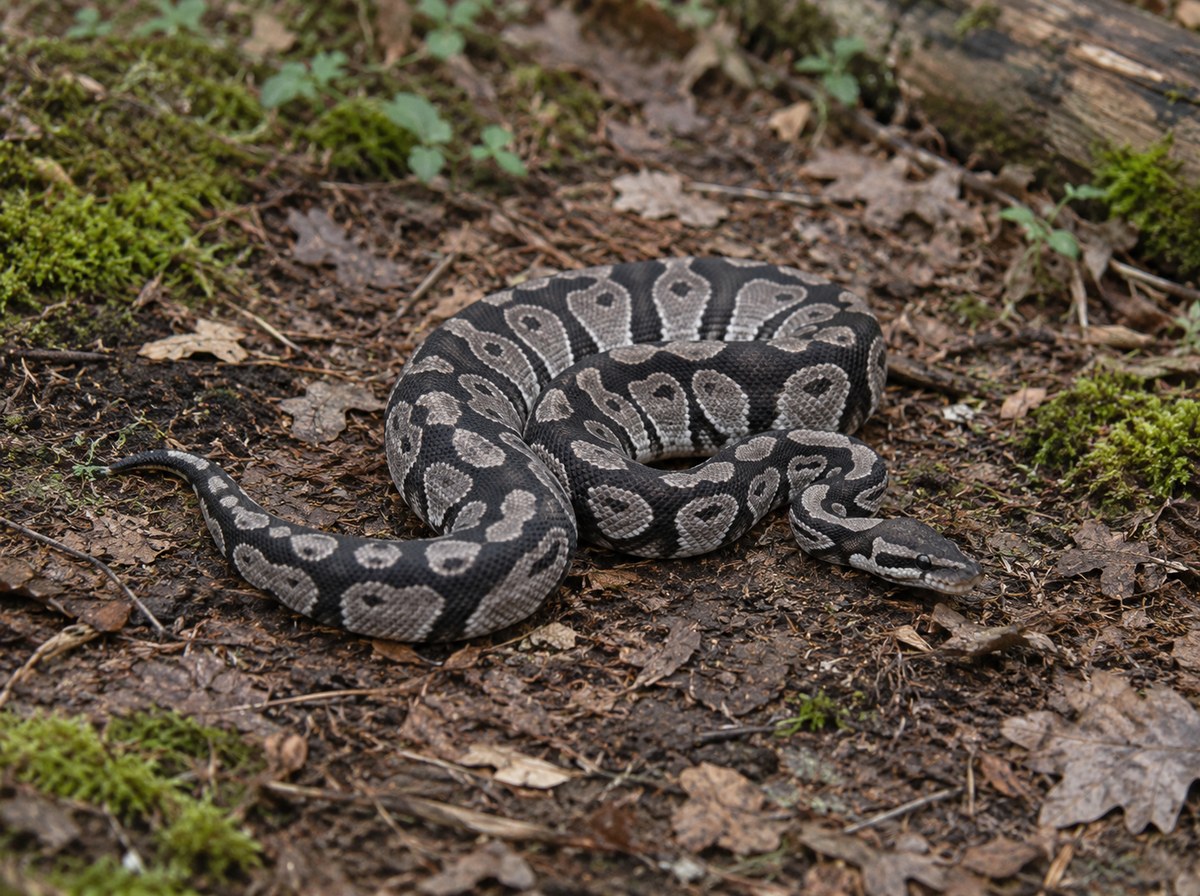
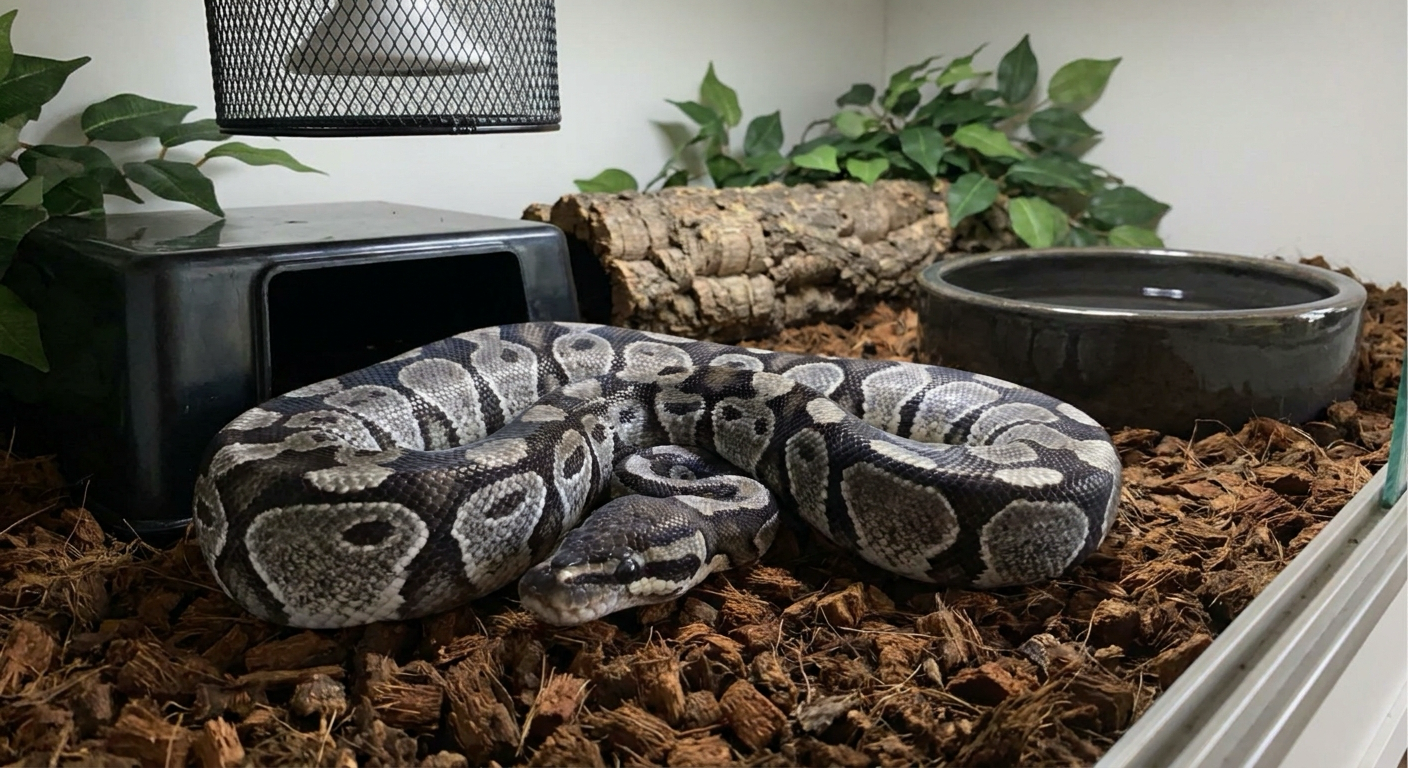
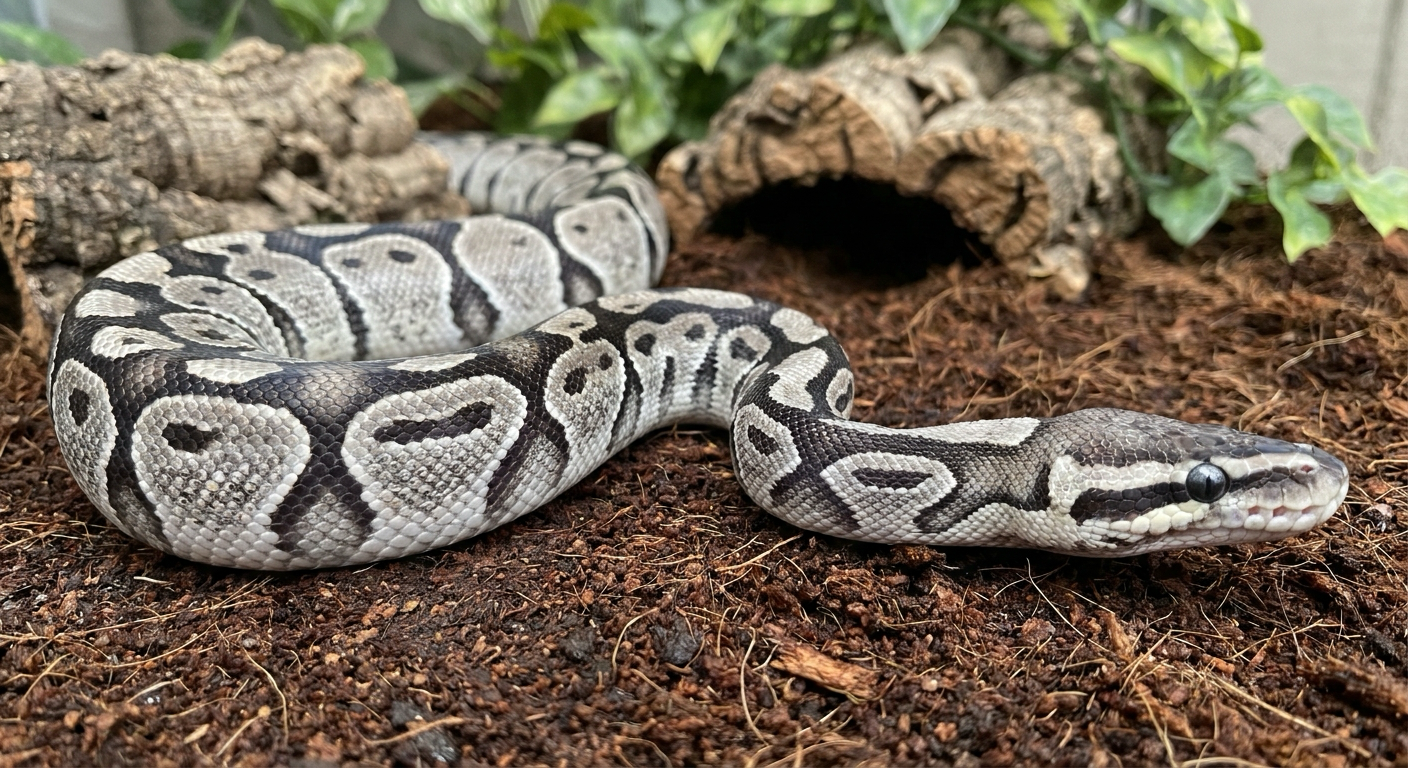
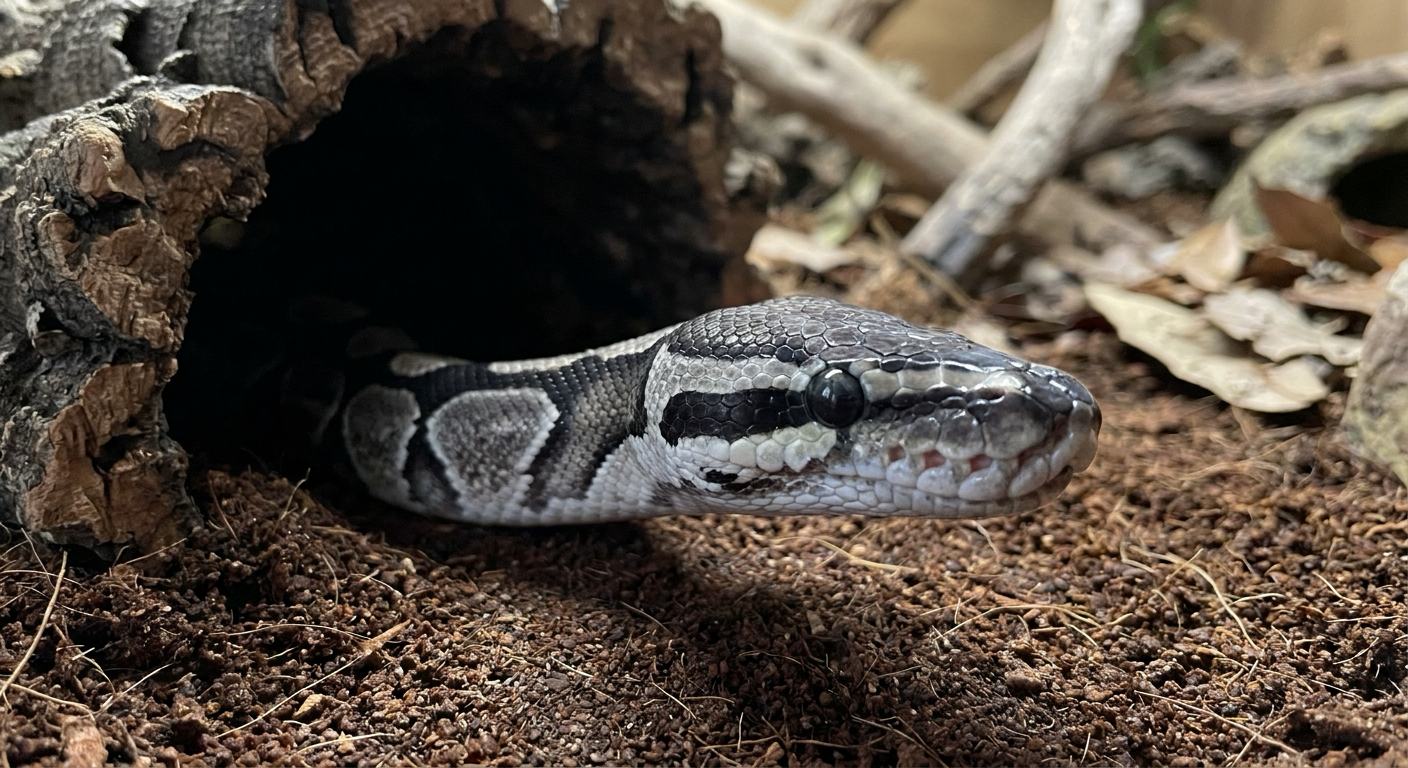
Axanthic means “without yellow”. The snake keeps the heavy body, broad head and the familiar ball python pattern of rounded blotches, but the colors change. Where a normal shows gold and warm brown, an axanthic shows silver, gray and white, set against black or charcoal. The eyes are dark. Because the pattern itself is normal, an axanthic can look like a black and white photograph of a normal ball python.
How gray an axanthic stays can vary between animals and lines, and a hatchling’s colors are not always the adult’s. Ask to see adults from the same line, photographed in neutral daylight, rather than relying on a crisp hatchling photo. Lighting and shed stage also change how a snake looks on screen. The ball python species page shows axanthic beside the other morphs.
The line problem
Axanthic-looking ball pythons have been established in several separate groups, and breeders refer to them by line names: VPI, TSK, GCR, Jolliff, MJ and others. Breeders report that these lines behave as separate recessive genes. If that holds, a VPI axanthic paired with a TSK axanthic produces normal-looking babies that are het for both, not visual axanthics. A snake sold simply as “axanthic” with no line is therefore an incomplete record: you cannot plan a pairing with it, and you cannot be sure two “axanthics” will produce axanthics together.
That is why the Creatures ball python morph calculator asks you to choose the line (VPI, TSK, GCR, Jolliff, MJ or Black Axanthic) and leaves an axanthic without a named line out of its odds instead of guessing. The ball python morphs guide explains the same limit. Record the line on the animal’s profile the day you buy it, together with where the seller says it came from.
Treat line claims with the same care as het claims. Ask how the line is known: from the breeder’s own records, from proven pairings with a known line, or from what an earlier owner said. If two sellers disagree about a line, write down both and do not breed on the assumption until a pairing has shown it.
Axanthic genetics: what is published
In 2025, Garcia-Elfring and colleagues published the first gene associated with axanthism in any vertebrate. Working from shed skins crowdsourced from commercial breeders, they studied a lineage of captive axanthic ball pythons and found a premature stop codon in the gene for GTP cyclohydrolase II, gch2, associated with the axanthic phenotype (Animal Genetics study on PubMed). The abstract describes a single lineage and does not name it, and it does not test the other lines. So the paper explains one route to axanthism; it does not settle which lines share that gene or why some lines are incompatible.
Within a line, recessive odds apply per egg:
- Het x het: 1 in 4 axanthic, 1 in 2 het, 1 in 4 with no axanthic from that line.
- Axanthic x het: 1 in 2 axanthic, the rest het.
- Axanthic x normal (non-carrier): no visual axanthics; every baby het.
- Axanthic x axanthic, same line: every baby axanthic.
Normal-looking babies from two hets are each two-thirds likely to be hets, the “66% possible het” on many listings. Read using the ball python morph calculator for how the tool treats possible hets and multiple genes. A calculator result is a prediction from your inputs; breeding results or a test show what a snake carries.
Combinations
Axanthic is often combined with other genes because it removes yellow from whatever pattern they make. Clown, Piebald and pattern genes all change how an axanthic looks. Each added gene is another claim to check, and some genes carry welfare questions of their own, such as the wobble linked to Spider and related genes covered in the Bumblebee guide. The published sources we checked document no health problem specific to axanthism. The in-batch guides to piebald ball pythons and clown ball pythons cover two recessive genes that are often paired with it, and the blue-eyed leucistic guide explains a white snake that is a different thing entirely.
Housing an axanthic ball python
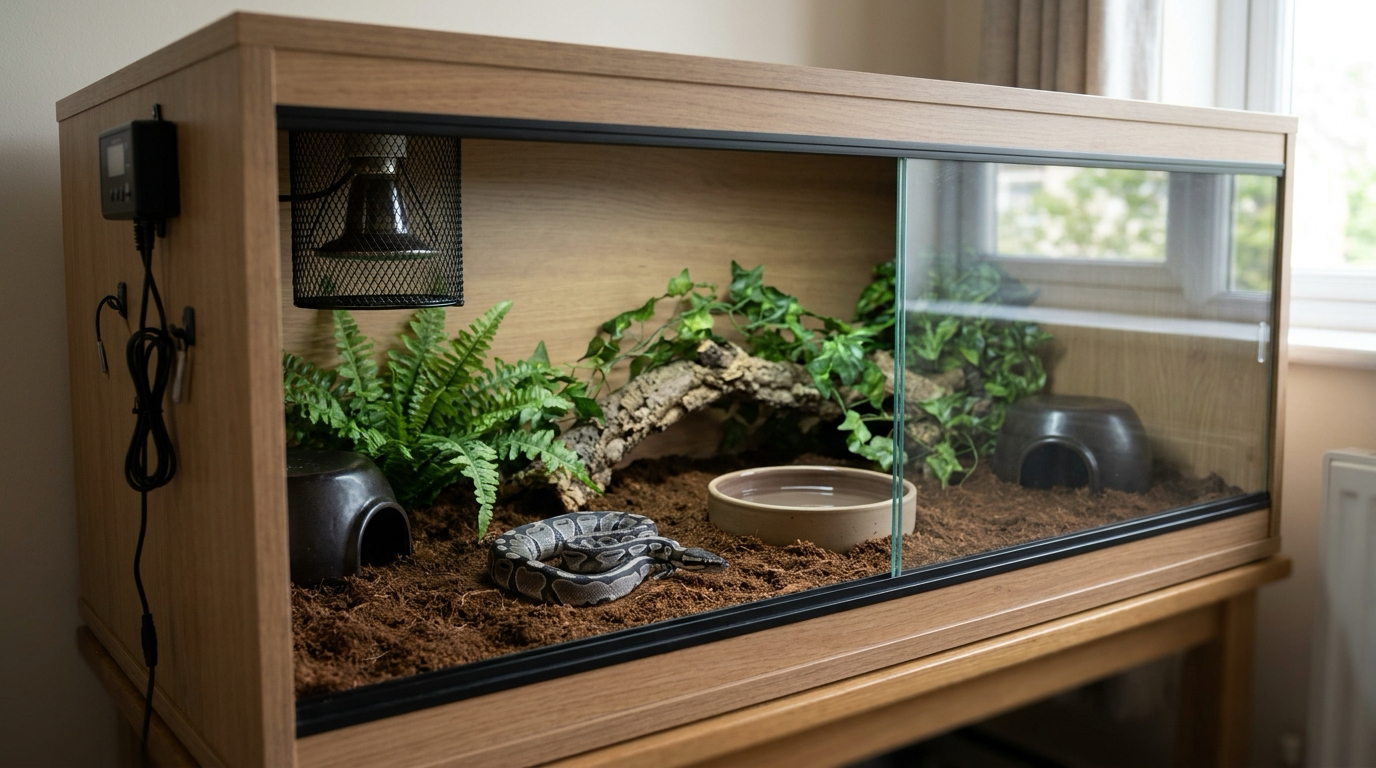
Color does not change care. The RSPCA’s royal python guidance covers what any ball python needs:
- Size. At least as long as the snake, with width and height each at least one third of its length: 120 by 40 by 40 cm for a 120 cm snake. Adults can reach around 150 cm; hatchlings can start smaller.
- Heat. A guarded basking zone at 30 to 32 C and a cool end at 24 to 26 C, each heater on a thermostat, measured at snake level. Merck says heaters should be thermostat controlled and screened from the animal, and that heat rocks frequently cause burns.
- Humidity. 50 to 60 percent at the cool end, with periodic rises to around 80 percent and drops in between.
- Light. A 12 hour day and a low-output UVB tube giving a UV index up to 1.0 at the basking spot.
- Furnishing. Snug hides at both ends, one humid hide, organic reptile soil, sturdy branches.
- Alone. RSPCA describes royal pythons as solitary.
The ball python care guide covers setup, humidity and shedding in detail.
Feeding
RSPCA describes feeding young snakes every five or six days and adults every 7 to 14 days depending on weight, on frozen-thawed prey slightly wider than the snake’s widest point. Merck’s snake nutrition chapter recommends thawing in the refrigerator and leaving the snake alone for three days after eating. Keep every meal, refusal, weight and shed in one log; the ball python feeding and shed log shows how.
Health and hygiene
Merck’s owner guidance says reptiles need no vaccinations, that a prompt first exam establishes a record of the animal in good health, and that an annual check helps confirm it is well nourished and free of disease and parasites. See how to find a reptile vet before the snake arrives, and quarantine a newcomer for the 3 to 6 months Merck recommends if you keep other reptiles.
RSPCA’s list of warning signs: weight loss or diarrhea, long periods in the water bowl (possible mites), whistling or gasping with the head raised (possible respiratory infection), constipation, and a sudden refusal to feed. Each is a reason to call a reptile vet. Retained eye caps after a shed need the vet too.
Reptiles and frozen feeder rodents can carry Salmonella without looking ill, and freezing does not kill it. The CDC advises handwashing after any contact with the snake, its food or its equipment, and suggests another pet for homes with children under 5, adults 65 and older or people with weakened immune systems.
Buying an axanthic ball python
There is no published price index for axanthics, and asking prices vary with line, visual or het status, other genes, sex, age and feeding history. A snake with a documented line is worth more to a breeder than one without, and a possible het should cost less than a proven het. For dated store prices, rescue fees and setup and lifetime costs, see how much a ball python costs.
Questions for the seller:
- Which axanthic line is it, and how is that known?
- Who bred it, when did it hatch, and who are its parents?
- Which genes are visual, proven het or possible het?
- Can I see photos of adults from this line in daylight?
- Is it feeding reliably on frozen-thawed prey, with records?
- Any history of retained shed, mites, regurgitation or respiratory signs?
The ball python lifespan guide explains the long commitment. The pedigree chart maker can turn the seller’s records into a three-generation chart with the line written in, and the ball python name generator helps with a name.
Frequently asked questions
What does axanthic mean in ball pythons?
It means without yellow. The snake keeps a normal pattern but shows it in black, gray, silver and white.
Can I breed two axanthics from different lines?
Breeders report that different lines are separate genes, so a pairing across lines is expected to produce normal-looking babies that carry both. Confirm the line of each snake before pairing.
What gene causes axanthism?
A 2025 study linked a premature stop codon in gch2 to axanthism in one lineage of ball pythons. Whether the other lines involve the same gene has not been published.
Is axanthic the same as black-eyed or blue-eyed leucistic?
No. An axanthic keeps its pattern and dark coloring, only without yellow. Leucistic ball pythons are white.
Do axanthic ball pythons need special care?
No. They need the same secure, warm, humid enclosure and feeding routine as any ball python.
Do this next on Creatures
Record the line first. Create a free axanthic ball python profile and record its genes, including the named line, on the profile. No account needed to start. See recording your animal’s morphs and genes and adding an animal to Creatures.
Keep the history with it. Add a feeding, weight or shed record, or attach the seller’s paperwork. The sheet opens for visitors; a free account saves it. Read adding a record.
Wait for the right line. Set an axanthic ball python listing alert and Creatures emails you when one is listed. No account needed to start. See saving searches and using your watchlist.
Check current listings. Axanthic ball pythons on the marketplace shows anything listed now; ask each seller for the line.
Find breeders. The breeder directory filters by species and state. A listing is a place to start asking questions, not proof of a line or of stock.
Breed axanthics? Create a free breeder profile and say which lines you work with. No account needed to start. See creating an organization.