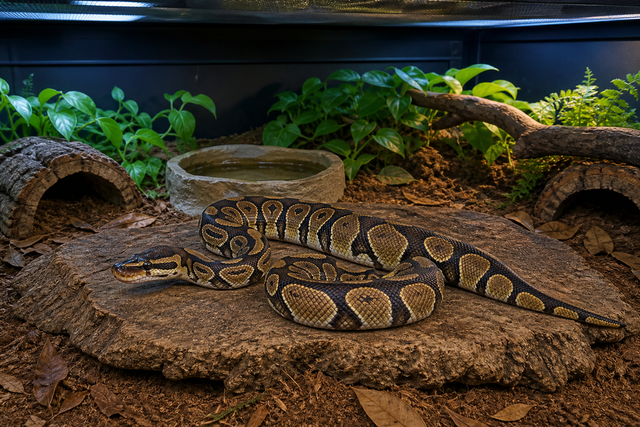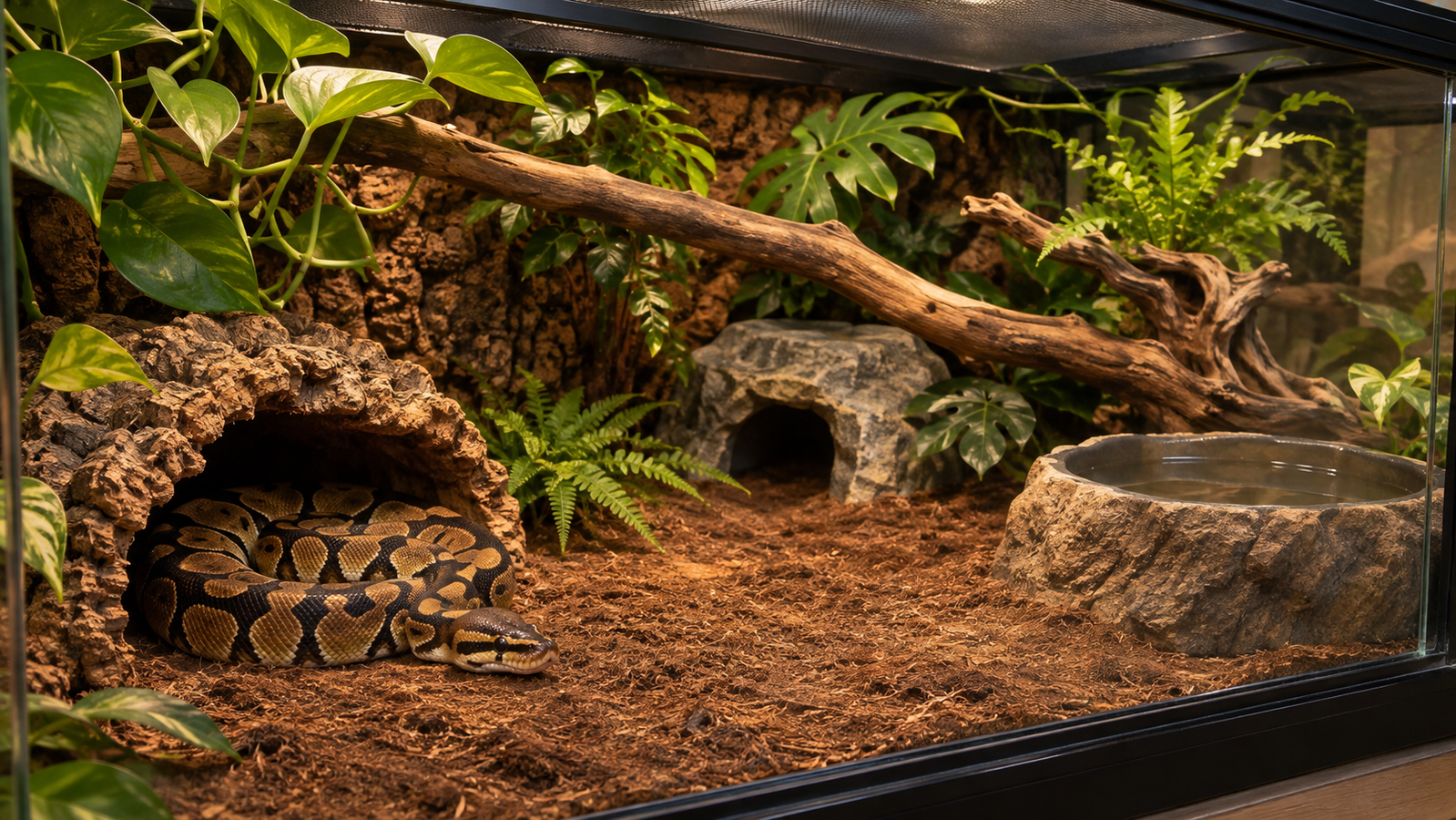
Ball Python Feeding Chart: Intervals, Weights and Meal Records
Author: Elliott Garber, DVM · Published
Use a ball python feeding chart as a starting interval, then review the individual snake’s weight trend, body condition and feeding history. Young snakes are commonly offered food more often than adults. Keep the plan and the actual outcome together in Creatures animal records so an offered meal never becomes a meal the snake supposedly ate.
Care sources checked November 12, 2026. This is a planning chart for healthy captive ball pythons, also called royal pythons. A reptile veterinarian should set the plan for an underweight, obese, ill or recovering snake.
| Young growing snake | RSPCA starting guidance: offer food every 5 to 6 days |
|---|---|
| Adult snake | RSPCA starting guidance: about every 7 to 14 days, depending on weight |
| Prey | Suitable frozen-thawed whole rodents |
| Review | Weight trend, body condition, growth and husbandry |
| Record separately | Offered, accepted, refused and regurgitated |
| After feeding | Avoid handling for at least 48 hours |
A feeding chart you can adjust to the snake
The intervals below come from the current RSPCA royal python guidance. They are starting points, not a requirement to feed every animal on the earliest day. Do not choose a ration from age or morph name alone. For breeding plans, use the ball python morph calculator to estimate pairing odds from the genes entered.
| Snake and situation | Starting feeding interval | Before the next offer | What to log |
|---|---|---|---|
| Young, growing ball python | Every 5 to 6 days in the RSPCA guide | Review growth, body condition and the previous meal | Prey type and size, offer date, outcome |
| Healthy adult ball python | About every 7 to 14 days in the RSPCA guide, depending on weight | Use the individual weight trend and veterinary advice to review the interval | Meal history alongside dated weights |
| Snake refusing food or showing a health concern | An individual veterinary plan | Contact a reptile veterinarian rather than repeatedly changing the ration | Last accepted meal, refusals, symptoms and enclosure readings |
Thaw frozen prey fully before offering it. The Merck Veterinary Manual recommends thawing under refrigeration and serving prey at room temperature or warmer, never cold. The RSPCA advises feeding inside the enclosure with tongs. Wash your hands after handling prey before handling the snake.
For prey size, the RSPCA describes prey slightly wider than the snake’s widest body section. The Merck Veterinary Manual’s general rule for snakes is more cautious: prey should not be much larger in diameter than the snake’s head. If unsure, size to the head. The RSPCA also recommends regular weighing and a 48-hour handling rest after feeding. Keep those observations beside the chart.
A label such as “small rat” is not the same information as a measured prey weight. Supplier size labels can be recorded exactly as supplied, with a weight if you measured it. Keep both fields clear. This page does not turn a prey label into a universal percentage of snake weight.
Record the offer and the result as separate facts
A scheduled feeding date says what you intended. An outcome says what happened. Feeding records start private. Use an uncomplicated record that a second keeper could read without asking you to translate it:
- Animal identifier and date of the offer.
- Prey species, supplier size label and measured weight if available.
- Frozen-thawed preparation and presentation notes relevant to the animal’s established routine.
- Outcome: Eaten, Partly eaten or Refused. Put regurgitation and the observation time in notes.
- A separate dated snake weight with units and any unusual circumstances.
- Recent shed, enclosure change, health concern or veterinary instruction.
Do not mark an entire collection “fed” because you offered every animal food. If one snake refused, leave that exception visible. Use the feeding and shed log guide for a fuller event record and the ball python care guide when reviewing the enclosure itself.
Use weights to review a plan, not to chase a daily number
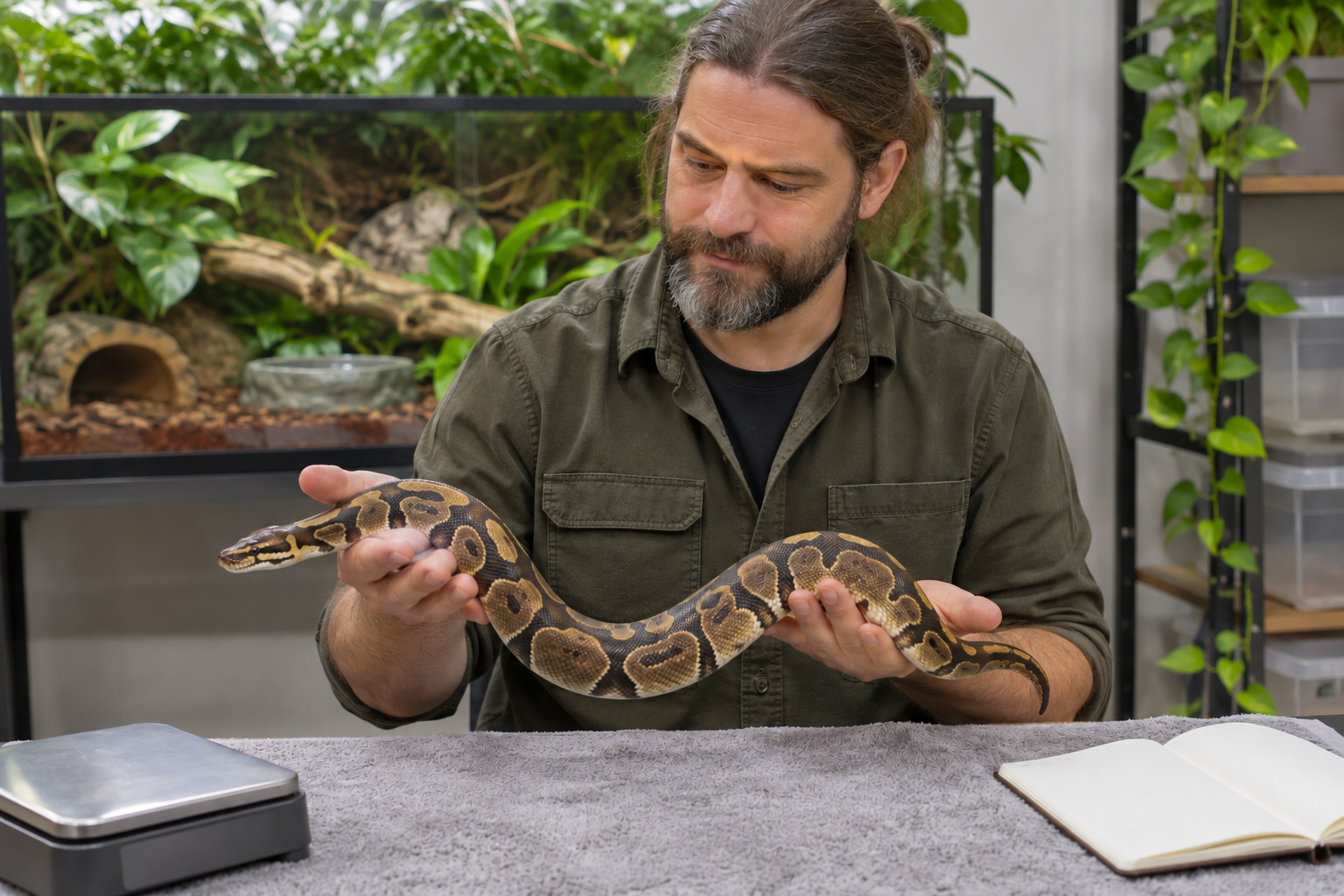
Keep the units consistent and note whether a measurement was taken before or after a meal. A weight without a date or animal identifier is hard to use later. Record the measured value; do not retrospectively change it to make the chart look smoother.
The Merck Veterinary Manual’s reptile husbandry guidance explains that diet depends on species, age, activity and environmental conditions. It also recommends detailed husbandry and nutrition records. A scale trend helps a veterinarian assess the history, but a gram value alone does not establish healthy body condition.
At a review, put the meal log and weight entries in date order. Ask whether the plan still fits the snake, whether the housing changed and whether there are symptoms that need examination. Record the revised plan with its start date and who advised it, leaving the previous entries intact.
When a ball python misses a meal
The RSPCA advises consulting a reptile specialist veterinarian when a snake suddenly stops feeding. Its care page describes shedding and enclosure stress among possible contexts; a refusal entry cannot diagnose either one. Weight loss, abnormal breathing, illness signs or regurgitation need prompt veterinary advice.
Before that conversation, gather the date of the last accepted meal, each later offer, dated weights, shed history and measured enclosure conditions. Send the actual readings and events rather than a conclusion such as “just seasonal.” Do not delay help while trying to create a longer history.
Do not substitute live rodents for a veterinary assessment. The Merck guidance advises against live rodent feeding because prey can injure the reptile and because of prey welfare. Do not force-feed or begin assisted feeding from a chart; Merck’s routine reptile care guidance puts feeding changes and assisted feeding under veterinary advice.
Hand the next keeper a usable history
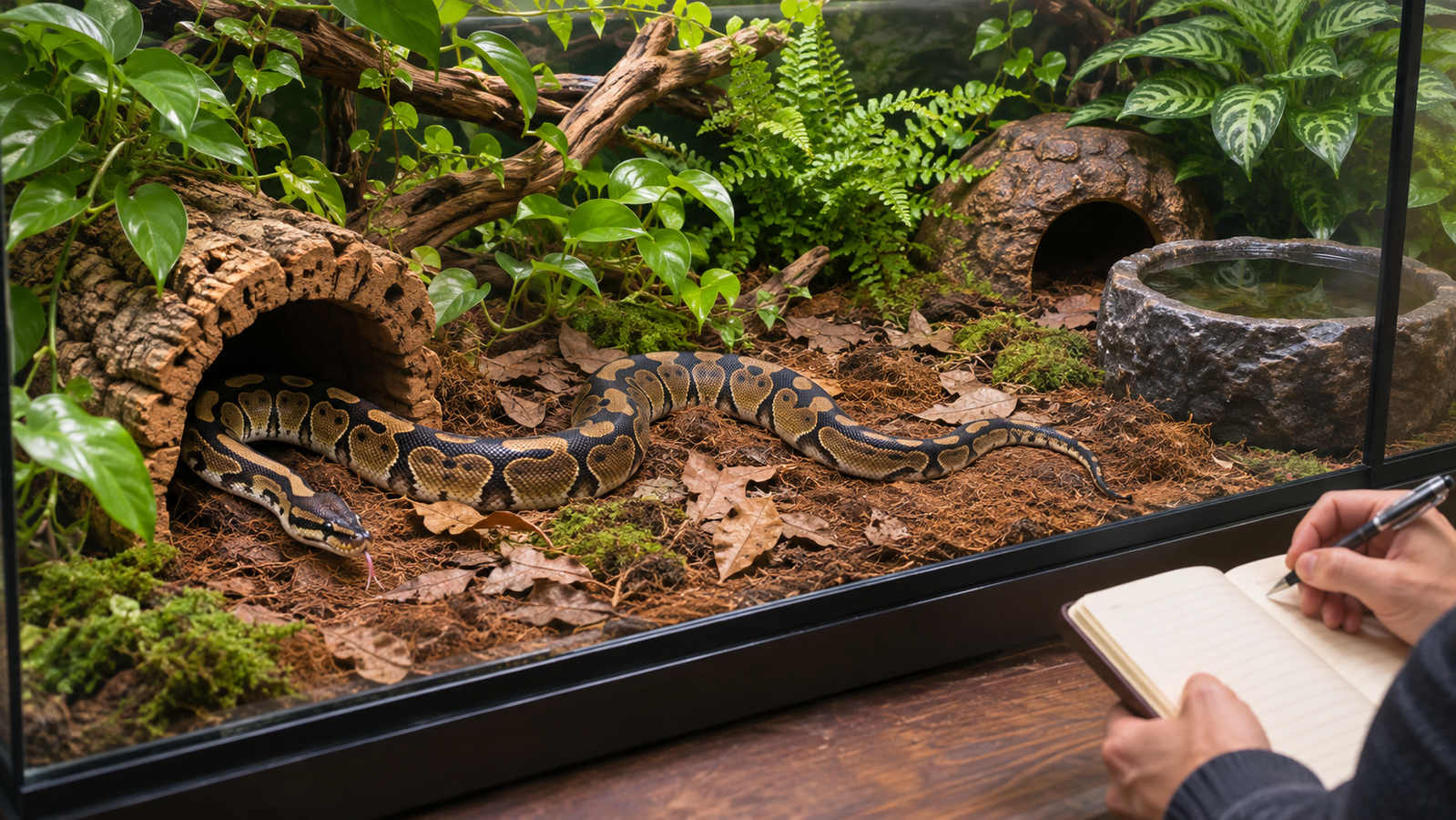
Before a sale, loan or change of carer, review the snake’s identifier against the record. Share the established feeding routine, recent actual outcomes, prey information and the source of any veterinary plan. A reminder is still a future task; it is not evidence that the snake ate.
For a larger collection, compare the reptile collection app options. Keep the species-specific schedule separate from the corn snake feeding chart. Browse the ball python hub for the wider species context. Creatures stores records and reminders; it does not diagnose a refusal or prescribe the next meal.
See Creatures for breeders for the broader animal-record features.
Do this next on Creatures
Keep the feeding plan and actual meal history attached to the animal you actually worked with. Animal profiles and records are free and unlimited; you need a free account to save your work.
- Add your ball python, then use Add identifier on the profile for any existing identifier. See how to add an animal.
- Add a record for today’s observation. This opens for visitors; a free account is needed to save it. Follow adding a record and keep reminders and upcoming care separate from completed work.
- Add your breeder profile when you want a public introduction to your program. Read getting listed in the breeder directory.
- Create a listing alert for future searches.
- Browse ball python listings and ask sellers for the individual animal’s records.
- Explore the breeder directory when you need to find and contact keepers yourself.