Southdown
Author: Elliott Garber, DVM · Published
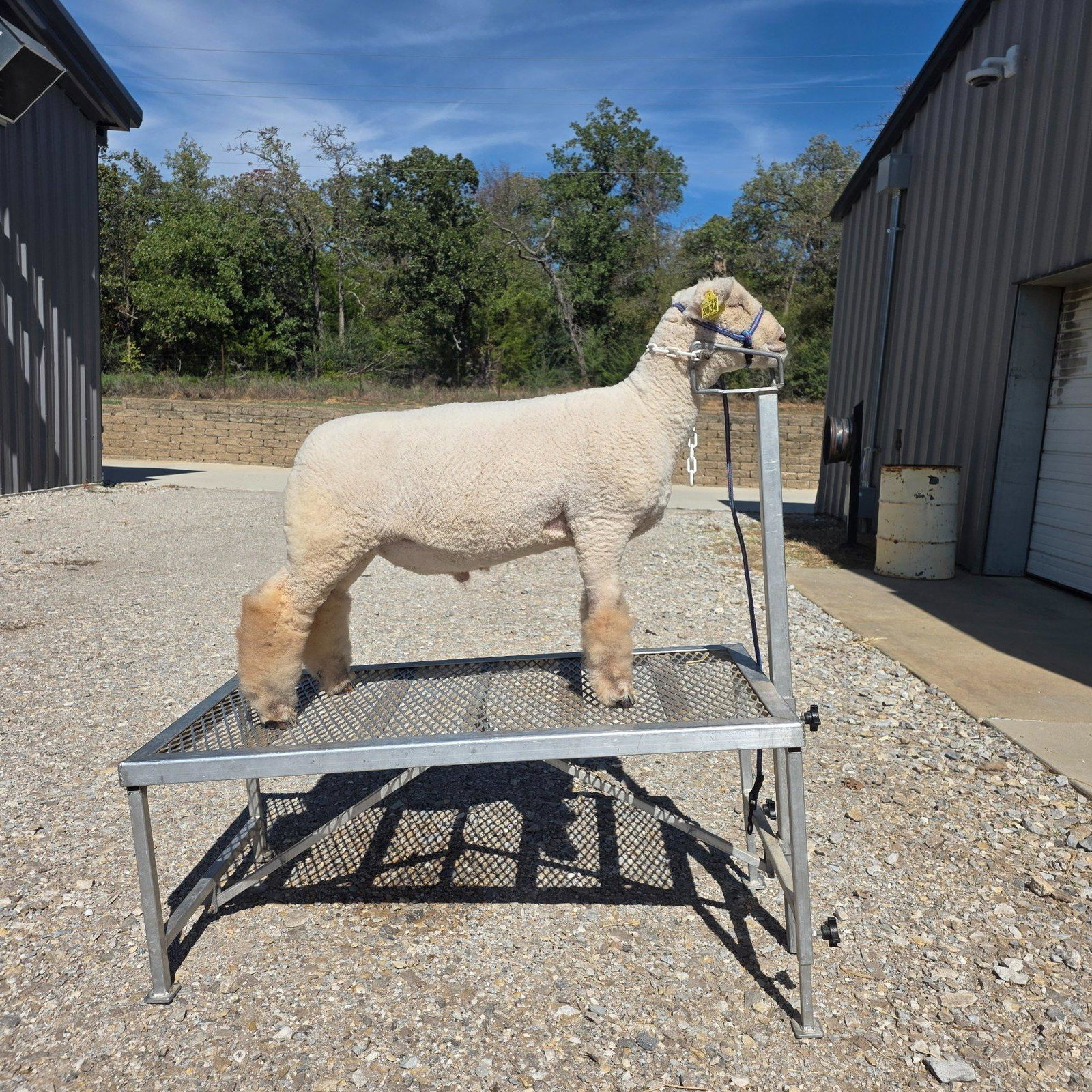
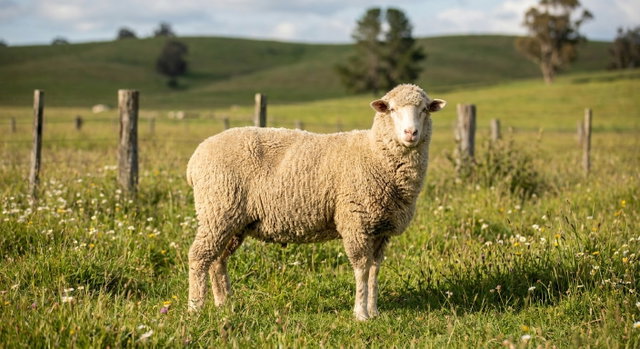
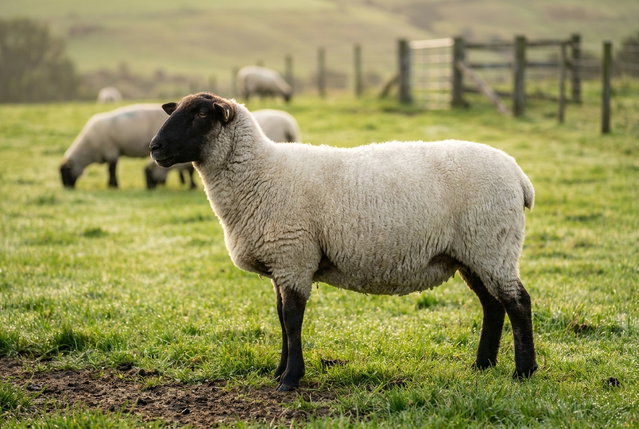
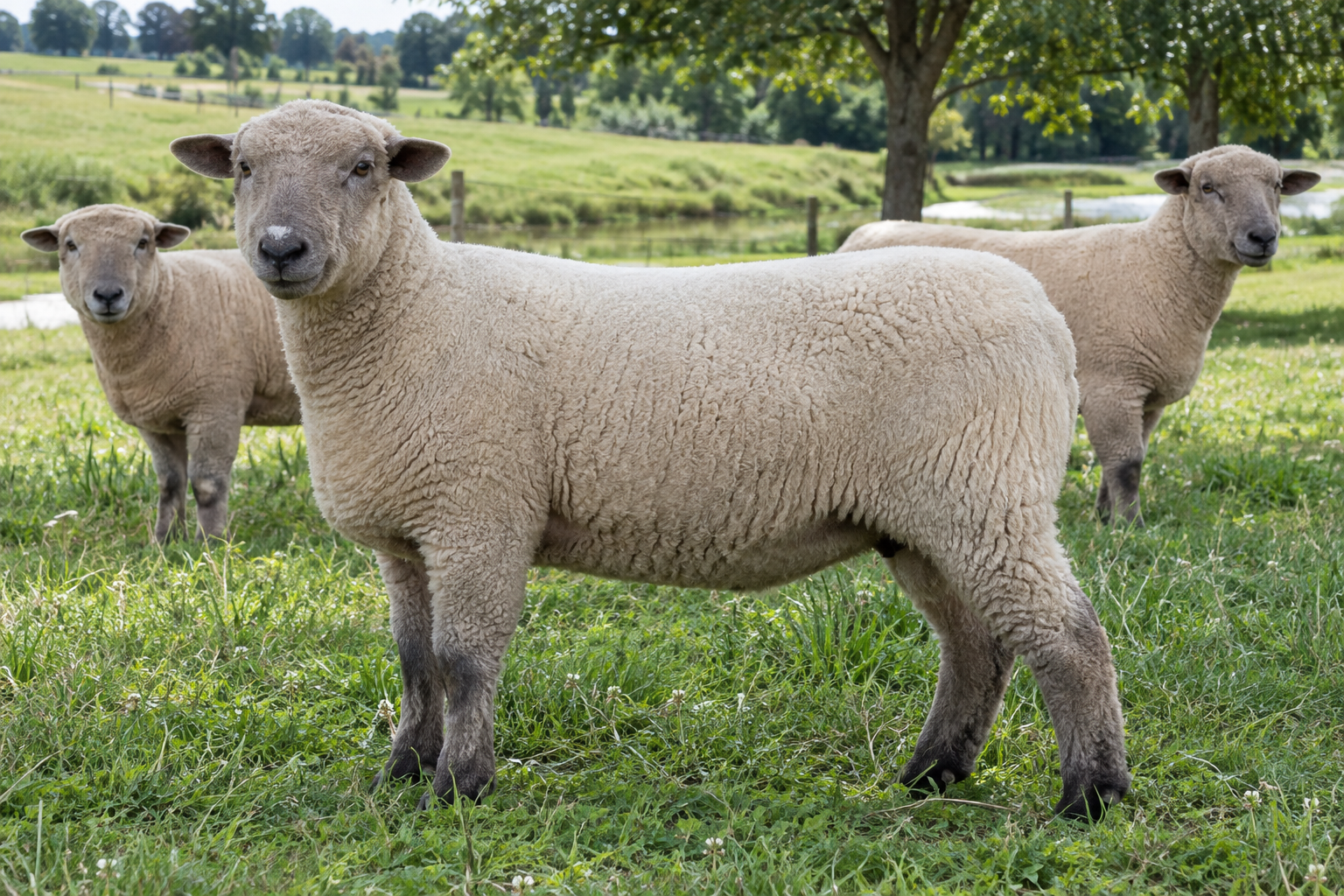
Southdown sheep are a polled, white-woolled Down breed with mouse-gray to brown faces and legs. Modern Southdowns are selected for a balanced meat-producing frame. They share ancestry with Babydoll Southdowns, but a modern Southdown listing is not a promise of miniature size or Babydoll registration.
Start with the animal’s age and actual measurements. The free sheep weight calculator can give a rough estimate from body measurements; scales and the parents’ records are better evidence when you are choosing breeding stock.
| Origin | South Downs of southern England |
|---|---|
| Type | Polled Down sheep selected for meat production |
| Face and legs | Mouse gray to brown |
| Fleece | Dense white wool, requires shearing |
| US registry | American Southdown Breeders’ Association |
| Common confusion | Modern Southdown is not a Babydoll registration category |
Browse listings, public profiles, breeders, or add your animal.
Southdown, Babydoll or a crossbred?
The American Southdown Breeders’ Association describes the breed’s development from the South Downs of England. For a US purchase, establish whether the animal is registered with that Association, with a Babydoll registry, or is an unregistered Southdown-influenced sheep. Similar faces do not make the certificates interchangeable. The separate Babydoll Southdown hub is the starting point for that smaller type.
NABSSAR’s Babydoll standard has its own height and color requirements. Those are not the size rules to apply to modern Southdowns. Even the word Babydoll needs a registry name and a current certificate, rather than a seller’s description of a short lamb. Do not compare two animals’ asking prices until you know which registration system and breeding goal each belongs to.
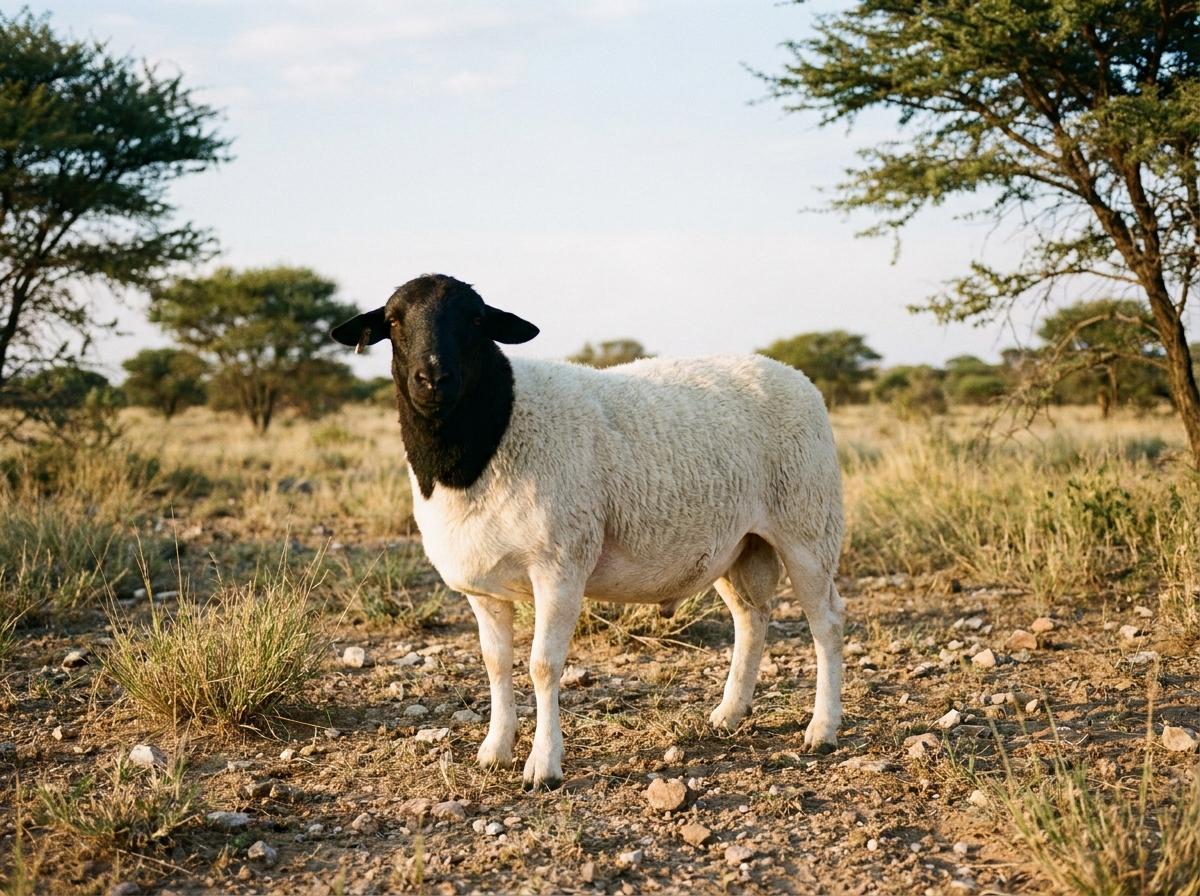
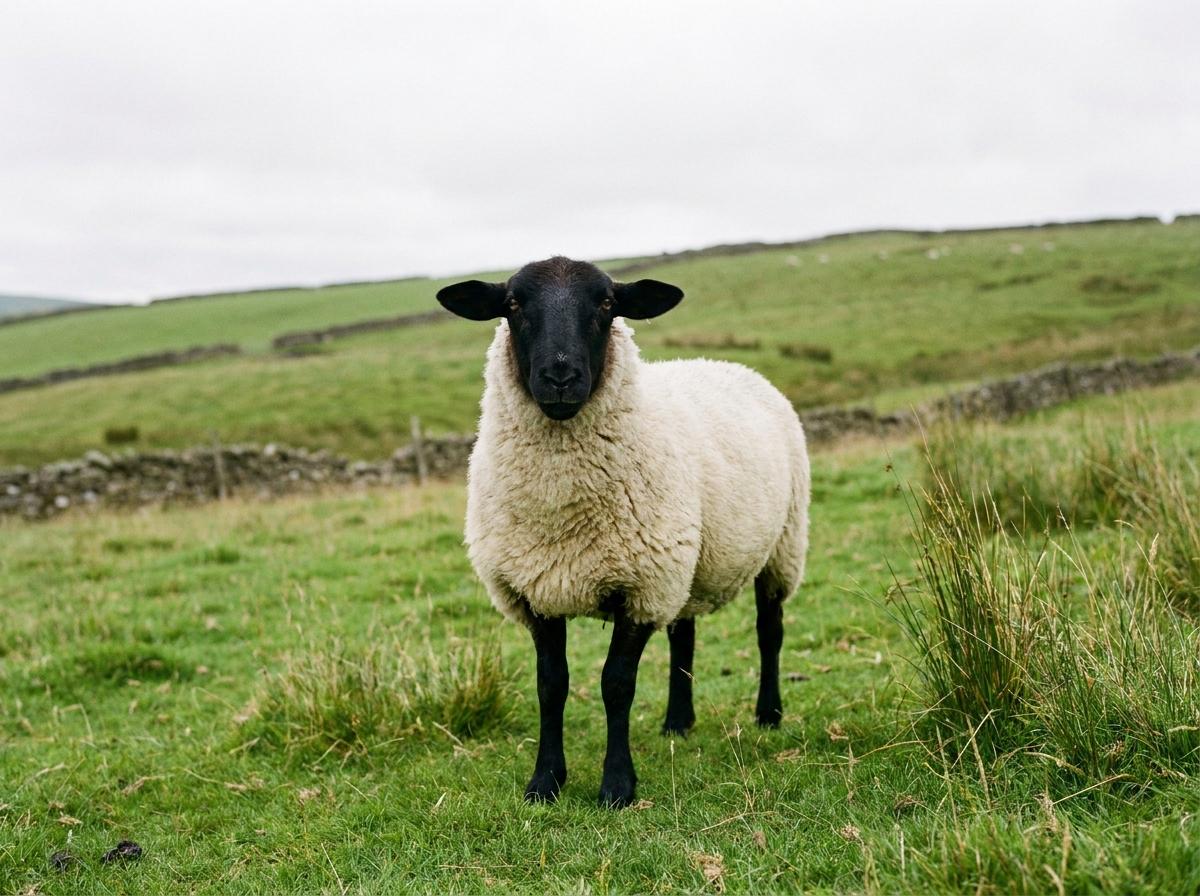
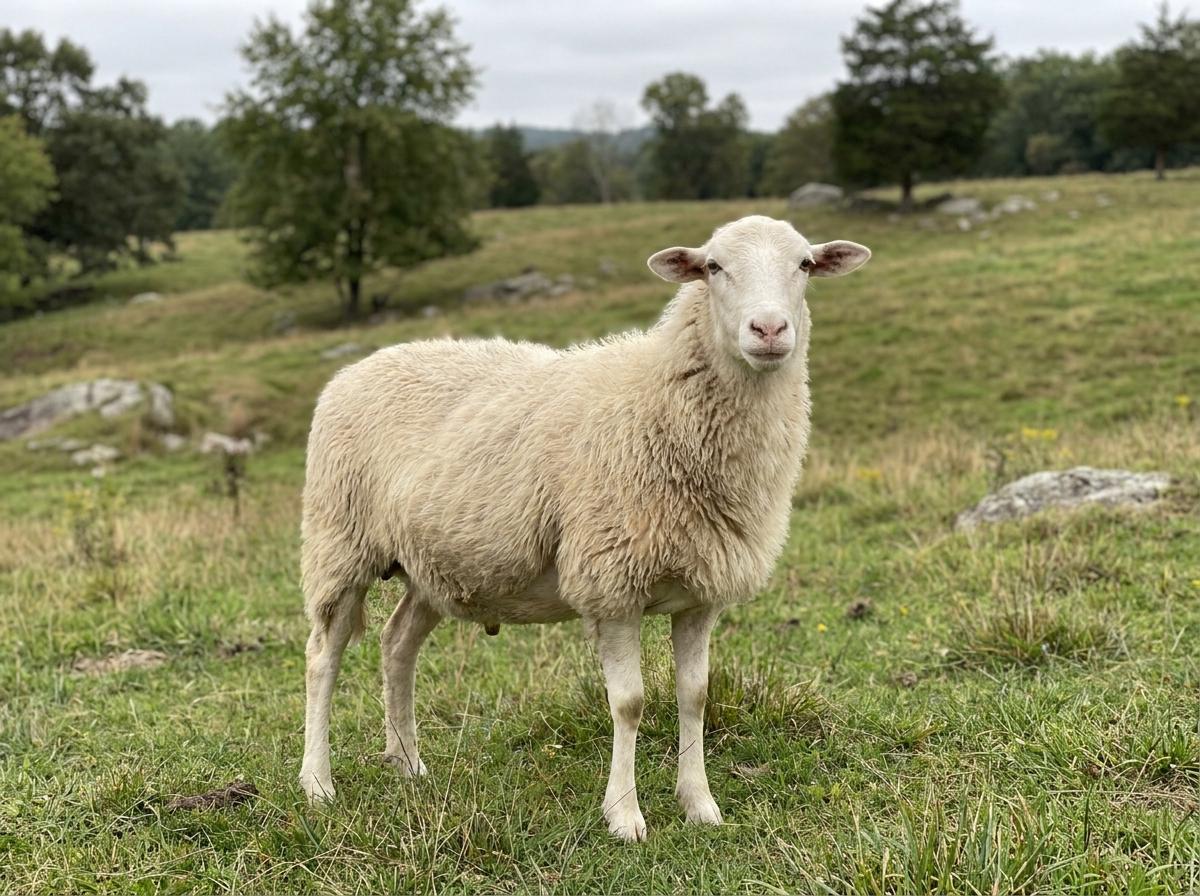
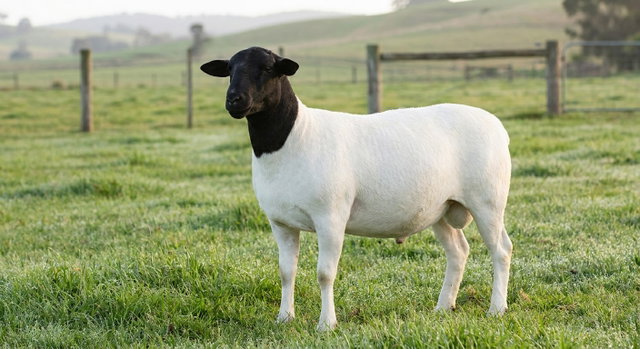
If you are comparing flock types, the sheep hub offers a wider starting point. The white-faced Dorset has different breeding-season considerations, while Shropshire has a darker face and a separate breed standard. Neither is simply another name for Southdown.
What a modern Southdown should look like
The US standard of excellence calls for a long, balanced body, a level back and useful muscling, with sound feet and legs. The muzzle hair should be gray to brown, neither white nor approaching black. The ears are moderate in length; eyes should remain clear of wool. Dense white fleece and dark hooves complete a more useful picture than the vague description “teddy bear sheep.”
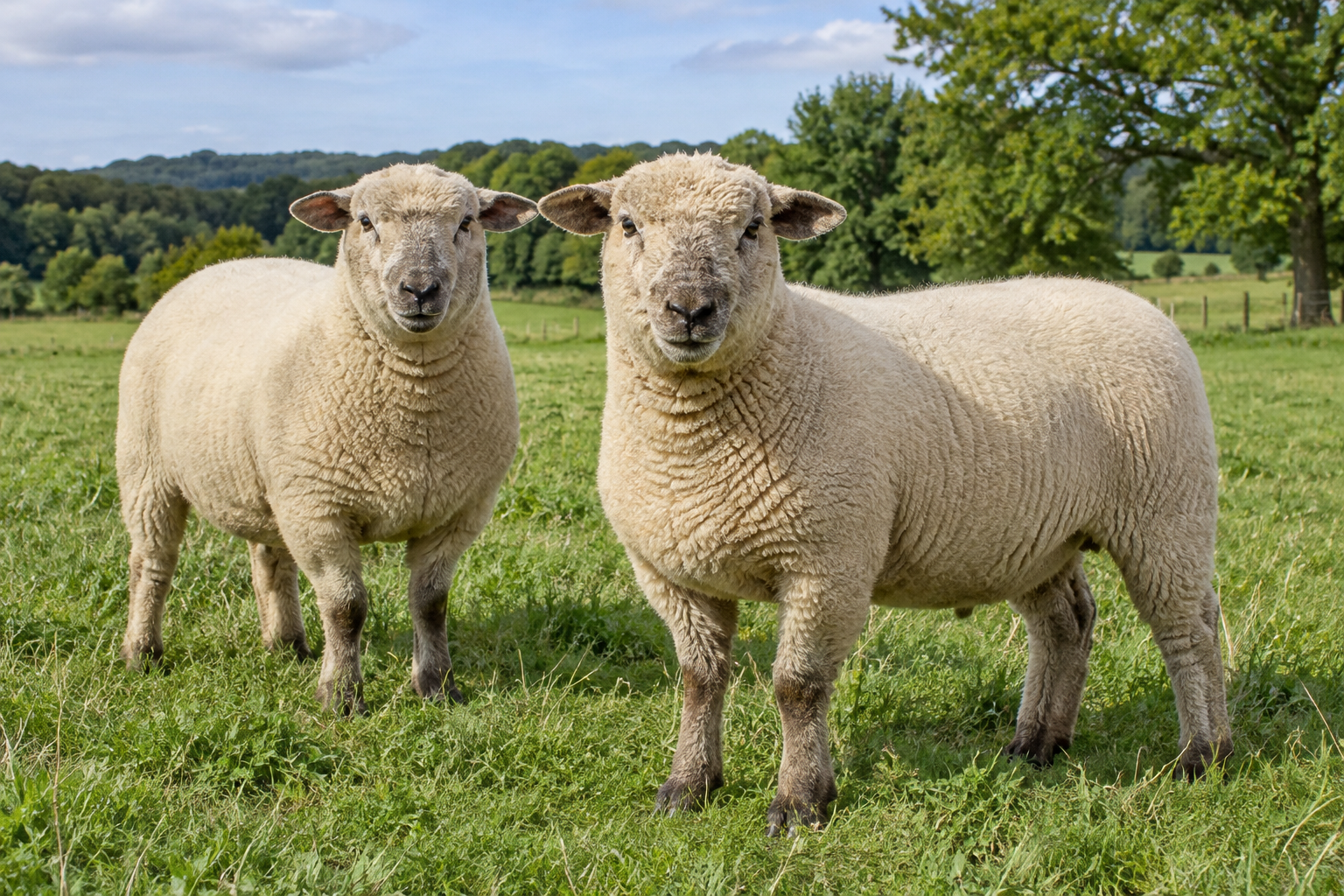
Size depends on age, sex, condition and line. As a selection guideline, the American standard gives optimum yearling weights in moderate flesh of 225 to 250 pounds for rams and 160 to 200 pounds for ewes. Those are explicitly yearling guidelines, not a requirement for every lamb or a measurement of miniature stock. Ask what the seller’s mature ewes actually weigh and how they perform on a ration like yours.
A rounded outline can hide poor structure or excessive condition. Watch the sheep walk on a firm surface, look at the feet and jaw, and have an experienced shepherd help you assess condition by touch. A show placing does not replace those checks. The showing sheep guide explains how exhibition goals fit alongside everyday flock care.
Meat, wool and choosing a purpose
Southdown is primarily a meat breed, with a fleece that remains a real management responsibility. A flock may use purebred ewes, raise registered replacements or use a Southdown ram in a crossbreeding program. A terminal mating means its lambs are intended for market rather than retained as replacements; decide that goal before buying the ram.
A useful seller can explain the production system, lamb growth records, ewe condition and the market they select for. Statements about easy keeping or good carcasses do not establish how a particular flock will perform on your pasture. Compare lambs of similar age and management, and distinguish a measured growth record from a sale photograph.
If wool is part of your plan, inspect a sample and ask how fleeces are prepared and sold. Do not assume the breed name guarantees a fiber buyer or a profitable wool clip. Rambouillet is a different comparison for someone whose main goal is fine wool.
Housing and feeding a Southdown flock
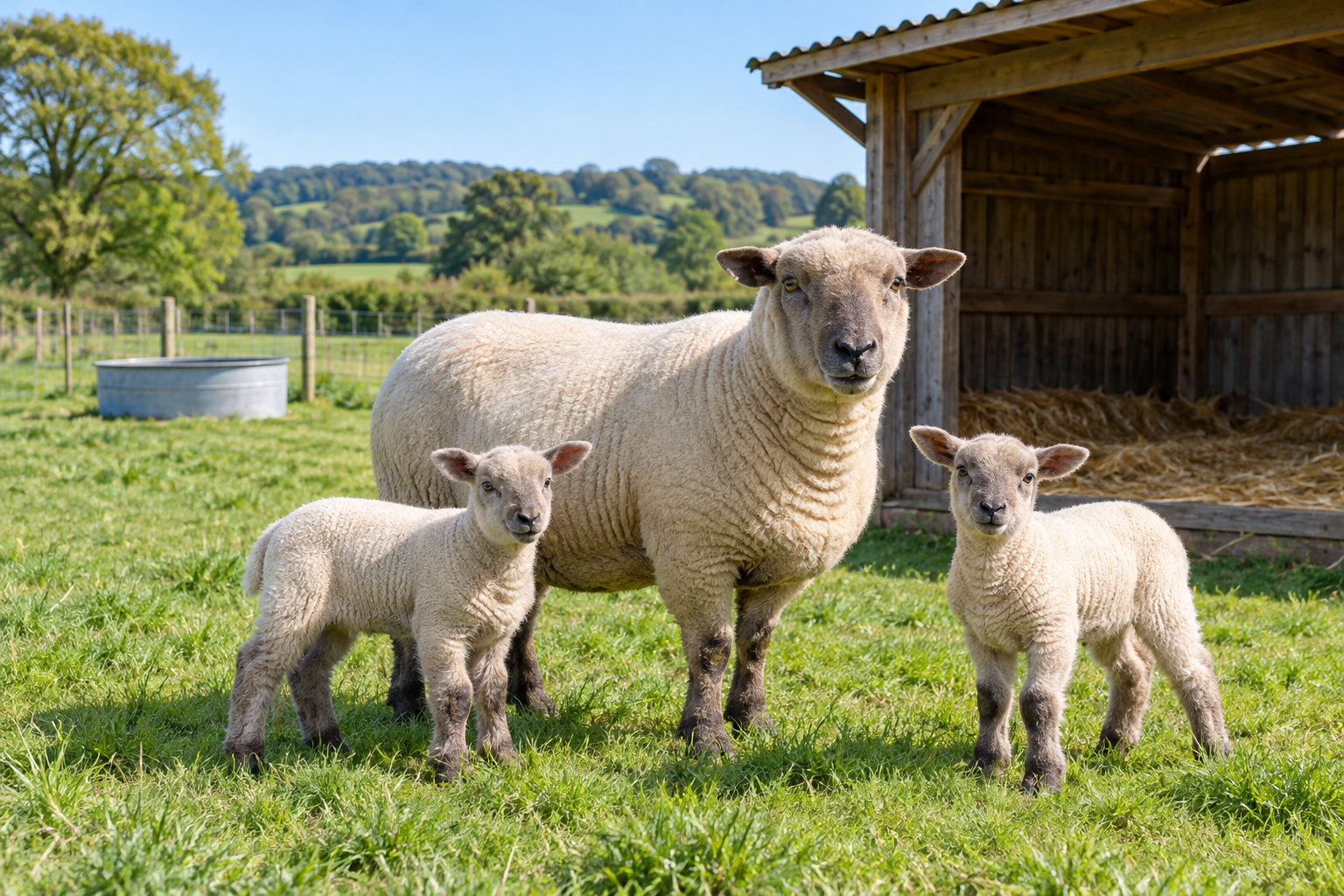
Provide compatible sheep companions, secure fencing, clean water and dry, ventilated shelter. Small or moderate frame does not mean a sheep can live alone in a small yard. Before buying, plan where the flock will graze, where it can be handled and where new or sick animals can be separated. The sheep shelter guide helps evaluate the building you already have.
Forage quality and life stage matter more than a fixed scoop of grain for every animal. Check body condition under the fleece. Growing lambs and lactating ewes may need a different ration from dry mature stock, while a sheep carrying excess condition needs an assessed plan rather than feed withheld by guesswork. Penn State’s small-ruminant guidance explains the changing need for protein, energy, minerals and water.
Use minerals intended for sheep and have the total ration checked when there is uncertainty. Wisconsin Extension warns that sheep can accumulate dangerous copper from inappropriate supplements. Keep shared cattle or goat feed stores from becoming accidental sheep feeders. Follow the sheep feeding guide for planning questions to take to your adviser.
Breeding and records without easy-lambing promises
The standard values functional udders and productive ewes, but no breed label makes a mating safe. Review the ewe’s age, condition, previous births and the prospective ram’s record with your veterinarian or experienced adviser. Buy a ram with appropriate breeding-soundness information and facilities that can contain him separately when he is not needed.
Use the sheep gestation calculator for estimated lambing dates after recording exposure and observed matings. It does not diagnose pregnancy. Keep actual births, assistance, lamb IDs and outcomes alongside those estimates so a later buyer can tell what happened rather than what was expected.
A practical ID can include a familiar name, but keep it tied to the ear tag or other permanent identifier. The sheep name generator offers ideas; it does not replace official identification. The flock record book guide shows which details are worth retaining.
Health and welfare responsibilities
A Southdown needs routine shearing, foot observation and a flock-specific parasite and vaccination plan. Ask your veterinarian about arrival quarantine and testing before combining flocks. Wisconsin Extension’s health guidance explains how introductions and contaminated equipment can move disease between flocks.
Keep the eyes clear of wool, as the breed standard requires, and investigate persistent lameness, poor appetite or loss of condition. Do not treat every thin sheep for worms without an assessment. Appropriate fecal testing and trained anemia assessment can help guide parasite decisions, but neither replaces examining a sick animal. The ASBA genetic-defect policy, effective January 1, 2022, says sellers at association-sponsored sales warrant that sheep are free of hereditary chondrodysplasia (spider lamb), ectodermal dysplasia (hairy lamb) and ovine dwarfism, and carry at least one R at codon 171. Ask for this individual’s genetic results, matched to its ID, and confirm the requirements of the sale or show you intend to enter. A normal-looking sheep does not prove a clear genotype, and the codon 171 result is not a certificate that the animal is free of infectious disease.
Keep rams out of unsupervised petting situations. A calm ewe’s behavior does not establish the safety of a breeding male. Children need active adult supervision around all livestock.
Buying Southdowns and planning the costs
Request current, dated quotes from comparable flocks. Registered breeding animals, commercial lambs and show prospects are different markets. There is no single national price that usefully covers them all. Your ongoing budget should include forage, shearing, fencing, handling equipment, transport and veterinary care, plus the time to inspect sheep daily.
Ask the seller:
- Which registry issued the certificate, and will the transfer be completed in my name?
- Is this a modern Southdown, a Babydoll-registered animal or a crossbred?
- What are its birth date, ID, measured weight and the mature size of its parents?
- Can I see it walking and inspect the feet, bite, body condition and relevant breeding anatomy?
- Which lambing, growth and treatment records belong to this individual, and can I see its results for spider lamb, hairy lamb, ovine dwarfism and codon 171?
- What is it eating, when was it shorn, and how should its move be managed?
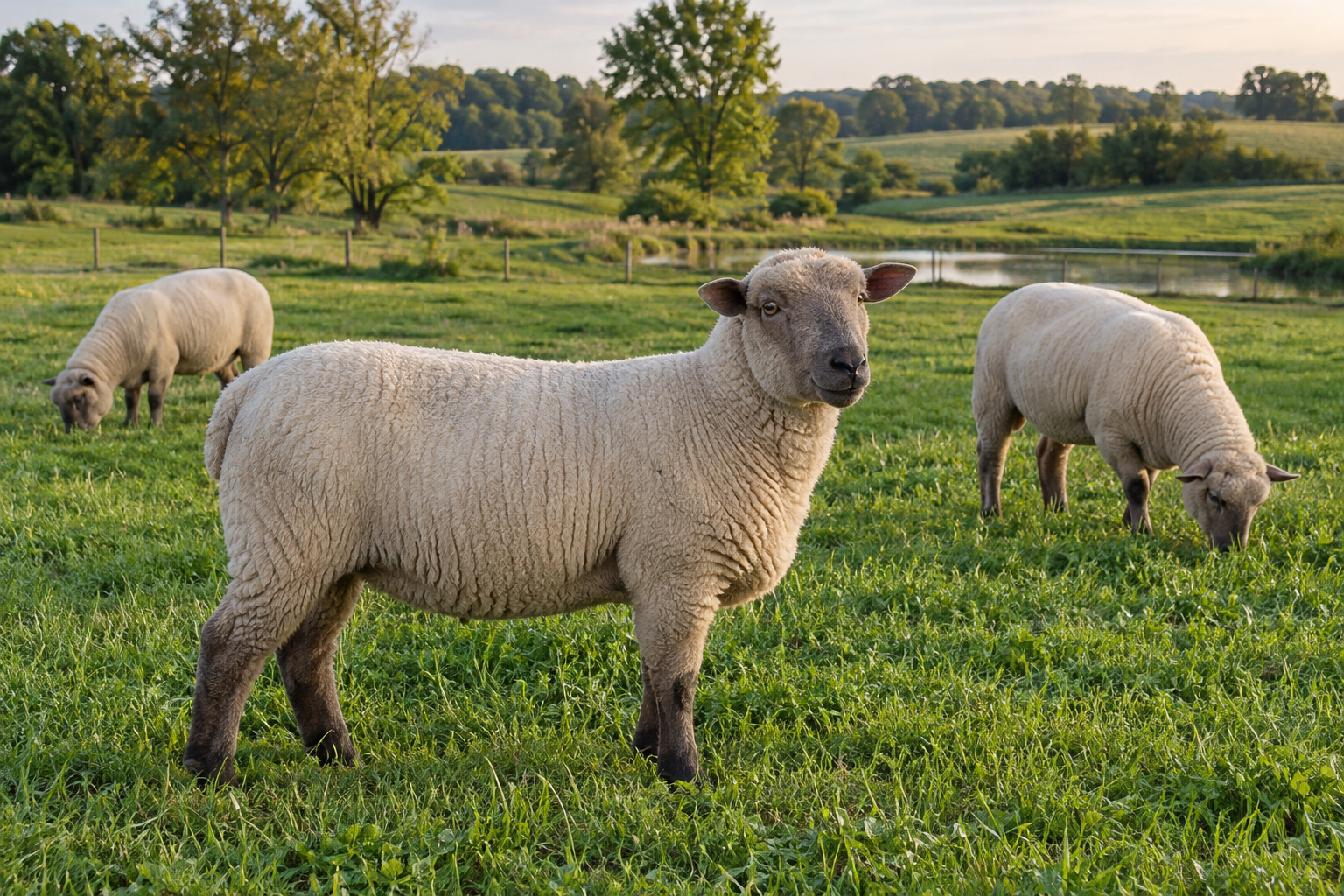
The where to buy sheep guide covers evaluating sellers. Browse listings as leads, then check the animal and documents. An attractive face is not a substitute for either.
Frequently asked questions
Is Southdown the same as Babydoll Southdown?
They share breed history, but the modern American Southdown standard and Babydoll registry standards are different. Ask for the exact registry and the animal’s measurements, rather than treating the names as equivalent sale categories.
What color is a Southdown’s face?
The American standard calls for gray to brown muzzle hair. A solid black face or a white muzzle does not match that description. Pigmentation details should be checked against the relevant registry’s current standard.
Are Southdowns horned?
They are a polled breed. The American standard discriminates against solid horns or scurs. Establish identity and consult the registry if an animal’s eligibility is uncertain.
Do they need shearing?
Yes. Southdowns grow wool. Arrange routine shearing and appropriate protection afterward, even when wool is not the reason you keep them.
Can I keep one as a pet?
Plan for compatible sheep company and the same fencing, feeding, health and shearing responsibilities as a larger flock. A bottle-raised or friendly lamb still grows into livestock; a breeding ram is not a casual pet choice.
Do this next on Creatures
Choose the step that fits your plans for Southdown sheep. A breed page or directory entry does not establish current stock, health status or registry eligibility.
Watch for stock. Set a Southdown sheep listing alert for future matching listings. It does not mean an animal is available now. Read saving searches and using your watchlist.
Browse what is listed. Check the filtered marketplace, then ask the seller for the evidence described above.
Start an animal profile. Add your animal. No account is needed to start; a free account keeps your records. See adding an animal to Creatures.
Keep useful observations. Add a record for weights, health observations and breeding dates. The sheet opens for visitors; a free account saves it. The record walkthrough explains the steps. A saved record does not verify a diagnosis, breed or pedigree.
Look for farms. Browse the breeder directory as a starting point for inquiries. Entries are not guarantees of active sellers, endorsement or available stock.
Represent your operation. Start an organization profile for your farm. Read creating an organization and adding your team and the separate directory listing guidance. Creating a profile does not itself verify breeder status or guarantee admission to the directory.