Rambouillet
Author: Elliott Garber, DVM · Published
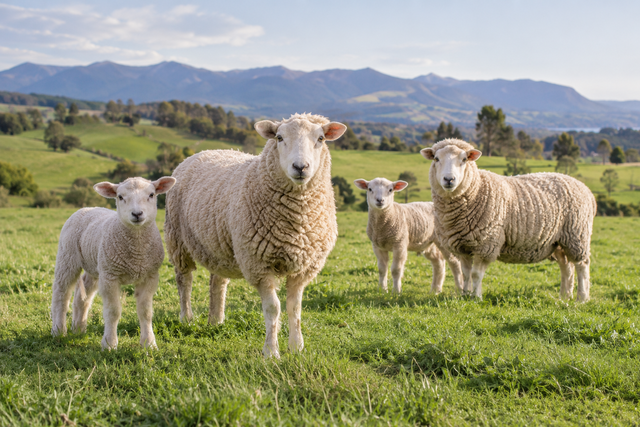
Rambouillet sheep are a fine-wool breed developed from Spanish Merino stock in France. They became important in western US range flocks and remain a choice for breeders who want useful wool alongside breeding ewes and lamb production. They are not simply any sheep with a soft white fleece.
When comparing animals, keep dated weights alongside fleece information. The free sheep weight calculator can help estimate a trend from measurements, but it is not a scale or a breed-specific guarantee.
| Identity | Merino-derived fine-wool sheep |
|---|---|
| Development | France, with influence on western US range flocks |
| Fleece | Dense fine white wool |
| Horns | Horned and polled lines occur |
| Main goals | Wool, breeding ewes and lamb production |
| Buyer priority | Measured fleece traits and whole-animal soundness |
Browse listings, public profiles, breeders, or add your animal.
Rambouillet, French Merino and related breeds
The American Rambouillet Sheep Breeders Association’s history traces the breed to Spanish Merinos taken to the royal farm at Rambouillet. “French Merino” appears in historical descriptions, but a modern sale still needs an identified registry and pedigree. A generic Merino description cannot establish that a sheep is registered Rambouillet.
The American Sheep Industry Association’s wool-breed reference identifies Rambouillet as a fine-wool breed with an important role in western US range populations. That is breed context, not proof that an individual can thrive without close observation or supplemental feed.
Compare the Merino guide for the wider fine-wool family and Columbia for a different breed developed for wool and lamb production. Our sheep hub helps separate fleece type from flock purpose. For a small farm, a known local flock adapted to comparable management may be a better guide than the broad label “range sheep.”
Appearance: white wool, sound frame and open eyes
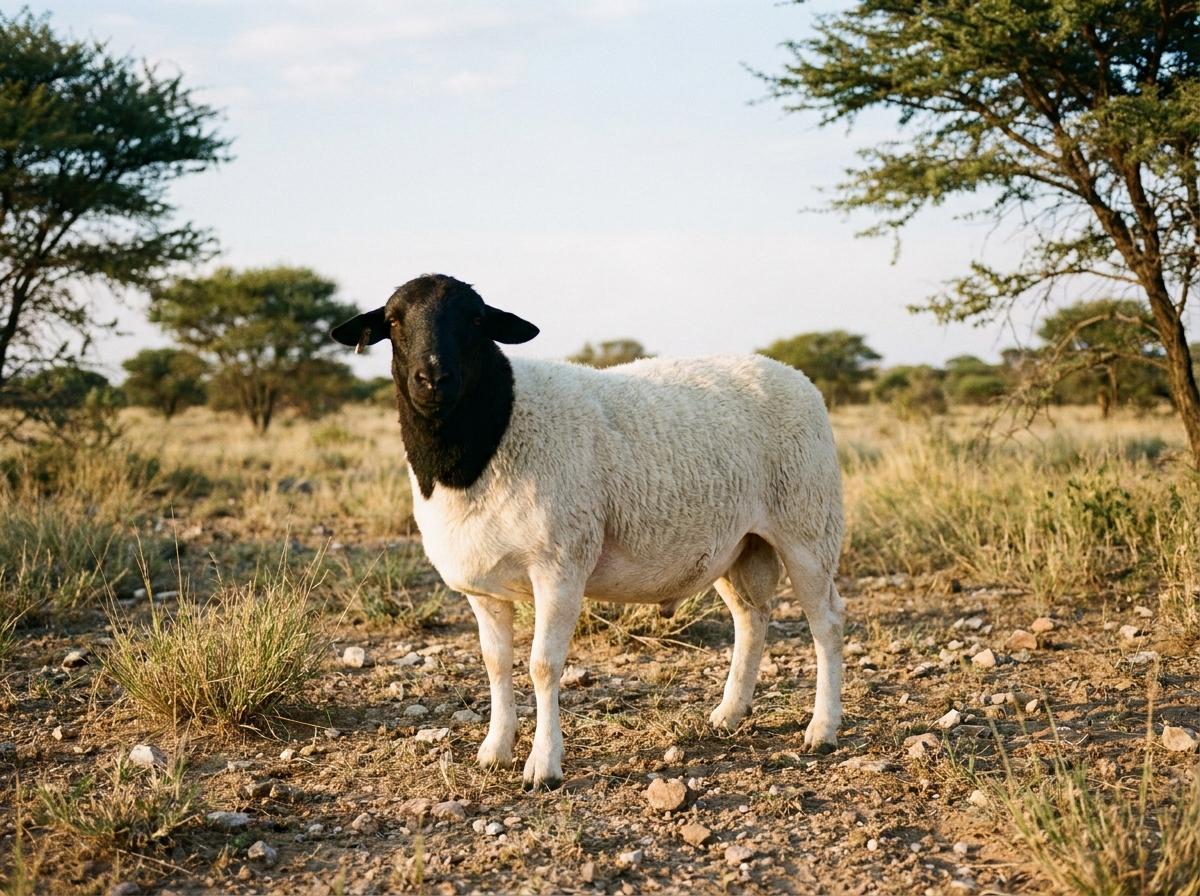
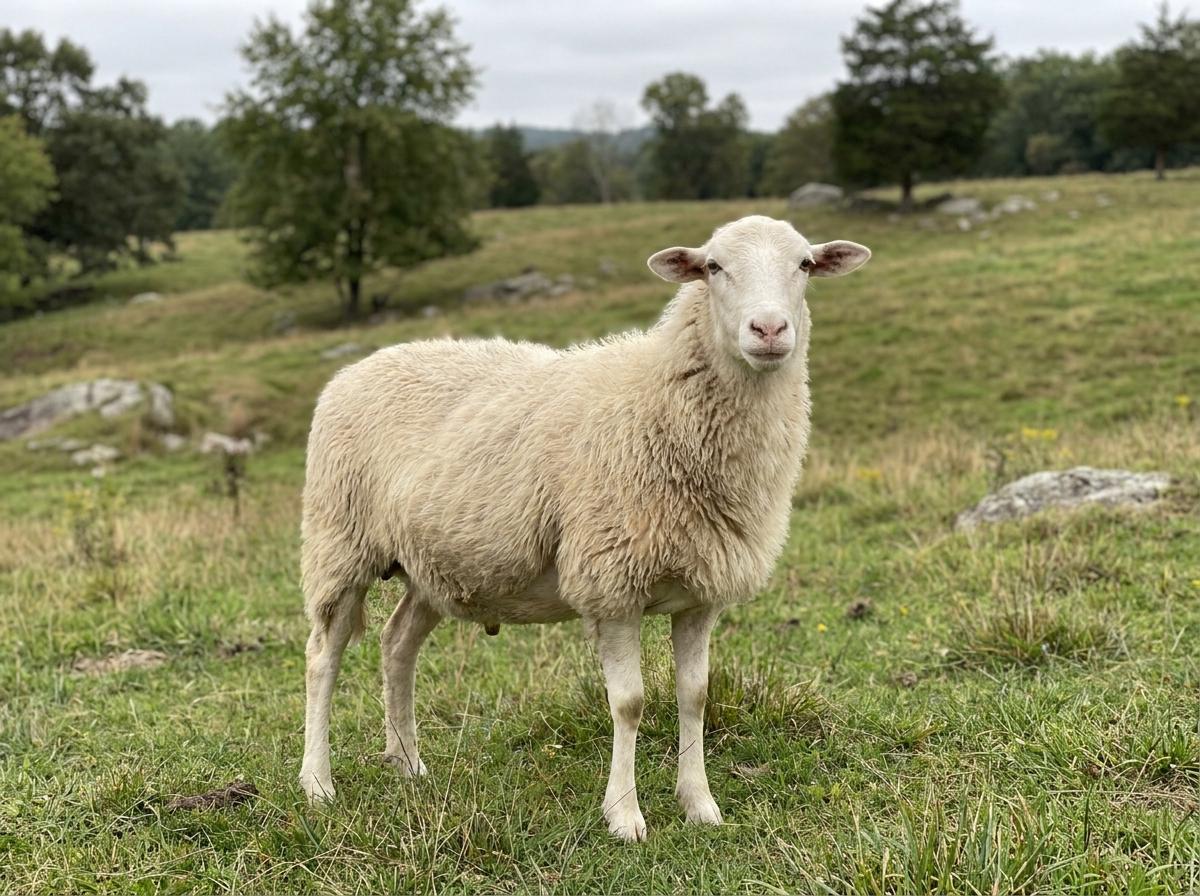
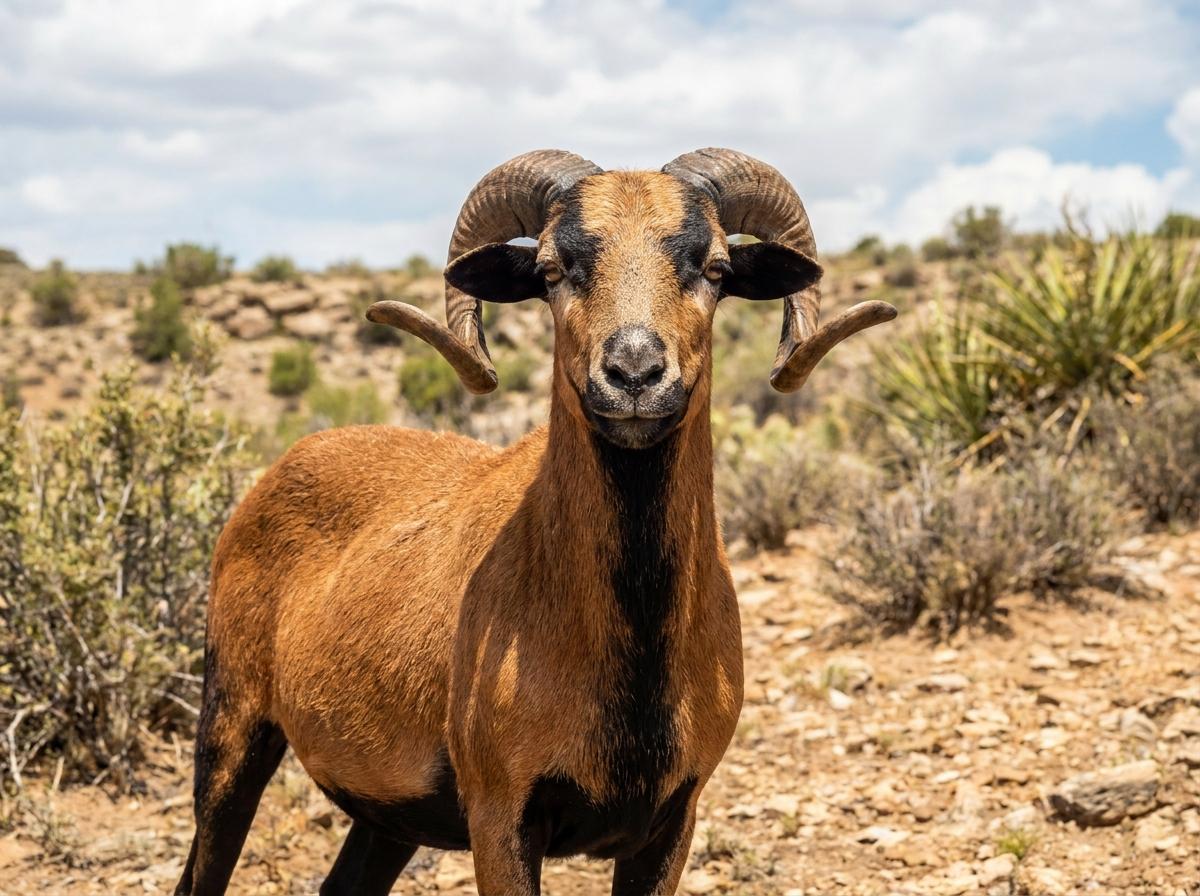
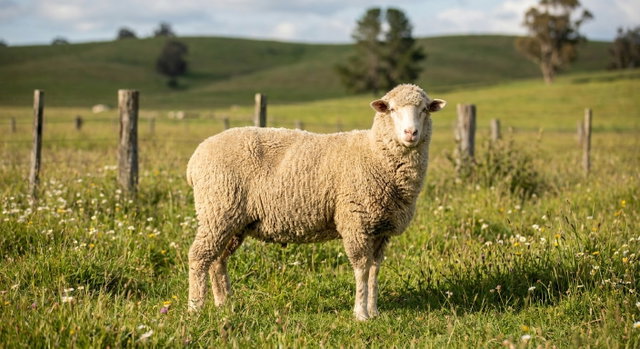
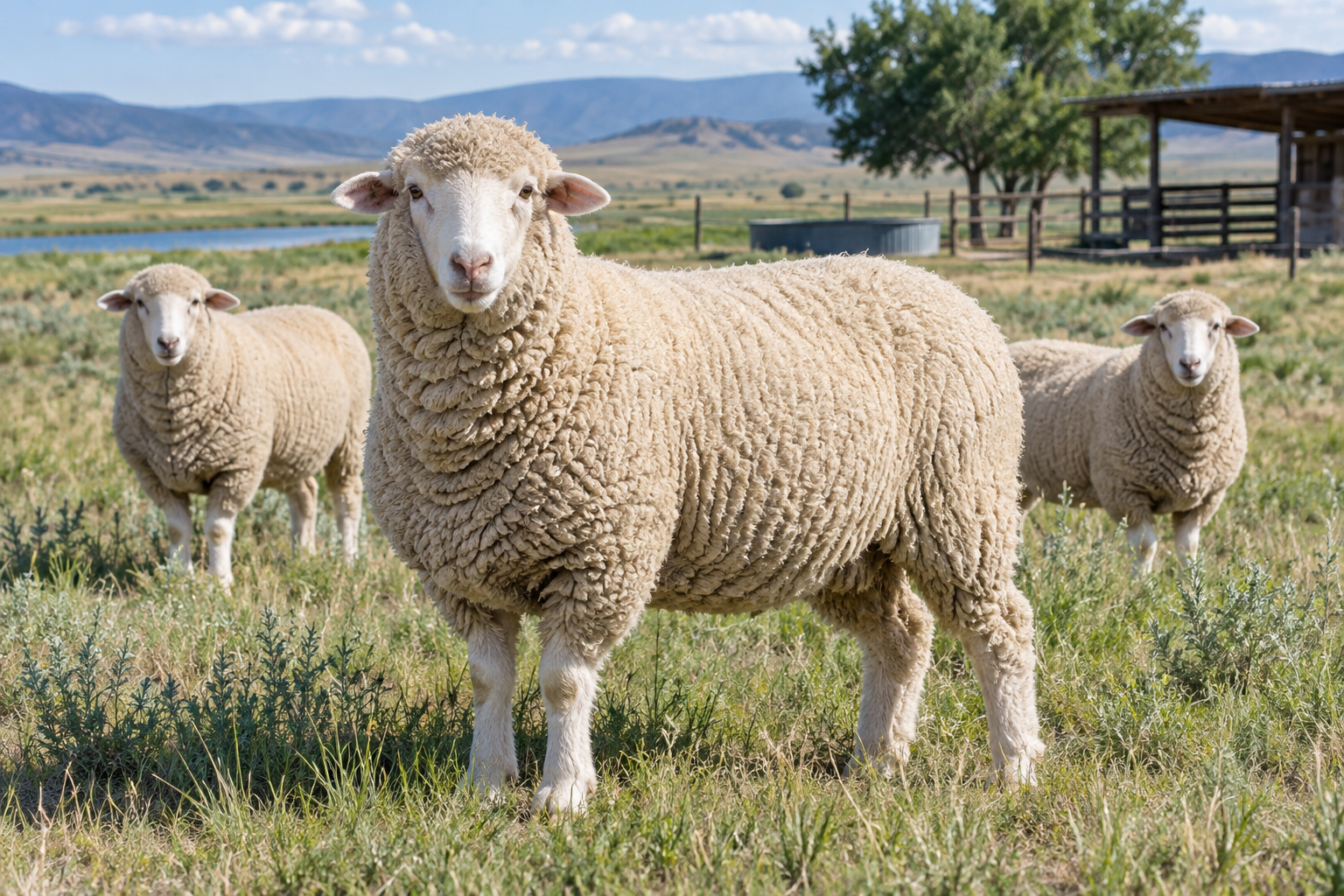
Look for a substantial sheep with body length, a deep chest, sound legs and dense white wool. Horn status varies by line; ask the breeder about the individual and its pedigree. The Canadian Sheep Breeders Association’s Rambouillet standard allows horned or polled animals and emphasizes an open face, clear eyes, white fine fleece and sound feet.
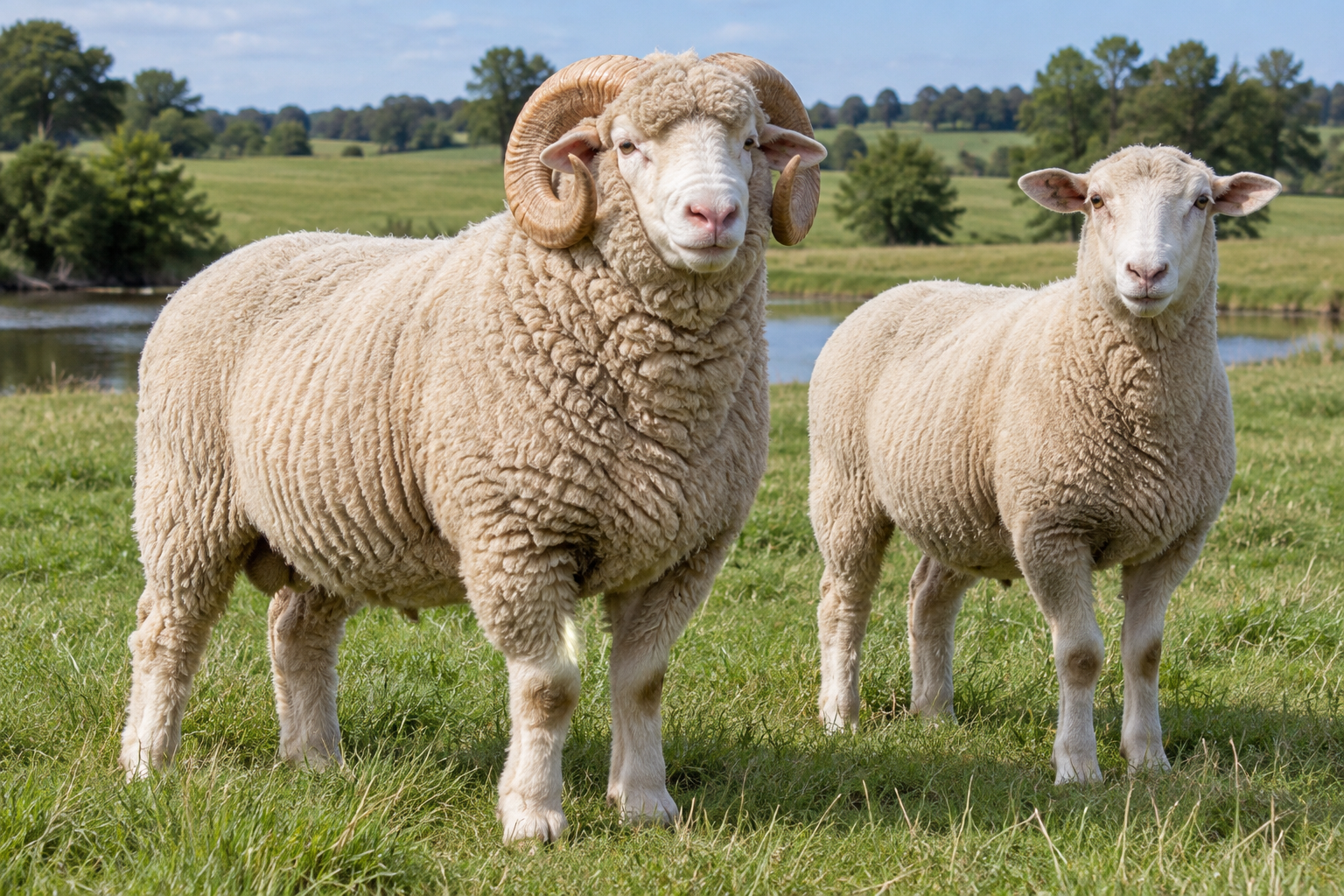
Wool should not obstruct vision. Do not mistake a heavily woolled face or extreme skin folds for a requirement of the breed. You need to see the animal move and handle it to assess condition. Dense fleece can make a thin sheep look substantial and can hide leg or skin problems in a distant photograph.
Published ewe weights differ markedly: the ASI breed reference gives mature ewes at 140 to 180 pounds, while the American breed association’s facts page gives 200 to 275 pounds. These are source descriptions, not interchangeable targets for every flock. Ask for actual mature weights from the family you are considering. Size and feed needs vary with sex, age, selection and management. A fine-wool ram still needs secure separation and safe handling; wool quality does not tell you how he behaves at a gate.
What the fleece report should tell you
A micron result describes fiber diameter from a sample. It does not, by itself, tell you what the whole fleece will sell for or how much usable wool it contains. Ask when and how the sample was collected, the sheep’s age and whether the result belongs to this individual. A lamb’s first fleece is not a promise about every adult clip.
For a fiber purchase, request staple length, strength or break information where available, uniformity across the fleece, vegetable matter and preparation details. Greasy fleece weight includes material that will not remain after washing; ask for clean yield or a clear explanation of what the quoted weight means.
The ASI reference lists Rambouillet fiber at about 19 to 24 microns, or 60s to 80s spinning count. Its ewe grease-fleece range is 10 to 15 pounds with a 45 to 55 percent clean yield. The breed association gives mature ewe fleeces of 8 to 18 pounds with a 35 to 55 percent yield. These are reference ranges, not a promise for an individual sheep. Fiber diameter, greasy weight and clean yield measure different things; request the animal’s actual fleece test and clip records.
Ask who will buy the wool before budgeting income from it. A handspinner, a local mill and a commercial pool may value different traits and preparation. Inspect a representative sample rather than selecting only on the finest number in an advertisement. There is no useful reason to invent a universal Rambouillet wool price.
Care on pasture and around shearing
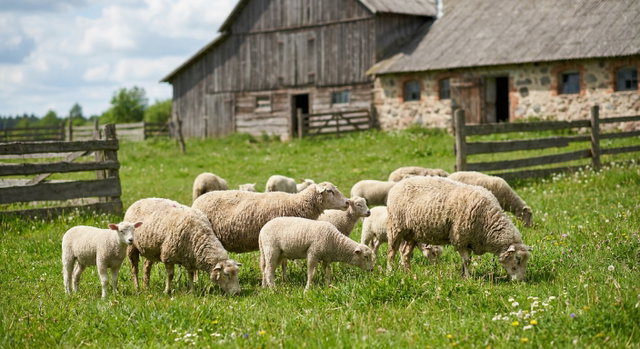
A range-breed history does not make a bare paddock adequate. Provide compatible flock companions, secure boundaries, fresh water, appropriate shade or weather protection and a dry resting area. Arrange handling facilities that let you inspect individuals, not just count distant white backs.
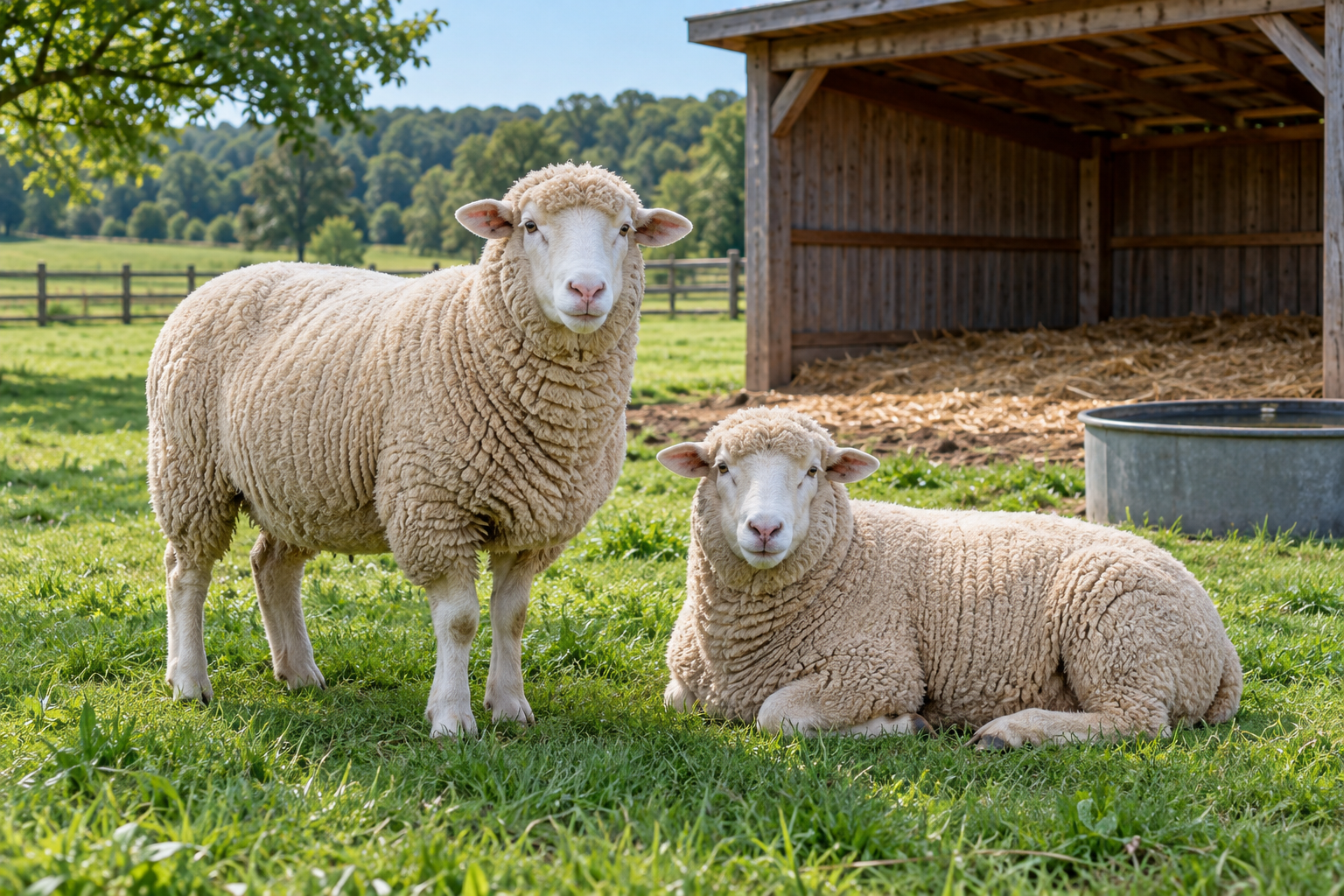
Book regular shearing before acquiring the flock. Plan clean, dry sheep for the shearer and suitable shelter afterward according to weather and the shearer’s advice. Keep feeding areas from filling fleeces with hay and debris. The sheep shearing guide explains the planning questions without treating a fleece as something you can leave indefinitely.
Assess forage and condition throughout the production cycle. Growing sheep, late-pregnant ewes and lactating ewes have different needs from dry adults. Penn State’s sheep nutrition guidance explains why forage that maintains an adult may not meet growth or milk-production needs. Use the sheep feeding guide to organize forage and supplement questions for your adviser.
Keep minerals species-appropriate. Wisconsin Extension warns about copper accumulation in sheep. Do not let a wool flock share unrestricted access to cattle or goat minerals. Testing forage and reviewing the whole ration are safer than adding supplements because a fleece looks dull.
Health and breeding records that make a flock useful
Work with a veterinarian on quarantine, vaccines, feet, parasites and testing suited to your area. Fine wool does not establish parasite resistance. Examine the skin and fleece during handling and act on persistent scratching, lameness, soiling or lost condition. A sick, weak or fly-struck sheep needs timely veterinary care, rather than an attempt to improve the clip first.
Record the animal ID against shearing dates, fleece samples, measured weights and health observations. Keep laboratory reports and the veterinarian’s conclusions separate from your own interpretation. The flock record book guide provides a practical structure.
For breeding, record ram exposure dates, observed services, pregnancy findings, births and lamb IDs. The sheep gestation calculator estimates a planning window; it does not establish pregnancy. Penn State includes Rambouillet among breeds with potential for off-season programs in its off-season lamb production guidance, but ask for your prospective flock’s actual results before adopting such a schedule.
Keep wool goals alongside fertility, mothering, feet, udder function and survival. If a seller offers estimated breeding values, ask which evaluation produced them, what traits they cover and whether the animals being compared belong to a compatible evaluation. A chart you type yourself is not a genetic evaluation or registry certificate.
Buying Rambouillets: costs and practical questions
Request dated quotes for comparable registered or commercial stock. A breeding ram with fleece tests, a group of replacement ewes and a handspinning wether serve different goals. Budget for transport, fencing, shearing, handling, forage and veterinary care before deciding what you can pay for the animals.
Ask these questions before a deposit:
- Which registry and certificate identify the sheep, and what exactly transfers?
- Is the line horned or polled, and what mature weights have been measured in the flock?
- Can the fleece test be matched to this animal and sampling date?
- Are quoted fleece weights greasy or clean, and what preparation and contamination should I expect?
- What are the actual lambing, foot-health, parasite and treatment records?
- Can I see the sheep walk and inspect its condition, bite, feet and breeding anatomy as appropriate?
- Who will shear them locally, and is there a realistic outlet for my wool?
For a flock whose main aim is meat-lamb production, compare Southdown. For breeding-season flexibility, compare Dorset, then assess actual flock records rather than assuming a name settles the choice.
A familiar name can make daily notes easier to read. The sheep name generator offers ideas, but keep every name attached to the animal’s permanent ID.
Frequently asked questions
Is Rambouillet the same as Merino?
It belongs to the Merino-derived fine-wool family, with its own development and registration identity. Ask for the exact breed and pedigree rather than treating every fine-wool sheep as interchangeable.
Are Rambouillets horned?
Horned and polled lines exist. Check the individual animal and its registry requirements. Do not infer its ancestry from horn status alone.
Is all Rambouillet wool the same fineness?
No. ASI gives about 19 to 24 microns as a breed reference. An individual’s dated laboratory result matters more than that range, and staple strength, uniformity, clean yield and contamination also affect the clip.
Do they need shearing?
Yes. They are wool sheep. Secure a shearer, safe handling and appropriate weather protection before buying them.
Can they live on poor pasture because they are range sheep?
That is not a safe assumption. Available forage, season, growth and reproductive stage determine needs. Watch condition and have the ration assessed when forage cannot support the animals.
Do this next on Creatures
Choose the step that fits your plans for Rambouillet sheep. A breed page or directory entry does not establish current stock, health status or registry eligibility.
Watch for stock. Set a Rambouillet sheep listing alert for future matching listings. It does not mean an animal is available now. Read saving searches and using your watchlist.
Browse what is listed. Check the filtered marketplace, then ask the seller for the evidence described above.
Start an animal profile. Add your animal. No account is needed to start; a free account keeps your records. See adding an animal to Creatures.
Keep useful observations. Add a record for weights, health observations and breeding dates. The sheet opens for visitors; a free account saves it. The record walkthrough explains the steps. A saved record does not verify a diagnosis, breed or pedigree.
Look for farms. Browse the breeder directory as a starting point for inquiries. Entries are not guarantees of active sellers, endorsement or available stock.
Represent your operation. Start an organization profile for your farm. Read creating an organization and adding your team and the separate directory listing guidance. Creating a profile does not itself verify breeder status or guarantee admission to the directory.