

Poland China
Author: Elliott Garber, DVM · Updated
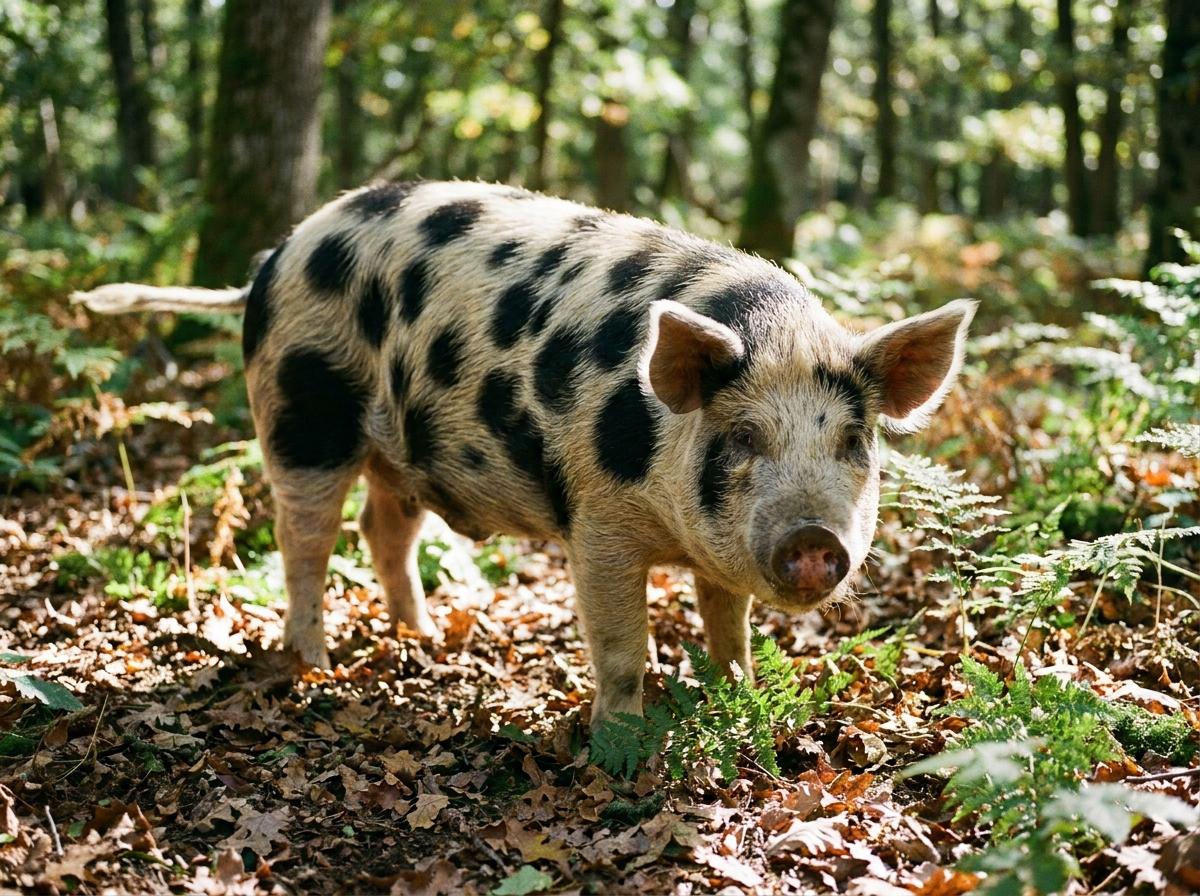
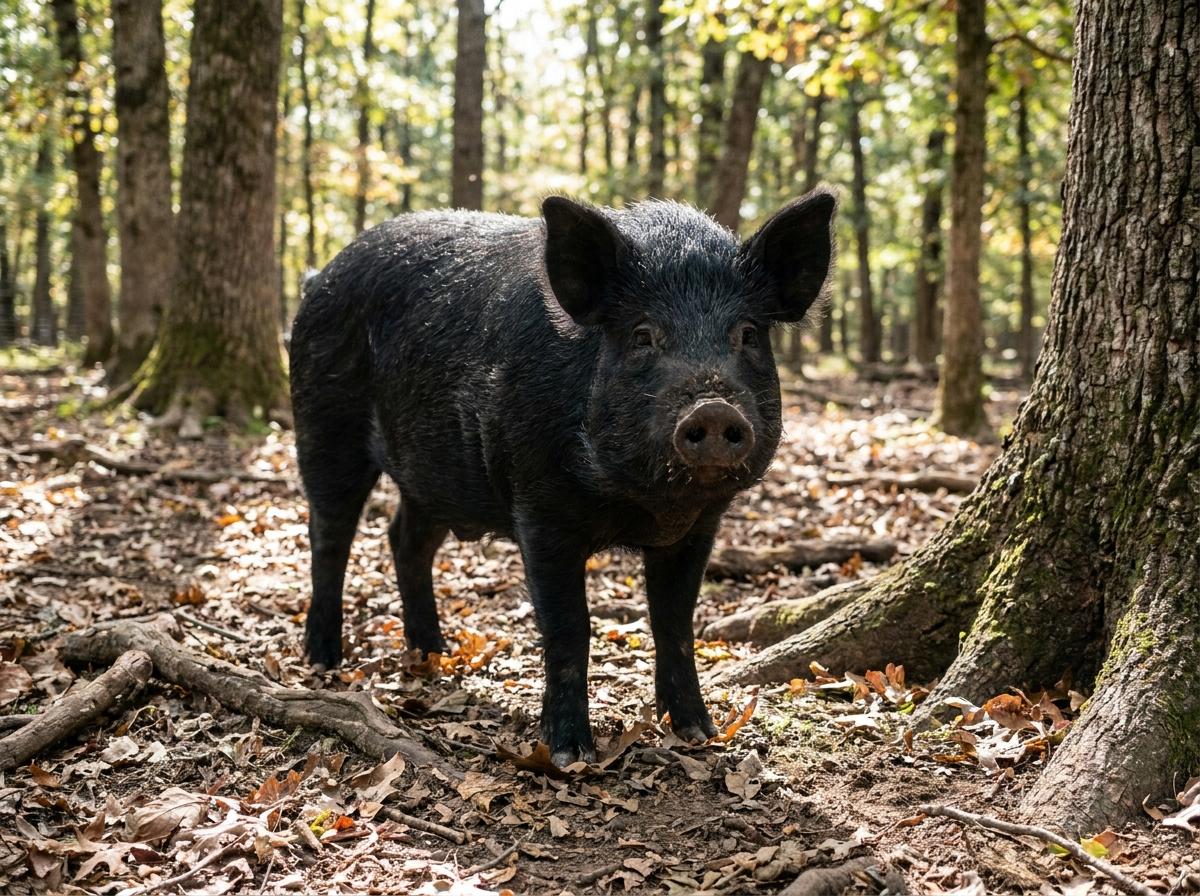
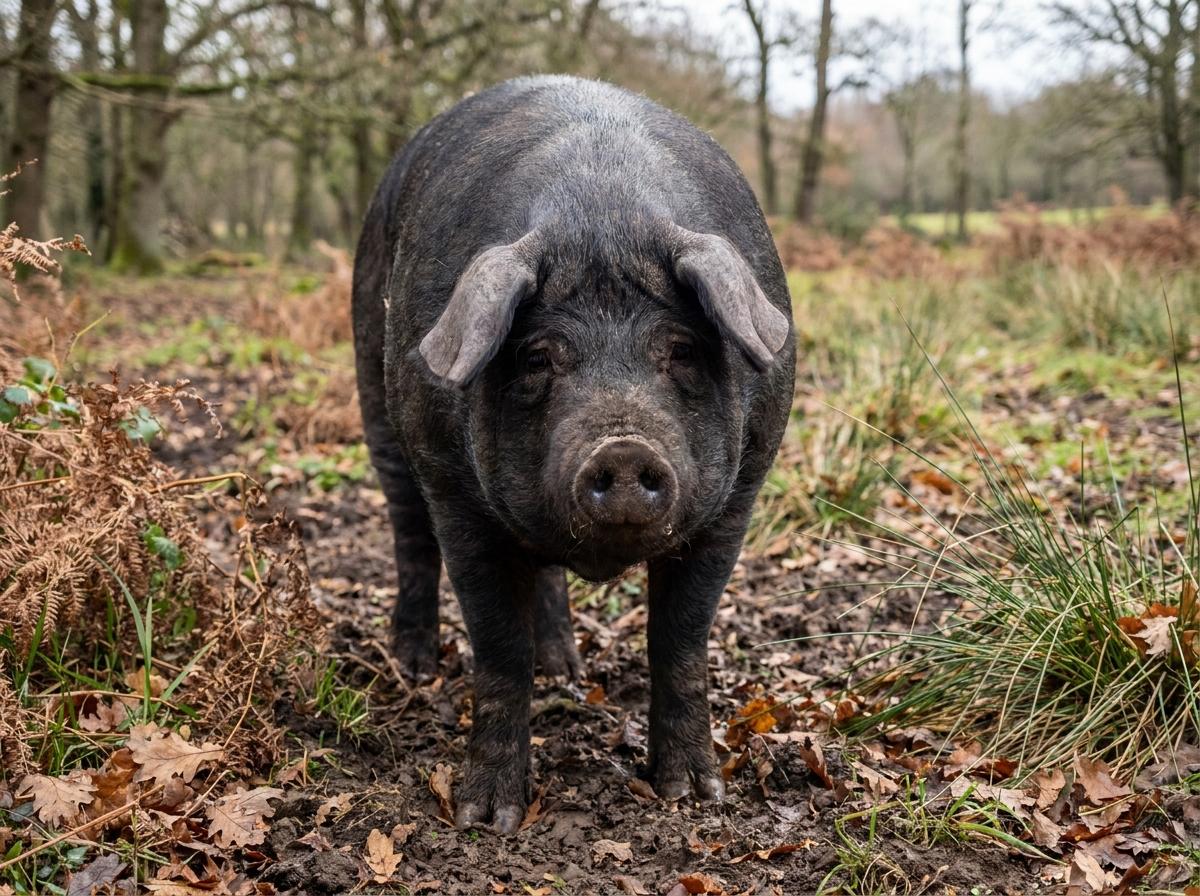
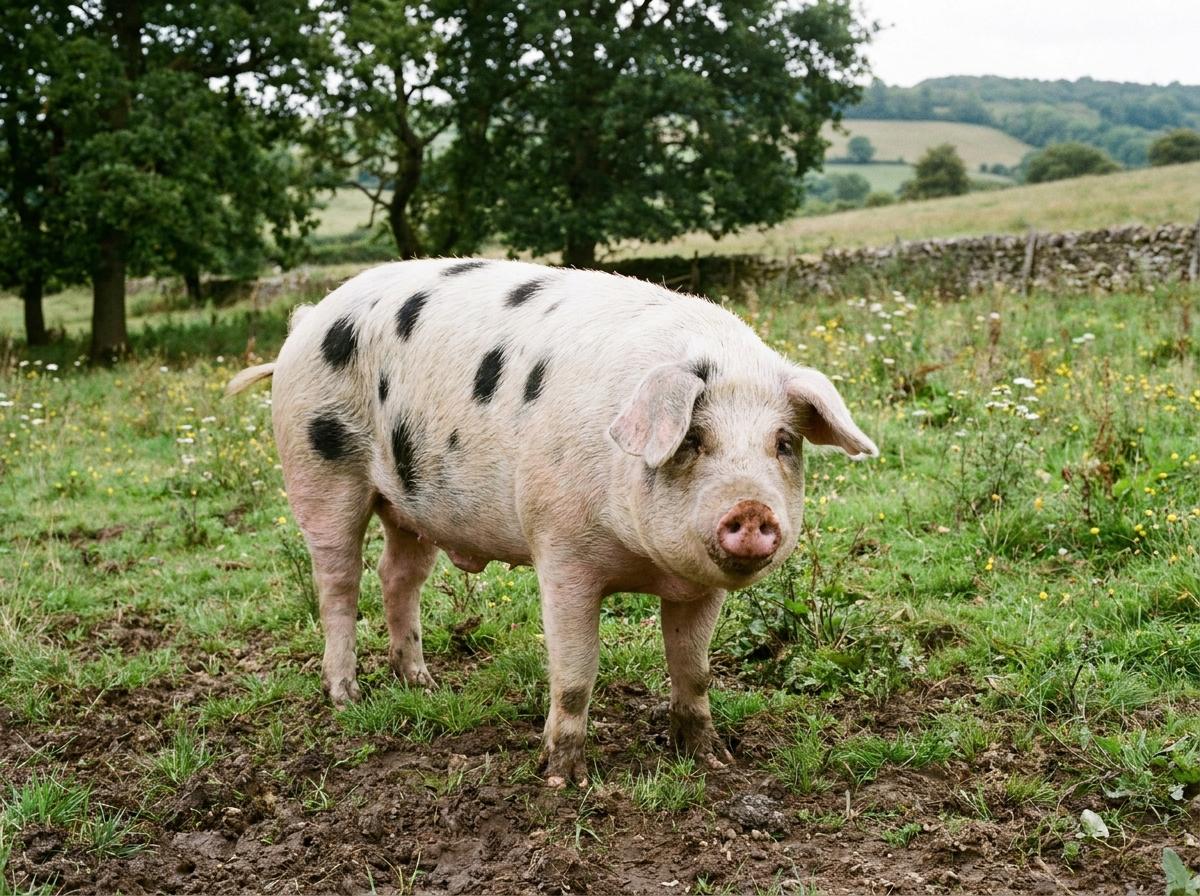
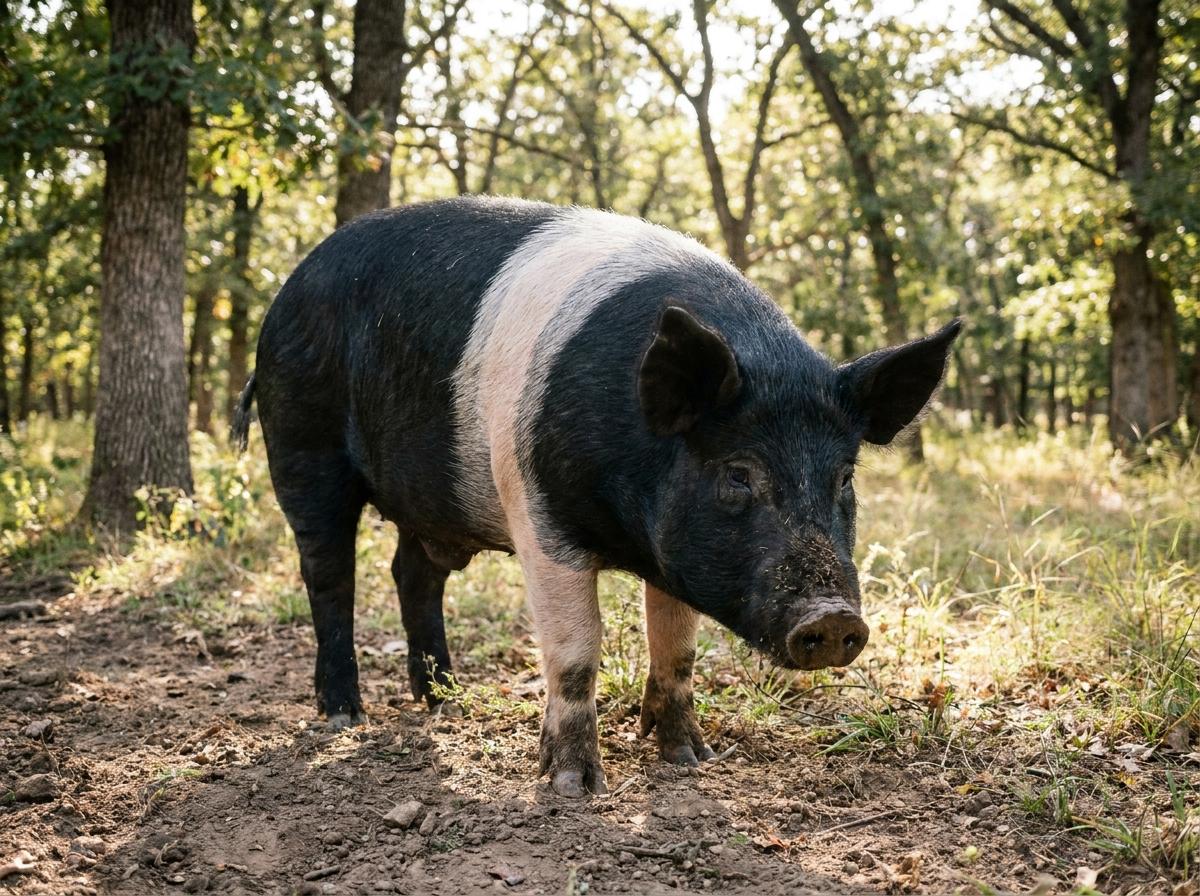
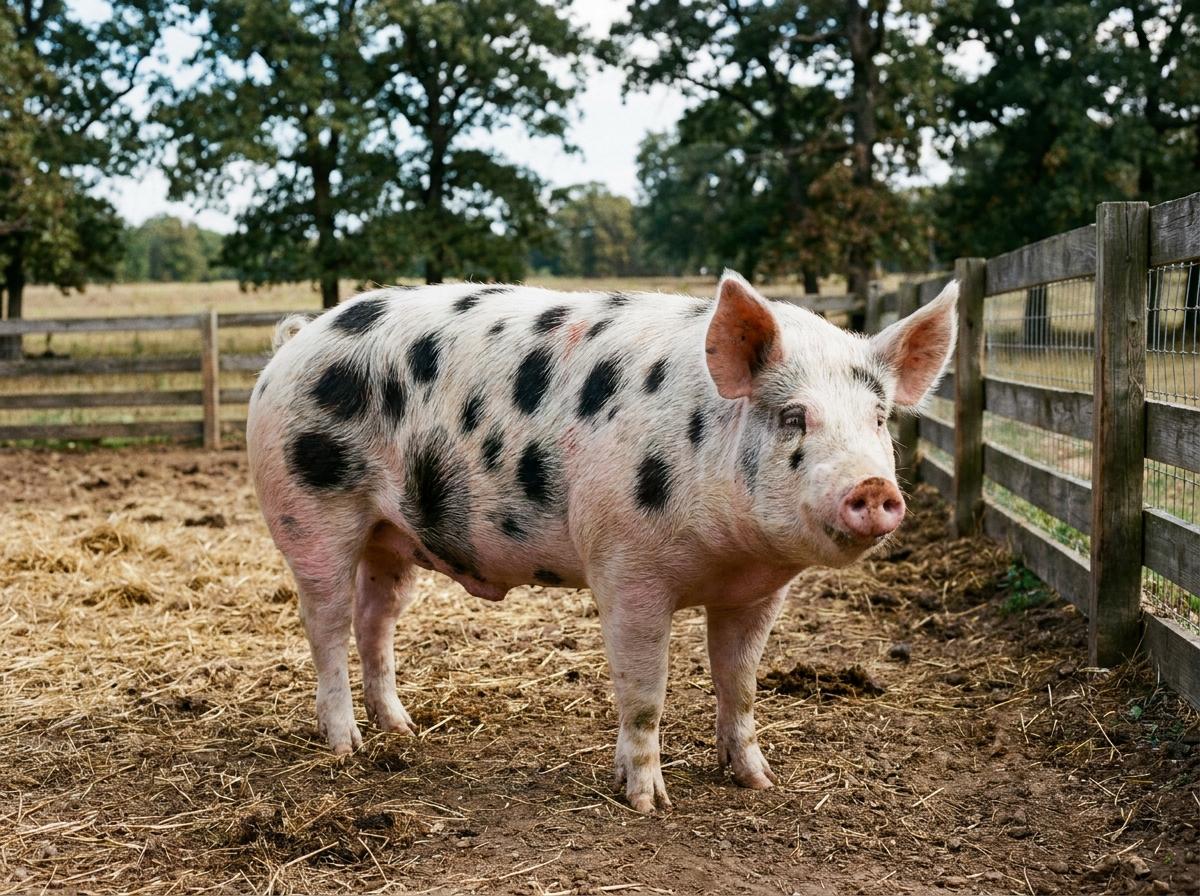
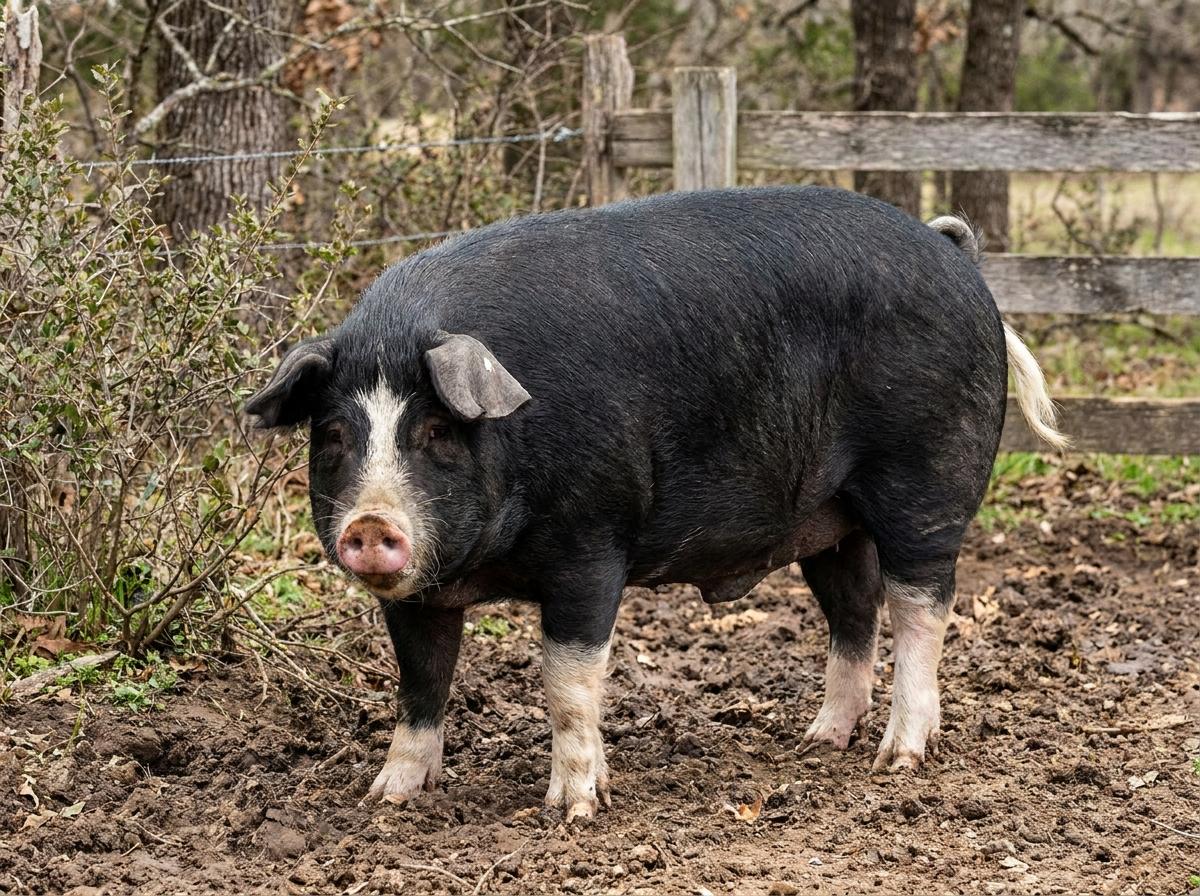
A Poland China is a large American hog, solid black with six white points: white on the nose, white on all four feet, and a white switch at the tip of the tail. Its ears hang down over its face. Farmers in the Miami Valley of southwestern Ohio assembled it in the first half of the 1800s, and despite the name it has no connection to Poland. If the pig in front of you is covered in bold black and white spots, you are looking at the Spotted, a separate registered breed that shares this one’s ancestry. Both are recorded today by Certified Pedigreed Swine, and you can see what is currently listed on the Poland China marketplace page.

| Origin | Miami Valley, Butler and Warren counties, Ohio, from 1816 onward |
|---|---|
| Registry | Certified Pedigreed Swine, Peoria, Illinois, which now operates the Poland China record |
| Color | Black with six white points: nose, four feet, tail switch. An occasional splash of white on the body is allowed. |
| Ears | Down when the hog is relaxed. Erect ears are an absolute disqualification. |
| Confused with | Berkshire (same six points, opposite ear rule), Spotted (black and white spots), Hampshire (white belt) |
| Main use | Purebred seedstock, the sire side of commercial crosses, and junior show projects |
| Market weight | Usually 250 to 290 lb, the standard US window rather than a breed trait |
| Find one | Poland China pigs in the Creatures marketplace |
Browse listings, public profiles, breeders, or add your animal.
The color pattern, and the breed almost nobody separates it from
Three black pigs get mistaken for a Poland China, and only one is a close call. Two are easy: a Spotted is boldly marked black and white, and a Hampshire carries a clean white belt around the shoulders and front legs, a pattern the Poland China standard rules out.
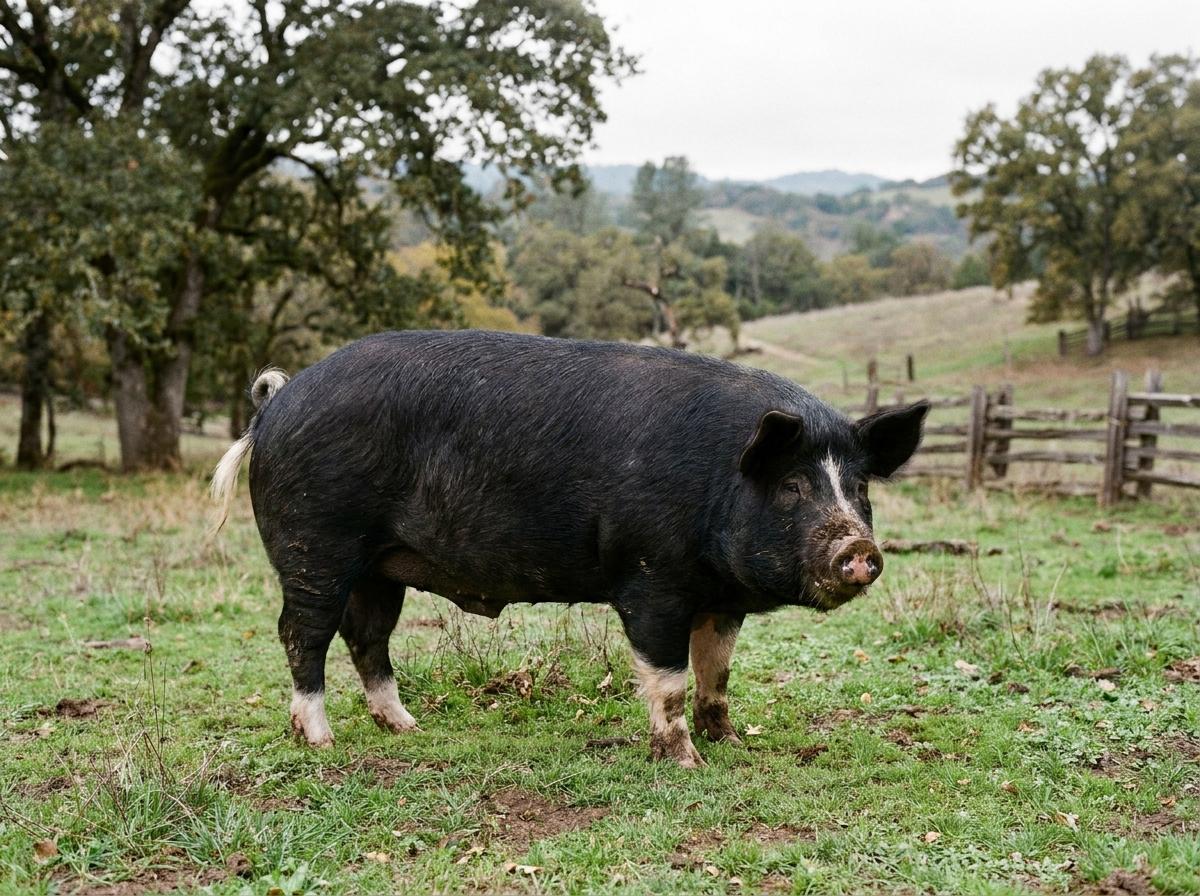
The Berkshire is the hard one, and most breed guides skip it. Read the American Berkshire Association by-laws and the ideal Berkshire color is “black with six white points (face, four socks, tip of tail),” with three of four legs required to be white and a belt disqualified. That is the Poland China pattern, allowing for the two registries writing the head point as face and nose respectively. Oklahoma State says the same from the other direction, noting that a major American breed built partly on Berkshire blood carries identical color markings.
The ears separate them, and the two registries pull in opposite directions. Certified Pedigreed Swine requires a Poland China to have “ears down” when relaxed and lists erect ears as an absolute disqualification. The Berkshire association calls rigid upright ears the ideal and disqualifies an animal whose ears break so far they point permanently downward. Same coat, mirrored rule. On a black pig with white feet, look at the ears first and ask for papers second.
The Berkshire guide explains the upright ears, white points and paperwork questions that help separate these superficially similar pigs.

That facial stripe is a blaze, not the nose point. The point the standard counts is the white on the snout itself, and a blaze running up the face is neither required nor a fault; only a solid white face is disqualified.
The rest of the current CPS color rules, effective 20 September 2021, matter before you buy anything you intend to register. Acceptable: a slight continuation of white from the legs onto the body, white on an ear, hair anywhere from dark black to ashy, and an ear folded backwards toward the body. Absolute disqualifications include: erect ears, a solid white or solid black face, more than one solid black leg, excessive free standing white not attached to a leg, an excessive continuation of white from the legs onto the upper hip or shoulder, white on a solid white ear running past the base of the ear, evidence of a belt, and red or sandy hair. Note that the hip and shoulder rule is the failure mode of the very thing listed as acceptable a sentence earlier, so there is a line between a slight continuation and an excessive one, and CPS draws it. CPS also flags a recent rule change on the ring neck, so confirm the current wording with the office rather than an old printout.
Only three of the four legs have to carry white, which surprises people who read “six white points” as all or nothing. A good pig with one black foot is still registerable.
Ohio, the Big China, and a hog that had to walk to market
The registry dates its own beginning to 1816, when the Shaker Society, through its trustee John Wallace, bought one boar and three sows from a Philadelphia firm. They were called Big China hogs, and three of the four were white while the fourth sow carried sandy to black spots. They landed in Butler and Warren counties, and CPS credits the twenty years that followed to their influence.
The selection pressure of that era explains a lot. Hogs were bred for two things: size, and the ability to walk. Market meant driving them overland, sometimes close to a hundred miles, and a hog that could not travel was worthless no matter how well it fed. Some historians have fixed 1846 as the point when breeders stopped bringing outside blood into the Warren County hog, which is how CPS itself puts it.
The name is the one part the registry does not explain. CPS covers the Big China import in detail and never says where “Poland” came from or when the two words were joined. A period source does. Joseph Ray Davis’s History of the Poland China Breed of Swine, published in 1921 by the Poland China History Association, records that in November 1872, at the National Swine Breeders convention at Indianapolis, a special committee appointed to investigate the breed’s origin made a report that was accepted. The committee recommended “in view of the difficulties in making the change in the name of any breed that the name of Poland-China be recognized as the accepted name of said breed.”
Three things in that same passage are worth carrying away. The committee gave no recognition at all to Poland blood in the breed. It traced the word only to one neighborhood’s habit of using “Poland” for the offspring of an animal bought from Asher Asher, a Butler County farmer who was a Pole by birth. And the name adopted was hyphenated, Poland-China; the hyphen was dropped in later years. The same convention also rejected D. M. Magie’s claim to be the breed’s originator as unfounded.
Where the record ended up is documented. Oklahoma State still lists the Poland China Record Association at a Peoria, Illinois post office box, the same box Certified Pedigreed Swine uses now. CPS registers five breeds from that office: Chester White, Hereford, Poland China, Spotted, and Tamworth.
The Spotted split off from this same stock. Breeders in Putnam and Hendricks counties in Indiana brought Ohio hogs home over a period of years and kept the spotting instead of breeding it out. Their association carried “Poland China” in its name until the 1960 annual meeting, when the board and members voted to rename it the National Spotted Swine Record and to call the breed Spotted Swine, or Spots. Half a century of farm signs is why people still search for “Spotted Poland China.” Our Spotted guide covers that breed in full, inside the wider pig breeds collection.
The type wars, and why this breed teaches leg set
The Poland China’s history is the best cautionary tale in American swine breeding, and it is why experienced buyers look at feet and legs before anything else.
Oklahoma State’s breed record describes two swings. During the era breeders called the Hot Blood, the breed was pushed toward compact, early maturing, heavily conditioned hogs, and prolificacy was sacrificed to get there. The pendulum then went the other way into the Big Type craze. Sows got very large and very prolific, with litters of sixteen and seventeen not uncommon, and they were also, in the record’s own words, so large and flat sided that they made poor mothers and lay on their pigs in the first days after farrowing.
Neither extreme survived. What came out the far side is the animal the breed is known for now, and Oklahoma State names substantial bone and soundness of feet and legs as defining strengths. That is less an accident of genetics than scar tissue from two generations of overcorrection, and the lesson reaches a buyer in 2026 without any history required. A hog selected hard on one number gives up something else, and on a heavy pig what it usually gives up is structure.
What the performance numbers actually show
The registry calls the modern Poland China a “big framed, long bodied, lean, muscular individual that leads the U.S. pork production in pounds of hog per sow per year.” That is the association’s claim about its own breed, and no independent body publishes a figure that confirms or refutes it.
The one published multi breed comparison anyone can check is Purdue Cooperative Extension’s factsheet PIH-39, and its numbers are old enough that the dates have to travel with them.
- Purebred barrows, 1985 and 1986 National Barrow Show. Forty seven Poland barrows averaged 1.64 lb of gain per day and reached 220 lb at 173 days. Loin muscle area averaged 5.17 square inches, second only to the Hampshire’s 5.22 among eight breeds, and tenth rib backfat averaged 1.12 inches, second leanest behind the Hampshire again.
- Boars in central test stations, 1984 through 1986. 219 Poland China boars averaged 2.11 lb of gain per day at 2.68 lb of feed per pound of gain and 0.80 inches of backfat. That conversion figure was the joint highest in the table, against 2.49 for Duroc, Hampshire and Yorkshire boars.
- The NC-103 research summary, from work completed in the 1970s, rated the Poland near average for age at 220 lb and better than average on backfat. It carries no rating at all for conception rate, litter size raised or 21 day litter weight, because the data was not there.
Two things follow, and one corrects a claim on most pages about this breed, including the earlier version of this one. The carcass reputation holds up: a big loin and low backfat is what those tables show, twice, from independent samples. The feed efficiency reputation does not. Poland China boars were the least efficient converters in that test alongside the Berkshire, and their gain sat in the bottom third.
PIH-39 is candid about its own limits and so should anyone quoting it be. The NC-103 estimates come from studies finished fifty years ago, and the barrow show and station figures come from pigs breeders chose to enter, which the factsheet says makes them “not very useful” as breed averages. So breed averages will not tell you what one Poland China pig will do. The herd’s own records will. Ask for real weights, dates and litter histories, and treat a breeder who cannot produce them as having told you something.
Sows, litters and farrowing

Nothing about pig reproduction is breed specific, so the cycle lengths, puberty ages and weaning intervals live on the pig species page rather than here. Two numbers belong at the pen. The Merck Veterinary Manual puts gestation at 115 to 116 days from first service, close enough to the old “three months, three weeks, three days” rule that farmers still count it on their fingers, and the pig gestation calculator does the date arithmetic for you.
Your setup decides the outcome far more than your pedigree does. Give the sow a clean, dry, draft free pen with deep bedding, a creep where piglets can get warm without being lain on, and clean water always within easy reach. Piglets arrive roughly every fifteen to thirty minutes in a smooth farrowing. Dry them as they come, make sure each gets colostrum quickly, and use a heat source that is not the sow, because chilling, missing colostrum and getting lain on are what kill newborn pigs.
If you intend to register the litter, sort the paperwork before you breed. CPS requires a DNA card on file for both the sire and the dam, and the litter has to be ear notched within seven days of birth. That window does not reopen.
Conformation and soundness

A pig that will carry 280 lb at six months and several hundred pounds as a breeding animal lives or dies on its feet and legs. The LSU AgCenter’s show pig guide is the clearest published walkthrough, and its checks work on breeding stock too.
Start on the ground. Toes should point straight forward and be even in size. Pasterns need some slope to absorb each step, so avoid both the pig that is flat and weak in the pastern and the one that is straight up and down and buck kneed in front. From behind, avoid an animal wider at the hocks than at the toes, because a pig bowed out at the hocks only gets worse as it gets heavier. A pig completely straight in its hocks, called post legged, is at high risk of going lame, and too much angle, called sickle hocked, brings its own walking problems.
Then watch it move, on solid footing. LSU makes the point directly: a pig standing on wire or slats cannot be assessed for soundness, because the floor hides how it walks. You want long smooth strides and feet set down softly. A pig that throws its rear feet out and hits the ground hard is showing you a problem that gets louder with every pound.
A level top matters for the same reason, since a steep shoulder slope leaves the front legs too straight and the pig short and choppy in front. One last check belongs on anything you might breed or exhibit: CPS requires six functional teats on each side for boars and gilts entering exhibition, and an underline is quick to count and impossible to fix later.
Buying one for a 4-H or FFA project
Junior shows are a large part of why this breed still has breeders. The generic project arithmetic, working backwards from the show date to a purchase weight, and the selection traits that get placed are the same for every breed and are covered on the pig species page. Two things are specific to this one.
Know your show’s rules, and be honest about the answer. If your show does not split by breed, LSU is blunt that you will usually find more show quality animals among crossbreds, Hampshires, Durocs and Yorkshires. Choose a Poland China because you want one, or because your show has a breed class, where the color rules stop being trivia: erect ears, a solid black face, two black feet or a hint of a belt gets a pig sifted at the gate.
Two current CPS rules affect showing. Animals at a national show must be stress identified and either negative or a carrier, since stress positive animals cannot be shown or sold there. And from 1 January 2026 CPS banned blowers, portable coolers, paint and adhesive at its open shows. Show rules move, so confirm before you enter.
Temperament, housing and feed
Oklahoma State describes Poland China hogs as very quiet in disposition and rugged in constitution, and junior exhibitors have handled them by hand for a century on that reputation. Take it as a starting point rather than a promise, because temperament comes from the individual animal and its handling far more than from a breed column. A boar in breeding condition or a sow with a fresh litter deserves a solid barrier however quiet the line is.
The husbandry is the ordinary large pig list, and the Spotted guide covers it in more detail: fence from below, a draft free lying area with dry bedding, feed to the stage with constant clean water, and rotated ground.
Summer is the one place this breed differs from its spotted relative, in both directions. Pigs cannot sweat, and a black coat is largely protected from sunburn, which is mainly a risk on pink and light skinned pigs. That same coat absorbs more solar heat, so shade and a clean wallow are not optional in an open lot. Build a herd health plan with a swine veterinarian covering vaccination, parasites and biosecurity, which matters more than usual if you show pigs and bring them home again.
Cost and availability
Poland China breeders cluster in the Corn Belt and around the junior show circuit, so availability is regional, seasonal, and thinner than the mainstream commercial breeds.
Prices vary too much by region, season and purpose for a single figure to be honest, and no authoritative breed price exists. A weaned feeder pig is the cheapest entry, registered breeding stock costs more, and a show prospect out of a proven litter can run well above that, at a price reflecting the sale as much as the pig. Check local auction reports and talk to more than one breeder before deciding what fair looks like.
Whatever you pay, buy on structure, health and honest records rather than markings. A correctly marked pig with bad feet is a bad pig with good marks.
Frequently asked questions
What color is a Poland China pig?
Black, with six white points: the nose, all four feet, and the switch at the end of the tail. An occasional splash of white on the body is permitted, and only three of the four legs have to carry white, so one solid black leg is acceptable. Erect ears, a solid black or solid white face, red or sandy hair, and any sign of a belt are absolute disqualifications.
Is the Poland China the same as the Spotted Poland China?
No. They are separate registered breeds with separate color standards, both recorded by Certified Pedigreed Swine. The Poland China is solid black with six white points; the Spotted is boldly black and white spotted. The shared name is a leftover from before 1960, when the Spotted association dropped “Poland China” from its own name.
How do I tell a Poland China from a Berkshire?
By the ears. The two breeds share an almost identical published color standard, but CPS requires the Poland China to carry its ears down and disqualifies erect ears, while the American Berkshire Association treats rigid upright ears as the ideal and disqualifies ears that break permanently downward. Papers settle anything the ears do not.
How big does a Poland China get?
It is a full size production hog. Market pigs are usually harvested between 250 and 290 lb at around six months, and mature breeding animals reach several hundred pounds, with boars heavier than sows. CPS publishes no mature weight standard, so treat any precise average with suspicion. Figures in the 500 to 800 lb range circulate widely and none trace to the registry.
Is it from Poland or China?
Neither. The “China” half traces to the Big China hogs imported into Ohio from a Philadelphia firm in 1816. The committee that fixed the name at the National Swine Breeders convention in November 1872 gave no recognition to Poland blood at all, and traced the word only to a local nickname for stock bought from a Butler County farmer who was a Pole by birth.
Who registers Poland China pigs, and is the breed rare?
Certified Pedigreed Swine in Peoria, Illinois, which now operates the Poland China record and also handles the Chester White, Hereford, Spotted and Tamworth. The National Swine Registry, often assumed to cover this breed, actually handles Duroc, Hampshire, Landrace and Yorkshire. The breed is not rare: neither it nor the Spotted appears on The Livestock Conservancy’s priority list.
Do this next on Creatures
Creatures is the records, profile and marketplace layer breeders and owners use to keep an animal’s history in one place and to find trusted farms.
Looking for a Poland China. Browse Poland China pigs in the marketplace, and if nothing is listed right now, set a free listing alert so new ones find you. No account needed to start, and saving searches and using your watchlist shows how it works. The breeder directory is the other place to look.
Already have one, or a project pig arriving. Add your pig to Creatures and keep its weights, treatments, breeding dates and pedigree together from day one. No account needed to start. See adding an animal to Creatures.
Then log what decides the outcome: weekly weights, feed changes, vaccinations, farrowing dates, ear notch numbers. The record sheet opens for any visitor, and a free account saves what you enter. Add a record for your pig, with adding a record as the reference.
Breeding or selling Poland Chinas. Create your farm or breeder profile so buyers can find you, no account needed to start. Getting listed in the breeder directory covers visibility, creating an organization and adding your team covers setup, and how seller payout works covers getting paid.
Comparing breeds. The companion Spotted pig guide covers the spotted breed that came out of this one, inside the full pig breeds collection. If you are weighing sire side options across species, Maine-Anjou cattle is the same frame and muscle question in beef, and the Black Bengal goat is the opposite trade-off, a small prolific breed selected for numbers rather than size.