American Guinea Hog
Author: Elliott Garber, DVM · Updated
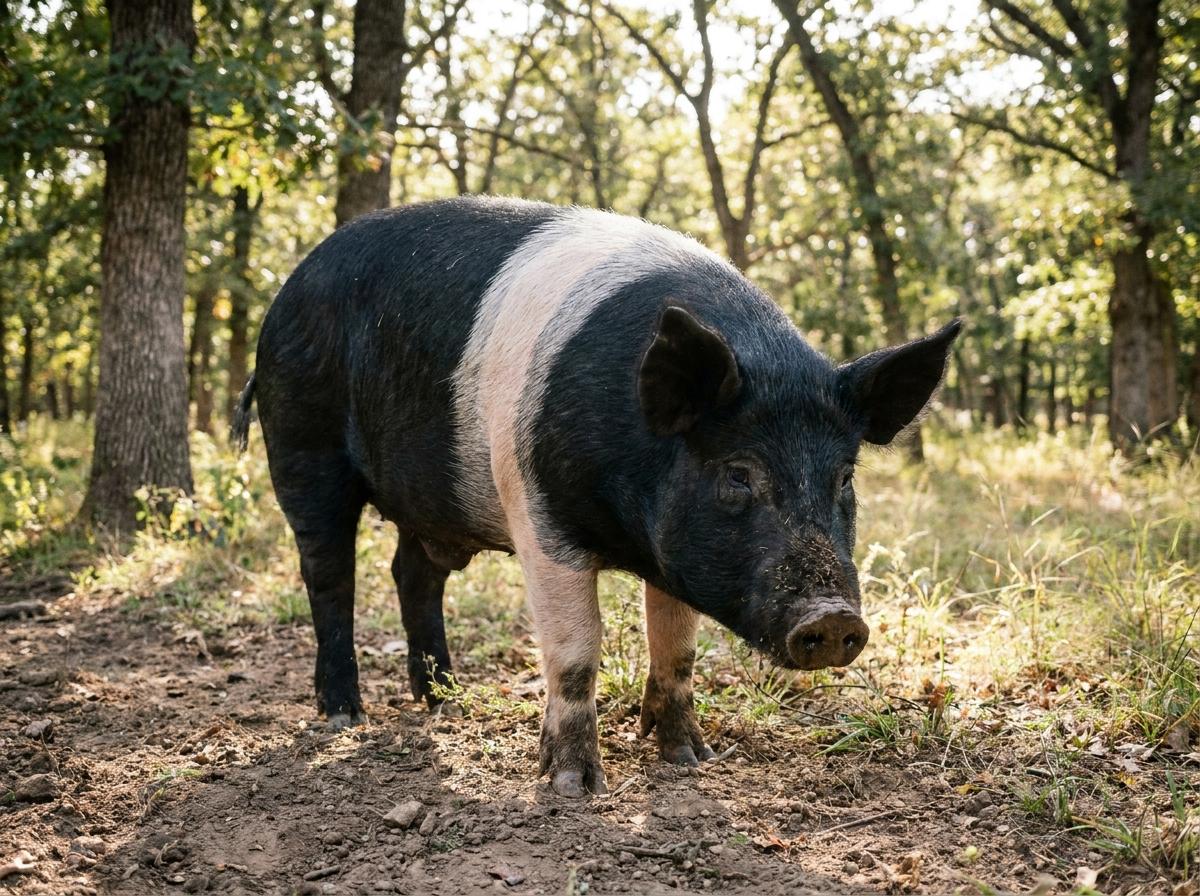
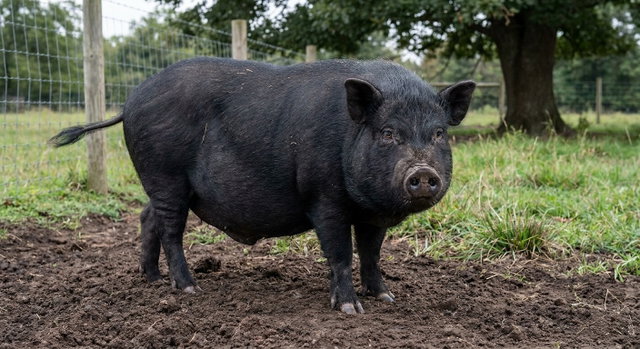
The American Guinea Hog is a small, solid black heritage pig from the American South, raised for pork and lard on pasture, in woodlots and around homesteads. Adults usually stand about 22 to 27 inches tall and weigh somewhere between roughly 150 and 300 pounds, which makes them a real farm hog but a far more manageable one than a commercial breed. They are calm, hairy, easy to fatten and, according to The Livestock Conservancy, still rare enough to be listed as Threatened. The much larger Red Wattle pig shares that Threatened listing and is another American heritage breed raised on pasture.
If you searched “American Guinea pig” and expected a rodent, you want the cavy breed instead: the American guinea pig breed page covers that animal. This page is about the hog. Below you will find what the breed is, where it came from, what it looks like, how big it really gets, how to feed, house and breed it, what the pork is like, and what to check before you buy. If you already have a bred sow, the free pig gestation calculator will give you a farrowing date in a few seconds, and the Creatures pig page lets you compare the Guinea Hog with other breeds.
| Also called | Guinea Hog, Pineywoods Guinea, Forest Hog, Acorn Eater, Yard Pig |
|---|---|
| Origin | Southeastern United States; recorded in the South by 1811 |
| Use | Pork, lard and charcuterie on small farms and homesteads |
| Adult height | 22 to 27 inches at two years (breed association description) |
| Adult weight | About 150 to 300 lb (breed association); 175 to 200 lb boars and 85 to 150 lb sows (Livestock Conservancy) |
| Color | Mostly solid black; white feet or snout tip occur; red is very rare |
| Gestation | About 114 days |
| Typical litter | Around 6 piglets, with a reported range of 1 to 14 |
| Conservation status | Threatened (Livestock Conservancy Priority List) |
| Registry | American Guinea Hog Association (AGHA), founded 2006 |
Browse listings, public profiles, breeders, or add your animal.
What is an American Guinea Hog?
The American Guinea Hog is a domestic pig breed that developed on farms across the southeastern United States. It is a landrace breed, which means it was shaped by the places it lived and the farmers who kept it rather than by one formal breeding program. That is why herds from different families and regions still look a little different from each other: some run longer in the nose, some heavier in the frame.
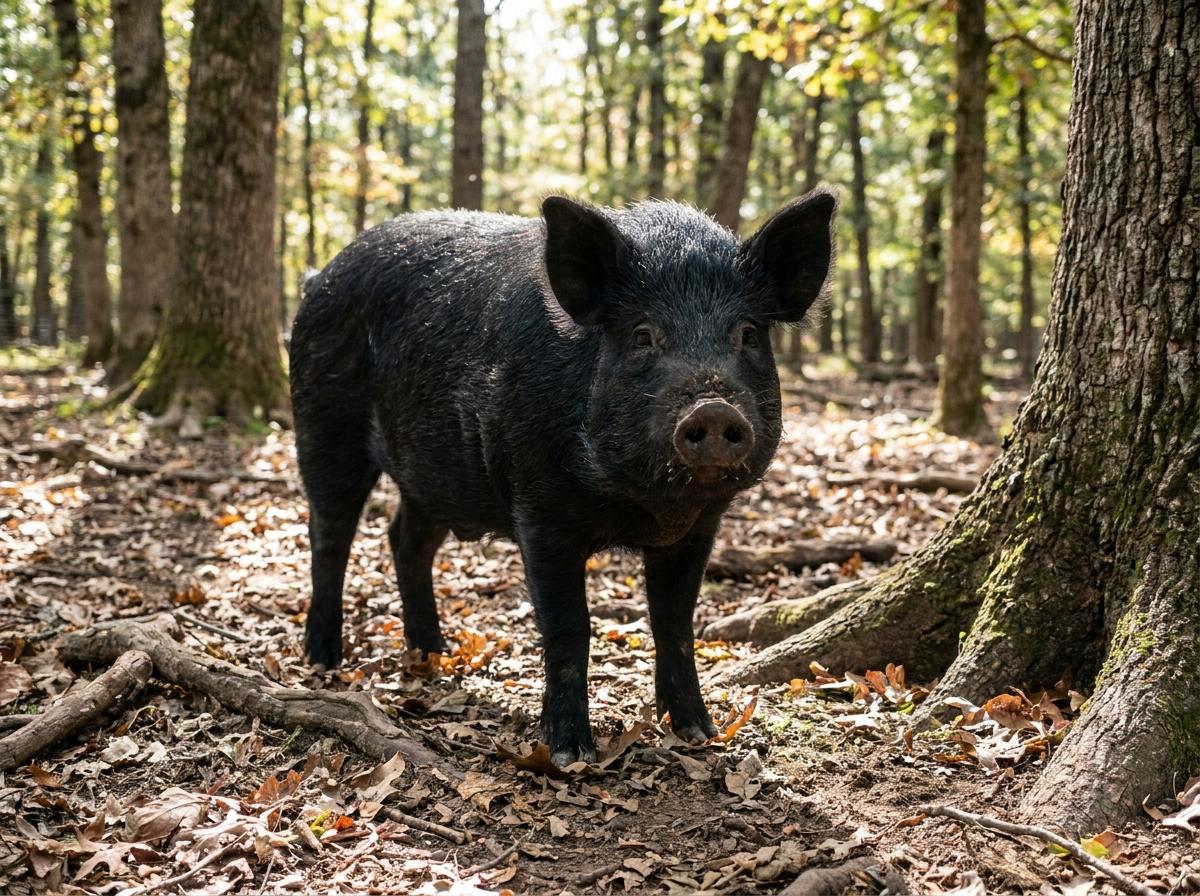
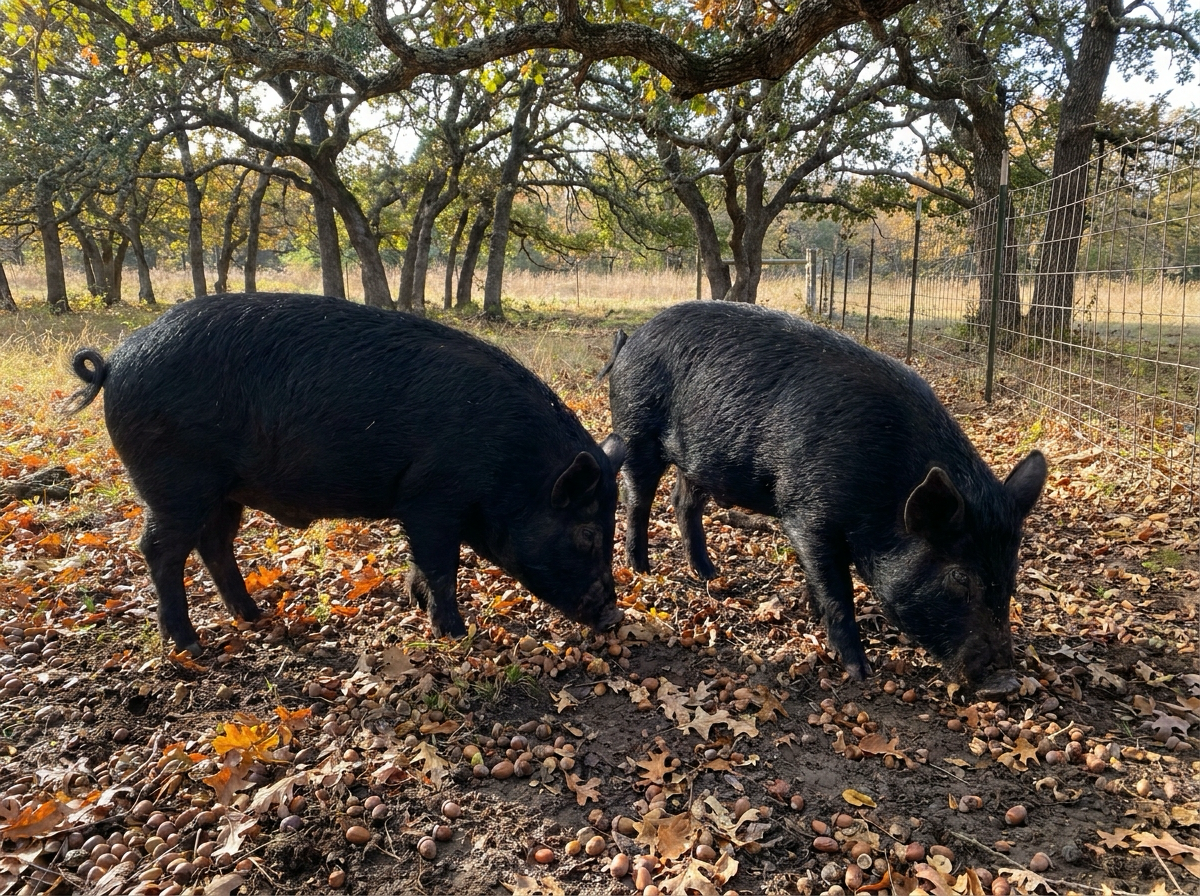
The Livestock Conservancy’s Guinea Hog profile lists several old names that tell you how the pig was used: Pineywoods Guinea, Forest Hog, Acorn Eater and Yard Pig. These were working hogs that foraged for much of their own food, cleaned up garden beds and turned rough forage into hams, bacon and lard for families that raised most of what they ate.
The name causes a lot of confusion. A Guinea Hog is not a guinea pig, and it is not related to the guinea fowl. Where the “Guinea” in the name came from is not documented in the breed authority sources we checked, so we will not repeat the theories that circulate online as fact. What matters for a buyer is that the modern registry, the American Guinea Hog Association, uses “American Guinea Hog,” and most keepers simply say “Guinea hog” or “AGH.”
History and conservation status
Written records show the Guinea Hog in the American South at least as early as 1811, according to The Livestock Conservancy, and it may be linked to hogs imported during the colonial period that Thomas Jefferson and other Virginia farmers wrote about. Its exact origin is unknown. What is clear is that it was in wide use on small Southern farms for roughly two centuries.
The breed’s decline came with the decline of the homestead hog itself. As farms specialized in the mid to late 20th century, the small lard pig that lived on scraps and forage lost its job, and the Guinea Hog survived mostly in isolated farm herds. The Livestock Conservancy reports that in 2009 the American Guinea Hog Association estimated there were fewer than 400 Guinea hogs in the United States.
Numbers have grown since then as interest in pasture-raised pork and diversified small farms picked up, but the breed is still rare. On the current Livestock Conservancy Conservation Priority List, the Guinea Hog is in the Threatened category. For livestock breeds, the Conservancy defines Threatened as fewer than 1,000 annual registrations in the United States and an estimated global population under 5,000.
The American Guinea Hog Association (AGHA) has kept the herd book since its founding in 2006 and says it has registered more than 8,500 purebred hogs. The association also runs a Genetic Recovery Diversity Initiative to bring “lost” historic herds back into the herd book using paperwork and DNA testing, because every surviving bloodline matters in a breed this small.
A USDA National Animal Germplasm Program study of 485 boars from 16 breeds and 3 feral populations (conference abstract, 2016) found that the Guinea Hog boars sampled all carried a single Y chromosome type, the one common to breeds that reached the United States across the Atlantic, including commercial breeds such as the Duroc and Yorkshire. That is consistent with the European ancestry the AGHA mentions, but one abstract on one chromosome is not an ancestry study.
Size, weight and appearance
The AGHA publishes a “breed description” rather than a strict show standard. Its own terminology page explains why: a breed standard can be exclusive and potentially destructive to a rare breed, while a description allows for natural variation. Keep that in mind when you read the numbers below. They describe a range, not a single target.
According to the AGHA breed description:
- Height. Adults at two years stand about 22 to 27 inches tall, with boars sometimes an inch or two taller than sows. Older hogs may grow larger.
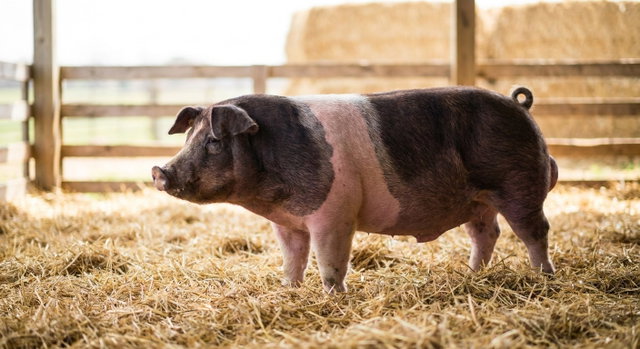
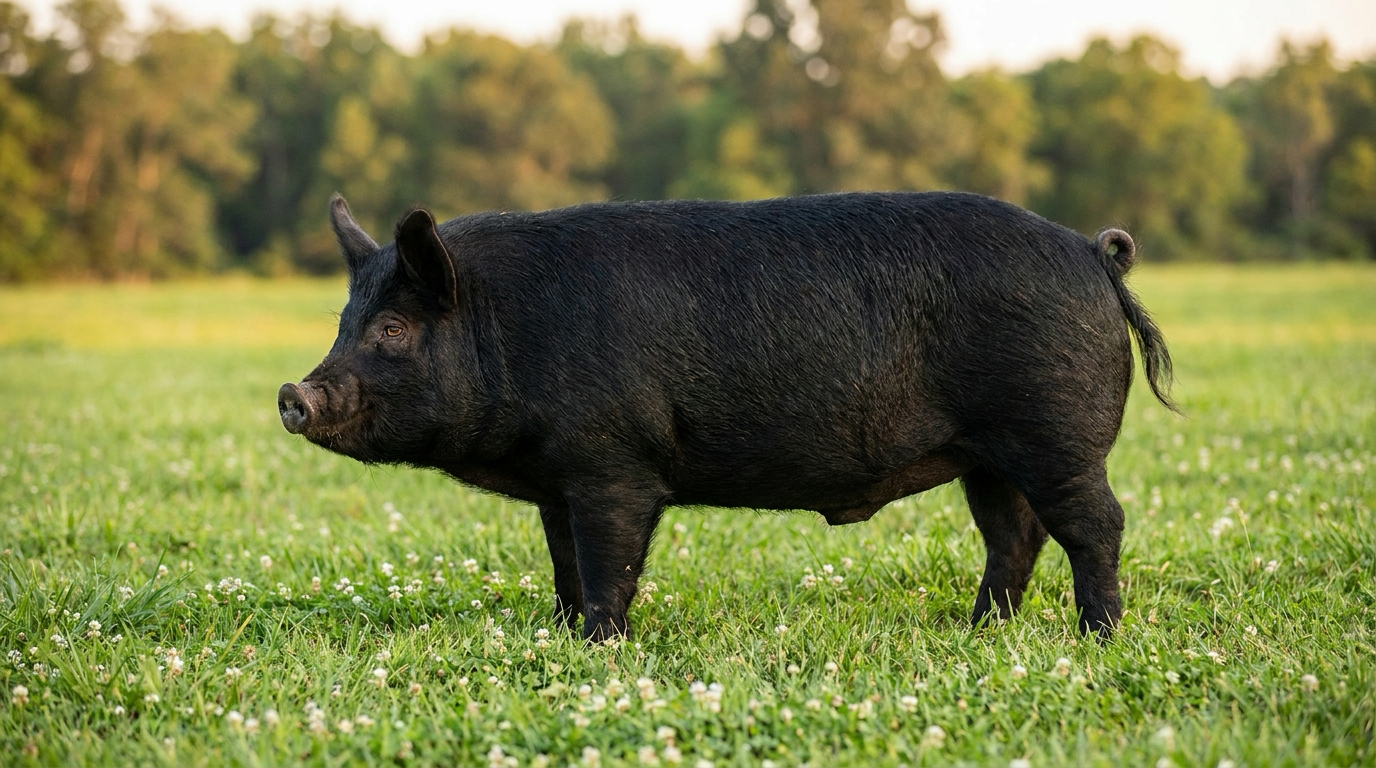
- Length. Fully grown adults measure about 46 to 56 inches from a point between the ears to the base of the tail. From the side they should look long and rectangular, with flat sides, rounded corners and a straight to slightly arched back.
- Weight. Well-conditioned adults range from about 150 to 300 pounds depending on sex, frame and condition.
- Head and ears. Medium-small upright ears (sometimes slightly bent at the tips in adults), a slightly dished face, and a snout that runs from rather short to medium long. Slightly forward-facing eyes are common.
- Tail. A single curl.
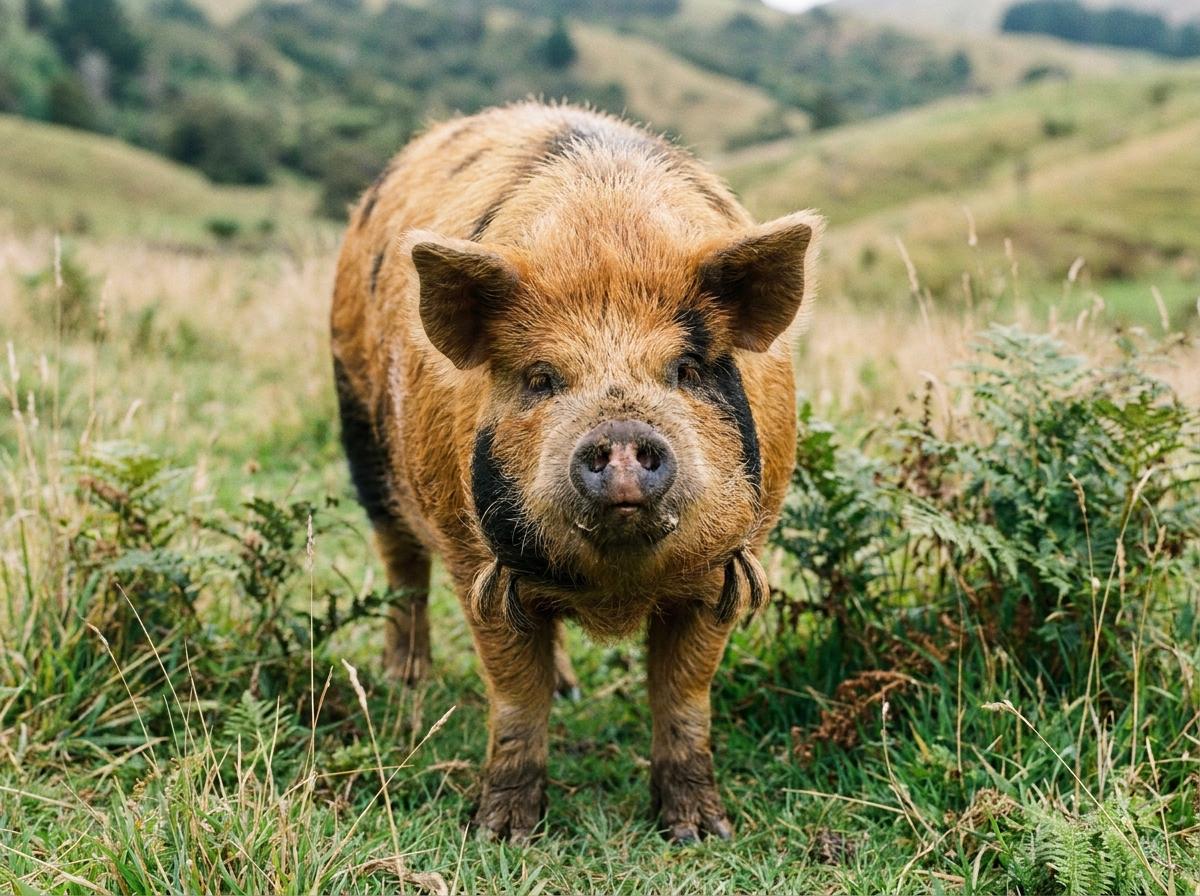
- Coat. Medium to long, coarse, bristly black hair, sometimes tinged reddish-brown or bluish-black.
How big do Guinea hogs get? The numbers disagree
You will see two quite different weight ranges for this breed, and both come from serious sources. The AGHA describes adults at roughly 150 to 300 pounds, and its “why raise Guinea hogs” page goes as high as 350. The Livestock Conservancy lists boars at 175 to 200 pounds and sows at 85 to 150 pounds. The AGHA’s life cycle page says hogs reach full size at about two to three years and top out around 200 to 300 pounds.
Part of the gap is condition: Guinea hogs fatten very easily, and an overfed adult can carry far more weight than a lean, active one. Part of it is the landrace variation described above, with some lines simply larger framed. The practical takeaway is that a Guinea hog is small for a farm pig, not small in absolute terms. Plan fencing, shelter and handling for an animal that may weigh as much as an adult person or more. Weigh rather than guess: the free pig weight calculator estimates live weight from a tape measurement, which helps you track condition without a scale.
Color
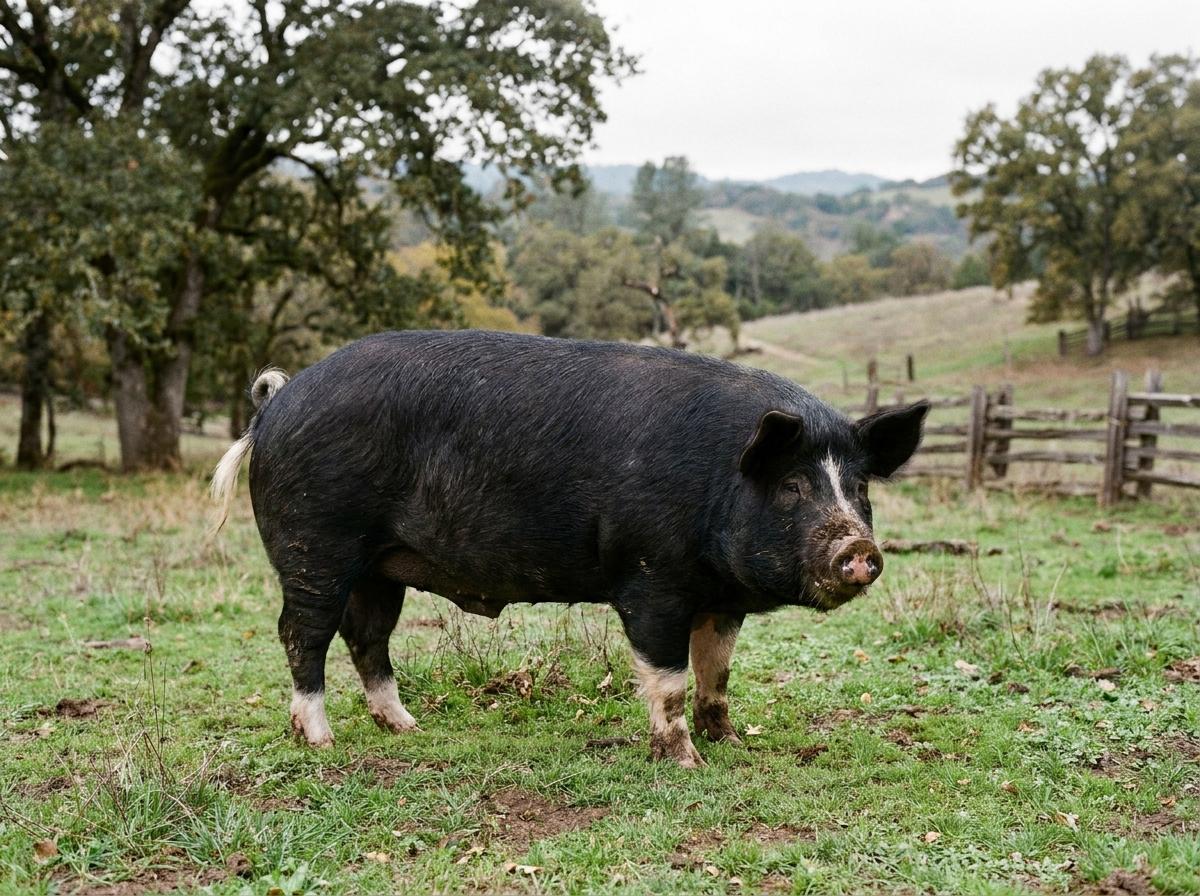
Most American Guinea Hogs are solid black. The AGHA notes a common variation caused by a widespread recessive gene: black with small white points on the feet and the tip of the nose. White beyond the feet and snout is discouraged, and an extremely rare recessive red also exists. In an essay on the AGHA site, Dr. Phillip Sponenberg points out that older Southerners described Guinea hogs as black, red or blue, and he urges breeders to put type and full representation of bloodlines ahead of color, because culling for cosmetic color in a breed this rare can cost whole lines.
Temperament
Calm temperament is one of the main reasons people choose this breed. The AGHA describes the Guinea Hog as exceptionally calm and friendly, says sows with piglets and adult boars are easily managed, and asks breeders to keep selecting for that disposition. The Livestock Conservancy also lists the temperament as docile and rates the breed suitable for beginners.
Treat that as a breed tendency, not a guarantee. Any pig is strong for its size, and a sow protecting newborn piglets or an intact boar in breeding condition deserves respect no matter what the breed literature says. Handle young pigs often, use a sorting board (the AGHA calls it a hurdle) when you move animals, and never put children in a pen with an unfamiliar boar or a sow with a litter.
Feeding: forage first, and watch the weight
The Guinea Hog’s reputation rests on its ability to do well on pasture and forage. The AGHA says most breeders keep their hogs on pasture, provide grass hay in winter or when grazing is short, and supplement with grain, purchased feed, garden produce or a combination. Feeding systems vary widely from farm to farm, but the common thread is that these pigs live mainly on grass and hay.
Two cautions run through every authoritative source:
- They get fat easily, and fat hogs struggle to breed. Both the AGHA and The Livestock Conservancy warn that Guinea hogs fatten on excess grain and that obesity can hurt fertility. The AGHA specifically warns against overfeeding grain, and one breeder it quotes avoids corn because it seemed to cause obesity.
- Forage alone is not a complete diet. The Livestock Conservancy says a complete diet should still be provided to meet the pig’s nutritional needs at each life stage, even for hogs ranging in woods, orchards and pasture. Ask your veterinarian or extension agent to help you balance a ration for growing pigs, pregnant sows and nursing sows.
Water must be available at all times, and in summer it should be kept clean and cool. The AGHA notes that water in barrels and nipple systems can get quite hot in the sun.
Kitchen scraps and the law
Many homestead pig keepers feed kitchen scraps, and older Guinea hog literature describes it as normal. Be careful here. Under the federal Swine Health Protection Act, anyone who feeds pigs “garbage,” which USDA APHIS defines as human food that contains meat or has touched meat during preparation, must be licensed, and licensed feeders must cook it to 212 degrees Fahrenheit for 30 minutes. Each state decides whether to allow garbage feeding at all. The rule exists because contaminated meat can carry diseases such as African swine fever and foot-and-mouth disease into pig herds. Keep meat and meat-contaminated scraps out of the pig bucket unless you have confirmed with your state animal health office what is allowed where you live.
Housing, fencing and hot weather
Guinea hogs do not need elaborate housing, but they do need the basics done well. The AGHA’s care pages list shade in summer, shelter from bad weather, food, water and good fencing.
Shelter. A simple three-sided or portable hut with dry bedding works for most herds. AGHA members describe small portable range houses on skids, calf huts and Quonset-style shelters, sized so the hog can lie down comfortably and the house fits through your gates. In cold climates, face the opening away from prevailing winds; in summer, turn it to catch the breeze.
Fencing. The AGHA notes that well-fed, well-watered pigs with good shelter are much less likely to test fences. Its members use woven wire field fence about 4 feet high, hog panels, hog wire, electric mesh, high-tensile electric and multi-strand polywire. Pigs learn to lift gates off their hinges, so secure the hinges. Keeping a few hog panels on hand lets you build a temporary pen in minutes.
Rooting. The AGHA says Guinea hogs are minimal rooters when grazing and feed are adequate. Expect more digging when pasture is short or the hogs are hungry, and rotate them before a paddock is bare.
Heat stress
Pigs cannot sweat, so hot weather is the biggest everyday welfare risk for a pastured herd. The AGHA hot weather page lists three essentials: shade, water and a wallow. Tree canopy is the best shade; failing that, use high shade well above the ground so heat can rise away from the pig. Low field huts that keep hogs warm in winter can turn into ovens in summer.
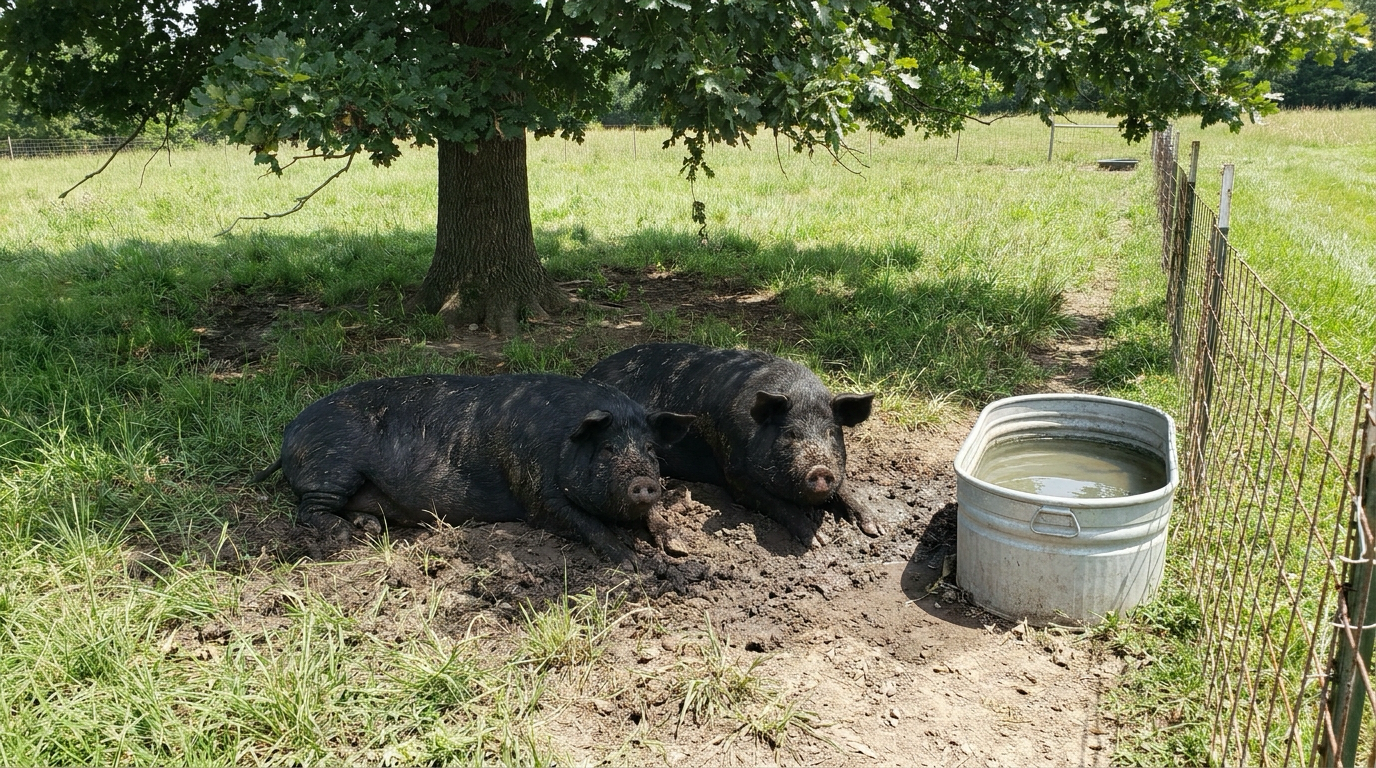
Watch for reduced appetite, lethargy and heavy, rapid panting, and know that a normal pig temperature runs about 101 to 103 degrees Fahrenheit. The AGHA advises against hosing an overheated pig with cold water. Move the pig into shade, offer water, cool the feet first, and sponge the body with tepid water, then call your veterinarian if the pig does not recover quickly.
Breeding and litters
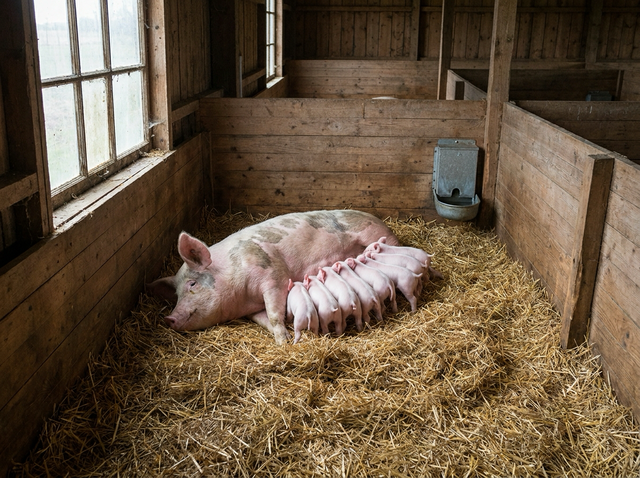
Guinea hogs are prized for easy farrowing and good mothering. The AGHA life cycle page describes sows that build their own nests from straw, hay or whatever they find outdoors, and says litters are typically born without assistance or a farrowing crate.
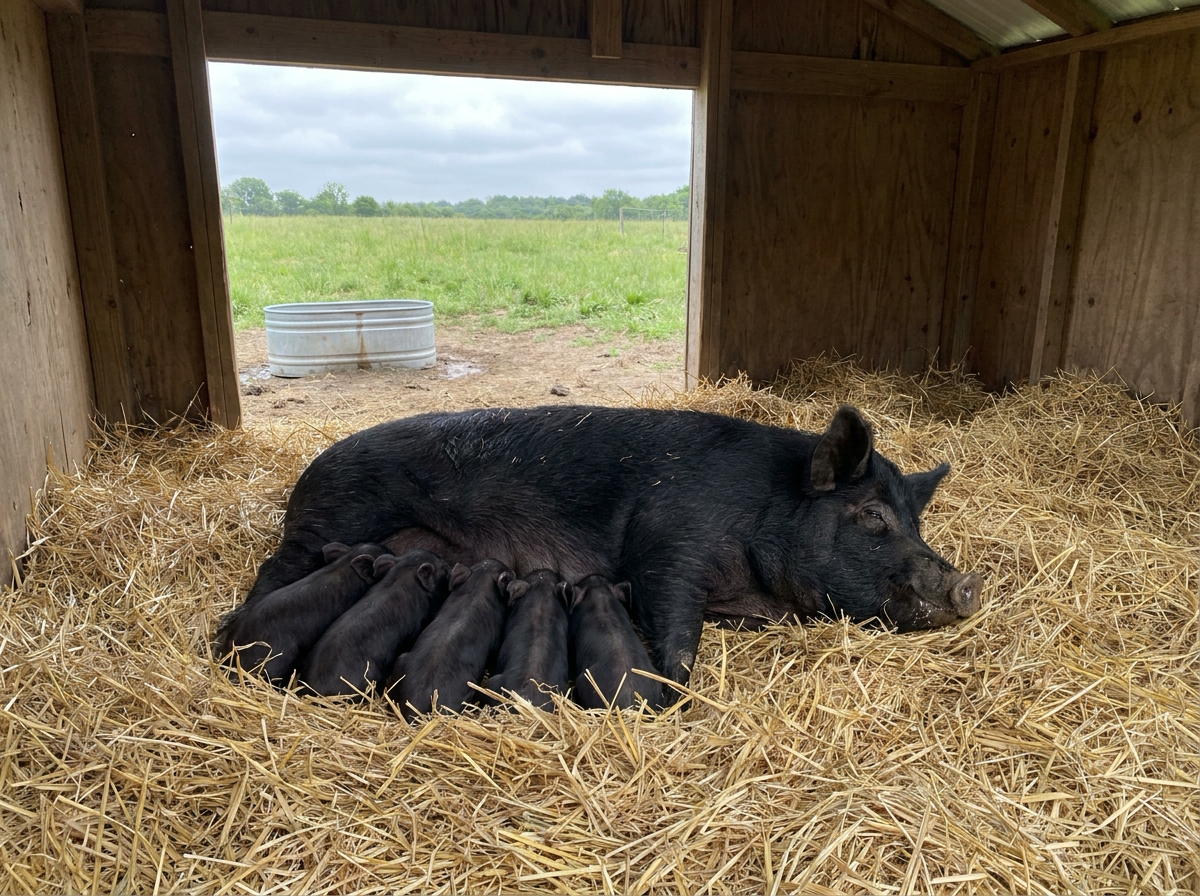
The numbers to plan around:
- Gestation averages about 114 days, the “three months, three weeks and three days” many farmers quote. Our guide to the pig gestation period explains the normal range.
- Puberty comes early. The AGHA says boars can breed at about 6 to 8 months and gilts can have a first heat as early as 8 months. The Livestock Conservancy is more cautious: it says Guinea hogs can reach sexual maturity as early as 3 months and recommends separating intact males and females by three months of age to prevent unplanned litters.
- Recommended breeding age is 8 to 12 months, according to The Livestock Conservancy, which says breeding at this age improves the chance of healthy litters and the sow’s lifetime production.
- Litter size. The AGHA reports litters from 1 to 14 piglets, with 6 the most common. The Livestock Conservancy says well-managed sows raise viable litters of 6 to 10 for much of their lives.
- Litters per year. The AGHA says sows exposed to a boar can produce 2 to 2.5 litters a year, with 2 the most common.
- Piglets are born at about 1 pound and weigh roughly 9 to 10 pounds at weaning, which the AGHA puts at around 5 to 8 weeks.
Do not wait too long to breed a gilt
Both the AGHA and The Livestock Conservancy stress a point that surprises many new keepers: Guinea hog sows that are not bred young, especially if they become overweight, may never conceive. The Conservancy recommends breeding twice a year and before the age of two to keep sows fertile, and the AGHA describes adult sows that owners have been unable to get in pig after missing their early years. If you are buying gilts for breeding, have a boar plan before they turn one.
Farrowing on pasture without a crate is normal for this breed, but you still need a clean, dry, sheltered nest site and a plan for problems. Our sister guide to pig farrowing covers the signs of labor, normal timing and the danger signs that mean you should call a veterinarian.
Once you are recording more than one litter, a breeding record per sow makes the job easier. On Creatures you can record a breeding with an exact date or an exposure window, see the projected due date on the sow’s Breeding tab, and then record the birth and create the litter so each piglet starts with its parents attached.
Pork, lard and butcher age
The American Guinea Hog is a lard hog. The Livestock Conservancy notes that it does not produce a conventional market carcass, which is exactly why it suits families who want a smaller pig or have limited freezer space. The AGHA describes the pork as well marbled with a creamy fat, and lists cooking, soap making and candle making among the traditional uses for the lard.
How much meat you get depends on age and size. The AGHA life cycle page gives these rough markers:
- At about 6 months, a hog might weigh around 60 pounds with a carcass of roughly half that weight.
- At about 1 year, a hog might weigh around 120 pounds with a carcass of roughly 60 pounds.
The AGHA’s breed description says a six-month-old may yield a carcass of up to 75 pounds hanging weight, and its pork page reports that one large 230-pound hog yielded about 175 pounds of cuts, fat for rendering and bones for broth, about 75 percent of live weight. That last figure includes fat and soup bones; for traditional cuts alone the AGHA suggests expecting 50 to 65 percent of live weight. Many keepers butcher younger, smaller hogs, and the AGHA notes that winter butchering is easiest.
Because these pigs grow slowly compared with commercial breeds, budget for a longer feeding period than you would with a feeder pig from a commercial line. Our guide to how much a pig costs walks through purchase and feeding costs for feeder pigs and breeding stock.
Health and lifespan
The Guinea Hog has a reputation as a hardy, thrifty pig, but it is still a pig, with the same exposure to parasites, injuries, heat stress and infectious disease as any other. Some AGHA material describes breeders who do not routinely deworm or vaccinate. That is a herd-level choice that depends on your parasite load, your pasture rotation and the diseases present in your area, so make it with a veterinarian who sees pigs, not from a breed website or this article.
A few practical points apply to almost every Guinea hog herd:
- Body condition is the health metric to watch most closely in this breed, because obesity is linked to infertility and heat intolerance.
- Feet and legs matter for a forager that walks all day. Check hooves and gait regularly, and choose breeding stock with sound feet.
- Heat is a year-round consideration in the South and a summer one everywhere else (see the heat stress section above).
On lifespan, the AGHA gives an expected range of 10 to 15 years for animals that are kept rather than butchered, and says some are alive today at 13 or 14. The Livestock Conservancy says well-managed sows can live up to 14 years and boars can sire into their late teens. For context on other breeds, see our article on how long pigs live.
Keeping records pays off over a sow’s long working life. On Creatures you can log treatments, weights and reminders on each pig’s profile; health and medical records explains the record types, and reminders and upcoming care shows how to set repeating reminders for things like hoof checks.
Registration and pedigrees
The AGHA keeps the herd book for the breed. It says members get access to the pedigrees of all registered hogs along with tools for planning breedings, and it handles tag prefix requests from member breeders. In a population this small, the pedigree is the most important document a breeding hog can have, because it is how you avoid pairing close relatives and how you keep rare bloodlines in the gene pool.
When you buy breeding stock, ask whether the pig is registered or eligible for registration with the AGHA, ask to see the pedigree, and ask which bloodlines are represented. If you are building a herd, look for a boar from lines unrelated to your sows. You can keep each pig’s parents and grandparents on its Creatures profile in the Pedigree tab, or sketch a quick tree with the free pedigree chart maker, which works for any species, before you commit to a pairing. The Creatures pedigree tools do not replace AGHA registration; they are a working copy for your own planning.
Buying an American Guinea Hog
Guinea hogs are sold mostly by small farms and conservation breeders. Here is what to check:
- Is it actually a Guinea hog? Small black pigs are sometimes sold under the name. Ask for AGHA registration or eligibility and the parents’ records. A registered pig comes with a paper trail; an unregistered “Guinea mix” is a different purchase.
- Body type. Look for the long, rectangular body, flat sides, upright ears and sound feet the AGHA describes. Be wary of very short, round, overly fat youngsters, since excess fat works against fertility in this breed.
- Breeding plans. If you want to breed, buy unrelated pigs, and remember the Livestock Conservancy advice to separate boars from gilts by three months of age.
- Age at sale. The AGHA says piglets are weaned around 5 to 8 weeks. Ask what the piglet has been eating and what health care it has had.
- Local rules. Pigs are livestock. Zoning, property covenants and state movement rules can all apply, especially on residential land. Check with your county or city zoning office and, for out-of-state purchases, your state animal health official before you bring pigs home.
Prices vary with registration, bloodline, age and region, and there is no reliable public price list for this breed, so we do not quote one. The pig cost guide explains what drives price for feeder pigs and breeding stock in general, and you can see current American Guinea Hog listings on the Creatures marketplace when sellers post them.
If you are comparing breeds, two other heritage pigs on Creatures make useful contrasts: the Berkshire, a larger black pig with white points raised for marbled pork, and the Hereford hog, a red-and-white American breed. If what you actually want is a small pet pig rather than a homestead meat hog, read about the Juliana pig instead.
Frequently asked questions
Is an American Guinea Hog the same as a guinea pig?
No. The American Guinea Hog is a domestic pig, a farm animal that can weigh a few hundred pounds. A guinea pig is a small rodent, and “American” is also the name of a common guinea pig breed, which is where much of the confusion comes from.
How big do American Guinea Hogs get?
The AGHA describes adults at 22 to 27 inches tall and roughly 150 to 300 pounds. The Livestock Conservancy lists smaller figures, 175 to 200 pounds for boars and 85 to 150 pounds for sows. Condition and bloodline explain much of the difference.
Are Guinea hogs good for beginners?
They are among the easier pigs to keep: calm, moderate in size and good at foraging, and The Livestock Conservancy rates the breed suitable for beginners. They still need secure fencing, shade, a wallow, sound feeding and a veterinarian, and they are livestock, not house pets.
When should you butcher a Guinea hog?
It depends on the size you want. The AGHA suggests a 6-month-old may weigh around 60 pounds and a 1-year-old around 120 pounds, with a carcass of roughly half the live weight. Many keepers choose winter for butchering.
How long are Guinea hogs pregnant?
About 114 days, the same as other domestic pigs. Enter the breeding date in the pig gestation calculator to get the expected farrowing date.
Are American Guinea Hogs endangered?
The Livestock Conservancy lists them as Threatened on its Conservation Priority List. Numbers have grown since the AGHA estimated fewer than 400 in the United States in 2009, but the breed remains rare.
Do this next on Creatures
Pick the step that fits where you are. Guinea hog supply is thin, so a listing search may be empty on any given day; an alert is the easiest way to hear about the next one.
- Looking to buy? Save an American Guinea Hog listing alert and get an email when a new one is listed (no account needed to start; saving searches and using your watchlist explains how alerts work). Then check the American Guinea Hog marketplace for current listings.
- Want to talk to breeders first? Browse the breeder directory to find farms that list Guinea hogs and other heritage pigs.
- Already have Guinea hogs? Add your pig to Creatures to start its free profile, no account needed to start. Adding an animal walks through the steps.
- Keeping records? Add a record for a weight, treatment or breeding. The form opens for visitors, and a free account saves it. Adding a record covers each record type.
- Breeding Guinea hogs? Create your farm or breeder profile so buyers can find you, no account needed to start. See getting listed in the breeder directory and creating an organization and adding your team.
- Naming a new litter? The free pig name generator suggests names you can tap to start a profile.