Berkshire
Author: Elliott Garber, DVM · Published
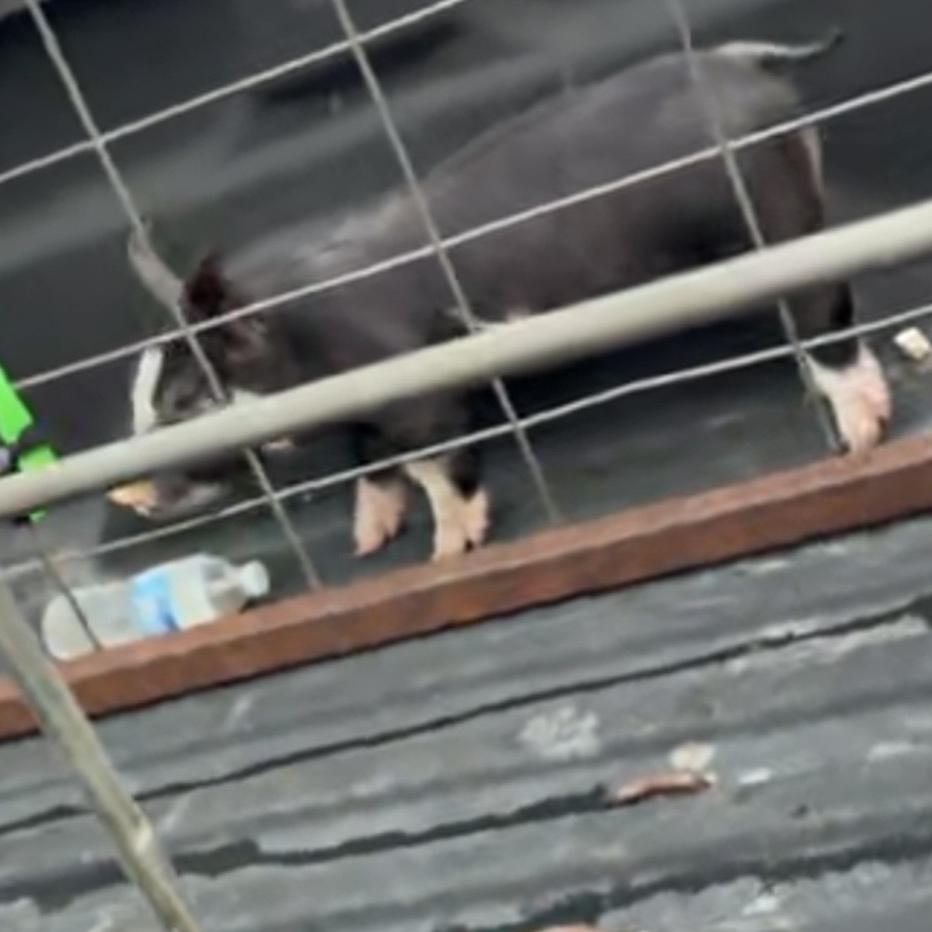
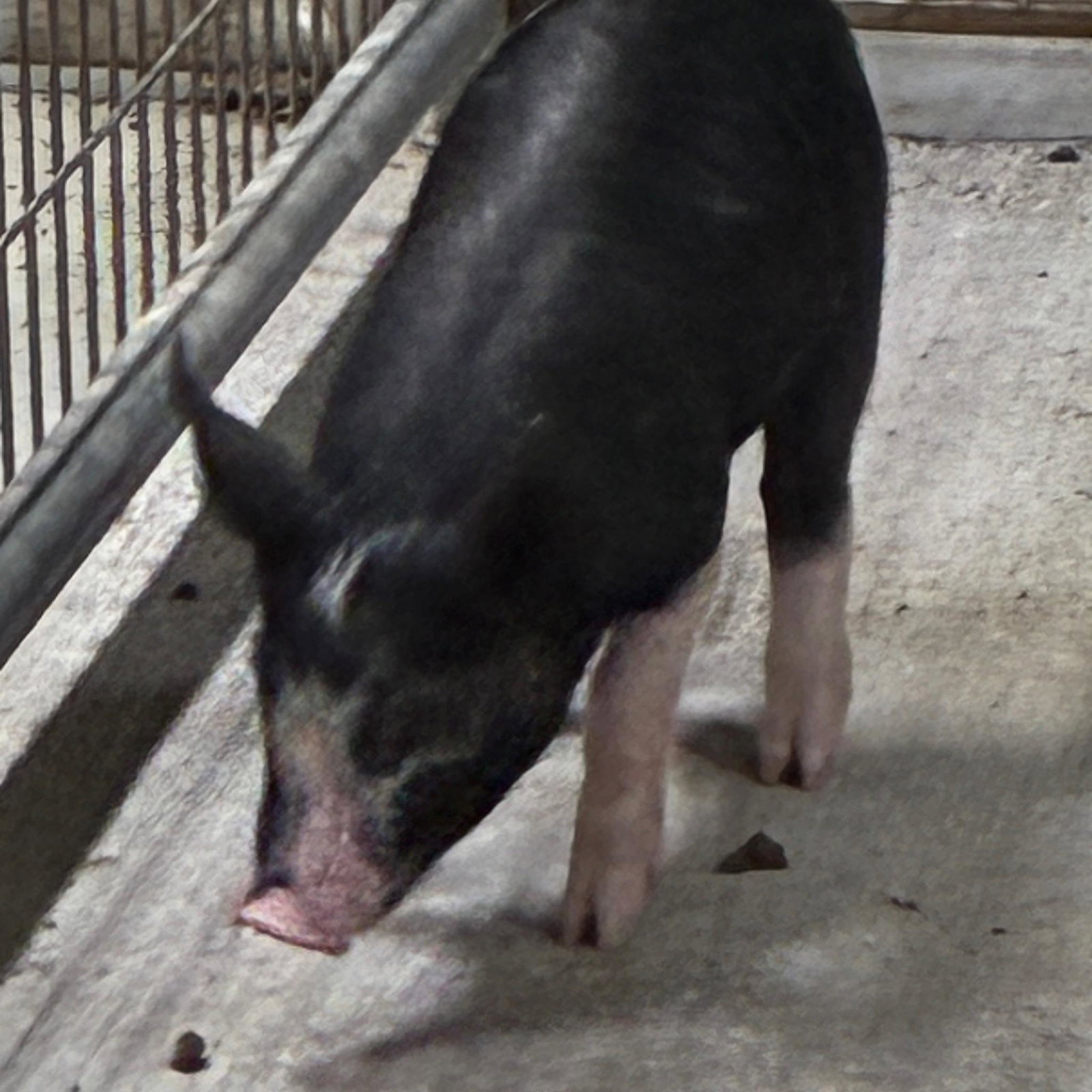
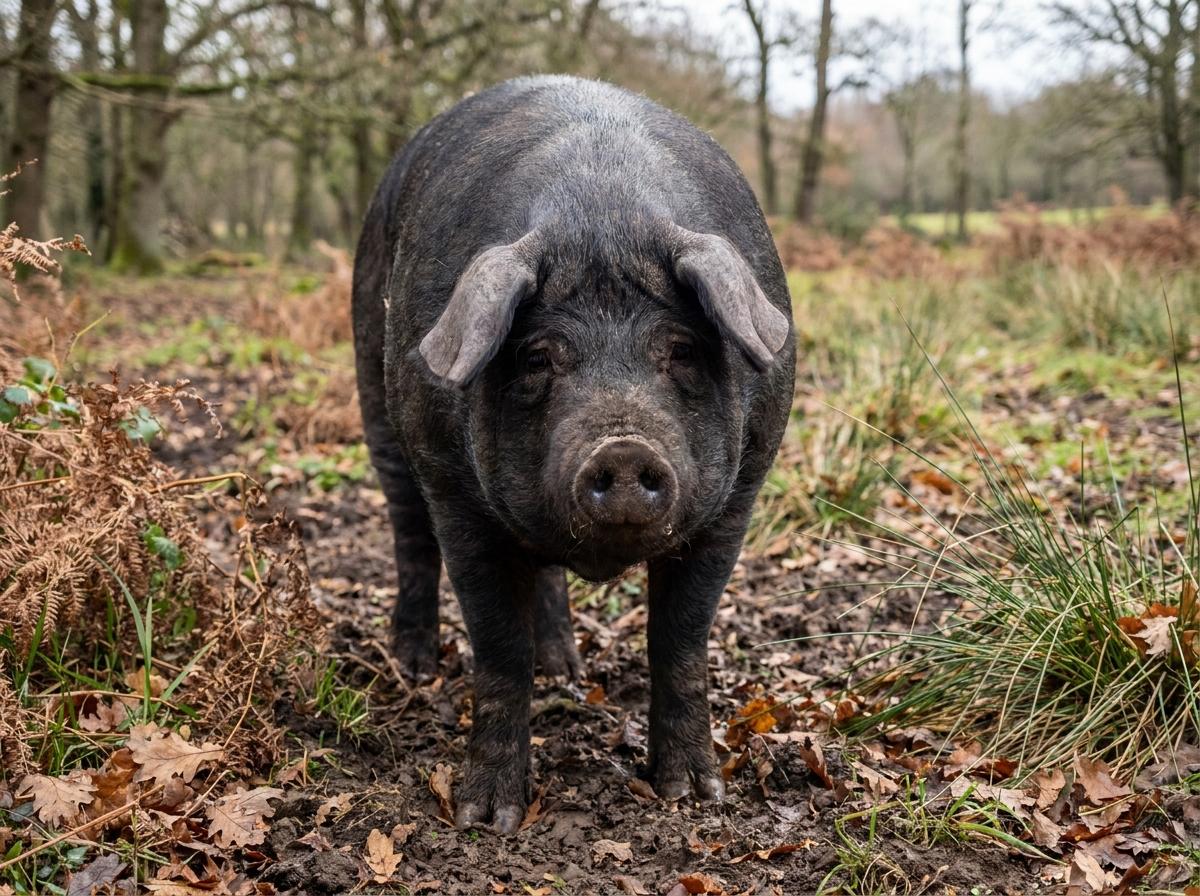
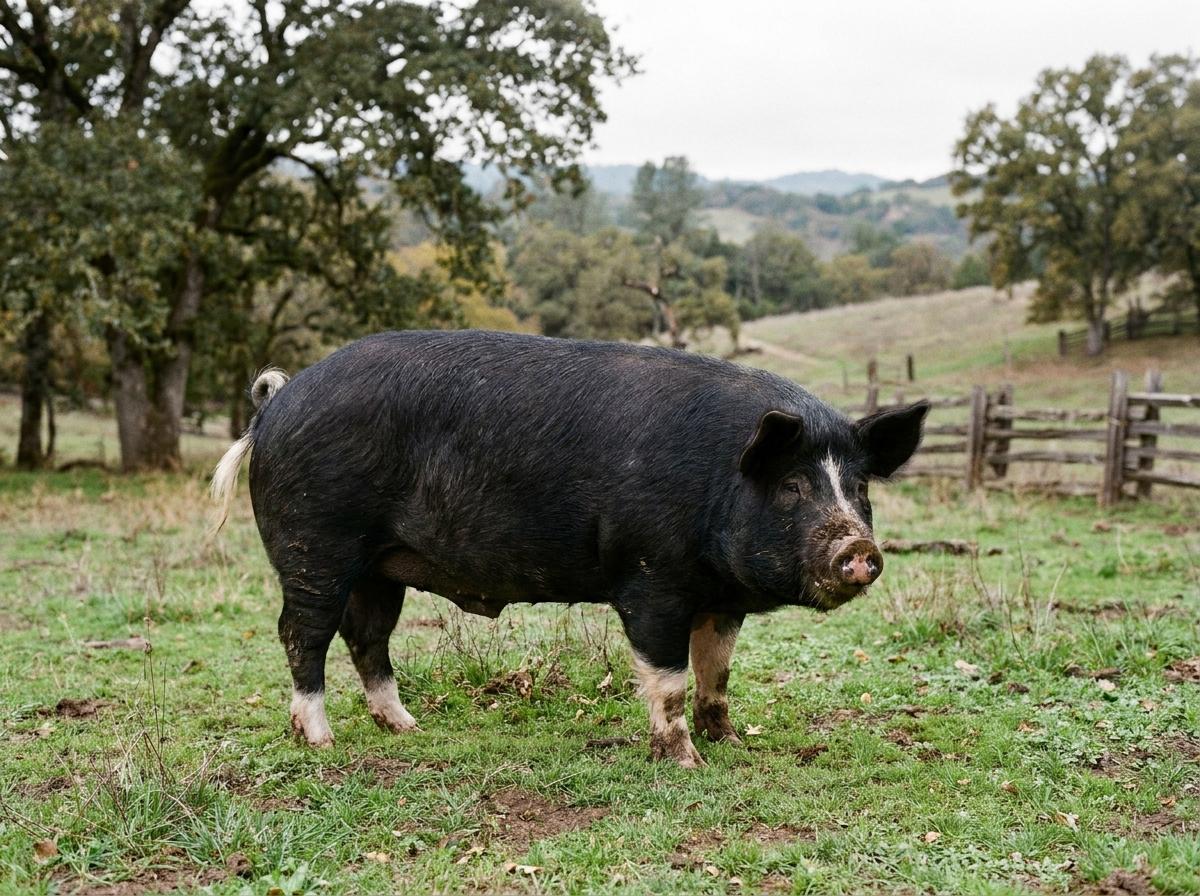
Berkshire pigs are a black breed traditionally marked with white on the face, feet and tail tip, with upright ears and a slightly dished face. Their name is often connected with specialty pork, but a successful purchase starts with accurate pedigree, suitable animals and a real care and market plan.
The free pig weight calculator can support an initial size comparison. Confirm a purchase described by weight with the seller’s dated measurements and agreed sale terms.
Set a Berkshire search alert for new matching listings. Current supply may be empty; use the alert while you prepare your care plan and the records to request from a seller.

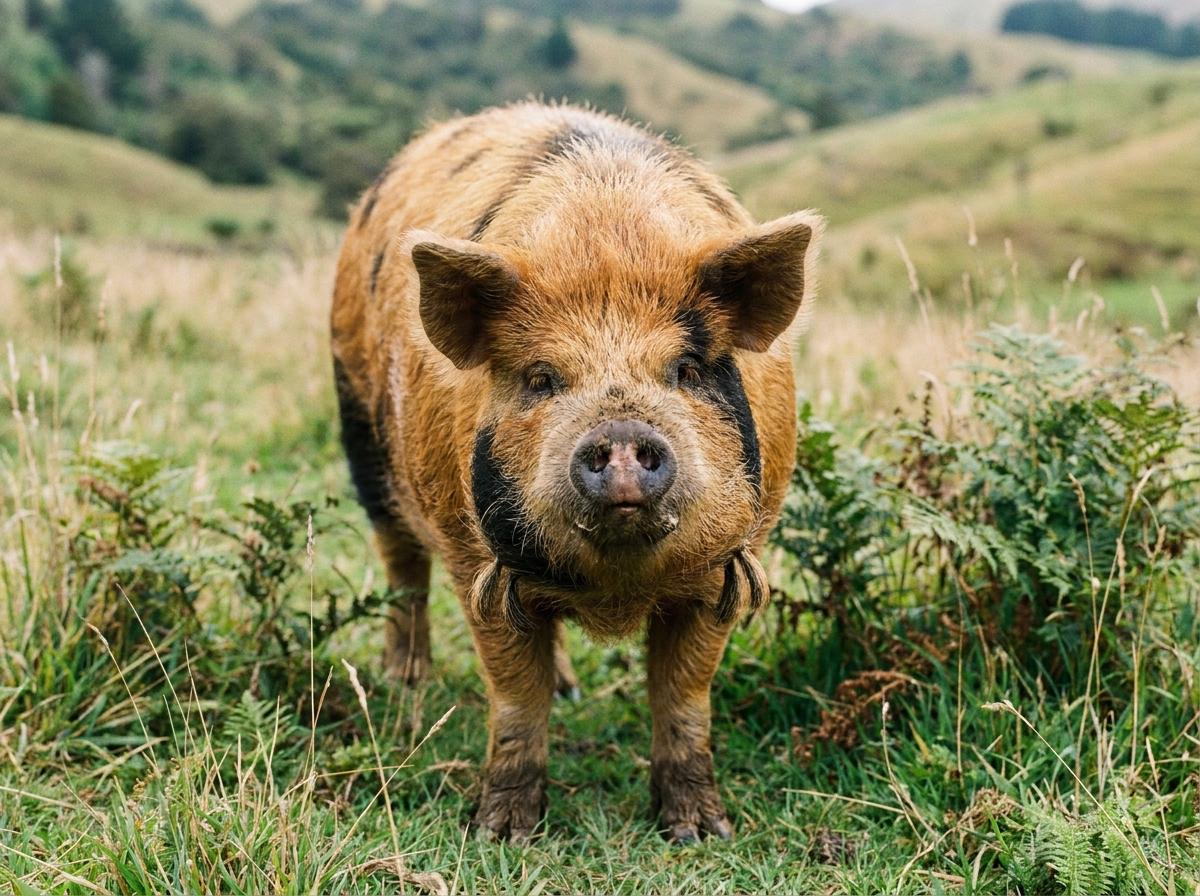
AI-generated illustration.
| Origin | England; US imports from 1823 |
|---|---|
| US registry | American Berkshire Association, founded 1875 |
| Ideal markings | Black with six white points |
| Recorded minimum white | Face, tail and at least three legs |
| Ears | Upright; permanently down ears disqualify |
| Buying priority | Individual pedigree and pork-program terms |
Browse listings, public profiles, breeders, or add your animal.
English heritage and American registration
Berkshires developed in England and reached the United States in 1823. The American Berkshire Association’s history records its founding in 1875, making it the oldest swine registry. The familiar pig is black with upright ears, a slightly dished face and white points, but identity still depends on the registered pedigree.
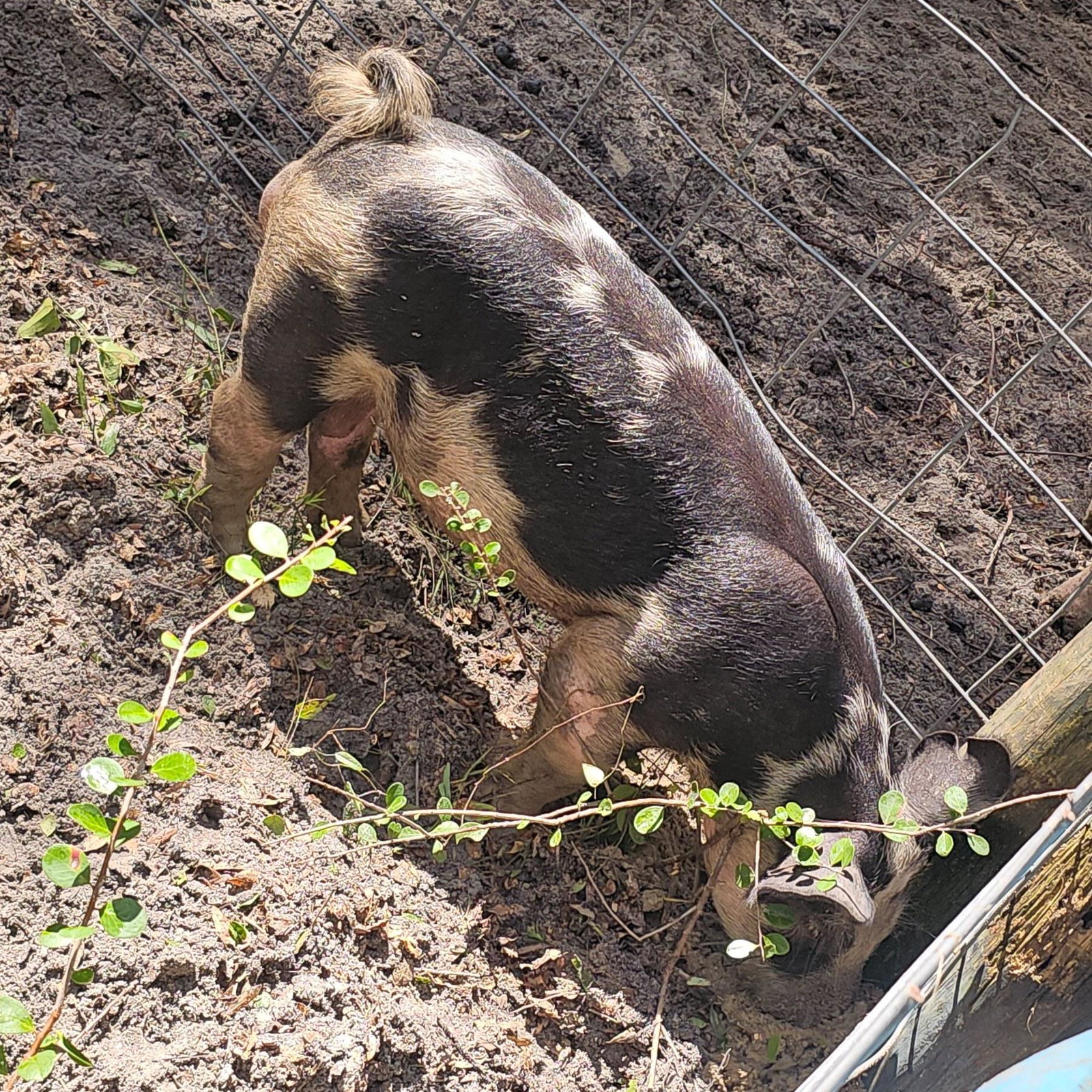
The ABA eligibility rules describe an ideal of six white points: face, four feet and tail. For recording, white is required on the face, tail and at least three of four legs. A full or three-quarter white belt, connected white areas over 64 square inches on a mature pig (proportionally less on a young pig), or permanently downward-pointing ears disqualify an animal. The rules also require permanent ear notching at farrowing and at least six functional teats on each side. These are recording rules, not merely preferences for show photographs.
Ask the breeder to match the ear notches and certificate to the pig and explain any marking you are unsure about before purchase. The Poland China guide helps distinguish another black-and-white pig with different ear carriage; color alone does not settle ancestry.
Pedigree and a pork program are separate checks
“Berkshire” or “Kurobuta” on a pork advertisement is not an individual pig’s registration certificate. If a buyer specifies a certified program, obtain its actual ancestry and traceability requirements before buying breeding stock.
If a branded or registered-pork program is central to your plans, obtain its current requirements directly from the organization and intended buyer. Buying an animal with a breed name does not by itself establish that every future product or claim will qualify.
The American Berkshire Association’s registered-pork information explains its program context. Ask what documents must follow the animals and which arrangements need to be in place before breeding or finishing them. Do not assume a processor or customer will pay a premium simply because an advertisement uses the word Berkshire.

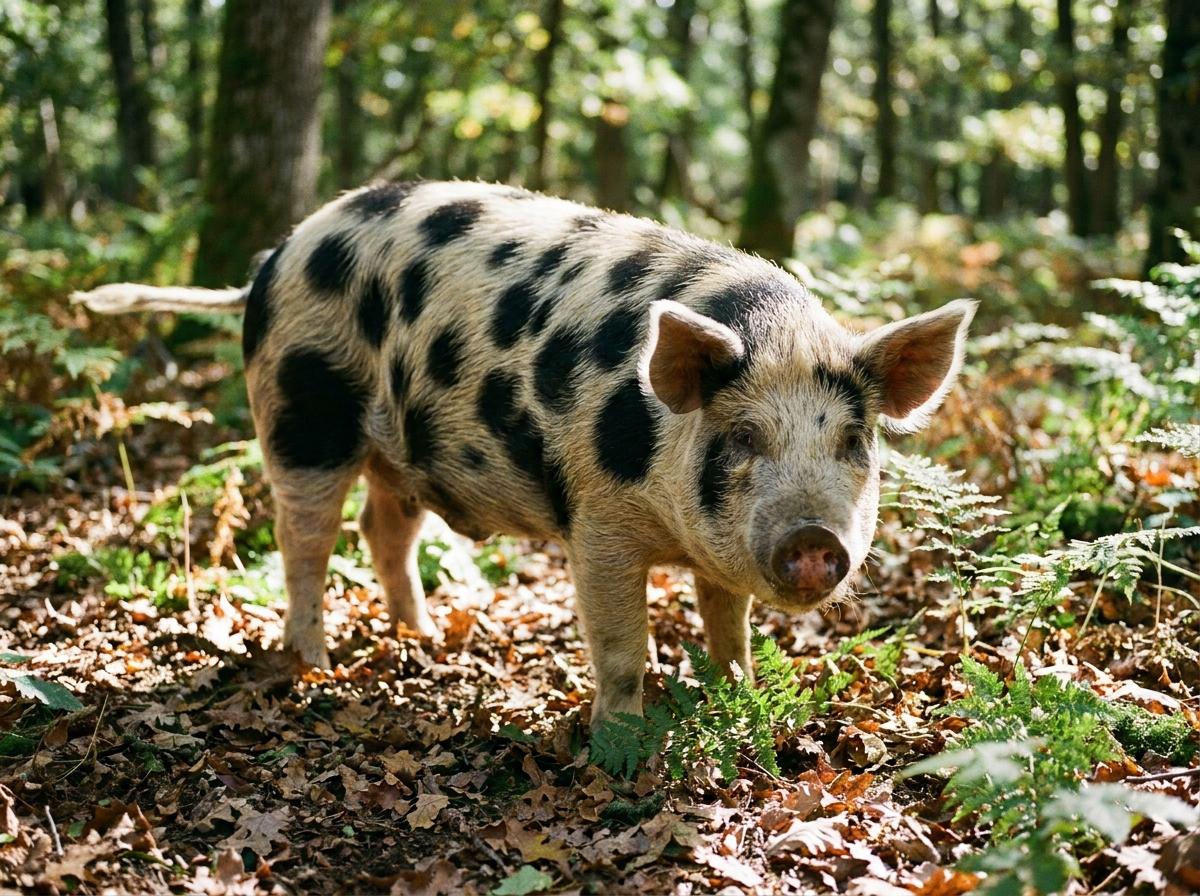
AI-generated illustration.
Select healthy, functional pigs
Watch pigs walk and turn on suitable ground. Ask about feet, legs, previous injuries and ordinary handling. A broad body and attractive markings are not a substitute for functional structure.
For feeder pigs, request origin, age, current feed and health history. For breeding gilts or sows, add reproductive history and relevant family information. Ask which records belong to the individual and which describe a herd average.
For boars, consider whether you have the experience and facilities for mature breeding animals. Seek advice on reproductive assessment and housing before purchase. Keeping a boar is not automatically the simplest breeding arrangement for a small group of females.
The pig gestation calculator helps plan from a recorded service date. Keep the sow’s actual farrowing history and veterinary findings beside the estimate.
Feed for the pig’s stage, not its marketing label
Do not feed meat or leftovers that touched meat. The USDA Swine Health Protection Act guidance requires licensing and prescribed treatment for regulated food waste where states allow it; some states ban it. Check your state animal-health authority before feeding any food waste. Contaminated meat can spread African swine fever.
Berkshires need a balanced ration appropriate to their age, condition and production role. Penn State’s pig-management guidance explains why pigs require a complete diet and why forage is not equivalent to a ruminant feeding system. Outdoor access does not make grass alone a complete ration.
Ask the seller for the feed product, form and current routine. Have a qualified adviser review changes to your own supplies. Check that every pig can reach feed and water, and monitor individuals rather than assuming the group is thriving because feed disappears.
Make an outdoor setup work through the seasons
Provide shade, clean drinking water, a dry resting area and appropriate cooling. University of Minnesota’s heat-management guidance applies to pigs regardless of their coat color. Dark skin is not a reason to omit a heat plan.
Give pigs a place to root while protecting the resources they need every day. Think about drainage, shelter access and how the paddock will recover. A shallow wallow can be part of an appropriate system, but it does not replace drinking water or a dry bed.
Build secure fences and gates for mature animals. Walk the loading route with someone experienced in pigs before collection. Getting young pigs onto the property is only one part of transport planning; you also need a workable route later.
Health, companionship and handover
Follow APHIS biosecurity guidance and keep new arrivals separate under your veterinarian’s introduction plan. Prevent contact with feral pigs, keep transport and feeding equipment clean, and confirm identification and movement requirements with your state animal-health authority before collection. A pig can carry a problem before it looks ill.
Arrange veterinary support before buying. Discuss the source herd, introductions and any testing appropriate to your animals. Ask for dated treatment and vaccination records and retain relevant instructions, including withdrawal information when applicable.
Plan compatible pig company and supervise group changes. Check that one animal is not being excluded from shelter, feed or water. A calm-looking paddock does not tell you how resources are shared over the whole day.
Record identification, origin, feed changes, weights where practical and veterinary documents. The Creatures record guide helps keep those details together. Preserve uncertainty when a fact is only reported by a seller; do not relabel it as independently confirmed.

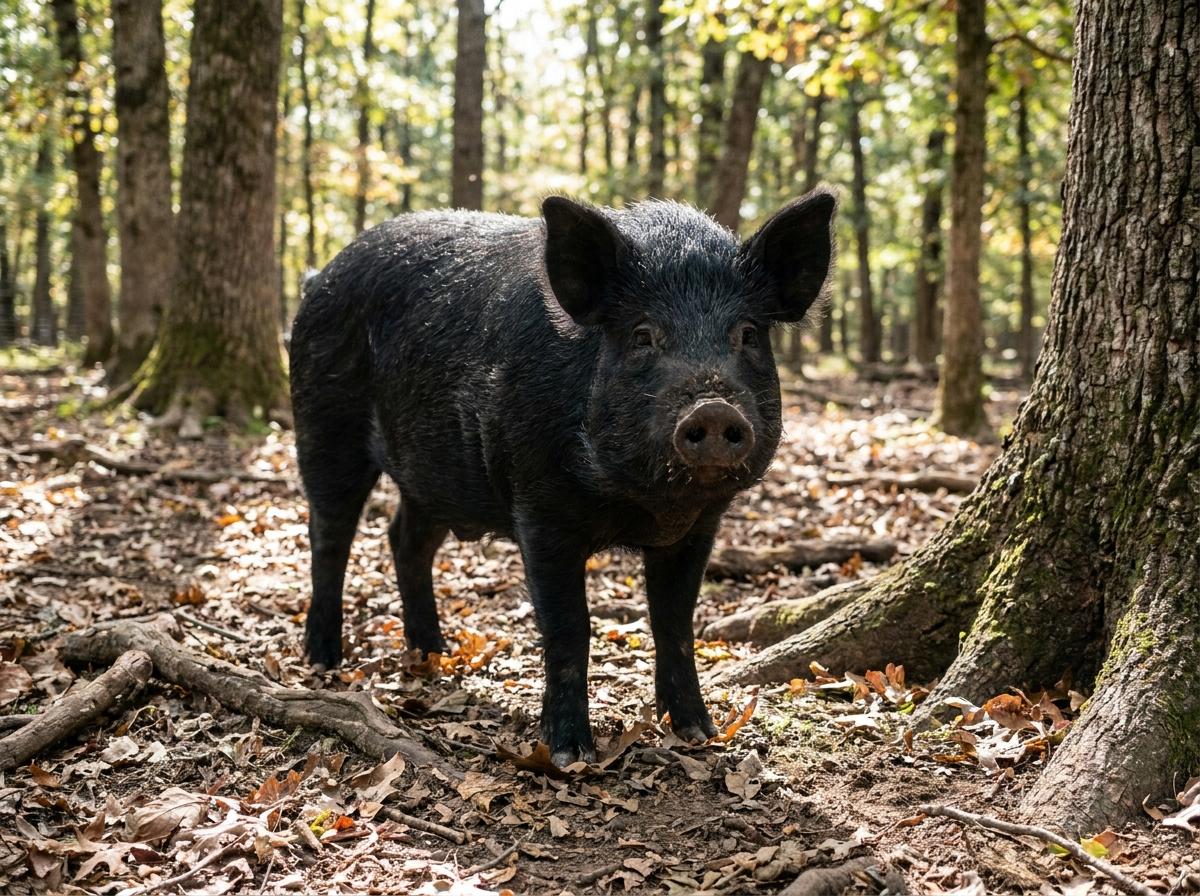
AI-generated illustration.
Berkshire prices and comparisons
Separate feeder prices from registered breeding-stock prices. Ask whether pedigree transfer, health documentation and transport are included. Put important promises and conditions in writing before collection.
Budget for feed, fencing, shelter, bedding, water equipment, veterinary care and transport. If the purchase relies on a specialty market, confirm that market first. A lower asking price cannot compensate for facilities that are unsuitable or a buyer who does not exist.
Read the pig guide, and compare Duroc and Landrace. The useful comparison is between real animals, breeding roles and management requirements, not a claim that one breed always tastes or performs better.
Use the pig-cost guide to build the rest of the budget before deciding whether a breeding-stock premium fits your plans.
Berkshire questions
Does every black pig with white feet qualify as Berkshire?
No. Check the actual registration and current eligibility requirements. Similar markings can occur in crosses.
Are Berkshires a miniature breed?
No. Plan for mature farm pigs and suitable facilities, even when buying small piglets.
Will pedigree guarantee a profitable pork business?
No. Costs, husbandry, processing arrangements and actual buyers determine whether the plan works.
Do this next on Creatures
Keep the animal’s identity, original documents and your dated observations together. Choose the next step that matches where you are in the process.
- Set up a Berkshire search alert. Get notified when new listings match, with help from the saved-search guide.
- Check current Berkshire listings; supply may be empty or change. Ask for the evidence relevant to your intended purchase.
- Start a Berkshire profile. No account is needed to start. The animal-profile guide explains the details.
- Add a care or breeding record. The form opens for visitors; a free account saves the record. Read the record guide before adding documents.
- Start a breeder or farm profile. The directory guide explains how a breeder listing works.
- Explore pig breeders to compare sources and prepare a careful introduction to the seller.