APHA Registration: Eligibility, Photos, DNA and Current Fees
Author: Elliott Garber, DVM · Published
APHA registration is how the American Paint Horse Association records a foal’s identity, parentage and registry classification. To register, you send APHA an application with the sire and dam’s registered names and numbers, at least two name choices, color photos from four sides and a hair sample for the DNA parentage test, and the fee depends on how old the foal is when the work arrives. If the mare is still in foal, put the breeding date into the free horse gestation calculator now so you know roughly when the cheapest registration window will open and close.
Rules and fees checked November 14, 2026 on APHA’s own registration guides, breed eligibility page and FAQ. APHA changes fees and rules through its annual rule book, so check the live pages before you mail anything.
| Checked | November 14, 2026, on apha.com |
|---|---|
| Parents | Both registered with APHA, AQHA or the Jockey Club |
| Color rule | One APHA parent: eligible regardless of white. AQHA or Jockey Club parents only: must meet APHA color requirements |
| DNA | Parentage verification required for new registrations since January 1, 2022 |
| Photos | Color photos of the left, right, front and rear |
| Lowest fee | $39 online or $59 paper with Paint parents, within the early window |
| Stallion report | Due November 30 of the breeding year to avoid late fees |
| Submit through | PHcentral online or APHA’s paper forms |
Who can register a foal with APHA
APHA’s breed page sets the parent rule plainly: both parents must be registered with APHA, the American Quarter Horse Association or the Jockey Club. That is the first thing to check, before color, before photos and before you spend money on a DNA kit.
The color question depends on the parents:
- At least one APHA parent. The foal is eligible for APHA registration whatever its white markings. It may land in the Regular Registry or be classed as Solid Paint-Bred.
- AQHA or Jockey Club parents only. The foal must meet APHA’s minimum color requirement. APHA describes a qualifying natural Paint marking as more than 2 inches of solid white hair with some underlying unpigmented skin, present at birth, in a qualifying area of the body.
- A parent from any other registry, or an unregistered parent. The foal does not meet the parent rule on that page. Do not plan a sale or a breeding around APHA papers for that foal.
The qualifying areas are described in detail on the breed page. On the legs the marking has to sit above the center of the knee or hock; on the head it has to sit behind a line from the base of the ear to the outside corner of the eye to the corner of the mouth. White on the lower legs and a typical face blaze do not count on their own. If a marking is close, take the close-up photos APHA asks for and let APHA make the call.
If the sire is a Quarter Horse or Thoroughbred, his papers carry extra weight in the packet. APHA’s guide says AQHA and Jockey Club papers, front and back, can be submitted and can stand in for the sire and dam owners’ signatures and breeding details. Our sister guides on AQHA registration and Jockey Club registration cover those registries’ own paperwork.
Regular Registry or Solid Paint-Bred
Two horses with the same parents can end up in different parts of the registry. A Solid Paint-Bred horse, in APHA’s words, meets the registration requirements by bloodline but does not show white markings on its coat. The Regular Registry is for horses that qualify in one of three ways:
- Natural Paint markings, as described above, in a qualifying area.
- The genetics rule (RG-070.E), open only to horses with at least one APHA parent. With two APHA parents the horse needs at least one Paint pattern gene and at least one Paint trait. With one APHA parent it needs two pattern genes and one trait, or two traits and one pattern gene.
- The pedigree rule (RG-020.A.1.b), for a horse that does not qualify under the genetics rule. It needs two APHA parents, at least one of them Regular Registry, and three connected generations of APHA horses in the pedigree beginning with the sire or dam.
The photos you send are part of how APHA sorts this out, which is why the photo instructions are strict. If a solid foal might qualify through genetics, order the pattern tests at registration time and keep the lab report with the foal’s file. The free horse coat color calculator is useful before a breeding: its tobiano by solid example shows how a single tobiano copy is passed on. It predicts odds from the parents’ test results; it does not decide a classification. Our tobiano vs overo guide explains the pattern names APHA uses.
What goes in the application
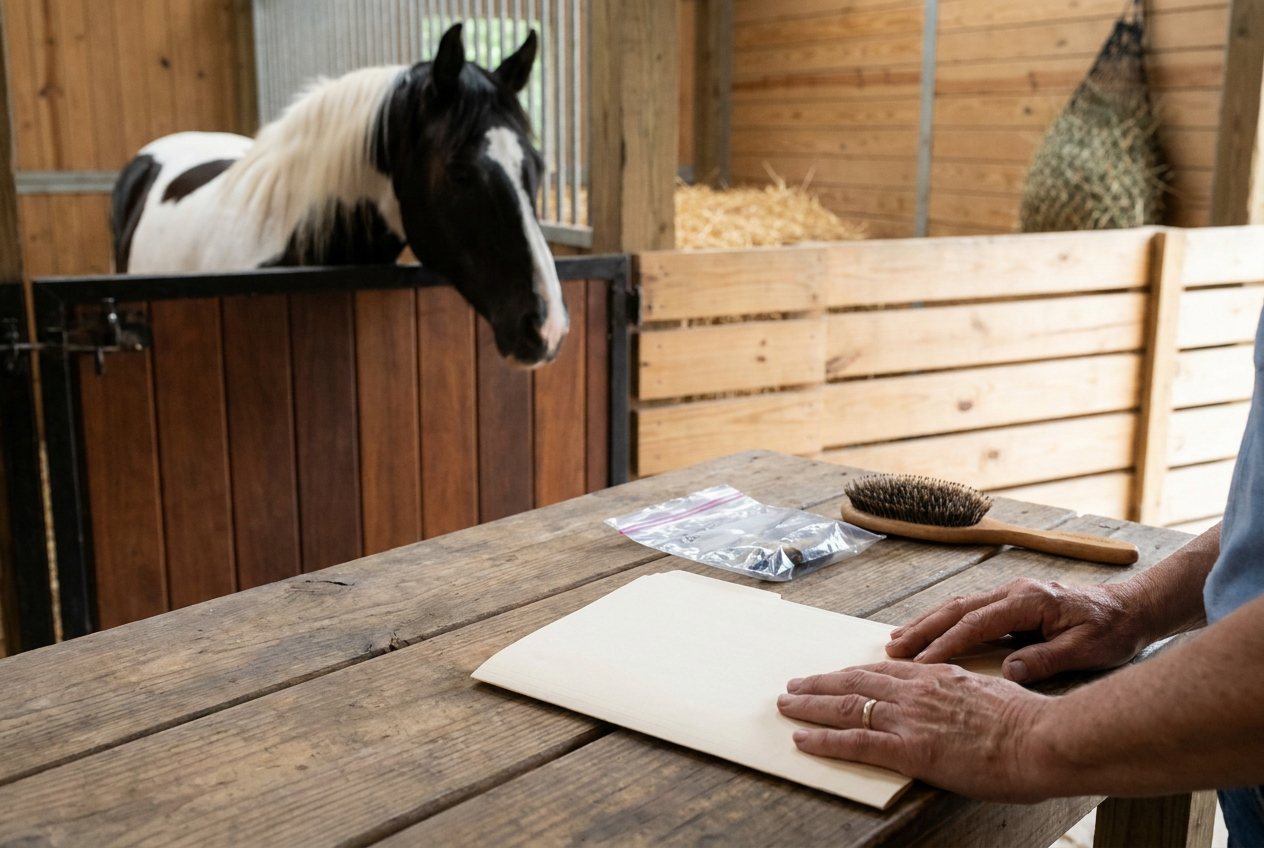
APHA’s registration guides list what the application needs. Gather it in one folder before you open PHcentral or the paper form:
- The sire and dam’s registered names and registration numbers, copied from their certificates.
- At least two unique name choices. APHA does not accept soundalike names, even when spelled differently from an existing horse, so check alternative spellings first. The FAQ adds that a name reservation is good for 12 months.
- Foaling date, foaling location and the foal’s sex.
- Color, pattern type and eye color details.
- The Transfer of Foal section, if you did not own the mare when the foal was born.
- For a mailed application, the signature of the stallion owner at the time of breeding (unless the breeding was released) and the signature of the mare owner at the time of foaling.
The FAQ says registration can be done online by the owner of the dam at the time of foaling or by the resulting foal owner, and only one submission method can be used for a given horse. Online registration is fastest when at least one parent is APHA registered and the stallion’s breeding report requirements are already on file.
Photos APHA will accept
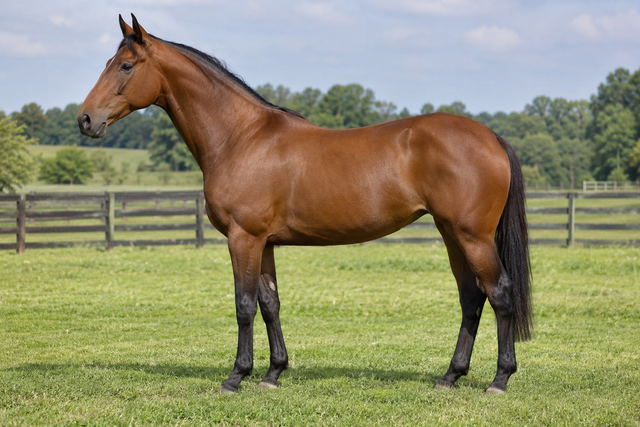
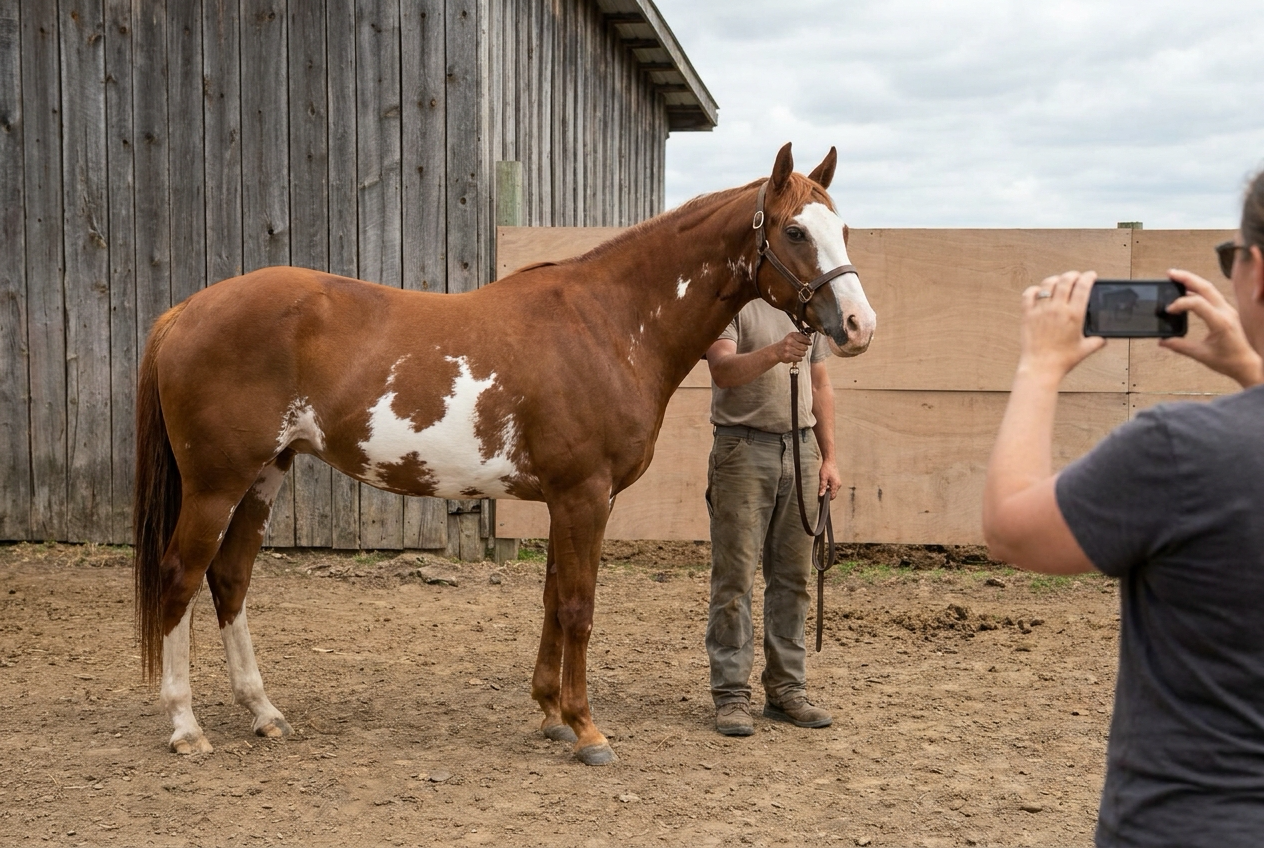
Color photos are required; black and white photos are not accepted, and you should not trim them. APHA wants the left side, the right side, the front and the rear, with side views taken in landscape orientation. For minimal markings that might qualify for the Regular Registry, add close-ups with and without a ruler beside the white.
The practical tips on APHA’s page match what experienced breeders already do. Groom the foal, pick a plain background, have a helper hold the horse square, and send several shots so APHA’s MemberCare team can choose. Photograph the foal on a calm day after it is used to handling, rather than chasing a nervous foal around a paddock for a side view.
The DNA parentage test
APHA requires parentage verification for every new registration since January 1, 2022, regardless of breeding method or age. APHA orders the foal’s parentage test as part of registration, and if the mare has no DNA on file her genetic typing is ordered automatically. You will get a DNA submission form by email. The sample is 30 to 50 hairs with intact roots: mane hair normally, tail hair for a young foal. The University of California, Davis Veterinary Genetics Laboratory runs the tests as APHA’s partner, and APHA finishes the registration once parentage testing is complete.
Pull the hairs, do not cut them; a cut hair has no root. Label the sample bag with the foal’s name and date before it leaves your hand, and keep a note of the day you mailed it.
APHA registration fees by foal age
The fee depends on the parents and on when APHA receives the work relative to the foaling date. These are APHA’s published registration fees as shown on its registration guides page on November 14, 2026. Membership, rush service, transfers and extra genetic tests are separate.
| Within 90 days of foaling or by June 30 of the foaling year, whichever is later | $39 online, $59 paper |
|---|---|
| July 1 through September 30 of the foaling year | $49 online, $69 paper |
| October 1 through December 31 of the foaling year | $69 online, $89 paper |
| Yearling year and older | $139 online, $159 paper |
| Within 90 days of foaling or by June 30 of the foaling year, whichever is later | $139 |
|---|---|
| July 1 through September 30 of the foaling year | $159 |
| October 1 through December 31 of the foaling year | $169 |
| Yearling year and older | $239 |
Two things follow from that schedule. First, the cheapest window is generous for spring foals: a foal born in March has until June 30. A foal born later in the year gets 90 days from foaling instead, once that date falls after June 30. Second, a foal that slips into its yearling year costs more than three times the early online rate with Paint parents. If you foal several mares a year, a written list of each foal’s last cheap-window date pays for itself. The mare foaling preparation timeline helps you plan the weeks around foaling so the paperwork does not land on the same day as the vet visit.
Online work goes through PHcentral, APHA’s member portal. The FAQ notes that registry options may not appear in PHcentral without an active APHA membership linked to the account, and that a mailed transfer goes in with the membership fee if the buyer is not already a member. Check APHA’s membership page for current membership prices rather than relying on an old invoice.
The stallion side: breeding reports and the health panel
If you stand a stallion, the foal’s registration depends on paperwork you file before the foal exists. According to APHA’s guides:
- The stallion owner at the time of breeding files a Stallion Breeding Report listing the mares, breeding dates and method. Each breeding year needs its own report.
- The report is due by November 30 of the breeding year, by postmark, to avoid late fees. Southern Hemisphere stallions are due May 31.
- Quarter Horse and Thoroughbred stallions must be enrolled for breeding before a report is filed. Paint stallions are enrolled automatically with their first report.
- Breedings marked “released” let mare owners register foals online without chasing a signature.
- Breeding stallions must have genetic typing and Genetic Health Panel results on file. APHA lists HYPP, HERDA, GBED, MH, PSSM1 and OLWS, and notes that a horse with AQHA’s five-panel results still needs the OLWS test.
OLWS is the test breeders of overo-patterned horses cannot skip. A peer-reviewed study in Mammalian Genome (Santschi and colleagues, 1998) found that all 22 affected foals examined carried two copies of the same EDNRB variant, while every available parent carried one copy. Affected foals are white or nearly white and die within days. Two carrier parents therefore carry a real risk at every conception. Our lethal white overo syndrome guide covers testing both parents, and the frame overo by frame overo example in the coat color calculator shows why that pairing is a health decision, not a color choice. Talk through any carrier pairing with your veterinarian before the mare is bred.
Transfers, duplicates and corrections
Registration and transfer are separate jobs. When a registered horse changes hands, APHA’s guides say the owner of record signs the transfer report as seller, usually on the back of the original certificate, and the buyer completes the buyer section with the sale date and normally submits it with payment. APHA points to PHcentral for faster service and lower fees than paper.
If the original certificate is lost, APHA has an Affidavit for Duplicate Certificate with its own photo and document requirements. The FAQ says no fee or horse photos are needed if a duplicate request arrives within 12 months of the original registration or transfer date, and asks you to wait at least 30 days after the work is completed before reporting a certificate that has not arrived. There are separate forms for a corrected certificate, a name change and a gelding report on the same guides page.
Buyers should treat the certificate as the starting point, not the sale photo. Compare the markings, sex and age on the papers with the horse in front of you, and make sure the seller can actually sign as owner of record. Our horse pedigree papers checklist and horse bill of sale guide cover what to check and what to write down at handover.
Keep the APHA paperwork with the horse on Creatures
Before you fill in the application, lay out the sire, dam and grandparents from their certificates in the free horse pedigree chart maker. It works without an account. Seeing the chart beside the papers is a quick way to catch a transposed number or a dam copied into the wrong line.
Once the foal is on the ground, a free Creatures account turns that folder into records that stay with the horse:
- Record the birth. Recording the birth on the mare creates the foal’s own profile, linked back to her. The recording births guide walks through it.
- Add a Registration record. Pick APHA from the registry list, then enter the registered name, registration number and a link if you have one. If the sire also carries AQHA or Jockey Club papers, those go on his profile as separate Registration records. The identity records guide explains what each record holds.
- Add identifiers. Microchip, brand and DNA profile numbers live on the horse’s identity page, separate from the registration number.
- Save test results. Enter the parentage report and any color or health panel results as Test Result records, with the report date and result, and keep the lab file with them. The health and medical records guide covers test results. The horse color DNA records guide suggests what to keep from each report.
- Build the pedigree. Parents you link on Creatures form the horse’s pedigree, which you can export as a PDF or image. The pedigree and lineage guide shows how.
Be clear about what this does and does not do. Saving an APHA number or a photo of the certificate on Creatures keeps your records together; it does not register the horse, transfer it or verify anything with APHA. The application, the DNA sample, the fee and any transfer still go to APHA through PHcentral or the mail.
Questions Paint breeders ask
Can a solid foal from two Paint parents be registered?
Yes. With at least one APHA parent the foal is eligible regardless of white markings. It is classed Solid Paint-Bred unless it qualifies for the Regular Registry through the genetics or pedigree rule.
Can I register a foal by a Quarter Horse stallion out of a Thoroughbred mare?
Only if the foal meets APHA’s color requirement, because neither parent is APHA registered. Registration for a foal with no Paint parent is paper only and costs more at every age.
What happens if I miss the early fee window?
The foal can still be registered; it moves into the tier for the date APHA receives the work: July 1 through September 30, then October 1 through December 31, then the yearling year and older. A foal born after about April 1 keeps the lowest rate for 90 days from foaling first.
Does a pinto horse qualify for APHA?
Not by color alone. Pinto describes a coat pattern, and the pinto horse guide explains the separate pinto registries. APHA registration depends on the parents’ registries first.
For the breed itself, start with the Paint Horse guide, and browse more horse guides for foaling, care and buying.
Do this next on Creatures
Keep each foal’s APHA paperwork with the foal it describes, starting with the mare and the foal due next.
- Add your Paint mare or foal with its registered name and identifiers. This has a guest signup path; the adding an animal guide walks through the form.
- Add an APHA registration record with the registration number. The form opens for visitors; a free account saves it. See the adding a record guide.
- Create your ranch or breeding farm profile so buyers can see your horses in one place. The breeder directory guide explains the listing.
- Save a Paint Horse listing alert if you are looking for a mare or prospect and want new listings by email.
- Browse Paint Horse listings and ask each seller for the certificate and test reports before you buy.
- Browse the breeder directory to find horse farms and contact them about their stock.