

Kurdish Horse
Search for the Kurdish horse and you get confident breed pages: a height range, a temperament profile, an origin story running back to the Median empire. Almost none of that rests on a registry document, because there is no registry. The Kurdish horse is a landrace, a population that Kurdish communities in the mountains of western Iran and adjoining parts of Iraq, Turkey and Syria bred for their own use over a very long time without a studbook, a breed society, or an agreed written standard. That is not a hole in the reporting. It is the central fact about the animal, and the researchers who study it say so in plain language.
What is documented is worth reading. Iranian and international teams have genotyped this population repeatedly since 2020, and one study went out and interviewed 114 Kurdish horse breeders to find out what they actually agree on. Those papers give a sharper picture than any breed-profile page, including the places where the picture stays blurry. If you keep a horse whose breeding lives in memory rather than on paper, a free Creatures animal profile is one place to put the photographs, measurements and parentage notes that a landrace has nowhere else to go.
Here is what the record supports: what the name covers, why the height figure you keep seeing is the least agreed number in the whole file, what the genetics say about how many are left, and why buying one in the United States is not a realistic plan.

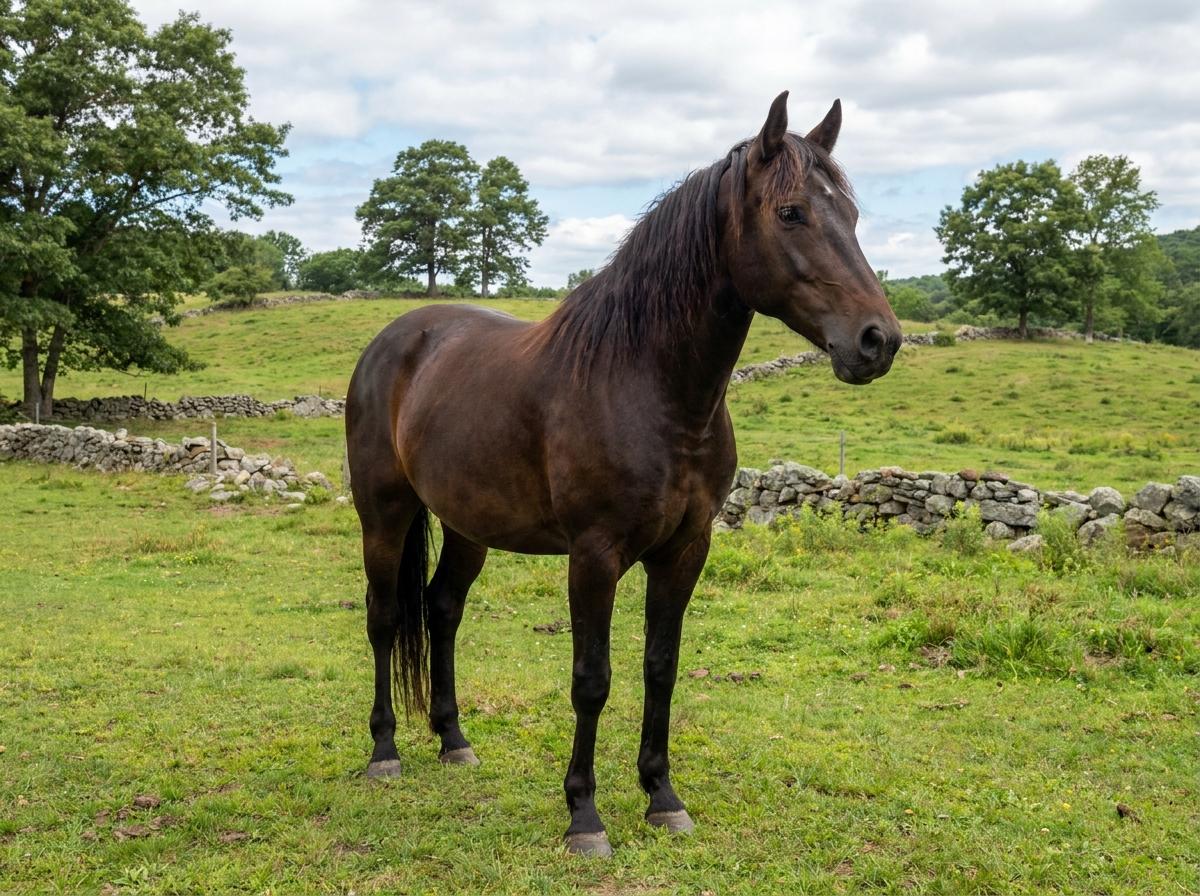
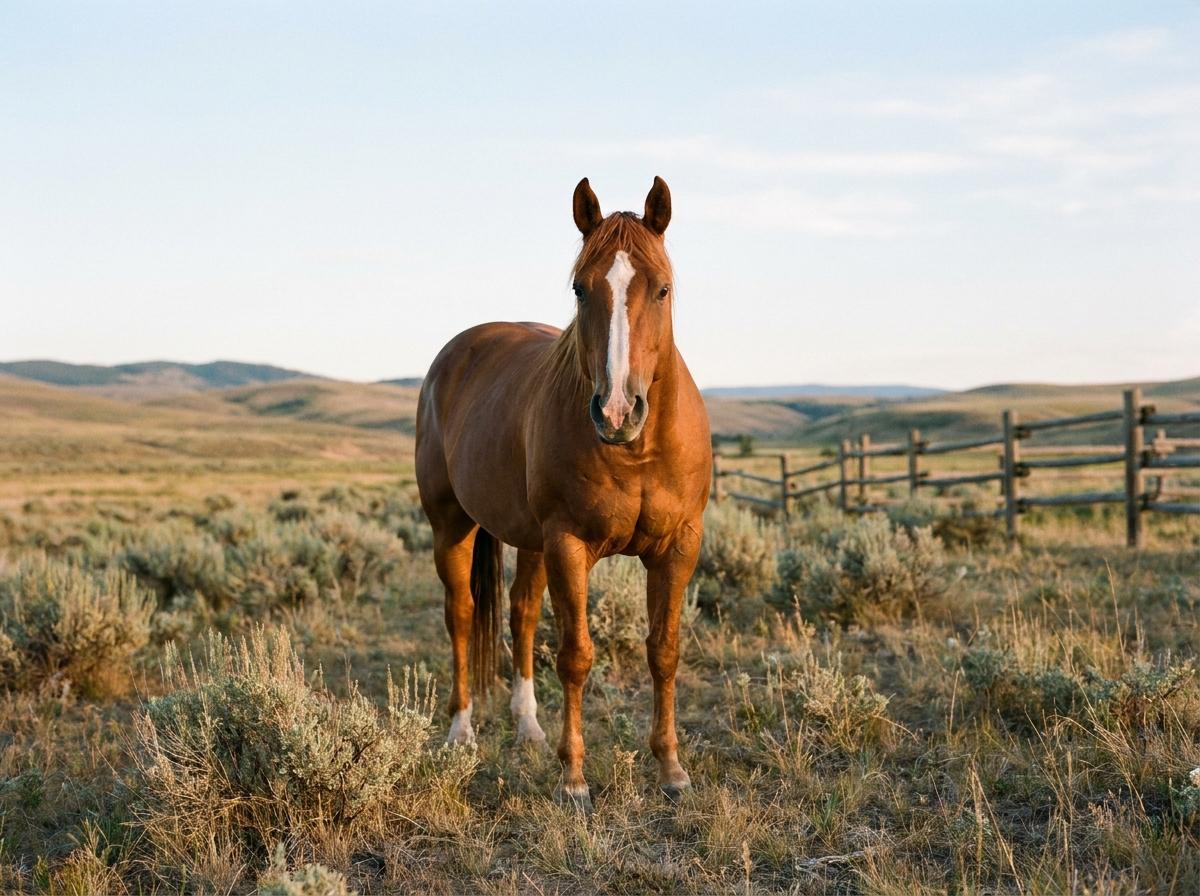
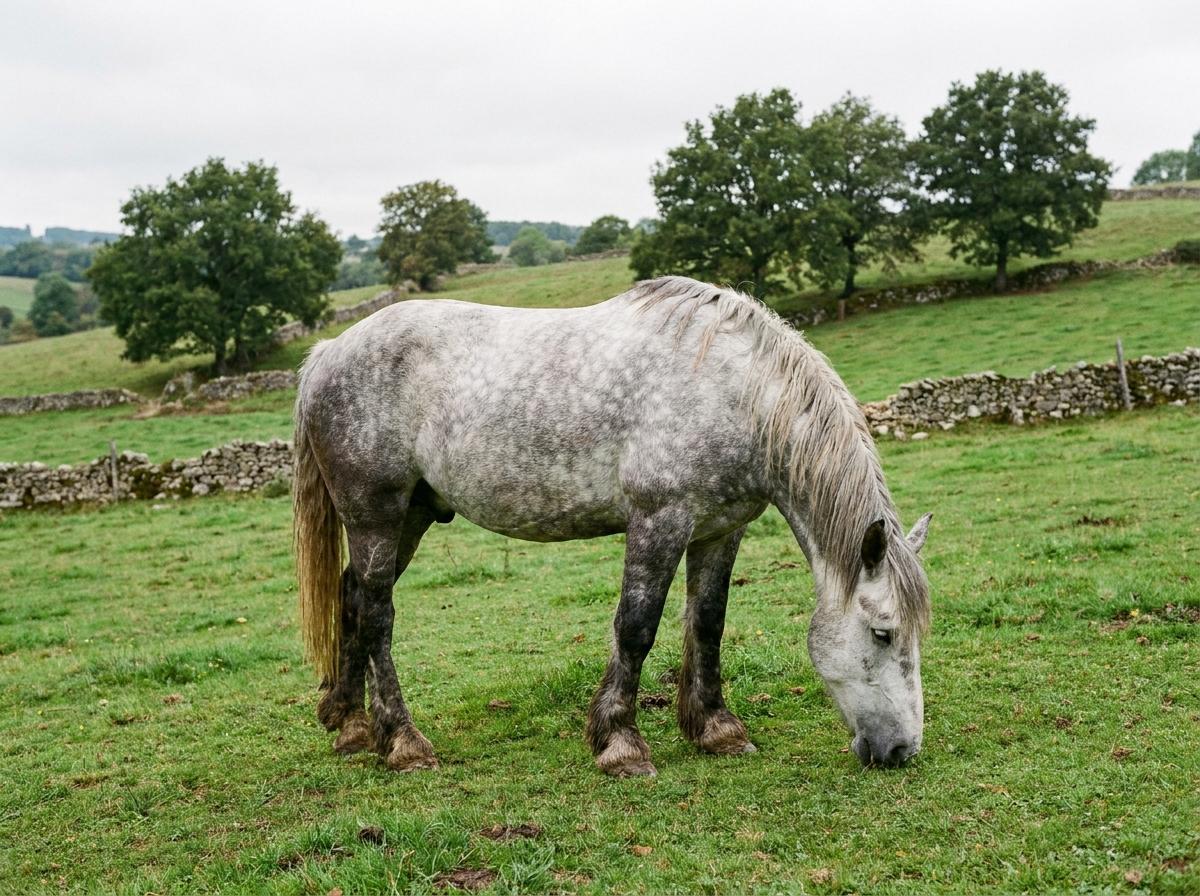
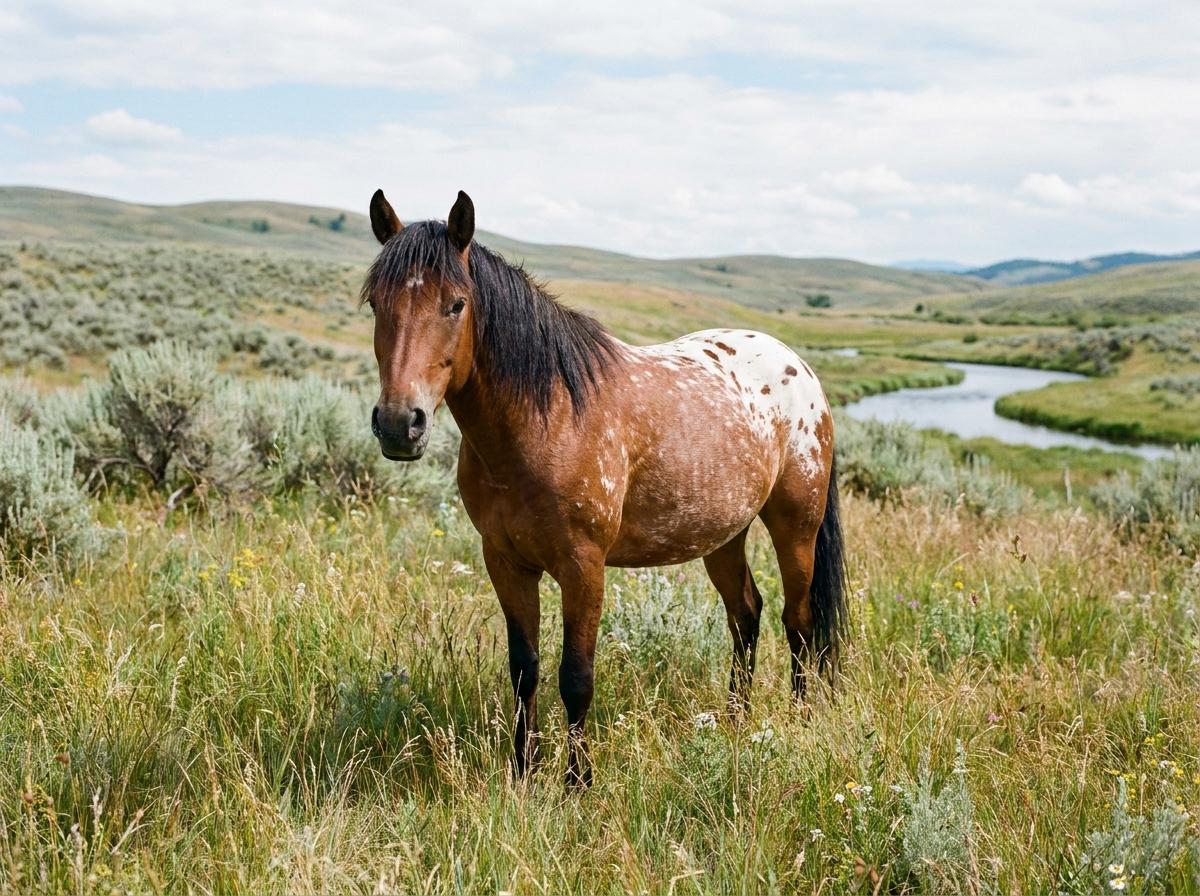
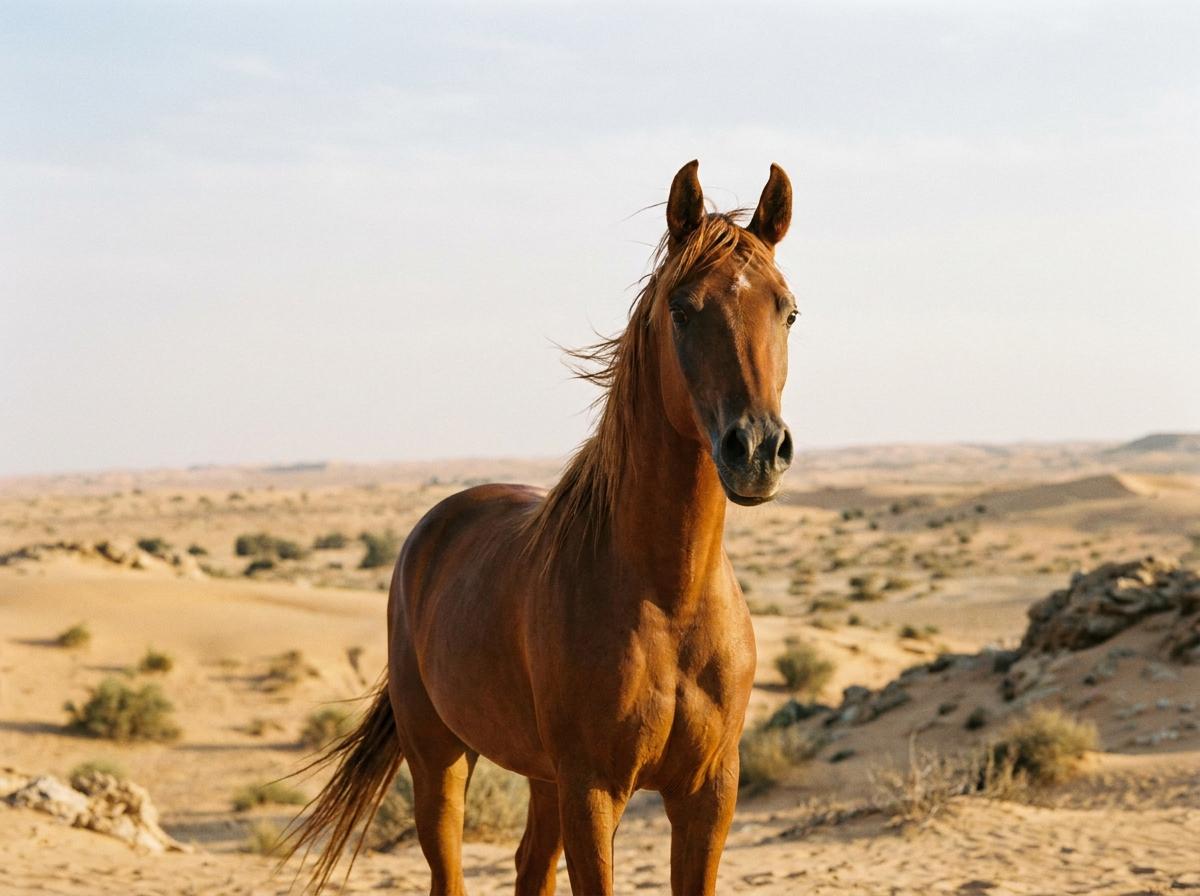
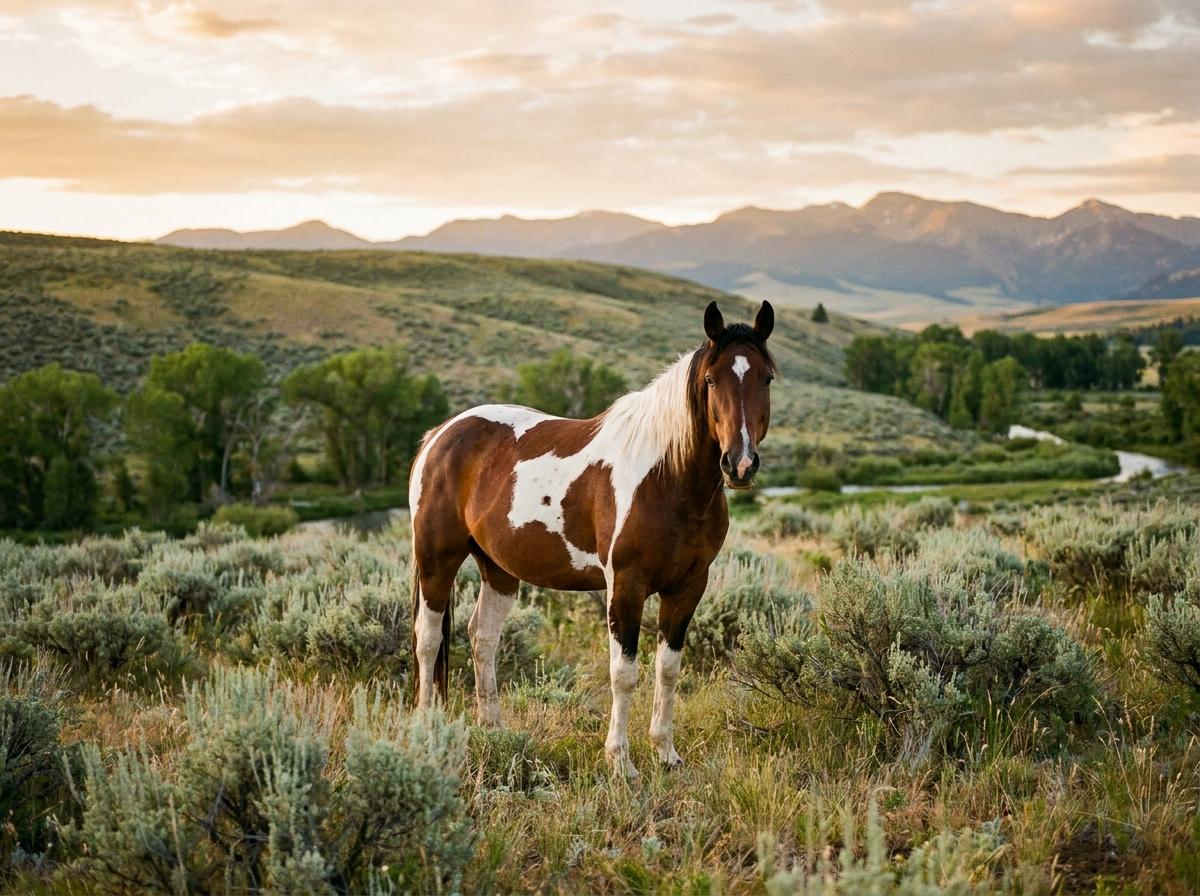
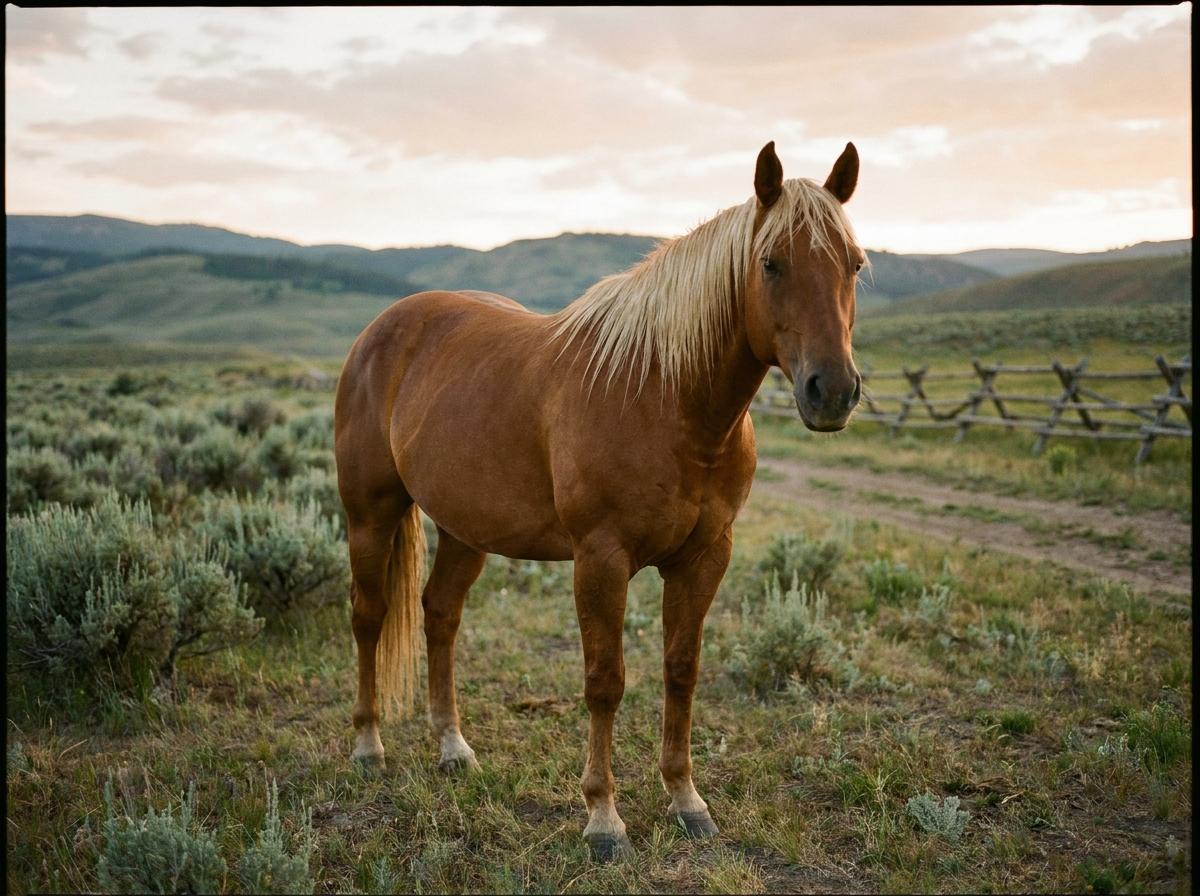
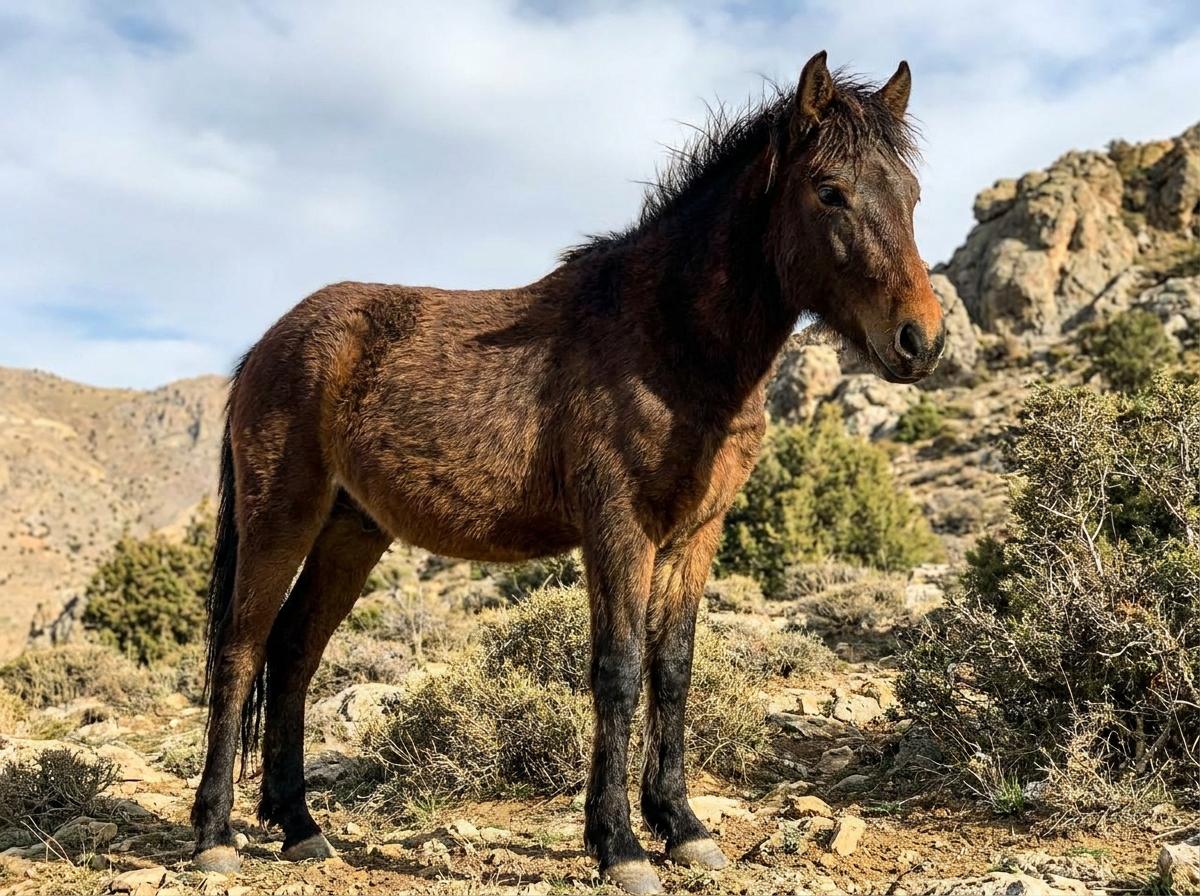
Illustration, not a photograph. Every image here is watercolor and ink on purpose: no biometric survey of this horse has ever been published, so a photoreal render would imply a precision the record does not have. Read this one for the square frame and the flat withers running into the topline. The horse is drawn at rest with head and tail low, so the high head and tail carriage the breeders call an outstanding feature is not what you are looking at.
| Also called | Kurd, Kurdi (FAO’s DAD-IS label), Iranian Kurdish, Persian Kurdish horse |
|---|---|
| Home range | Mountains of western Iran, above all Kermanshah and Kurdistan provinces, with related horses across Kurdish areas of Iraq, Turkey and Syria |
| Breed status | Landrace. Peer-reviewed studies published in 2020 and 2021 record no studbook, no registry and no breed association |
| Written standard | One proposed text, built in 2020 from a survey of 114 breeders. No governing body has adopted it |
| Height | 140 to 155 cm (roughly 13.3 to 15.1 hands) in that proposed text, where it tied for the lowest agreement of all 86 statements |
| Coat colors | Mainly base colors. Buckskin, dun, palomino and large white body markings are described as rare |
| Effective population | Genomic estimates of 104 (2022), 113 (2023) and 49 (2024) breeding animals |
| Availability abroad | Effectively none. US import of goods of Iranian origin is prohibited under 31 CFR 560.201 |
Browse listings, public profiles, breeders, or add your animal.
What the name actually covers
Five labels circulate for the same horses: Kurdish, Kurd, Kurdi, Iranian Kurdish and Persian Kurdish. Kurdi is FAO’s. DAD-IS, the Domestic Animal Diversity Information System and the closest thing to an international register of livestock breeds, carries Kurdi as a horse entry under Iran, one of only five horse breeds listed there, and separately under Turkey. A register entry is a name and a country rather than a characterization study, so it settles nothing about the animal, but the most authoritative institutional list there is does carry this horse. They are not competing breeds. They are what different research groups have called the same western Iranian population, and you can watch the naming drift across the literature. A 2020 paper in the Journal of Agricultural Science and Technology calls it the Persian Kurdish Horse. A 2021 genomic study in PLoS One uses Persian Kurdish. A 2022 study of five Iranian breeds and a 2023 study in Heredity both simply say Kurdish.
That 2022 study is a useful anchor because it names the whole set. Iran’s native horse breeds, as the genetics literature treats them, are five: Asil (the Persian Arabian), Caspian, Dareshuri, Kurdish and Turkoman. There is no sixth entry for a Hamadani horse, and we could not find a peer-reviewed description of one anywhere. FAO’s DAD-IS agrees, listing exactly five horse breeds for Iran and the same five. Older DAD-IS-derived snapshots do carry a Hamdani entry, but Hamdani is an Arabian strain name that turns up as an alternate name on other countries’ Arabian horse entries, not a Hamadan-province breed. Hamadan is a western Iranian province inside the general range, so the word reads as a place label.
Jaf, sometimes written Jafi, is a different case and a real one. The 2020 breeder survey names Jaaf, Sanjabi and Afshari as strains the population was believed to have carried in the past, and notes that the Jaaf strain was described as having more prominent eyes. The same paper then explains why almost every strain-level detail was cut from its final text: the interviewed breeders disagreed sharply about them, and, in the authors’ summary, mixing within the population has caused the strains to disappear. Older DAD-IS-derived snapshots list Jaf as its own Iranian horse entry; the register as it stands today does not, which is consistent with the merger the breeders themselves described. Treat Jaf as a historical strain name with living cultural weight and thin present-day evidence, not as a separate breed with its own documented type.
One more distinction is worth keeping straight, because the phrase does double duty. In everyday use, a Kurdish horse means a horse kept by Kurdish people, which covers a very wide and very loosely defined set of animals across four countries. In the scientific literature it means something narrower: the western Iranian population that Iranian institutions have sampled and genotyped. Turkey, Iraq and Syria have no comparable published characterization of horses in their Kurdish regions. Turkey does carry a DAD-IS entry for Kurdi, but a register entry is a name and a country, not measured animals. When a page quotes a genetic finding about the Kurdish horse, it is describing the Iranian sample.
There is no studbook, and that is on the record
Two independent peer-reviewed sources state this outright. The 2020 breed-type paper says that “no studbook or form of the registry has ever been established for Kurdish Horses” and that “no local or national breed association for this breed exists.” The 2021 PLoS One study repeats it and adds the historical timing: when the first studbooks for Persian Arabian horses were set up around 1976, there was still no official breed registry for Kurdish horses.
No later publication records a studbook or a breed association being established. It is worth being precise here, because the absolutist version of that claim is wrong. The 2023 Heredity study drew its Kurdish sample from a data set held by Iran’s Animal Science Research Institute, and describes those horses as “selected based on pedigree information, without crossbreeding in their pedigree, and those passed microsatellite parentage testing.” So pedigree records exist for some of these horses and at least one institution parentage-tests them. What does not exist is a studbook, a breed registry that issues anything, or an association defining what qualifies. The same paper describes the wider situation as a lack of active and strong equine breed associations in Iran, with no clear breeding strategy for these populations as a result. The contrast in how the two populations get sampled follows from it: the 2021 study drew its Kurdish horses province by province across five provinces, while the Persian Arabian, which has had a studbook since around 1976, has a registry to sample from.
The FAO’s guidelines on phenotypic characterization put a useful frame around this. FAO separates a traditional population, managed by farmers at low selection intensity with pedigrees only partly known, from a standardized breed, which is derived from a traditional population “by a community of breeders based on a recognized list of standard breed descriptors.” The Kurdish horse sits in the first category. The 2020 survey was an explicit attempt to move it toward the second, and its authors described their work as a first step rather than a finished standard.
None of that makes the Kurdish horse fake. FAO’s own definition of a breed has two arms, and the second one covers exactly this animal: a group for which “geographical and/or cultural separation from phenotypically similar groups has led to acceptance of its separate identity.” Cultural separation is precisely what defines this horse. The genetics back it up. The 2021 study found the Kurdish sample formed its own genetic cluster, distinct from the Persian Arabian even though the two share ancestry, and the 2022 five-breed study placed Kurdish horses in a cluster of their own alongside the other four Iranian breeds.
What a Kurdish horse looks like, and who says so
Every physical description on this page comes from one document: the breed type and standards text built in 2020 by Yousefi Mashouf and colleagues from interviews with 114 breeders across nine Iranian provinces, conducted over 106 days in 2015. It is not a registry standard. It is a written record of what a large sample of the people who breed these horses said the ideal animal looks like, and it is the only systematic attempt of its kind. Overall agreement across the 86 statements ran at 93.8 percent.
The traits the breeders agreed on describe a square, heavily built riding horse rather than a tall or refined one:
- A square frame. Height at the withers roughly equals body length, which the text contrasts with the longer-backed Turkoman.
- A very broad, thick, muscled neck with a prominent crest, carried upright, described as triangular from the side with a wide base.
- High head and tail carriage, listed as an outstanding feature. The croup is flat, level and short, with the tail set high.
- Flat withers blended into the topline rather than standing up as a distinct bony point.
- A straight or slightly convex head profile. A dished or concave head, of the kind seen in modern Arabians, is called undesirable. Cheekbones are prominent and the forehead is wide.
- Heavy, relatively short limbs with dense bone, short strong pasterns, and hooves described as coarse, strong, wide at the base, high at the heels and usually dark.
- A thick skin and dense coat, a thick mane and tail, and feather behind the fetlock and pastern, which the text calls common in the breed.

Color is where the agreement thinned. The survey text says buckskin, dun, palomino and white body markings are rare and that the horses are mainly found in base colors, and it attributes the narrow color range to population decline and inbreeding rather than to selection. One of the three color statements scored 57.9 percent agreement, among the lowest in the survey.
How tall is a Kurdish horse?
The figure in circulation is 140 to 155 cm, which is roughly 13.3 to 15.1 hands. It comes from that 2020 text, and it deserves an asterisk, because the height statement tied for the lowest agreement of all 86 statements in the survey. It drew 57.9 percent agreement, with 39.3 percent of breeders wanting it amended, and 38 proposed amendments were logged against the single height section.
So the honest version is this. Kurdish horses are medium sized, built more solidly than their height alone suggests, and the people who breed them do not agree on where the range starts and stops. Anyone quoting 140 to 155 cm as a breed specification is quoting a proposal that four breeders in ten wanted changed. No independent biometric survey has since measured a representative sample and published the result, which the 2020 authors themselves flagged as the obvious next study.
Temperament and what these horses are used for
Temperament is the mirror image of height. All four temperament statements in the survey scored between 99.1 and 100 percent agreement, the highest in the document. The breeders described a horse that is highly intelligent and alert, hot-blooded, quick and full of energy, and at the same time gentle, kind, trainable and eager to work. That is a consensus, not a behavioral study, and an individual horse’s handling and training will always matter more than its type.
The use profile in the same text is more specific than the warhorse-and-pack-animal story that gets repeated online. Breeders described the horse as suited to polo, exhibition dressage and pleasure riding, and listed a set of movement traits: cadenced, animated gaits with high foreleg elevation, natural lowering of the hindquarters with deep hock flexion, easy flying changes and lateral work, and enough agility to turn tightly in confined space. They also named Ta’zieh, the Iranian ritual drama in which riders work in a small arena.

Two of those cultural practices carry UNESCO recognition in their own right. Iran’s inscribed intangible heritage includes Chogan, the horse-riding game with music and storytelling, listed in 2017, and the ritual dramatic art of Ta’zieh, listed in 2010. The horse itself is not on any UNESCO list. Iranian state media reported in January 2023 that it had been added to Iran’s own national intangible heritage list, and in November 2023 that Iran and Iraq intended to seek a joint UNESCO inscription. UNESCO’s public record shows 27 inscribed elements for Iran and four nominations in progress, and the horse is not among either group. Read the national listing as reported rather than independently verified, and the UNESCO bid as a stated intention.
How many are left
This is where secondary sources fall apart, and the collapse is instructive.
Two census figures circulate. One says about 7,000 horses in Iran. The other says about 2,700. Both trace back to the same paper: Nazari and colleagues, 2022. The 2023 Heredity study cites that paper for “only about 7000 horses”. Wikipedia’s Kurdish horse article, and the pages that copy it, cite the identical paper for an Iranian population of 2,700. The number sits in the paywalled body of the article, not in its abstract, so at least one of those readings is wrong and a reader cannot tell which from the outside. What that disagreement really shows is that no independent census exists.
The measured number is better behaved. Effective population size, meaning the number of animals actually contributing genes rather than the raw headcount, has been estimated three times from genomic data:
- 104, up to three generations back, in the 2022 selection scan of 72 horses.
- 113 as a contemporary estimate in the 2023 Heredity study of 67 Kurdish horses.
- 49 across the last five generations in a 2024 PLoS One analysis of 29 Kurdish horses.
Different methods and different time windows, so the three are not directly comparable. They agree on the thing that matters: the breeding population is small enough that inbreeding management, not headcount, is the real conservation question. The 2023 study also reports that these Iranian breeds are classified as endangered because of small population size and uncontrolled crossing with imported breeds.
There is good news buried in the same data. Kurdish horses carry high genetic diversity for a population this size. The 2021 study found the highest expected heterozygosity of the three populations it compared, ahead of both the Persian Arabian and the Thoroughbred, and the 2024 study found the highest observed heterozygosity of six populations and the lowest genomic inbreeding on three of its four measures. A 2023 mitochondrial study of 29 horses found 14 maternal haplotypes, high haplotype diversity with low nucleotide diversity, all within haplogroup K. Diversity is still there. Keeping it is the job.
Care, and the parts that are just horse care
A hardy landrace is still a horse, and nothing about this type changes the fundamentals. Forage first, clean water always, salt and minerals, and a workload matched to body condition. A horse shaped on thin mountain grazing is likely to be an efficient keeper, so overfeeding concentrates is the more probable mistake, and easy keepers carry a raised laminitis risk when they get heavy.
Hooves described as coarse, strong and high-heeled are an asset, and plenty of these horses work without shoes. Barefoot is not the same as unmanaged: regular trimming on a schedule your farrier sets, daily picking out, and honest attention to cracks and bruising still apply. The feather behind the fetlock needs checking in wet or muddy conditions, since long hair over the pastern hides skin problems until they are advanced.
Preventive medicine here is simply horse care and nothing about the type changes it: the core vaccines in the AAEP vaccination guidelines, a region-appropriate parasite plan, routine dental work and annual examinations, every one of them decided by a veterinarian who can put hands on the animal.
Breeding decisions deserve extra weight here. With an effective population in the low hundreds at best, every mating either spends or preserves diversity, and good pedigree and reproduction records are the only way anyone will know which. That is true whether the horse lives in Kermanshah or anywhere else.

Can you buy a Kurdish horse outside the region?
Realistically, no, and the reasons stack.
Start with the paperwork problem, which is the one nobody mentions. With no studbook and no breed registry, nothing can certify that a given horse is a Kurdish horse. No registry issues a certificate you can check, and no association defines what qualifies. Iranian research institutes do hold pedigrees and parentage-test the horses in their own data sets, as above, but that is an internal research record, not a register a buyer can query. For a buyer, a seller’s word and a photograph are the whole file. That alone should end most transactions at a distance.
Then the law. US live-horse imports run through USDA veterinary requirements, and 9 CFR 93.308 sets the quarantine rules, including negative official tests for dourine, glanders, equine piroplasmosis and equine infectious anemia, and quarantine on arrival whose length depends on the disease status of the region of origin. Horses from regions APHIS considers affected with African horse sickness may enter only at the port of New York and must be quarantined there for at least 60 days.
On top of that sits a sanctions layer that closes the breed’s heartland. 31 CFR 560.201 prohibits the importation into the United States of any goods or services of Iranian origin, other than information and informational materials. A horse bred in Iran is a good of Iranian origin. Rules change and individual circumstances vary, so anyone seriously attempting an import needs current legal and veterinary advice rather than a web page, but the ordinary route from Iran is closed.
Treat any casual overseas offer of a Kurdish horse for sale with real suspicion. There is no registry to check it against, which is exactly what makes the label easy to attach to any brown horse.
If your interest is in hardy regional and landrace animals more broadly, documenting them is far more achievable than importing them. The same evidence problems show up across the world’s regional types, including two others covered here: the Sarabi dog of Iran and the Laconian hound of Greece. You can also compare types on the Creatures horse species page.
What is still unknown
An honest page should say where it stops.
- No independent census. Both circulating population figures trace to one 2022 paper and disagree by a factor of about two and a half.
- No measured height range. The 140 to 155 cm figure is a survey proposal that 39 percent of breeders wanted amended, and no biometric study has since tested it on a representative sample.
- No adopted standard. The 2020 text is a proposal. No registry, association or government body has adopted it.
- The Nisean link is heritage, not pedigree. The 2021 study reports the traditional claim that the breed descends from the extinct Nesayee horses of the Medes. That is a documented tradition, and it is not a demonstrated genetic line to the modern population.
- Strains are largely lost. Jaaf, Sanjabi and Afshari are recorded as historical strains, and the breeders surveyed in 2015 described them as no longer distinguishable.
- No characterization study outside Iran. FAO’s DAD-IS carries a Kurdi horse entry for Turkey as well as Iran, but no study has measured, sampled or genotyped Kurdish horses in Turkey, Iraq or Syria, so claims about them rest on tradition and observation rather than data.
Frequently asked questions
Is the Kurdish horse a recognized breed?
It is a recognized population, not a registered one. Peer-reviewed studies from 2020 and 2021 both state that no studbook, registry or breed association exists for it. It qualifies as a breed under FAO’s definition through cultural separation and accepted separate identity, and genomic studies consistently resolve it as its own cluster among Iran’s native horses.
How tall is a Kurdish horse?
Medium sized. The commonly quoted 140 to 155 cm, about 13.3 to 15.1 hands, comes from a 2020 proposed standard, where it tied for the lowest agreement of any statement in the survey. Take it as an approximation rather than a specification.
Is the Kurdish horse the same as the Persian horse?
No, though the names overlap. Persian horse usually means the Persian Arabian, called Asil in Iran, which has had a studbook since around 1976. Persian Kurdish is a name several papers use for the Kurdish horse itself. The two populations share ancestry and are genetically distinguishable, with a pairwise FST of 0.013 in the 2021 study, small but significantly greater than zero.
Is the Kurdish horse rare?
Yes. Genomic estimates put the effective breeding population at roughly 49 to 113 animals depending on method and time window, and the 2023 Heredity study describes Iran’s native breeds as endangered because of small population size and uncontrolled crossing with imported horses.
What is a Jaf or Jafi horse?
A historical strain name within the Kurdish horse population, recorded in the 2020 survey alongside Sanjabi and Afshari. The breeders interviewed disagreed about strain characteristics and described the strains as having merged, so Jaf is best treated as heritage naming rather than a distinct present-day type.
Do Kurdish horses need shoes?
Often not. The breeders’ text describes coarse, strong, high-heeled hooves, and many of these horses work barefoot. They still need routine trimming, daily hoof picking and a farrier’s judgment on the individual animal.
Do this next on Creatures
This page is about a horse most readers cannot buy, so the useful things to do here are about recording and finding, not purchasing.
Give an undocumented horse a record. For a landrace with no studbook, the file someone keeps is the pedigree. Create a free animal profile for photographs, measurements, parentage notes and dates. No account needed to start, and the walkthrough is in adding an animal to Creatures.
Keep the health and farrier history. Add a record for vaccinations, trimming, dental work and health events. The sheet opens for any visitor to look around, and a free account is what saves what you enter. See adding a record and what each profile tab does.
List a breeding program or preservation project. If you work with regional or landrace horses anywhere, create an organization or breeder profile so people can find you. Start with getting listed in the breeder directory and creating an organization and adding your team.
See what horses are actually listed. Browse current horse listings. Kurdish horses will not be among them, and any listing that claims to be one has no registry behind it to check.
Find people, not animals. The Creatures breeder and farm directory lists trusted breeders and farms by species and region, which is the more realistic route into a rare-breed community.