Mikawa
Author: Elliott Garber, DVM · Updated
The Mikawa is a rare Japanese chicken breed, written 三河種 and read Mikawa-shu, that was put together in Aichi Prefecture during the Meiji era (1868 to 1912) as a laying bird. It is buff coloured with a single comb, white ear lobes and clean yellow legs, and it is a made breed rather than an ancient one: it was assembled by crossing imported stock in Japan, not carried over from antiquity. Very few Mikawa are left. The clearest reason the name still matters is regulatory. Mikawa is one of the 38 breeds on the Japanese government’s official native breed list, so its blood counts toward the native breed share a chicken needs in order to be sold as jidori.
That last point is the whole story of this breed today, and it is also where most English pages get it wrong. Below you will find what “Mikawa” refers to (the name is attached to several things), where the breed came from, what is actually documented about how it looks, why it appears on one Japanese government list but not on the more famous one, and what a keeper outside Japan can and cannot realistically do about it. If you are here to compare Japanese and Asian chicken breeds generally, the Creatures chicken species page is the better starting point, because it lets you browse breeds side by side.

| Japanese name | 三河種 (Mikawa-shu), after the old Mikawa Province in what is now eastern Aichi Prefecture |
|---|---|
| Origin | Aichi Prefecture, Japan, established during the Meiji era (1868 to 1912) |
| Type | Synthetic utility breed, made for egg production, not one of Japan’s ancient ornamental breeds |
| Reported founding cross | Buff Leghorn, Chinese Buff Cochin and Nagoya, per a 2025 review; an earlier account says only foreign breeds contributed |
| Documented appearance | Buff plumage, jungle fowl type body, single comb, white ear lobes, yellow shanks |
| Official status | On Japan’s 38 breed zairaisyu (native breed) list in the JAS standard for jidori chicken meat |
| Natural Monument | No. That designation covers 17 ornamental Japanese breeds, and Mikawa is not one of them |
| Rarity | Numbers described as very small in Japan; conserved in the national gene bank at Okazaki, Aichi |
| Availability abroad | No realistic route outside Japan. Not recognised by the American Poultry Association |
Browse listings, public profiles, breeders, or add your animal.
What “Mikawa” actually refers to
If you searched the single word “Mikawa” you may not have been looking for a chicken at all, so it is worth clearing the ground first.
Mikawa is a place name. Mikawa Province (三河国) was one of the old provinces of Japan, on the Tōkaidō circuit, covering what is now the eastern half of Aichi Prefecture. The name literally means “three rivers.” The province was united under Tokugawa Ieyasu, and Okazaki, its best known castle town, sits inside it. That is where the chicken’s name comes from, in the same ordinary way that Sussex, Ancona and Rhode Island name chickens after the places that made them. You can read the province’s history on Wikipedia’s Mikawa Province entry.
Mikawa is also a dialect, a bay, several unrelated towns and a surname. There is a Mikawa dialect spoken in the same region, a Mikawa Bay on the Aichi coast, towns called Mikawa in other prefectures entirely, and Mikawa as a Japanese family name. None of those has anything to do with poultry.
Mikawa appears in the names of branded Japanese chicken meat. This is the confusion that actually catches poultry people, and the three names in circulation do not mean the same thing. Two of them carry no Mikawa ancestry at all. The third does, which is the part most English pages get backwards.
- Mikawa Akadori (三河赤鶏) is a commercial brown meat bird. The Japan Chicken Association, the national industry body, gives its parent stock as Rhode Island Red on the sire side and a dwarf Rhode Island Red crossed with Rhode Sussex on the dam side, and the brand is sold on the Rhode Island Red blood in it. There is no Mikawa breed anywhere in it. See the association’s Mikawa Akadori entry.
- Oku-Mikawa-dori (奥三河どり) is a modern broiler, listed by the same association as Chunky on both sides, which is a mainstream commercial meat line. It is named for the Oku-Mikawa uplands of north eastern Aichi where it is raised. The name is geography and nothing else. See the association’s Oku-Mikawa-dori entry.
- Mikawa Jidori (三河地どり) is the exception. It is a meat line the prefecture built from the Mikawa breed itself, crossed with White Rock, and named in 1997. Its name is not merely geographic, and saying otherwise strips a real Mikawa cross of the ancestry it actually has. The prefecture’s own record is quoted in the jidori section below.
None of the three is the rare pure Mikawa breed this page is about, which is the thing that matters if you are hunting the bird rather than the meat. But the reason differs by name, and “it just means the region” is only true of the first two.
Mikawa is not Nagoya. The other Aichi chicken, the Nagoya, which is still marketed under the older name Nagoya Cochin, is far more famous, and the two get conflated constantly. They are different breeds with different looks and different histories, although Nagoya is one of the breeds reported to have gone into making the Mikawa. More on that below.
So: the Mikawa chicken is real, it is a distinct named breed on an official Japanese list, and it is genuinely obscure. The honest position on it is that the documentation is thin in English and rests on a small number of Japanese and Japanese authored sources, which are named throughout this page. Where the record is silent, this page says so rather than filling the gap.
Where the breed came from
The Mikawa was established in Aichi Prefecture during the Meiji era for egg production. That much is consistent across sources. What went into it is less settled, and it is worth showing both accounts rather than picking one.
A 2025 review of Japanese native chicken genetic resources by Hideaki Takahashi of Japan’s National Agriculture and Food Research Organization describes the Mikawa as “a synthetic breed crossed between Buff Leghorn, Chinese Buff Cochin, and Nagoya.” That reads sensibly: a Leghorn for laying, a Cochin for size and buff colour, and the local Aichi breed for the rest. You can read the review in full, open access, at PubMed Central.
An earlier and equally authoritative account differs on one point. Masaoki Tsudzuki of Hiroshima University, writing on Japanese native chickens for an APEC survey of indigenous animals, says of the Mikawa that “although the breed was established in Japan, no Japanese native breeds contributed to its establishment. Some foreign breeds were crossed in Japan to make this breed.” That chapter is available as a PDF from APEC.
The two are reconcilable if you look at how Tsudzuki organises Japanese chickens. He splits them into “fancy fowl,” the ornamental and ancient breeds, and “utility fowl,” the small group of egg and meat breeds mostly assembled during the Meiji era. Nagoya sits in the utility group and is itself a Meiji era cross made with Chinese Cochin, so it is not a “native breed” in the sense Tsudzuki uses in that sentence. What both authors agree on is the important part: the Mikawa is a constructed Meiji era laying breed, not a survivor of ancient Japanese poultry.
That distinction is not pedantry. It is why the Mikawa is missing from the lists of Japanese chickens most Western readers have seen, which are almost always lists of the ornamental breeds.
What a Mikawa looks like
Here is everything the sources actually pin down about appearance, and nothing more.
- Buff plumage. The plumage is described simply as buff coloured. That is worth contrasting with the two other Aichi and Kochi utility breeds Tsudzuki describes alongside it. Nagoya is buff columbian with an orange tinge and black tail feathers, and Tosa-Kukin is buff columbian with brownish tail feathers. The Mikawa is described without that columbian patterning.
- Jungle fowl type body shape. Tsudzuki records the Mikawa as having a Red Jungle Fowl type body shape, which in practice means a moderate, upright, athletic bird rather than the heavy, deep, loosely feathered Cochin outline of the Nagoya and Tosa-Kukin.
- Single comb.
- White ear lobes.
- Yellow shanks.
That is the complete published description in the sources I could verify. There is no weight range, no height, no comb point count, no wing or tail carriage, no plumage description for the hen as distinct from the cock, and no written breed standard in English at all. The photograph in Tsudzuki’s chapter is captioned as showing a Mikawa cock with a dubbed comb, which is a management practice (the comb trimmed back) rather than a breed feature, so a natural single comb is what the description supports.

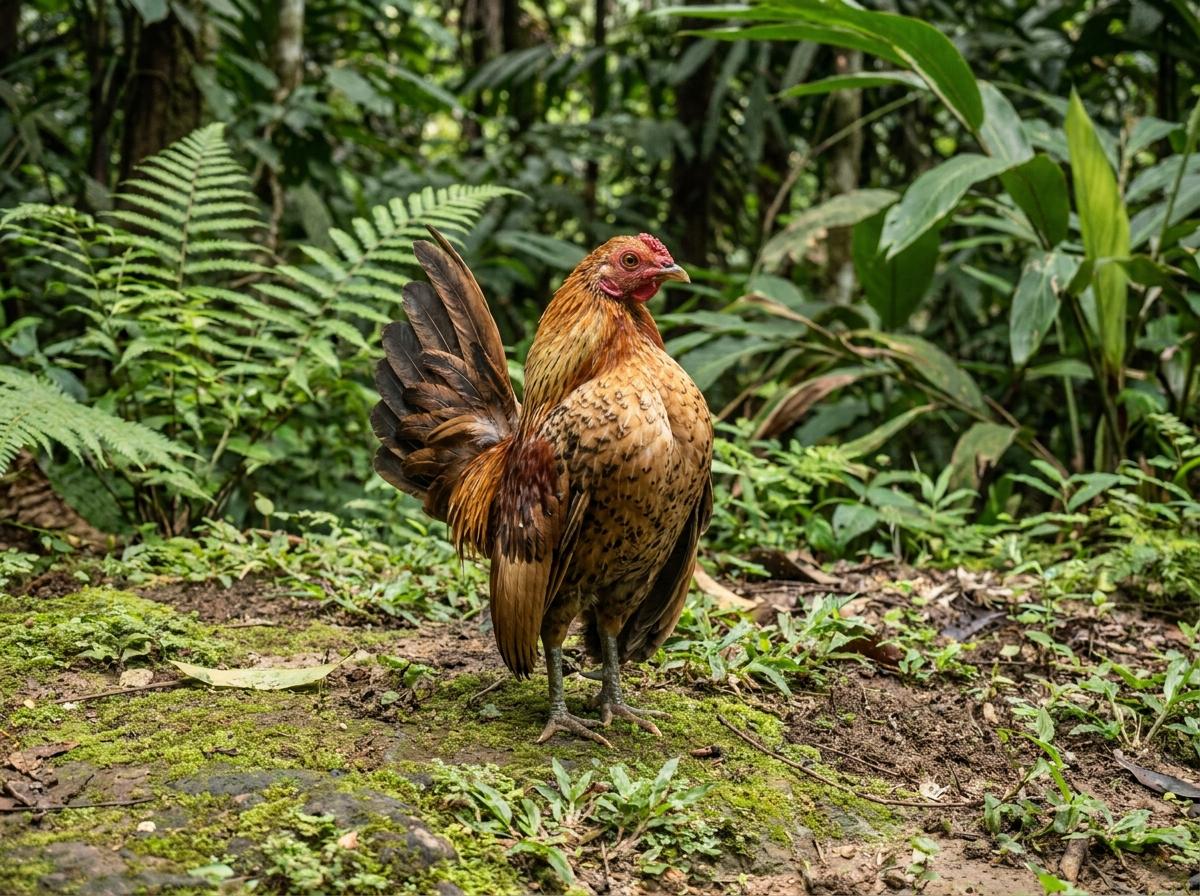
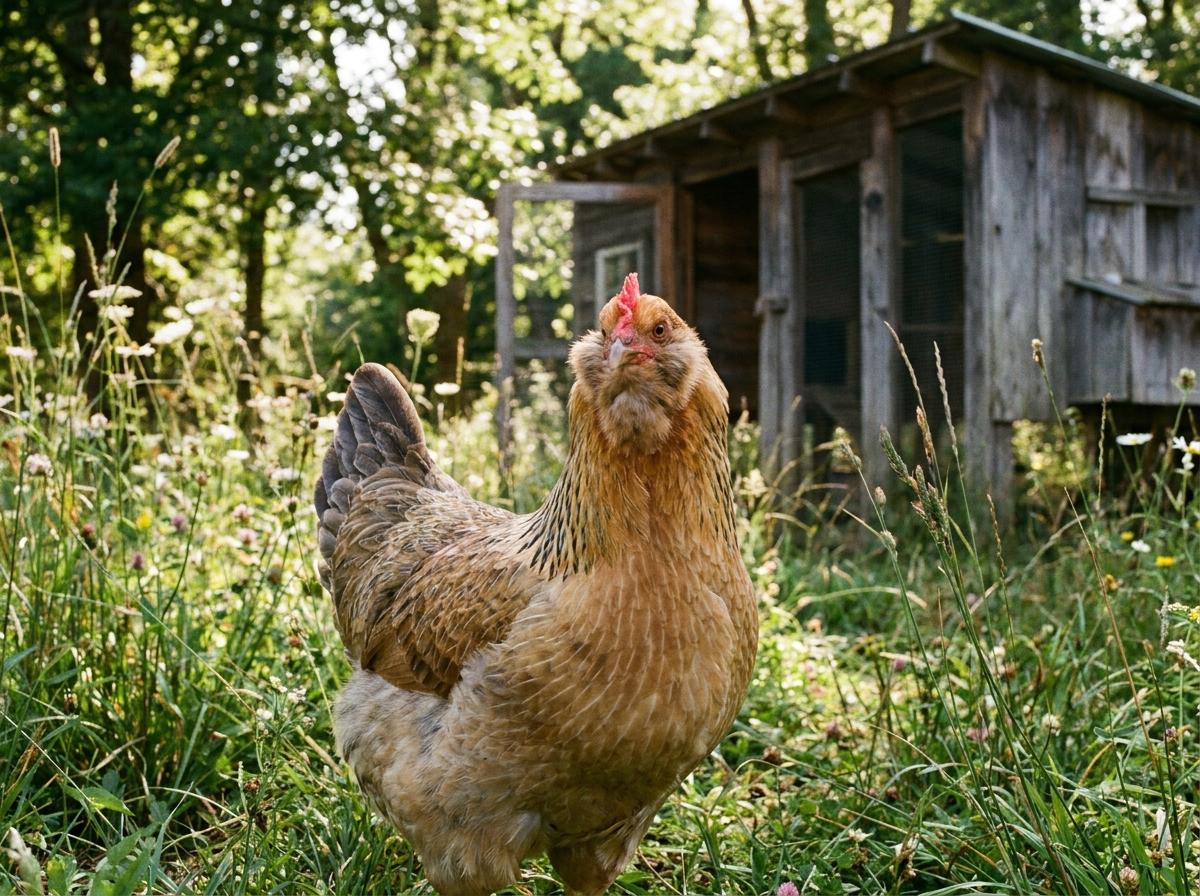
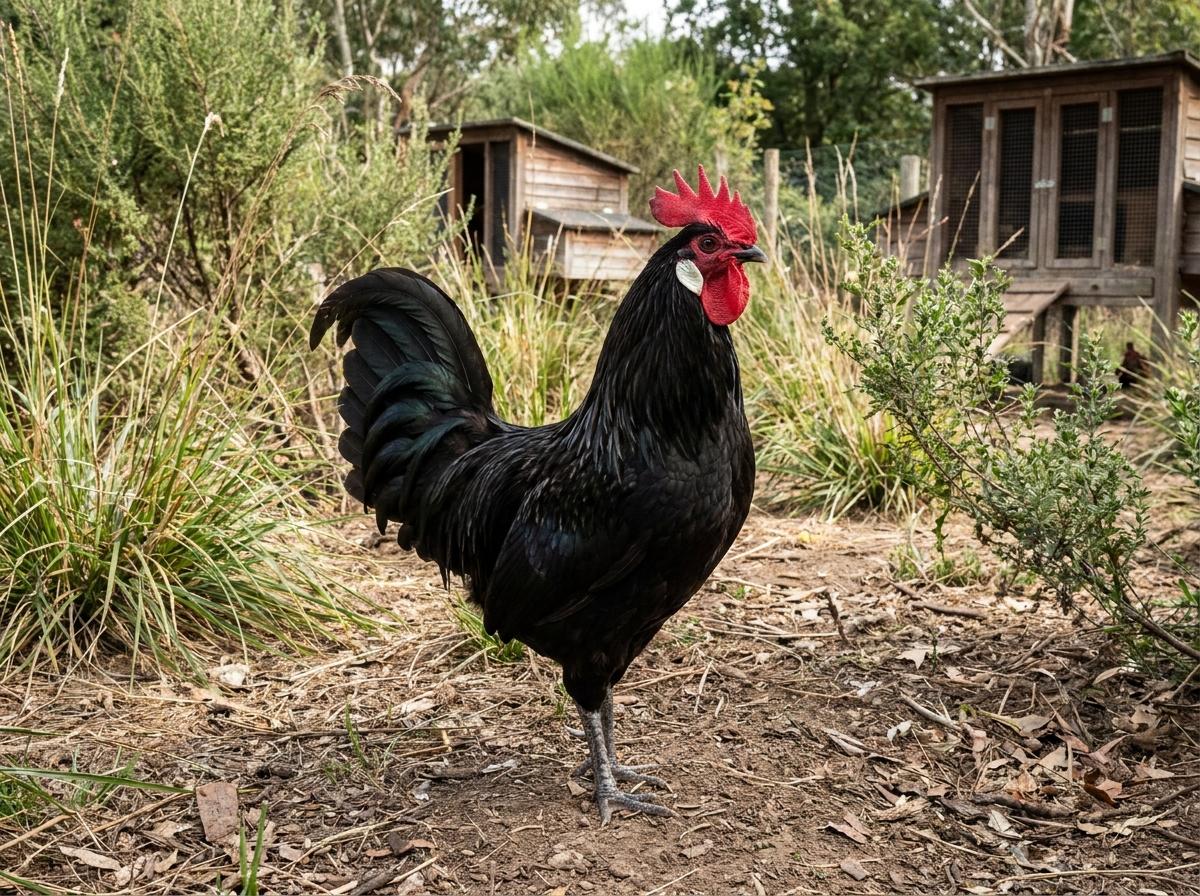
The images on this page are rendered from that documented description: buff plumage, single comb, white ear lobes, yellow legs, moderate jungle fowl build. Treat them as an illustration of what is written down, not as a conformation authority. There is no registry standard to hold them to.
What the record does not say
Being explicit about the gaps is more useful than guessing at them. The following are all things a breed page would normally tell you, and which the sources checked for this page do not establish:
- Egg numbers. The breed was made for eggs, but no lay rate I could verify appears in the peer reviewed or governmental sources.
- Egg shell colour. White ear lobes correlate loosely with white shelled eggs across chickens generally, but that is a tendency and not a rule, and no source checked here states the Mikawa’s egg colour. It is not worth guessing on a page that people are reading precisely because they cannot find the answer.
- Body weight and size.
- Lifespan.
- Temperament, broodiness and foraging behaviour.
- Current population count. Sources say the number is very small. None of them gives a figure.
If you find a Japanese language source that settles any of these, it will almost certainly be a prefectural livestock research bulletin rather than a hobby site.
Native breed, but not a Natural Monument
Japan keeps two separate official lists of chicken breeds, and the difference between them explains why the Mikawa is on the record in one context and invisible in the other.
The famous list is the Natural Monument designation (天然記念物), which the Japanese government applies to ornamental breeds of cultural value. Seventeen chicken breeds hold it, among them the Chabo bantam, the Ukokkei silkie, the Shamo game, the Totenko and Koeyoshi crowing breeds and the Tosa-Onagadori long tail, which is raised further to Special Natural Monument. Hiroshima University publishes a list of the designated breeds with their designation years. The Mikawa is not on it, and would not be expected to be, because it is a working laying breed rather than an ornamental one.
The list the Mikawa is on is more consequential for anyone buying or selling chicken. Japan’s Ministry of Agriculture, Forestry and Fisheries maintains a Japanese Agricultural Standard for jidori chicken meat, and the standard carries an appendix naming the breeds that count as zairaisyu (在来種), Japan’s official native breeds. The standard’s own definition, translated, is the breeds in its appendix that were established in Japan, or introduced and settled there, by the end of the Meiji era. That is why the list of 38 includes both unmistakably Japanese breeds and long settled imports such as Rhode Island Red, Barred Plymouth Rock and Cochin. 三河種, the Mikawa, is on that list. The current text of the standard, issued as JAS 0844 and amended in September 2025, is published by MAFF as a comparison of the new and previous wording.
Being on the list is not honorary. It is a licence to contribute blood to a regulated product, which is the next section.
The jidori rule, and why the Mikawa’s name is on it
“Jidori” gets translated loosely into English as free range chicken or heritage chicken. In Japan it is a defined term with a written standard behind it, and the four conditions are worth knowing whether or not you ever meet a Mikawa.
To be sold as JAS certified jidori, a bird must meet all of the following, per the standard linked above:
- Parentage. The chicks must have a zairaisyu derived blood percentage of at least 50 percent, with documentary proof of the pedigree, the blood percentage and the hatch date. Half the bird, at least, has to come from the native breed list.
- Rearing period. At least 75 days from the hatch date. Commercial broilers are finished well before that.
- Housing. From 28 days of age the birds must be floor reared, which the standard defines as housing indoors or outdoors in which the birds can move freely on the floor or the ground. Cage rearing is out. Birds given daytime outdoor access can be labelled with the separate term for range rearing.
- Stocking density. From 28 days of age, no more than 10 birds per square metre.

That is a demanding specification by commercial standards, and the market reflects it. Takahashi’s 2025 review reports that more than 99 percent of the chicken on the Japanese market is broiler, and that JAS certified jidori holds less than one percent. The native breeds are not feeding Japan. They are supplying the parent stock for a small premium category, and the Mikawa’s place on the appendix is what keeps it eligible to do that.
That eligibility was not theoretical, and this is the part English pages miss. Aichi Prefecture used the breed, and its own record says so plainly. The prefecture’s Livestock Research Center publishes a chronology of its breeding poultry farm, and three consecutive entries carry the sequence. In June 1995 the farm ran fattening trials of WR x MK and MK x WR, meaning White Rock over Mikawa and Mikawa over White Rock, explicitly “for the development of a meat type Mikawa” (肉用三河種). In July 1996 that specialty bird, the “meat type Mikawa,” was developed at the prefecture’s poultry research institute. In March 1997 it was given a name: 三河地どり, Mikawa Jidori. The chronology is in the centre’s annual business report, in the breeding poultry farm’s history section, and the same crossbreeding work is indexed in FAO’s AGRIS bibliographic database.
The choice of White Rock was not arbitrary either, and the arithmetic is worth following. White Rock is not on the zairaisyu appendix and the Mikawa is, so a straight two way cross of the two lands at 50 percent native breed derived blood, which is exactly the parentage threshold in the list above. The breed was being used to lift a meat bird over the jidori line.
What the record does not establish is the present tense. Takahashi’s 2025 review names the Mikawa as a listed utility breed without describing any current Mikawa based line, and the Japan Chicken Association’s Aichi listings today carry Mikawa Akadori and Oku-Mikawa-dori but no Mikawa Jidori. So the honest position is that a Mikawa blooded product was developed and named three decades ago, and nothing checked for this page shows one in production now.
How rare is it, and who is keeping it
Tsudzuki’s 2003 account says plainly that “the number of this bird is very small currently in Japan,” and puts it in the same bracket as the Tosa-Kukin. Nothing found for this page suggests that has improved in the years since.
What has happened is that the breed was taken into national safekeeping. Japan’s National Livestock Breeding Center runs a gene bank for chickens at its Okazaki Farm, and its own description of the work names the Mikawa first. Translated, it says the farm collects and preserves distinctive native breeds and promising breeding material, naming the Mikawa, the Nagoya and the Fayoumi, and carries out trait surveys while keeping them either as live birds or as reproductive cells, under the Ministry of Agriculture, Forestry and Fisheries gene bank project. The centre publishes the gene bank page in Japanese.
There is a neat geographical closing of the circle in that. Okazaki Farm sits in Okazaki City, Aichi Prefecture, which is inside the old Mikawa Province the breed is named after. The bird that eastern Aichi built in the Meiji era is now conserved by a national facility in the same district, a short distance from where it was made.
For anyone thinking about conservation genetics rather than backyard keeping, that is the practical shape of the breed today: a small living population plus cryopreserved material, held mainly by a public institution rather than distributed across private flocks.
Can you buy a Mikawa outside Japan?
Realistically, no, and it is better to say that flatly than to imply a path that does not exist.
There is no Mikawa breed club outside Japan, no import line, and no Western standard for the bird. It does not appear on the American Poultry Association’s list of recognised breeds and varieties, which you can check against the published summary of APA recognised breeds; the Japanese breeds that do appear there include the Shamo, the Yokohama and the Japanese bantam. Inside Japan the breed is scarce and largely institutional. On top of that, live poultry moving between countries sits under tight veterinary control, and imports into the United States are further restricted from regions with avian influenza outbreaks, so anyone contemplating an import should treat USDA APHIS requirements as the first question rather than the last. None of that adds up to a purchase route.
What you can sensibly do instead:
- Buy the breed you can actually verify. If you want a Japanese breed, the ones with real Western presence are the Japanese bantam (Chabo), the Shamo and the Yokohama. All three are traceable to a written standard and to breeders you can check.
- Treat “Japanese rare breed” listings with suspicion. A bird sold under a rare Japanese name with no pedigree, no hatch record and no source flock is a claim, not a breed. Ask for the parent birds’ records before you ask about price.
- Set an alert instead of hunting. If you want to know the moment a Japanese or otherwise unusual chicken is listed, a saved search does that work for you rather than you refreshing pages. There is a listing alert in the hub at the end of this page.
- Browse what is genuinely available. The chicken listings on the Creatures marketplace and the breeder and farm directory will show you what real supply looks like for the species right now.
If your interest is specifically in unusual Asian chicken breeds rather than this one bird, two sister pages are worth your time: the Dong Tao, Vietnam’s extraordinary thick legged breed, and the Giriraja, the Indian dual purpose bird bred specifically for smallholder backyard flocks. Both are better documented than the Mikawa, and both are birds you can realistically read up on before you commit to anything.
Keeping a buff Japanese type layer well
Because the breed specific husbandry record is thin, this section is deliberately general. It is what good practice looks like for a moderate framed, single combed laying breed of this kind, and it is what a Mikawa keeper in Japan would be working from too. Anything that concerns a sick bird belongs with a veterinarian who can examine it, not with a breed page.
Housing. Dry, draught free, well ventilated housing with deep clean litter, perches at more than one height, and enough floor space that birds are not crowded. The jidori standard’s ceiling of 10 birds per square metre from four weeks of age is a useful reference point for how much room a slow grown bird of this type is expected to have, and it is a ceiling rather than a target.
Combs in cold weather. A large single comb is the vulnerable part of a bird like this in a hard frost. Dry housing and good ventilation matter more than heat for frostbite risk, because it is moisture in the air that does the damage. Dubbing (cutting the comb back), which shows in the archival photograph of the breed, is a mutilation rather than a breed trait. Rules on poultry mutilations differ between countries, and it is not something a backyard keeper should reach for.
Feeding. A laying bird needs a complete layer ration with the right calcium level, constant clean water, and grit if it is eating anything other than a complete feed. Range and forage change the flavour and the yolk, but they do not replace the ration.
Health and biosecurity. Routine parasite checks, clean feeders and drinkers, and a plan for keeping wild birds out of the feed. For a rare breed the biosecurity point is not abstract: avian influenza controls apply to backyard flocks as well as commercial ones, and a breed that exists in only a few places has no margin. Keep good records so a vet can see the pattern rather than a snapshot.
Records. With a rare or unclear breed, the paperwork is the breed. Hatch date, parentage, ring or tag number, source flock, health events and lay records are what separate a documented bird from an assertion. You can start a record on Creatures in a few taps, and the health and medical records guide covers what belongs where.
Frequently asked questions
Is the Mikawa a real chicken breed?
Yes. It is a Japanese breed established in Aichi Prefecture during the Meiji era and named after the old Mikawa Province. It appears by name, written 三河種, on the Japanese government’s official list of 38 zairaisyu (native) chicken breeds in the JAS standard for jidori chicken meat.
Is the Mikawa a Japanese Natural Monument breed?
No. Seventeen Japanese chicken breeds hold Natural Monument designation, and they are the ornamental ones such as the Onagadori, Chabo, Ukokkei and Shamo. The Mikawa is classed as a utility breed, made for eggs, and does not carry that designation.
What does a Mikawa chicken look like?
The published description is buff plumage, a Red Jungle Fowl type body shape (moderate and upright rather than heavy and fluffy), a single comb, white ear lobes and yellow shanks. There is no detailed written standard in English, and no verified weight, height or hen specific description.
How many eggs does a Mikawa lay?
No figure appears in the peer reviewed or governmental sources checked for this page. The breed was made for egg production, but the lay rate is not something anyone should quote with confidence.
Is the Mikawa the same as the Nagoya or Nagoya Cochin?
No. They are two different Aichi breeds. Nagoya is buff columbian with black tail feathers and a Cochin type body, and it is much better known. The Mikawa is described as plain buff with a jungle fowl type body. Confusingly, Nagoya is reported by a 2025 review as one of the breeds that went into making the Mikawa.
Is branded “Mikawa” chicken meat from the Mikawa breed?
It depends which name you are looking at, and that is where the answer usually gets flattened. Mikawa Akadori is a Rhode Island Red and Rhode Sussex commercial cross, and Oku-Mikawa-dori is built on the Chunky broiler line, so for those two the name is regional and nothing more. Mikawa Jidori is different: Aichi Prefecture’s record shows it was developed from the Mikawa breed crossed with White Rock and named in 1997, so that name does report real Mikawa ancestry. None of the three is the rare pure Mikawa breed itself.
Can I buy Mikawa chickens or hatching eggs outside Japan?
There is no realistic route. The breed is rare inside Japan and largely held in a national gene bank, there is no Western breed club or standard, and live poultry movement between countries is tightly controlled on animal health grounds. Anything sold abroad as a Mikawa should be treated as an unverified claim until the seller produces pedigree and source flock records.
Where is the Mikawa breed conserved?
At the National Livestock Breeding Center’s Okazaki Farm in Okazaki City, Aichi Prefecture, which keeps it as live birds or reproductive cells under the Ministry of Agriculture, Forestry and Fisheries gene bank project, alongside the Nagoya and the Fayoumi.
Do this next on Creatures
Whether you are researching Japanese breeds, running a flock, or trying to keep a rare bird’s history in one place, Creatures is the records, marketplace and directory layer to do it in.
Add your birds. Keeping Mikawa in Japan, or any other chicken anywhere, create a free animal profile and record the hatch date, parentage and source flock while you still remember them. No account needed to start, and you can pick any breed in the sheet. The walkthrough is in adding an animal to Creatures.
Keep the history. Add a record for lay results, treatments, vaccinations and breeding events. The record sheet opens for any visitor to look around, and a free account is what saves what you enter. See adding a record for the full how to.
Get told when something appears. Rare stock shows up without warning, so set a free Mikawa listing alert and we will email you if one is ever posted. No account needed to start, and saving searches and using your watchlist explains how the alerts work.
Browse what is really available. See current chicken listings on the marketplace, and search farms and breeders in the Creatures directory of trusted operations.
List your flock or hatchery. Breeding uncommon poultry? Set up a free organisation profile so buyers looking for unusual breeds can find you, then read getting listed in the breeder directory and creating an organization and adding your team if you run it with other people.
Keep exploring. Compare breeds on the chicken species page, or read the sister guides to the Dong Tao and the Giriraja.