

Author: Elliott Garber, DVM · Published
A miniature donkey is a bit like a giant, long-eared dog that lives in your paddock: gentle, loyal, endlessly curious, and built to be part of the family for decades. Standing only about three feet tall at the shoulder, these compact equines have earned a real following among people with a few acres (or sometimes just a large backyard) who want the personality of a horse without the size, the cost, or the intimidation factor.
If you are weighing whether a mini donkey belongs in your life, this guide gives you the honest version: what they are, whether they genuinely make good pets, what their temperament is really like, and the space, companionship, and care they need before you bring one home. You can browse the full miniature Mediterranean donkey breed profile on Creatures for photos and listings as you read, and dig into the wider donkey hub to see how minis fit into the donkey family.
The short answer: for the right owner, a miniature donkey is one of the most rewarding animals you can keep. But “the right owner” means someone with the space, the time, and the willingness to commit for 25 to 35 years. Here are the details so you can decide if that is you.
What is a miniature donkey?
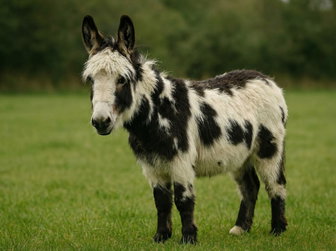
Miniature Mediterranean donkeys are small, sturdy equines that stand 32 to 36 inches tall at the withers (the top of the shoulder) and typically weigh between 200 and 350 pounds, roughly the size of a large dog. They are not a dwarf or a separate species; they are Equus asinus, the same species as every other donkey, bred selectively over generations to keep their compact size.
Despite the small frame, they are stocky and strong, with shorter legs than standard donkeys and the same hardy constitution. A few features make them instantly recognizable:
- Long, fuzzy ears that span roughly 12 to 16 inches
- Large, expressive eyes set on the sides of the head, often framed by long lashes
- A dark dorsal stripe running down the spine, usually crossed by a shoulder stripe to form the classic “donkey cross”
- Soft, dense coats in shades of gray, brown, and black, sometimes with spotted, frosted, or pinto patterning
- Light muzzles and pale rings around the eyes
Their roots trace back to the Mediterranean islands of Sicily and Sardinia, where for centuries they were working animals: turning grinding stones for grain inside peasant homes, carrying water from village wells, and picking their way along narrow, rocky mountain paths with supplies for shepherds. Their small size was an advantage in that terrain.
The breed’s American story began in 1929, when Robert Green, a New York stockbroker, bought seven Sardinian donkeys during a trip to Europe and shipped them to his farm in New Jersey. Three of the seven were killed by dogs soon after they arrived, but the survivors bred up into a herd of more than fifty by the mid-1930s. Later imports by August Busch Jr. of Anheuser-Busch and Powel Crosley Jr. of Crosley Motors expanded the population, and nearly every miniature Mediterranean donkey in North America today traces back to those early arrivals. By the 1950s the animals had shifted from working stock to beloved companions, and dedicated registries grew up around them: the Miniature Donkey Registry was founded in 1958 by Bea Langfeld of Omaha, Nebraska, and later moved to the American Donkey and Mule Society (founded 1967), which has administered it since 1987. The National Miniature Donkey Association, founded in 1989, holds the official breed standard. North American breeders now matter beyond hobby farms: in the donkeys’ native Sicily and Sardinia, the original type is being crossed away toward extinction, so these careful bloodlines are a big part of what keeps the breed going.
One trait that surprises new owners is their longevity. With good care, a mini donkey will be with you for 25 to 35 years, a genuine multi-decade commitment closer to a parrot or a horse than a dog, and it should weigh heavily in your decision.
Are miniature donkeys good pets? The honest pros and cons
Mini donkeys combine the affection of a dog with some of the practical perks of livestock. They are not the right fit for everyone, though, so here is the balanced picture.
Why people fall in love with them
- Genuinely affectionate. These are social animals that bond deeply with their people. Expect gentle nudges for attention, soft brays when they greet you, and a donkey that follows you around the property and comes when you call its name.
- Calm and good with people of all ages. Their steady, patient nature makes them excellent with children and elderly handlers, which is exactly why they shine in therapy programs and visits to senior care homes.
- Manageable size. At dog-to-large-dog weight, they are easy for most people to handle, halter, and house, even if you have never owned an equine before.
- Practical around the property. They help keep weeds and vegetation grazed down, and their manure composts into excellent garden fertilizer.
- Hardy and adaptable. They handle a range of climates well with proper shelter, though they are happiest in warm, dry weather thanks to their Mediterranean heritage.
What you need to be honest with yourself about
- They cannot live alone. This is the single most important thing to understand. Mini donkeys are herd animals, and a solitary donkey gets stressed and depressed. Loneliness is not just an emotional problem: a stressed, off-feed donkey can develop hyperlipaemia, a serious and sometimes fatal metabolic condition. Plan to keep at least two.
- Daily commitment, for decades. Feeding, water, hoof checks, and cleaning add up to roughly 30 to 60 minutes a day, every day, across a 25 to 35 year lifespan.
- They get fat easily. Minis are very efficient at turning food into weight. Overfeeding, too much rich grass, or too many treats leads quickly to obesity and the health problems that follow, so their diet has to be managed deliberately.
- Zoning and space rules apply. Even small equines usually count as livestock. Many areas have rules about what you can keep, how much land you need, and required setbacks from property lines.
- Treats can create bad habits. Hand-fed too generously, a young donkey can get nippy. Gentle, consistent handling matters more than a pocket full of snacks.
If none of those are dealbreakers, a mini donkey is likely to exceed your expectations. If a 30-year commitment to at least two animals gives you pause, it is far kinder to pause now.
Temperament and personality
Donkeys carry an old reputation for stubbornness, but that label misreads them. A donkey will not blindly bolt from something that scares it the way a horse might; it stops, assesses, and decides. That caution is intelligence, not obstinacy, and it is part of what makes minis so safe around children.
They are sweet-natured, social, clever, and eager to please once they trust you, often described as the golden retrievers of the donkey world. They form their tightest bonds through quiet, routine contact: a grooming session, a slow walk, calm handling during a farrier visit. They are smart enough to learn their names, navigate obstacle courses, and pull a cart, and they genuinely seem to enjoy working with people.
That intelligence cuts both ways. They learn good routines fast, but they also learn that nipping gets a reaction. Short, patient, consistent sessions (15 to 20 minutes is plenty) build a confident, well-mannered donkey, and exposing them to different sights and sounds while young pays off in a calmer adult.
One more thing worth knowing: donkeys are stoic by nature and evolved to hide pain and illness. By the time a donkey looks visibly sick or lethargic, the problem may already be well along, so a dull, withdrawn donkey is a reason to call your vet, not to wait and see.
Space, companionship, and basic care
Mini donkeys are far easier to keep than a horse, but “easy” still means real daily work. Here is what they need.
Companionship comes first
Because they are herd animals, companionship is a care requirement, not a luxury. Two is the minimum; many owners find three to four is the sweet spot for healthy social dynamics that stay manageable. Donkeys pair off, share favorite grazing spots, and groom each other, and a buddy helps them feel secure during storms and new situations. A donkey on its own is a welfare problem waiting to happen.
Land and shelter
Plan on about a quarter acre of pasture per donkey to roam and graze. A simple three-sided run-in shed works beautifully for shelter: it blocks wind and rain while letting air circulate. Position the open side away from the prevailing wind and add a roof overhang. Each donkey needs roughly 40 square feet of dry, covered space, so a pair is comfortable in about a 100 square foot shelter and a group of four in around a 12 by 12 foot stall. Keep the paddock well drained and the bedding clean and dry.
Fencing
Fencing should be about 4.5 feet high to discourage any adventurous jumping. Wooden board, metal panels, or no-climb horse mesh all work well. Set posts solidly (wooden posts every 8 feet or so), round off the corners to avoid trapping a donkey, use double-latched gates positioned away from corners, and keep surfaces free of protruding hardware.
Feeding
This is where mini donkey care differs most from horse care. They are desert-adapted animals built to thrive on poor forage, so a rich horse diet will make them sick. The foundation is good-quality, low-sugar grass hay, fed at roughly 1.5 percent of body weight per day. For a 200-pound donkey that is about 3 pounds of hay, split between morning and evening; most minis land in the 2 to 4 pound range daily. Always keep fresh water available (a mini typically drinks about 1 to 3 gallons a day, more in hot weather or while a jennet is nursing) and offer a salt or mineral block. Use raised feeders to keep hay clean, clear away uneaten hay before the next meal, and resist the urge to free-feed grain. Check with your vet before adding any grain or supplement.
Routine health and grooming
None of this is complicated, but it has to happen on schedule:
- Hoof trims by a farrier every 6 to 12 weeks (every 8 to 10 weeks is a common rhythm); overgrown hooves cause real lameness
- Dental checks roughly once a year, with floating (filing down sharp edges) as needed, since overgrown teeth interfere with eating
- Vet visits about 2 to 3 times a year, with vaccinations on your vet’s schedule
- Deworming guided by fecal egg counts rather than a blind calendar
- Daily grooming and a quick once-over to pick out hooves and catch cuts, skin issues (rain scald, mud fever, ringworm, sweet itch), or changes in appetite early
- Steady weight monitoring, because obesity is the most common avoidable problem in minis
Budget roughly $800 to $1,200 a year for routine care, and set aside an emergency fund on top of that. Colic and other surprises can get expensive fast. For the full breakdown of purchase price and yearly costs, see the companion guide on how much miniature donkeys cost, and for a deeper look at their dimensions and how to keep them at a healthy weight, the miniature donkey size and weight guide.
How miniature donkeys differ from standard donkeys
The personality is similar across the donkey family; the practical differences come down to size, space, and intended purpose. Standard donkeys range from about 36 to 56 inches tall and can weigh anywhere from 400 to 1,000 pounds, with the towering Mammoth (over 56 inches) bred largely for producing mules and the American Standard (36 to 48 inches) being the all-around farm donkey. Standards make excellent working animals: pulling carts, carrying loads, guarding livestock against predators, and managing vegetation on larger acreage.
Miniatures, by contrast, are bred to be companions. They suit smaller properties, first-time equine owners, families with children, and therapy or educational settings. Here is the side-by-side:
| Trait | Miniature donkey | Standard donkey |
|---|---|---|
| Height at withers | 32 to 36 inches | 36 to 56 inches |
| Weight | 200 to 350 pounds | 400 to 1,000 pounds |
| Land per animal | About 1/4 acre | About 1/2 acre or more |
| Daily hay | About 2 to 4 pounds | About 6 to 8 pounds |
| Typical lifespan | 25 to 35 years | 30 to 40 years |
| Best suited for | Companionship, therapy, small farms | Working, guarding, larger land |
The choice comes down to your situation: how much land you have, whether you want a companion or a working partner, and your experience with equines. For most pet owners on modest property, the mini wins on every count. Both, of course, need company, a dry shelter, proper hooves, and managed feeding.
One safety note that catches a lot of new owners off guard: despite a stubborn myth, a miniature donkey is not a livestock guardian. They are simply too small, and the National Miniature Donkey Association puts it bluntly, saying their lack of height, weight, and bone mass puts them below any aggressive dog. A mini placed in a guardian role is the one at risk, not the flock. The guard-donkey reputation comes from standard and Mammoth donkeys, and even those cannot handle multiple predators. If you want a guardian, look to a livestock guardian dog or a full-size donkey, and keep your minis as the companions they are.
Colors, coats, and what drives the price
Miniature donkeys come in a wide range of coat colors, and gray-dun is the most common by far, followed by browns and chocolates, then black, sorrel, spotted, roan, and the pale ivory and frosted-white patterns. A few of these distinctions matter at purchase time, because color and coat are some of the biggest drivers of price within the breed.
One color term you will run into is “no light points,” usually shortened to NLP. Most donkeys carry lighter coloring around the muzzle, the eye rings, and the belly; an NLP donkey lacks that lighter shading and so reads as a more uniform, striking solid color. The look has become popular, and NLP animals tend to carry a premium. Other rare colorings, especially spotted, ivory, and champagne, command higher prices for the same reason.
The other premium specialty worth knowing about is the wooly miniature donkey. Woolies grow a long, shaggy, often curly coat instead of the usual short hair, which gives them a plush, teddy-bear look that has made them hugely popular with hobby-farm buyers. They are considerably rarer than standard-coated minis, and that scarcity shows up in the price: a wooly often runs several thousand dollars above a smooth-coated animal, and a standout spotted wooly or a top breeding jennet can climb well past $10,000. If a fluffy donkey is what stole your heart, just go in knowing you are paying for a specialty, and lean on the same health, conformation, and temperament checks you would apply to any mini.
A note on “micro” miniature donkeys
You will see some breeders advertise “micro” miniature donkeys, the smallest of the small. There is no separate species here; a micro mini is simply a miniature donkey on the tiny end of the scale, often standing around 30 inches or under (some as little as 26 to 30 inches) while staying under the 36-inch breed ceiling. Their care, temperament, and needs are identical to any other mini.
A couple of things are worth knowing before you go chasing the smallest possible donkey. First, the truly pure original micro bloodlines from Sicily and Sardinia have become rare, largely lost to crossbreeding with larger donkeys in their homeland, which makes well-documented stock something to value. Second, breeding deliberately for ever-smaller size can introduce conformation problems, so an honest breeder will prioritize health and structure over novelty. Chase soundness and temperament first, and treat a few extra inches in either direction as a detail, not the goal.
Registration: what the papers actually mean
If you plan to show or breed, registration matters; if you just want a pair of pasture companions, plenty of wonderful minis are unregistered and that is perfectly fine. Either way, it helps to understand how the system works.
The gold standard is the Miniature Donkey Registry (MDR), administered by the American Donkey and Mule Society. MDR papers confirm purebred miniature Mediterranean heritage with a verified pedigree; both parents must be MDR-registered, the animal must measure 36 inches or under at the withers at maturity, and DNA parentage testing is part of the process. For donkeys that do not yet have full papers, the American Donkey Registry (ADR), also run by the ADMS, provides a stepping stone: an animal with incomplete or absent MDR lineage can be recorded there and then work its way up, becoming MDR-eligible by the third generation of MDR-crossed breeding. That ADR-to-MDR pathway is how grade animals are gradually brought into the documented studbook. The National Miniature Donkey Association does not keep its own registry, but it holds the official breed standard and show rules, and animals must be ADMS-registered to compete in NMDA-sanctioned shows.
For a companion buyer, the practical takeaway is simple: papers tell you the animal meets the height standard and has documented parentage, which is reassuring, but an unregistered mini with good health, a sweet temperament, and sound conformation makes just as good a friend.
How to find a reputable miniature donkey
Where you get your donkey matters as much as the donkey itself. A well-raised, well-socialized mini from a responsible source starts your relationship on solid footing; a poorly handled or unhealthy one can mean years of difficulty and vet bills. You have two main paths.
Reputable breeders give you the most insight into temperament, bloodlines, and health history. A good breeder keeps detailed records of lineage and care, raises foals with daily handling, is candid about both strengths and faults, and welcomes your questions. Because companionship is non-negotiable, many will happily sell you a bonded pair, which is the easiest way to bring home two animals that already get along. You can search verified donkey breeders on Creatures to find sellers near you, and the verification badge tells you the seller’s identity has been confirmed.
Rescues and adoption are a wonderful, often more affordable option, and rescues frequently adopt out pairs precisely because donkeys do best with a companion. Adoption fees are typically lower than breeder prices, and you may be giving a deserving animal a second home.
Whichever route you choose, look for a few green flags:
- Up-to-date health records: vaccinations, deworming history, and recent hoof and dental care
- Animals that are calm, curious, and comfortable being approached and handled
- A seller who asks you questions, about your setup, your fencing, and whether you have a companion lined up, because they care where their donkeys land
- Honesty about temperament and any quirks, rather than a hard sell
- A willingness to let you visit, meet the herd, and see the conditions the animals are kept in
Take your time, meet more than one donkey if you can, and do not rush a multi-decade decision. When you are ready to start looking, you can browse listings and connect with sellers across the Creatures marketplace. And once your new friend comes home, picking the right name is the fun part. The donkey name generator is a lighthearted place to start.
Is a miniature donkey right for you?
Adding a mini donkey to your family is the start of a long, rewarding friendship. These are affectionate, intelligent, gentle animals that give back far more than they ask. They are also a real responsibility: at least two animals, daily care, managed feeding, and a commitment measured in decades, not years.
If you have the space, the time, and the resources, and you go in with eyes open about the companionship and the commitment, a pair of miniature donkeys will brighten your days for a very long time. If you are thinking about raising one from the very beginning, the guide to raising a miniature donkey foal walks through those early months in detail.
Related guides
- How Much Do Miniature Donkeys Cost?
- Miniature Donkey Size and Weight
- Raising a Miniature Donkey Foal
- Miniature Mediterranean Donkey Breed Profile
More farm and homestead reading: what to know before buying a Scottish Highland cow and the deep litter method for bedding and compost.