Shropshire
Author: Elliott Garber, DVM · Published
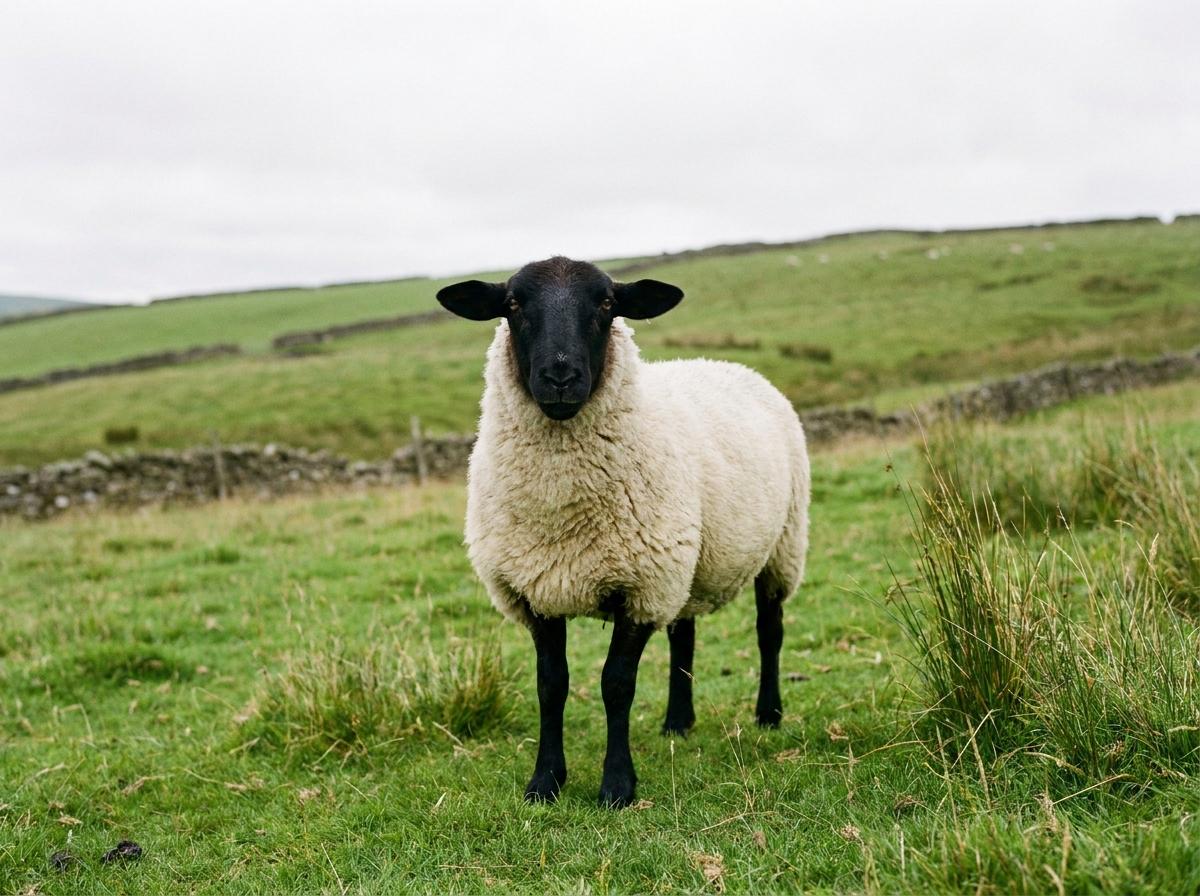
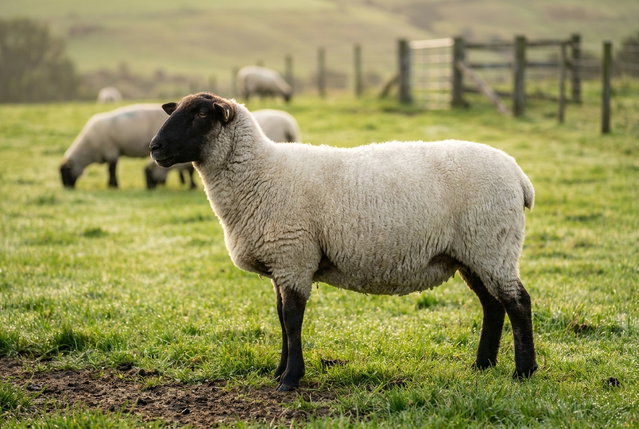
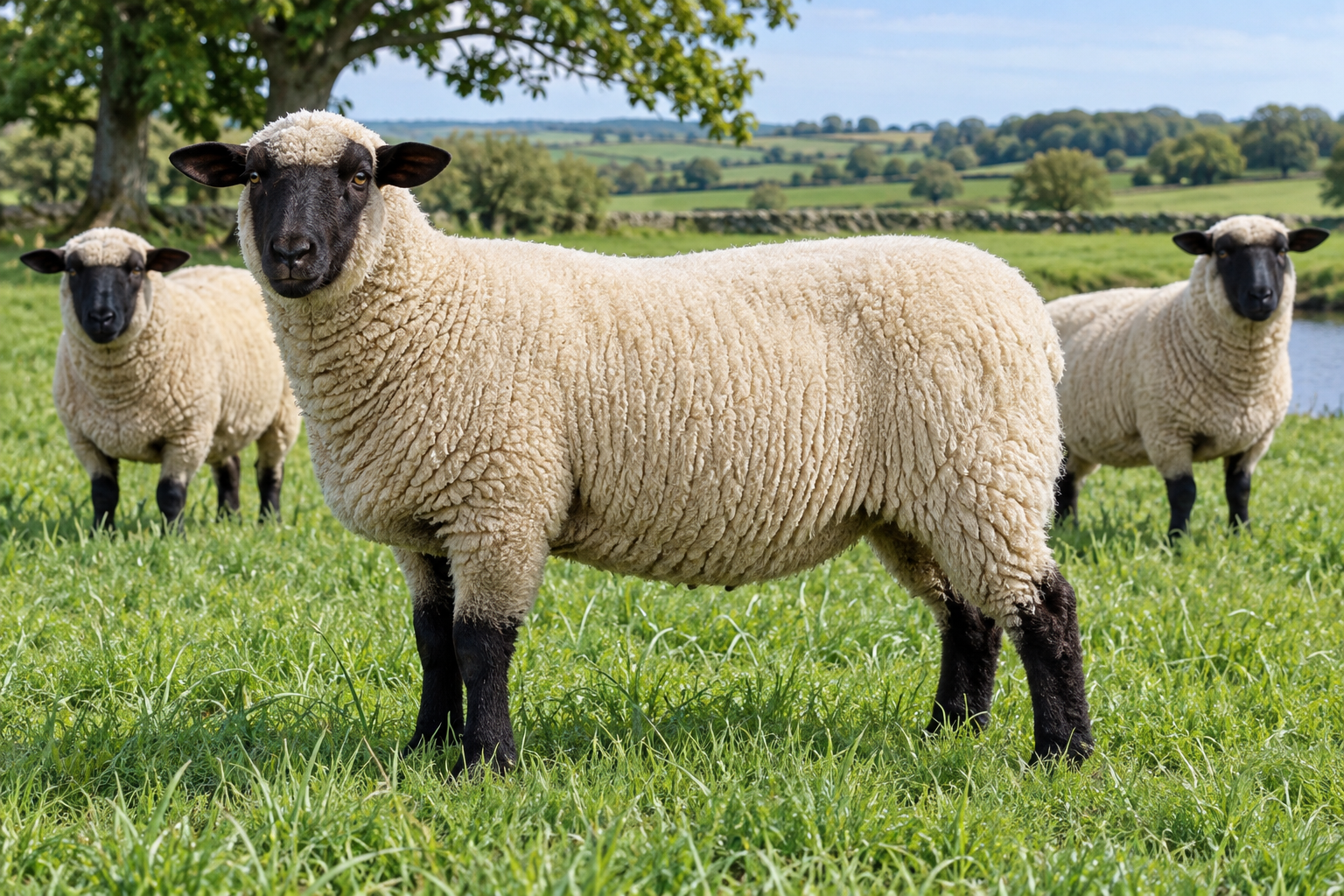
Shropshire sheep are a polled British Down breed with dense white wool and dark faces and legs. They are kept for lamb and wool, and some flocks work in orchards and tree plantations. That specialized use depends on flock selection and management; “tree-friendly” should never be read as a guarantee that an unattended sheep cannot damage a tree.
Keep weights and observations tied to individual IDs from the start. The free sheep weight calculator gives a measurement-based estimate for planning trends, rather than a scale weight or a basis for medicine dosing.
| Type | British Down breed for lamb and wool |
|---|---|
| Appearance | White dense fleece, dark face and lower legs |
| Horns | Polled |
| Specialized use | Managed grazing in tree plantations and orchards |
| US registry | American Shropshire Registry Association |
| Buyer priority | Soundness, papers and evidence for the intended use |
Browse listings, public profiles, breeders, or add your animal.
Identifying a Shropshire
The Shropshire Sheep Breeders’ Association description calls for a clean soft-black face, dark medium-length ears, wool on the poll, a long deep body and strong, well-placed legs. A dense white fleece contrasts with the dark points. The Livestock Conservancy’s profile also identifies Shropshires as naturally polled and lists the breed as Watch on its Conservation Priority List, checked October 29, 2026.
A dark face alone is not enough to identify one. Suffolk and other Down breeds may share a dark-faced outline while differing in head wool, frame and standard. Southdown has a gray to mouse-brown face under its American standard. Compare the animal’s actual pedigree and the rules of the registry named on its certificate.
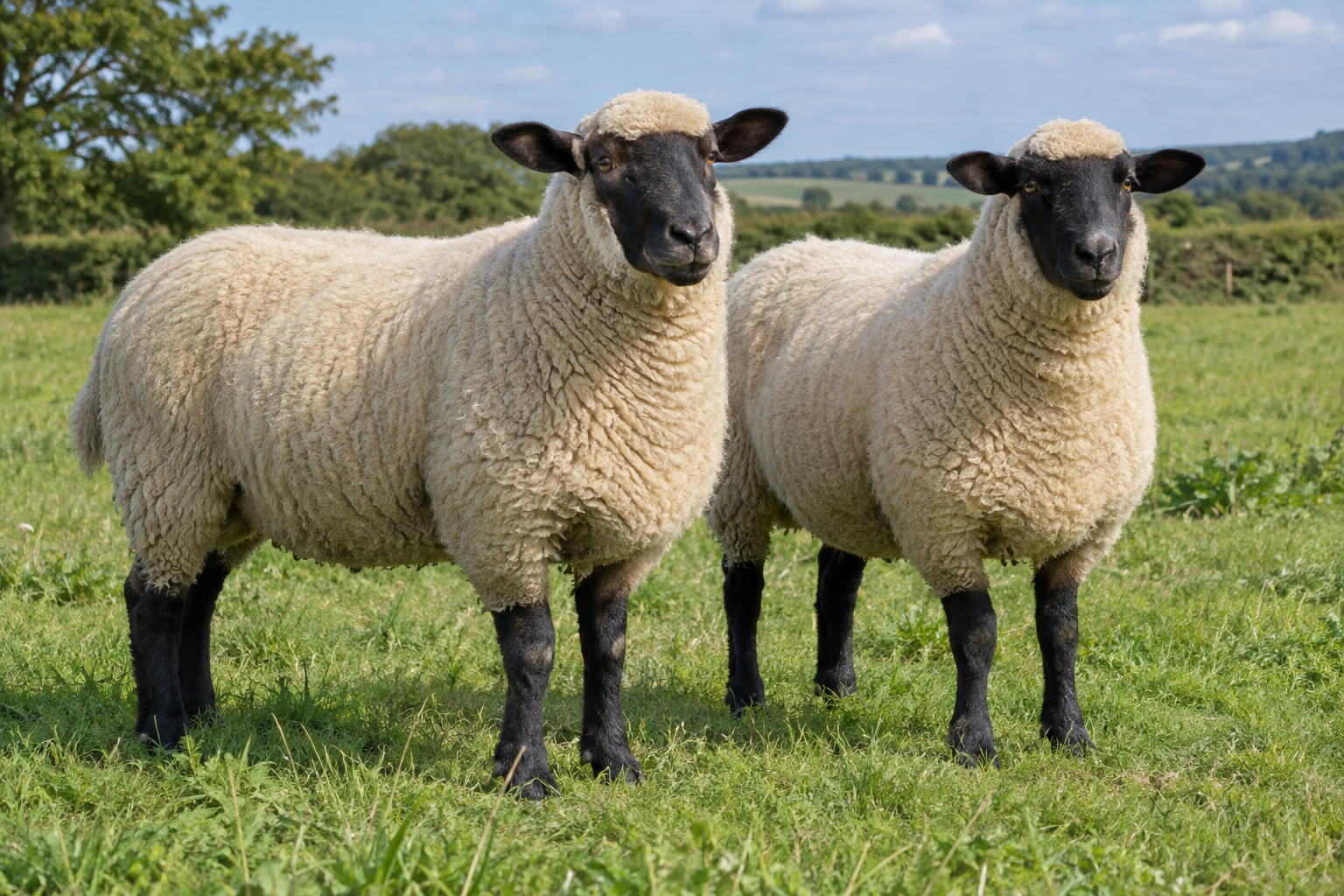
For US registered stock, the organization is the American Shropshire Registry Association. British and American sheep can be selected for different markets and may look different in frame and presentation. Avoid treating a size figure or show photograph from one country as a requirement for every flock elsewhere. Ask for the mature weights and management of the family you are buying.
Watch the sheep move. Sound feet, a correct bite, clear eyes and functional breeding anatomy matter more than how much wool has been fitted around the head. The sheep hub is a useful place to compare roles before deciding whether this is the right Down breed for your farm.
Are Shropshire sheep safe around trees?
The British breed society documents their use in conifers, orchards and vineyards in its tree-grazing guidance. It also explicitly says management guidelines must be followed. That second point belongs in the purchase decision just as much as the first.
A SARE-supported Michigan project found useful weed control with purebred Shropshires, while crossbred lambs in that project chewed fir needles. The growers emphasized reliable water, forage management, protection of irrigation infrastructure and close monitoring. This is practical evidence from a particular system, not proof that a breed name removes all risk across every tree species and site.
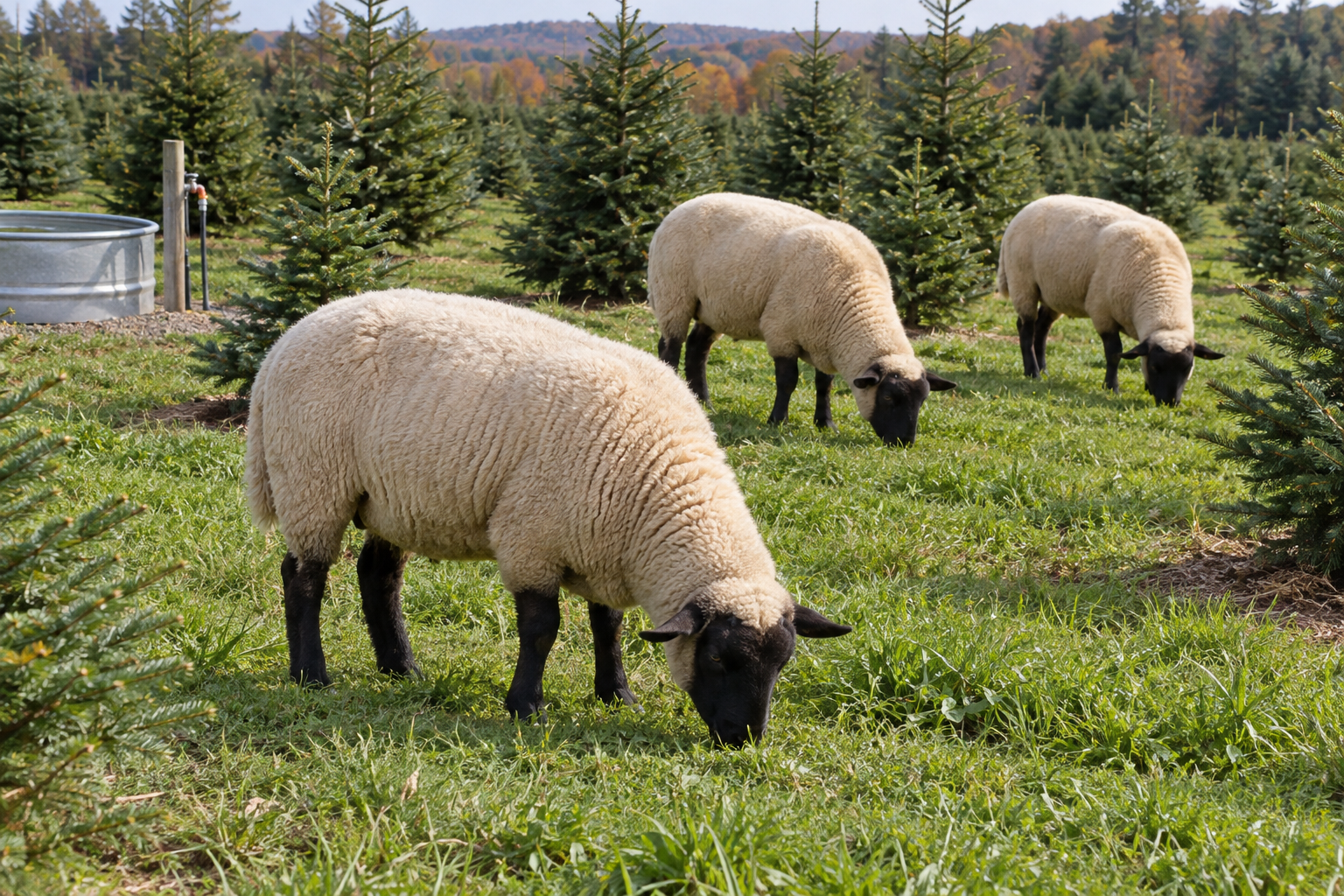
If tree grazing is your purpose, ask where the flock has worked, which crops and ages of trees it encountered, and whether the sheep offered are the proven animals or untested young stock. Inspect fencing and irrigation, identify plants unsafe for livestock, and coordinate grazing with any chemical applications. Start with a supervised trial and a way to remove the flock promptly if browsing begins. Keep before-and-after photographs and written observations rather than relying on a recollection that “they never touched anything.”
The society’s Two Crops from One Acre booklet warns that even the best stock carry no guarantee against nibbling. Its Danish conifer system advises using ewes, keeping ram lambs out of the trees and never leaving newly weaned lambs alone in a plantation. Keep water and sheep-appropriate minerals available, positioned away from the trees so gathering sheep do not damage them. Later case studies describe different use of young lambs with their dams, so agree on a site-specific plan with an experienced grazier rather than treating every example as one universal system.
A sheep that controls weeds is still an animal with feed, water, health and social needs. Do not leave a plantation short of usable forage and expect the breed name to solve hunger. If the system would require close supervision that you cannot provide, ordinary pasture may be the better use of the flock.
Housing, feed and wool care
Provide compatible sheep company, secure fencing and a dry resting area with protection suited to local weather. Tree shade does not replace a wet-weather plan. Arrange a place to gather and examine individuals without chasing them through valuable trees. The sheep shelter guide helps assess existing sheds and field shelters.
Forage should match the animals’ condition and production stage. Penn State’s sheep guidance explains that growing and lactating animals may need more than forage that maintains a dry adult. A compact, heavily fleeced sheep can be over- or under-conditioned without looking obviously different from a distance.
Use sheep-specific minerals, and keep cattle or goat feed out of reach. Wisconsin Extension explains sheep’s vulnerability to copper toxicity. Do not add minerals or grain simply because “easy keeper” sounds like a feeding instruction. Have the whole ration assessed when the pasture or crop cover changes.
Shropshires grow wool and need routine shearing. Book a shearer, keep the fleece reasonably clean and prepare safe handling and post-shearing weather protection. The sheep shearing guide covers that practical commitment. A wool buyer will judge the actual clip and its preparation, not just the breed label.
Health, genetics and breeding decisions
Set up a veterinary health and arrival-quarantine plan before mixing purchased sheep into your flock. Ask about lameness, contagious disease, parasite assessments, treatments and reproductive problems. A registry certificate and a visually clean fleece are not a health clearance.
The American registry has published an ovine dwarfism policy. It describes a recessive condition and notes that carriers cannot reliably be distinguished by appearance. If buying breeding or show stock, request the individual laboratory report or properly documented parentage-based status, and ask the registry for the requirements of the sale or event you intend to enter. Do not assume that every registered animal is genetically clear, or carry an old event rule forward without checking it.
Keep ram exposure dates and observed matings separate from confirmed pregnancy findings. The sheep gestation calculator provides an estimated planning window. Record actual lambing dates, assistance, lamb IDs and the ewe’s recovery so the next breeding decision has evidence behind it. The flock record book guide provides the structure.
Seek prompt veterinary help for a sheep that is unable to rise, struggling to breathe, severely lame or in difficulty at lambing. This guide cannot determine the cause or choose a treatment. Routine parasite care should use appropriate assessment, rather than repeated deworming based only on the calendar.
Buying, availability and ownership costs
A registered ram, an orchard-grazing ewe and a commercial lamb are not one market. Request current, dated quotes for animals that match your purpose. No national Shropshire price would fairly combine those categories. Include transport, quarantine space, shearing, fencing, handling and veterinary care in the budget. A tree-grazing system also needs time for monitoring and moving the flock.
Before a deposit, ask:
- What are the registry, registration number, permanent ID and transfer arrangements?
- Are these purebred Shropshires, and what evidence accompanies that claim?
- If tree grazing is the goal, what have these animals actually grazed, with what monitoring and results?
- What are the sheep’s age, measured weight, current ration and last shearing date?
- Can I see it walk and inspect feet, bite, condition and breeding soundness as appropriate?
- Which health, lambing and inherited-condition test records will come with it?
- What support is available if the sheep do not suit the intended grazing system?
Compare Dorset if breeding-season flexibility is a priority, or Rambouillet if a fine-wool clip is central to your plans. Pick a flock by the evidence for your intended use, not by a general reputation for versatility.
A familiar name can make daily notes easier to read. The sheep name generator offers ideas, but keep every name attached to the animal’s permanent ID.
Frequently asked questions
Will Shropshires eat my Christmas trees?
They have a documented role in managed conifer grazing, but damage is still a risk to monitor. Use the breed society’s management guidance, known flock history and a supervised trial. Crossbred lambs should not be assumed to behave like a proven purebred flock.
Are Shropshires horned?
They are naturally polled. Horn stubs are undesirable in the British description. Ask the named registry about eligibility if an animal’s features are uncertain.
Are they the same as Suffolk sheep?
No. Both can have dark faces, but they are separate breeds with different standards and pedigrees. Shropshires have a characteristic woolled poll and their own registration system.
Do they need shearing?
Yes. They are wool sheep. Arrange a shearer and weather protection rather than assuming that grazing work replaces normal flock care.
Does registration prove a clear dwarfism genotype?
No. Ask for the applicable laboratory result or documented parentage evidence, and confirm current requirements with the registry. Appearance cannot reliably identify carriers.
Do this next on Creatures
Choose the step that fits your plans for Shropshire sheep. A breed page or directory entry does not establish current stock, health status or registry eligibility.
Watch for stock. Set a Shropshire sheep listing alert for future matching listings. It does not mean an animal is available now. Read saving searches and using your watchlist.
Browse what is listed. Check the filtered marketplace, then ask the seller for the evidence described above.
Start an animal profile. Add your animal. No account is needed to start; a free account keeps your records. See adding an animal to Creatures.
Keep useful observations. Add a record for weights, health observations and breeding dates. The sheet opens for visitors; a free account saves it. The record walkthrough explains the steps. A saved record does not verify a diagnosis, breed or pedigree.
Look for farms. Browse the breeder directory as a starting point for inquiries. Entries are not guarantees of active sellers, endorsement or available stock.
Represent your operation. Start an organization profile for your farm. Read creating an organization and adding your team and the separate directory listing guidance. Creating a profile does not itself verify breeder status or guarantee admission to the directory.