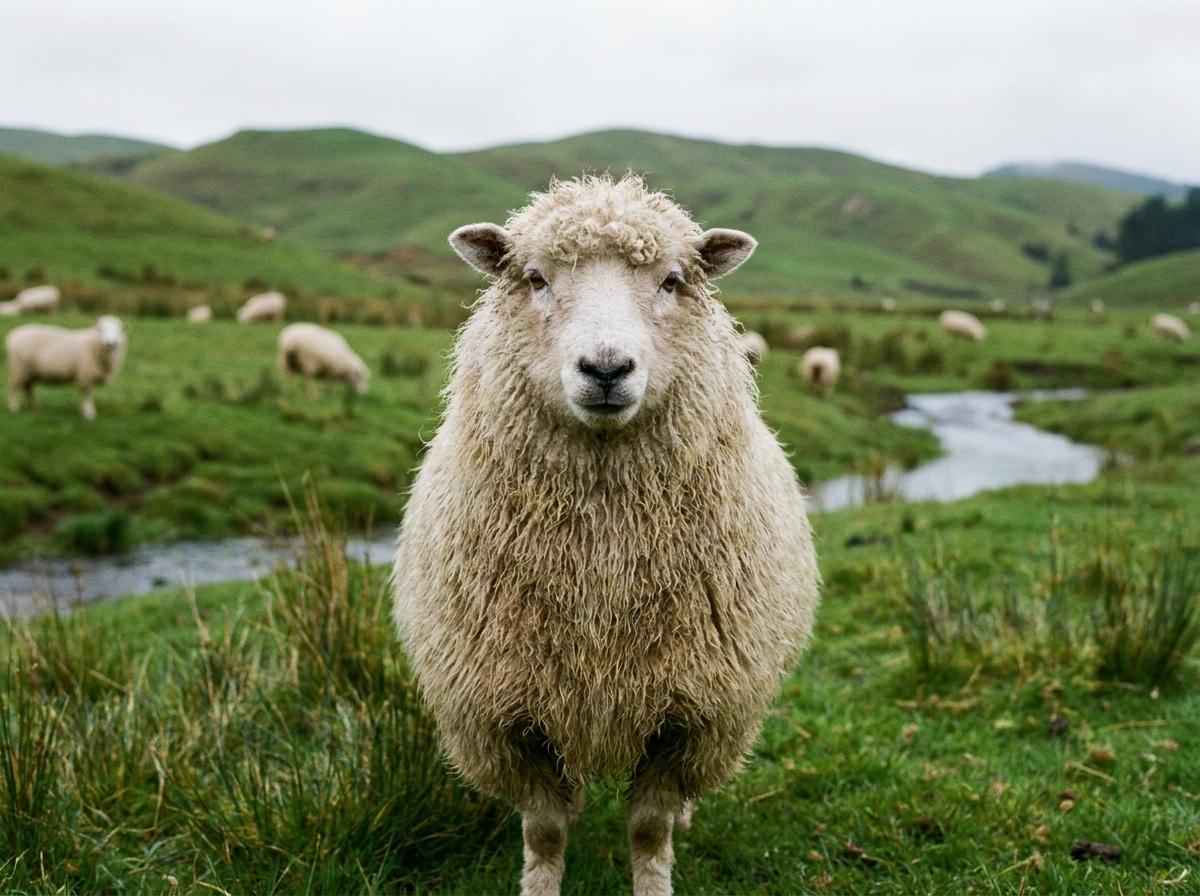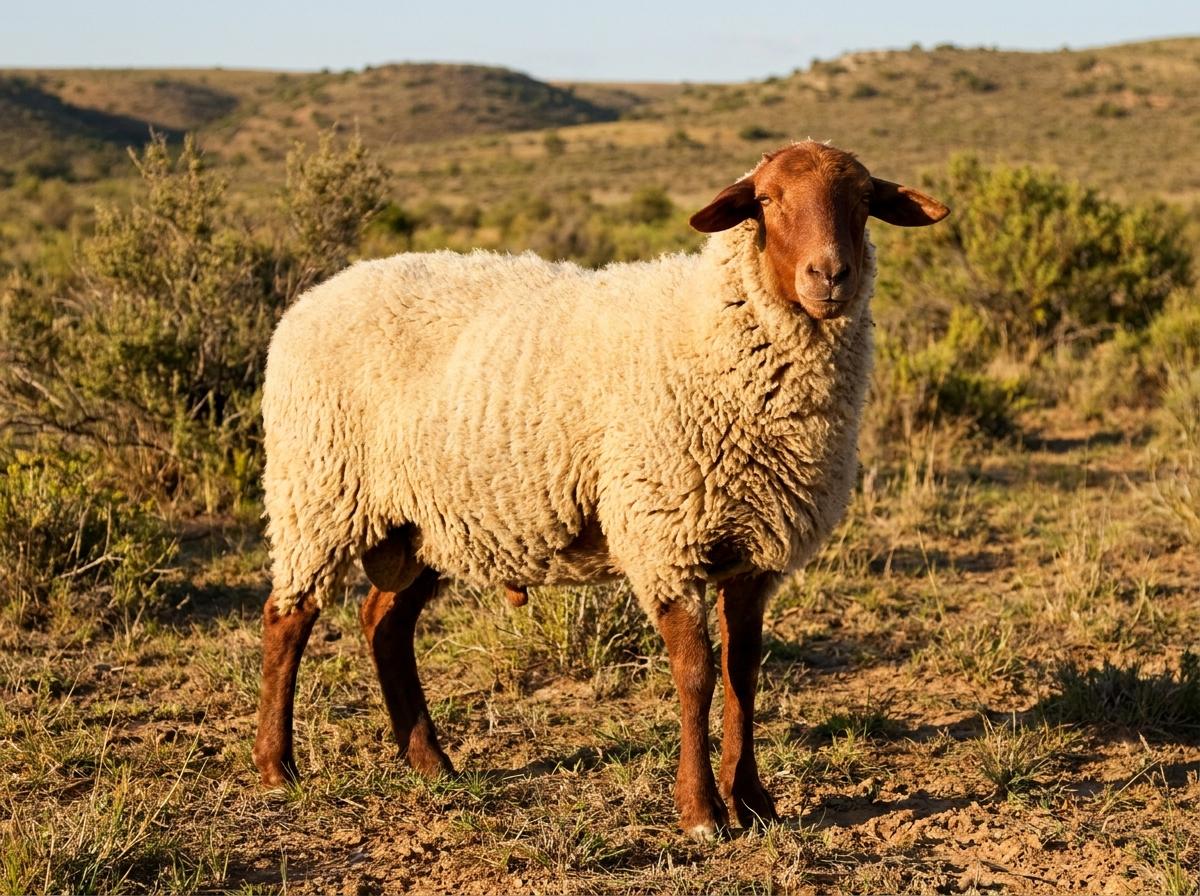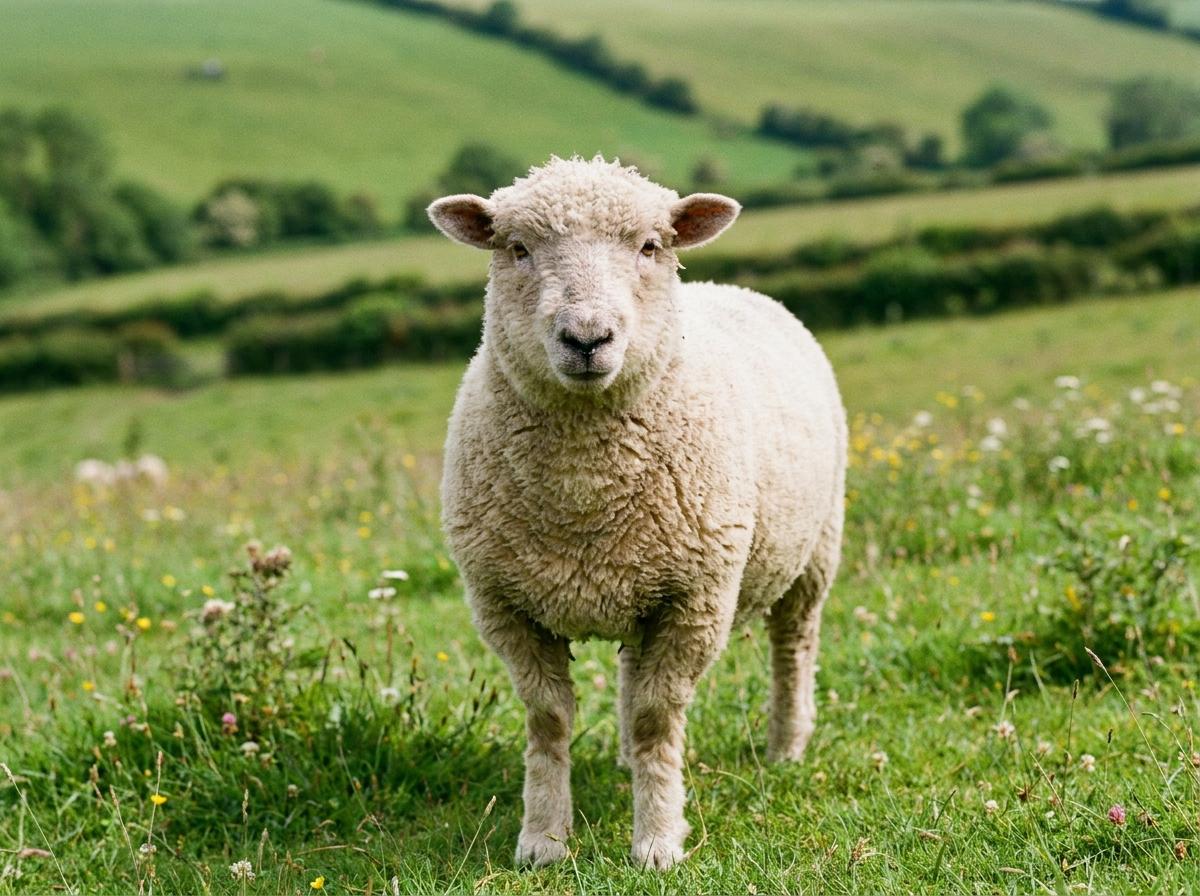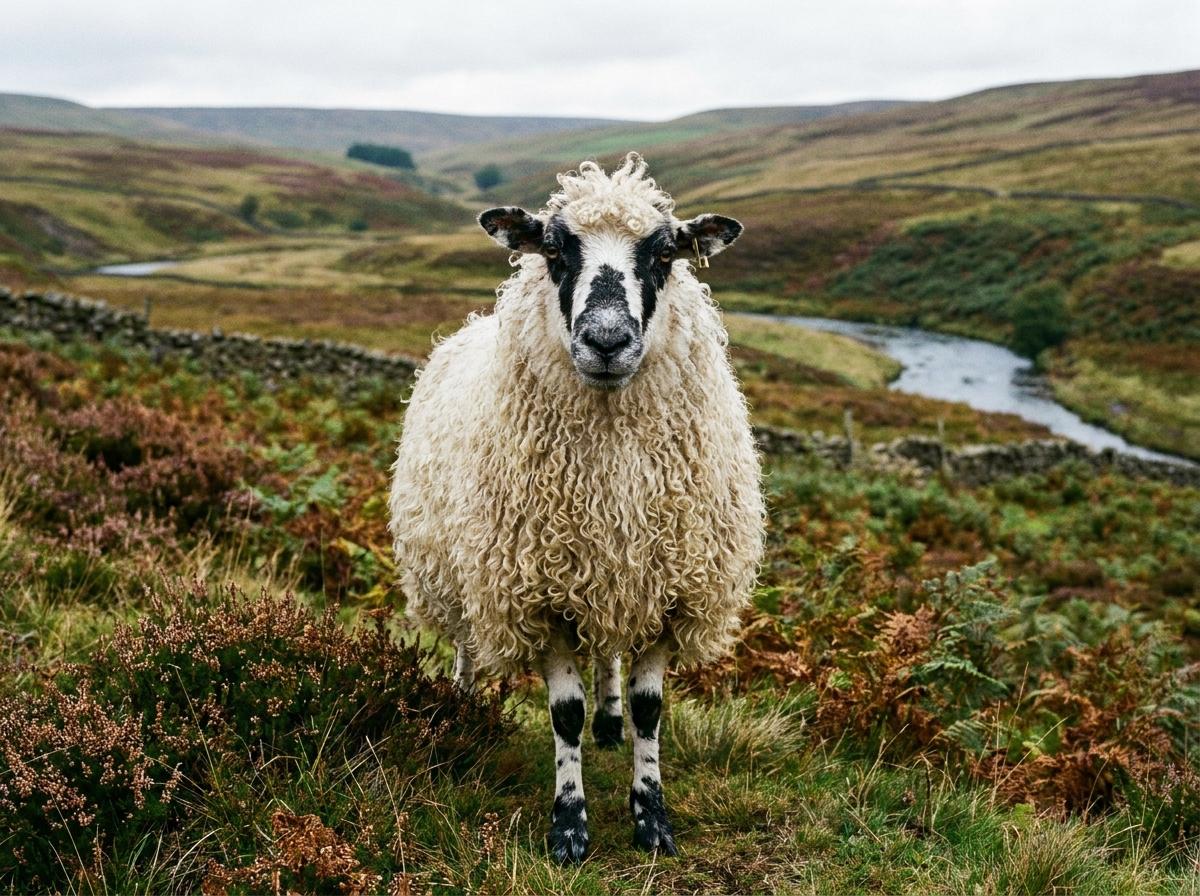


Danish Landrace
The Danish Landrace sheep (Dansk Landfar in Danish, and often called Klitfar, the dune sheep) is a hardy, medium-sized native breed from the sandy dune heaths of western Jutland in Denmark. It is white-bodied with a distinctive gray, brown, or mottled head and legs, a long undocked tail, and a rustic double coat that suits felting and craft wool rather than fine apparel yarn. It is a conservation breed first and a production animal second: it nearly disappeared in the 1980s, and today it survives in a small number of Danish herds precisely because it thrives where most improved sheep cannot. If you are weighing the breed for a heritage or landscape-grazing flock, this page covers what it is, where it came from, how to recognize one, how it actually produces, and the real availability picture outside Scandinavia.
Browse listings, public profiles, breeders, or add your animal.
What is the Danish Landrace sheep?
The Danish Landrace is a landrace in the truest sense of the word: a locally adapted sheep shaped more by a harsh place than by a stud book. It belongs to the dune heaths (klithede) of western Jutland, a landscape of sand, wind, and thin acidic soil where few farm breeds hold condition. The Nordic gene bank NordGen, which coordinates conservation of the Nordic native breeds, lists it among the Danish sheep breeds under its two common names, Dansk Landfar and Klitfar, the second meaning “dune sheep.”
Calling it a “production breed” undersells what it is. In modern Denmark the Danish Landrace is kept mostly as a heritage and landscape animal. Conservation grazing, using hardy stock to hold open heath and dune vegetation that would otherwise scrub over, is one of its main jobs, alongside a modest output of meat and rustic wool. If you are comparing native and heritage sheep more broadly, the Creatures sheep species page is a good place to see it next to other breeds.
It sits in a family of northern European short-tailed and heath sheep, but note one point of confusion up front: it is a long-tailed breed, not one of the northern short-tailed sheep. NordGen describes it plainly as a long-tailed sheep, and the tail is left undocked in conservation flocks, which is part of the breed’s original character.
Origin and history
The breed traces back to the old Danish heath sheep that grazed Jutland’s moors and dunes for centuries. Over time that base stock absorbed outside blood. NordGen records historical crossing with Spanish Merino as far back as the 1600s, English breeds in the 1800s, and Norwegian Rygja sheep in the 1900s, while other breed references point to Merino influence in the 18th century and later infusions of Leicester Longwool and Oxford Down to add size and productivity in the early 1900s. The exact sequence varies between sources, but the shape of the story is consistent: a native heath sheep, periodically improved with imported blood, that kept its hardiness because the land it lived on punished anything soft.
Historically two types were recognized, a Hede (heath) type and a Klit (dune) type. Today the conserved population is organized into a small number of distinct lines rather than a single uniform breed. According to NordGen, the modern breed is maintained as three lines, Hulsig, Vesterbolle, and Ertebolle, kept by two Danish breed associations. That structure matters if you are serious about the breed: with a founder base this small, the lines are a genetic-management tool, not just a naming quirk.

How to recognize a Danish Landrace
A few features, taken together, separate the Danish Landrace from a generic white commercial ewe.
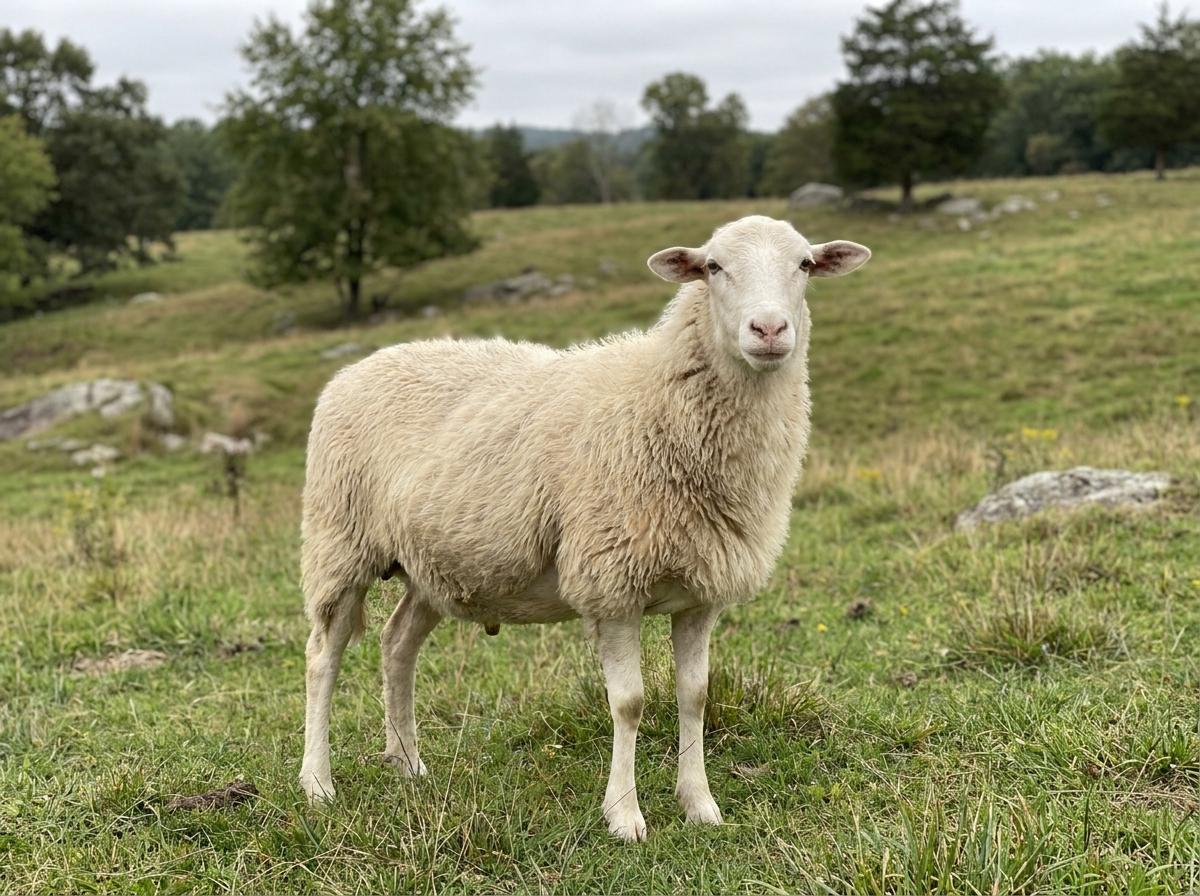
- White body with a colored head and legs. The fleece is predominantly white, but the head and legs are gray, brown, or mottled, and NordGen notes that some animals carry red-yellow, glossy hairs on the head. That two-tone look, a pale fleece against a darker, patterned face and lower legs, is the quickest field cue.
- Long, undocked tail. This is a long-tailed breed, and in conservation flocks the tail is left natural. If you are used to commercial lambs with docked tails, the full tail reads as unusual.
- Mostly polled, with occasional small horns. The breed is described as polled, though NordGen notes that rams can grow small horns. Some general breed references put a small share of rams as horned, so do not be surprised by the odd horned ram, but treat a heavily horned animal as atypical.
- Medium frame, not a large meat sheep. Rams run roughly 70 to 80 kg and ewes about 50 kg by NordGen’s figures, with wither heights near 75 cm and 70 cm. This is a compact, functional animal built for foraging, not a big terminal-sire carcass breed.
- Strong, dark, well-pigmented legs. The legs are long and gray, mottled, or dark, with hard feet suited to covering ground on rough terrain. Good pigment and sound feet are part of why the breed copes with wet, exposed heath.
I would treat the head-and-leg coloring plus the long undocked tail as the two most reliable diagnostics. Weight and horn status vary enough between individuals that no single one of them proves the breed on its own.
The fleece: a double coat, not a fine wool
This is where a lot of secondhand breed writing goes wrong, so it pays to be precise. The Danish Landrace carries a double coat, a mix of finer ground hair (underwool) and coarser guard hair, which is the classic structure of a primitive landrace fleece rather than a single-coated fine-wool type.
On fiber diameter, the most authoritative figure comes from NordGen, which gives a fiber thickness of roughly 21 to 27 micron and describes the wool as highly suitable for felting. You will find higher numbers floating around general breed databases, and a double coat genuinely does contain coarser guard hairs at the top end. The upshot: a rustic, dual-coat wool best thought of as a craft and felting fiber, good for coarser textiles such as blankets, not a fine apparel wool competing with Merino. Annual fleece yield is commonly cited at around 3.5 kg, which is a reasonable working figure for a medium hardy sheep, though it varies with line, nutrition, and shearing management.
If wool is your main interest, the practical takeaway is to buy for the craft use you actually have in mind (felting and hand-spinning rustic yarn) and to handle a real fleece before you commit, rather than expecting a soft next-to-skin wool.

Temperament and grazing behavior
Be honest with yourself about management before you fall for the look. The Danish Landrace is a hardy, semi-feral-descended sheep, and it behaves like one. NordGen describes the breed as alert and lively with strong maternal instincts, traits that read as assets on open heath, where ewes need to watch for danger and look after lambs with little intervention, and as challenges in a small, tightly fenced paddock.
This is not a placid, halter-trained show sheep. General breed references describe it as a wild breed by nature that needs large areas to roam, and note that it holds its own on the dune heath where other breeds cannot compete. For a keeper, that means planning for space, patient low-stress handling, and stock-proof fencing from the start. The upside of that same wildness is exactly what makes the breed valuable for conservation grazing: it will work rough, low-value ground on its own terms and thrive on forage that would leave an improved sheep thin.
Production: meat, wool, and lambing
Set your expectations to “heritage and landscape breed with useful byproducts,” not “high-output commercial ewe.”
Meat. The breed is dual-purpose and produces good, lean lamb off extensive forage. NordGen reports lamb growth of roughly 200 grams per day during the first two months, a solid figure for a hardy sheep raised on modest pasture rather than intensive feeding. The value proposition is low-input meat from ground that cannot support a demanding breed, not fast finishing weights.
Wool. Covered above: a double-coated craft and felting fleece, roughly 21 to 27 micron by NordGen, around 3.5 kg a year. Treat it as a specialty and heritage fiber.
Lambing and prolificacy. This is another spot where the breed is easy to overstate. NordGen figures put litter size at roughly 1 to 1.4 lambs born per ewe, which is modest prolificacy: mostly singles and some twins, not routine triplets. That lower, more manageable litter size fits a breed selected by survival on marginal land, where a ewe that raises one strong lamb unaided beats one that drops three she cannot feed. Combined with strong mothering, it makes for low-intervention lambing, which is often the point for a heritage flock.
Care and management for hardy flocks
The breed’s whole selling point is that it needs less than a commercial sheep on marginal ground. That is not the same as needing nothing. The headlines below cover the structure of good management; defer all medical decisions and any drug dosing to a veterinarian who can see your animals and knows your region’s disease pressures.
Grazing and fencing
Give the breed room and rough grazing and it will reward you; confine it tightly and you will fight it. Plan for extensive paddocks or heath, rotational access to varied forage, and genuinely stock-proof fencing, because an alert, active sheep that wants to roam will test a weak boundary. If you are using the breed for conservation grazing, match stocking rate to the vegetation you are trying to manage rather than to a production target.
Shelter and climate
This is a cold-hardy, wind-hardy, wet-hardy breed by origin, adapted to exposed Jutland dunes. It does not need elaborate housing, but it does need the basics any sheep needs: the ability to get out of the worst weather, dry lying ground to protect feet, and shade and water in heat. A breed bred for a cool maritime climate will feel prolonged high heat and humidity more than cold, so in warmer regions prioritize shade, ventilation, and water.
Health
Standard hardy-sheep health management applies: a parasite-control plan matched to your climate and grazing, regular foot checks and trimming, clean lambing, and the core vaccinations and biosecurity your veterinarian recommends for your area. The breed’s hardiness reduces some input needs, but it does not exempt it from worms, footrot, or flystrike where those pressures exist. Keep clear records of lambing, treatments, weights, and health events so culling and breeding decisions rest on evidence rather than memory. You can start a free profile and log health records on Creatures (see the hub at the end of this page).
Breeding
With a founder base this small, breeding is as much a conservation exercise as a production one. Work within the recognized lines, avoid tightening an already narrow gene pool, and coordinate with the breed associations that manage the studbook. Select for the traits that keep the breed what it is, sound feet and legs, good pigment, correct type, strong mothering, and unassisted lambing, rather than chasing size at the expense of hardiness.
Conservation status and registry reality
The Danish Landrace is a genuine conservation success story that is not finished. FAO’s Domestic Animal Diversity Information System (DAD-IS) classifies the breed as endangered. It reached a severe bottleneck in 1986, when the population fell to roughly 50 animals with only three registered breeding rams, a point at which the breed could easily have been lost.
Coordinated Danish conservation, including subsidies for keepers of recognized native breeds and in-situ conservation on Jutland farms, pulled it back. By around 2004 the population had recovered to roughly 1,100 animals across about 28 herds, and NordGen reports on the order of 900 breeding ewes in Denmark by 2023, with the population still slowly growing. Those are encouraging numbers, but they are small: this remains a rare breed maintained by a committed community, not a mainstream commercial sheep.
On the registry side, the breed is managed by two Danish associations. Per NordGen, Foreningen Dansk Landfar is responsible for the Hulsig and Vesterbolle lines, and Avlsforeningen for Ertebollefaret is responsible for the Ertebolle line, both working under NordGen’s coordination. If you want papered stock or accurate line information, those associations, reached through NordGen, are the authoritative starting point.
Availability and importing: the honest picture
For most readers outside Scandinavia, the hard truth is that live Danish Landrace sheep are not realistically available to you, and that is a regulatory reality as much as a supply one.
Inside Denmark, the breed changes hands through the conservation community and its associations, at prices that reflect a rare heritage animal rather than a commodity market. There is no reliable public price to quote, and I will not invent one.
For North American buyers, live importation is the wall. Under current US rules administered by USDA-APHIS, live sheep imports are tightly restricted on animal-health grounds. A December 2021 APHIS rule (effective January 3, 2022) removed the older BSE-era restrictions and replaced them with scrapie-based conditions: any live sheep not going directly to slaughter, or to a designated feedlot and then to slaughter, must come from a scrapie-free country or from a flock in a certification program equivalent to the US Scrapie Flock Certification Program. In practice the routes that function are narrow: young non-pregnant slaughter or feeder sheep from Canada, and certain sheep and goat semen imports from approved regions including the European Union under specific conditions. None of them opens a practical door for importing live breeding sheep of a rare European conservation breed. Importing a live Danish Landrace ewe or ram into the United States is not a realistic path, and germplasm (semen) under APHIS conditions is the only genetic avenue that exists at all, and even that is a specialist undertaking. Always confirm the current requirements directly with APHIS before assuming anything, because animal-health import rules change.
The realistic action for an interested North American keeper is to admire the breed, support conservation grazing models it exemplifies, and, if you want a hardy heritage sheep you can actually obtain, look to breeds already established on your continent. The Danish Landrace is not alone as a regional native breed with this profile; Creatures covers other heritage and landrace animals across species, from the Dalbo, a Scandinavian farm dog, to the naturally occurring Korean Bobtail cat, if you are drawn to native and locally adapted breeds in general.
Frequently asked questions
Is the Danish Landrace the same as the “dune sheep”?
Yes. Klitfar, one of its Danish names, translates as dune sheep, a reference to the dune heaths of western Jutland where the breed developed. Dansk Landfar (Danish Landrace) and Klitfar are two names for the same breed.
Is it a short-tailed sheep?
No. Despite grouping loosely with northern European heath sheep, the Danish Landrace is a long-tailed breed, and the tail is left undocked in conservation flocks. That is one of its recognizable traits.
How rare is the Danish Landrace?
Rare, and classified as endangered by FAO DAD-IS. It crashed to about 50 animals in 1986 and has since recovered to over a thousand, with roughly 900 breeding ewes reported by NordGen for 2023. It is a conservation breed maintained by a small community of keepers.
Can I buy Danish Landrace sheep in the United States or Canada?
Realistically, no, not as live animals. US import rules under USDA-APHIS tightly restrict live sheep imports on animal-health (scrapie) grounds, and the narrow exceptions that exist do not cover importing live breeding stock of a rare European breed. Verify current rules with APHIS, and if you want a hardy heritage sheep you can actually get, look to breeds already established locally.
What is the wool like?
It is a double-coated fleece with both finer ground hair and coarser guard hair, around 21 to 27 micron per NordGen, well suited to felting and rustic craft wool. It is not a fine, soft apparel wool, so buy it for the craft use you have in mind.
Is it good for beginners?
For a calm backyard pet, probably not. It is an alert, active, roaming-inclined hardy breed that wants space and good fencing. For an experienced keeper doing conservation grazing or running a heritage flock on rough ground, its low-input hardiness and strong mothering are real advantages.
Do this next on Creatures
Whether you are researching the breed, keeping hardy heritage sheep, or running a conservation flock, Creatures is the records, marketplace, and directory layer to do it in one place.
Compare the breed. See the Danish Landrace alongside other native and heritage sheep on the Creatures sheep species page, and browse related heritage breeds like the Dalbo and the Korean Bobtail.
Add your sheep. Keep hardy heritage sheep? Create a free animal profile in a few minutes, no account needed to start. The walkthrough is in adding an animal to Creatures.
Track lambing and health. Log lambing, weights, and health records as you go. The record sheet opens for any visitor to look around, and a free account saves what you enter. See adding a record and reminders and upcoming care for the how-to.
Watch for stock. Genuine heritage stock is scarce, so set a free listing alert and we will tell you when a matching sheep is posted. You can also browse current sheep on the marketplace.
Find and list flocks. Search trusted breeders and farms in the Creatures directory. Run a flock yourself? List your operation and read getting listed in the breeder directory.
Manage as a team. Running a conservation or heritage flock with others? See creating an organization and adding your team.
Rare heritage stock rarely stays listed long. If you are hoping to find one, a saved alert is the most practical way to catch it.