


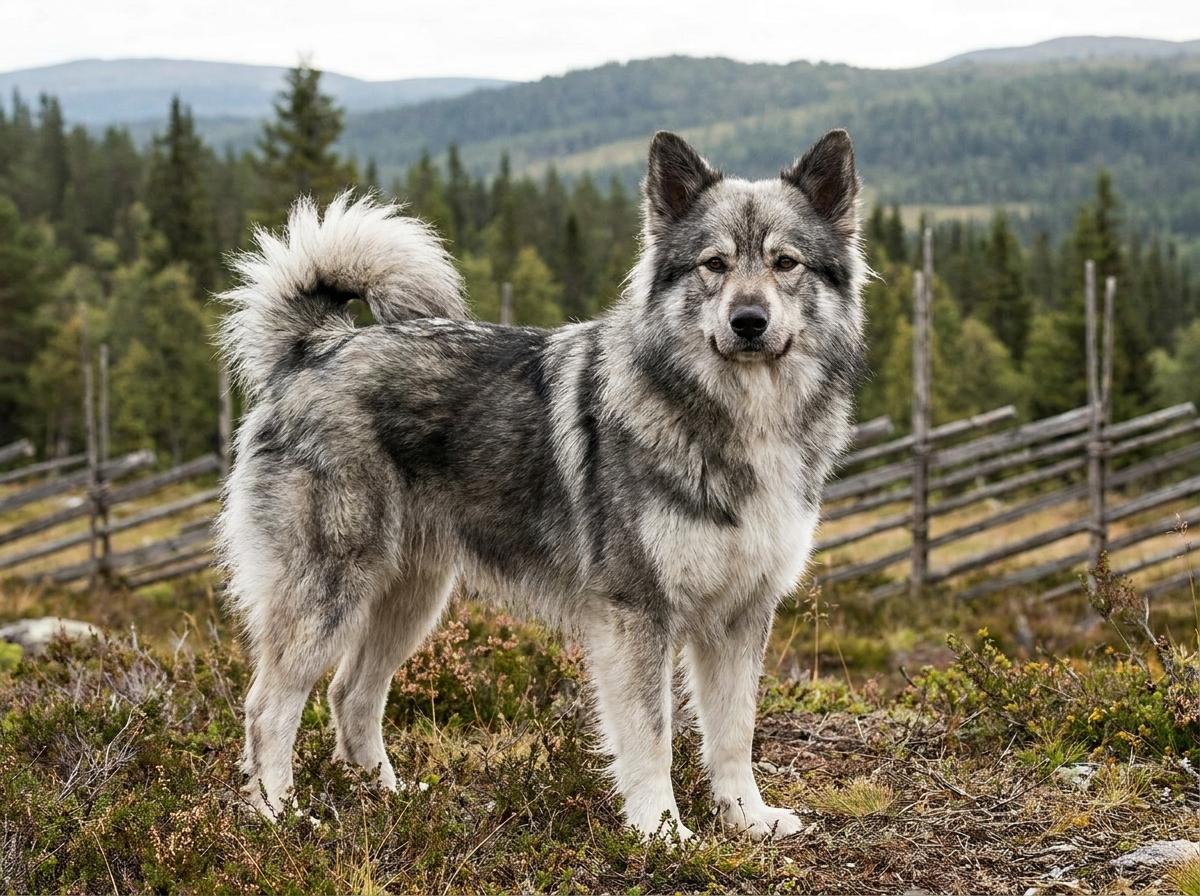
Dalbo
Author: Elliott Garber, DVM · Published
The Dalbo dog, known in Swedish as the Dalbohund and sometimes as the Dalsland Mastiff, is an extinct livestock guardian breed from western Sweden. It was a large, heavy, molosser type dog kept to protect free roaming cattle, horses, sheep, and goats from wolves and brown bears in the forests of Dalsland, Värmland, Bohuslän, Västergötland, and the neighboring border country of southeastern Norway. This is a history page rather than a buyer’s guide. No living Dalbo dogs exist. The breed had faded out by roughly the 1870s, and a 1913 attempt to inventory and save it found that none were left. What follows is what can actually be documented about the dog, where the record is thin, and where its working role survives today in the livestock guardian breeds people still keep.
| Also called | Dalbohund, Dalsland Mastiff (Dalslandsmastiff) |
|---|---|
| Origin | Dalsland and neighboring provinces of western Sweden, plus southeastern Norway |
| Type | Livestock guardian dog, molosser type |
| Main job | Guarding free roaming cattle, horses, sheep, and goats from wolves and bears |
| Reported size | Males reported at roughly 80 cm (about 31 in) at the shoulder; other measurements not reliably recorded |
| Coat | Long and heavy; brown or dark, sometimes with large white patches |
| First written record | Mentioned in Gunno Brynolphi Blutherus’s Dalia (1632); named in print in 1843 |
| Status | Extinct; functionally gone by the 1870s, confirmed by a 1913 inventory |
Browse listings, public profiles, breeders, or add your animal.
What was the Dalbo dog?
The Dalbo dog was a working farm guardian, not a companion or a show dog. Its whole reason for existing was to stand between livestock and large predators in a part of Scandinavia where wolves and brown bears were a real and constant threat to grazing animals. According to the English and Swedish descriptions that survive, it was a big, powerfully built dog of molosser type, in the same broad family as the mastiffs and mountain guardian breeds rather than the herding collies and spitzes more commonly associated with Nordic farms.
The name comes from the region. “Dalbo” is tied to Dalsland in western Sweden, and the alternate label Dalsland Mastiff points to the same home country. It was never a numerous breed even in its prime. Sources describe it as scarce and localized, scattered across a handful of provinces rather than spread evenly across the country.
If you have landed here expecting a spotted carriage dog, that is a different animal entirely. The Dalmatian and the Dalbo dog are unrelated, and the similar first syllable is a coincidence of spelling. The Dalbo was a brown or dark, long coated guardian giant from the Swedish backwoods, and it has been gone for well over a century.
Where it came from and the written record
The documentary trail for the Dalbo dog is genuinely old, part of what makes the breed interesting, but it is also thin and secondhand. Oral tradition about these dogs reaches back to the 1700s, in stories of a large dog that killed wolves, faced down bears, and, in the folklore, even guarded children who had wandered off into the deep forest. Those tales should be read as folklore rather than field notes, but they tell you what the dog meant to the people who kept it.
The first mention in writing is credited to Gunno Brynolphi Blutherus (1609 to 1657) in his work Dalia, printed in 1632. The dog is described again, and given its regional name in print for the first time, in 1843, in Axel Emanuel Holmberg’s Bohusläns historia och beskrifning (a history and description of the Bohuslän province). Those two references, roughly two centuries apart, are the backbone of what is documented about the breed. Everything else is later summary built on top of them.
Its home range is consistently given as Dalsland, Värmland, Bohuslän, and Västergötland in western Sweden, extending across the border into Østfold in southeastern Norway. This was rugged, forested, sparsely settled country where cattle, horses, sheep, and goats were often left to graze freely over large areas, exactly the conditions in which a guardian dog earns its keep.
What the Dalbo dog looked like
The honest answer is that no precise, verified conformation record survives, because the breed died out before anyone measured and standardized it the way modern kennel clubs do. What we have are consistent descriptions, not a published standard.
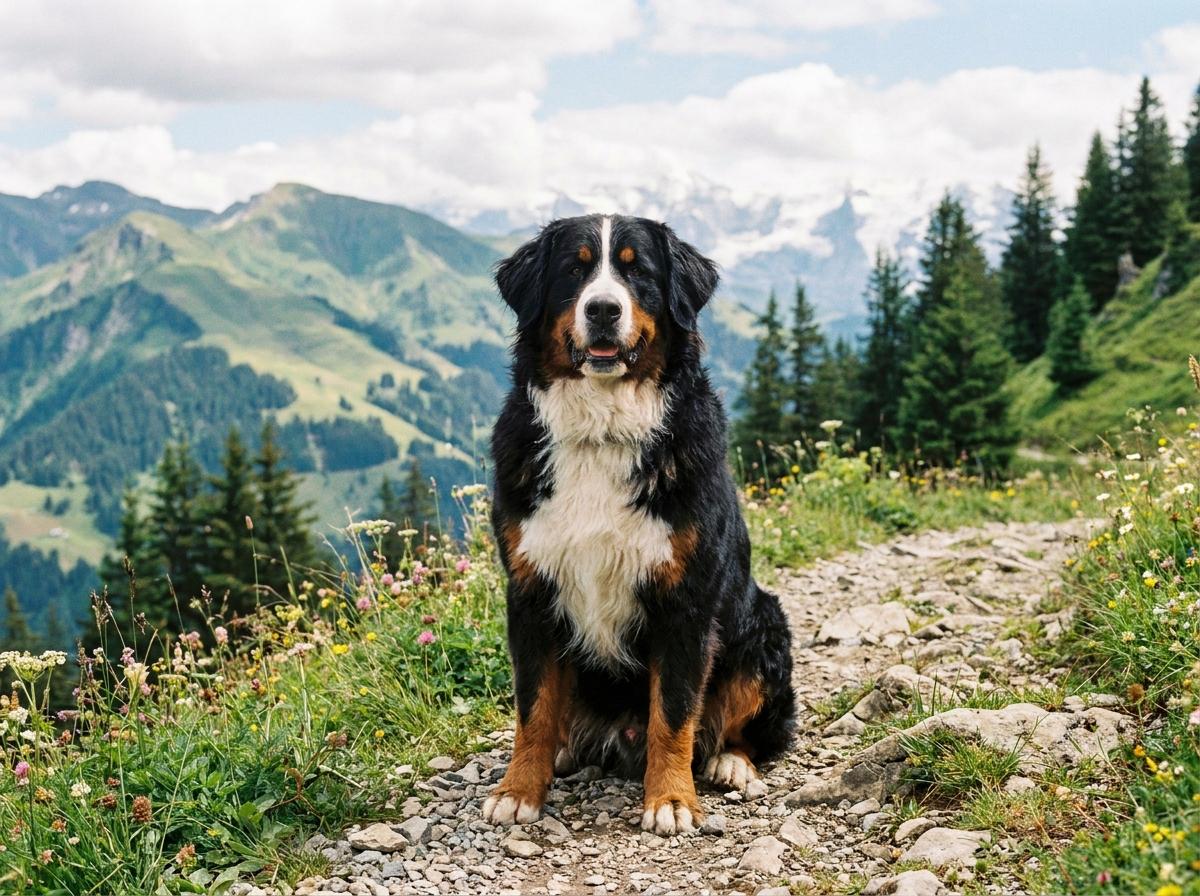
The dog is described as large and heavy, with a long, thick coat suited to a cold, wet climate. Coat color is given as brown or dark, and some individuals reportedly carried big white patches, a pattern that observers compared to a St. Bernard. Male shoulder height is reported at around 80 cm (roughly 31 inches), which would make it a very tall dog by any measure. That figure appears in secondary and tertiary summaries without a clear original source, so treat it as a reported estimate rather than a measured breed average. Weight, lifespan, and other physical details were never reliably recorded, and inventing numbers for them would only mislead anyone trying to understand the real animal.
For a sense of its build, writers have reached for living breeds as visual analogies. The Dalbo dog has been compared to the Portuguese Cão da Serra da Estrela, and by other accounts to the Leonberger, the Hovawart, or the English Mastiff. These are comparisons of general type and size, not evidence of direct relationship, so treat them as “something in this shape and mass” rather than a family tree.

The job it was bred for
The Dalbo dog was a predator defense specialist. In its home country, free ranging livestock faced wolves and brown bears, and the dog’s role was to stay with the stock and drive off or fight anything that threatened it. Swedish accounts note that the dogs often worked in pairs rather than alone, which makes sense for animals expected to take on a wolf or a bear, and that they were sometimes fitted with spiked collars to protect the throat, the classic point a wolf goes for and the classic countermeasure guardian dogs have worn across Europe and Asia for centuries.
This puts the Dalbo dog mainly in the livestock guardian tradition rather than the herding tradition, even though the record notes it was sometimes put to work moving free ranging cattle as well. A herding dog gathers and moves stock and answers closely to a handler. A guardian lives with the animals, thinks largely for itself, and treats the flock or herd as its own to defend. The temperament that job demands, steadiness with the stock combined with the nerve and size to confront a large predator, is what the surviving descriptions of the Dalbo dog emphasize when they call it bold and courageous. Because the breed is extinct, there is no behavioral study to point to, so those temperament notes are historical characterization, not measured data.
Why the Dalbo dog disappeared
Extinction is rarely one clean cause, and the Dalbo dog is a good example of several pressures arriving together over the middle and later nineteenth century.
The first and most decisive was the loss of the dog’s purpose. As wolves and brown bears were systematically hunted down across southern and central Scandinavia through the 1800s, and largely wiped out of the region by around 1890, the threat the dog existed to counter simply went away. A very large, food hungry guardian is expensive to keep, and once there is little left to guard against, the economic case for the animal collapses.
On top of that came hard years and disease. A rabies outbreak is recorded in 1854, and the Swedish famine of 1867 to 1868, one of the last great subsistence crises in the country, fell squarely on the rural households that would have kept these dogs. A large working dog is a significant mouth to feed, and famine years are exactly when such an animal becomes unaffordable. Swedish sources also note that a dog tax introduced late in the century added a further ongoing cost, pushing keepers to give up big dogs they could no longer justify.
The combined result was that the Dalbo dog faded out as a distinct type by roughly the 1870s. When an inventory was undertaken in 1913 specifically to find and preserve the breed, it turned out to be too late: no dogs answering to the type could be found. That failed 1913 search is the reason the breed is usually dated as confirmed extinct at that point, even though it had effectively vanished decades earlier.
The Dalbo dog’s place among guardian breeds
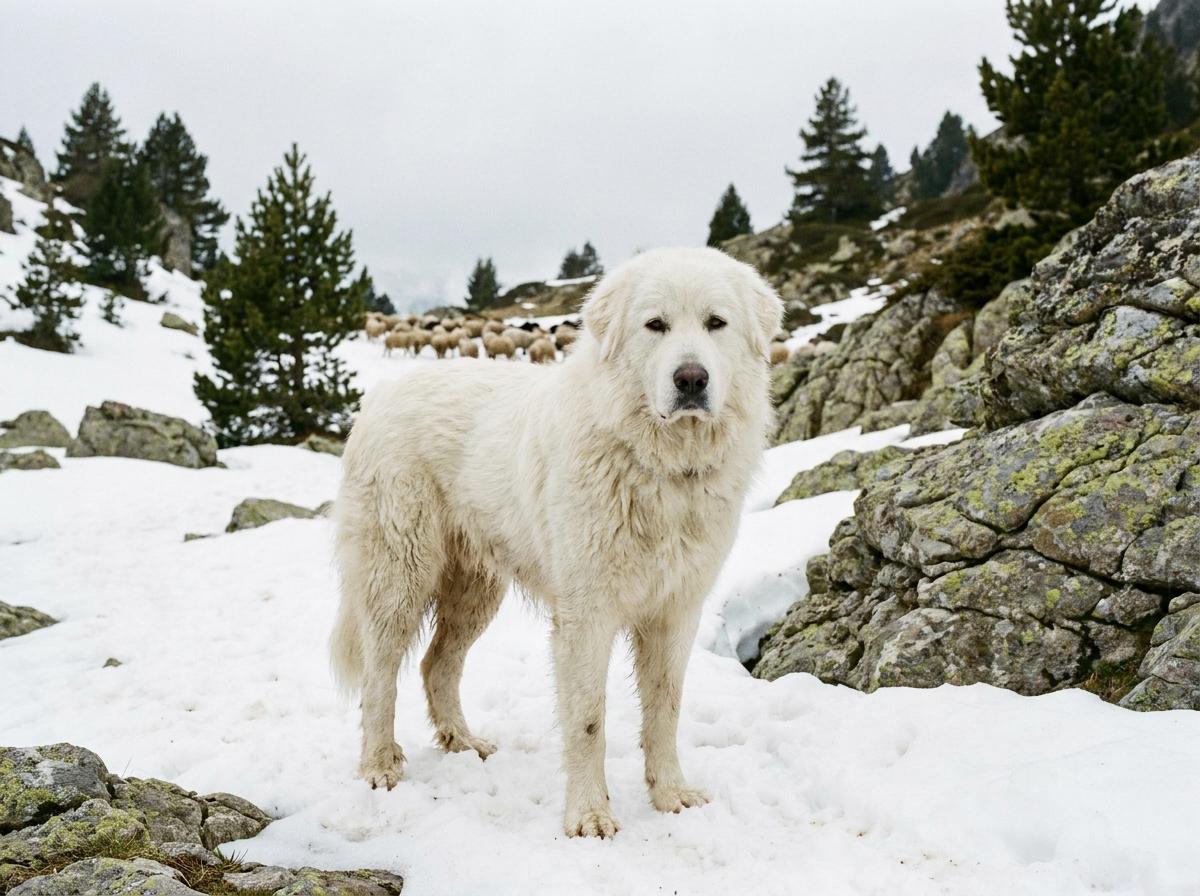
It helps to see the Dalbo dog as one lost branch of a much larger, still living tradition. Livestock guardian dogs developed independently across many pastoral regions, from the Great Pyrenees and Pyrenean Mastiff of the French and Spanish mountains, to the Maremma of Italy, the Kuvasz of Hungary, the Estrela Mountain Dog of Portugal, and many others. They tend to converge on a similar look and mind: large, often light or particolored, thick coated, independent, and bonded to stock rather than to sport or show. The Dalbo dog fit that template in a Scandinavian setting, which is why the visual comparisons to breeds like the Estrela Mountain Dog and the Leonberger feel apt even without a documented relationship.
Sweden and the wider Nordic region lost or nearly lost other regional farm dogs as agriculture modernized and predators were driven back, a recurring story across the continent. The Dalbo dog turns up on plenty of lists of vanished breeds, and it belongs to that same pattern: a working animal shaped by one specific landscape and one specific job, which disappeared when that landscape and that job changed.
If you want to see how uncommon and historically important breeds are documented and, where possible, kept alive today, look at how living rare breeds are cataloged. The Creatures dog species pages group breeds so you can move from one to another, and other rare and regional breeds we cover, such as the Techichi, an ancient Mexican dog behind the modern Chihuahua, or the Hejazi goat among livestock, sit in the same category of animals whose story is mostly history and heritage rather than a busy sales market.

Can you own a Dalbo dog today?
No. This is the honest and important point. The Dalbo dog is extinct, there are no living examples, no breeder produces them, and no registry recognizes a current breed by that name, because the type died out before modern kennel club recognition systems existed in Sweden. Any listing or advertisement claiming to sell a “Dalbo dog” is not selling the historical breed, and should be treated with real skepticism.
What you can do is keep the tradition the Dalbo dog belonged to. If you run livestock and need genuine predator protection, or you simply admire big guardian dogs, the living livestock guardian breeds carry the same working heritage: the Great Pyrenees, Maremma Sheepdog, Kuvasz, Anatolian Shepherd, Estrela Mountain Dog, and others. Those are real, obtainable dogs with active breeders, health testing, and breed communities, and they do today what the Dalbo dog once did in western Sweden. If a guardian breed is what you are after, start from the living breeds and buy on evidence: temperament with stock, health background, and a breeder who understands what these dogs are for.
Frequently asked questions
Is the Dalbo dog the same as a Dalmatian?
No. They are completely unrelated breeds and only the first few letters of the name look similar. The Dalmatian is a spotted carriage and companion dog. The Dalbo dog was a large, brown or dark, long coated livestock guardian from western Sweden, and it has been extinct since the late nineteenth century.
When did the Dalbo dog go extinct?
The type had effectively disappeared by around the 1870s. An inventory carried out in 1913 to try to locate and preserve the breed found none remaining, so 1913 is often cited as the point of confirmed extinction.
Why did the Dalbo dog die out?
Several pressures combined. Wolves and brown bears, the predators the dog was bred to fight, were hunted out of the region by about 1890, which removed the dog’s purpose. A rabies outbreak in 1854, the Swedish famine of 1867 to 1868, and a later dog tax all made a large, costly working dog harder to justify keeping. Together these caused the breed to fade out.
How big was the Dalbo dog?
It is described as a large, heavy dog, with male shoulder height reported at roughly 80 cm (about 31 inches). That figure comes from later summaries rather than a measured breed standard, so it is best treated as an estimate. Reliable weight and lifespan figures were never recorded.
What did the Dalbo dog look like?
Large and heavily built, with a long, thick coat that was brown or dark, and sometimes marked with large white patches. Observers compared it to breeds like the Cão da Serra da Estrela, the Leonberger, the Hovawart, and the English Mastiff, all comparisons of type and size rather than proven relationships.
Are there any Dalbo dogs left, or projects to bring the breed back?
There are no living Dalbo dogs. It appears on lists of extinct breeds people would like to see recreated, but recreating an extinct breed is not the same as recovering the original animal, and no verified population exists today.
Do this next on Creatures
You cannot keep a Dalbo dog, but the guardian tradition it belonged to is alive in the breeds people still work and raise. Whether you are researching lost breeds or keeping a modern livestock guardian, Creatures is the records, marketplace, and directory layer to do it in one place.
Explore living breeds. The Dalbo dog is gone, but you can browse the guardian and working breeds that carry on its job from the Creatures dog species pages, and compare other rare and historical breeds like the Techichi.
Find a guardian dog. If you keep livestock and need real predator protection, browse dogs on the marketplace and search trusted breeders and rescues in the Creatures directory. New to searching? See saving searches and using your watchlist.
Get alerted to new dogs. Good guardian pups from careful breeders go fast, so set a free dog listing alert and we will tell you when a match is posted. No account needed to start.
Add your dog. Keep a Great Pyrenees, Maremma, or any other breed? Create a free animal profile in a few minutes. The walkthrough is in adding an animal to Creatures.
Keep health and care records. Track vet visits, weight, and vaccinations on Creatures. The record sheet opens for any visitor to look around, and you will need a free account to save what you enter. See adding a record and health and medical records for the full how-to.
List your kennel or program. Breed working guardian dogs? List your operation in the Creatures directory so people searching for these breeds can reach you.