Red Wattle
Author: Elliott Garber, DVM · Published
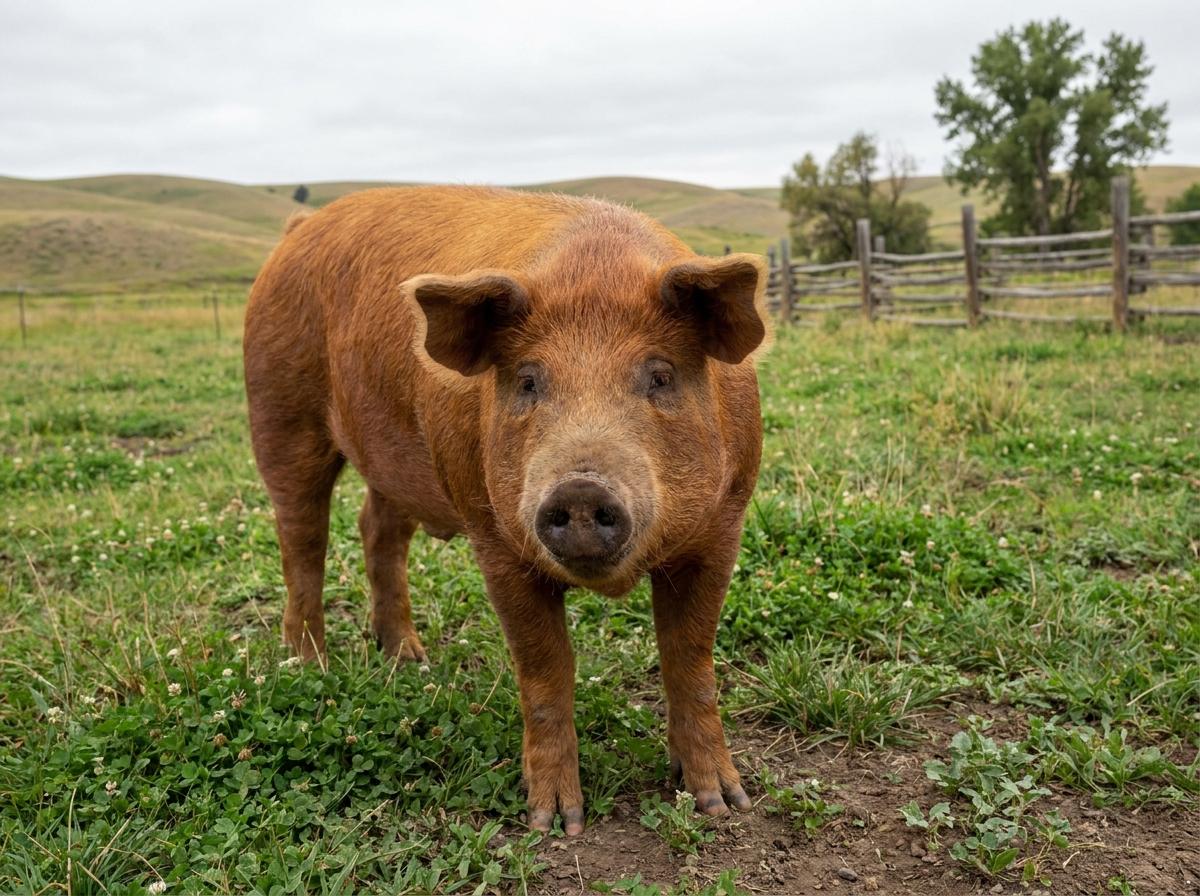
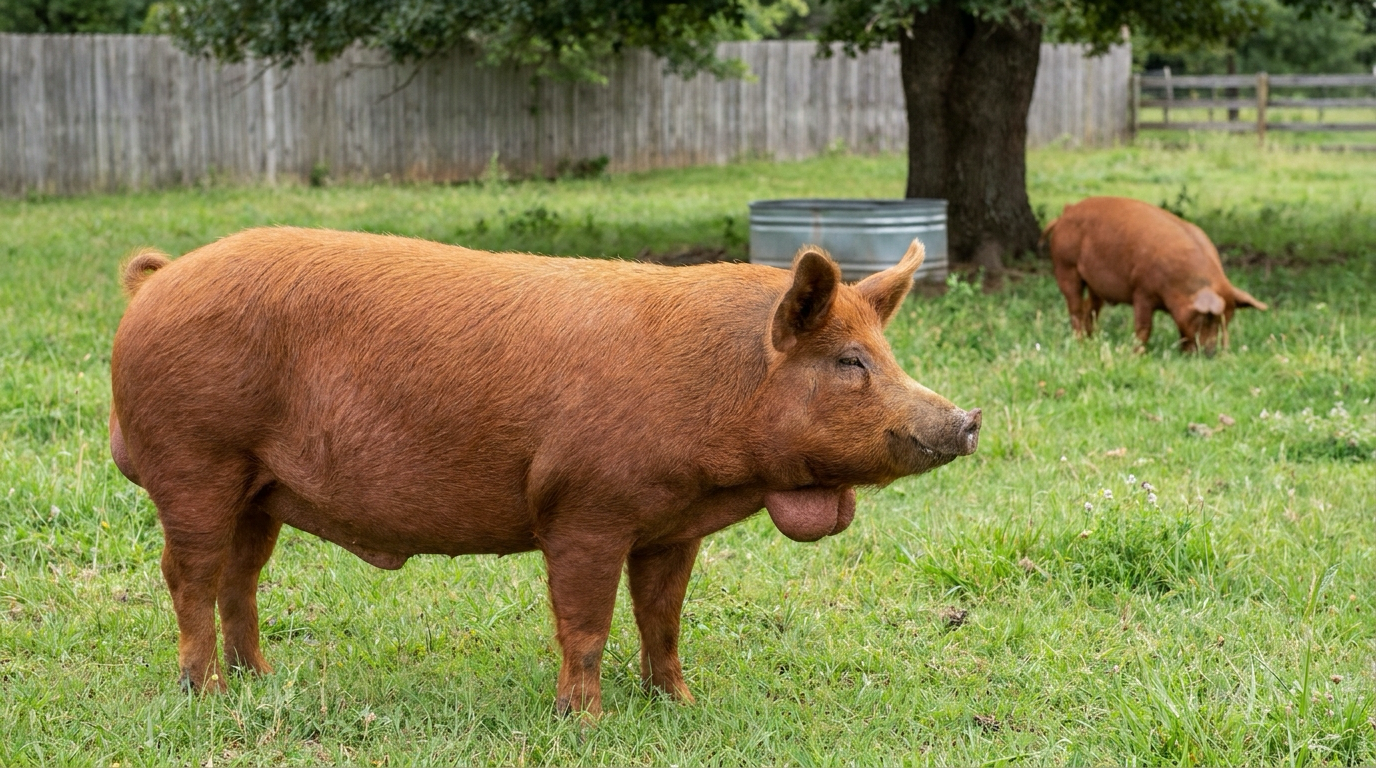
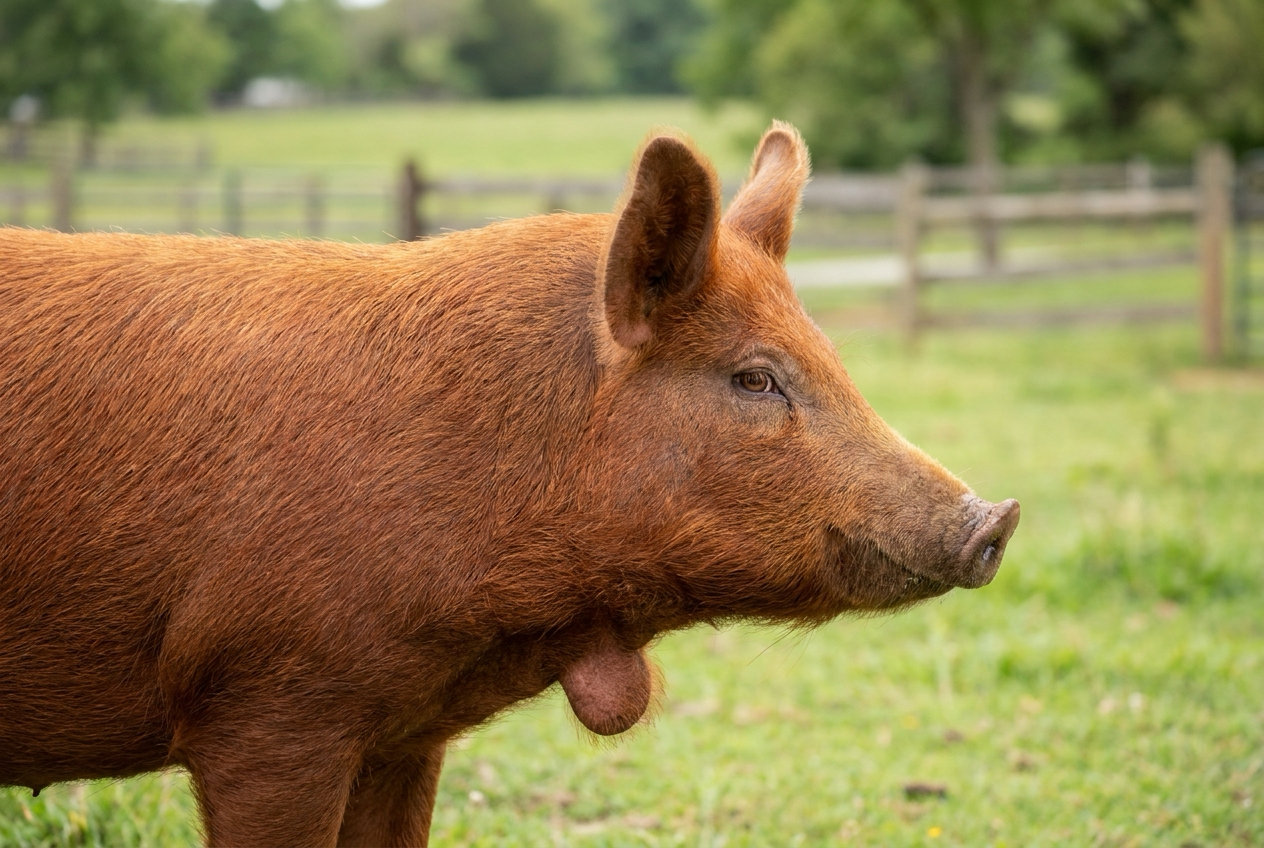
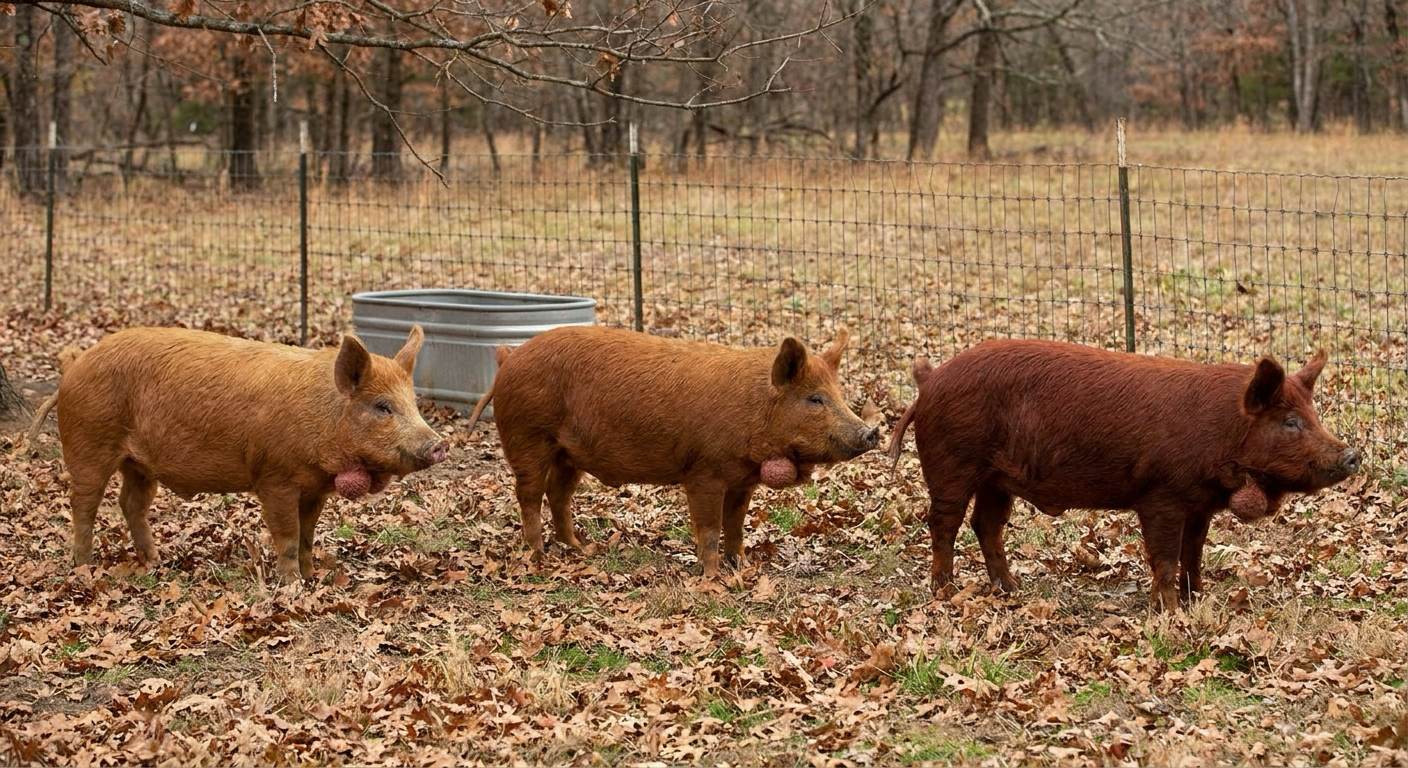
The Red Wattle is a large, red American heritage hog named for the two fleshy wattles that hang from its throat, one on each side. The Livestock Conservancy lists it as Threatened, and the Red Wattle Hog Association keeps the breed’s registry. If you are thinking about a breeding pair or a few feeder pigs, the useful questions are about registration, parentage and the size these pigs reach, not just the wattles.
Red Wattles grow big. If you do not have a scale that can take a grown sow, the free Creatures pig weight calculator turns a heart girth and body length into an estimate with no account needed, and the pig gestation calculator gives a farrowing date from a breeding date.
| Identity | Large red heritage hog with a fleshy wattle on each side of the throat |
|---|---|
| Conservation status | Threatened (Livestock Conservancy priority list, 2026) |
| US registry | Red Wattle Hog Association, founded 2001 |
| Color | Light red to dark red; small dark skin spots allowed only on the underline |
| Mature weight | About 600 to 800 lb, occasionally far more (Livestock Conservancy) |
| Typical butcher weight | Around 300 to 325 lb live, per the Livestock Conservancy |
| Litter size | Often 7 to 12 piglets |
| Main use | Pasture and small-farm pork |
Browse listings, public profiles, breeders, or add your animal.
What makes a pig a Red Wattle
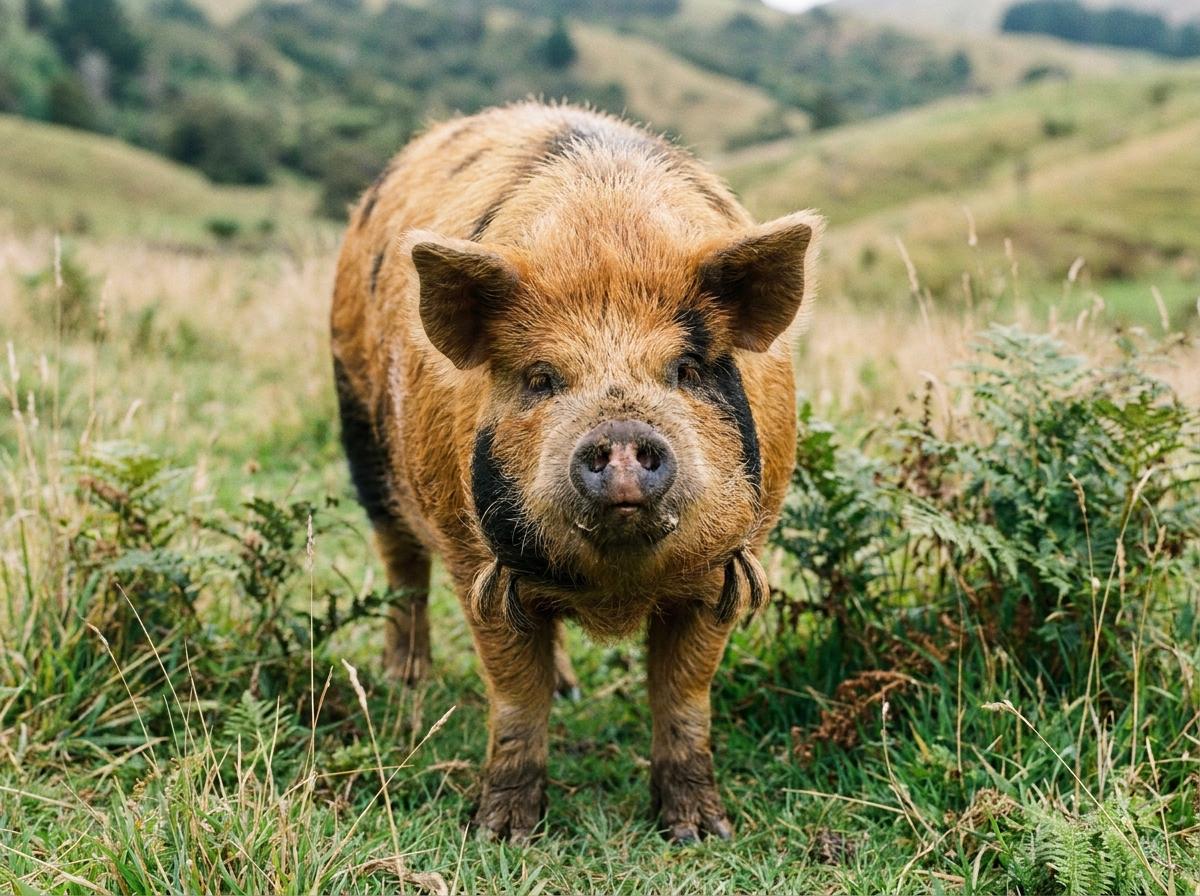
The wattle is the obvious mark, but it is not the whole breed. The Livestock Conservancy’s Red Wattle page describes the wattles as a single-gene trait with no known function that usually passes to crossbred offspring. That last point matters to a buyer: a red pig with wattles can easily be a cross. Wattles are not exclusive to this breed either: the Kunekune carries a pair as part of its own breed standard. So a red coat and wattles do not prove Red Wattle ancestry, let alone a purebred pig. Pedigree records and registration papers do.
The Red Wattle Hog Association’s registration rules and minimum standards (revised March 2025) describe what a registrable pig should look like:
- Wattles: two, firmly attached and substantial, one at the inside corner of each jowl in matching positions, firm and kidney or thumb shaped, and similar in size. No extra wattles anywhere else on the body.
- Color: light red to dark red, with a distinct red tint in sunlight. Small dark spots or freckles under the size of a nickel are allowed only on the skin of the underline. Spots in the hair are not acceptable.
- Coat: moderately thick, smooth or curly, covering the body well.
- Head and ears: a head in proportion to the body, a medium-length snout with a slight curve or almost straight profile, and ears that may be upright, tipped or lopped, set wide on the top corners of the head.
- Underline: at least six evenly spaced teats per side, with the first three on each side ahead of the navel or sheath. They must be functional in gilts; a boar’s teats are not functional but must show the same layout.
- Disposition: calm, quiet and gentle, easily handled and driven.
The Livestock Conservancy’s own description is broader on color, from light blond to almost black, and allows black spots on the belly. When the two descriptions differ, the registry’s rules decide what can be registered, so ask the seller which standard the breeding stock was selected under.
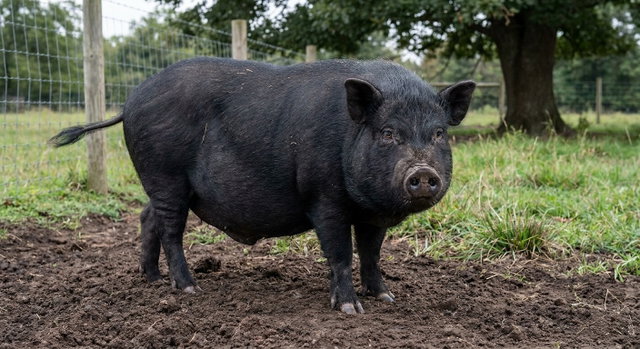
A Red Wattle is also easy to confuse with other red breeds. The Duroc is red too but has no wattles and drooping ears, and the Tamworth is a long, ginger, prick-eared bacon breed. Compare them on the pig hub before you assume a red pig in a listing is a heritage Red Wattle.
History and why the breed is rare
Nobody knows exactly where the Red Wattle came from. The Livestock Conservancy reports that red, wattled hogs have been known in North America since at least the mid-1800s, that their ancestors are believed to have arrived through the Gulf of Mexico, and that modern Red Wattles trace to 20th-century descendants of wattled hogs from Texas.
The breed nearly disappeared. The Conservancy says breeders in the mid-1980s preferred to keep three separate registries, and by 1999 a search turned up only 42 breeding animals with six breeders, none registered in years. The Red Wattle Hog Association was founded in 2001 with eight members and the Conservancy’s support.
Today the Livestock Conservancy priority list places the Red Wattle in its Threatened category, which the Conservancy defines as fewer than 1,000 annual registrations in the United States and an estimated global population under 5,000. It sits alongside other rare American pigs on that list, such as the Mulefoot, the Ossabaw Island hog and the American Guinea Hog.
Rarity changes how you buy. A small gene pool means relatedness matters: the RWHA publishes a coefficient of inbreeding resource on its site, and the most useful thing a seller can give you is a pedigree that lets you see how closely two prospective breeders are related. If you start a herd, the free pedigree chart maker lets you type out a pig’s ancestors and print the chart.
Size, temperament and what to plan for
Red Wattles are big pigs. The Livestock Conservancy gives mature weights of 600 to 800 pounds, says they can reach 1,200 pounds, and lists boars at about 750 to 800 pounds and sows at about 550 to 600. It notes that the pigs may not be fully mature until about three years old. Plan fencing, gates, loading and handling space for that size, not for the piglet you bring home.
The Conservancy describes the breed as docile and suited to beginners, with active foraging that fits outdoor and pasture systems, and says most breeders now prefer butcher weights around 300 to 325 pounds. Docile is a description of the breed’s reputation, not a promise about an individual boar. Any intact boar of this size, tusks included, deserves respect and a handling plan.
Pasture does not replace a ration. Foraging pigs still need balanced feed, clean water every day, shade and a wallow or other way to stay cool, and shelter from wind and wet. Penn State Extension’s Raising Pigs 1: Farrowing is a practical starting point for farrowing housing. Ask your veterinarian about a herd health plan, parasite monitoring and any state rules on moving pigs before you buy.
For weight, measure rather than guess. The pig weight calculator uses heart girth and body length (for pigs, length runs from between the ears to the base of the tail), and the estimate can be off by 5 to 10 percent. Use a scale when you need an exact number, especially for anything to do with medicine.
Breeding and farrowing
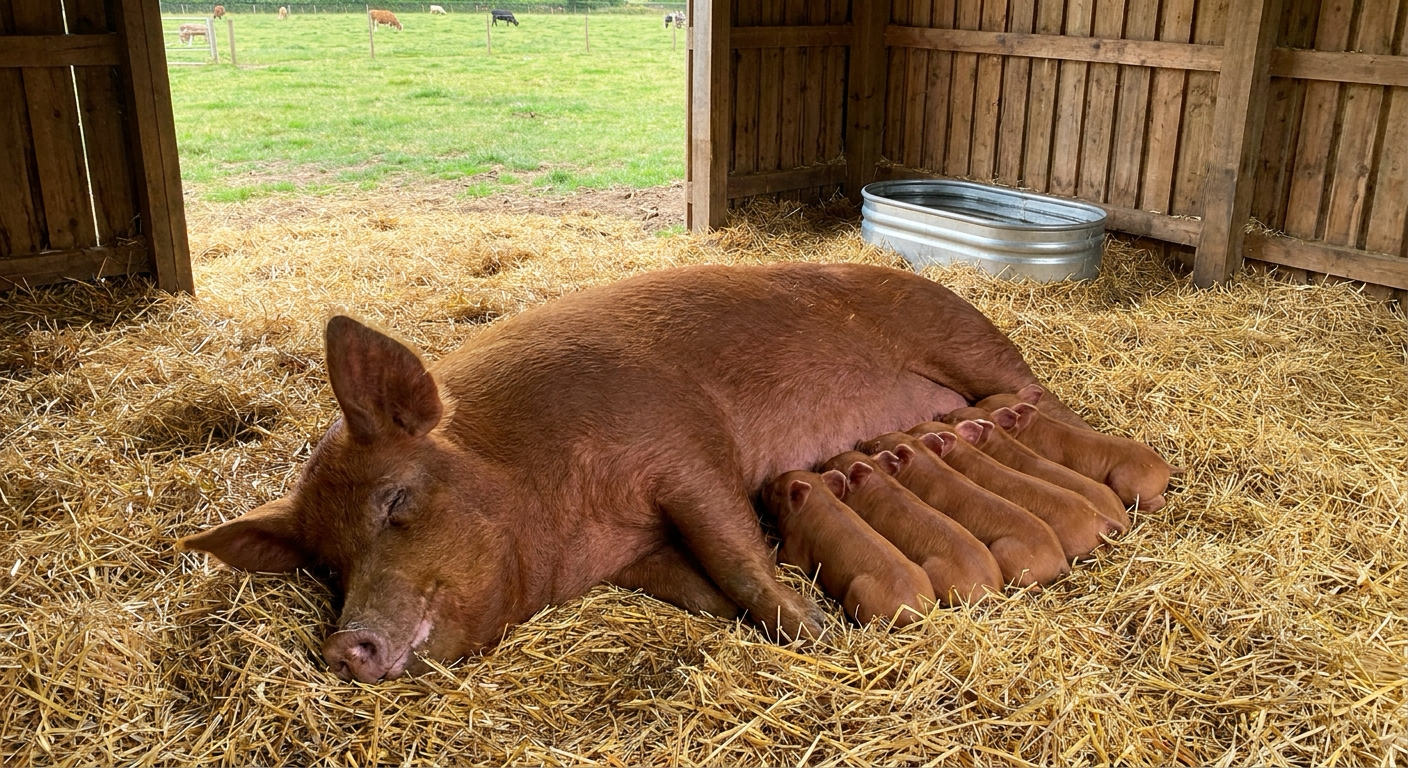
The Livestock Conservancy describes Red Wattle sows as good mothers that farrow 7 to 12 piglets and give plenty of milk. Gestation follows the same pattern as other pigs: about 114 days, with Penn State Extension noting that most sows farrow between days 110 and 117. Enter the breeding date in the pig gestation calculator for the date to prepare for, then read our pig farrowing guide for the setup, the signs of labor and the danger signs that mean you should call a veterinarian now. The longer pig gestation period guide covers the pregnancy week by week.
If you plan to register the litter, the RWHA rules set the order of work:
- Identify every piglet before litters mix. Pigs must carry an ear tag, ear notch or microchip, and parentage must be confirmed. If sows farrow individually, identifying the piglets before litters are combined does that; group farrowing needs DNA parentage confirmation from an approved lab.
- Boars need DNA. New boar registrations need a DNA sample submitted to UC Davis Veterinary Genetics Laboratory, the only lab the RWHA currently approves, within 60 days of the application.
- Wait for the minimum age. Pigs can be registered from 8 weeks.
- Membership and deadlines. You must be an RWHA member to register a Red Wattle. Buyers have 30 days after a sale to submit transfer or registration paperwork before fees double.
Record the breeding, the farrowing date and each piglet’s ID as you go. On Creatures you can record a breeding to get a projected due date, then record the birth and create a litter so each piglet has its own profile linked to its parents.
Buying Red Wattle pigs
Supply is thin, so buying usually starts with a breeder conversation rather than a listing. Before you commit, ask:
- Is the pig registered with the RWHA, or eligible? Will the seller provide the registration paper, transfer paperwork and a bill of sale, as the association’s rules expect?
- How is the pig identified (ear tag, notch or microchip), and does that ID match the paper?
- For a boar, is there a DNA profile on file?
- What are the parents’ pedigrees, and how related are the pigs you are buying to each other?
- How many teats does the pig have on each side, and are a gilt’s teats all functional?
- What has the pig been eating, what health care has it had, and what is the herd’s health history?
For price context, our guide to how much a pig costs separates feeder pigs, breeding stock and pet pigs. Ask several breeders for dated quotes on comparable animals (registered gilt, unregistered feeder, proven boar) rather than relying on one number. Keepers weighing up heritage breeds often also look at the Gloucestershire Old Spots and the Large Black. For how long a breeding sow might stay in your herd, see pig lifespan.
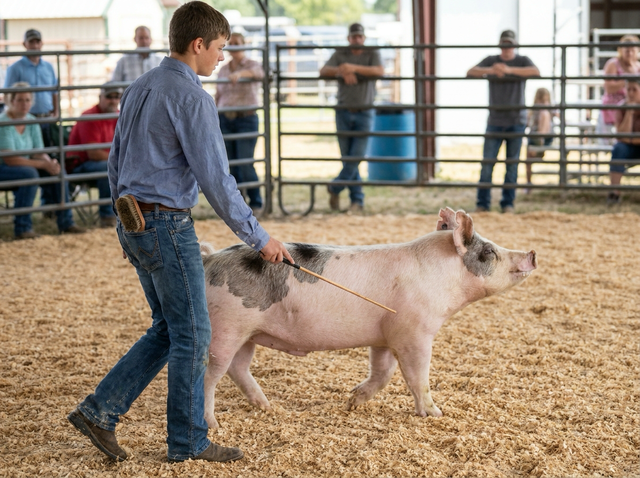
Raising feeder pigs for a youth project instead? Our sister guide to showing pigs covers picking a show pig, feeding to a target weight and fair rules.
Frequently asked questions
Are Red Wattle pigs rare?
Yes. The Livestock Conservancy lists the breed as Threatened, meaning fewer than 1,000 annual US registrations and an estimated global population under 5,000.
Does every Red Wattle have wattles?
The RWHA minimum standard requires two well-attached wattles, one on each side of the jowl. Wattles also pass to crossbreds, and other breeds such as the Kunekune have them too, so a wattled pig is not automatically a Red Wattle, let alone a purebred one. Check the pedigree and registration papers.
How big do Red Wattle hogs get?
The Livestock Conservancy gives mature weights of 600 to 800 pounds, with some reaching 1,200. Most breeders butcher at around 300 to 325 pounds.
Are Red Wattles good for beginners?
The Livestock Conservancy rates them docile and beginner friendly. Their adult size still calls for strong fencing, safe handling facilities and care around boars.
How do I register a Red Wattle?
Through the Red Wattle Hog Association. You need to be a member, the pig must be identified and at least 8 weeks old, parentage must be confirmed, and boars need a DNA sample at the approved lab.
Do this next on Creatures
Red Wattle stock is scarce, so the first useful step is usually an alert. Listings and directory entries do not establish registration, health or availability; ask the seller for the evidence above.
Get told when one is listed. Set a Red Wattle listing alert, with no account needed to start. See saving searches and using your watchlist.
Ask breeders. Search the breeder directory for pig breeders and contact them about registered stock. A listing there is a starting point, not an endorsement.
Browse what is listed. Check Red Wattle pigs on the marketplace; when it is empty, the alert above is the better tool.
Give your pig a profile. Add your Red Wattle with its ID and registration details. No account is needed to start; a free account keeps it. See adding an animal to Creatures.
Keep the records. Add a record for a weight, an ear notch or tag number, or a breeding date. The sheet opens for visitors; a free account saves it. See track weight and growth and identification and registration papers.
Breed Red Wattles? Create your farm’s profile, no account needed to start, then read getting listed in the breeder directory so buyers looking for this breed can find you.