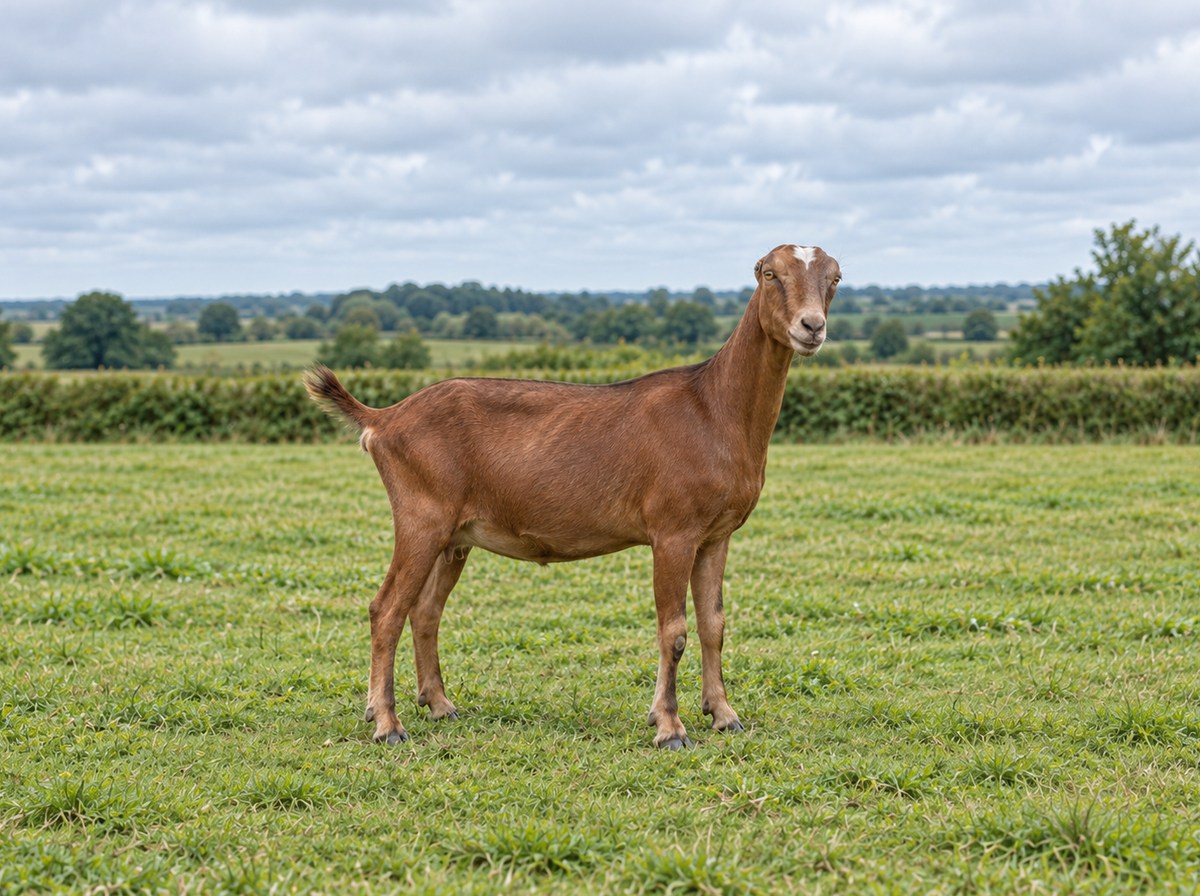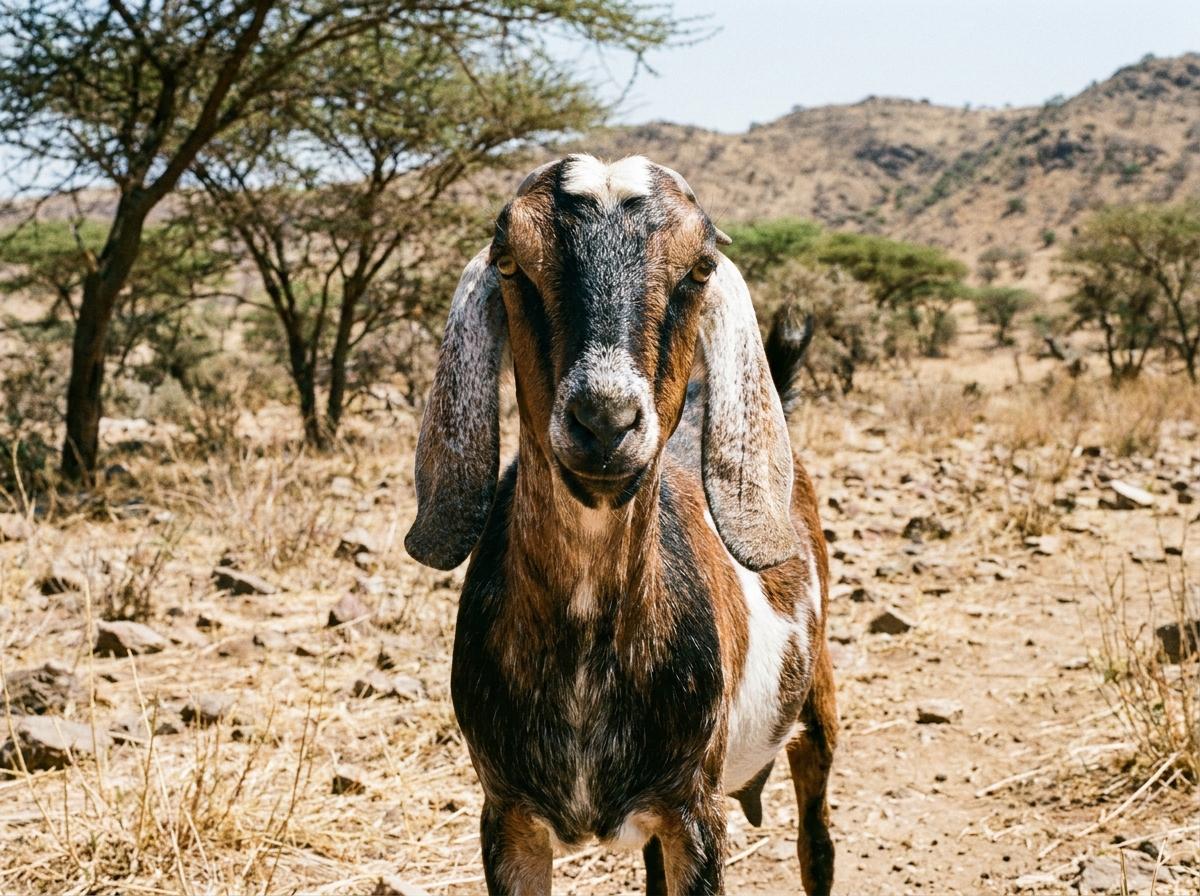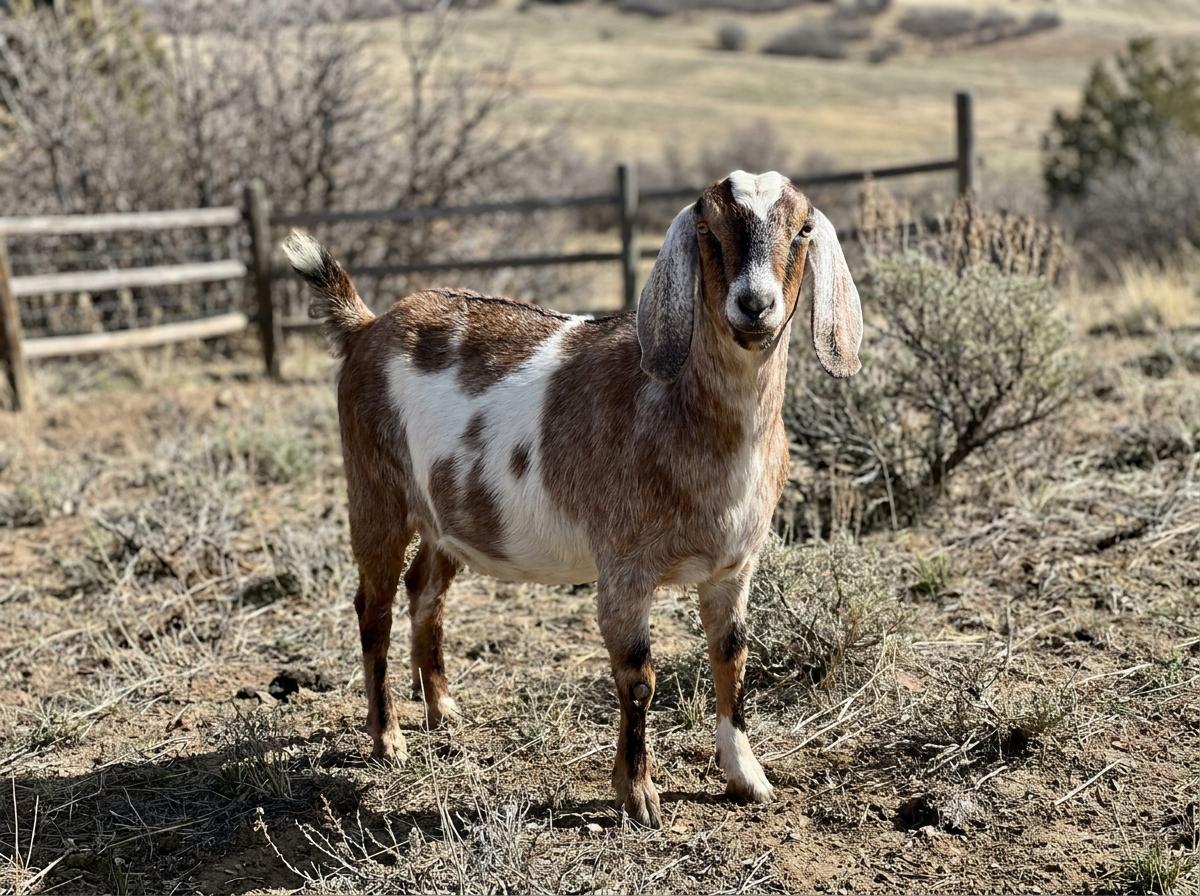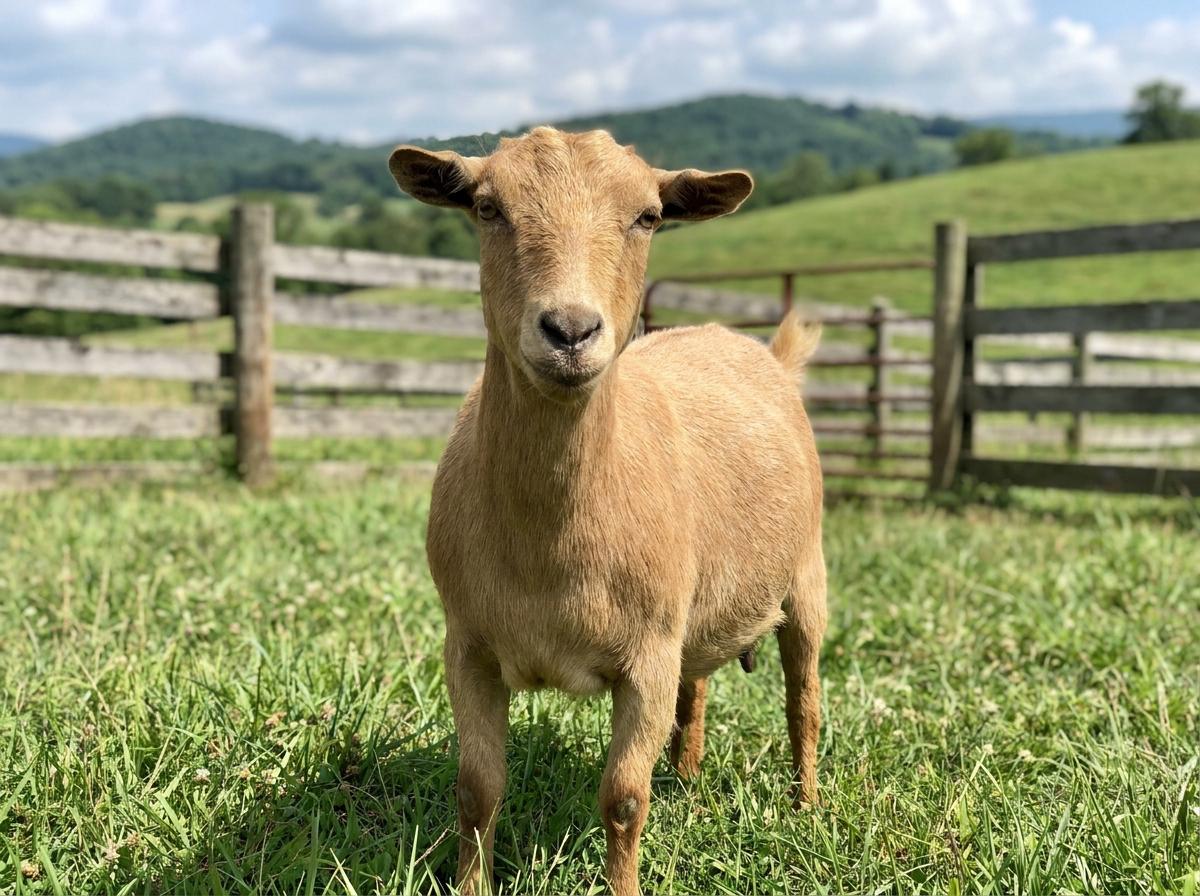
Mini LaMancha
Author: Elliott Garber, DVM · Published
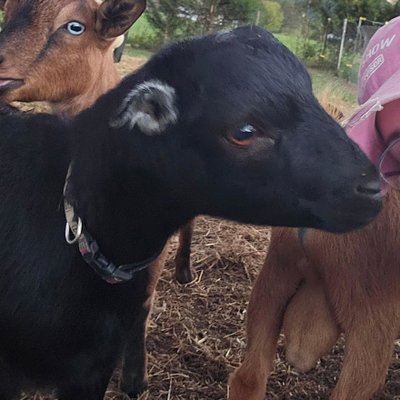
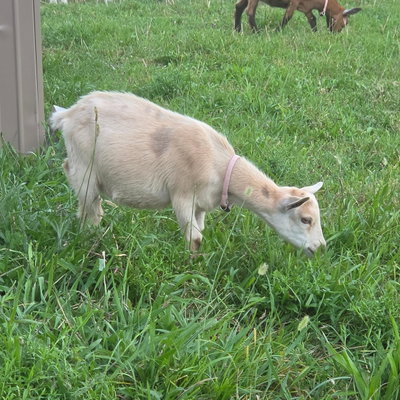
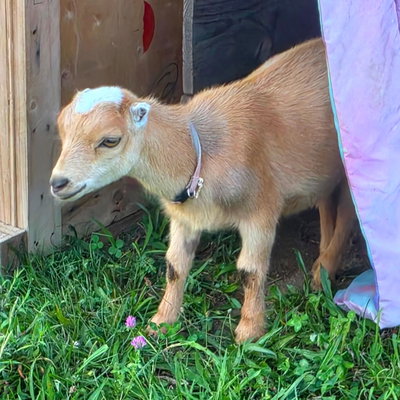
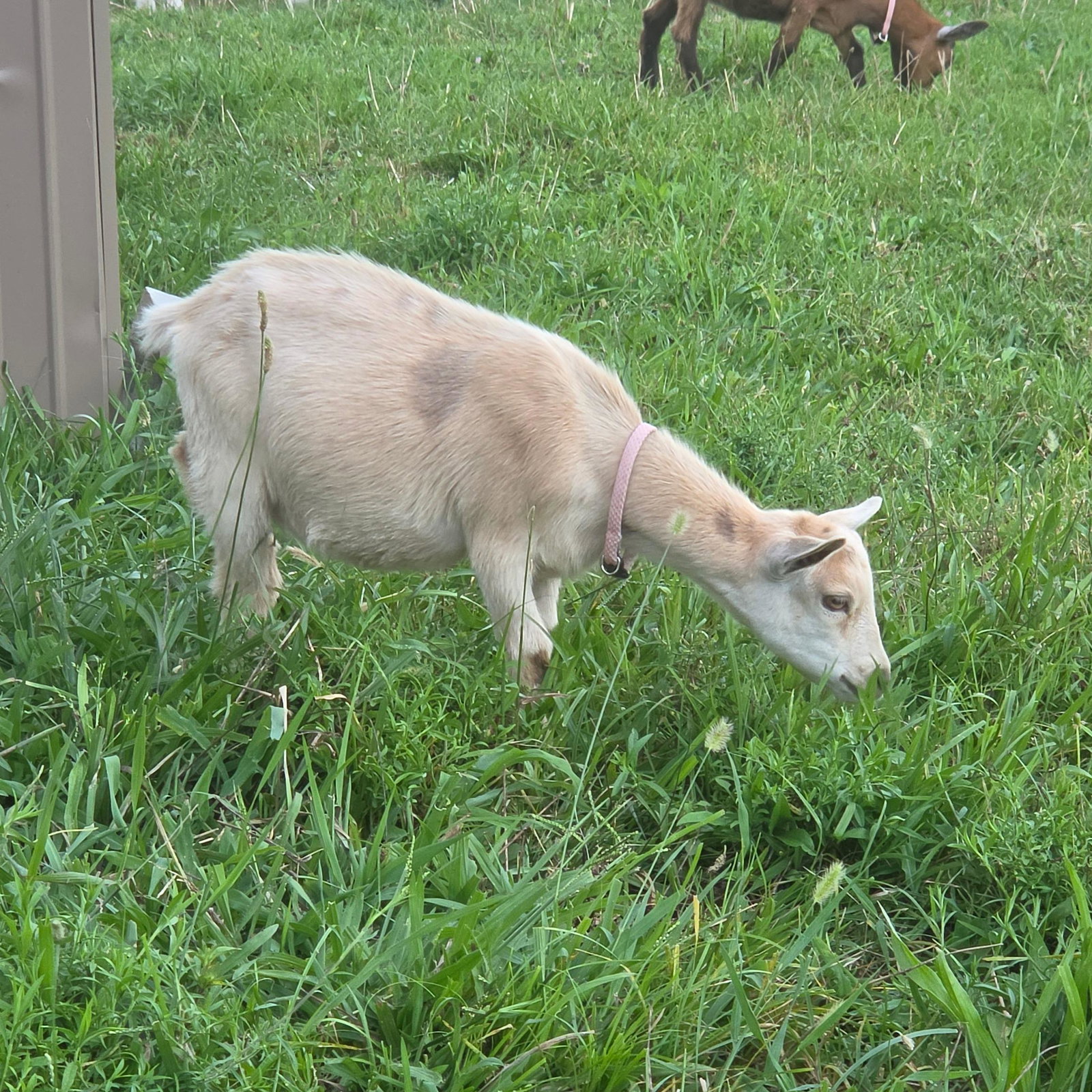
A Mini LaMancha is a miniature dairy goat made by crossing the LaMancha, the American dairy breed with almost no external ears, with the Nigerian Dwarf. It keeps the LaMancha’s tiny “gopher” or “elf” ears and straight face on a smaller frame. Both main miniature dairy goat registries cap a Mini LaMancha in their American and Purebred books at 27 inches at the withers for does and 29 inches for bucks, and The Miniature Goat Registry puts the ideal doe at 24 to 26 inches. Mini LaManchas are registered by the Miniature Dairy Goat Association (MDGA) and The Miniature Goat Registry (TMGR), not by the American Dairy Goat Association, and a line reaches Purebred status only at the sixth generation.
If you want one, the questions that matter are which registry, which herd book and generation, what the ears look like, and how tall the parents finished. Listings come and go, so the quickest routes are the Mini LaMancha breeders in the Creatures directory and a free Mini LaMancha listing alert (no account needed to start), which emails you when one is posted.

| Type | Miniature dairy goat bred from the LaMancha and the Nigerian Dwarf |
|---|---|
| Registries | MDGA and TMGR; ADGA and AGS do not register Mini LaManchas |
| Maximum height | Does 27 in, bucks 29 in at the withers in the American and Purebred books (MDGA and TMGR) |
| TMGR minimum | 23 in for does and bucks in the American and Purebred books |
| Ears | Gopher or elf (elf up to 1.5 in) on does; gopher only on American and Purebred bucks |
| Weight | Mature milking does average 90 to 120 lb (TMGR standard) |
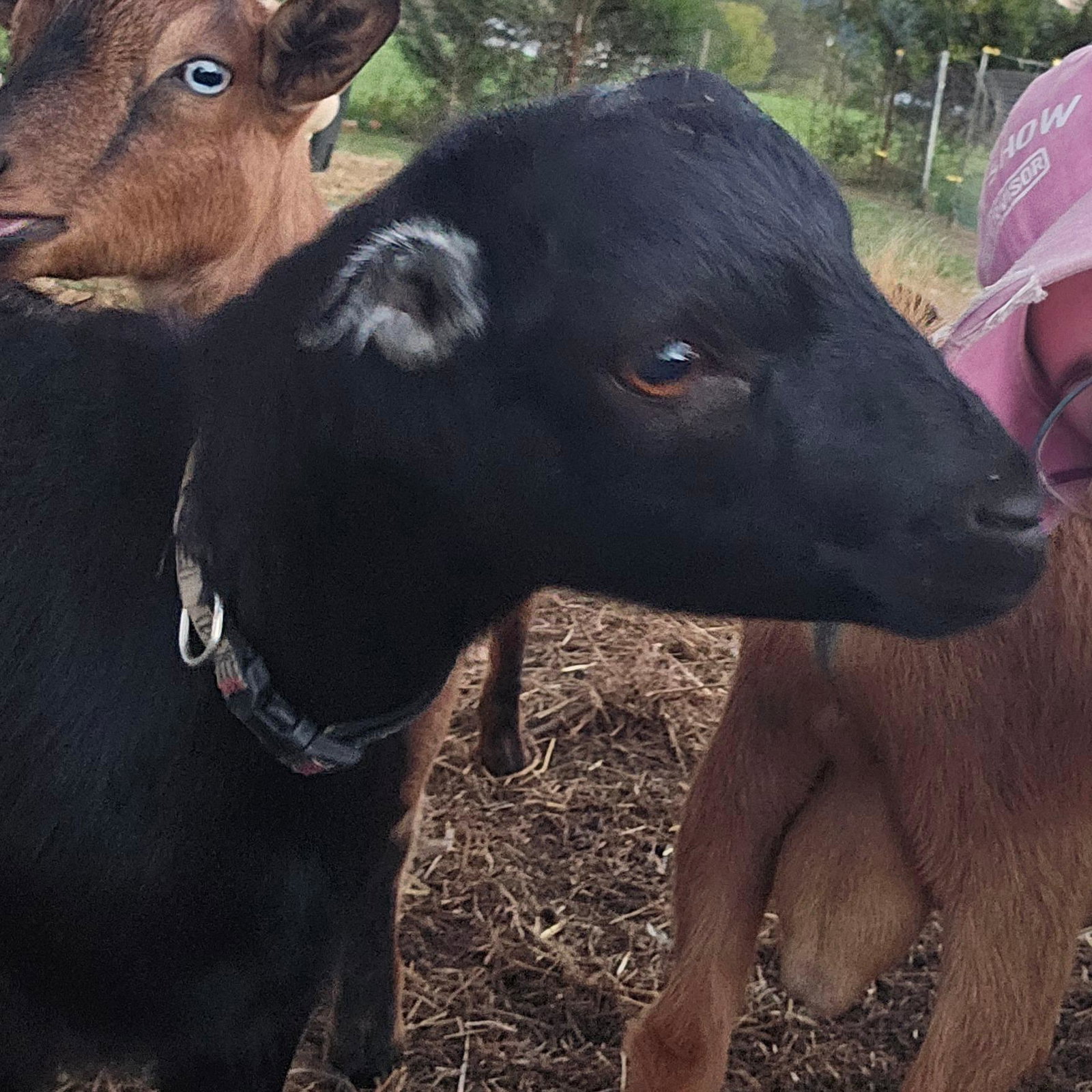
| Color | Any color or pattern; blue eyes allowed |
| Herd books | F1 and F2 Experimental; F3 to F5 American; F6 and later Purebred, if the goat meets the standard |
Browse listings, public profiles, breeders, or add your animal.
What is a Mini LaMancha?
The Mini LaMancha, often shortened to Mini Mancha, is one of the miniature dairy breeds developed in the United States by crossing a standard-size dairy breed with the Nigerian Dwarf. The point is a mid-sized dairy goat. TMGR describes miniature dairy goats as sitting between Nigerian Dwarf and standard-breed heights, and MDGA says the goal is a goat that looks like the standard breed apart from its smaller size.
For the Mini LaMancha, that means a dairy goat with the LaMancha’s identity, the ears, on a body that is easier to house, handle and milk than a full-size doe. The TMGR Mini LaMancha standard describes the breed as usually heavier and wider than the miniature Swiss breeds, shorter in stature, with more substantial bone and a deeper body. It allows any color and blue eyes and wants a straight profile with a deep, wide jaw. The MDGA Mini LaMancha standard adds that the hair is short, fine and glossy.
It is a young breed. TMGR, one of the two registries that keeps its herd book, says on its history page that it has been fully operational since January 1, 2007, and Mini LaMancha lines are still being built generation by generation. That is why papers matter so much when you buy. For the wider picture of goat breeds and species-level care, start with the Creatures goat guide.
Where it comes from: the LaMancha and the Nigerian Dwarf
The LaMancha. Oklahoma State University’s Breeds of Livestock reference says the LaMancha originated in Oregon with Mrs. Eula Frey, from short-eared goats of a type found throughout Spain. The American Goat Society says the breed has roots in Spain but that its full genetic history is somewhat obscure, and ADGA’s dairy goat history dates the American LaMancha herd book to 1958. Under the ADGA breed standards, a LaMancha doe is at least 28 inches tall and 130 pounds and a buck at least 30 inches and 160 pounds. Any color is allowed and the nose is straight. Bucks must have ears no longer than one inch with little or no cartilage, while does may have ears up to two inches. The Creatures LaMancha breed page lists breeders of the standard-size breed.
The Nigerian Dwarf. The same ADGA page calls the Nigerian Dwarf the only miniature dairy breed ADGA registers. Does and bucks must be at least 17 inches tall, does no taller than 22.5 inches and bucks no taller than 23.5 inches, with 75 pounds given as an average weight, and the breed is known for milk high in butterfat. ADGA’s history says it first recognized the Nigerian Dwarf in 2005. The Nigerian Dwarf breed page covers that parent.
What each side contributes. The TMGR standard credits the LaMancha with udder conformation, milk production, lactation length and persistence, good butterfat and a quiet, friendly temperament. It credits the Nigerian Dwarf with smaller size, hardiness, higher butterfat and protein, the ability to hold condition through heavy lactation and, frequently, breeding outside the usual season. Those are the registry’s goals for the breed. Individual goats vary, and a doe’s own records tell you more than any breed description.
Registries, generations and herd books
Mini LaManchas are registered by miniature dairy goat registries, chiefly MDGA and TMGR. The big dairy registries do not keep a Mini LaMancha herd book: ADGA’s breed list covers nine breeds and names the Nigerian Dwarf as its only miniature, and the American Goat Society’s breeds registered page lists the LaMancha and the Nigerian Dwarf but no miniature dairy breeds.
Generations. Both registries count generations the same way. A registered Nigerian Dwarf bred to a registered standard dairy goat produces a first-generation (F1) mini. F1 bred to F1 gives F2, F2 to F2 gives F3, and so on. When the parents are different generations, the kid is one generation above the lower parent, so an F6 bred to an F1 gives an F2, and any mini bred back to a standard LaMancha or a Nigerian Dwarf starts again at F1. The rules are set out on MDGA’s what is a miniature dairy goat page, and TMGR in its FAQ.
Herd books. Generation alone does not move a goat up. Both registries sort Mini LaManchas into three herd books:
- Experimental: F1 and F2 goats, plus any goat that does not meet the breed standard.
- American: F3 to F5 goats that meet the breed standard.
- Purebred: F6 and later goats that meet the breed standard. At TMGR, the goat’s parents, grandparents and great-grandparents must also be documented as meeting the standard.
The details differ. MDGA requires goats in the American and Purebred books to carry between 30 and 70 percent of each parent breed (its 70/30 rule), and it does not require heights to be recorded except for milk testing and live shows, so the breeder is responsible for reporting a goat that grows over height. TMGR places every goat under a year old in the Experimental book. To move one up, it wants front and side photos and a height taken at one year or older and signed by another breeder, a veterinarian, a milk tester or a show judge, according to its registration rules. Goats with incomplete parentage can go in MDGA’s separate Grade book.
Which parents qualify. MDGA’s registration guidelines say both parents must be registered as American or Purebred with TMGR, ADGA, AGS, BGS, NDGA or CGS, and the Nigerian Dwarf must be purebred; grade Nigerians do not qualify. TMGR accepts parents registered with TMGR, MDGA, CGS, AGS, NDGA or ADGA. Both registries rule out Pygmy, Boer and other non-dairy crosses, so a Pygmy and LaMancha cross is not a Mini LaMancha, however small its ears. The Pygmy goat is a separate, cobby miniature with its own registry and standard.
Percentages. A mini pedigree shows the blood split as standard over Nigerian, and a kid’s figure is the average of its parents’. In MDGA’s worked example, a 75/25 buck bred to a 62.5/37.5 doe gives 68.75/31.25 kids. TMGR’s FAQ says many breeders find the most desirable characteristics around a 60/40 split either way.
How big does a Mini LaMancha get?
The two registries agree on the top limit and differ at the bottom.
- MDGA: a maximum of 27 inches for does and 29 inches for bucks in the American and Purebred books, and no minimum. An overheight goat is moved down to a lower herd book and is disqualified from awards at MDGA shows.
- TMGR: the same maximums, a minimum of 23 inches for both does and bucks in the American and Purebred books, and an ideal range of 24 to 26 inches for does and 24 to 28 inches for bucks. (TMGR’s general FAQ still gives 21 inches for does at Purebred, so confirm with the registry if your doe measures between 21 and 23 inches.)
For scale, the standard LaMancha starts where the mini stops, since ADGA’s minimum for a LaMancha doe is 28 inches. The Nigerian Dwarf tops out at 22.5 inches for does and 23.5 inches for bucks. TMGR says miniature dairy goats should not drop below the Nigerian Dwarf maximums and should stay well under standard-breed minimums. Its Mini LaMancha standard gives 90 to 120 pounds as the average weight of fully mature, lactating does. If you have no scale, the free goat weight calculator estimates weight from a tape measurement, and the goat weight guide explains the method.
How to measure. Height is taken at the withers, from the highest point of the shoulders straight down to level ground, with the goat standing square and its head held at a natural, alert height. TMGR’s measuring guide warns that head position alone can change the reading by as much as an inch and that goats keep growing for at least four years, so it recommends rechecking at three to four years. The MDGA standard likewise says final height is not reached until three to four years of age. A yearling that measures well inside the limit is a good sign, not a promise.
Gopher ears and elf ears
The ears are the whole identity of the breed, and they are the first thing to check when you buy. A goat sold as a Mini LaMancha can have gopher ears, elf ears or, in early crosses, ordinary upright ears, and the herd book a goat can enter depends on which it has.

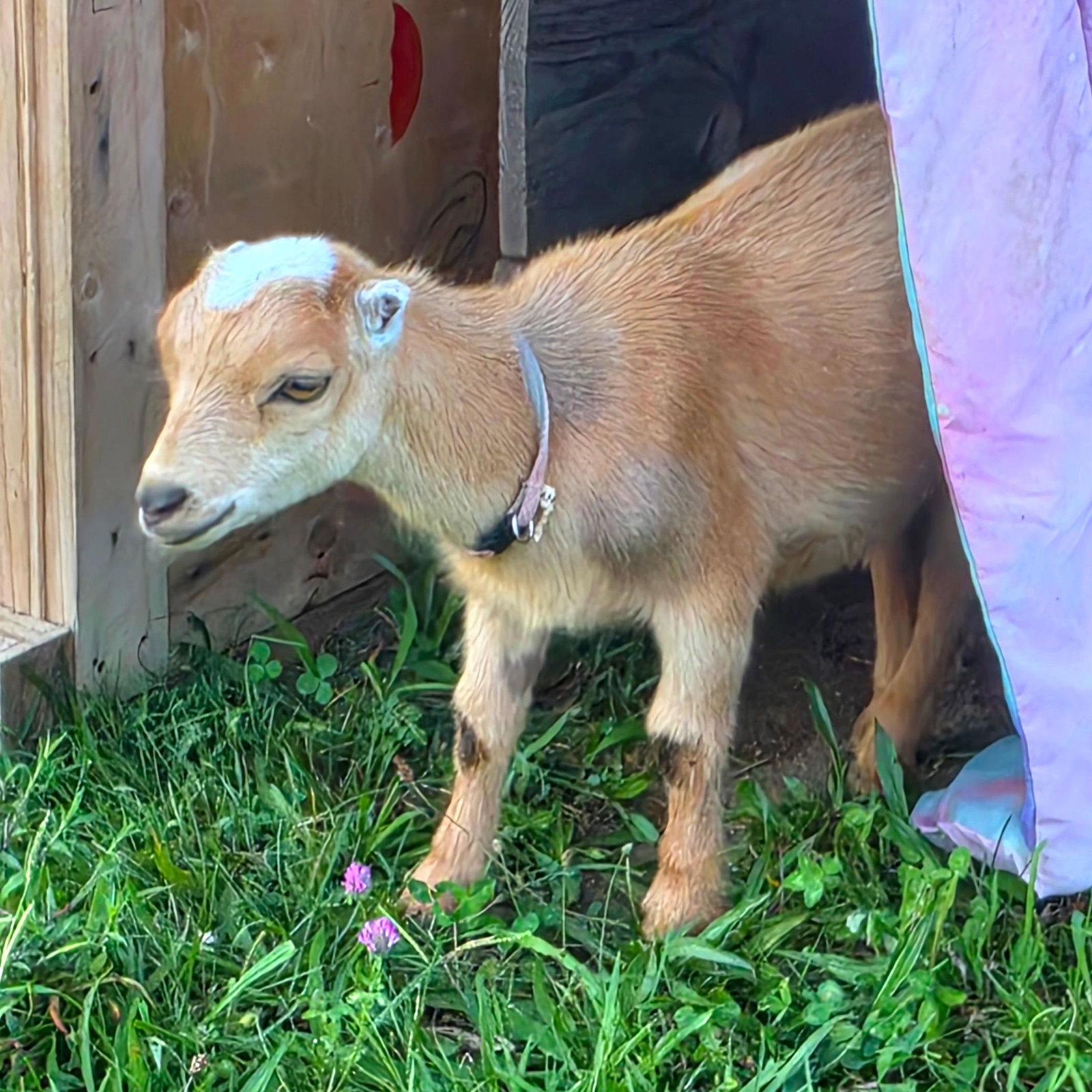
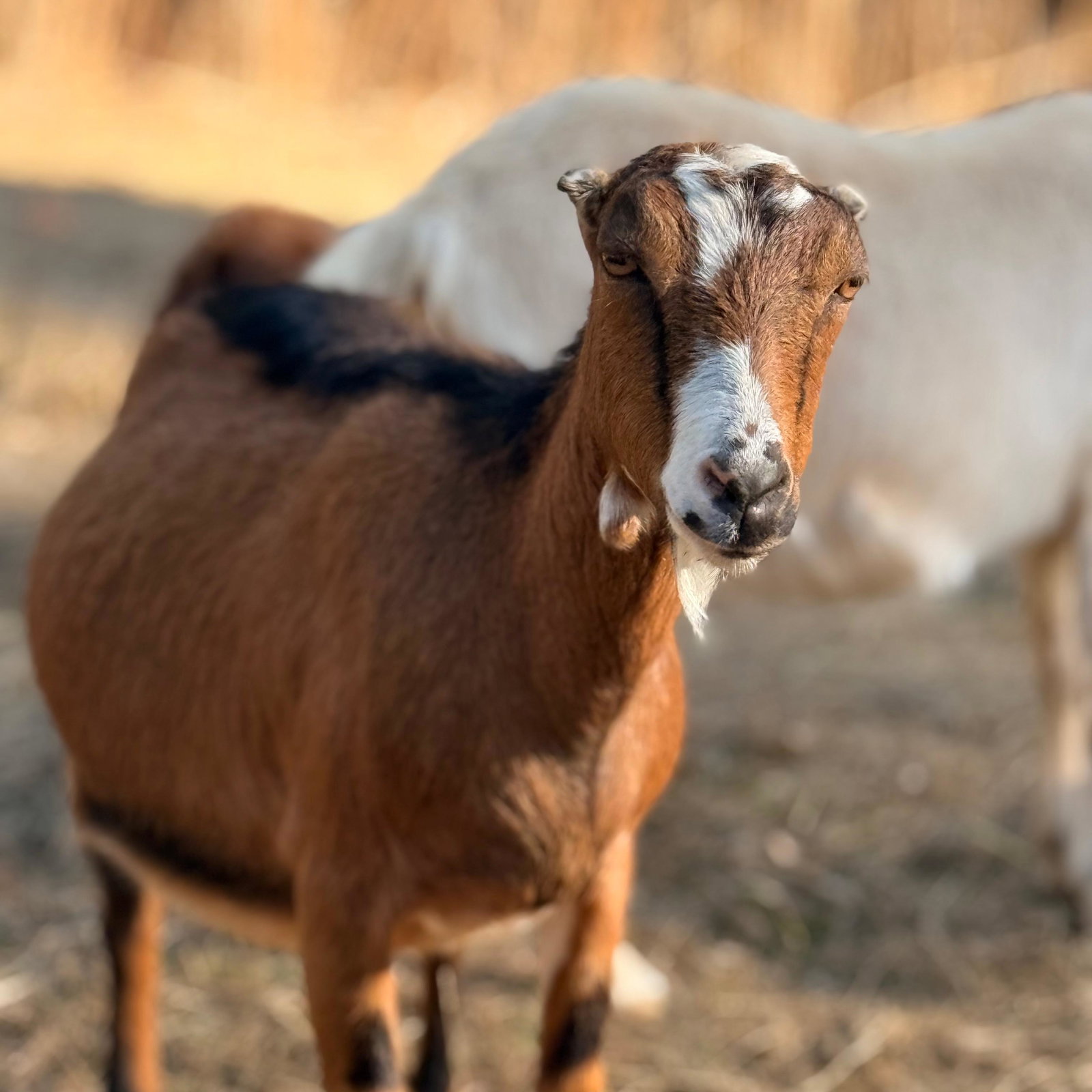
Gopher ears lie tight against the head with little or no cartilage, little more than folds of skin around the ear opening. The TMGR standard sets a maximum length of one inch and says they should be barely visible from the front. No muscle is attached to these folds, MDGA notes, so a gopher-eared goat cannot move or prick its ears.
Elf ears have some cartilage and a small tip that may turn up or down. Both the MDGA and TMGR standards cap them at 1.5 inches, which is tighter than ADGA’s two-inch allowance for standard LaMancha does. Elf-eared goats can move their ears toward a sound.
Who may carry which.
- Does: gopher or elf ears in every herd book.
- Bucks: gopher ears only for the American and Purebred books. A buck with elf ears is registered Experimental.
- Upright, full-size ears: Experimental book only, for does and bucks.
How the ears are inherited. The MDGA standard explains ear type with two gene forms, one for a full ear and one for no ear, and says neither is dominant over the other. A goat with two full-ear genes has upright ears, a goat with one of each has elf ears, and a goat with two no-ear genes has gopher ears. From that, MDGA gives the expected results:
- Gopher bred to gopher: all gopher-eared kids.
- Elf bred to gopher: on average half elf, half gopher.
- Elf bred to elf: on average one quarter upright, one half elf, one quarter gopher.
- Upright bred to gopher: all elf-eared kids. So when a gopher-eared LaMancha doe is bred to a Nigerian Dwarf buck, every F1 kid has elf ears; gopher ears come back when those elf-eared kids are bred to gopher- or elf-eared goats (elf to gopher gives about half gopher, elf to elf about one in four).
- Upright bred to elf: on average half upright, half elf.
Telling them apart. MDGA says experienced LaMancha breeders can tell elf from gopher at a glance, and that newcomers should watch whether the goat moves its ears in response to sounds; it considers measuring unreliable because soft tissue varies with age. TMGR’s standard allows an ear to be measured, if necessary, from the base of the skull to the tip without stretching it. When you register, MDGA asks for photos taken from the top of the head so its registrars can judge the ears.
Identification when there is no ear to tattoo
Registered dairy goats are normally tattooed in the ears, which a gopher ear cannot hold. TMGR’s FAQ says LaManchas are tattooed in the tail web instead, and that a microchip, usually placed in the tail web, can stand in for the tattoo as long as tattoos are still assigned on the certificate. MDGA’s tattoo and EID policy treats the tattoo as the primary ID, allows goats with absent ears to be tattooed in the tail web or flank, and accepts a microchip at the base of the ear or tail as a backup, marked with an “E” or “ET” tattoo.
This matters beyond the registry. Both MDGA and TMGR are on the USDA APHIS list of registries whose tattoos count as official scrapie ID, approved until 2031. The APHIS identification and recordkeeping fact sheet says a registration tattoo can replace an ear tag only when the goat travels with a copy of its registration certificate listing the current owner, or the certificate plus a completed transfer dated within 60 days, and that a tattoo cannot be the only ID for goats going to slaughter or through a livestock market. Check your own state’s movement rules with your state veterinarian’s office before you haul.
Temperament and milk
Mini LaManchas are bred as household milkers, and their reputation rests on manners as much as volume. The TMGR standard describes a quiet, personable temperament and calm manners on the milk stand, along with long, level lactations, a good let-down, good teat size for hand milking and milk richer than that of standard dairy goats. The MDGA standard calls them docile and even-tempered with a steady production of fairly high butterfat milk.

What the numbers show. We did not find a published breed average for Mini LaManchas, so here is what the primary sources do give:
- Miniature dairy goats in general. MDGA’s FAQ says minis have been reported to give anywhere from about 2 pounds (one quart) to 10 pounds a day, averaging around 5 to 6 pounds, which it equates to about three quarts. The same FAQ says a mini can often produce two thirds of a standard doe’s milk while eating half as much feed. Treat that as the registry’s claim, not a measured study.
- The parent breeds. ADGA’s DHIR breed averages for 2025 lactations show LaManchas averaging 2,430 pounds of milk with 94 pounds of fat and 78 pounds of protein (160 records), and Nigerian Dwarfs averaging 847 pounds of milk with 54 pounds of fat and 37 pounds of protein (549 records). Worked out as percentages, that is roughly 3.9 percent fat for the LaMancha and 6.4 percent for the Nigerian Dwarf.
Those parent figures frame the range; they do not predict any one doe, whose volume and components depend on her own genetics and management. Both registries run 305-day and one-day milk testing programs, so the best evidence for any doe is a test record for her, her dam or her sisters.
Two practical points before you buy for milk. A doe has to kid to start producing, which Cornell’s goat ownership fact sheet spells out alongside the need to plan for the extra kids. And a smaller goat is easier to milk on a stand, but the routine is the same as for any dairy doe; our guide to goat milking machines and stands covers the equipment.
Mini LaMancha, LaMancha and Nigerian Dwarf side by side
- Height. Mini LaMancha: does up to 27 inches, bucks up to 29 in the American and Purebred books (TMGR minimum 23). LaMancha: does at least 28 inches, bucks at least 30 (ADGA). Nigerian Dwarf: does 17 to 22.5 inches, bucks 17 to 23.5 (ADGA).
- Weight. Mini LaMancha: mature milking does average 90 to 120 pounds (TMGR). LaMancha: does at least 130 pounds, bucks at least 160 (ADGA). Nigerian Dwarf: about 75 pounds on average (ADGA).
- Ears. Mini LaMancha: gopher, or elf up to 1.5 inches on does. LaMancha: no longer than one inch on bucks, up to two inches on does. Nigerian Dwarf: medium-length upright ears.
- Registries. Mini LaMancha: MDGA and TMGR. LaMancha and Nigerian Dwarf: ADGA, AGS and others.
- Color. Any color in all three; the TMGR Mini LaMancha standard also allows blue eyes.
If you are still choosing among the minis, the Creatures guides to the Mini Alpine and the Mini Oberhasli cover two of the upright-eared miniature breeds.
Breeding Mini LaManchas
Breeding minis is mostly a record-keeping exercise: generation, percentage, ear type and height all have to line up before a kid can go into the American or Purebred book.

The foundation cross. Both registries describe the first cross as a Nigerian Dwarf buck bred to a standard-size doe, which keeps the larger animal on the kidding side. TMGR notes that many people now prefer to upgrade by breeding minis to other minis, which is how a line climbs toward F6.
Planning a pairing. Check three things before you choose a buck. Ears first: bucks for the American and Purebred books need gopher ears, so a gopher-to-gopher pairing is the only one that gives all gopher-eared kids. Percentages next: under MDGA’s 70/30 rule, a kid that drifts outside 30 to 70 percent of either parent breed stays in the Experimental book. Height last: the parents’ mature heights are a good guide to whether the kids will finish under 27 or 29 inches.
Season, age and gestation. The Merck Veterinary Manual describes goats as seasonal breeders that cycle as days shorten, with breed differences; both registries say Nigerian Dwarf blood can extend the breeding season. Merck adds that does reach puberty at 6 to 9 months but should weigh 60 to 65 percent of their mature body weight before they are bred, and that gestation averages 150 days. The free goat gestation calculator has a Mini LaMancha setting that uses 150 days, and our goat gestation guide and kidding guide cover what to expect and when to call the vet.
Horns. The TMGR standard expects Mini LaManchas to be polled or neatly disbudded. Merck notes that whether to disbud depends on registry requirements, owner preference and management, and that the best timing varies by breed. Plan it with your veterinarian; our guide to disbudding goat kids explains the options.
Keep the paper trail. Write down each kid’s generation, percentage, ear type and tattoo at birth, and its height at one year and again at maturity. The free goat pedigree chart maker prints a three-generation chart with registration numbers, and our guide to reading goat registration papers explains what a certificate should show.
Care basics for a miniature dairy goat
A Mini LaMancha needs the same husbandry as any dairy goat, scaled down a little. Species-level detail lives in the goat guide; the points below are the ones buyers ask about most.
- Company. Goats are herd animals, and Penn State Extension’s goat production guide says you will need to keep at least two.
- Shelter. A dry, draft-free, well-ventilated shelter with clean bedding; see our goat shelter and housing guide.
- Fencing. A small goat still tests every fence. Our goat fencing guide compares electric netting, woven wire and cattle panel.
- Feed and minerals. Build the diet on good forage, add a ration matched to milk production, and give a goat-specific loose mineral; see what to feed goats and loose minerals for goats.
- Routine health. Hooves need regular trimming (hoof trimming guide); vaccination and parasite control should be planned with a local veterinarian (CD&T vaccine guide, deworming and FAMACHA guide).
- Local rules. According to MDGA, some cities now allow miniature dairy goats within city limits. Many do not, so check your zoning before you buy.
Hoof trimming, clipping, showing and milking are all easier on a smaller goat, MDGA points out, and children, seniors and people with disabilities may find the minis easier to handle. To see how many years you are signing up for, read how long goats live.
Buying a Mini LaMancha
Papers first. Ask which registry the goat is in, which herd book and which generation, and look at the certificate itself, not a sale note. TMGR’s registration basics says a registered kid comes with either a certificate or an application for registration filled out by the breeder, sometimes with a buck service memo, and warns buyers not to delay the transfer into their own name. If the transfer is lost, there may be no way to rebuild the paper trail for the goat or its kids.
Check the ears and the height against the standard. A doe with gopher or short elf ears is eligible for the higher books; a buck needs gopher ears. Ask how tall both parents measured as mature adults. TMGR is blunt that a seller cannot guarantee how a kid will mature, so a kid sold as “American eligible” is a prediction until it has been measured at one year or older.
Judge it as a dairy goat. TMGR’s FAQ tells newcomers to look for milk records, well-attached udders and good feet and legs. It also suggests asking for photos of the dam’s fore udder, not just a rear view taken days after kidding, and milking the dam yourself if you can. Shows are a good place to train your eye; our guide to goat shows explains how dairy shows work.
Ask about disease testing. TMGR’s FAQ names caprine arthritis encephalitis (CAE) and caseous lymphadenitis (CL) as the two blood tests of most interest and says reputable breeders either test or can explain why they do not. The Merck Veterinary Manual says CAE is widespread in dairy breeds, spreads mainly through infected colostrum and milk, and has no vaccine or specific treatment. Its page on other common goat diseases explains that CL spreads through pus from abscesses entering breaks in the skin, and that Johne’s disease cannot be cured and is screened with fecal PCR testing. Have your own veterinarian review any results before you buy.
Price. We could not find a reliable published price range for Mini LaManchas. Registration, herd book and generation, ear type, milk records and health testing all move the price, so compare like with like. The Creatures goat auction price guide is built mostly from Boer and crossbred auction sales and has no Mini LaMancha breed row, so treat it as context only. Our guides to how much a goat costs and where to buy a goat cover yearly costs and choosing a seller.
Frequently asked questions
How big do Mini LaMancha goats get?
Both MDGA and TMGR set a maximum of 27 inches at the withers for does and 29 inches for bucks in the American and Purebred herd books. TMGR also sets a 23-inch minimum and calls 24 to 26 inches ideal for does. Goats can keep growing until they are three to four years old.
What is the difference between gopher ears and elf ears?
Gopher ears have little or no cartilage, lie tight to the head and cannot move; TMGR caps them at one inch. Elf ears have some cartilage and a small tip that turns up or down, can move, and are capped at 1.5 inches by both miniature registries.
Can a Mini LaMancha buck have elf ears?
He can be registered, but only in the Experimental herd book. MDGA and TMGR both require gopher ears on American and Purebred bucks.
Does ADGA register Mini LaManchas?
No. ADGA registers the standard LaMancha and the Nigerian Dwarf, and it names the Nigerian Dwarf as the only miniature dairy breed it registers. Mini LaManchas are registered with MDGA and TMGR.
What do F1 and F6 mean on Mini LaMancha papers?
They are generations. An F1 is the first cross between a Nigerian Dwarf and a standard dairy goat (or a mini bred back to either). F1 and F2 goats go in the Experimental book, F3 to F5 goats that meet the standard go in the American book, and F6 and later goats that meet the standard can be Purebred.
How much milk does a Mini LaMancha give?
There is no published breed average we could verify. MDGA says miniature dairy goats have been reported to give about 2 to 10 pounds a day, averaging around 5 to 6 pounds, and the parent breeds averaged 2,430 pounds (LaMancha) and 847 pounds (Nigerian Dwarf) per lactation in ADGA’s 2025 records. Ask for test records on the doe you are buying.
Can I cross a Pygmy with a LaMancha to make a Mini LaMancha?
Not for registration. MDGA and TMGR accept only dairy breeds as parents, and both rule out Pygmy, Boer and other non-dairy crosses.
Do this next on Creatures
Whether you are looking for your first Mini LaMancha or registering your sixth generation, Creatures keeps the search, the records and the paperwork in one place.
Find a breeder. Search Mini LaMancha breeders by state or the full Creatures breeder directory, and ask each one which registry, herd book and generation their goats are in.
Get alerted. Mini LaMancha listings come and go, so set a free Mini LaMancha listing alert and we will email you when one is posted. No account needed to start. Saving searches and using your watchlist explains how alerts work.
Check the marketplace. Mini LaManchas are listed only now and then; when one is, it appears on the Creatures marketplace.
Add your goat. Create a free Mini LaMancha profile with her registration number, tattoo, generation, ear type and photos, no account needed to start. The steps are in adding an animal to Creatures.
Record height, milk and kidding. Add a height, milk test, kidding or health test record. The record sheet opens for any visitor to look around, and a free account saves what you enter. See adding a record, health and medical records and reminders and upcoming care for boosters, hoof trims and due dates.
List your herd. Breed Mini LaManchas? Create a free herd or breeder profile so buyers looking for registered, tested stock can find you, no account needed to start. Read getting listed in the breeder directory and creating an organization and adding your team.
Plan, chart and name. Work out kidding dates with the goat gestation calculator (choose Mini LaMancha), print a pedigree with the goat pedigree chart maker, and find names for this year’s kids with the goat name generator.