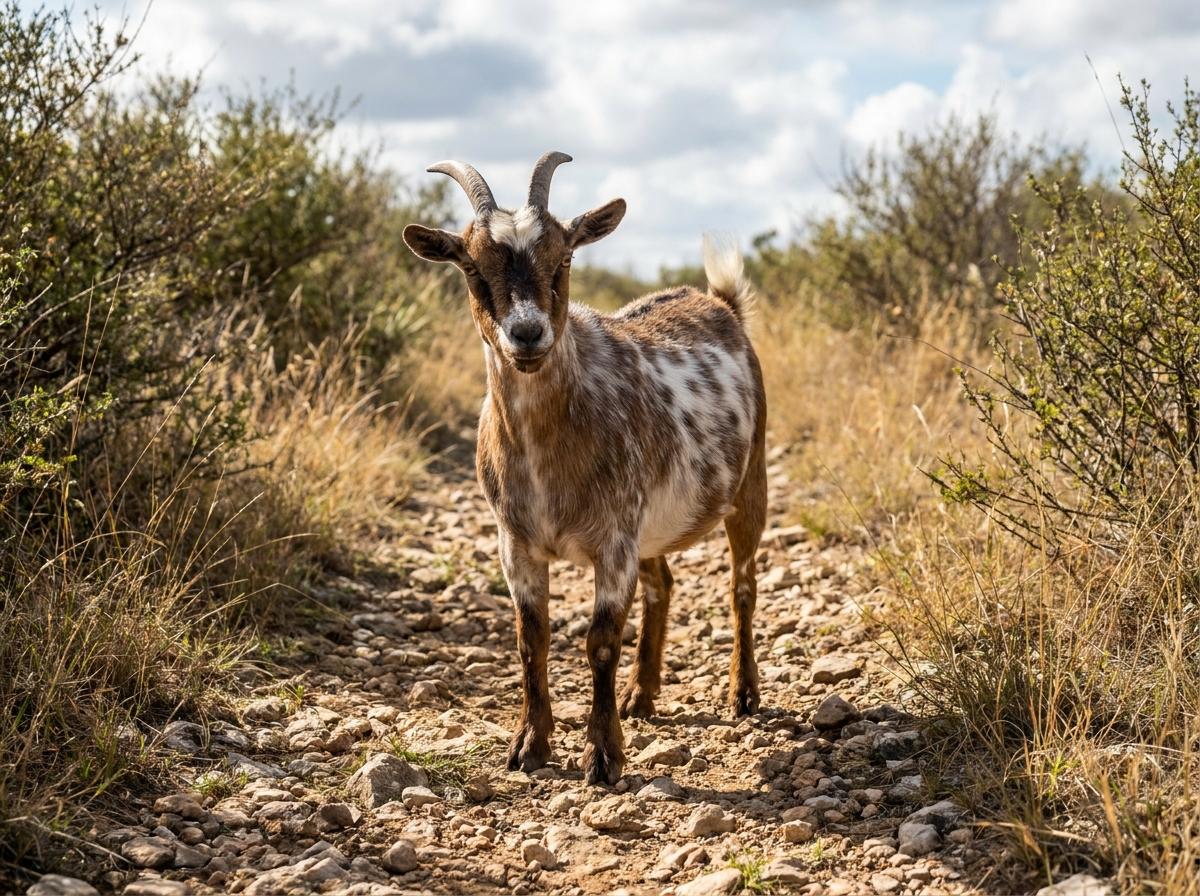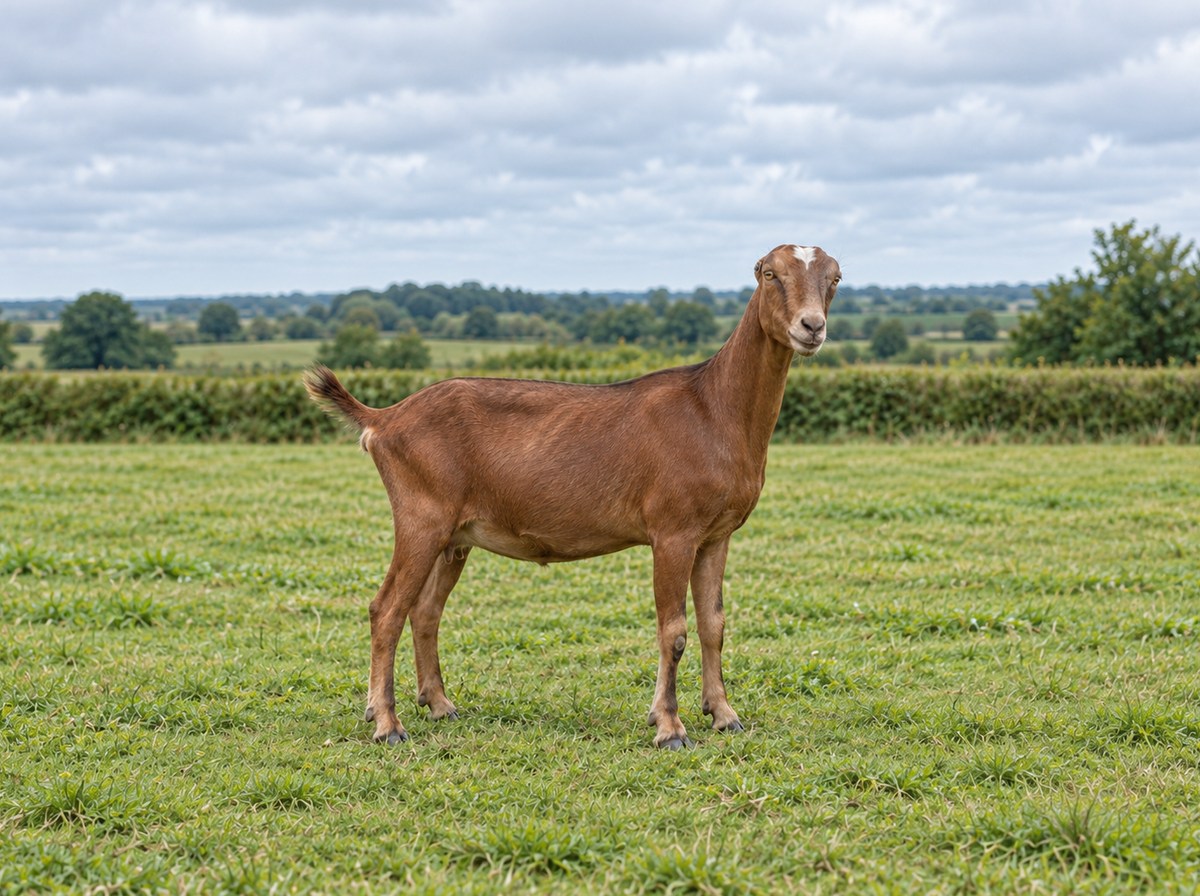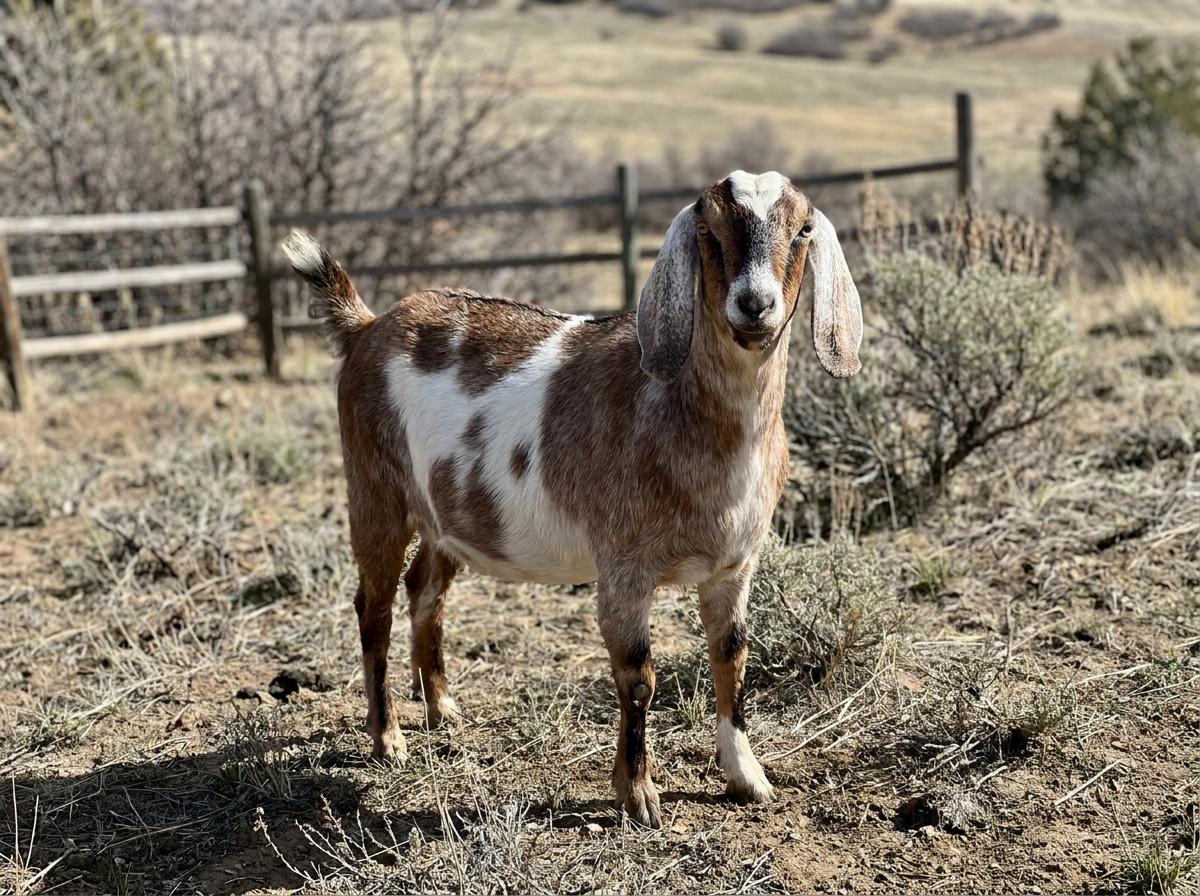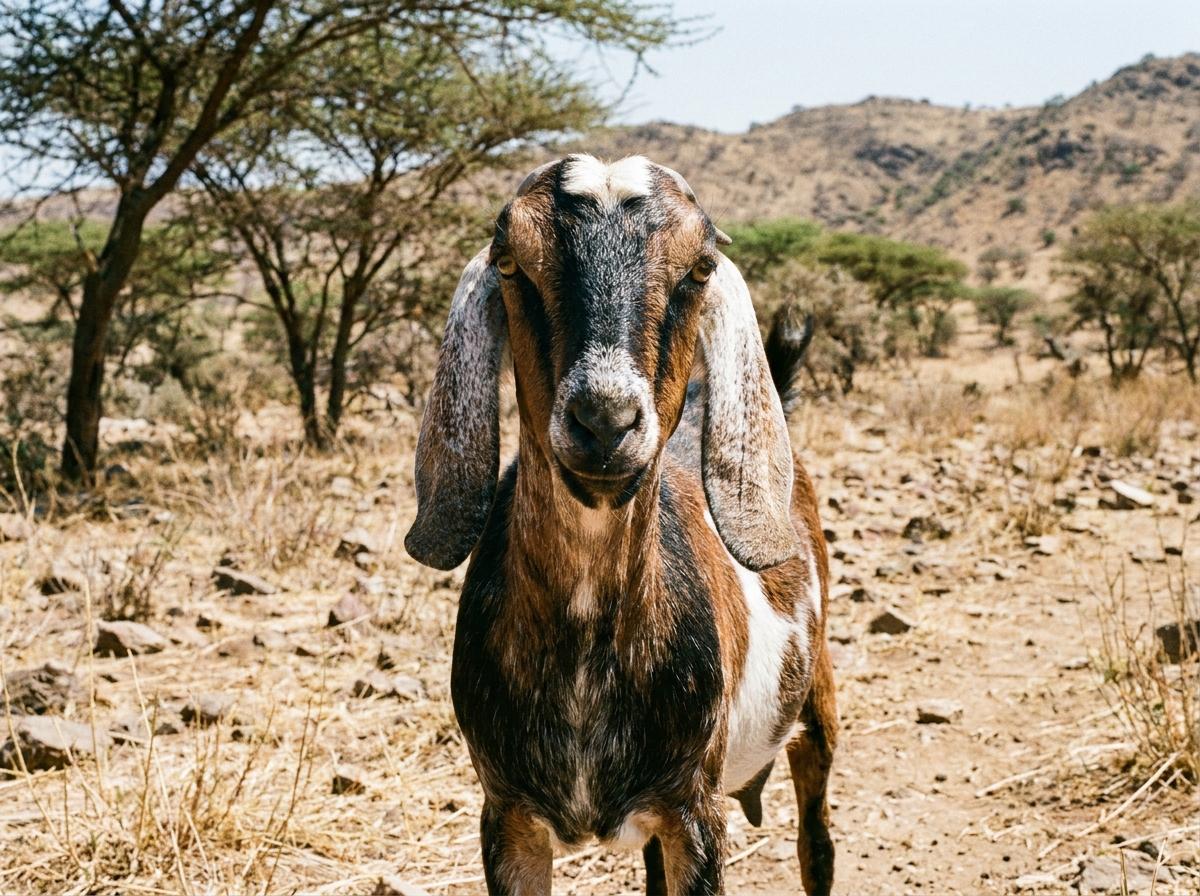



Jamnapari
Author: Elliott Garber, DVM · Published
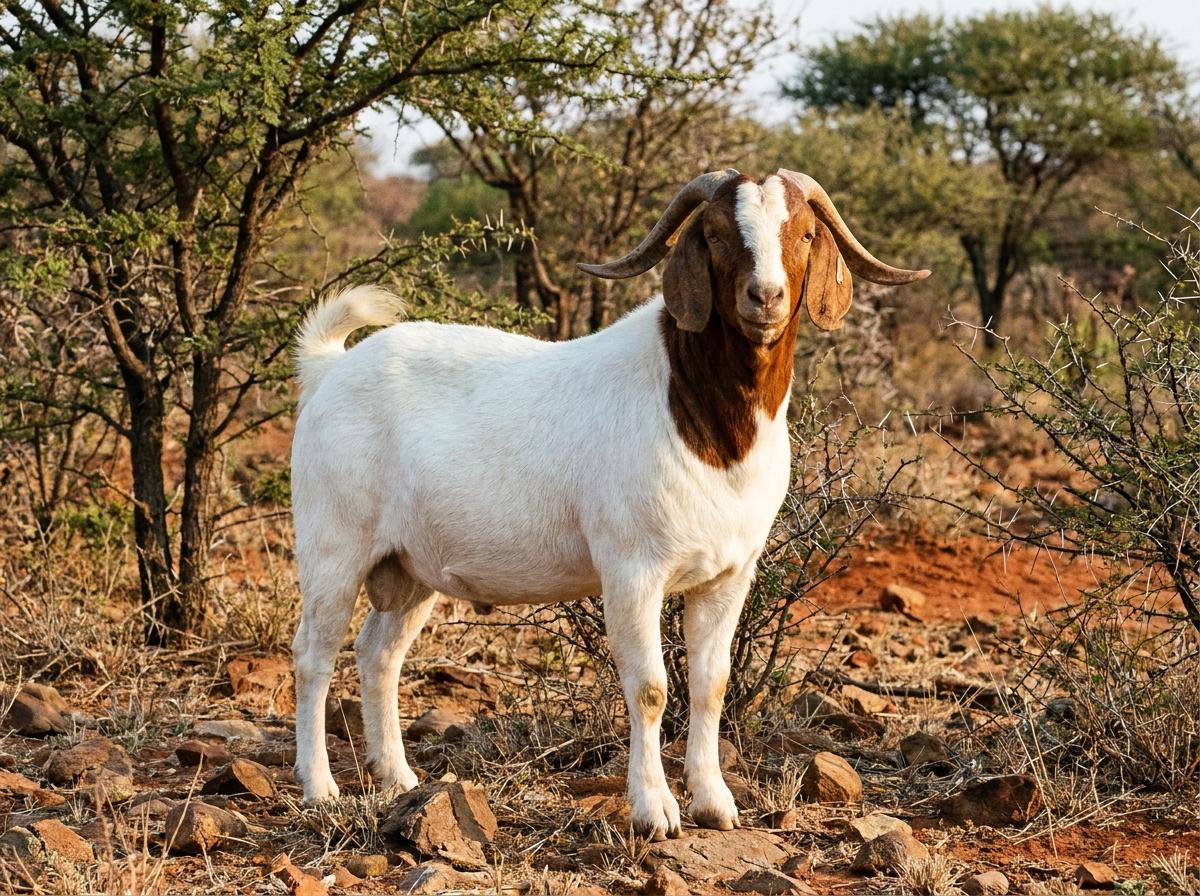
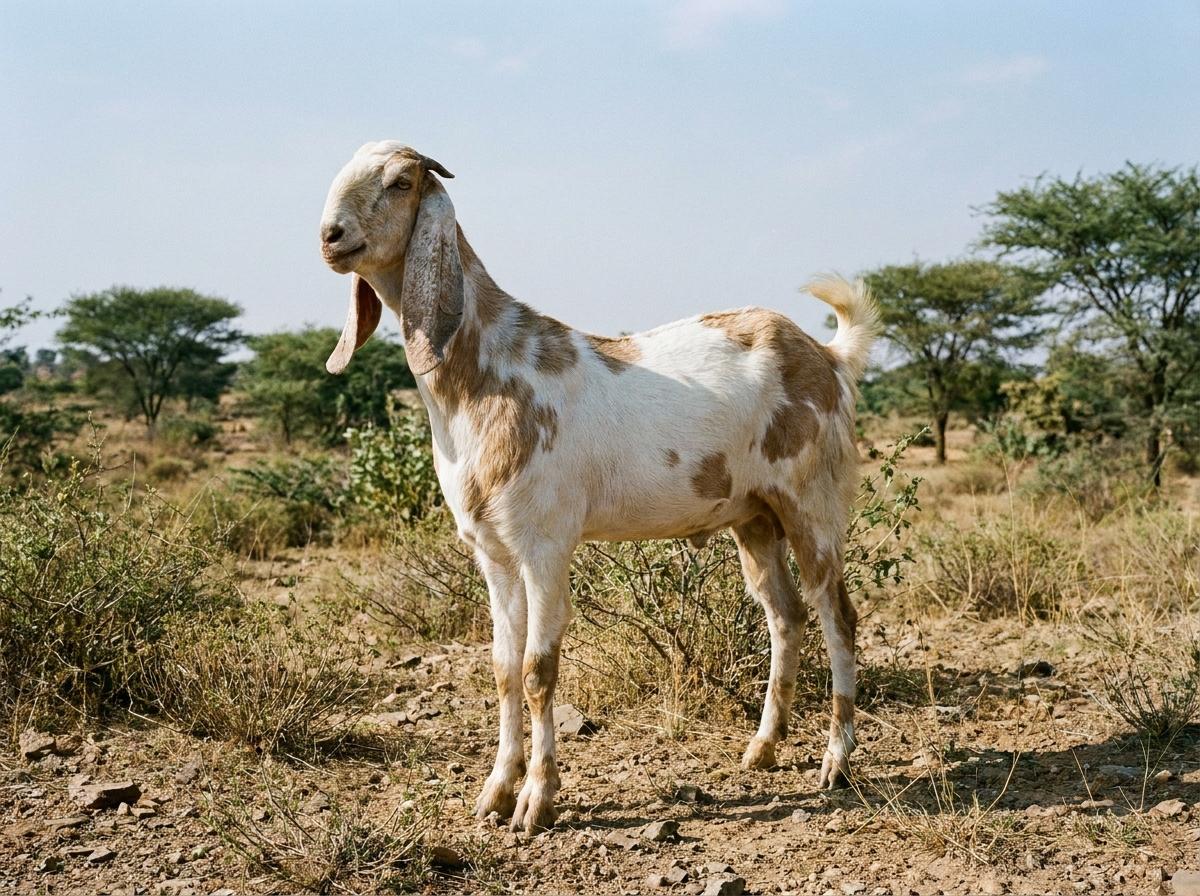
The Jamnapari (also spelled Jamunapari) is a tall, white, Roman nosed dairy goat from the ravine country of northern India, often called the “queen of goats” at home for its stately looks and its milk. It is one of the largest and most striking of India’s indigenous goat breeds, built long in the leg with pendulous ears that hang well past the jaw and a strongly convex face that gives it an almost parrot like profile. If you have landed here trying to work out what the breed actually is, how much milk it really gives, whether you can keep one, and where its genetics sit in the wider goat world, this page separates the well documented facts from the inflated numbers that circulate online. You can compare it against other dairy and meat goats on the broader Creatures goat species page.
| Also called | Jamunapari, Jamnapuri; known as Etawah in Indonesia |
|---|---|
| Origin | Etawah district, Uttar Pradesh, India; home tract in the Chakarnagar ravines between the Yamuna and Chambal rivers |
| Primary use | Dual purpose, dairy first, with meat and breeding stock |
| Doe weight | Averaged about 38 kg (roughly 84 lb) in FAO survey data; popular sources cite far more |
| Buck weight | Averaged about 45 kg (roughly 99 lb) in FAO survey data, with larger individuals |
| Height at withers | Does averaged about 75 cm, bucks about 78 cm (roughly 30 to 31 in); a notably tall, leggy goat |
| Ears | Long, flat, drooping; measured mean about 27 cm (nearly 11 in) |
| Milk yield | Measured lactations around 120 to 150 kg; a 1982 FAO survey recorded about 202 kg, among the highest of Indian goats |
| Litter size | Around 1.5 kids per kidding; mostly singles and twins |
| Coat and horns | White with tan patches on head and neck, feathered hind legs; both sexes usually carry short flat horns |
| Conservation | Large overall goat numbers historically, but purebred stock is scarce and declining in the home tract |
Browse listings, public profiles, breeders, or add your animal.
What is a Jamnapari goat?
The Jamnapari is an indigenous dairy and meat goat of northern India, and one of the country’s best known milking breeds. It is a large, upstanding animal that looks quite unlike the compact European dairy goats many keepers picture: long in the leg, deep in the body, with a strongly arched nose, a small tuft of hair above the muzzle, and enormous flat ears that fold and hang beside the face. The National Bureau of Animal Genetic Resources (ICAR-NBAGR), India’s official register of livestock breeds, lists it as a registered goat breed of Uttar Pradesh under accession INDIA_GOAT_2000_JAMUNAPARI_06011. The description of it as probably the highest yielding of India’s goat breeds is older than that register: it traces to R.M. Acharya’s 1982 FAO breed survey, and the research literature has repeated it ever since.
The name comes from the Yamuna river (historically written Jamna), which runs through the breed’s home country in Uttar Pradesh. In its heartland the Jamnapari carries real cultural weight, and it is traditionally called the “queen of goats” for its size, its carriage, and its reputation as a milker. That nickname is folklore rather than a technical grade, but it tells you how the breed is regarded where it comes from.
One thing worth setting straight up front: the “parrot mouth” you will read about is a description of the head shape, not a jaw defect. The face is so convex that the profile looks parrot like, and that convex line with its little nose tuft is the single most recognizable Jamnapari trait. It is a breed feature, not a fault.
Origin and home tract
The Jamnapari comes from the Etawah district of Uttar Pradesh, and is most closely associated with the Chakarnagar area, a stretch of deeply cut ravine country in the angle between the Yamuna and Chambal rivers. This is not lush pasture. It is broken, seasonally dry rangeland, and the breed was shaped by browsing shrubs and tree growth across that terrain rather than grazing flat improved grass. That origin explains the long legs, the reach, and the hardiness that let it forage rough ground.
The home tract matters when you read breed figures, because the Jamnapari that farmers keep in the ravines and selected animals kept at research stations are not always the same in condition or output. The ICAR-Central Institute for Research on Goats (CIRG) at Makhdoom, Mathura, has maintained a Jamnapari flock for decades, and much of the reliable production data comes from that work and from surveys of the home tract itself. Where the research numbers and the popular numbers diverge, this page leans on the measured ones.
How to recognize a Jamnapari
A few features together make the breed hard to confuse with anything else.
- Convex face with a nose tuft. The head is long and the nasal profile is strongly convex, a pronounced Roman nose that curves out to give the “parrot” look. A small tuft of hair sits above the muzzle. This is the breed’s signature.
- Very long drooping ears. The ears are long, flat, and pendulous, hanging beside and below the jaw. The FAO breed survey measured them at an average of 26.8 cm (nearly 11 inches) across 216 animals, though you will usually see the rounder figure of 25 cm quoted. That is a genuinely long ear for a goat.
- Tall, leggy frame. Jamnapari goats stand high, with survey averages of about 75 cm at the withers for does and 78 cm for bucks, and are long boned rather than blocky. Height, not bulk, is the first thing you notice.
- White coat with tan markings and feathered legs. The typical animal is white with tan or brown patches on the head and neck, though color varies. A distinctive feature is the thick growth of long hair on the hindquarters and back of the legs, sometimes described as feathering.
- Short flat horns in both sexes. Unlike some dairy breeds that are commonly polled, Jamnapari bucks and does usually carry short, flat, backward set horns.

The breed that traveled: Anglo-Nubian and Etawah
The Jamnapari’s influence reaches far beyond the Chambal ravines.
In Britain, the Jamnapari is recorded as one of the founding ancestors of the Anglo-Nubian goat, the large, Roman nosed, floppy eared dairy breed known in North America simply as the Nubian. Historical accounts of the Anglo-Nubian’s development point to a handful of imported eastern billies as especially influential, including an Indian Jamnapari brought to England in 1896, alongside a goat from Chitral and a Zaraibi from Egypt, with the first Anglo-Nubian herd book registrations following in 1910. If you keep or have seen Nubians, you have already met a distant, heavily developed descendant of this breed. That connection is also the most realistic way most Western keepers will ever encounter Jamnapari genetics, a point the acquisition section returns to.
The breed also traveled east. Exported to Indonesia, the Jamnapari became known there as the Etawah (after its home district), and crossing it with local Indonesian goats produced the widely kept Peranakan Etawah, or PE, dairy goat. So a breed from one district of Uttar Pradesh sits in the family tree of goats on three continents.
How much milk does a Jamnapari really give?
This is where honest sourcing matters most, because the figures you see online vary wildly.
The Jamnapari is genuinely a leading Indian dairy goat, and the figure that built its reputation is worth tracing to its actual source. The often quoted “about 200 kg in a lactation” comes from R.M. Acharya’s 1982 FAO breed survey, which recorded an average lactation yield of 201.96 kg across 166 does under farm conditions and called the breed probably the highest yielding of India’s goat breeds. Note what that number is and is not: it is a measured survey average from more than four decades ago, not a modern figure and not an individual ceiling.
The measured, everyday reality is more modest. In the long running CIRG research flock, total lactation yield has been recorded at roughly 120 to 125 kg over a lactation of about 180 days. Surveys in the breed’s home tract found milk yields of around 102 litres by 90 days and about 145 litres by 150 days. In plain terms, a good Jamnapari doe gives on the order of one kilogram of milk a day across her lactation, more in early lactation and in the best animals, which is high for an indigenous goat kept largely on browse but well short of the “two kilograms a day, every day” claims that circulate. The milk is rich, with butterfat commonly reported in the range of about 4 to 5 percent depending on the source and stage of lactation.
The practical takeaway: treat “around 200 kg per lactation” as a 1982 survey average recorded under farm conditions rather than a number to plan on today, and roughly 120 to 150 kg as what the more recent measured record shows. Both describe an excellent milking goat by indigenous standards.
Reproduction, growth, and prolificacy
Jamnapari does typically first kid at around 16 to 18 months of age. The breed is often described as a relatively aseasonal breeder that can conceive across much of the year, though managed flocks tend to concentrate kiddings, with breeding common in the May to June and October to November windows in the home tract.
On litter size, the popular claim that triplets and quadruplets are common does not hold up against the measured data, so it is worth correcting. Home tract and research records put the kidding rate at roughly 1.5 kids per kidding, with a twinning rate near half, meaning singles and twins are the norm and larger litters are the exception rather than the rule. This is a prolific and productive breed for its region, but it is not a triplet machine, and buying decisions built on the higher claim will disappoint.
Kids are born at around 2.75 to 3.1 kg and grow steadily on good management. Research flock figures put weight near 10 to 12 kg by three months and in the low twenties of kilograms by twelve months, with mature bucks in survey data averaging around 45 kg and does around 38 kg. You will see much larger adult weights (60 to 90 kg and occasionally higher) quoted on general breed websites; those figures are not well supported by the measured surveys, and appear to describe exceptional or generously fed individuals rather than the breed average. A tall, well grown Jamnapari is an impressive goat, but it is impressive for its height and frame more than for extreme mass.
Temperament and the “queen of goats”
Keepers generally describe Jamnapari goats as alert, active, and manageable, a breed long kept in close contact with the households that milk them. The “queen of goats” reputation rests as much on bearing and appearance as on production: this is a goat that stands tall and carries itself well. As with any goat, individual temperament depends heavily on handling and how much time the animals spend around people, and intact bucks in rut are a different proposition from does and wethers. The scientific literature on the breed concentrates on production and genetics rather than behavior, so treat temperament notes as practitioner observation rather than measured fact.
Husbandry and care
The Jamnapari is a hardy, browse adapted goat, but a productive dairy animal is still a higher input animal than a hardy brush goat, and it earns its keep only when fed and housed to match. The outline below covers the structure of good management; day to day ration building, mineral programs, and a health calendar are the province of a detailed care routine and your veterinarian.
Housing
Jamnapari goats need dry, draft free shelter, clean bedding, and enough space to avoid crowding, bullying, and the foot problems that come with wet or filthy footing. Sound, dry ground matters for a tall, heavy uddered milker. Those very long ears can be prone to nicks and injury in rough or cramped housing, so smooth fittings and uncrowded pens are worth the effort.
Feeding
The breed evolved browsing shrubs, saplings, and tree growth across dry ravine country rather than grazing flat grass, and it does best with access to varied browse plus a balanced ration. A doe in late pregnancy or heavy lactation cannot hold condition and milk on sparse forage alone; she needs enough energy and protein, constant clean water, and appropriate minerals. Underfeeding a goat selected for milk is the fastest route to lost condition, depressed yield, and metabolic trouble around kidding.

Breeding and health
Because the breed matures early, decide deliberately when young does first kid rather than letting it happen by accident, and select breeding stock on udder, feet, legs, and correct breed type rather than on size alone. Routine goat health management applies throughout: a parasite control plan suited to your climate and grazing, regular hoof care, clean kidding and milking hygiene, and the core vaccinations your veterinarian recommends for your area. Keep clear records of kiddings, milk output, treatments, and health events so culling and breeding decisions rest on evidence rather than memory. Defer all medical decisions and any drug dosing to a veterinarian who can examine the animal.
Climate
The Jamnapari is well suited to hot, dry conditions and to browsing marginal ground, which is exactly the environment that shaped it. In very hot weather it still needs shade, ventilation, and reliable water. It is less naturally suited to cold, wet, muddy climates, where its long ears, feathered legs, and dairy udder call for extra attention to dry housing and foot care.
Conservation status and rarity
Here the breed’s story turns cautionary. Historically there were very large numbers of goats of the general Jamnapari type. India’s 1972 census recorded an estimated 580,000, but even then Uttar Pradesh animal husbandry officials put genuinely purebred stock at no more than about 5,000, concentrated in the Chakarnagar ravines. Decades later the picture has not improved: a 2012 population genetics study put the breed at fewer than 8,000 animals overall and called it endangered, citing land reclamation, shrinking grazing area, and breed replacement.
The pressures are the familiar ones for a landrace breed: reclamation and cultivation of the ravine grazing that suited the breed, shrinking common grazing land, and crossbreeding or replacement with other goats. Conservation programs have responded, including in-situ improvement work begun in the 1990s in adopted home tract villages and nucleus breeding efforts to propagate quality Jamnapari stock. The record holds a genuine tension: at the broad population level FAO listed the breed as not at risk in 2007, and the DAD-IS database still carried that status in 2021, yet the purebred, breed true animal is the part that conservationists worry about. Both statements can be true at once, and for anyone seeking authentic stock the purebred picture is the one that matters.
Getting a Jamnapari, and the reality for Western keepers
If you are in India or a neighboring region, the Jamnapari is a working farm goat, bought and sold on its milk records, conformation, and breeding value, with genuine purebred stock commanding a premium precisely because it is scarce. Buy on evidence: ask for milk and kidding records, look hard at udder attachment, teats, feet, and legs, confirm correct breed type (the convex face, the long ears, the tall frame), and be clear about how pure the animal in front of you actually is, since the type is widely crossed.
For keepers in North America, Europe, or Australia, the honest answer is that you are very unlikely to buy a purebred Jamnapari. Under the USDA-APHIS import rules at 9 CFR 94.1, bringing in any ruminant that originates in a region where foot and mouth disease exists is prohibited, and APHIS treats the disease as present in every region it has not specifically declared free, India included. That keeps fresh Indian goat genetics out of reach. In practice, the breed’s traits reach the West through its descendant, the Anglo-Nubian (Nubian): if you want a large, Roman nosed, long eared, rich milking goat and you live where Jamnapari cannot be imported, a well bred Nubian is the realistic route to that phenotype. It is not the same breed, but it carries the family resemblance for a reason.
You can browse goats currently listed on the Creatures marketplace and look for breeders and farms in the Creatures directory. If you are comparing productive dairy and meat breeds, the Alpine and Boer breed pages are useful contrasts, one a specialist dairy goat, the other a specialist meat goat, against the Jamnapari’s dual purpose profile.
Frequently asked questions
Why is the Jamnapari called the “queen of goats”?
It is a traditional Indian nickname earned by the breed’s size, upright carriage, striking Roman nosed head, and its reputation as one of the country’s best indigenous milkers. It is folklore and admiration rather than an official designation.
Is “parrot mouth” a defect in this breed?
No. In the Jamnapari the term describes the strongly convex facial profile that makes the head look parrot like. It is the breed’s signature feature, not the dental or jaw fault that “parrot mouth” means in some other contexts.
How much milk does a Jamnapari goat give?
Measured flocks produce roughly 120 to 150 kg per lactation over about 150 to 180 days, on the order of a kilogram a day, more in early lactation and in top does. The widely quoted figure near 200 kg comes from a 1982 FAO breed survey average, not from current flocks. The “two kilograms a day” claims seen online overstate the everyday average.
Do Jamnapari goats really have triplets and quadruplets often?
Not typically. Measured kidding rates run around 1.5 kids per kidding, so singles and twins are the norm and larger litters are uncommon. Claims that triplets and quadruplets are common are not supported by the research data.
Can I buy a purebred Jamnapari in the United States or Europe?
Almost certainly not as a live import. Restrictions on small ruminant imports from foot and mouth disease regions keep genuine Indian stock out. The breed’s traits live on in the Western world mainly through its descendant, the Anglo-Nubian (Nubian).
Are Jamnapari goats horned?
Yes. Both bucks and does usually carry short, flat, backward set horns, which sets the breed apart from the naturally polled dairy goats some keepers are used to.
Is the breed endangered?
The purebred Jamnapari is scarce and generally described as declining in its home tract, even though goats of the broad type were once very numerous and FAO and DAD-IS have listed the breed at the population level as not at risk, a status DAD-IS still carried in 2021. If you want authentic breeding stock, treat the purebred as the uncommon, conservation sensitive animal it is.
Do this next on Creatures
Whether you are researching the breed, comparing dairy goats, or already keeping goats of your own, Creatures is the records, marketplace, and directory layer to do it in one place.
Add your goat. Keeping Jamnapari or Jamnapari cross goats? Create a free animal profile in a few minutes. The walkthrough is in adding an animal to Creatures. No account needed to start.
Track milk and health. Record milk yields, kiddings, and health events so you can make breeding and culling calls on evidence. The record sheet opens for any visitor to look around, and a free account saves what you enter. See adding a record for the full how-to.
Find stock. Browse goats on the marketplace and search trusted breeders and farms in the Creatures directory. New to the marketplace? See saving searches and using your watchlist.
Get alerted. Purebred Jamnapari stock is scarce, so set a free Jamnapari listing alert and we will tell you if one is posted. No account needed to start.
List your farm. Run a herd or farm? Add your operation and get listed in the breeder directory so buyers can reach you. If you manage the operation with others, read creating an organization and adding your team.
Explore the species library. Compare the Jamnapari with other goats on the goat species page, or browse further afield, from the Antwerp Smerle pigeon to the IMG boa constrictor.
If you run goats or a farm, you can also list your operation in the Creatures directory so buyers looking for productive dairy stock can find you.