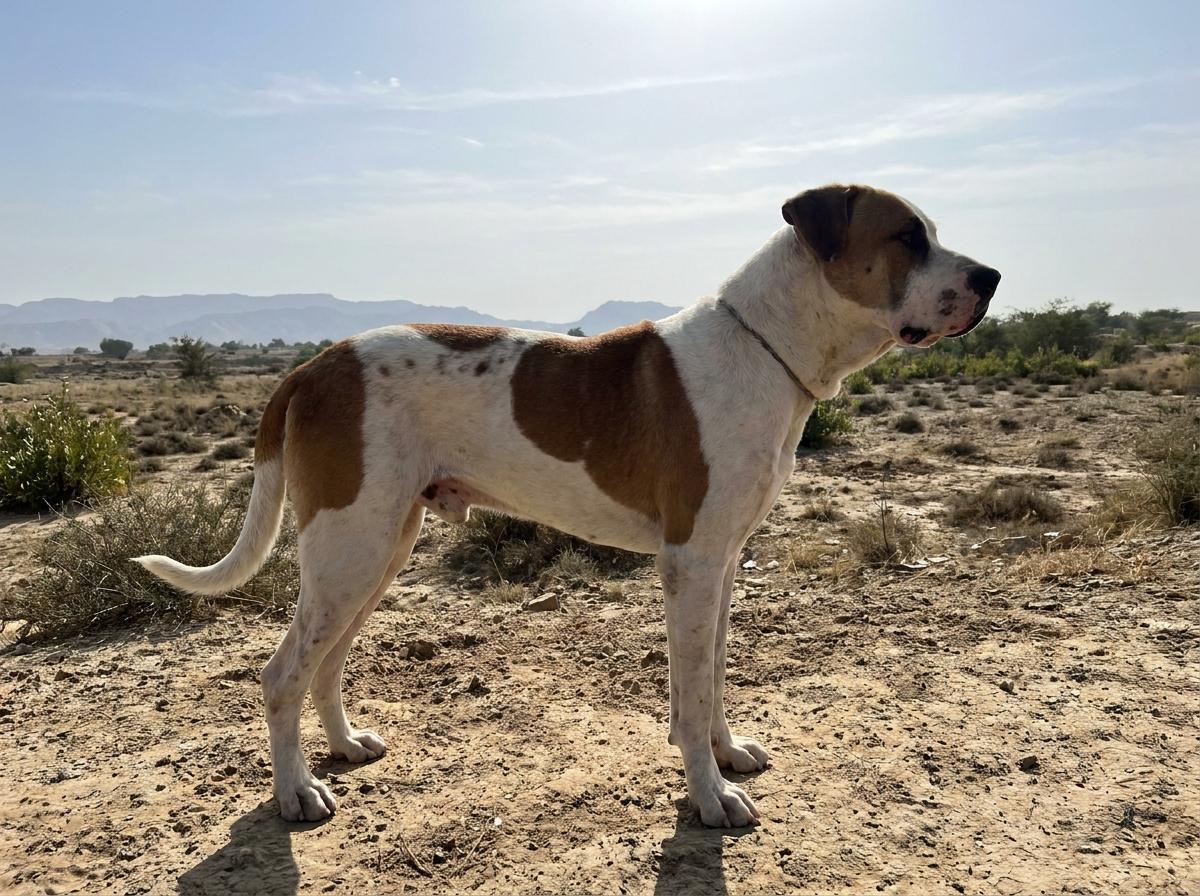
Bully Kutta
The Bully Kutta is a giant, short-coated mastiff type from the Punjab and Sindh regions of Pakistan and northern India, long kept as a guard dog, a hunting and catch dog, and, far too often, a fighting dog. It is tall, powerful, usually white or white with patches, and bred to be suspicious of strangers. It has no written standard with any of the big international kennel clubs, which means “Bully Kutta” describes a regional type rather than a documented breed, and that matters for anyone thinking about buying one. This guide covers what the name means, where the dogs come from, the honest story about fighting, how they relate to the Gull Terr and Gull Dong, what giant-breed health looks like, the legal and import realities, and what to expect on price. To compare it with other guardian and mastiff breeds, start on the Creatures dog species page.

| Also called | Pakistani Mastiff, Indian Mastiff, Sindhi Mastiff, Bully |
|---|---|
| Origin | Punjab and Sindh, in present-day Pakistan and northern India |
| Name | Usually explained as “heavily wrinkled dog”; kutta is the everyday word for dog |
| Type | Giant, short-coated guardian mastiff; commonly white or white with patches |
| Size | Commonly reported around 30 to 33 inches at the shoulder for males; no official standard exists |
| Temperament | Protective, territorial, often dog-aggressive; for experienced handlers only |
| Recognition | Not listed by the AKC, UKC, or FCI; not on India’s ICAR-NBAGR dog register |
| Key health risks | Giant-breed issues: hip and elbow dysplasia, bloat (GDV), shorter lifespan |
Browse listings, public profiles, breeders, or add your animal.
What is a Bully Kutta?
A Bully Kutta is a large mastiff-type dog from the Punjab region, the fertile plain that is split between Pakistan and India, and from neighboring Sindh. You will see it sold and discussed under a string of names, including Pakistani Mastiff, Indian Mastiff, Sindhi Mastiff, and sometimes Alangu Mastiff (a name also used for an old Tamil Nadu type), and in everyday speech people often just say “bully.” All of them point at the same loose population of big, short-coated guard dogs.
The name is usually explained as “heavily wrinkled dog.” According to the Wikipedia entry on the Bully Kutta, “bully” comes from a Hindustani and Punjabi root, bohli, meaning heavily wrinkled, and some explanations also tie it to the local word for lips, a nod to the dog’s loose flews. “Kutta” is simply the word for dog in Hindi, Urdu, and Punjabi. So the name is descriptive rather than grand: the wrinkly dog.
The most important thing to understand up front is that the Bully Kutta is a type, not a closed breed with a studbook. Dogs are bred to a working purpose and a look, strains vary from district to district and kennel to kennel, and there is no single written standard that everyone breeds to. Two dogs sold under the same name can differ noticeably in height, head shape, and temperament.
Origin and history
Accounts of the Bully Kutta’s early history lean heavily on tradition, and much of what circulates online cannot be checked. Popular histories connect the type to big guard and hunting dogs kept by rulers and landowners across the subcontinent, and some tell a story of Mughal emperors hunting with them. Others trace the dogs to mastiffs brought in by armies and traders over the centuries. None of these stories rests on a pedigree record or a genetic study, so treat them as tradition.
What is better documented is that large “Indian Mastiff” dogs were known to Victorian Britain. Dog show records from the 1860s, cited in the Wikipedia article above, list Indian Mastiffs exhibited in London, including one entered by the Prince and Princess of Wales. Whether those dogs were the direct ancestors of today’s Punjabi Bully Kutta is impossible to say, but they show that big subcontinental mastiffs were a recognized kind of dog more than 150 years ago.
In their home region the dogs have done several jobs. They have guarded farms, estates, and livestock. They have been used to hunt and hold large game. And, unavoidably, they have been bred and used for fighting. That last use shaped the modern type as much as any of the others, which is why an honest guide has to deal with it directly.
The dog-fighting problem, stated plainly
Bully Kuttas have a long association with organized dog fighting in Pakistan and parts of northern India. That history is the main reason the type has a reputation for aggression toward other dogs, and it is why lines bred from fighting stock can be a real risk in an ordinary home.
Dog fighting is against the law in both countries. Pakistan’s Prevention of Cruelty to Animals Act, 1890 makes it an offence to incite any animal to fight or to bait an animal. India’s Prevention of Cruelty to Animals Act, 1960 treats organizing, keeping, or managing a place for animal fighting as cruelty under section 11(1)(n), which the Animal Welfare Board of India’s enforcement handbook lists as a cognizable offence. Enforcement is uneven, and fights still happen, but that is a problem of policing, not of legality.
Two practical points follow for anyone interested in the breed. First, the fighting past is not a feature to admire or a selling point, and a seller who markets a dog’s “gameness” or fighting bloodline is telling you something important about how the dog was bred. Second, many South Asian owners and breeders keep these dogs as guardians and companions and have nothing to do with fighting. Judge the individual kennel by what it breeds for, not by the name on the dog.
What a Bully Kutta looks like
There is no official breed standard, so this describes the common working type rather than a written specification.
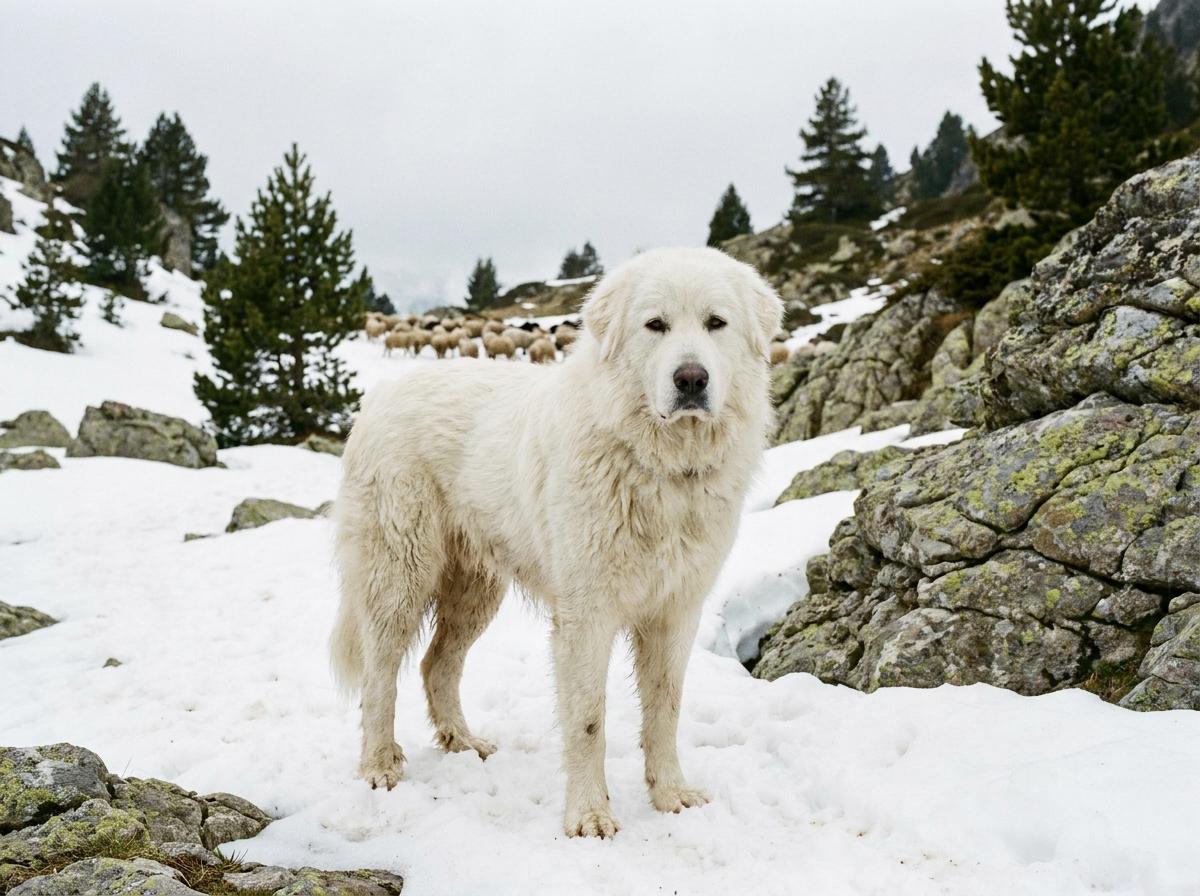
- Tall and athletic for a mastiff. A good Bully Kutta is big but not ponderous: long legs, a deep chest, a fairly tucked-up waist, and a level back. It looks more like a heavy, rangy guard dog than a squat bulldog.
- A broad head and square muzzle. The skull is wide, the muzzle is strong and fairly long for a mastiff, and the lips are loose. Wrinkling on the head varies by line.
- A short, smooth coat. The coat is short and close, suited to the hot plains of Punjab and Sindh, and needs very little grooming.
- Mostly white. White and white with patches are the classic looks. References also describe fawn, black, brindle, red, and harlequin dogs.
- Ears and tail. Ears are naturally dropped. In the region, ears are commonly cropped short. The AVMA opposes ear cropping when it is done only for cosmetic reasons, and we show natural ears in every image here. The tail is long and tapering.
Size figures deserve caution. Commonly reported ranges put males at roughly 30 to 33 inches at the shoulder and females a little smaller, with weights often quoted anywhere from about 130 to 200 pounds. Those numbers come from breed references rather than a registry standard, and they vary a lot between sources. Individual dogs vary by line and feeding, so read any published figure as a rough description of a giant dog, not a guarantee.

Temperament and behavior
The Bully Kutta is a guardian first. Good ones are calm and steady at home, attached to their family, and alert to anything unfamiliar. They are also territorial, suspicious of strangers, and, in many lines, intolerant of other dogs, especially dogs of the same sex. Those traits are the job, not a malfunction, and they do not fade with a few obedience classes.
A dog that can weigh well over a hundred pounds and has been bred to act on its own judgment needs a handler who can manage it physically and mentally. That means:
- Early, sustained socialization. Puppies need calm, controlled exposure to people, places, sounds, and handling from the first weeks at home, continued through adolescence. Socialization lowers risk; it does not turn a guardian into a dog park regular.
- Training that starts early. Leash manners, a reliable recall in safe spaces, and settle-on-cue need to be solid before the dog is too strong to guide by hand.
- Secure containment. Tall, sound fencing and a household routine that prevents door dashing are non-negotiable.
- Careful management around other dogs. Many owners keep a Bully Kutta as the only dog, or only with a carefully chosen companion of the opposite sex.
This is not a first dog, an apartment dog, or a dog for a home where visitors come and go unsupervised. It suits experienced large-breed owners with space, time, and a clear plan for managing a protective dog for its whole life.
The Caucasian Shepherd guide sets out the space, handling and management questions behind this imposing guardian breed.
Bully Kutta, Gull Terr, and Gull Dong
Three names come up together in Pakistani dog culture, and they are easy to confuse.
- The Bully Kutta is the giant mastiff type described on this page.
- The Gull Terr, also called the Gull Terrier or Pakistani Bull Terrier, is a lighter, bull-and-terrier type from the Punjab. Its history is usually told as local dogs crossed with bull terrier types brought in during the colonial period, with the Bully Kutta often named among its ancestors.
- The Gull Dong is commonly described as a cross between the two: bigger than a Gull Terr, lighter and quicker than a Bully Kutta.
None of the three has a recognized international standard, and all three carry the same fighting-dog baggage, which is why the same buyer cautions apply to each. If you are researching big guardian types more broadly, the Kurdish Mastiff is another regional mastiff kept largely outside the kennel-club world.
Recognition and registries
The Bully Kutta is not recognized by any of the major international registries. It does not appear in the American Kennel Club’s breed lists or its Foundation Stock Service, it has no standard with the United Kennel Club, and it is not among the molossoid breeds listed by the Fédération Cynologique Internationale. In India, it is also not one of the six native dog breeds on the ICAR-NBAGR register of indigenous animal genetic resources as of September 2026.
Some Indian references say a national kennel body and a private mastiff registry record these dogs, and some breeders issue their own papers. We could not confirm those claims on an official registry site, so treat any paperwork as a breeder’s record, not proof of a recognized pedigree. In practice, the most reliable information about a Bully Kutta is the dog in front of you, its parents, and the health and vaccination records that come with it.
Health and lifespan
No breed-specific health studies have been published for the Bully Kutta, so the honest guide is general giant-breed medicine. The main risks for any dog this size are well documented.
- Hip and elbow dysplasia. The American College of Veterinary Surgeons describes canine hip dysplasia as most common in large breed dogs, with genetics the biggest single risk factor and rapid growth from overfeeding a complicating one. Elbow dysplasia is also a common cause of front-leg lameness in large, fast-growing dogs. Ask whether the parents have had hip and elbow X-rays, and keep a growing puppy lean.
- Bloat (gastric dilatation-volvulus). GDV is a life-threatening emergency in which the stomach fills with gas and can twist. The Merck Veterinary Manual lists large and giant breeds with deep chests among the most at risk. Retching without producing anything, a swelling belly, restlessness, and drooling mean an emergency vet visit, now. The ACVS notes that many surgeons recommend a preventive gastropexy for at-risk breeds, often done at the same time as a spay or neuter; ask your veterinarian whether it makes sense for your dog.
- A shorter life. Across dog breeds, bigger means shorter-lived. A study of 74 breeds in The American Naturalist concluded that large dogs die young mainly because they age faster. There is no reliable lifespan figure for the Bully Kutta specifically, so plan for the shorter life typical of giant breeds rather than trusting a number on a sales page.
- Heat and skin. A short white coat means sunburn risk on thin-haired, pink skin, and a big dog overheats more easily in hot, humid weather. Shade, water, and exercise in cool hours matter.
Every medical decision belongs with a veterinarian who can examine the dog. What an owner controls is lean growth, sensible exercise for a growing giant, a feeding routine your vet agrees with, and good records. If you ever plan a litter, involve the vet from the start; our guide to how long dogs are pregnant covers the due window and the larger litters giant breeds tend to carry.
Living with a Bully Kutta
Space and exercise
A Bully Kutta needs room: a house with a large, securely fenced yard at minimum, and ideally a rural property. Adults need daily walks and time to move, but growing puppies should not be pushed hard on long runs or repeated jumping while their joints are developing. A bored guardian without a job tends to invent one, usually patrolling and barking.
Handling in public
Walk the dog on a sturdy flat collar or harness and a leash you trust, give other dogs a wide berth, and do not put the dog in situations where a stranger or loose dog can rush it. Owning a protective giant means taking responsibility for every encounter, not relying on the dog to make good choices.

Care basics
The short coat needs little more than a weekly brush and a check of skin and nails. Keep vaccinations, including rabies, and parasite control current; for a new puppy, the puppy vaccination schedule sets out the first-year shots. Feed a diet suited to a large-breed dog at each life stage, and plan with your veterinarian for the growth phase in particular. Budget for giant-dog costs: bigger food bills, larger medication doses, and potentially orthopedic or emergency surgery.
Records
With no recognized registry, a Bully Kutta’s paper trail is whatever you create. Weights, vaccination dates, deworming, vet visits, hip and elbow results, and photos from puppyhood onward make the dog easier to care for and far easier to rehome or place if you ever need to. You can keep all of it on a free Creatures animal profile, and the help center’s guide to health and medical records shows how owners set them up. Pair it with reminders and upcoming care so boosters and parasite treatments do not slip.
Legal restrictions and insurance
Some countries, cities, housing providers, and insurers restrict large guardian dogs, mastiff types, or dogs with a fighting history, and some rules judge a dog by appearance rather than papers. Because the Bully Kutta has no recognized standard, a dog of this type can be classed in unpredictable ways. We are not naming specific places here because the rules change and differ even within a single country. Before you bring one home, check the rules with your local authority, your landlord or homeowners association, and your insurer.
For context, the AVMA supports dangerous-animal laws only when they do not single out specific breeds, and focuses on the behavior of individual animals and their owners. Either way, the law holds the owner responsible for a large protective dog, and that is the right frame to plan around.
Bully Kutta price and availability
There is no reliable public price for a Bully Kutta, and we will not invent one. Prices quoted online vary enormously, and with no recognized registry there is little to verify what a seller is actually offering.
Inside Pakistan and India, dogs change hands through local breeders, owner networks, and word of mouth. Outside South Asia they are genuinely scarce. What turns up in North America and Europe tends to be one of three things: dogs bred from a small number of imported lines, dogs imported directly, or dogs sold as “Bully Kutta” that are crosses or another mastiff type.
If you are looking outside the region, keep these realities in mind:
- Importing is complicated. Pakistan and India are both on the CDC’s list of high-risk countries for dog rabies, so dogs coming into the United States from either country face stricter vaccination and entry rules. Other countries have their own requirements. Check the destination country’s official rules before any money changes hands.
- Scams target rare breeds. Watch for sellers who cannot show the dog on a live video call, refuse to let you meet the parents, push for payment by wire or gift card, or promise to ship a puppy internationally with fees that keep growing. A rare, high-demand name is exactly what puppy scammers use.
- Ask what the dogs are bred for. A kennel that talks about guarding, temperament, and health is a different proposition from one that talks about fighting ability or “gameness.”
- Ask for health evidence. Hip and elbow X-rays of the parents, vaccination and deworming records for the puppy, and a willingness to take the dog back if things go wrong.

On Creatures, you can check the marketplace filtered for Bully Kutta, search the breeder directory, and set a free alert so a listing finds you.
Is a Bully Kutta right for you?
A Bully Kutta can be a devoted, steady guardian in the right hands. The right hands belong to someone who has already owned a large, protective breed, has secure space and no need to take the dog into crowded places, can commit to socialization and training from day one, and has the budget for giant-dog health care. If that does not describe your situation, other large breeds give you the size and loyalty with far less risk, and the Creatures dog species page is the easiest place to compare them.
The Bully Kutta also belongs to a wider story of animals bred for war, guarding, and protection. If that history interests you, read about the destrier, the medieval warhorse that was a type rather than a breed, much like the Bully Kutta today. And if you want a companion animal at the opposite end of the handling scale, the Mini Lop rabbit is about as far from a giant guardian mastiff as a family pet gets.
Frequently asked questions
What does Bully Kutta mean?
It is usually translated as “heavily wrinkled dog.” “Bully” is explained as coming from a Hindustani and Punjabi root meaning heavily wrinkled, and “kutta” is the ordinary word for dog in Hindi, Urdu, and Punjabi.
Is the Bully Kutta recognized by the AKC or other kennel clubs?
No. It is not listed by the American Kennel Club, the United Kennel Club, or the FCI, and it is not on India’s official ICAR-NBAGR register of native dog breeds.
Is a Bully Kutta a good family dog?
Only for experienced owners with space and a firm plan. A well-bred, well-socialized dog can be devoted to its household, but the type is protective, often intolerant of other dogs, and very large. It is a poor choice for first-time owners or homes with frequent unfamiliar visitors.
How big does a Bully Kutta get?
There is no official standard. Commonly reported figures put males around 30 to 33 inches at the shoulder, with weights quoted from about 130 to 200 pounds, but individual dogs and strains vary widely.
Is the Bully Kutta banned?
Dog fighting is illegal in Pakistan and India, but that is different from banning the dog. Some places, landlords, and insurers restrict large guardian or mastiff-type dogs. Check your local rules before buying.
How much does a Bully Kutta cost?
There is no reliable public price. Quotes vary widely, the dogs are scarce outside South Asia, and importing adds cost and paperwork. Be cautious of any seller who cannot show you the dog and its parents.
What is the difference between a Bully Kutta and a Gull Dong?
The Bully Kutta is the giant mastiff type. The Gull Dong is commonly described as a cross between the Bully Kutta and the lighter Gull Terr, giving a somewhat smaller, quicker dog.
Do this next on Creatures
Whether you are researching the Bully Kutta, hoping to find one, or already living with a big guardian breed, Creatures is where you can keep records, watch for listings, and connect with breeders.
Compare breeds. Weigh the Bully Kutta against other mastiff and guardian breeds on the Creatures dog species page.
Watch for listings. Check the marketplace filtered for Bully Kutta (they are rarely listed) and search trusted breeders in the Creatures directory. See saving searches and using your watchlist for how alerts work.
Get alerted. Bully Kuttas rarely come up outside South Asia, so set a free Bully Kutta listing alert and we will tell you when one is posted. No account needed to start.
Add your dog. Already own a Bully Kutta or another giant breed? Create a free animal profile in a few minutes, no account needed to start. The walkthrough is in adding an animal to Creatures.
Build the paper trail. Add weight, vaccination, and health records as they happen, including hip and elbow results. The record sheet opens for any visitor, and a free account saves what you enter. See adding a record for the how-to.
List your kennel. Breed guardian dogs responsibly? Get listed in the breeder directory so buyers can find you, and read creating an organization and adding your team if others help run it.
Set up your operation. Create a free organization profile for your kennel or rescue, no account needed to start.