




Golden Retriever
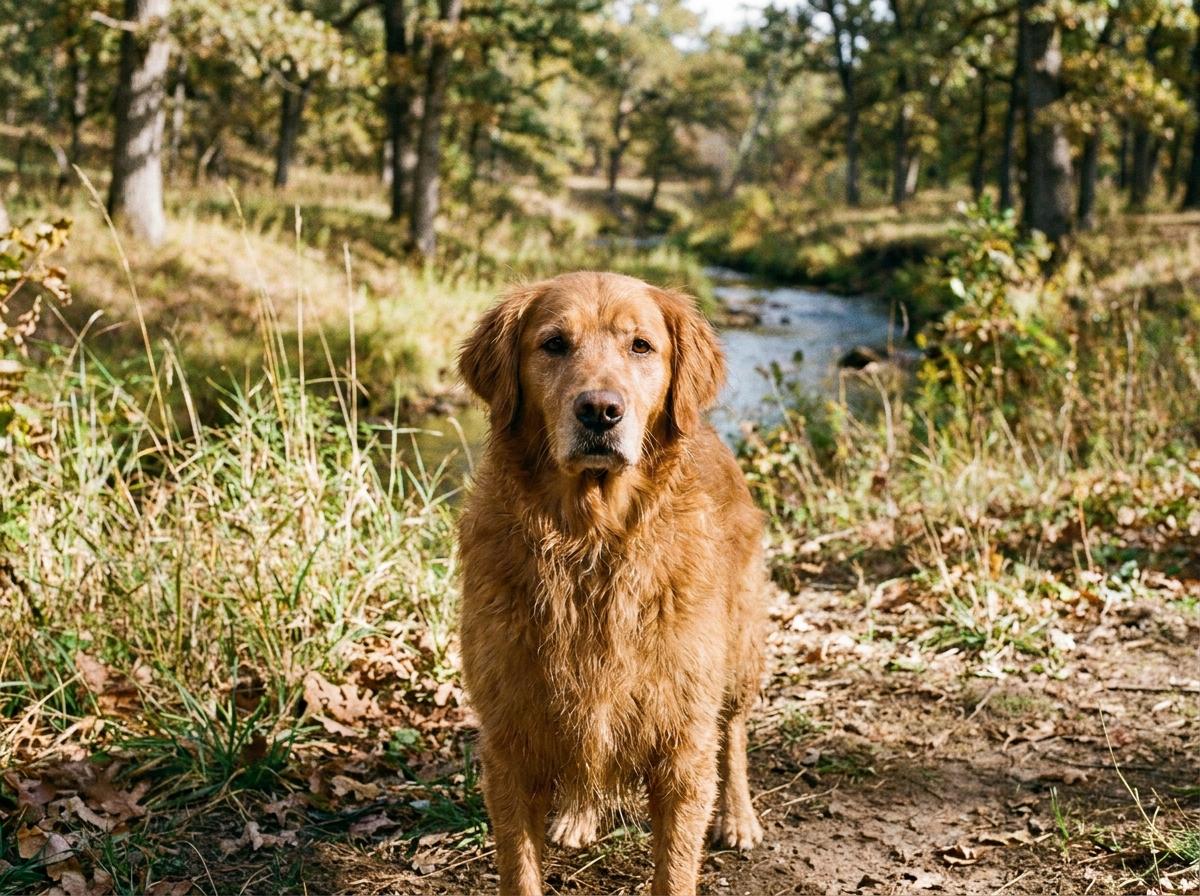
The golden retriever began in nineteenth-century Scotland as a capable shooting companion for retrieving birds from moor, marsh, and water. The breed traces strongly to the Guisachan estate of Dudley Marjoribanks, where yellow retrievers, the now-extinct Tweed Water Spaniel, and other sporting dogs helped create a biddable retriever with a soft mouth and water-resistant coat. Modern goldens range from pale cream to rich gold, with field lines often lighter framed and more driven than many show or companion lines. Their friendly expression should not obscure their roots as energetic working dogs.
Most golden retrievers thrive when family life includes daily exercise, swimming or retrieving games, and patient training. They are typically social dogs, but unmanaged adolescent exuberance can be a lot in a large, strong retriever. The feathered coat sheds heavily and needs brushing, especially behind the ears, under the tail, and around the trousers. Health screening is a serious buyer concern in this breed; hips, elbows, eyes, and heart clearances are standard expectations, and cancer is an important topic in many golden families. Weight control matters because extra pounds stress joints and can shorten an otherwise active life.
Colors: Apricot, Bicolor, Black, Black and Tan, Black and White, Black Mask, Blue, Blue and Tan, Blue Merle, Blue Roan, Blue Tick, Brindle, Brown, Brown and Tan, Brown and White, Chocolate, Cream, Dapple, Dark Gold, Domino, Fawn, Fawn and White, Gold, Gray, Harlequin, Irish Marked, Light Gold, Liver, Liver Mask, Mantle, Mask, Merle, Mottled, Parti-Color, Piebald, Red, Red and White, Red Merle, Red Roan, Red Tick, Reverse Brindle, Roan, Sable, Saddle, Silver, Speckled, Spotted, Tan, Ticked, Tricolor, Tuxedo, White, Yellow