


Cocker Spaniel
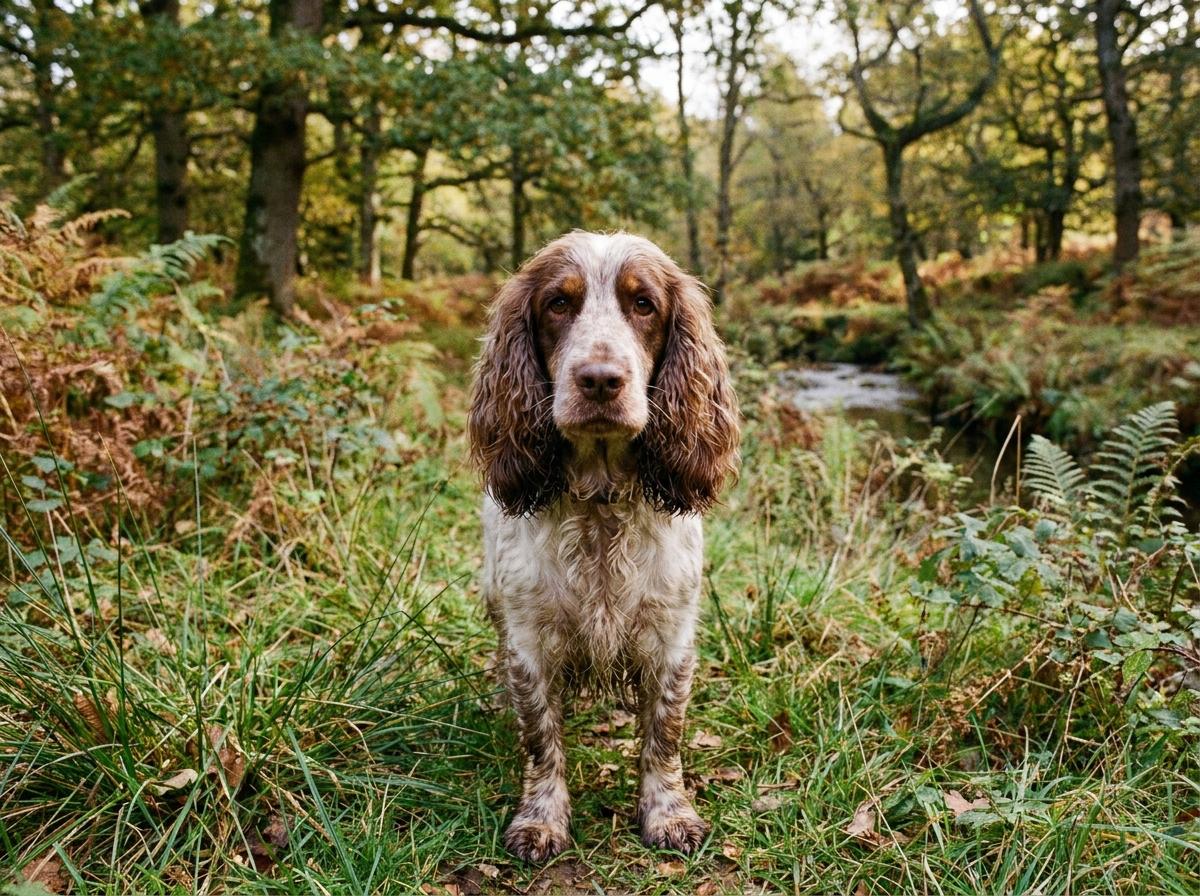
The cocker spaniel is a compact gundog developed to find, flush, and retrieve birds, especially woodcock, in close cover. The name is used differently by region: in many countries it may mean the English Cocker Spaniel, while in North America it can also refer to the American Cocker Spaniel, a smaller, more heavily coated breed that split into its own type. English lines are often divided again into field and show families, with field dogs lighter, racier, and more intensely driven. Across types, the cocker outline includes soft expression, long ears, a merry tail, and a silky coat in solid, parti-color, roan, or tan-point patterns depending on the standard.
Cocker spaniels fit best where grooming and activity are part of normal life. The ears and feathering collect moisture, seeds, and mats, so routine brushing, ear checks, and trimming are more than cosmetic. Many enjoy retrieve work, scent games, agility, and off-leash exercise in safe areas; a bored cocker may invent noisy or destructive jobs. Weight control matters because these dogs are food-motivated and often compact. Health questions for breeders include eye disease, ear and skin problems, hip status, patellas in some lines, and, in certain families, temperament stability. Before buying, it is worth asking whether the puppy comes from working, show, or companion-focused lines, as their energy and coat demands can differ greatly.
Colors: Apricot, Bicolor, Black, Black and Tan, Black and White, Black Mask, Black White and Tan, Blue, Blue and Tan, Blue Merle, Blue Roan, Blue Tick, Brindle, Brown, Brown and Tan, Brown and White, Buff, Chocolate, Cream, Dapple, Domino, Fawn, Fawn and White, Gold, Golden, Gray, Harlequin, Irish Marked, Liver, Liver Mask, Mantle, Mask, Merle, Mottled, Parti-Color, Piebald, Red, Red and White, Red Merle, Red Roan, Red Tick, Reverse Brindle, Roan, Sable, Saddle, Silver, Speckled, Spotted, Tan, Ticked, Tricolor, Tuxedo, White, White with Merle, Yellow