Welbar
Author: Elliott Garber, DVM · Published
The Welbar is a British autosexing chicken developed from Welsummer and Barred Plymouth Rock stock. Its barred plumage and brown eggs make the family connection easy to remember. The more consequential detail is that autosexing depends on maintaining the intended breeding line, not merely seeing bars on an adult bird.
Start with the chicken guide for general flock planning. This page focuses on the questions that distinguish Welbar from a Welsummer, another barred breed or an undocumented cross.
| Origin | British breeding program |
|---|---|
| Background | Welsummer and Barred Plymouth Rock |
| Purpose | Utility and autosexing breed |
| Eggs | Brown shells; actual flock output varies |
| Breeding question | Does the maintained line reliably distinguish chick sexes? |

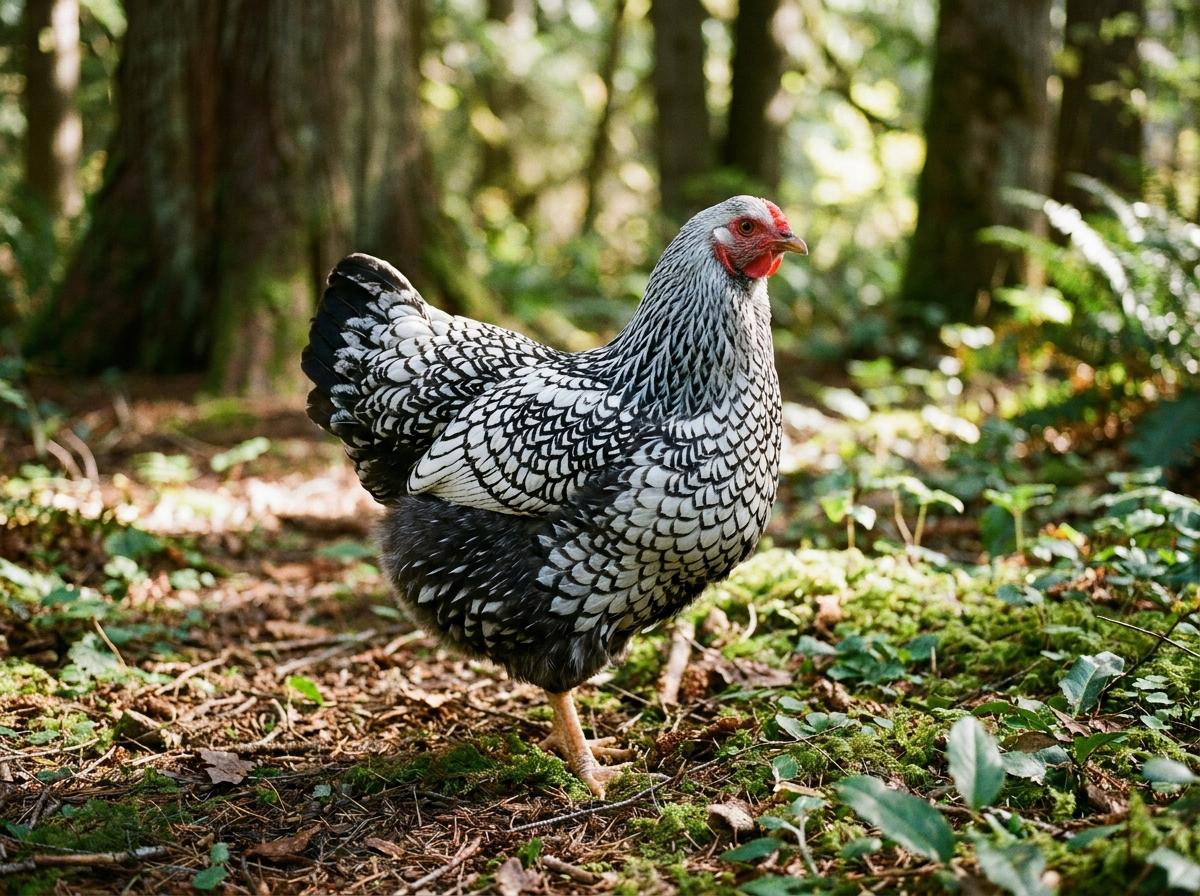
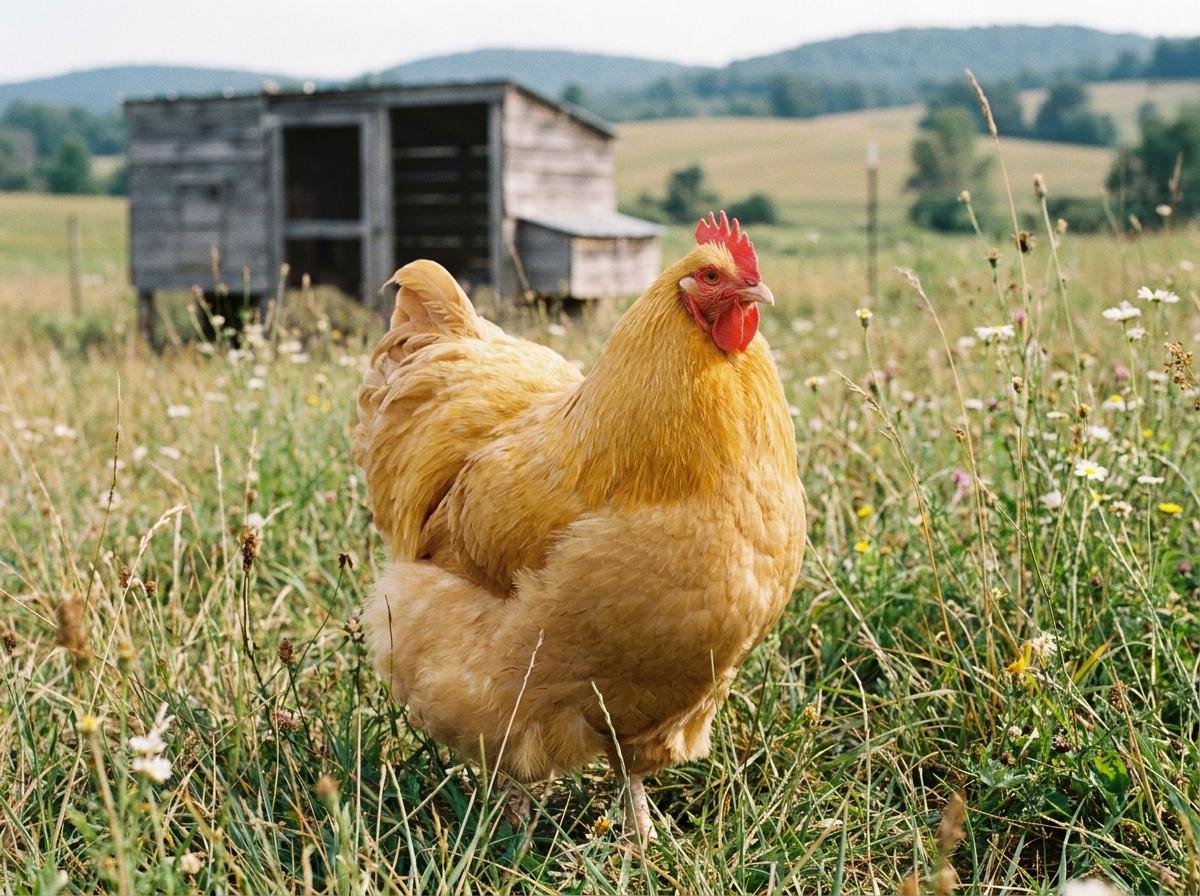
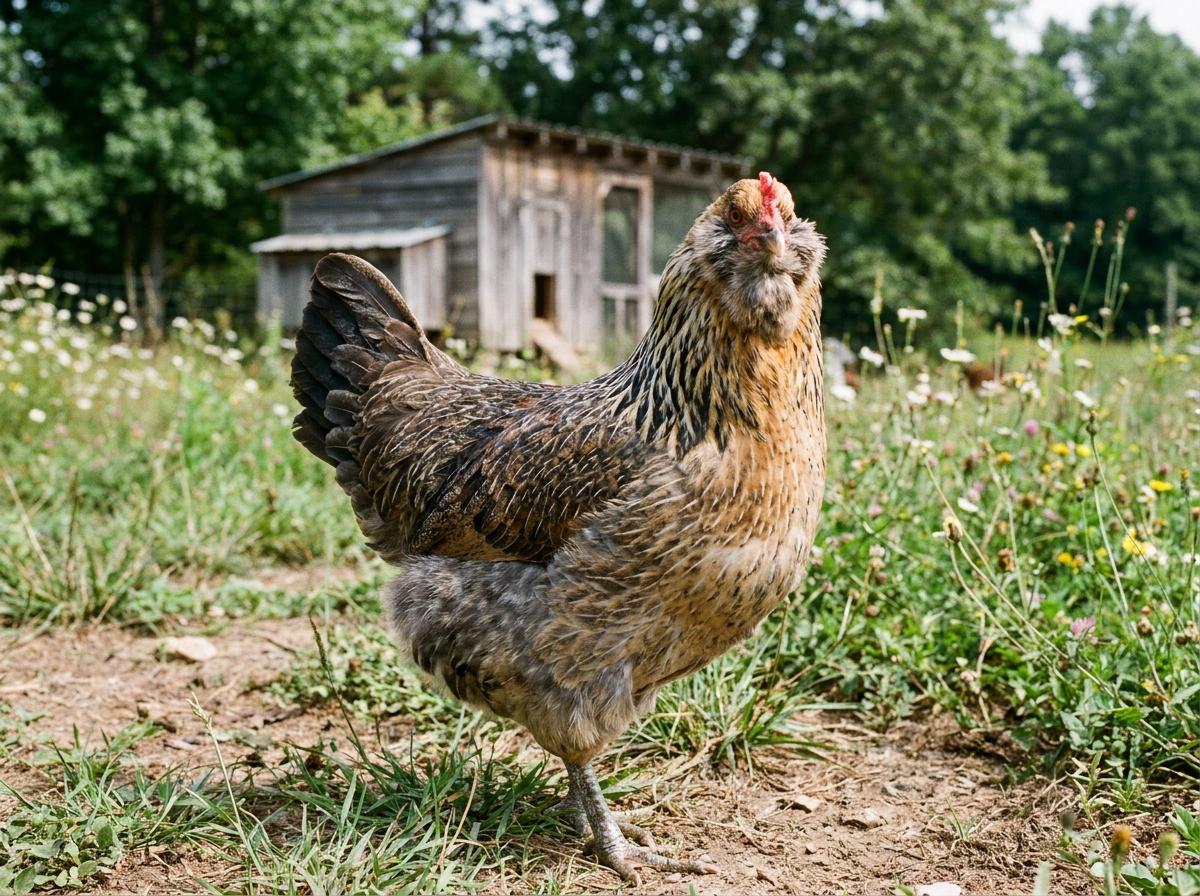
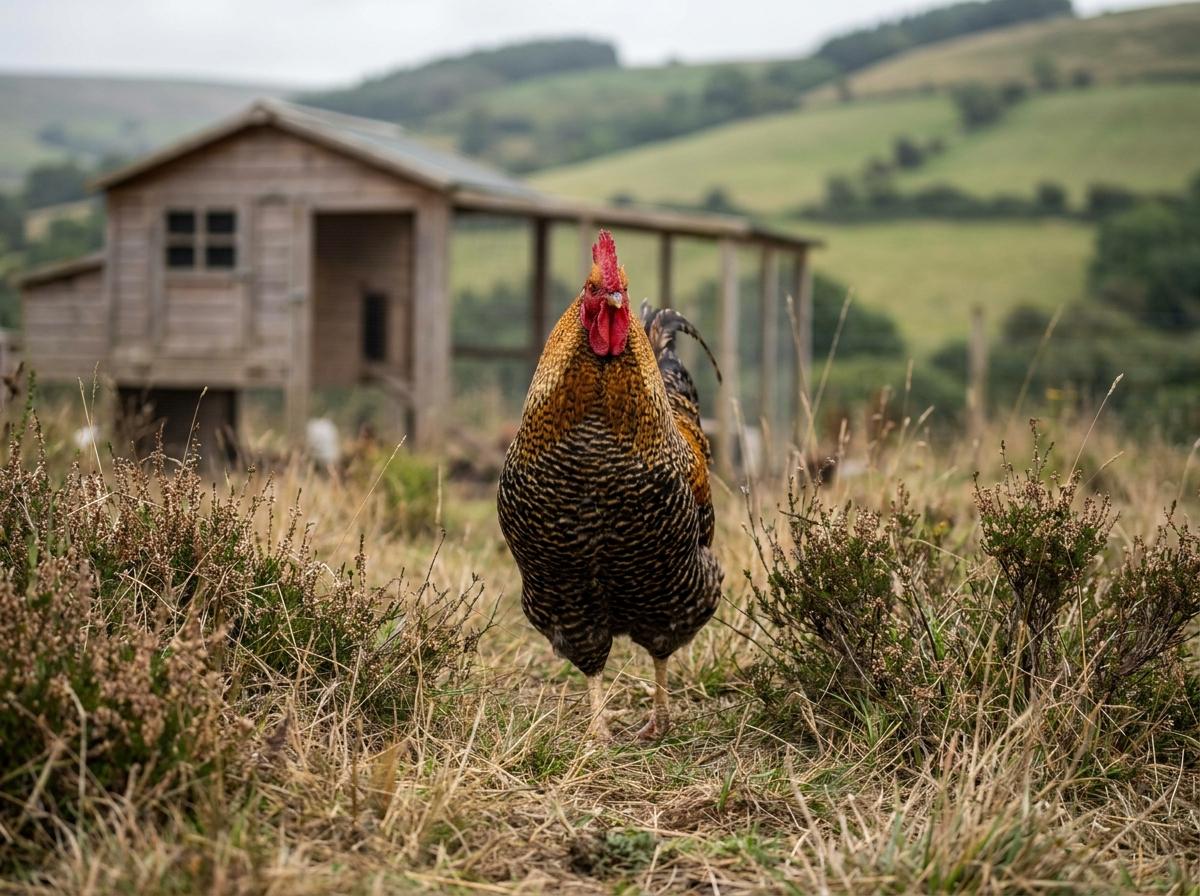
AI-generated illustration of a gold-type Welbar hen. Plumage cannot certify a breeding line’s autosexing performance.
Browse listings, public profiles, breeders, or add your animal.
A barred Welsummer background
The Rare Breeds Survival Trust’s Welbar account traces the breed to H. Humphreys in Devon in the 1940s. It describes active birds with an upright carriage, tucked wings and a full raised tail. Hens resemble barred Welsummers; gold and silver varieties were developed.
Compare the Welsummer and Plymouth Rock pages to understand that background. The Welbar’s name does not mean that any present-day cross between those breeds has already become a stable Welbar family.
Ask which variety and size the breeder keeps. RBST discusses both large birds and bantams, and its historical account notes the silver variety in the standard. For exhibition, obtain the current standard used by the intended show. Do not infer class eligibility from the gold-type illustrations on this page.
What autosexing does and does not promise
In RBST’s description of day-old Welbars, males have yellow down while females show dark stripes. This is the breed’s intended autosexing distinction, so ask to see examples from the breeder’s own maintained line.
The mechanism includes sex-linked barring. As University of Kentucky poultry guidance explains, barring is carried on the Z chromosome: males have two Z chromosomes and females one. Correctly bred Welbar males carry two barring factors, making them lighter than females with one.
RBST specifically cautions that some large Welbar males seen at shows appear to carry only one barring factor instead of the intended two, undermining the autosexing purpose. The intended day-old contrast therefore needs line records to support it; bars on an adult bird alone are insufficient.

AI-generated illustration of adult feather detail. An adult plumage picture is not a genetic test.
Ask the breeder to show chick photographs from the same family alongside the sexes confirmed as those birds matured. Useful records include hatch date, parent group, the initial sex assignment and the later outcome. If you are buying pullets because you cannot keep a rooster, agree the seller’s sexing terms before collection.
For a breeding flock, ask how the breeder tracks parent groups and prevents accidental crossing. Attractive adult plumage is only one part of maintaining a line whose chick traits remain useful.
Brown eggs and realistic expectations
Welbar hens are kept as useful layers, but there is no sound reason to turn that description into a fixed annual yield. Ask for actual flock records, including season and hen age. The darker brown egg reputation is a reason to request ordinary recent egg photographs, not just the darkest shell the breeder has ever collected.

AI-generated illustration of brown egg tones. It is not an egg-color guarantee for any hen or family.
If consistent egg supply matters more than a conservation breeding project, be clear about that goal. Maintaining separate parent groups and documenting chicks can require more space and time than keeping a few hens for household eggs. Choose the commitment intentionally.
Care for active birds
An active utility chicken needs a secure place to move, scratch and dust bathe, plus dry overnight shelter and suitable perches. Plan feed and water access for the whole flock and observe quieter birds during introductions. Do not replace those observations with a blanket claim that Welbars are always docile or always flighty.
Use a complete ration appropriate to the birds’ stage of life. Record a new group’s starting diet and make management changes thoughtfully. A breeder’s claims about laying should be read alongside their feeding and housing conditions, especially if yours differ substantially.
A poultry biosecurity plan is relevant whether you keep exhibition birds, a breeding group or a household flock. Discuss separation of new birds and local health priorities with a poultry veterinarian or extension adviser before mixing groups.
Price and breeder questions
A useful quote specifies whether you are buying hatching eggs, chicks or older birds; the intended sex; the variety; and the identity of the parent group. Hatching eggs carry uncertainty about hatch outcome and sex. An older confirmed pullet offers a different purchase, even when its initial price is higher.
Ask about transport separately and check that any “unrelated trio” claim is supported by records. For exhibition stock, obtain the standard name and known faults in writing. For a breeding project, prioritize evidence of maintained line identity and chick-sexing outcomes over a dramatic adult photograph.
Frequently asked questions
Is Welbar the same as Welsummer?
No. Welsummer contributed to its development, but Welbar is the named barred autosexing breed.
Can I sex any Welbar chick from an internet picture?
RBST describes yellow male chicks and dark-striped females at day old. Use that rule with the breeder’s line records; a photograph or an undocumented cross does not guarantee the same contrast.
Is brown egg color proof of a Welbar?
No. Many chickens lay brown eggs. Breed identity needs records and the whole bird’s characteristics.
Do this next on Creatures
Use the chicken guide to compare breeds against your egg, exhibition or breeding goals before choosing a line.