Shamo
Author: Elliott Garber, DVM · Published
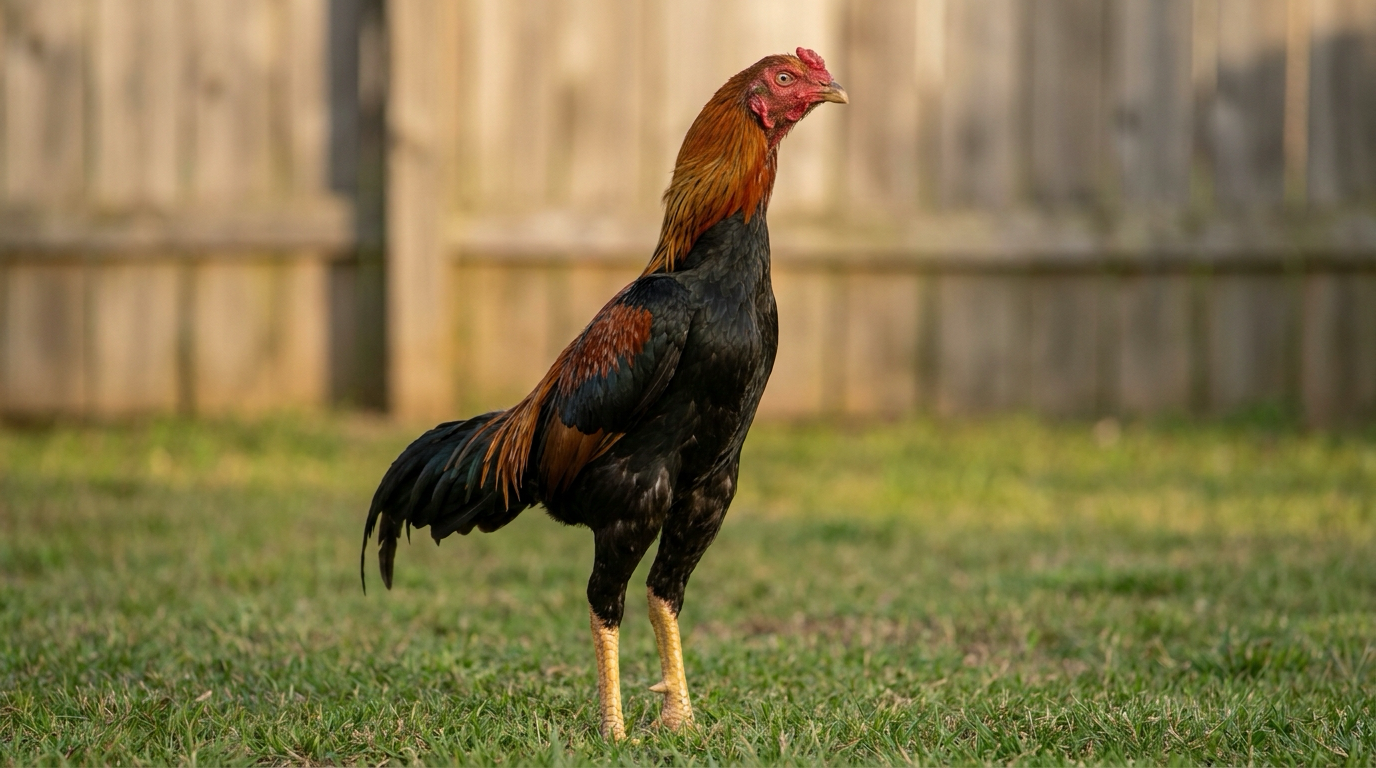
The Shamo is a tall, hard-feathered Japanese game breed that stands almost straight up on long yellow legs, and Japan has protected it as a Natural Monument since August 1, 1941. It comes in several sizes (O-Shamo, Chu-Shamo and the separate Ko-Shamo), it entered the American Poultry Association’s Standard in 1981, and The Livestock Conservancy currently lists it as Critical. Today it is kept for exhibition, breed preservation and as a striking, people-friendly bird for experienced keepers who can house mature males apart.
This guide covers what a Shamo is, how the size types differ, how to recognize one, how to house it well, and what to check before you buy. Supply is thin: no Shamo were listed on Creatures when we checked, so a free Shamo listing alert is the easiest way to hear when one appears. To compare it with other breeds, start from the chicken breed index.
| Origin | Japan, from birds said to have come from Siam (Thailand) in the early Edo period |
|---|---|
| Protection in Japan | Natural Monument, designated August 1, 1941 |
| Size types | O-Shamo (large), Chu-Shamo (medium), Ko-Shamo (small, treated as a separate breed) |
| US standard weight | Cock 11 lb, hen 7 lb (per The Livestock Conservancy) |
| APA recognition | 1981; Black, Dark, and Black Breasted Red (Wheaten) |
| Comb and eye | Small pea comb (walnut also described in Japan), tiny wattles, pearl eye |
| Eggs | Tinted to light brown, about 90 a year |
| Conservation status | Critical on The Livestock Conservancy’s list |
Browse listings, public profiles, breeders, or add your animal.
What is a Shamo chicken?
A Shamo is a Japanese breed of hard-feathered game chicken. Japan’s national cultural properties database describes it as a bird said to have arrived from Siam early in the Edo period, with a pea or walnut comb, a long neck, a strong body and a bold nature, valued historically as a fighting bird and now recognized as a fowl characteristic of Japan (Agency for Cultural Affairs database entry for 軍鶏, Shamo). The name is generally taken to come from “Siam.” The Japanese characters used for it mean, roughly, “military fowl.”
The UK’s Poultry Club describes the Shamo as a Japanese bird of Malayoid (Malay-type) build and notes its sparse but strong, shiny feathers, powerful bone and erect posture (The Poultry Club of Great Britain, Shamo). The Livestock Conservancy goes further on ancestry, describing the breed as a strain of the Asil, whose ancestors are believed to have traveled from Pakistan and India to Siam and then to Japan (The Livestock Conservancy, Shamo). If you know the Aseel or the Malay, you will see the family resemblance in the upright frame and hard plumage.
Two practical points follow from that background. First, the Shamo is a heavy, muscular bird selected for strength, not a production layer. Second, mature males of the same sex rarely tolerate each other, which shapes every housing decision you make.
Natural Monument status in Japan
Japan designated the Shamo a Natural Monument on August 1, 1941, under the criterion for domestic animals characteristic of Japan. The designation is breed-wide rather than tied to one place: the official entry lists no specific region (database entry). It sits alongside other protected Japanese breeds such as the long-tailed Onagadori, which holds the higher Special Natural Monument rank.
The official text sorts Shamo into three body sizes (large, ordinary and small) and lists several colour forms, including solid white and solid black and a series of “sasa” patterns in red, yellow and white tones. Aomori Prefecture’s cultural properties page adds working detail: the main areas it names for the breed are Tokyo, Ibaraki, Chiba, Aomori, Akita and Kochi, and it describes the birds as gentle toward people, robust and easy to rear as chicks (Aomori Prefecture Board of Education, Shamo).
If you are hoping to import birds or eggs from Japan, know that Japan’s trade ministry states that natural monuments are, in principle, prohibited from export under the cultural properties law, with an export permit route through the Agency for Cultural Affairs (METI, export of national treasures and natural monuments). How that applies to individual birds of a breed-wide designation is something we could not confirm, so ask the relevant authorities before planning any import. In practice, most keepers outside Japan buy from established flocks in their own country.
O-Shamo, Chu-Shamo, Ko-Shamo and other types
“Different types of Shamo” is one of the most common questions about the breed, and the answer depends on whose system you use.
In Japan, birds are sorted by the male’s size. Aomori Prefecture gives approximate male weights of 5.6 kg (about 12.3 lb) for the large O-Shamo, 4.1 kg (about 9 lb) for the medium Chu-Shamo, and 1.2 kg (about 2.6 lb) for the small Ko-Shamo (Aomori Prefecture). The Livestock Conservancy gives slightly different figures: O-Shamo males 12.4 lb and females 7.5 lb, Chu-Shamo males 8 lb and females 6 lb (The Livestock Conservancy). Treat any single number as a guide, not a scale reading every bird must hit.
In the UK, the Poultry Club says the term “Shamo” has covered all large fowl since the breed was imported in the early 1970s, while Japanese classification also divides them into Chu and O Shamo (The Poultry Club). The Ko-Shamo is treated as its own breed: the Poultry Club calls it the most popular of the small Shamo breeds, none of which have large fowl counterparts, and asks that they not be called “Shamo bantams” (The Poultry Club, Ko Shamo). Creatures keeps a separate Ko-Shamo breed page for that reason.
Regional types exist too. Aomori Prefecture describes the Kinpa (kinpa-dori), a kind of Shamo kept in Aomori and Akita, with males around 1.9 kg (about 4.2 lb), and The Livestock Conservancy notes that Kimpa males are hen-feathered. A 2004 genetic study of Japanese native breeds grouped the Oh-Shamo with the Ko-Shamo and placed Kinpa with Yakido and Koeyoshi in a separate cluster, which shows how related but distinct these lines are (Osman et al., Journal of Poultry Science, 2004). The Yamato Gunkei is another small Japanese game breed you may see sold alongside Shamo.
How to recognize a Shamo
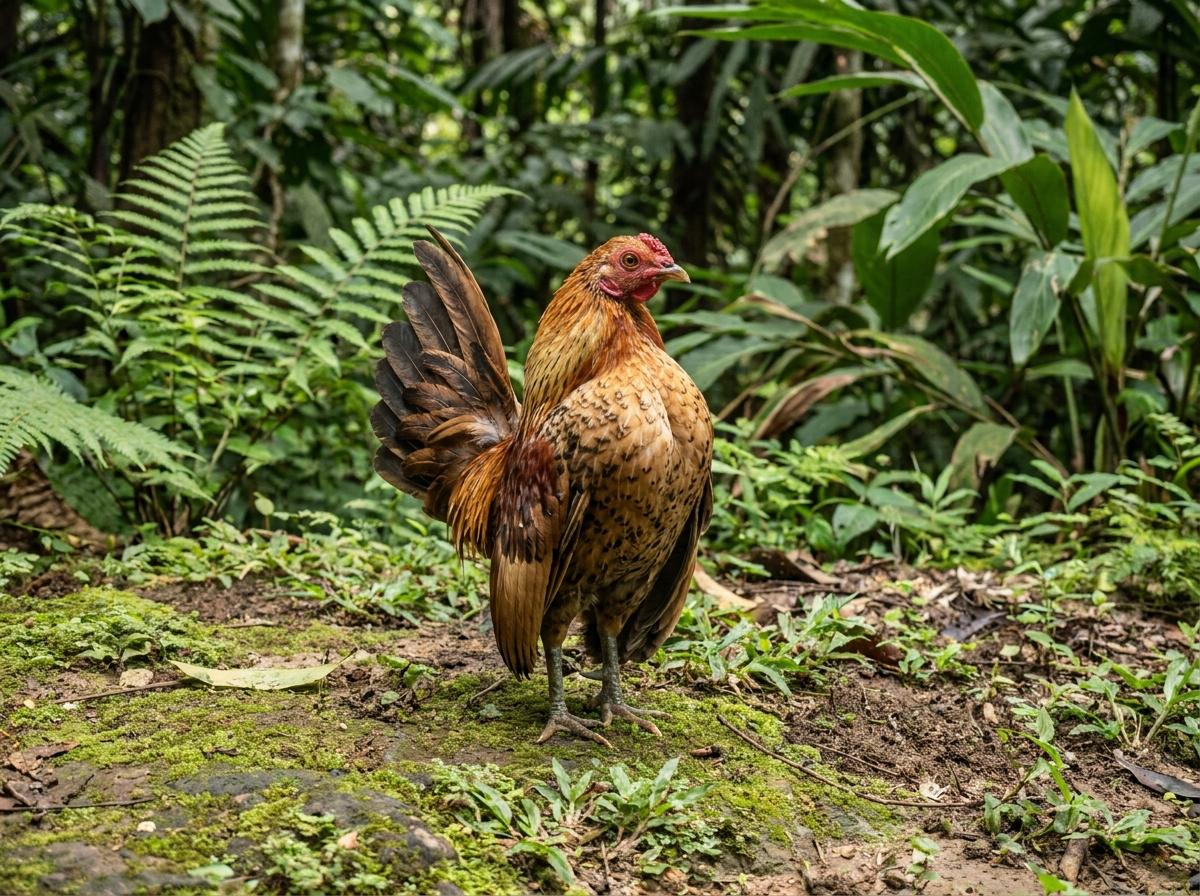
The Livestock Conservancy’s description is a good field checklist: a large, tall bird (up to 30 inches), with an upright, nearly vertical body carriage, well-muscled thighs, yellow legs, a wide muscular body, a pea comb, tiny to non-existent wattles and pearl-coloured eyes. The feathers are hard and close and often do not completely cover the body, so some bare red skin at the breast or wing points can be normal for the breed (The Livestock Conservancy).
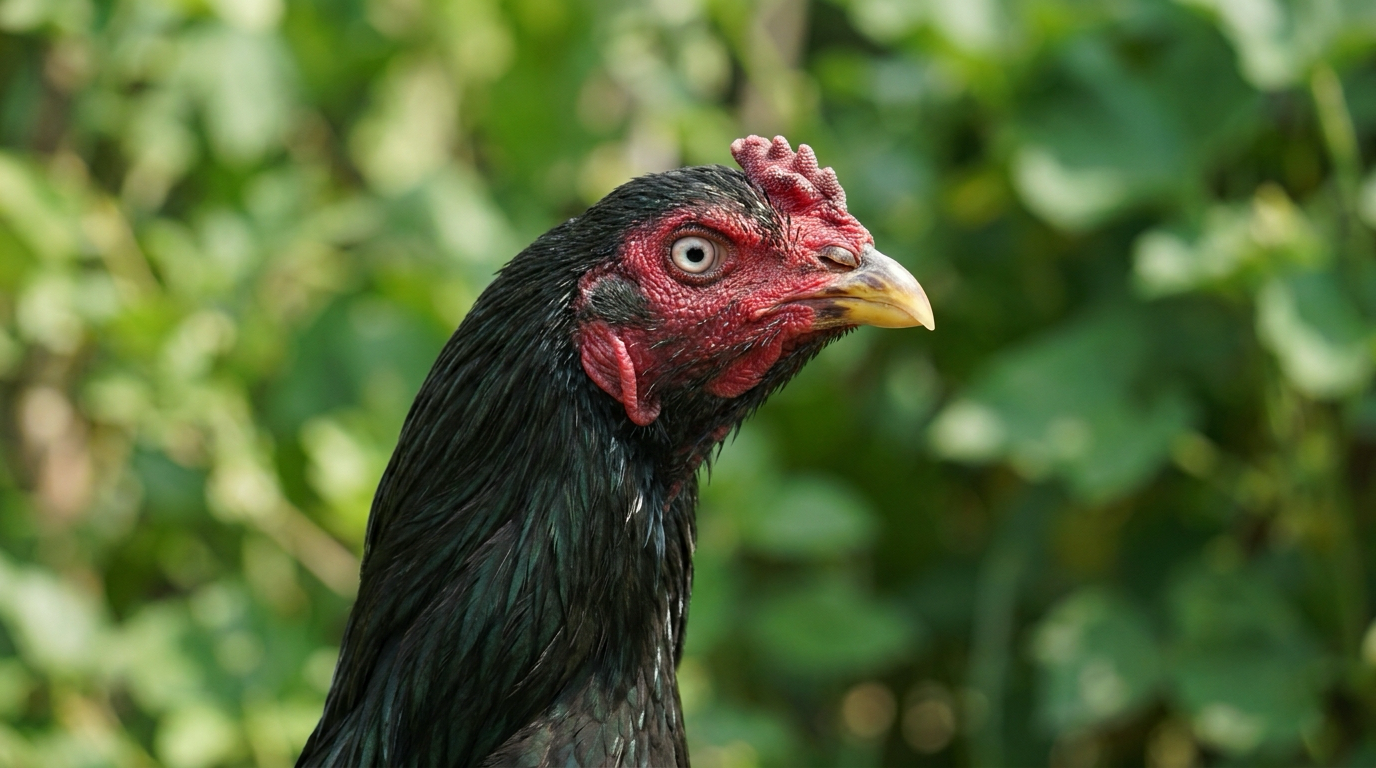
Look for these features when you evaluate a bird:
- Carriage. The back slopes steeply and the bird stands tall, much more upright than a typical farmyard chicken.
- Head. A broad skull, short thick beak, small comb, very small wattles and a pale “pearl” eye.
- Feather. Short, hard and tight. The tail is carried low and is modest compared with ornamental breeds.
- Legs. Long, thick and yellow.
- Colour. In the US the APA varieties are Black, Dark, and Black Breasted Red (Wheaten). In Japan more colours are kept.
Because the breed’s features overlap with other Asian hardfeather breeds, a striking photo does not prove a bird is a Shamo, let alone which size type. Ask the seller which line the birds come from and how long it has been kept pure.
Shamo history outside Japan
According to The Livestock Conservancy, the first documented Shamo outside Japan were breeding pairs that reached Germany in March 1884, with a second German importation recorded in 1953. The first Shamo known in America came home with servicemen after World War II, and the APA added the breed to its Standard of Perfection in 1981 (The Livestock Conservancy). A Delaware State University Cooperative Extension fact sheet lists Shamo in the APA’s “Any Other Standard Breed” large fowl class with four varieties, and in a bantam class as well (Delaware State University, poultry breeds fact sheet).
The breed’s fighting history is real, and we will not dress it up. Animal fighting is illegal throughout the United States: federal law makes it a crime to sponsor or exhibit a bird in a fight, to attend one, or to buy, sell, train or transport a bird for one (7 U.S.C. 2156). This page is about keeping Shamo for exhibition, conservation and as well-housed flock birds, which is what the Natural Monument designation and the APA Standard are about too.
Temperament: friendly to people, not to rivals
Keepers often describe a pleasant surprise. The Livestock Conservancy calls the breed quite friendly to humans but considerably pugnacious with other chickens of the same sex, and Aomori Prefecture’s description also calls Shamo gentle toward people (The Livestock Conservancy; Aomori Prefecture).
Plan around the second half of that sentence. Mature males generally need their own pen, and young males can start sparring as they mature, so have a separate space ready before you need it. Never put two males together to “see what happens.” When you add hens or younger birds, go slowly and watch closely; the guide to adding new chickens to a flock covers quarantine and gradual introductions, and the same patience applies with more force to a game breed.
Housing and daily care
A Shamo needs the same fundamentals as any chicken: dry, well-ventilated shelter, clean bedding, shade, constant clean water, a balanced feed and secure predator protection. The chicken coop guide and the predator protection guide cover the basics. The breed adds a few specific needs.
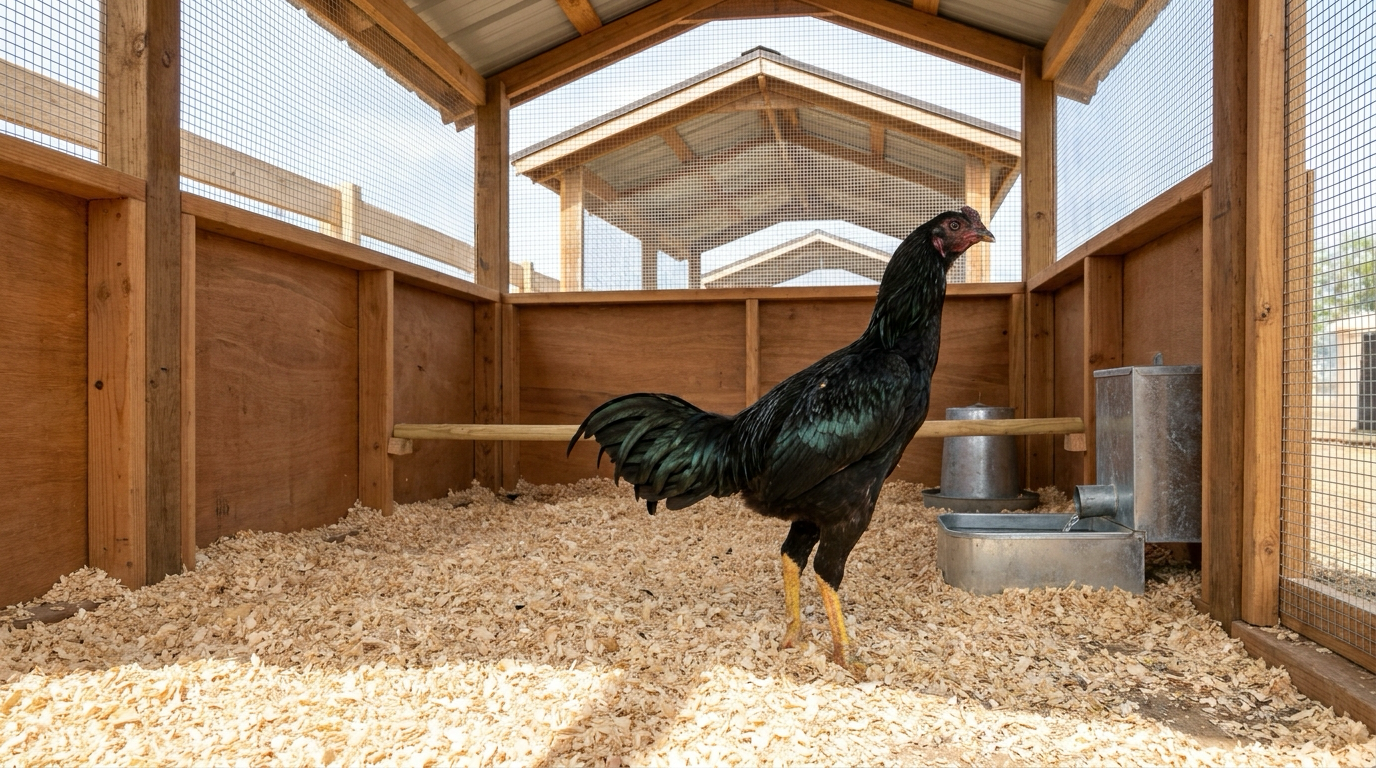
- Height and room. A tall bird needs headroom in the coop and doorways it can walk through without crouching. Give each pen enough floor space that the bird can move freely and is not pressed against the walls.
- Separate pens for mature males. Many keepers use solid lower walls between neighbouring males so they are not displaying at each other through the mesh all day.
- Sturdy, reachable perches. A heavy, muscular bird does better with a solid perch it can step up to and drop down from without a long fall, over soft, dry bedding.
- Weather protection. Hard, sparse feathering gives less insulation than a fluffy breed, so a draft-free, dry shelter matters in cold, wet weather. The winter care guide has practical steps for cold snaps.
- Feeding. Feed a complete ration for the bird’s age and purpose, and keep oyster shell available for laying hens. The chicken feeding guide explains starter, grower and layer rations.
Health care follows normal chicken practice. Watch appetite, droppings, breathing and movement every day, and learn the warning signs in the common chicken illnesses guide. For any sick or injured bird, and for vaccination or parasite plans, work with a veterinarian who treats poultry.
Eggs, broodiness and hatching Shamo chicks
Shamo are not layers for a busy kitchen. The Livestock Conservancy describes them as fair to poor layers of medium to large, tinted to light brown eggs, averaging about 90 a year, while noting they are among the better layers of the game breeds. Hens are devoted mothers, but because of their size they can crush their own eggs (The Livestock Conservancy).
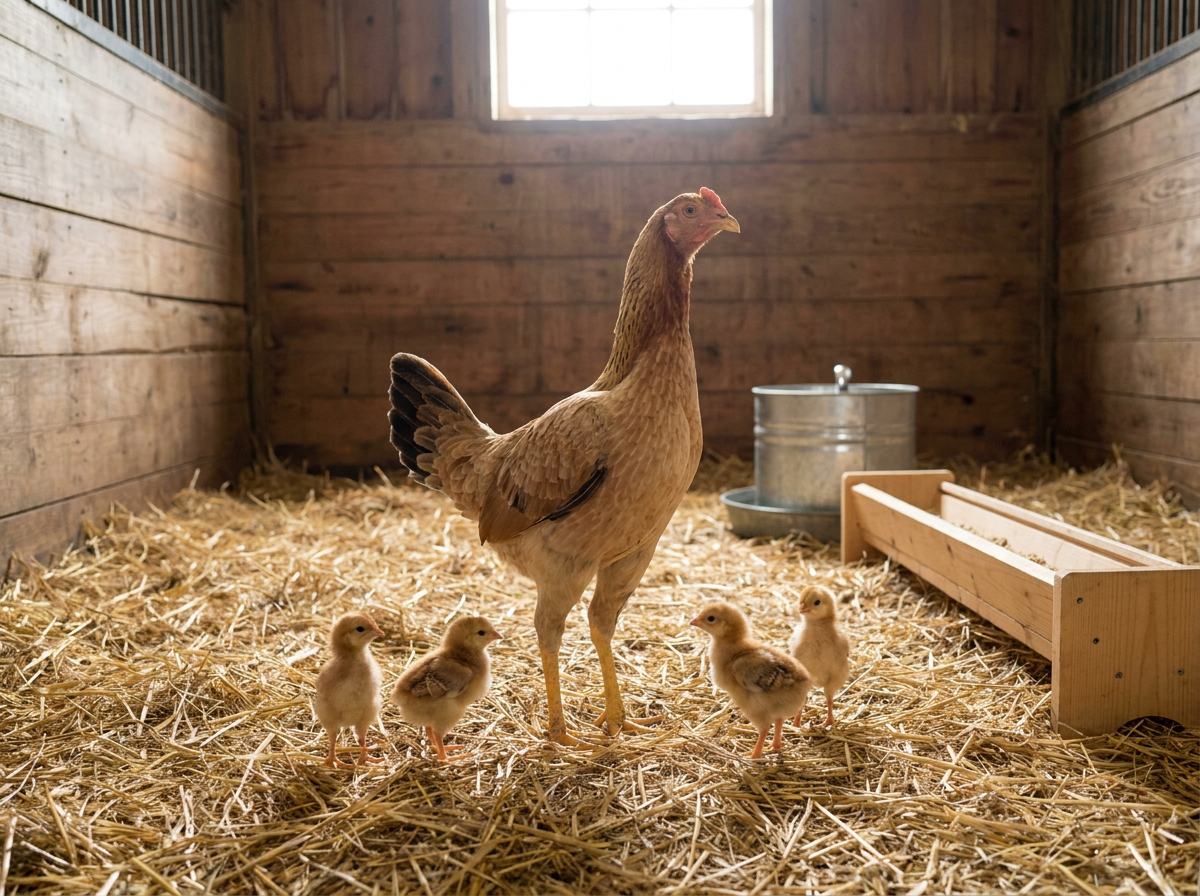
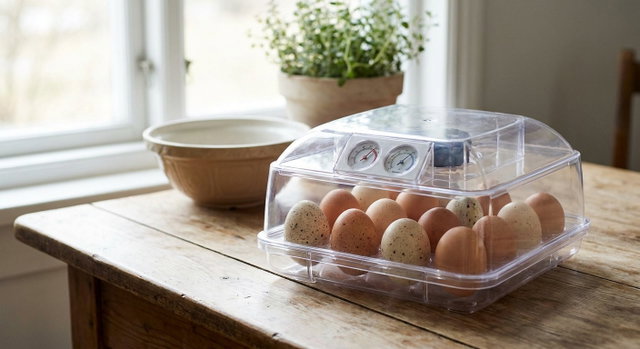
That combination makes many breeders split the job: an incubator for the eggs, then a hen or a brooder for the chicks. Chicken eggs take 21 days to hatch (Nebraska Extension, incubating chickens), and our incubator guide walks through temperature, humidity and lockdown. If you let a hen sit, the broody hen guide covers nest setup. Keepers hatching several kinds of poultry can compare timelines in our guides to how long duck eggs take to hatch, how long quail eggs take to hatch and how long turkey eggs take to hatch.
For a rare breed, the hatch is where lines get lost. Record which hen laid which eggs, which male sired them, the set date and the hatch results. On Creatures you can set eggs as a clutch, note candling per egg and record the hatch once you are signed in; the chicken hatch records guide follows one batch from eggs to identified chicks, and the help article on recording births and creating a litter explains linking young to their parents.
Records that keep a rare line honest
With a breed listed as Critical, good records are a conservation tool, not paperwork. The details worth keeping for each bird are its size type (O, Chu or another line), variety and colour, hatch date, parents, and where the line came from. Add weights as birds mature, since size is how the types are told apart.
A Creatures animal profile holds identity, photos, parentage and a growing pedigree; the help article on pedigree, family and lineage shows how the family tree builds from parents you link. If you show your birds, results can sit on the bird’s profile too (see show results on your animal’s profile). Hens’ laying is easy to over- or under-estimate, and the egg production records guide explains what to count. Stuck on what to call a new cockerel? The free chicken name generator lets you tap a name to start its profile.
Price and availability
We could not find a dated, public price record for Shamo from a registry, extension service or public sale report, so we will not quote a number. Expect the price to reflect the line, size type, age, sex and the breeder’s records rather than a set breed rate. For general context on chick, pullet and setup costs, see how much a chicken costs.
Availability is the bigger hurdle. The Livestock Conservancy’s Critical listing means few breeding flocks, and Shamo marketplace listings, herdbook records and breeder entries on Creatures all stood at zero when we checked on October 17, 2026. The Shamo marketplace filter will show any new listing, but an alert is less work than checking.
Buying checks
The where to buy chickens guide explains source checks in general. For Shamo, add these:
- Ask which type and line. O-Shamo, Chu-Shamo, Ko-Shamo or a regional line, and how long the breeder has kept it without outcrossing.
- See the parents if you can. Size and carriage are easier to judge in adults than in chicks.
- Watch the bird move. Look for clear eyes and nostrils, sound legs and feet, normal breathing and an alert, upright stance.
- Ask about flock health testing. The National Poultry Improvement Plan lists participating flocks by state; ask whether the flock takes part.
- Ask how males have been housed. A breeder should be able to tell you which birds have been penned alone and from what age.
- Ask why the birds are kept. A reputable source keeps Shamo for exhibition, preservation or a home flock. Walk away from anyone who talks about fighting.
Frequently asked questions
Is the Shamo a fighting chicken?
It was developed as a fighting breed in Japan. Animal fighting is illegal throughout the United States, and today Shamo are kept for exhibition, conservation and as flock birds. Responsible keeping means housing males apart, not testing them against each other.
How big do Shamo chickens get?
In the US, The Livestock Conservancy gives 11 lb for males and 7 lb for females, with birds standing up to 30 inches tall. Japanese O-Shamo males are around 5.6 kg (about 12.3 lb) by Aomori Prefecture’s figure.
What is the difference between O-Shamo, Chu-Shamo and Ko-Shamo?
Size. O-Shamo is the large type and Chu-Shamo the medium type. Ko-Shamo is a small Japanese game breed with no large counterpart, and the UK’s Poultry Club treats it as a separate small breed with no large fowl counterpart rather than a “Shamo bantam.”
Are Shamo friendly?
Toward people, often yes: both The Livestock Conservancy and Aomori Prefecture describe them as gentle with humans. Toward other birds of the same sex, expect aggression in mature males.
Are Shamo good egg layers?
No. Expect about 90 tinted to light brown eggs a year. Hens are attentive mothers but heavy enough to crush eggs, so many breeders use an incubator.
Is the Shamo endangered?
The Livestock Conservancy lists it as Critical, and Japan protects it as a Natural Monument.
Do this next on Creatures
Shamo are scarce, so most readers start by watching for birds. Keepers and breeders can build the records that help the breed last.
Get alerted first. Set a free Shamo listing alert and we will email you when one is posted. No account needed to start. See saving searches and using your watchlist.
Check sources. Browse Shamo on the marketplace and search trusted breeders and farms in the Creatures breeder directory.
Add your bird. Already keeping Shamo? Create a free Shamo profile and note its size type, colour and parents. No account needed to start; the steps are in adding an animal to Creatures.
Keep the records. Add a weight, health or breeding record. The record sheet opens for any visitor, and a free account saves what you enter. See adding a record and health and medical records.
List your flock. Breeding Shamo? Create a free breeder profile so buyers searching for this rare breed can find you. Read getting listed in the breeder directory and creating an organization if others help run your flock.