
Chyangra
Author: Elliott Garber, DVM · Published
Chyangra is the Nepali name for a real, specific goat, not a marketing word attached to a shawl. It is a compact, horned, double-coated animal of Nepal’s trans-Himalayan districts, herded through Mustang, Manang, Dolpa, Mugu, Jumla and Humla on a migratory round that follows the season. Under its long, coarse outer hair lies a dense undercoat of extremely fine down, and that down, combed out when the animal molts in spring, is the raw material behind chyangra pashmina. Below is what the breed is, what its fibre genuinely measures, how much one goat actually yields, what Nepal’s Chyangra Pashmina trademark does and does not certify, and what any of this means if you keep goats yourself. If you are comparing breeds, the wider Creatures goat species page is a good place to start.

| Also called | Chyangra, the Nepali cashmere goat; the fibre itself is khu-lu in the local language |
|---|---|
| Origin | Trans-Himalayan Nepal, concentrated in Mustang, Manang, Dolpa, Mugu, Jumla and Humla |
| Altitude | Roughly 2,400 to 5,000 m, under a migratory herding system |
| Primary uses | Meat, pack transport, manure, and cashmere (pashmina) |
| Adult size | Bucks about 35 to 40 kg, does about 29 to 32 kg, around 62 cm at the withers |
| Cashmere fineness | Mean 15.36 microns in a 2022 study of 34 goats in Mustang |
| Cashmere yield | Roughly 115 to 200 g of down per goat per year |
| Availability | Not traded as live animals outside Nepal; the national population is small and declining |
Browse listings, public profiles, breeders, or add your animal.
What is a Chyangra goat?
The Chyangra is one of four indigenous goat breeds formally identified and characterized in Nepal, alongside the Terai goat of the southern plains, the Khari or hill goat of the mid-hills, and the Sinhal of the high hills. Each occupies a band of altitude, and this one holds the top band, the trans-Himalayan north, described in the peer-reviewed breed survey Breeds and Breeding System of Indigenous and Crossbred Goats in Nepal as spanning roughly 2,500 to 5,000 metres from the eastern to the western end of the country. Nepal’s own genetic-resources record puts the floor slightly lower, above 2,400 metres, and notes that the breed is raised under a migratory system.
It is a working animal with three jobs, not one. Herding families keep Chyangra for meat, which is the main income in most of the range, for carrying loads across terrain where roads do not go, and for the cashmere. Manure matters too: in Lower Mustang it is sold by the sack and spread on the apple orchards, which ties goat keeping and fruit growing together in the same local economy.
Genetically the breed sits at a crossroads. A study of mitochondrial DNA across Nepal’s goats found that Chyangra was the only one of the four breeds in which all four maternal haplogroups appeared, and that it carries the B2 lineage also found in Tibetan goats. That is consistent with what herders have always done on that border, which is share pasture and exchange animals across it. In practical terms the Chyangra belongs to the same trans-Himalayan cashmere-goat complex as the Changthangi of Ladakh and the cashmere goats of the Tibetan plateau, rather than being an isolated Nepali oddity.
One more thing worth stating plainly at the top, because most writing about this animal skips it: the Chyangra population is officially recorded as declining. Nepal’s genetic-resources register lists its numerical status that way, and the breed survey says the same. Estimates of how many are left vary by a factor of three depending on the source and the year, from roughly 110,000 head (about one percent of Nepal’s national goat herd) upward. There is no recent authoritative census we can point to, so treat any single confident population number for this breed with suspicion, including the ones repeated in trade press.
Where the Chyangra lives, and what that does to the fibre
The Chyangra’s home range is cold, dry and high. Mustang, the district most closely associated with the breed, is semi-arid, with annual precipitation in the range of 250 to 400 mm. Herds move with the season and the grazing. Flock sizes are large by smallholder standards: research in Mustang recorded herds of 25 to 50 and 100 to 200 head in Lower Mustang, and 100 to 500 head in Upper Mustang.
The environment is not incidental to the fibre. Cashmere down is grown in secondary follicles in response to shortening day length and cold, and shed in spring as the days lengthen. Herders in Mustang report that fineness increases with altitude and that colder conditions produce finer fibre, and the published research treats photoperiod, temperature and nutrition as the main environmental drivers of fibre growth. That is the honest reason a Himalayan cashmere goat is a Himalayan animal: you cannot pick up the phenotype and put it somewhere warm and expect the same fleece.
Purpose also varies within the range, which surprises people who assume every Chyangra is a fibre animal. The 2023 Nepal Agricultural Research Council study found that in Lower Mustang the goats are kept mainly for meat, manure and social and ritual purposes, and are seldom combed at all, so animals are found with matted fleece. In Upper Mustang, which borders China, cashmere is a genuine objective, and fibre is sold across that border. The difference shows up in the laboratory: wax and dirt contamination in the samples was roughly twice as high in Lower Mustang as in the upper valleys, because nobody is combing.
What a Chyangra looks like
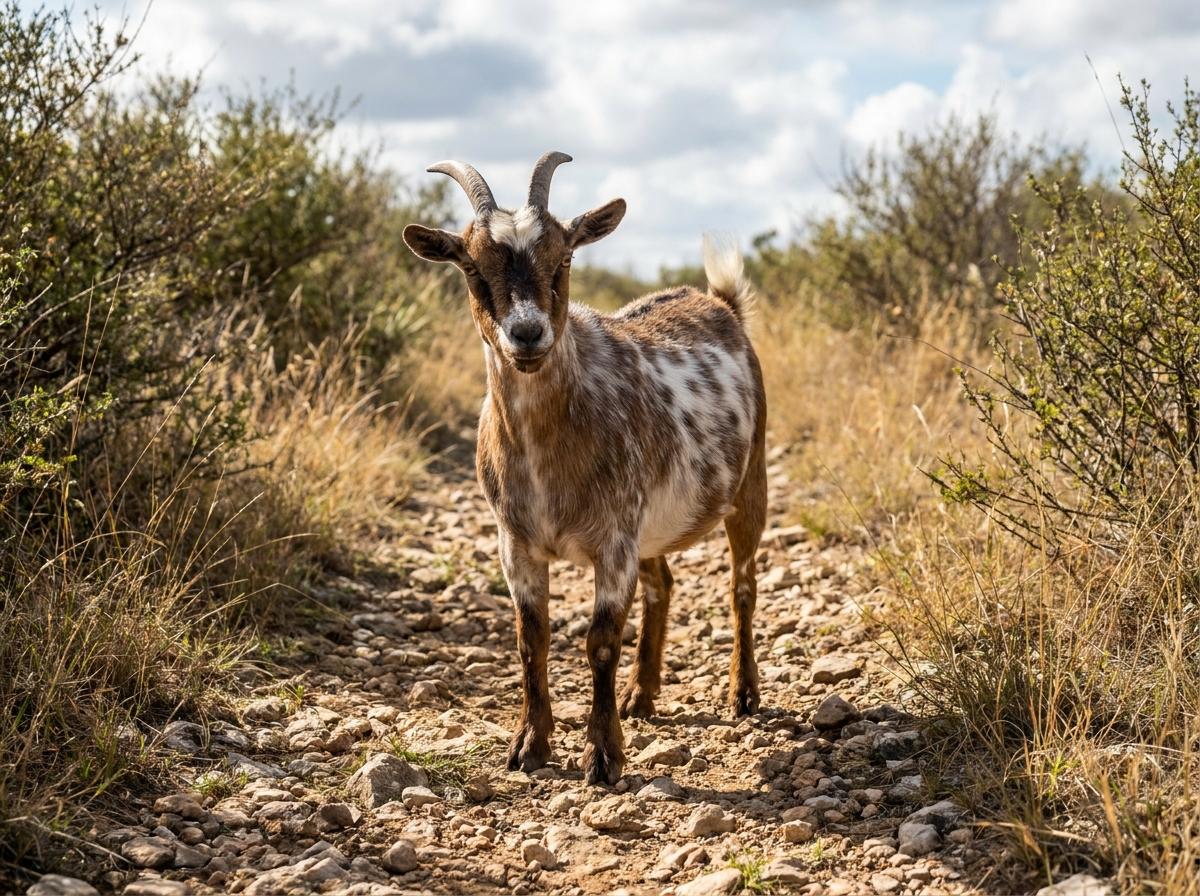
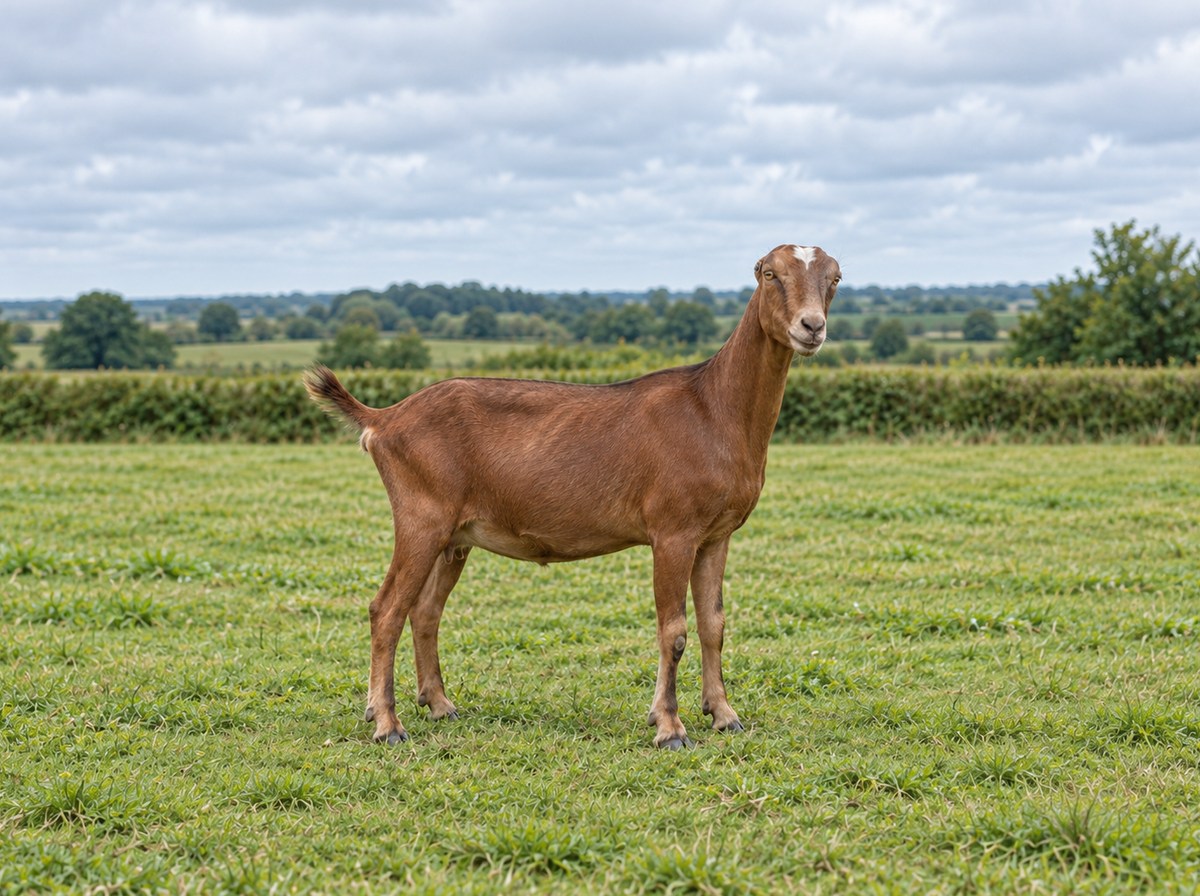
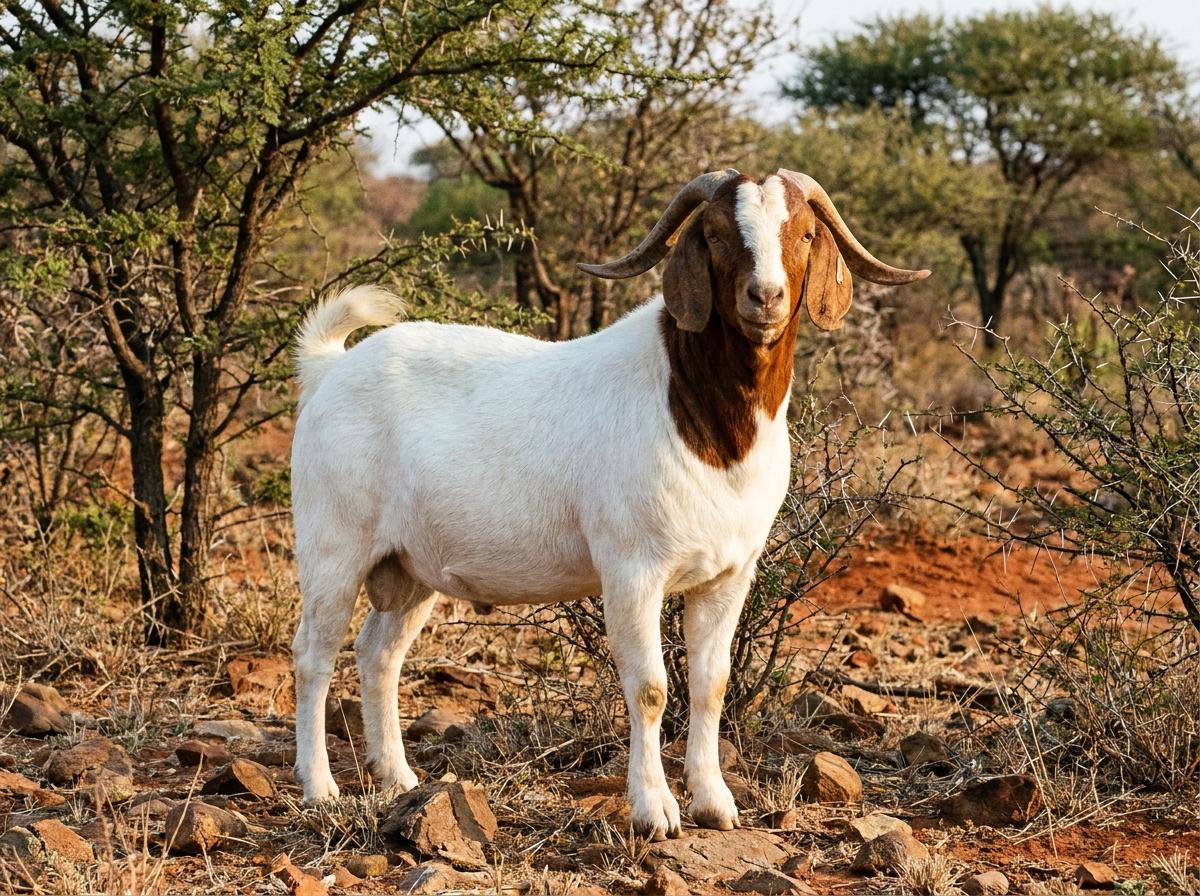
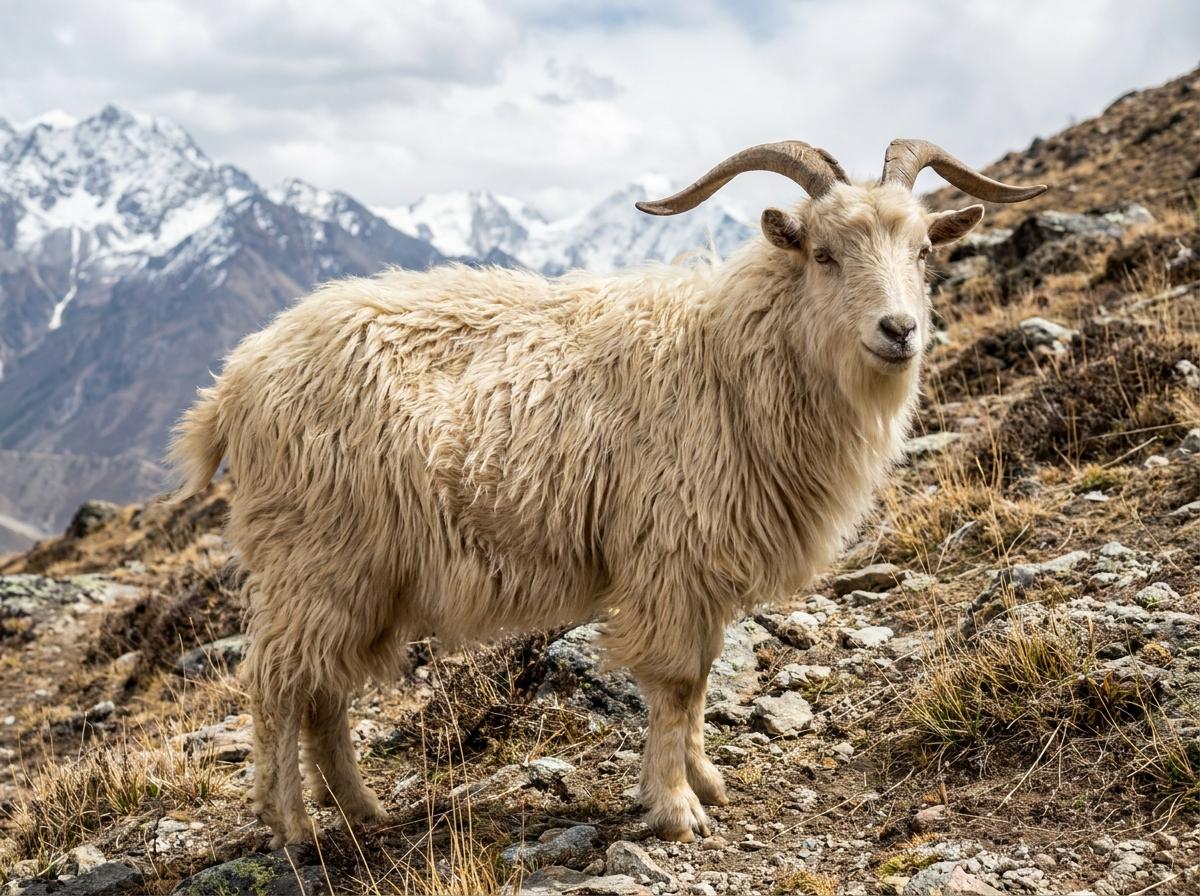
This is a compact, hardy mountain goat rather than a large one. Adult does weigh about 29 to 32 kg and bucks about 35 to 40 kg, standing around 62 cm at the withers, with a body length near 62 cm and a heart girth near 71 cm.
- A genuine double coat. The outer coat is long, coarse and somewhat silky, described in Nepal’s own breed record as reaching down toward the knees, and beneath it sits a fine undercoat. That two-layer structure is the whole point of the animal.
- Short ears. At an average of about 10.5 cm, Chyangra ears are the shortest of Nepal’s four indigenous goat breeds, roughly half the length of a Terai goat’s. Short extremities are a normal cold-climate trait.
- Long horns for a Nepali goat. Average horn length is about 18.2 cm, the longest of the four breeds, and the horns sweep upward and back.
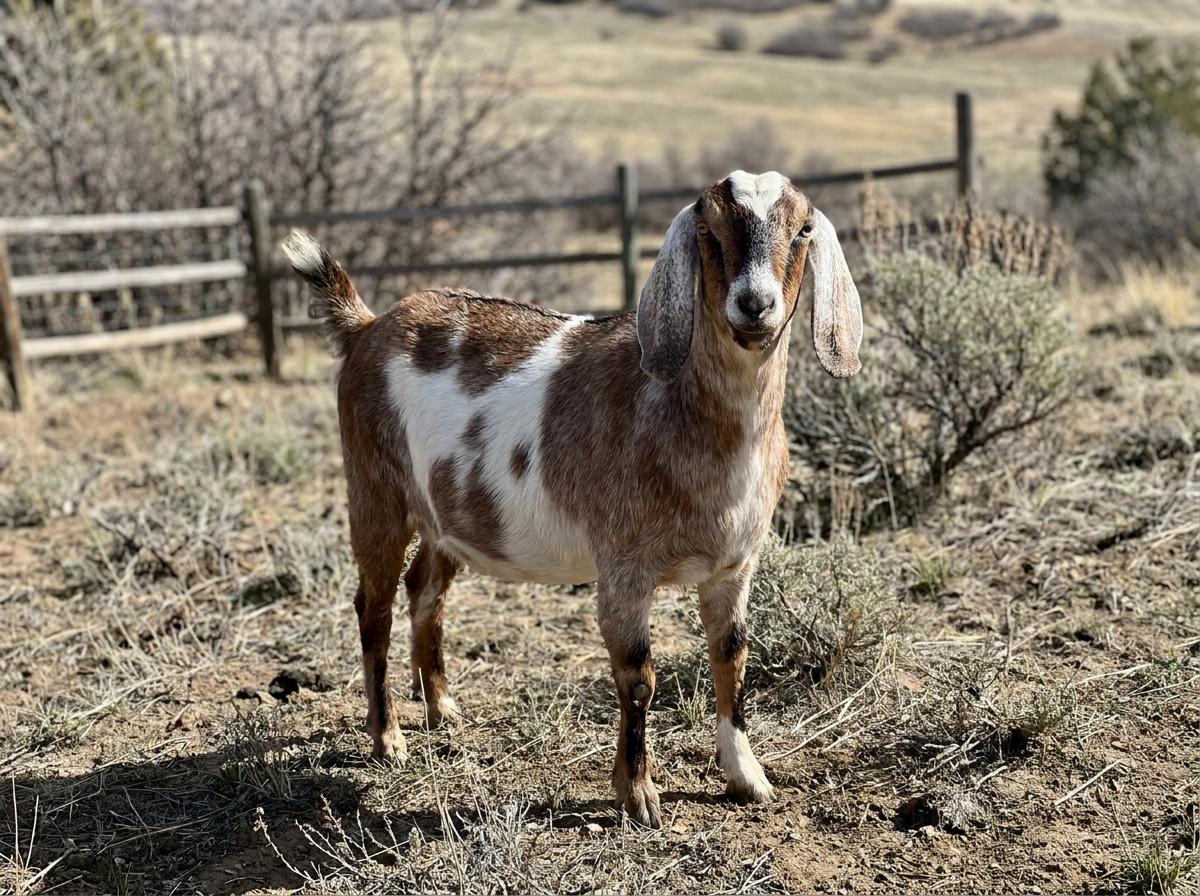
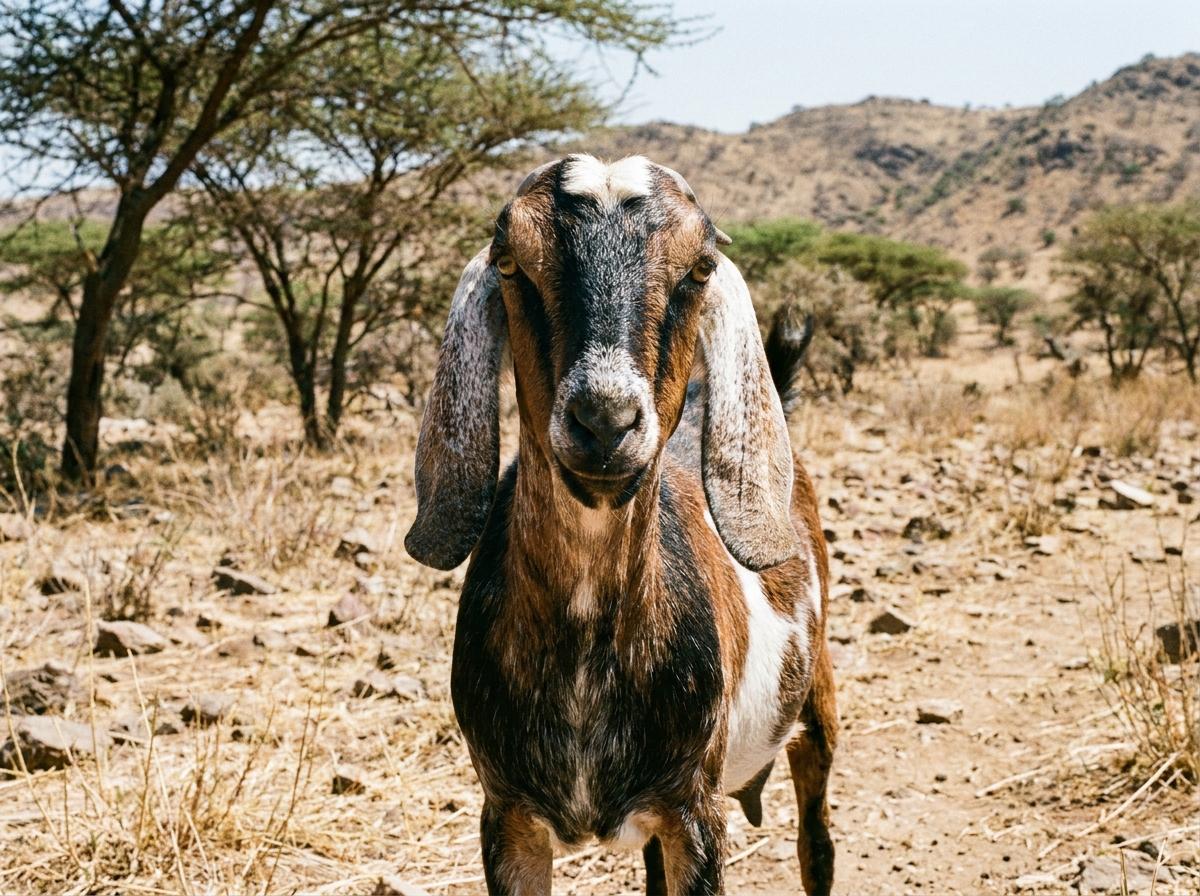
- Any colour. Coat colour runs from pure white through greys and browns to pure black, with mixed patches common. In Lower Mustang, herders often prefer black animals on the reasoning that white ones are easier for predators to pick out. In Upper Mustang there is no strong colour preference.

That second photograph is the diagnostic one. The straight, coarse strands lifting in the wind are guard hair. The crinkled, cottony mass sitting underneath and against the skin is the pashm. They are two different fibres from two different follicle populations, and confusing them is the single most common error in writing about this animal.
The fibre: guard hair, pashm, and what the numbers actually say
Two coats, two very different fibres
A cashmere goat’s outer coat is coarse, medullated guard hair produced in primary follicles, and its job is mechanical protection. The undercoat is short, fine down produced in secondary follicles, and its job is insulation. The gap between them is enormous. In a study of 158 Alashan cashmere goats, guard hair averaged 47.3 microns while down averaged 13.8 microns, which is why the two can be separated mechanically at all. Commercial dehairing exists precisely to strip the guard hair out, and everything sold as cashmere is the dehaired down.
This matters legally as well as technically. Under United States labelling rules, a fibre may only be called cashmere if it is the fine dehaired undercoat of a cashmere goat (Capra hircus laniger), if its average diameter does not exceed 19 microns, if no more than 3 percent by weight of the fibres exceed 30 microns, and if the coefficient of variation around the mean stays within 24 percent. Guard hair is not cashmere in any sense a regulator recognises.
How fine is chyangra cashmere?
Until recently there was no published measurement at all. That changed with Qualitative characteristics of cashmere fiber of Chyangra goat of Nepal, published in the Journal of the Nepal Agricultural Research Council in 2023, which its authors describe as the first scientific study of Chyangra cashmere quality in Nepal. Samples were combed from 34 unrelated goats in Upper and Lower Mustang in March and April 2022, taken from three body regions each, and measured by optical projection microscopy with a subset re-confirmed on an optical fibre diameter analyser at Nepal’s national standards laboratory.
The headline results:
- Mean fibre diameter 15.36 microns, with a standard error of 0.19. By body region: neck 15.23, belly 15.27, back 15.67. The differences between body regions, and between the sexes and age groups, were not statistically significant.
- Mean fibre length 45.97 mm, standard error 0.14. Length did vary significantly by location and by sex, with males producing longer fibre, which the authors attribute partly to males being better fed and partly to does molting during late pregnancy and early lactation.
- Wax and contamination 9.49 percent on average, but 6.7 to 8.7 percent in the combed Upper Mustang samples against 13.2 percent in the uncombed Lower Mustang samples.
Two pieces of context make those numbers legible. Cashmere is conventionally defined as down between about 11 and 18 microns, with processors paying a premium in the 15 to 16 micron band and 15.5 microns quoted as a benchmark. And fibre shorter than 40 mm cannot be processed on the worsted system at all. Chyangra down clears both marks: it sits inside the premium diameter band and comfortably over the 40 mm length threshold.
What it is not is uniquely fine. The same study measured reference samples from other cashmere countries and got 15.10 microns for China, 15.50 for Mongolia and 15.15 for Afghanistan. That puts the Nepali fibre squarely in the same company rather than above it. The Nepali samples did have the longest staple of the four, at 45.97 mm against 35.7 to 40.8 mm, though those comparison samples were small, so treat the length advantage as suggestive rather than settled. Marketing copy that presents chyangra pashmina as categorically finer than Mongolian or Chinese cashmere is not supported by the only published measurement of it.
How much does one goat actually produce?
This is where published sources diverge sharply, and where a reader is most likely to be misled, so here is the evidence laid out.
Three independent authorities give figures in the same narrow range:
- Nepal’s genetic-resources record: about 115 to 170 g of pashmina per goat per year, out of a total annual fleece of 300 to 1,130 g.
- The 2023 Nepal Agricultural Research Council study, citing earlier work: 150 to 200 g per goat per year, described bluntly as “not economically attractive.”
- The World Bank’s project appraisal document for the Nepal Livestock Sector Innovation Project, which set the national baseline for measuring improvement: “Average production of Chyangra wool is estimated at 150-170 gm per year.”
So the defensible answer is somewhere around 115 to 200 grams of down per goat per year, and the low end of that is the reason the fibre has never anchored the local economy the way meat has.
A very different number also circulates: that Chyangra goats produce 2 to 3 kg of pashmina annually. It appears in at least one peer-reviewed book chapter, without a citation attached, and gets copied onward from there. We are not repeating it as fact, for three reasons. It is an order of magnitude above all three sources above. It exceeds even the Nepal government’s figure for the goat’s entire annual fleece, guard hair included, which tops out at 1,130 g. And a 30 kg goat growing 3 kg of pure down would be an extraordinary animal by world standards, given that a good cashmere goat anywhere yields a few hundred grams at most. The most charitable reading is that it refers to greasy total fleece rather than dehaired down, and even then it is high.
We would rather give you a range with three sources behind it than a bigger number with none.
The national picture: a small supply and a large industry
Put the per-goat yield together with a small and declining population and you get the central awkward fact of Nepal’s pashmina trade. In its 2018 evaluation of a pashmina sector project, the International Trade Centre, a joint agency of the United Nations and the World Trade Organization, found that Nepal’s Chyangra pashmina wool production was “very small (less than five tons)” against manufacturer requirements of “about 150 tons”. The World Bank’s 2017 baseline put national raw Chyangra wool output at around 10 tons a year. The Nepal Agricultural Research Council study puts it as a percentage: less than 4 percent of national demand for Chyangra cashmere is met from domestic production, with the rest imported.
Nepal has been working on that gap. The livestock project financed a Chyangra fibre value chain explicitly, including preprocessing and yarn plant investment, and set a target of substantially increasing per-goat fibre production over its life. But the structural position, a luxury export industry sitting on top of a very thin domestic fibre supply, is the thing to understand before reading anything else about chyangra pashmina.
How the fibre is harvested, and the welfare question
The molt comes in spring. In Upper Mustang the molting window runs roughly March to May, earlier in Lower Mustang, and it shifts with the animal’s age, sex, condition and nutrition. Herders time collection to that window, which also coincides with the flowering of the thorny bush and with snow melt.
The correct method is combing the loosened down out of the coat during the molt, using a comb designed for cashmere goats. Done properly it takes the down and leaves the guard hair, which is both better for the fibre and easier on the animal.
The history in Nepal is not that tidy, and the research says so directly. Chyangra were once sheared like sheep, which cuts guard hair and down together and gives a contaminated, low-value clip. Later, herders adopted an iron comb intended for yak, which the study records as hurting the goats, irritating the skin, sometimes drawing blood, and leaving does weak after combing. The consequence was predictable: farmers became reluctant to collect fibre at all, and some came to regard it as wrong to do so. That reluctance, not indifference, is a real part of why so little Chyangra cashmere reaches the market.
There is a genuine welfare point buried in that history, and it applies to any fibre animal. A harvest method that hurts the animal does not just cost you the animal’s welfare, it costs you the fibre, because a stressed, underfed or injured goat grows less and poorer down the following season. Combing at the right point in the molt with the right tool is the version that works for both.
Chyangra Pashmina: what the trademark certifies
Nepal operates a collective trademark for its pashmina products called Chyangra Pashmina, administered by the Nepal Pashmina Industries Association. Manufacturers must be members and must accept a code of conduct to use the mark, which the association says is registered in more than forty countries including the United States, Canada, the European Union, Japan and Australia. The association’s published criteria are specific: yarn must be at least 97 percent pashmina where the product is not blended and at least 51 percent where it is, fibre diameter must not exceed 17 microns, colour fastness must be durable, and the product must be free of harmful azo dyes. The mark also carries commitments on environmental method and on the absence of child labour in production.
That is a real quality scheme, and it is worth understanding on its own terms. It is a guarantee about fineness, composition, dyeing and manufacture in Nepal. It is not, as commonly assumed, a guarantee that the fibre in the garment came off a Nepali Chyangra goat.
The International Trade Centre’s evaluation is unusually blunt about this. Interviewing 38 Nepali pashmina enterprises in early 2018, it found that “only two manufacturers use a small quantity of Nepali Chyangra pashmina wool in their export products and all others rely on imported yarns,” and that those imported yarns have “no traceability to Nepal’s Chyangra wool production areas.” It flagged the use of the word Chyangra on the label as a reputational risk for the sector, noted that several manufacturers themselves had reservations because they could not prove composition traceability, and recommended that the label be used only on products containing at least some Chyangra fibre. That recommendation is itself the clearest evidence that, as things stood, it was not.
None of this means the mark is worthless or that Nepali pashmina is a fraud. Nepali manufacture is genuinely skilled, the fineness threshold is genuinely enforced, and the association’s own description of the mark refers to Chyangra wool “and fibers of a similar quality,” which is at least a candid phrase. It does mean that if traceability to the Nepali Himalaya specifically is what you are paying for, the mark alone does not deliver it, and you should ask the seller directly about fibre origin.
Husbandry and care

The transhumant system
Keeping Chyangra means extensive grazing, not confinement. Animals are out on pasture for most of the day and the herd moves between seasonal grazing areas, which is exactly what the breed is adapted to and exactly why it is hard to improve. Fodder is not generally cultivated in the range. Herds eat what is there: buckwheat and barley straw, maize stover, naked barley, various local grasses and thorny browse. Water is adequate in the lower valleys and limited higher up.
The trade-off is honest and worth naming. Extensive grazing keeps the animal cheap to run and is why the breed survives in a place almost nothing else would, but it also means nutrition swings hard through the year, and fibre quality and quantity swing with it. The research is explicit that this variability is a limiting factor on Chyangra fibre, and that controlled feeding trials are needed before anyone can promise better.
Housing

Traditional Chyangra housing has three parts: an enclosed room, an open paddock, and a separate room for kids. The logic holds up anywhere goats are kept in a cold climate. Animals need somewhere genuinely sheltered from wind and snow with dry bedding, somewhere open to move and stand in daylight, and separate accommodation for young stock so they are not crushed or bullied.
For a double-coated animal, dry is the requirement that matters most. A wet, muddy or heavily soiled lying area turns a fleece into matted, contaminated fibre and invites foot problems, and the value of a cashmere goat’s coat is destroyed by exactly that. Space matters for the same reason: crowded goats rub, and rubbed fleece is lost fleece.
Health
Standard small-ruminant management applies. Herders in Mustang dip in March and April and deworm routinely, segregate weak animals and feed them better, and keep sick animals and unweaned kids off the grazing round. Parasite control appropriate to your climate and grazing, hoof care, clean kidding, and the core vaccinations your veterinarian recommends locally are the backbone anywhere.
Two points are specific to a fibre animal. Parasites and skin infections reduce fibre production directly, so a parasite plan is a production decision and not only a health one. And because in Mustang the kidding season overlaps the molting season, does are asked to grow fibre while pregnant or lactating, which measurably reduces what they grow. Any medical decision belongs with a veterinarian who can examine the animal.
Fibre management
If cashmere is an objective, three things drive results more than anything else: comb at the right point in the molt with the right tool, keep the coat clean, and select breeding animals on measured fibre rather than by eye. The published guidance for the breed lists diameter, length, freedom from kemp and lock formation as the quality traits, and body size as the practical predictor of quantity, while noting that most producers still select visually. Weighing and measuring what each animal actually produces is the change that moves the number.
Can you keep a Chyangra outside Nepal?
Realistically, no, and it is better to say so than to pretend otherwise.
Chyangra are an indigenous Nepali genetic resource with a small, declining population, kept in situ by herding families and the subject of a national conservation and improvement effort. There is no export trade in live Chyangra, no herdbook outside Nepal, and no realistic import path. If you see an animal advertised anywhere as a Chyangra outside Nepal, treat the label as unverified until someone shows you the paperwork.
Cashmere-producing goats do exist elsewhere. In North America, “cashmere goat” describes a production type rather than a closed breed, built largely from Australian and New Zealand imports crossed onto local stock and selected for down yield. Those animals can produce good cashmere. They are not Chyangra, and honest sellers will not claim they are.
The part that does transfer is the biology and the method. Down growth responds to short days and cold, so a genuinely cold-winter climate is a prerequisite, not a preference. Combing at molt beats shearing. And the improvement lever that Nepal’s own researchers keep pointing at is not exotic genetics, it is measurement: record each animal’s fibre weight and diameter, and breed from the ones that actually perform. That is available to anyone with a few goats and the discipline to write things down.
Buying considerations
If you are buying cashmere-producing goats anywhere, or buying chyangra pashmina as a product, the same principle applies: buy on evidence.
- For animals, ask for measured fibre, not adjectives. Weight of down per animal per year and mean fibre diameter from a laboratory are the two numbers that matter. Visual selection is what the research says most producers currently do, and it is why yields have not moved.
- Check the coat with your hands. Part it and look for a dense, crimped undercoat close to the skin, not just long outer hair. Long outer hair alone tells you nothing about down yield.
- Look at condition, feet and skin. A fibre animal that is thin, lame or carrying a heavy parasite burden will not grow good down next season.
- For products, ask about fibre origin explicitly. The Chyangra Pashmina mark certifies fineness, composition and Nepali manufacture. It does not by itself certify that the down came from a Nepali goat.
- Be sceptical of yield and fineness claims from sellers. The published mean for this breed is 15.36 microns and roughly 115 to 200 g of down a year. Numbers dramatically better than that, quoted without a source, usually come from marketing rather than a laboratory.
You can browse current goat listings on the Creatures marketplace and look for breeders and farms in the Creatures directory. If you are weighing up other goats, two useful comparisons in the same species are the Mini Alpine, a scaled-down dairy cross, and the Zalawadi, an Indian dual-purpose breed from a very different climate.
Frequently asked questions
Is chyangra pashmina the same thing as cashmere?
Yes. Pashmina is a regional word for cashmere, and both refer to the fine dehaired undercoat of a cashmere goat. In Nepal that goat is the Chyangra and the fibre is known locally as khu-lu. Under United States labelling rules the word cashmere carries a legal specification, including a mean fibre diameter no greater than 19 microns.
How fine is chyangra cashmere?
The only published measurement of the breed, a 2023 Nepal Agricultural Research Council study of 34 goats in Mustang, found a mean of 15.36 microns and a mean staple length of about 46 mm. That is inside the premium processing band. Reference samples of Chinese, Mongolian and Afghan cashmere in the same study measured 15.10, 15.50 and 15.15 microns, so Chyangra is comparable to them rather than finer.
How much cashmere does one Chyangra goat produce a year?
Roughly 115 to 200 grams of down, on three independent sources. Total fleece including coarse guard hair runs higher, up to about 1,130 g. Claims of 2 to 3 kg of pashmina per goat circulate widely but conflict with every primary figure we could find, including Nepal’s own record of the total fleece.
Is the Chyangra goat endangered?
Nepal’s genetic-resources register lists the breed’s numerical status as declining, and the published breed survey says the same. Population estimates vary widely by source and year, so we would not put a single number on it. Remoteness, harsh conditions and the transhumant system all make the breed hard to support with services and research.
What do a Chyangra’s horns and ears look like?
This is a horned breed, and the horns are the longest recorded among Nepal’s four indigenous goat breeds at about 18 cm on average, sweeping upward and back. The ears run the other way: at about 10.5 cm they are the shortest of the four, roughly half the length of a Terai goat’s, which is a normal cold-climate trait.
Can I buy a Chyangra goat?
Not outside Nepal in any practical sense. There is no live export trade and no herdbook abroad. If you want to produce cashmere elsewhere, look for locally available cashmere-type goats and select them on measured down weight and diameter.
Does the Chyangra Pashmina label guarantee Nepali fibre?
No. It guarantees fineness, pashmina content, dye safety and Nepali manufacture under an association code of conduct. An evaluation by the International Trade Centre found in 2018 that almost all Nepali manufacturers were using imported yarn with no traceability to Nepal’s Chyangra areas, and recommended tightening the label for that reason. Ask the seller about fibre origin if it matters to you.
Do this next on Creatures
Whether you are researching the breed, running cashmere-type goats of your own, or selling fibre and breeding stock, Creatures is the records, marketplace and directory layer to do it in one place.
Compare the breed. Start at the Creatures goat species page, then look at neighbouring breeds like the Mini Alpine and the Zalawadi to see where a fibre goat sits against dairy and dual-purpose stock.
Find stock. Browse goats on the marketplace and search trusted breeders and farms in the Creatures directory. If you are new to the marketplace, read saving searches and using your watchlist.
Get alerted. Cashmere-producing goats come up rarely, so set a free listing alert and we will tell you when one is posted. No account needed to start.
Add your goats. Keeping fibre goats already? Create a free animal profile in a few minutes. The walkthrough is in adding an animal to Creatures.
Record the fibre, not just the animal. Down weight and laboratory diameter per animal per year are the numbers that let you select on performance instead of appearance. Track fibre and health records on Creatures. The record sheet opens for any visitor to look around, and you will need a free account to save what you enter. See adding a record for the full how-to, and health and medical records for parasite and treatment history.
List your farm. Running a fibre herd? Get listed in the breeder directory so buyers can find you, and read creating an organization and adding your team if you run your operation with other people.
Sell with confidence. Planning to sell breeding stock? Learn how seller payout works before you list.
If you run goats or a farm, you can also list your operation in the Creatures directory so buyers looking for fibre stock can reach you.