

Empordanesa
Author: Elliott Garber, DVM · Published
The Empordanesa is a rustic Mediterranean chicken from the Empordà region of northeast Catalonia, Spain, kept for generations as a dual purpose farm bird and famous for one thing above all: it lays one of the darkest eggs in the poultry world. Picture a deep reddish brown shell, intense enough to read as terracotta or near chocolate in the best examples, the kind of egg that stops people at a farm stand. It is a close cousin of the better known Penedesenca, it carries the unusual “carnation” comb of that Catalan family, and it is genuinely rare, listed by Spain’s own livestock authorities as a native breed in danger of extinction. This page covers what the breed actually is, how to identify it, how it behaves, what its eggs and production really look like, how it compares to the Penedesenca, and what to weigh before you try to add one to your flock.
| Origin | Empordà region, northeast Catalonia, Spain |
|---|---|
| Type and use | Rustic Mediterranean breed, dual purpose for meat and dark eggs |
| Recognized varieties | Five: White (Blanca), Red (Roja), Buff (Rubia), Buff-white (Blanquirubia), and partridge (Aperdizada) |
| Diagnostic traits | Single carnation comb with side sprigs at the rear, largely red earlobes, bright yellow legs |
| Weight | Cocks 2.4 to 3 kg (roughly 5.3 to 6.6 lb), hens 1.7 to 2.3 kg (roughly 3.7 to 5.1 lb) |
| Eggs | About 180 in the first laying year, around 60 g each, deep reddish-brown shell |
| Climate | Official breeding program calls it very rustic, resistant to cold but sensitive to heat; an active free-range forager |
| Conservation status | Spain’s official breed catalogue lists it as a native breed in danger of extinction (162 registered birds across 5 farms at the end of 2025) |
Browse listings, public profiles, breeders, or add your animal.
What is an Empordanesa chicken?
The Empordanesa takes its name from the Empordà, a coastal district in the province of Girona in the far northeast of Catalonia. It is a Mediterranean type chicken, which in poultry terms means a lighter, active bird built for foraging rather than sitting quietly in a run. What sets it apart from the classic Mediterranean layers most people know, such as the Leghorn or the Minorca, is the color of what it lays. Those breeds are almost always white egg birds. The Empordanesa and its Catalan relatives break the rule completely, producing a deep reddish-brown egg that ranks among the darkest laid by any chicken.
Spain’s Ministry of Agriculture (MAPA) lists the Empordanesa in the official Catalogue of Livestock Breeds as a native breed, and classifies it in the group of native breeds in danger of extinction. In practice it is a heritage farm chicken kept by a small circle of dedicated breeders, not a commercial hybrid. If you are weighing it against other options, the broader Creatures chicken species page is a good place to compare it with more common layers.
The breed we see today is a recent reconstruction, which is part of why numbers stay so low. Empordà farmhouse chickens were shown at competitions organized by the Mancomunitat de Catalunya between 1920 and 1925, but that early population was lost; the modern breeding population dates only to 1982.
Origin and history
Catalonia gave the poultry world two dark egg breeds that are often discussed together: the Penedesenca, from the Penedès wine country southwest of Barcelona, and the Empordanesa, from the Empordà up near the French border. Both descend from the hardy, self-reliant farmyard chickens of rural Catalan masies (farmhouses), the kind of birds that scratched a living around the yard and roosted in trees or outbuildings with little fuss.
By the second half of the twentieth century that traditional farm poultry had nearly disappeared, squeezed out by modern commercial hybrids. The Empordanesa as a defined breed is the product of a deliberate rescue. In 1982 the Diputació de Tarragona backed a recovery: fertile eggs and live birds were gathered from Empordà farmhouses and taken to IRTA’s Mas de Bover centre in Constantí, where between 1985 and 1989 the flock was built up and made uniform, structured into its recognized varieties, and given the standard still in use. It is now maintained under an official conservation program, and since 2014 the herdbook and breeding program have been run by AVIRAUT jointly with the breeders’ association, the Associació de Criadors de Gallina de Raça Empordanesa (ACGRE).
How to identify an Empordanesa
No single feature is unique, but a handful together make the breed recognizable.
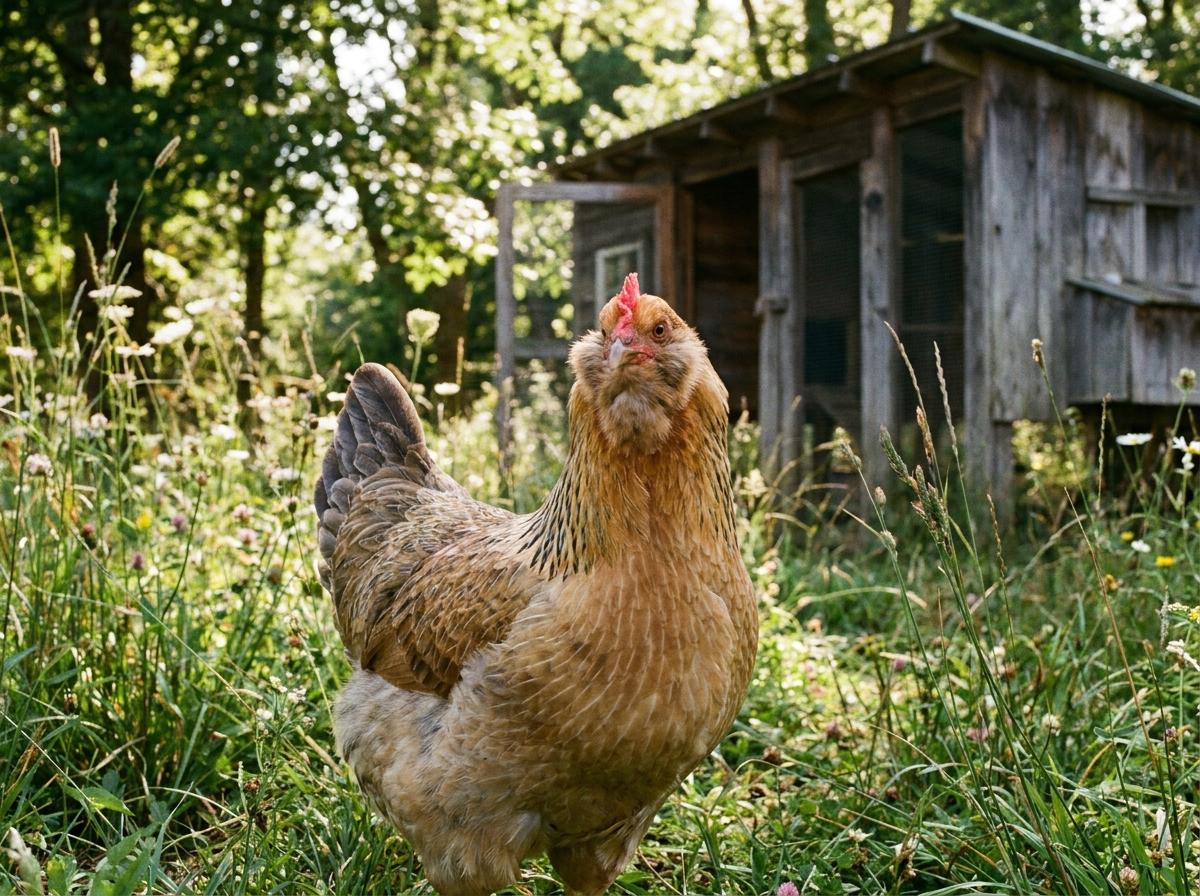
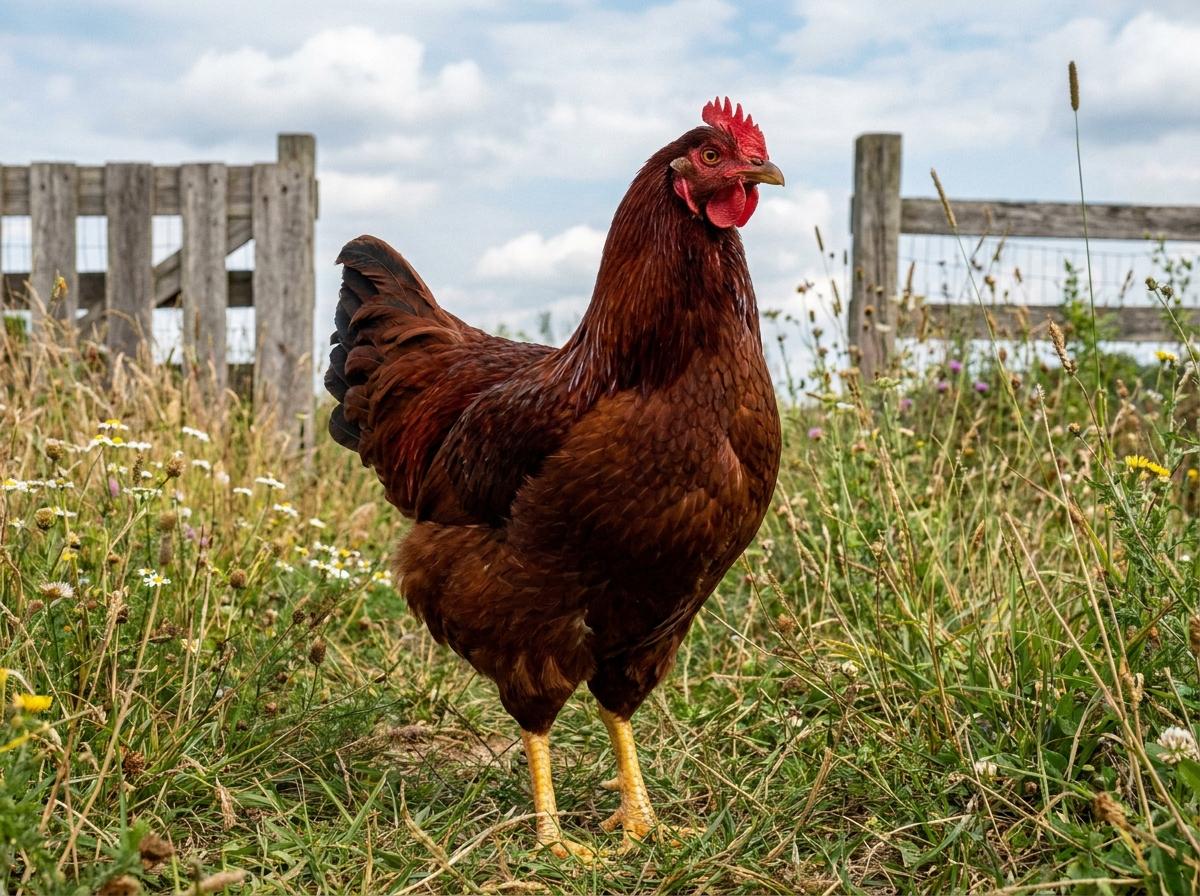
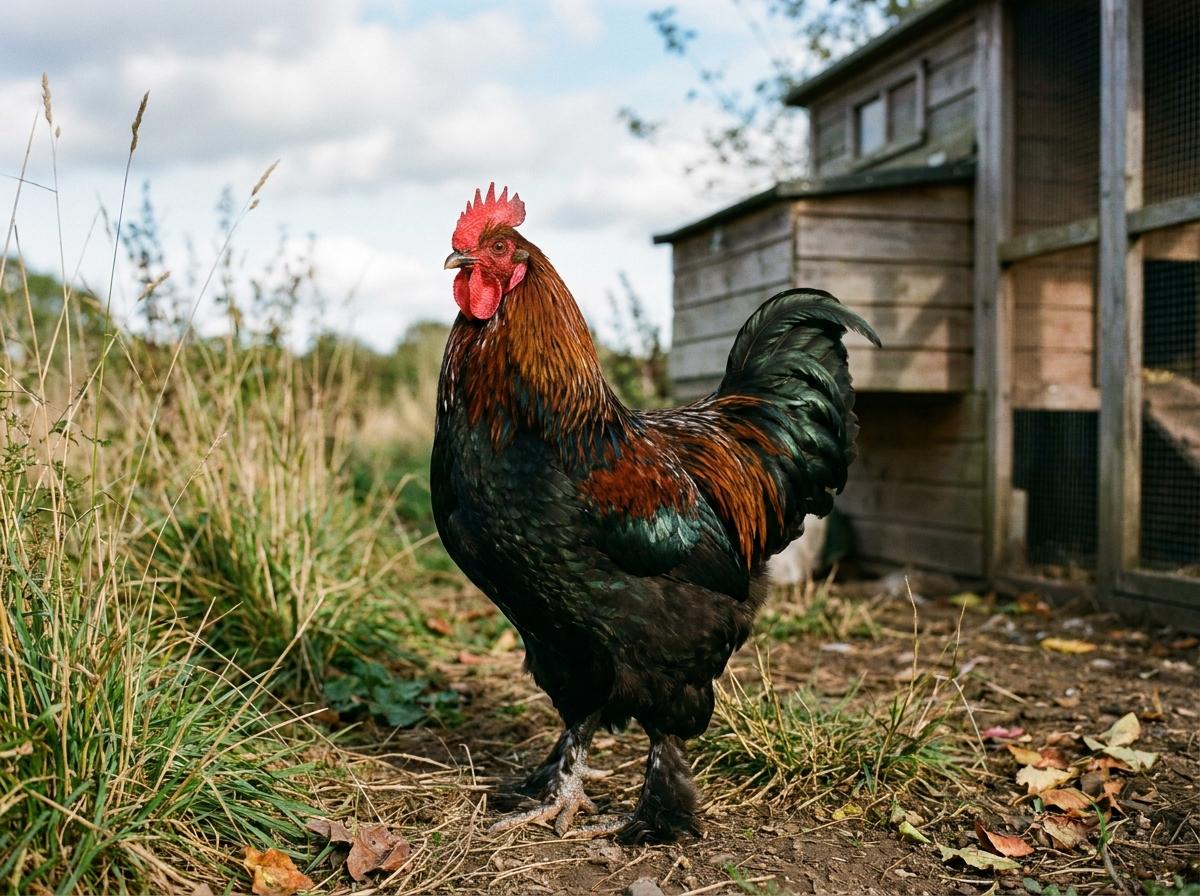
- The carnation comb. This is the signature trait of the Catalan dark egg family. The Empordanesa carries a single comb with an appendix on each side of its rear, toward the back of the head. It is also called a “king’s” comb in English and a cresta en clavell in Catalan. The comb is red, moderately large, upright and arched, with five or six flat serrations along the top; the standard says that seen from behind it should recall a cross. On hens it falls to one side from about halfway back.
- Largely red earlobes. This is the most practical way to tell an Empordanesa from a Penedesenca, whose standard calls for earlobes more than two thirds white despite the brown egg. The Empordanesa’s earlobes are red, with the standard tolerating up to one third white in cocks and up to half in hens, the redder bird scored higher. A Catalan dark egg bird with predominantly red earlobes is very likely an Empordanesa, though not every bird is pure red.
- Bright yellow legs. The shanks are a clean yellow, an easy field marker consistent across the varieties.
- A tight, active Mediterranean frame. These are moderately sized, athletic birds rather than heavy, blocky dual purpose fowl. The standard puts cocks at 2.4 to 3 kg (roughly 5.3 to 6.6 lb) and hens at 1.7 to 2.3 kg (roughly 3.7 to 5.1 lb), and the official breeding program describes the typical adult hen at around 2.2 kg with the adult cock reaching up to about 3 kg.
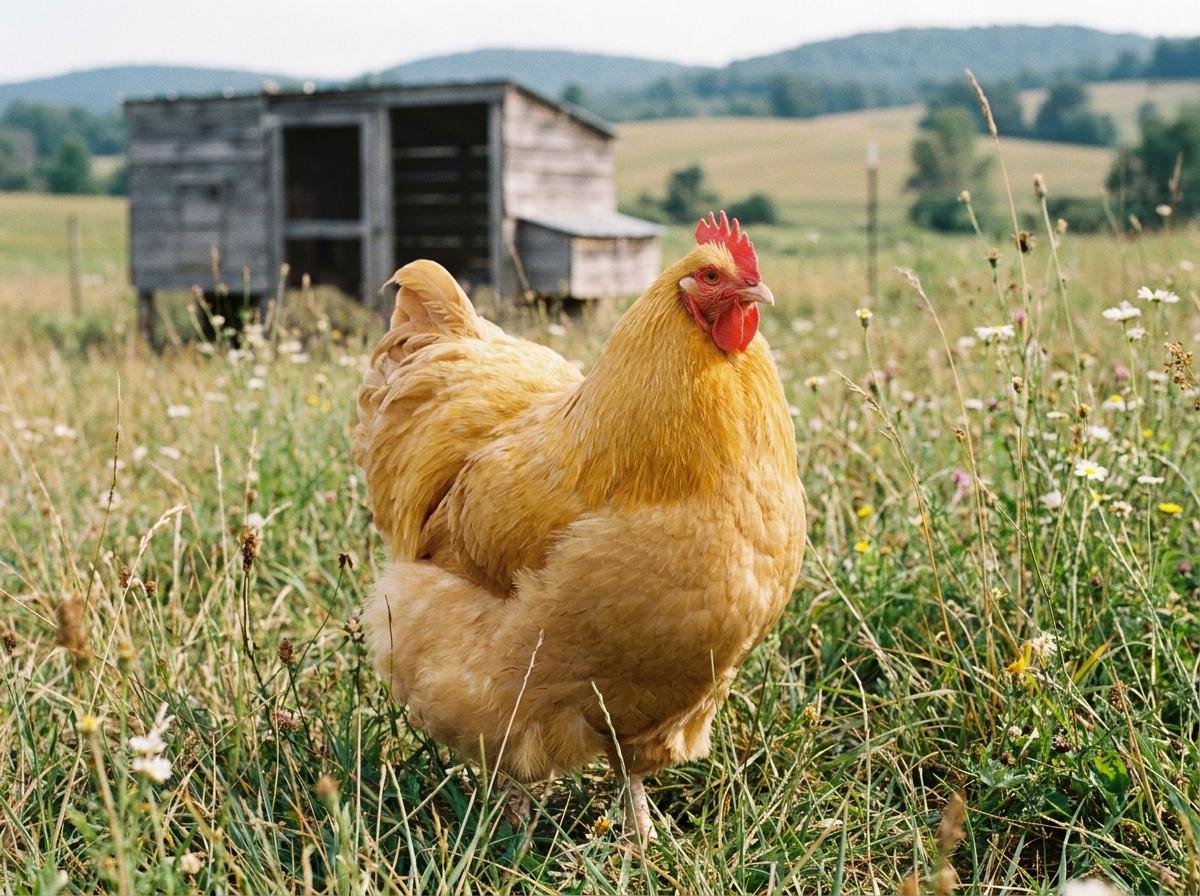
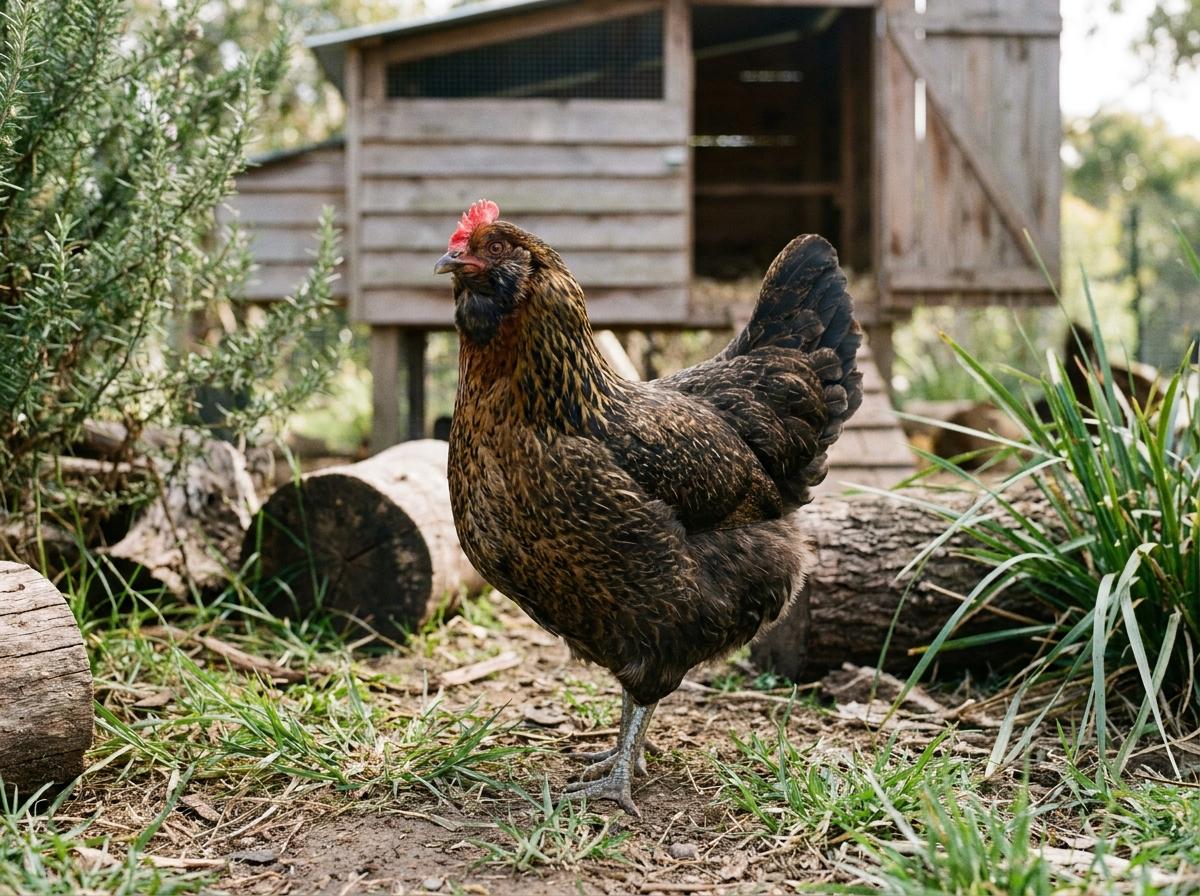
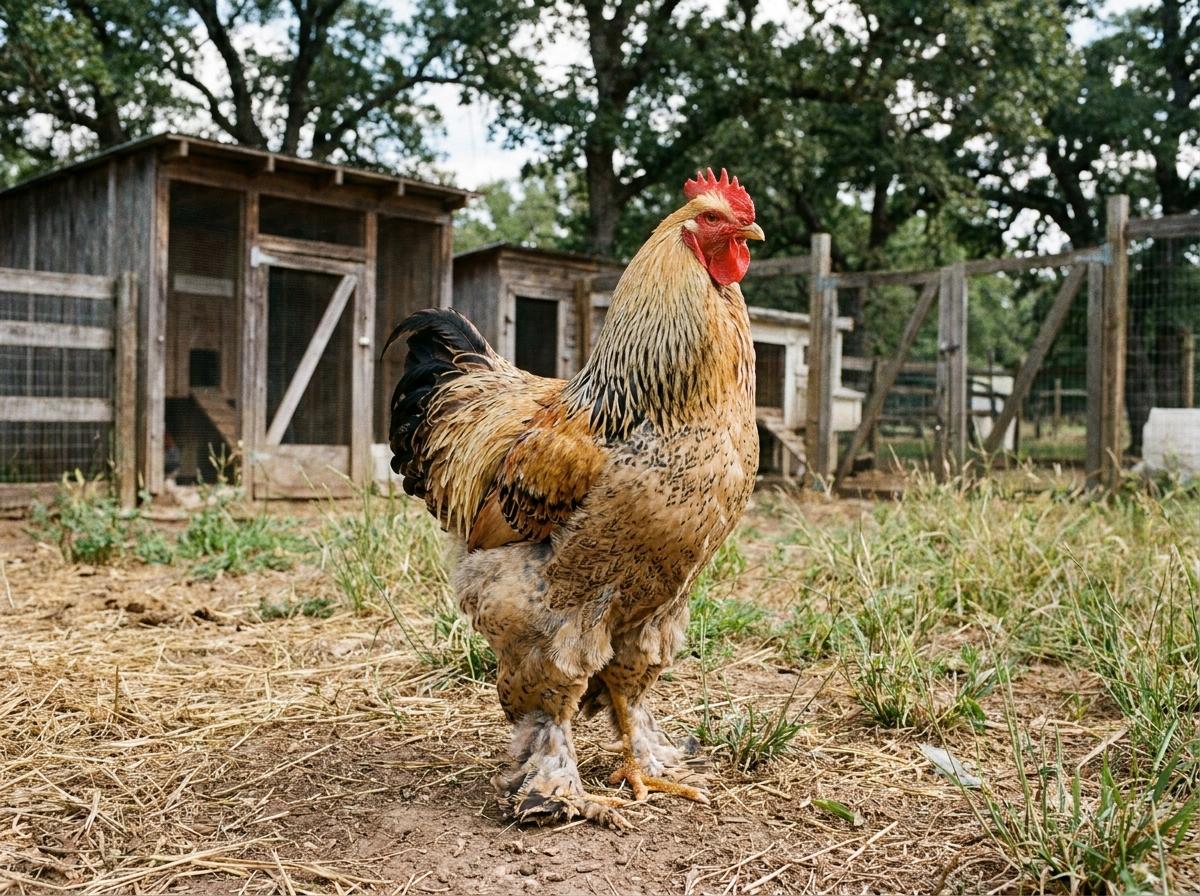
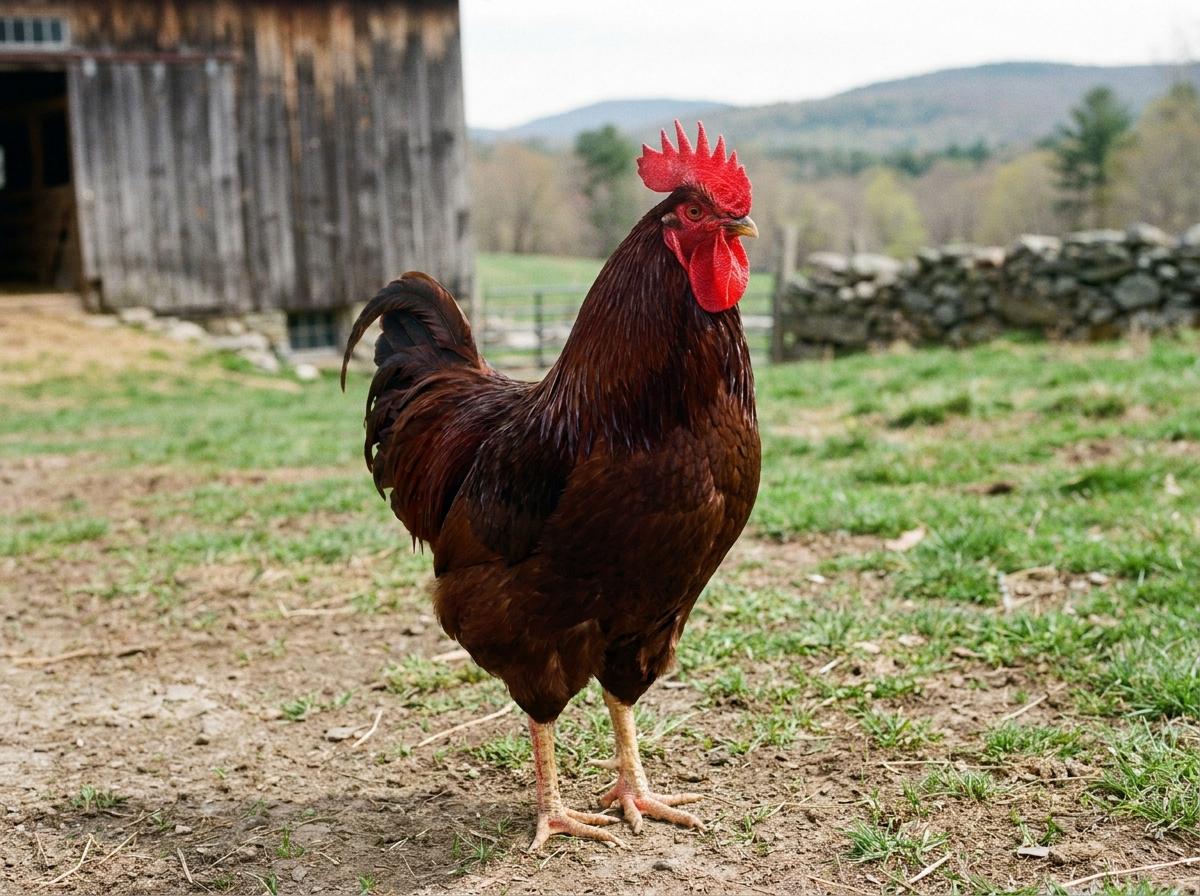
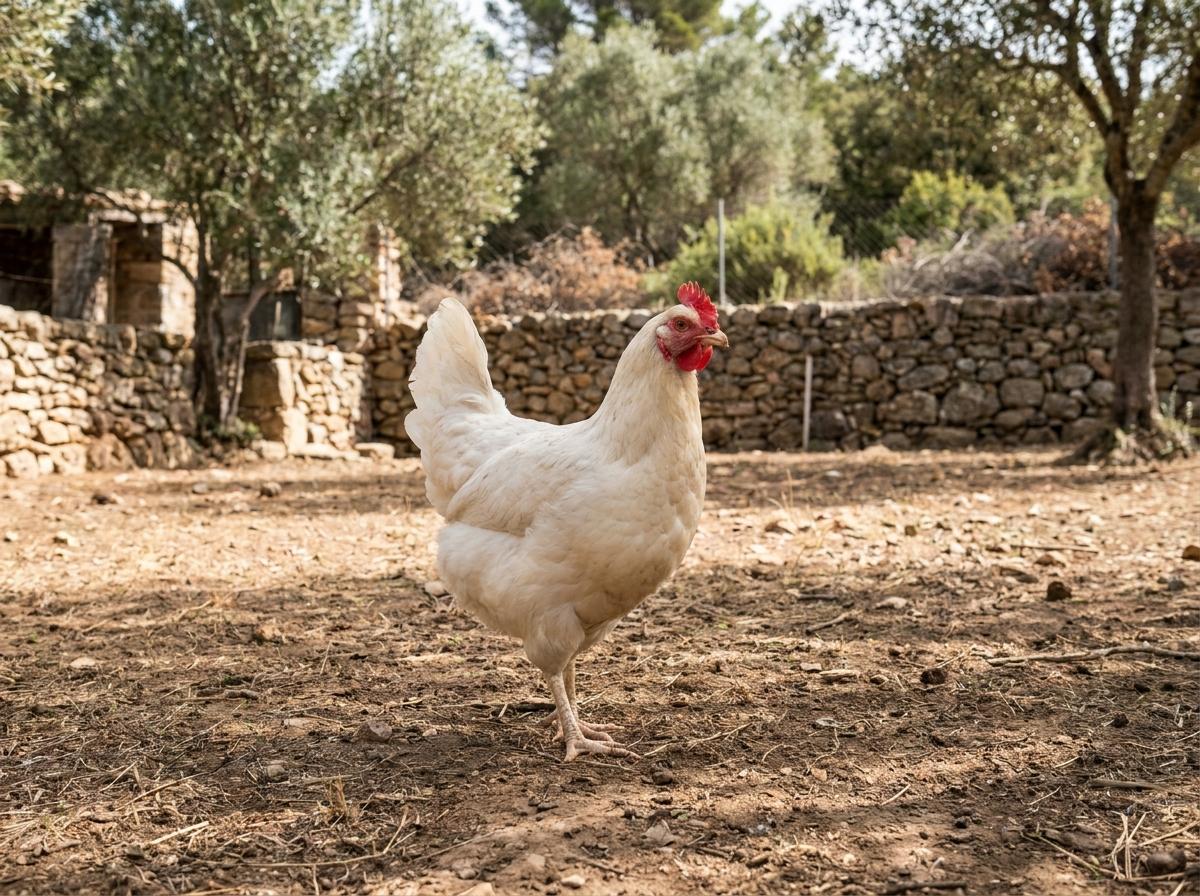
On plumage, the recovered population was structured into five varieties: White (Blanca), Red (Roja), Buff (Rubia), Buff-white (Blanquirubia), and partridge (Aperdizada), the last of which the color standard describes in black, blue-grey, and white forms. The emblematic bird most people picture, and the one shown above, is the Red variety: a warm reddish-brown body with a contrasting black tail and those yellow legs. Black tails run through the Red, Buff, and Buff-white varieties, and other contrasting shades appear across the group.

Temperament and behavior
If you want a placid lap chicken that dozes in a small run, this is not your breed. The Empordanesa behaves like the rustic foraging bird it is. Keepers consistently describe it as alert, active, and wary, an excellent forager that would rather range widely and find its own food than crowd a feeder. These are practitioner observations from people who keep the Catalan breeds rather than laboratory findings, so treat them as the lived experience of owners.
That wariness has a practical upside. The birds are quick and flighty, they notice predators early, and cockerels tend to be attentive flock protectors. One recurring account among keepers is that Empordanesas evade aerial predators that pick off calmer breeds, precisely because they stay alert and take cover fast. The flip side is that they are described as skittish and unhappy when closed into tight quarters. This is a breed for space, for range, and for keepers who can accommodate an active bird that flies well.
One oversimplification is worth correcting. Active and flighty does not mean the hens will not sit. The official breeding program records that around 14 percent of hens go broody, incubate their own eggs, and mother the chicks well. It also sets fertility at about 90 percent with one cock to every ten hens, incubability of fertile eggs at 80 to 85 percent, and the expected average hatch at around 72 percent. So while these are not the perpetually broody birds of some heritage lines, the hens retain useful mothering ability, which matters for a breed conserved through natural reproduction on small farms.
The eggs: why the shell is so dark
The dark egg is the whole reason most people seek this breed out. The shell is a deep reddish-brown, described in the Spanish standard as pardo rojizo, and the official breeding program adds a detail the photos rarely show: the color is a fairly intense reddish brown carrying bluish tones. In the darkest examples it reads as terracotta or near chocolate. Among chickens, only a short list of breeds lays eggs this dark. The Empordanesa’s own Catalan cousin the Penedesenca is generally regarded as producing the very darkest, and the French Marans and the Dutch Barnevelder are the usual names mentioned in the same breath. Reasonable sources disagree about which breed truly holds the crown, so the honest framing is that the Empordanesa sits firmly in the small elite of very dark egg layers, not that it is provably the single darkest.
Two things about dark eggs are worth knowing. The darkness is a pigment (protoporphyrin) laid down on the outside of the shell late in formation, so it is a coating that can rub or wash off, not the shell color all the way through, and the interior is normal. And the intensity fades over a laying cycle: a pullet’s first eggs are the darkest, the color lightens as she lays on, then resets after a rest or molt. The jaw dropping near black eggs you see in photos are usually early season pullet eggs, not the year round average.
On quantity, the official breeding program expects about 180 eggs by the end of a hen’s first laying year, with one exception: IRTA ran a genetic improvement process on the Red variety, whose lay sits at about 220 a year. Eggs reach around 60 grams in that first year, a solidly large egg, and the program notes they come into good size in the second laying year. Pullets generally start at roughly four and a half to five and a half months, some nearer four. That is respectable rather than industrial output. You keep an Empordanesa for the character and color of its eggs and for its heritage value, not to out produce a commercial brown layer.

Climate, hardiness, and housing
The popular picture of this breed and the official one part company here, so get it right before you buy. English language breed write ups routinely file the Empordanesa under “heat hardy,” on the logic that a light-framed Mediterranean bird with a big comb must suit hot weather. The breed’s own official breeding program, lodged with Spain’s Ministry of Agriculture, says the opposite in plain terms: a rather light and very rustic bird, sensitive to heat but resistant to cold. MAPA’s breed record agrees, describing a free-range bird adapted to the low winter temperatures of its Mediterranean zone. The Empordà is Mediterranean, but it is northern Catalan, with real winters and the Tramuntana blowing through them.
So treat the Empordanesa as a rustic, cold tolerant outdoor bird, and treat hot weather as a condition to manage rather than the breed’s specialty: deep shade over the range, cool water through the day, airflow in the housing, no crowding during the worst hours, and early action on panting or lethargy. If you want a heat-proof layer, this is not the obvious pick, whatever the breed pages say.
Give the birds real range if you can. Everything about the Empordanesa, its foraging drive, its flightiness, its dislike of confinement, points to a bird that does best with space to roam rather than in a small static run. Secure that range against predators and against escape, because these birds fly well and will use height. Cold is less of a worry here than with a more delicate breed, though the large single comb is still exposed to frostbite in a hard freeze, so dry, draft free housing remains the sensible baseline.
Empordanesa versus Penedesenca
The two are often confused. How to keep them straight:
- Region. The Penedesenca comes from the Penedès, southwest of Barcelona. The Empordanesa comes from the Empordà, in Girona province to the northeast.
- Earlobes. This is the most useful difference. Penedesencas carry white earlobes despite laying brown eggs, an almost unique combination, with their standard calling for more than two thirds white. Empordanesa earlobes are red, tolerating up to a third white in cocks and up to half in hens.
- Comb. Both share the carnation, or king’s, comb, so the comb tells you the family but not which of the two you have.
- Eggs. Both lay very dark reddish-brown eggs, and both sit near the top of the dark egg scale. The Penedesenca is usually cited as the darker of the two. Within the Penedesenca, keeper accounts point to the Partridge and Wheaten varieties as the darkest layers rather than the Black, with the autosexing Crele laying a lighter egg.
If you want the reddish-brown Red variety pictured on this page, that is an Empordanesa trait to shop for. For a side by side look at the cousin breed, see the Creatures Penedesenca breed page.
Care basics
Beyond climate and space, the Empordanesa needs the same sound husbandry as any active heritage layer. Feed a complete poultry ration appropriate to the birds’ stage, a layer feed for hens in production, with grit and a calcium source such as oyster shell offered free choice, and always clean water. Good range offsets some feed and keeps these keen foragers occupied, though it supplements a balanced ration rather than replacing it. Provide dry, well ventilated housing with roosts and nest boxes. Routine flock health is the same story as any small farm chicken: a parasite plan suited to your area, clean bedding, biosecurity, and prompt attention to anything that looks off, with a poultry veterinarian for any diagnosis, medication, or dosing decision. Keeping clear records of lay, broodiness, hatch results, and health events is doubly valuable in a rare breed, because those notes feed directly into good conservation breeding decisions. You can track all of that on a free animal profile, described in the hub at the end of this page.
Cost, availability, and buying well
This is where the breed’s rarity becomes the whole story. The Empordanesa is not merely uncommon, it is officially endangered. Spain’s national breed census recorded just 162 registered birds at the end of 2025, spread across only five farms, all of them in Catalonia. That is the entire documented core of the breed. Outside Spain it is rarer still, and in the United States only the White variety is reported to have arrived, in small numbers.
Because of that, there is no meaningful published market price, and it would be misleading to invent one. What you can plan for is scarcity: a very short list of sources, a waiting list rather than an off the shelf purchase, and a strong likelihood of buying hatching eggs or chicks from a conservation minded breeder rather than adult birds. Live poultry and hatching eggs also cross borders under strict animal health rules (in the United States, imports are regulated by USDA APHIS on disease grounds), so do not assume you can simply order stock from Spain.
A few things to check when you do find a source:
- Confirm the breed, not just the look. A reddish-brown yard hen is not automatically an Empordanesa. Look for the whole package: the carnation comb, red earlobes, yellow legs, and stock that traces to recognized breeding birds.
- Ask about the line and its papers. With a conserved breed, provenance is the point. A breeder working within the official program should be able to tell you where their birds come from.
- Set expectations on eggs. Ask to see the flock’s actual egg color, and remember that the darkest examples are early season pullet eggs, not the year round norm.
- Buy for conservation, not novelty. The most useful thing a new keeper can do for a breed this scarce is to breed it responsibly and keep good records, not just enjoy a few dark eggs and let the line lapse.
Genuine stock is scarce enough that a saved listing alert, set up in the hub below, is often the most realistic way to catch birds when they do become available.
Frequently asked questions
Are Empordanesa eggs really among the darkest?
Yes. It sits in the small group known for the darkest shells, alongside its Catalan cousin the Penedesenca and breeds such as the Marans and Barnevelder. Which lays the single darkest egg is genuinely debated, so call it one of the darkest, not the darkest.
Why do the eggs get lighter over time?
The dark color comes from pigment applied to the outside of the shell late in formation. It is heaviest on a pullet’s first eggs of a laying cycle and fades as she keeps laying, then resets after a molt or rest. The near black photos you see are usually early season eggs.
How is an Empordanesa different from a Penedesenca?
Both are Catalan dark egg breeds with the carnation comb. The simplest tell is the earlobes: the Penedesenca standard calls for more than two thirds white, while the Empordanesa’s are red. They also come from different regions, the Penedès and the Empordà.
Is the Empordanesa good for beginners?
It can be, with the right setup. It is rustic and low fuss on health, but it is an active, flighty forager that dislikes confinement, so it suits a keeper who can offer real, secure range rather than someone wanting a calm bird for a small run. Hot weather needs managing, and its rarity puts a stewardship role on any beginner who takes it on.
How many eggs will a hen lay?
The official breeding program expects about 180 by the end of the first laying year, with pullets starting at around four and a half to five and a half months. The Red variety is the exception: IRTA selected it for lay and it runs at about 220 a year. This is a heritage layer valued for egg color and character rather than volume.
Is the Empordanesa heat hardy?
No, and this is the breed’s most repeated myth. The official breeding program filed with Spain’s Ministry of Agriculture describes it as very rustic, sensitive to heat, and resistant to cold, and MAPA records it as adapted to the low winter temperatures of its Mediterranean zone. Plan for shade, cool water, and airflow in summer, and do not choose this breed for a hot climate.
Can I buy Empordanesas outside Spain?
With difficulty. The breed is officially endangered, with a very small population concentrated in Catalonia, and only the White variety is reported to have reached the United States. Expect to work through a conservation breeder and to navigate strict rules on importing live poultry or hatching eggs.
Do this next on Creatures
Whether you are researching the breed, trying to find genuine stock, or already helping conserve a flock, Creatures is the records, marketplace, and directory layer to do it in one place.
Find stock. Browse Empordanesa listings on the marketplace and search trusted breeders and farms in the Creatures directory. New to the marketplace? See saving searches and using your watchlist.
Get alerted. Genuine Empordanesas are scarce, so set a free Empordanesa listing alert and we will tell you when one is posted. No account needed to start.
Add your bird. Already keeping Empordanesas? Create a free animal profile in a few minutes. The walkthrough is in adding an animal to Creatures.
Track lay and health. Record egg color, broodiness, hatches, and health on Creatures. The record sheet opens for any visitor to look around, and you will need a free account to save what you enter. See adding a record and health and medical records for the how-to.
List your flock. Conserving a line? Create a breeder or farm profile so buyers searching for this rare breed can reach you, and read getting listed in the breeder directory.
Explore other rare breeds. If heritage stock is your thing, owners are also documenting breeds like the Pakistani Highflyer pigeon and the Dogo Cubano on Creatures.
Keeping a rare heritage flock is easier with a rhythm. A free profile lets you set reminders and upcoming care for seasonal jobs like heat prep, molt, and hatching season, so nothing slips.