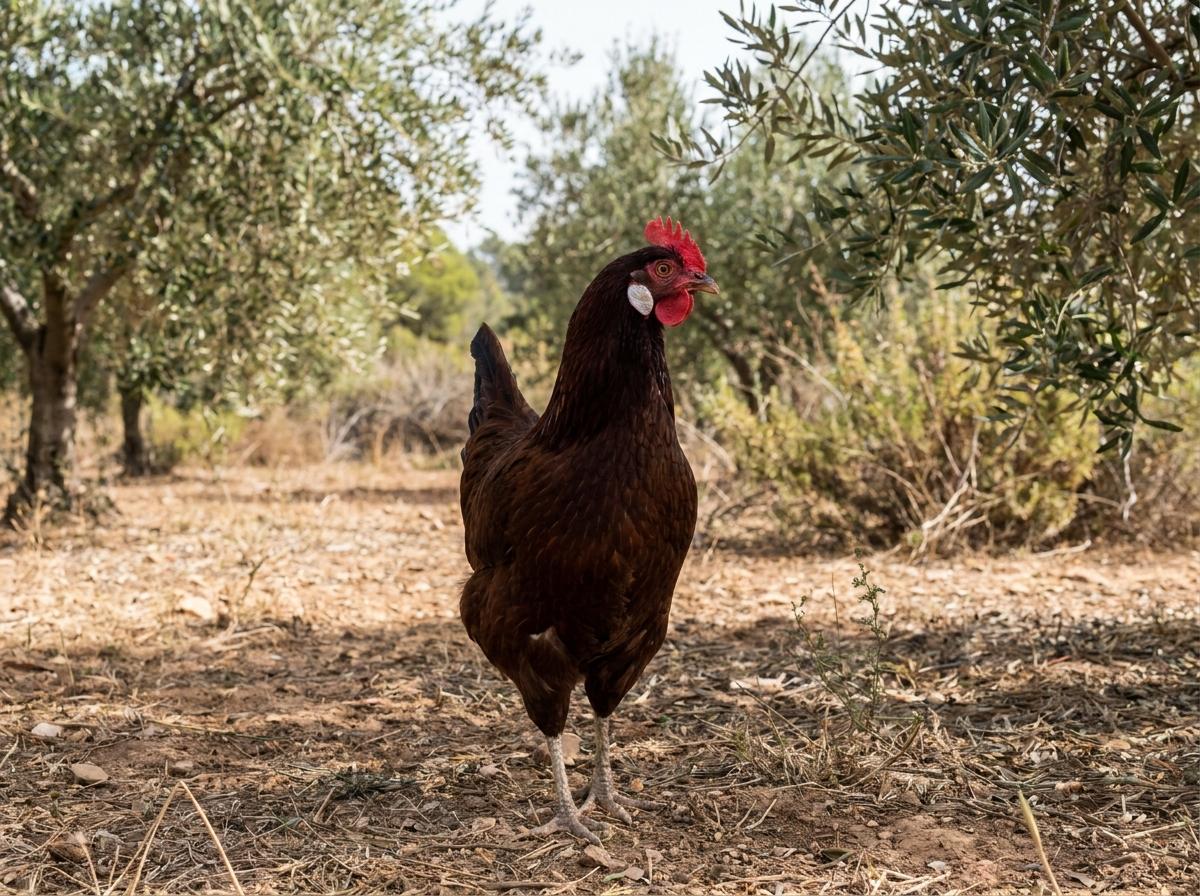
Penedesenca
Author: Elliott Garber, DVM · Published
The Penedesenca is a chicken breed from the Penedès area of Catalonia, Spain, known for reddish-brown eggs and an unusual rear detail on its single comb. This is a carnation comb (Catalan clavell), with small appendages projecting sideways from its back. The Rare Poultry Society’s breed description uses the carnation name and Catalan term. It is not the all-around cup shape of a Buttercup comb.
The chicken guide offers the wider comparison. For Penedesenca, check the named variety, the breeder’s records and the actual flock’s eggs instead of treating one dark shell or unusual comb as proof of identity.
| Origin | Penedès, Catalonia, Spain |
|---|---|
| Varieties | Black, partridge, wheaten and barred (usually called crele in the US) |
| Comb | Single, with rear lateral appendages |
| Eggs | Reddish-brown shells |
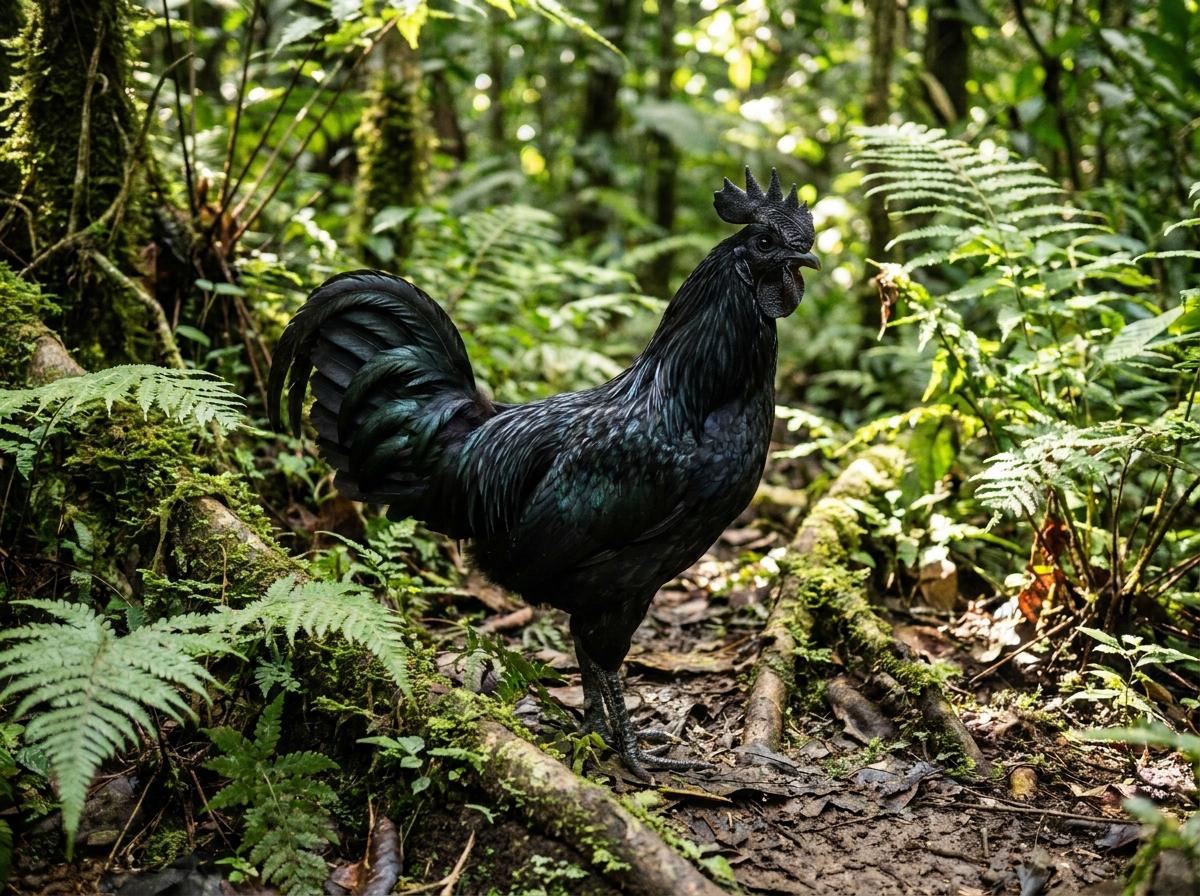
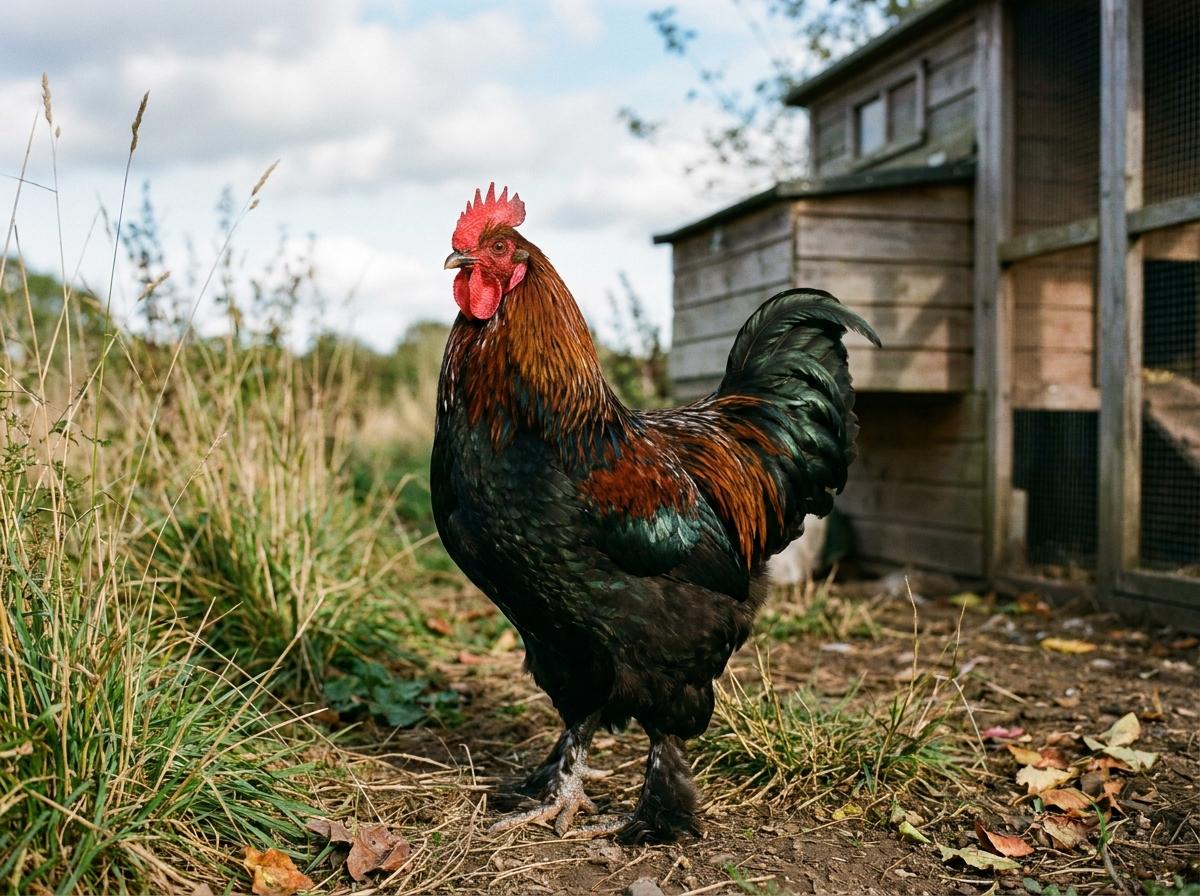
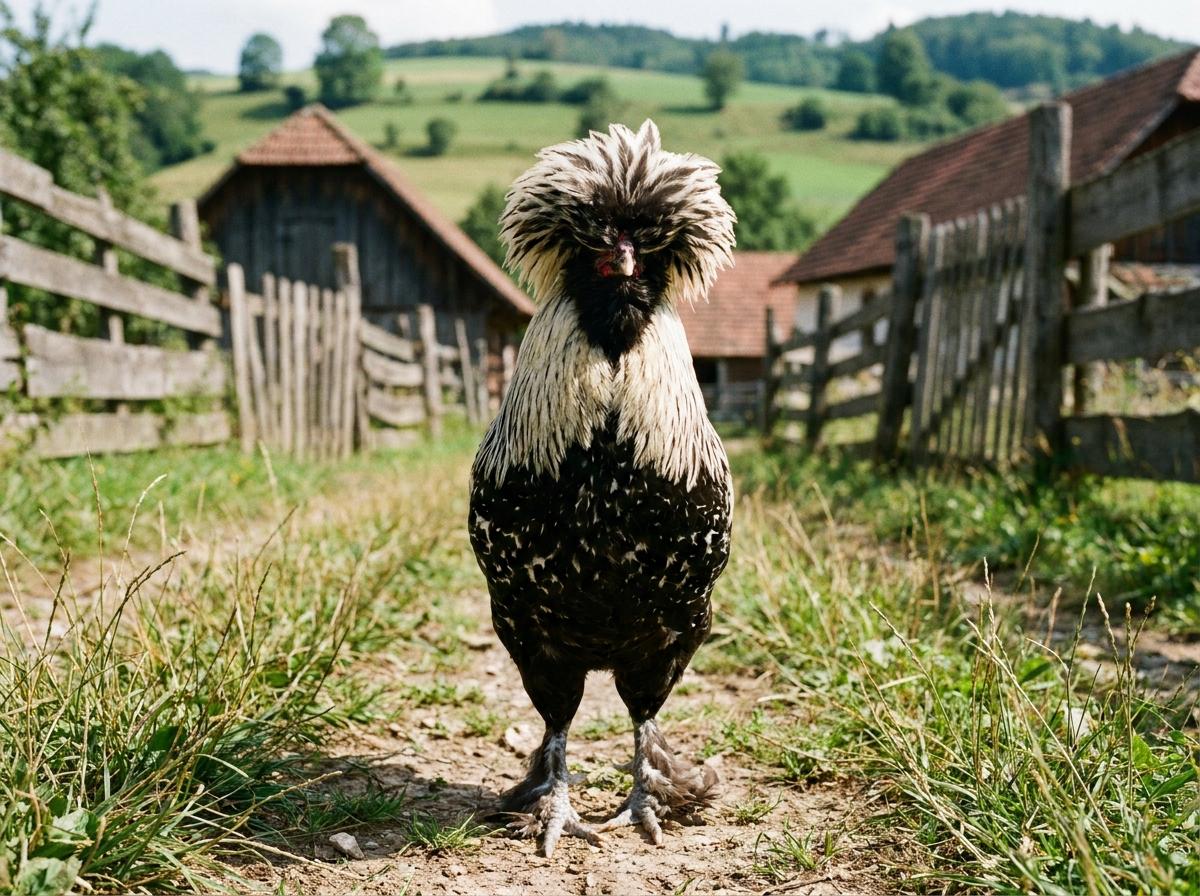
| Illustrated form | Black variety with dark clean legs |

AI-generated illustration of the black Penedesenca variety, not a photograph of breeding stock or a certification of type.
Browse listings, public profiles, breeders, or add your animal.
A Catalan breed with several varieties
Spain’s agriculture ministry, MAPA, lists Penedesenca as a native breed associated with the Penedès region. Its description recognizes black, partridge, wheaten and barred varieties. Barred is the variety US sellers usually call crele, a useful translation when comparing a US listing with the Spanish description. The black bird in this article is one variety, not the only Penedesenca appearance.
The official morphology account describes white earlobes bordered by red and the comb’s posterior side appendages. In the black variety, both plumage and legs are black. Those details are more useful than assuming that all dark-egg chickens share the same physical standard.
Ask which variety is being sold and which standard the breeder follows. Keep the variety name on your purchase and breeding records. A mixed-color flock may be entirely satisfactory for a keeper’s own goals, but that is different from a documented group intended to maintain a particular variety.
The clavell is at the back of a single comb
From the side, the small rear projections may be difficult to see. Ask for a clear view from behind and slightly above, along with an ordinary side photograph. The central comb should still be recognizable as a single blade.

AI-generated reconstructed detail of rear comb appendages. It is an explanatory illustration, not a judging plate or a model for altering a bird’s comb.
Do not use a generated drawing to declare an actual bird purebred. Comb development, viewpoint and individual variation all affect what a photograph reveals. Breeder records and the applicable standard supply context that a close-up cannot.
The feature also should not be confused with a full ring or cup. If an advertisement illustrates a different comb type, ask for photographs of the actual birds before drawing conclusions from the label.
Reddish-brown eggs, measured honestly
MAPA describes the breed’s eggs as reddish. That supports discussing reddish-brown shells, but it does not support declaring Penedesenca eggs the world’s darkest or guaranteeing a fixed shade from every hen.

AI-generated illustration of shell tones. These are not sampled eggs, a grading chart or proof of an individual hen’s output.
For a buying decision, request ordinary recent egg photographs in neutral light and ask which hens laid them. If output matters, request records that cover a stated number of hens and a stated period. A single striking egg is not a laying record.
A comparison with Marans or Welsummer can help clarify your goals, but do not choose solely by an edited color image. Egg size, laying pattern, the birds’ needs and the breeder’s documentation belong in the decision too.
Flock care and purpose
Discuss why the breeder maintains the line. A conservation or exhibition group, a household laying flock and birds selected for table use may have different priorities. Avoid turning a broad breed description into a guarantee about every strain.
MAPA’s management account describes birds with feed and water access, outdoor space and shelter from adverse weather. In your own setup, provide secure night housing and a dry resting area, and make sure the flock can use shade and shelter rather than relying on geographic origin as a heat-tolerance promise.
Ask about actual handling and flock experience. “Mediterranean” is not a personality assessment. Observe birds moving around people and reaching shared resources, and plan introductions before placing newcomers into an established flock. Agree local health and separation priorities with a poultry veterinarian or extension adviser.
Price and purchase checks
Compare quotes for the same type of purchase: hatching eggs, unsexed chicks, sexed growers or established breeding birds. Ask for the variety, parent-group identity and any sexing terms. Include transport and equipment costs before deciding that one offer is cheaper.
There is no reliable universal Penedesenca price. Where the breed is uncommon locally, a distant seller may appear attractive, but rarity does not replace identity, health records or a workable transport arrangement. For hatching eggs, separate evidence of the breeding group from a promise about what any particular shipped egg will produce.
Frequently asked questions
Are all Penedesencas black?
No. The official account includes several varieties. Black is the example illustrated here.
Does the comb form a complete cup?
No. The distinctive appendages are at the rear of a single comb.
Does a dark brown egg prove the breed?
No. Shell color is useful context, but it cannot establish parentage or variety.
Do this next on Creatures
Compare the chicken breed guide against your priorities for eggs, exhibition or maintaining a documented breed group.