
Traits and Temperament of Scottish Highland Cows
Author: Elliott Garber, DVM · Updated
Built for the Worst Conditions on Earth
Highland cattle did not become one of the world’s most resilient breeds by accident. Centuries of development in the Scottish Highlands and Islands, where winter temperatures drop below freezing, winds rip across open moors, and usable forage is sparse and low-quality, produced an animal engineered for survival. Every physical trait the highland carries, from its layered coat to its compact skeletal structure, serves a functional purpose. Understanding these traits explains why highlands behave the way they do and why they succeed in environments that challenge more commercially developed breeds.

The Coat: Function Over Fashion
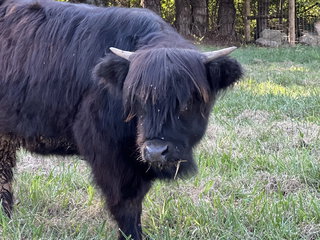
The highland’s shaggy coat is the breed’s most recognizable feature and its most important adaptation. It operates as a two-layer weather system. The outer coat consists of long, oily guard hairs, some reaching 13 inches in length, that shed rain and snow before moisture reaches the skin. Beneath this lies a dense, downy undercoat that traps warm air against the body, providing thermal insulation without the thick subcutaneous fat layer that other cold-climate breeds rely on.
This distinction between hair insulation and fat insulation has real consequences. Because highlands stay warm through their coat rather than body fat, their meat is naturally leaner than that of breeds like Angus or Hereford. The double coat also means highlands can be maintained outdoors year-round with only basic windbreaks or open-sided shelters, even in severe climates. Enclosed barns are unnecessary for most highland operations and can actually create problems with humidity and poor ventilation for animals adapted to open air.
The long fringe of hair over the eyes, called the “dossan,” is not just a charming visual feature. It provides protection from wind, driving rain, and insects around the eyes and face. Some owners trim the dossan for better visibility, particularly for show animals, but in field conditions, it functions as intended.
Highlands shed their dense undercoat in late spring and early summer, which allows them to adapt to warmer conditions better than their heavy winter appearance might suggest. This seasonal shedding cycle is one reason highlands are raised successfully in climates well beyond Scotland, including the American Southeast, Australia, and Mediterranean Europe.
Coat Colors and the Victorian Influence
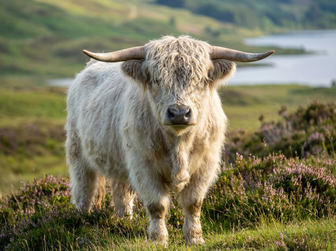
Highlands come in a range of recognized colors, including red, black, yellow, dun, white, brindle, and silver. Red is by far the most common today and the color most people picture when they think of the breed, but black was historically more prevalent, particularly among the island Kyloe type. Color preferences have shifted over the centuries, and the breed’s most famous admirer played a part. Queen Victoria reportedly expressed a fondness for the red highlands during her time in Scotland, and some breed historians credit that royal preference with helping tip the population toward the red coats that dominate show rings and pastures today.

Horns: Tools, Weapons, and Social Signals
Both highland bulls and cows grow horns, and the shape differs meaningfully between the sexes. Cows develop long, upswept horns with a graceful curve, while bulls carry thicker, shorter horns angled more horizontally and forward. Horn growth continues throughout the animal’s life, and horn condition can indicate overall health (smooth, even growth suggests good nutrition; ridged or flaky horn may warrant a closer look at mineral intake).
In their native habitat, highland horns serve as foraging tools. Cattle use them to scrape through snow and ice to reach buried vegetation and to push through dense brush to access browse. Within the fold, horns are social instruments used to establish and maintain hierarchy. A dominant cow will use subtle horn positioning, a slight tilt or a purposeful step forward, to communicate her status without making physical contact. Actual horn-to-horn contact occurs during more serious disputes, but in a stable group with adequate space, these confrontations are infrequent.
For owners, horns are the single most important management consideration unique to the highland breed. A mature cow’s horn span can reach three to four feet tip to tip, so handling facilities, chutes, gates, and feeders must all be designed or modified to accommodate that spread. Standard chutes and headgates built for polled (hornless) breeds are usually too narrow, and a cow with a 36-inch horn span will not fit safely through a 26-inch squeeze chute. Gates need to open wide enough for a horned animal to pass without catching, and hay rings or feed bunks should let cattle eat without tangling horns or trapping a neighbor. Many experienced owners widen chutes, adjust headgates, and lay out pens to avoid tight turns before their first animal ever arrives.
Working highlands on foot calls for the same awareness. A cow that swings her head to look at something beside her can catch a handler with a horn tip, rarely out of aggression and simply as a consequence of carrying wide horns in close quarters. Position yourself where you can see the animal’s head and keep a clear path to step aside. Some owners choose to dehorn or tip (blunt the sharp ends of) their horns, particularly in close-confinement settings or where cattle interact frequently with children. That is a personal management decision with strong opinions on both sides. If you keep the horns intact, the answer is good facilities and good handling habits. Planning your infrastructure around horned cattle before your first animal arrives prevents injuries to both cattle and handlers. For more on working safely with horned stock, see our highland cattle temperament guide.
Size, Build, and Structural Soundness
Highland cattle are moderate in size compared to mainstream commercial beef breeds. Standard highland cows stand 42 to 48 inches at the hip and weigh 900 to 1,300 pounds at maturity. Bulls are larger, reaching 1,500 to 1,800 pounds. This moderate frame is a feature, not a limitation. Smaller body mass means lower maintenance energy requirements, lighter impact on pastures, and easier handling on small-acreage properties.
Miniature highland cattle, generally classified by breeders as under 42 inches at the hip at about three years of age, have become extremely popular for hobby farms and small properties. Prospective buyers should be aware that terms like “teacup” and “micro mini” are marketing labels, not recognized breed classifications. Some miniature lines carry chondrodysplasia, a genetic condition similar to dwarfism, that can cause health and structural problems. Buying from breeders who test for and disclose genetic conditions is important, especially at the price points miniature highlands command.
Structurally, highlands are built for rough terrain. Their legs are short relative to body depth, providing a low center of gravity. Hooves are dark, hard, and wide, suited to rocky hillsides and soft, boggy ground alike. This structural soundness translates into fewer foot and leg problems than breeds developed primarily for flat, improved pastures.
Temperament: Calm Under Pressure
The highland temperament is one of the breed’s strongest selling points, particularly for owners who are new to cattle or managing animals on small acreage with limited handling infrastructure. Highlands are consistently described as calm, curious, and slow to react. They do not spook easily, they tolerate changes in routine, and they generally allow close human approach when they have been handled regularly.
This calm disposition is not uniform across every animal. Individual personality varies, and management history matters enormously. A highland calf raised with daily human contact, halter-trained young, and handled with patience will behave very differently from a pasture-raised animal with minimal socialization. If you plan to use your highlands for agritourism, showing, or any situation involving public interaction, early and consistent handling is essential.
Highland cows are outstanding mothers. They calve easily (small calf birth weights combined with wide pelvic structure), they are attentive and protective without being dangerously aggressive, and they raise vigorous calves on forage-based diets. Calving ease alone makes the breed attractive for operations that do not have staff available for round-the-clock calving season supervision.
Seasonal Behavior Patterns
Highland temperament shifts subtly with the seasons, and reading those rhythms helps you time management tasks and farm activities. During spring calving, cows are more alert and protective of their young, so give a freshly calved cow extra room. Summer brings flies and heat, and highlands, despite their adaptability, prefer cooler conditions; expect them to be more restless and less tolerant of close approach as they seek shade, water, and airflow. Fall is breeding season, when bulls are more active and cows in estrus may behave differently than usual. Winter tends to be the calmest stretch. With adequate forage and shelter from the wind, the fold settles into a steady routine and is often at its most approachable.
Foraging: Browsers, Not Just Grazers
One of the highland’s most underrated traits is how it eats. Unlike most cattle breeds, which are primarily grazers, highlands are both browsers and grazers. They will take coarse grasses, sedges, rushes, heather, brambles, and woody browse that other cattle leave untouched. That versatility lets them hold good body condition on rough ground without supplemental feed for much of the year, and it is what makes them outstanding conservation grazers for managing overgrown or ecologically sensitive land. On a small property, the same appetite for brush keeps fence lines and rough corners under control with no extra effort from you.
How Highlands Compare to Other Beef Breeds
Understanding where highlands fit relative to other popular breeds helps prospective buyers make informed decisions.
- Versus Angus: Angus are the dominant commercial beef breed in North America. They grow faster, reach market weight sooner, and produce heavier carcasses. Highlands grow more slowly but on lower-cost feed, produce leaner meat, and tolerate harsher conditions. Angus are polled (hornless), which simplifies handling infrastructure.
- Versus Hereford: Herefords share some of the highland’s grazing efficiency and docile temperament but lack the cold tolerance and foraging versatility. Highlands will eat brush, weeds, and browse that Herefords leave untouched.
- Versus Galloway: Galloways are another Scottish breed with a double coat and similar hardiness. The Galloway is naturally polled, which appeals to owners who want the Scottish genetics without horn management. Highlands typically have an edge in visual appeal and market demand, particularly for miniature animals.
- Versus Dexter: Dexters are another small, dual-purpose breed popular on small farms. They mature faster than highlands and produce more milk, but lack the highland’s extreme weather tolerance and distinctive appearance.
Why Highlands Work for Small Farms
The combination of traits described above makes highland cattle particularly well-suited to small-acreage operations, homesteads, and hobby farms. Their moderate size reduces pasture impact. Their browsing habits keep fence lines and rough areas under control. Their coat eliminates the need for expensive barn infrastructure. Their temperament makes them manageable for owners without extensive cattle experience. And their market value, particularly in the miniature segment, provides genuine economic return. Miniature highland calves routinely sell for $3,000 to $8,000, and proven breeding stock commands considerably more.
If you are evaluating highlands for your property, the physical traits and temperament described here are what you can expect from well-bred, properly managed animals. Start with good genetics from reputable highland cattle breeders, invest in appropriate handling facilities, and commit to regular, low-stress interaction with your animals. The breed will reward you with years of productive, low-drama partnership. Browse highland cattle for sale on Creatures, or explore our full highland cattle breed guide for more detail on feeding, care, and management. Follow our Small Cows, Big News newsletter for highland cattle market data and auction results.