
What Do Mini Highland Cattle Eat?
Author: Elliott Garber, DVM · Updated
Highland Cattle Are Exceptional Foragers
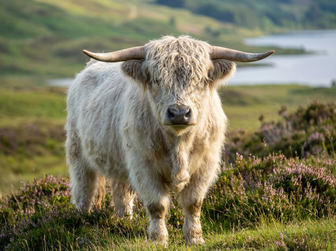
Before getting into specific feed recommendations, it helps to understand what makes highland cattle different from most beef breeds nutritionally. Highland cattle evolved in the Scottish Highlands, where forage was sparse, weather was brutal, and only the most efficient converters of rough vegetation survived. That history is still written into their biology.
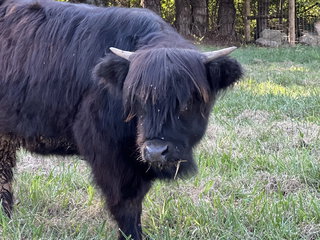
Highland cattle are both browsers and grazers. They’ll eat grass, but they’ll also eat brush, thistles, wild rose, blackberry canes, and coarse weeds that other cattle breeds walk past. This makes them outstanding land management animals. Many landowners keep highlands specifically to clear overgrown pastures and control invasive vegetation. But don’t mistake their foraging adaptability for nutritional simplicity. They still need a balanced diet, especially the miniature lines that have become popular on small acreages. If you’re still researching the breed, our guide to buying miniature highland cattle covers sourcing and what to look for.

The Foundation: Forage First
Miniature highland cattle are ruminants with a four-chambered stomach designed to ferment and extract nutrients from fibrous plant material. Forage (pasture grass or hay) should make up 90% or more of their diet. Everything else is supplemental.
A mature miniature highland cow weighing 600 to 800 pounds will consume roughly 2% to 2.5% of her body weight in dry matter daily. That works out to 12 to 20 pounds of forage per day, depending on body size, lactation status, and weather.
Pasture
If you have adequate pasture, it’s the most natural and cost-effective way to feed highland cattle. They thrive on mixed-grass pastures containing orchardgrass, timothy, bluegrass, brome, and legumes like white clover or birdsfoot trefoil. Deep-rooted forbs such as chicory and plantain are excellent additions that support mineral uptake and gut health.
Plan on 1 to 2 acres per miniature highland cow on well-managed pasture. Standard highlands need more, typically 2 to 3 acres per animal. These numbers vary significantly by region, soil quality, rainfall, and pasture management. A lush Appalachian pasture will support more animals per acre than arid rangeland.
Rotational grazing is strongly recommended. Moving cattle to fresh paddocks every 2 to 5 days improves forage regrowth, reduces parasite load, and prevents overgrazing. Target a grazing height of 6 to 10 inches when cattle enter a paddock and move them before forage drops below 3 to 4 inches. If you’re on limited acreage, cross-fencing and rest periods of 30 to 45 days between grazings will help your pasture recover.
Hay
Unless you’re in a year-round grazing climate, hay will be the primary feed source for four to six months of the year. Quality matters. Good grass hay (orchardgrass, timothy, or brome) is the standard choice for miniature highlands on a maintenance diet.
- Grass hay: The workhorse feed. Moderate protein (8 to 12%), adequate fiber, and safe for year-round feeding. This is what most miniature highland owners should stock.
- Mixed grass-legume hay: Higher protein and calcium than straight grass hay. Good for lactating cows, growing calves, and winter feeding when energy demands increase.
- Alfalfa: High protein (16 to 20%) and very palatable, but too rich for routine feeding of adult miniatures on a maintenance diet. Reserve alfalfa for lactating cows, underweight animals, or as a supplement mixed with grass hay. Feeding straight alfalfa to easy-keeper minis is a fast path to obesity.
When buying hay, get a forage analysis if possible. It costs $15 to $30 per sample and tells you exactly what your hay contains for protein, fiber, and minerals. This removes the guesswork from your feeding program.
Use slow-feed hay nets or feeders to reduce waste. Highland cattle can waste 20% to 30% of loose hay through trampling and soiling. A hay net slows consumption, mimics natural grazing behavior, and stretches your hay supply.
Mineral Supplementation: The Most Overlooked Requirement
Even the best pasture and highest-quality hay are unlikely to provide all the minerals your highland cattle need. Mineral deficiency is one of the most common and most preventable health problems in small herds. It shows up as poor coat quality, reproductive failure, weak calves, and general unthriftiness.
Key Minerals for Highland Cattle
- Copper: This is the big one. Copper deficiency is widespread in cattle, and it’s made worse in regions where soil is high in sulfur, iron, or molybdenum (all of which antagonize copper absorption). Symptoms include faded coat color, rough hair, poor immunity, and infertility. Highland cattle with fading red coats are frequently copper-deficient.
- Selenium: Deficient in many regions of the U.S., particularly the Pacific Northwest and Northeast. Selenium deficiency causes white muscle disease in calves and reproductive problems in adults.
- Zinc: Supports immune function, hoof health, and skin integrity.
- Magnesium: Especially important during spring pasture flush, when fast-growing grass is low in magnesium. Deficiency can cause grass tetany, a potentially fatal condition.
How to Supplement
Provide a free-choice, loose mineral mix formulated for beef cattle. Loose minerals are strongly preferred over mineral blocks. Cattle cannot consume adequate minerals from a block alone because they cannot lick fast enough to meet their daily requirements. Loose mineral consumption is self-regulating and more reliable.
Look for a mineral mix with a 2:1 calcium-to-phosphorus ratio and adequate copper, selenium, and zinc levels for your region. Your local agricultural extension office can advise on regional mineral deficiencies.
One critical warning: never use mineral mixes formulated for sheep or goats. Sheep minerals lack copper because copper is toxic to sheep. Cattle require copper. Using sheep minerals for cattle is a common and harmful mistake on mixed-species farms.

Water Requirements
Miniature highland cattle drink 5 to 10 gallons of water per day depending on temperature, lactation status, and diet moisture content. Cattle on dry hay in summer heat will drink more than those on lush, wet pasture in cool weather.
Water should be clean, fresh, and accessible. If you’re using stock tanks, clean them regularly. Algae-filled tanks reduce water intake, and reduced water intake directly impacts feed digestion and overall health.
In winter, keep water from freezing. Tank heaters or heated automatic waterers are a worthwhile investment. Research shows that cattle water intake drops significantly when water temperature falls below 40 degrees Fahrenheit, and reduced intake in cold weather leads to decreased feed efficiency, weight loss, and lower milk production in lactating cows. This is especially important for anyone milking their highland cow.
When to Feed Grain (and When Not To)
Most miniature highland cattle on adequate pasture and quality hay do not need grain. This is a breed that evolved to thrive on forage alone, and their efficient metabolism reflects that history. Grain supplementation is the exception, not the rule.
Situations where grain makes sense:
- Lactating cows: 1 to 2 pounds per day of a pelleted beef cattle ration can help maintain body condition during peak lactation
- Late gestation (last 60 days of pregnancy): A small grain supplement supports fetal growth and helps the cow maintain condition heading into calving
- Underweight animals: Short-term grain feeding to bring an animal back to appropriate body condition
- Growing calves after weaning: A calf starter ration supports development during the transition from milk to full forage
- Severe winter weather: When temperatures stay well below freezing for extended periods and hay quality is marginal
If you do feed grain, use a pelleted beef cattle ration or rolled oats rather than straight corn. Corn is high in starch and can cause acidosis and bloat if overfed. Keep grain at 0.5% to 1% of body weight daily at most. Signs of overfeeding include loose or foamy manure, lethargy after eating, and excessive weight gain.
The Obesity Problem in Miniature Highlands
This is worth its own section because it’s the most common feeding mistake with miniature highland cattle. Overfeeding is a bigger health risk than underfeeding for most miniature highlands, especially those on small acreages where owners are supplementing out of affection rather than necessity.
Miniature highlands are easy keepers. They evolved to extract maximum nutrition from minimal forage. When you give them unlimited access to rich hay, supplemental grain, and treats, they get fat. An obese highland cow faces higher risks of difficult calving, metabolic disorders, reduced fertility, joint stress, and shortened lifespan. This is worth factoring into your total cost of ownership, since feed costs for a properly managed miniature should actually be quite low.
Monitor body condition regularly. On a 1-to-9 scale, you want your highland cattle at a body condition score of 5 to 6. You should be able to feel ribs with light pressure but not see them. If you can’t feel ribs at all, your animal is overweight. Adjust feed accordingly.
For highland cattle that tend toward obesity, limit hay to 2% of body weight (rather than free-choice), eliminate grain entirely, and increase exercise through rotational grazing across larger paddocks when possible.
Feeding by Life Stage
Calves (Birth to Weaning)
- Day 1: Colostrum from the dam within 4 to 6 hours of birth. This is non-negotiable for immune transfer. The calf should receive 10% of body weight in colostrum within the first 24 hours.
- Weeks 1 to 8: Nursing from the dam or milk replacer (22 to 24% protein). Begin introducing small amounts of calf starter grain by week 2 and hay by week 3.
- Weeks 8 to 12: Gradual weaning when the calf consistently eats 1.5 to 2 pounds of starter grain daily. Transition to pasture and hay with free-choice minerals.
Growing Animals (Weaning to 2 Years)
Focus on quality forage with mineral supplementation. A growth-oriented ration (slightly higher protein hay or a small grain supplement) may be appropriate, especially through the first winter. Monitor growth rates but avoid pushing rapid growth, which can stress developing joints.
Mature Maintenance Animals
Forage and minerals. That’s it for most healthy adults not in production. Highland cattle are among the most efficient beef breeds on a forage-only diet.
Pregnant and Lactating Cows
Increase energy intake by 10% to 25% during the last trimester and through peak lactation. Higher-quality hay, mixed grass-legume hay, or a modest grain supplement will meet increased demands. Monitor body condition closely through calving and early lactation.
Seasonal Feeding Adjustments
Highland cattle are famously cold-hardy thanks to their double coat (a coarse outer layer over a soft, downy undercoat). But cold hardiness doesn’t eliminate the need for increased nutrition in winter. When temperatures stay below freezing, increase hay by 10% to 15%. The extra fiber generates heat through rumen fermentation.
Spring transition from hay to pasture should be gradual. A sudden switch to lush, fast-growing spring grass can cause bloat or grass tetany. Start with a few hours of grazing per day while continuing hay access, and increase pasture time over 7 to 14 days.
Summer feeding on good pasture may require nothing beyond minerals and water. Highland cattle handle heat less well than cold (that double coat works both ways), so ensure shade and ample water during hot periods. Some owners clip their highlands in late spring for summer comfort.
Highland cattle are low-maintenance feeders compared to most cattle breeds, but low-maintenance is not no-maintenance. Good forage, consistent mineral supplementation, clean water, and attention to body condition will keep your herd healthy and productive for years. If you’re exploring the breed, our highland cattle breed guide covers the full picture, and our marketplace can connect you with breeders who can advise on feeding programs specific to your region and setup.