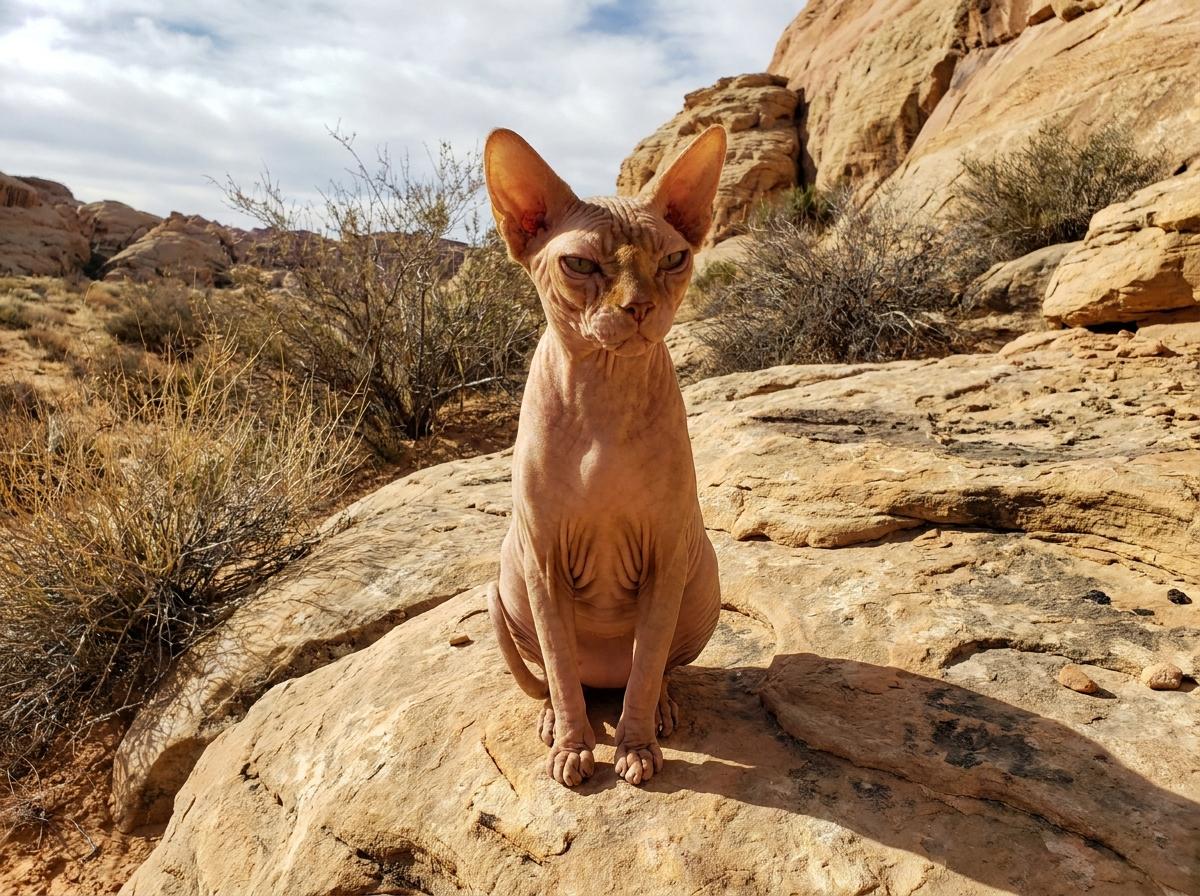
Lykoi
Author: Elliott Garber, DVM · Published
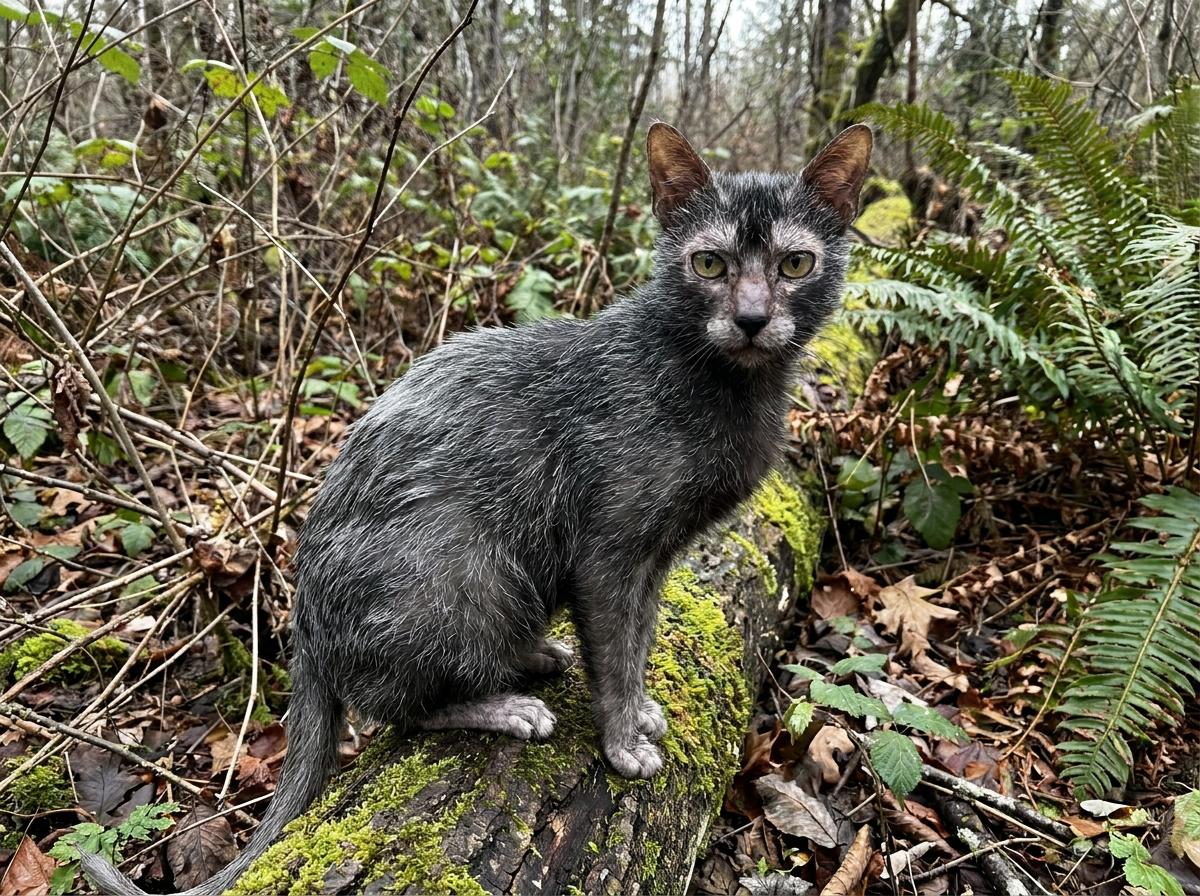
The Lykoi is a partially hairless cat with a roan coat, a bare face mask and a look that earned it the nickname “werewolf cat.” It is a natural mutation, found in feral and stray cats in the United States around 2010, and it is now a championship breed in both TICA and CFA. Under the odd coat is an ordinary, active, people-focused domestic cat that needs a little more skin care than most.
If you are weighing one up, start with the facts below, then compare it with other breeds in the Creatures cat breed index. Lykoi breeders are few, so a free Lykoi listing alert is the easiest way to hear when one is offered on Creatures.

| Origin | Natural mutation in US feral cats; breeding program started in 2011 |
|---|---|
| Genetics | Recessive loss of function variants in the hairless (HR) gene, not the Sphynx gene |
| Recognition | TICA championship May 2017; CFA registration 2018, championship 2023; GCCF preliminary 2020 |
| Coat | Roan guard hairs, no undercoat, bare face mask; coverage changes with molts |
| Show color | TICA: black roan only. CFA: all base colors |
| Size | Small to medium; TICA lists males 7 to 12 lb, females 6 to 9 lb |
| Temperament | Active, curious, playful hunter; cautious at first, then attached to its people |
| Care focus | Warmth, sun protection, oily skin, ears and toes, molt checks |
Browse listings, public profiles, breeders, or add your animal.
What a Lykoi is, and what it is not
A Lykoi is a domestic shorthair type cat with a specific inherited coat. Three traits define it in the CFA Lykoi breed standard: no undercoat, sparse guard hair (most noticeably on the ears, face, legs and feet), and roaning, meaning white hairs mixed evenly through the colored ones. The bare skin around the eyes, nose, muzzle and chin forms the “mask” that gives the breed its wolfish face. The name comes from the Greek word for wolf.
It is not a Sphynx, and it is not a Sphynx cross. A 2020 genetic study led by researchers at the University of Missouri, Werewolf, There Wolf (Buckley and colleagues, Genes), found that Lykoi owners had already tested their cats for the known fur type variants, including the KRT71 variants behind the Sphynx and Devon Rex coats, and that none were present. Whole genome sequencing then traced the Lykoi coat to loss of function variants in a different gene, called hairless (HR). The researchers found six separate HR variants across the founder lines they studied, from Tennessee, Virginia, Texas, North Carolina, Canada and France. Each causes a similar sparse coat, which is why unrelated stray cats in different places could all look like Lykoi.
The inheritance is recessive. A cat shows the Lykoi coat only when it carries two hairless variants, either two copies of the same one or one each of two different ones. A normal-coated cat can carry a single variant and pass it on without showing it. That is how the breed could be built by outcrossing to ordinary cats while keeping the coat in later generations.
If you are comparing hairless and part-hairless breeds, the Donskoy guide covers a Russian breed whose hairlessness is dominant and comes from a different mutation again. Same “hairless cat” label, different genetics and different breeding rules.
Where the breed came from
The founding story is short and well documented. According to the CFA Lykoi breed profile, the first cats were found in Virginia in 2010, and their appearance was unusual enough that people first assumed they were sick. More cats with the same look turned up in Tennessee. The British registry GCCF’s Lykoi breed page names Patti Thomas in Virginia as the person given the first pair of kittens, and veterinarian Johnny Gobble and Brittney Gobble of Tennessee as the people who took them on. Accounts differ slightly on the year the Tennessee cats appeared: CFA says the following year, while GCCF and the genetic study both describe independent finds in 2010.
Before anyone bred them, the founders checked whether the coat was a disease. GCCF reports that University of Tennessee dermatologists ran tests to rule out infection and other causes, and that genetic testing at UC Davis showed the trait was recessive and unrelated to known hairless mutations. CFA and GCCF both give September 14, 2011 as the birth date of the first intentionally bred Lykoi kittens. TICA’s breed material describes the program as founded in 2011 from two unrelated litters, with outcrossing to solid black domestic shorthairs because one founder’s mother was a black domestic cat.
Recognition then moved quickly for a new breed:
- TICA granted championship status in May 2017, a date both GCCF and the genetic study confirm.
- CFA accepted the Lykoi for registration in 2018 and advanced it to championship status in 2023, per CFA’s own breed profile.
- GCCF in the UK gave the first stage of recognition in October 2017 and preliminary recognition in February 2020. The GCCF page also records the first Lykoi variants imported to the UK in 2013 and the first full Lykoi born there in May 2015.
Lykoi-type kittens still turn up in feral and stray cat populations, and the breed has recruited some of them to widen the gene pool. Under TICA’s standard, any cat naturally born with the sparse, roan coat may be used for breeding, and shown if it meets the standard.
Coat, color and the breed standard
The coat is the whole point of the breed, and it changes over a cat’s life. Both TICA and CFA describe Lykoi kittens as born looking solid and normally coated, with the roaning and thin areas appearing within one to two weeks. Adults cycle between nearly bare and nearly fully coated, and most will molt the bulk of their coat at least once. A photo of a kitten, or of an adult at one point in its cycle, does not show what the cat will look like next year.

What the standards ask for:
- Mask. A hairless area joining the nose, muzzle, chin and eye rims. A cat with no hairless face mask is withheld all awards under TICA’s standard, and CFA describes the ideal as a clover shape around the eyes and nose.
- Roaning. Each hair is either fully colored or fully white from root to tip. TICA’s Lykoi standard asks for 30 to 70 percent dark hair with 50/50 ideal, and CFA also names 50 percent roaning as ideal.
- Coverage. CFA expects 50 to 100 percent of the body covered in guard hairs, allows less during a molt, and penalizes less than 30 percent coverage or visible ingrown hairs and cysts.
- Body. A modified wedge head, large high-set ears, a lean but solid body without bulk, sparsely haired legs, long-looking toes and a tail shorter than the body. Males may be much larger than females.
- Skin color. Lykoi skin is pink but can darken quickly in sun or heat and fade again without it. Both standards allow tanning and pigment spots.
Color is where the registries part ways. TICA shows black roan only; Lykoi in other colors exist and may be used for breeding, but cannot compete. CFA accepts all base colors and has an any other variety class for longhaired Lykoi. GCCF lists all colors and patterns except white and bicolor. If color matters to you as an exhibitor, check which registry you plan to show in before choosing a kitten.
Temperament and activity
Registry descriptions agree on an energetic, hunting-minded cat. TICA’s breed page describes Lykoi stalking toys, other pets and even people before pouncing, fetching and chasing, and being cautious with new people and animals before warming up. CFA calls them active and curious cats who “would generally rather hunt than cuddle” but still seek out attention, with a range of chirps and trills. Temperament is individual, so treat these as tendencies, not promises, and meet the kitten and ideally a parent.

In practice that means daily interactive play with wand toys and small prey-like toys, tall and sturdy scratching posts, and places to climb. Puzzle feeders suit a cat that likes problem solving. A Lykoi that is bored will find its own hunting projects, and those are rarely ones you chose. Their sparse coat also means they seek warmth, so expect them in sunny windows, laps and under blankets.
Lykoi generally do well with other cats once introduced, and TICA notes that two Lykoi interact well together. Introduce any new cat slowly, with separate space at first, whatever the breed.
Skin, coat and everyday care
Thin hair changes care in a few specific ways. Without an undercoat, a Lykoi loses heat faster and has little protection from the sun. CFA’s breed page advises a warm home, limiting long sunbathing sessions, and notes that over-exposure to sun can speed up molting. Pale, bare skin on the face and ears is the area to watch. If you want to use a sun product, ask your veterinarian which ones are safe for cats, since some ingredients that are fine for people are not.
Oil is the other daily reality. CFA says the skin can become oily and need occasional baths, with attention to the ears and toes, and warns against human shampoos. Some Lykoi need more frequent bathing, according to TICA’s breed material, and can get blackheads or small acne-like bumps. Bathing is quick because there is little hair, but over-bathing can irritate skin, so let your veterinarian guide the routine if the skin looks red, scaly or sore. CFA also notes that ingrown hairs can occur during a molt.
A practical weekly routine:
- Look over the face, ears, chin, legs and between the toes for oil buildup, redness or bumps.
- Clean ears gently when they look waxy, using a product your veterinarian recommends.
- Trim nails and brush teeth on a regular schedule, as you would for any cat.
- Note when a molt starts and ends. Over a year, those notes show you the cat’s normal cycle, which helps you and your vet tell a normal molt from a skin problem.
On allergies: a sparse coat does not make a Lykoi safe for people with cat allergies. The main cat allergen, Fel d 1, is made mostly in skin and salivary glands and spread over the body by licking, so it does not depend on how much hair a cat has. None of the registries market the Lykoi as hypoallergenic. If allergies are a concern, spend real time with the specific cat and talk to your doctor before committing.
Diet and routine veterinary care are the same as for any cat. The TICA Lykoi breed committee advises against free feeding; your veterinarian can help you pick a food and portion that keeps the cat lean. For core vaccines and timing, see the kitten vaccination schedule, and keep each visit in a simple cat health record.
Health: what the research shows
The Lykoi is young, the population is small, and there is no large health survey of the breed. What exists is useful but limited.
The 2020 Genes study describes the coat itself as a form of hypotrichia: fewer hair follicles per group than in domestic shorthairs, follicles that are often small, dilated or malformed, and mild to severe inflammation (lymphocytic infiltration) around many of them. The authors report that no health concerns had been identified in the breed other than that follicle inflammation, and that the variants do not cause additional health problems known to date. The authors also note, from a founder’s report rather than their own data, that some variants seem to cause more periodic hair loss, and they say that breeders can now use genetic testing to track which variants their cats carry. An earlier clinical and histologic description of Lykoi skin and coat was published by the same University of Missouri group in the Japanese Journal of Veterinary Dermatology in 2016.
TICA’s breed page calls the Lykoi a hardy breed with no prevalent genetic diseases and says the TICA Lykoi Breed Committee recommends genetic testing for all cats. TICA lists life expectancy as reaching the late teens; GCCF lists 12 to 15 years. Both are registry estimates, not study results.
What that means for an owner:
- Skin changes are the breed’s normal, but new redness, sores, crusting, itching or sudden patchy loss outside the usual molt pattern are reasons to see a veterinarian. Do not assume every change is “just the Lykoi coat.”
- Lykoi still get every ordinary cat illness. Routine exams, dental care and vaccinations matter as much as they do for any cat.
- Ask a breeder what genetic and health testing the parents have had, and ask for copies of the results rather than a verbal summary.
Buying a Lykoi kitten
There are not many Lykoi breeders, and CFA’s breed profile warns that you may have to wait for a kitten. That makes a careful, patient search more useful than a fast one. Price is set by each breeder and varies with lines, color and whether a kitten is sold as a pet or for breeding; there is no published, dated price survey for the breed, so compare full first-year costs using the cat cost guide rather than the kitten price alone.

Questions worth asking any breeder:
- Registration. Which registry are the parents and kitten registered with, TICA, CFA or another? Ask to see the papers. The cat pedigree papers guide explains how to read TICA and CFA paperwork and check parentage.
- Genetics. Do the parents have HR variant results? Which variants does the kitten carry, if tested?
- Health. What veterinary records come with the kitten (exams, vaccines, deworming)? What has the breeder seen in their lines for skin problems, and how are they handled?
- Coat expectations. How did the parents’ coats change through molts? A breeder who has kept cats through several cycles can describe this honestly.
- Contract. What does the sale agreement say about health, returns, and breeding rights?
A kitten that seems sick, a breeder who will not show parents or papers, or pressure to pay before you have seen records are reasons to walk away. Remember that a Lykoi-looking cat with no papers may be a genuine natural Lykoi, a carrier cross, or a cat with hair loss from illness. Only a veterinary exam and, ideally, genetic testing can tell those apart.
The general checks in the Maine Coon breeder guide apply to any pedigree cat purchase, and the breeder waitlist guide explains what a fair waitlist and deposit look like. Once you have a kitten, the cat name generator is a light way to settle on a name before you start its profile.
Breeding and showing Lykoi
Because the coat is recessive, every Lykoi breeding decision is a genetics decision. Two Lykoi-coated parents each pass on a hairless variant, so their kittens should all carry two and show the coat. A Lykoi bred to a normal-coated cat that does not carry a variant produces normal-coated carriers, and a carrier bred back to a Lykoi gives a mix of Lykoi and carrier kittens. The permitted outcross in TICA’s standard is the solid black domestic shorthair, and the founders relied on such outcrosses to keep inbreeding low. Genetic testing for the HR variants lets you know which cats carry what rather than guessing from coats.
Keep careful records from the start: the mating date, both parents’ registration and test results, and each kitten’s coat as it changes in the first weeks. A cat pregnancy runs about two months; the cat gestation calculator gives a due date from the mating date, and the guide to how long cats are pregnant covers the signs and timeline. On Creatures you can record the breeding on the queen’s profile and add each kitten to the litter when they arrive, so the family tree is built as you go.
For exhibitors, the main thing is to match cat to registry: a non-black Lykoi can compete in CFA but not in TICA championship classes. Temperament is judged too; TICA’s standard disqualifies a cat that shows a definite challenge or threatens to harm the judge, though fear or complaining is allowed. The sister guide to cat shows explains how TICA and CFA shows are organized and how to enter your first one. Results you earn can sit on the cat’s profile using show results on your animal’s profile, alongside its pedigree and health records. Creatures does not list upcoming shows, so find those through the registries and their clubs.
If you are drawn to unusual-looking breeds, the Minuet guide covers another newer TICA breed with its own genetics questions.
Frequently asked questions
Is a Lykoi a hairless cat?
Partly. It has no undercoat and sparse guard hair, with bare skin on the face mask, ears, legs and feet. Coverage ranges from nearly bare to nearly full coat depending on the molt cycle.
Is the Lykoi related to the Sphynx?
No. Its coat comes from recessive variants in the hairless (HR) gene. The Sphynx coat comes from a variant in a different gene, KRT71, which Lykoi cats tested for did not carry.
Is a Lykoi hypoallergenic?
No. Cat allergens come largely from skin glands and saliva, so less hair does not mean no allergen. Spend time with the cat and talk to your doctor first.
What colors do Lykoi come in?
Black roan is the classic look and the only color TICA shows. Lykoi occur in other colors, and CFA accepts all base colors in competition.
How big do Lykoi get?
TICA describes a small to medium cat, with males around 7 to 12 pounds and females around 6 to 9 pounds. Males can be noticeably larger.
Why does my Lykoi look so different from last month?
Lykoi molt and regrow their coat in cycles, and their pink skin can tan in sun. If the change comes with redness, sores or itching, see your veterinarian.
Do this next on Creatures
Lykoi are scarce and their coats change, so the most useful things you can do are hear about kittens early and keep a clear record of your cat once you have one.
Hear about Lykoi kittens first. Set a free Lykoi listing alert and Creatures emails you when one is listed. No account needed to start, just an email. See saving searches and your watchlist.
See what is available now. Browse Lykoi cats on the marketplace and search the breeder directory for catteries. A directory listing is a starting point for your own questions, not a health guarantee.
Start your Lykoi’s profile. Add your Lykoi with photos and its registration details; no account needed to start. The adding an animal guide walks through it.
Log skin checks, molts and vet visits. Add a record such as a health check, test result or vaccination. The form opens for visitors, and a free account saves it. See adding a record, health and medical records and reminders for upcoming care.
Breeding Lykoi? Create your cattery profile so buyers can find you, then read getting listed in the breeder directory and creating an organization.
Compare other breeds. Go back to the cat breed index, or read the Siberian guide for a very different, heavily coated cat.