



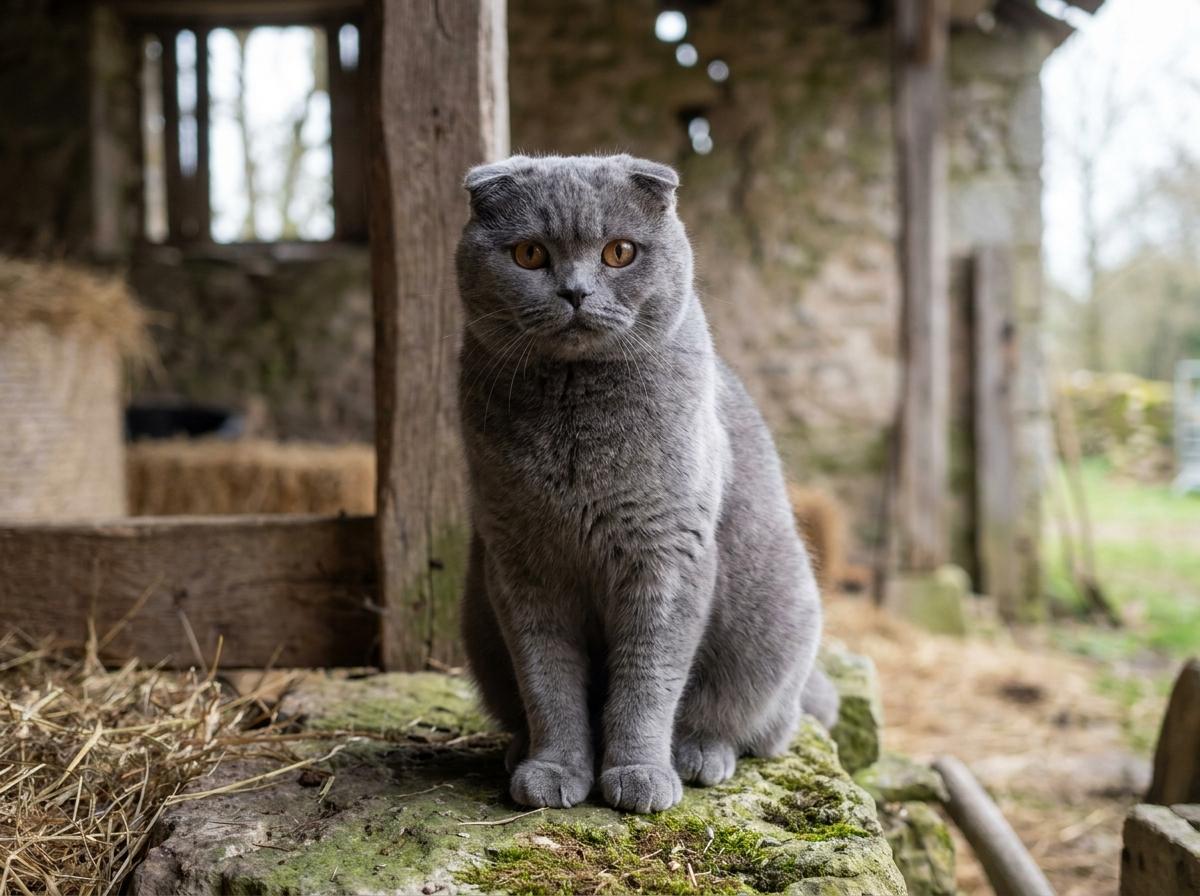
Scottish Fold
Scottish Fold cats are identified by forward-folding ears caused by a cartilage mutation first noticed in Scotland. The rounded head, broad eyes, and compact body give the breed its familiar soft expression, but the ear fold is tied to the same cartilage biology that can affect joints and tails. Straight-eared littermates are often part of responsible breeding programs, and registry acceptance varies because welfare concerns are real.
People considering a Scottish Fold should look past the ear shape and ask direct questions about breeding practice, mobility, and veterinary monitoring. Cats with stiff tails, reluctance to jump, lameness, or early arthritis need careful management and should not be bred. Daily care is otherwise ordinary: moderate grooming, indoor enrichment, weight control, and gentle handling. The best homes are prepared to value comfort and sound structure over an exaggerated fold.
Colors: Bi-Color, Bicolor, Black, Black Smoke, Blue, Blue-Cream, Blue Patched Tabby, Blue Point, Blue Smoke, Blue Tabby, Blue Torbie, Brown, Brown Patched Tabby, Brown Tabby, Brown Torbie, Calico, Chocolate, Chocolate Point, Cinnamon, Classic Tabby, Cream, Cream Point, Cream Smoke, Cream Tabby, Dilute Calico, Dilute Tortoiseshell, Fawn, Flame Point, Golden, Harlequin, Lilac, Lilac Point, Lynx Point, Mackerel Tabby, Mink, Pointed, Red, Red Smoke, Red Tabby, Seal Point, Sepia, Shaded, Shell, Silver, Silver Tabby, Smoke, Spotted Tabby, Tabby, Ticked Tabby, Torbie, Tortie Smoke, Tortoiseshell, Van, Van Pattern, White