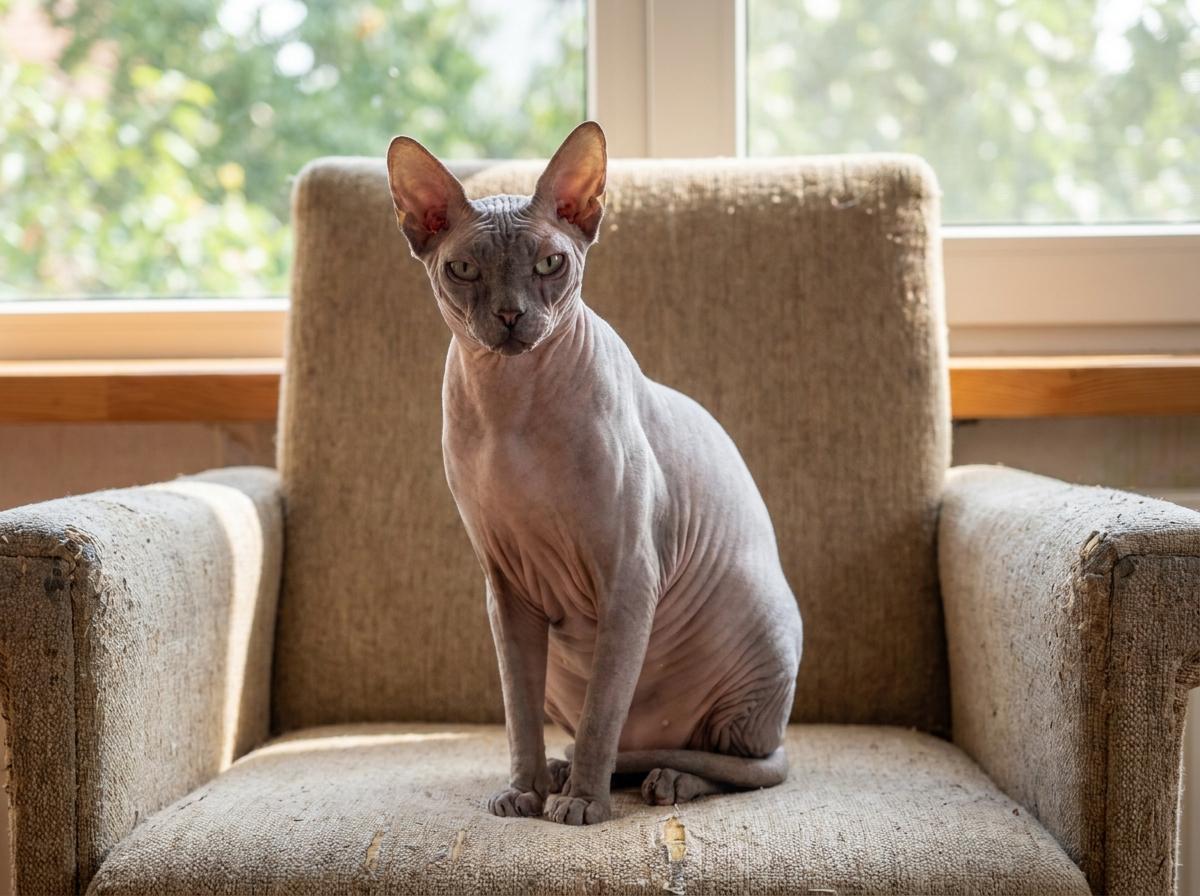
Donskoy
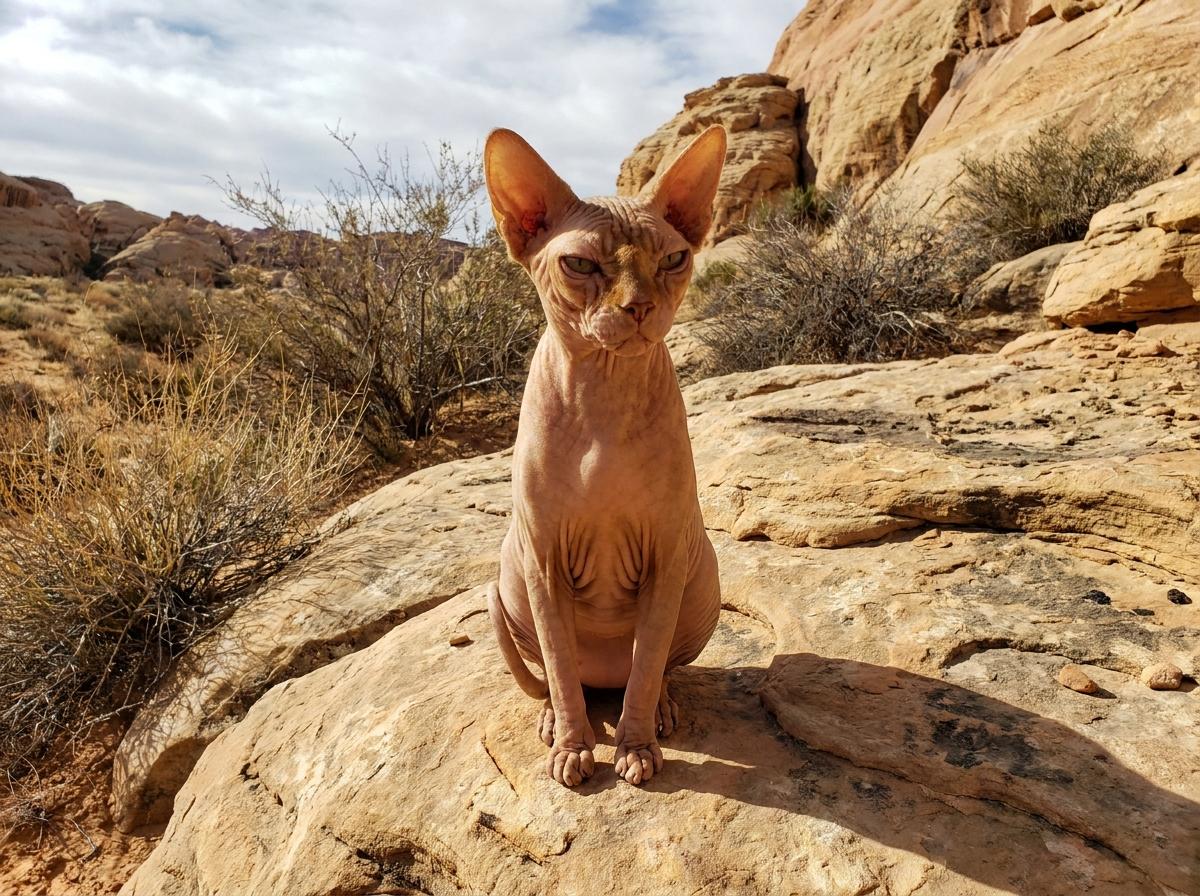
The Donskoy is a Russian cat breed known for wrinkled skin and coat types that range from bald to short, fuzzy or brush-coated. Hairlessness changes daily care, but it does not make the cat hypoallergenic. TICA describes an active, social cat. Compare the cat breed index before deciding that the unusual appearance is the right match for your home.

| Origin | Rostov-on-Don, Russia |
|---|---|
| Registry | TICA recognized breed |
| Coat | Bald, flock, velour and brush forms occur |
| Temperament | Social, active and inquisitive |
| Care focus | Skin inspection, temperature comfort and routine veterinary care |
Browse listings, public profiles, breeders, or add your animal.
The Donskoy is not a Sphynx under another name
TICA’s Donskoy breed profile traces the foundation to a spontaneous mutation in Rostov-on-Don in 1987. TICA calls the hairless trait dominant and describes several coat forms, including cats that retain short or brush-like hair. The Donskoy and Sphynx are different breeds with different histories. “Hairless” also does not mean completely bare or maintenance free.
TICA describes a sturdy, medium-sized cat with strong bone, large ears, wrinkled skin and an active, friendly temperament. Judge a kitten by its registered pedigree and health records, not by how bald it looks in one photograph. Compare the dense coat of the British Shorthair and the semi-long coat of the Nebelung if coat maintenance is a deciding factor for you.

Skin and temperature care
Without a protective coat, a Donskoy needs a comfortable indoor temperature and protection from prolonged direct sun. Check its skin, ears and nails during gentle handling. TICA recommends a daily wipe to remove skin oils and a bath roughly weekly to twice monthly; adjust the routine with a veterinarian if the skin becomes irritated. Soft bedding and clean resting surfaces matter, but clothing should never be forced on an animal that resists or overheats.
People can react to saliva and skin proteins as well as fur. Never buy a hairless cat on a promise that it cannot trigger allergies. If allergies are a concern, discuss the decision with a clinician and spend time around the individual cat before committing.
Activity and buying checks
TICA describes Donskoys as sociable, clever and active. Offer play that lets the cat chase and pounce, sturdy vertical space and warm resting spots away from hazards. A new kitten also needs a quiet room and time to adjust. Temperament is individual, so observe the kitten and ask how it was socialized.

Request the parents’ identification, pedigree, veterinary records and any testing a breeder advertises. Ask how skin problems are handled and what the return agreement says. The cat cost guide is useful for planning recurring care, while the Maine Coon breeder checklist gives general questions that also fit a Donskoy purchase.
The free cat pedigree chart maker helps put supplied ancestors in order. Keep the original registry and veterinary documents with the animal’s Creatures profile after you add it. A user-made chart does not certify breed or health status.
Four coat types and a sturdy body
The TICA Donskoy profile describes four coat types: rubber bald, flocked, velour and brush. Some kittens change coat as they mature, so a kitten’s current hairlessness is not a stand-alone promise of its adult coat. Ask the breeder to identify the coat type recorded for the kitten and to show its parents.
TICA describes a muscular cat with strong boning, not a delicate Oriental silhouette. It also describes Donskoys as sociable cats that should have a companion pet. Plan a compatible companion and supervised introductions, and ask how the kitten has lived with other animals. Check that its skin and body condition are comfortable under ordinary light; unusual redness or injury warrants veterinary advice.
Frequently asked questions
Are all Donskoys bald?
No. TICA describes multiple coat types, and some cats retain short or brush-like hair.
Is a Donskoy hypoallergenic?
No breed can promise that. Allergens can come from saliva and skin as well as shed hair.
Does hairlessness mean no grooming?
No. Skin, ears and nails still need regular checks, with a care routine suited to the individual cat.
Do this next on Creatures
Keep the questions you asked the breeder and the records you receive in one place. Use the actions that fit where you are in the decision.
Watch for a listing. Set a free Donskoy listing alert; supply may be thin, and the guest flow can start with email. See saving searches.
Compare what is available. Browse current Donskoy listings and the public breeder directory. A directory listing is a lead, not a health guarantee.
Start the cat’s history. Add your Donskoy, then follow the animal profile guide.
Keep the evidence. Add a health or identification record. The sheet opens for visitors, and a free account is needed to save. The record guide explains the flow; health records covers veterinary details.
Breed responsibly. If you are a breeder, create a cattery profile and read how directory listings work.
Compare breeds and plan care. See the cat breed index and care reminders for follow-ups.