




Oriental Roller
The Oriental Roller is one of the oldest performing pigeons in the world, a Near Eastern flying breed prized for the way it somersaults and spins through steep dives rather than for any practical use. It is a large, long tailed pigeon that carries its wings low beneath a high, upturned tail, and it breaks from the ordinary pigeon in two concrete ways: it has more tail feathers, and it lacks the oil gland that most birds preen from. Keepers take it in two directions today, as a show bird judged on a written standard and as a flying bird judged on its rolling in the air, and plenty of people keep it simply as a tame, confident loft pigeon. This page covers where the breed comes from, how to recognize a real one, what its flight actually looks like, how to care for it, and what to weigh before you bring one home.
Browse listings, public profiles, breeders, or add your animal.
What is an Oriental Roller?
An Oriental Roller is a breed of domestic pigeon (Columba livia domestica) developed for aerial acrobatics. The name covers a family of closely related flying pigeons from the Near East, and the bird also goes by Smyrna Roller, after the port city of Izmir (historically Smyrna); Izmirac circulates as a secondary hobby alias. It is widely described as one of the oldest breeds of performing, flying pigeon. The Western Michigan Pigeon Association, one of the clubs that keeps the breed, states that Oriental Rollers received mention in Persian manuscripts of the twelfth century. The tradition is genuinely ancient even if you treat that date as breed lore rather than a precisely dated fact.
Two things are worth getting straight up front. First, the Oriental Roller is not the same bird as the Birmingham Roller, even though the names look alike and the two are related. The Oriental is the older, larger, more independent flier. The Birmingham is the compact English breed developed later, in part from Oriental stock brought into England in the 1800s, and bred for tight synchronized rolling in a flock. Second, the “roller” in the name refers to a specific behavior in the air, a backward somersault performed in flight, not to any rolling on the ground. If you are comparing acrobatic pigeon breeds, the broader Creatures pigeon species page shows how the Oriental Roller sits alongside its relatives.
The breed lives a bit of a double life. Some keepers fly it and judge it on performance; others show it in the cage and judge it on a written standard for type, carriage, and color. Few pigeon breeds get pulled in both directions at once.
Origin and history
The Oriental Roller comes from the Near East, within a wider tradition of performing pigeons across Turkey and Persia. Breed accounts most often connect it to the Smyrna region of what is now western Turkey, hence the alternate names Smyrna Roller and Izmirac. Rolling and tumbling pigeons of this type were cultivated there through the Middle Ages, and the breed is repeatedly cited as one of the oldest performing varieties on record. European fanciers refined the standardized show form much later, so a present-day exhibition Oriental Roller reflects both its ancient flying roots and recent selection for type and color.
The breed’s route into the English speaking fancy runs through nineteenth century Britain. According to J.C. Lyell’s 1887 book Fancy Pigeons, the first Oriental Rollers were introduced into England shortly before 1874 by H.P. Caridia, who also brought in the Oriental Frill. English fanciers then used them, among other tumbling and rolling stock, in developing the now far more famous Birmingham Roller. Some pigeon authorities go further and suggest that many, or even all, modern roller breeds ultimately trace back to Oriental Roller ancestry. That is a reasonable reading of the history but hard to prove in detail, so treat it as a strong possibility rather than a settled fact.
From there the breed spread into continental Europe, North America, and Australia, where it is recognized in the flying and tumbler classifications used by the major pigeon bodies. Dedicated breed clubs support it in the United States, including groups focused specifically on preserving its flying heritage as opposed to its show form.
How to recognize an Oriental Roller
A good Oriental Roller has a silhouette that separates it from a common pigeon or a Birmingham Roller at a glance. These are the features that actually diagnose the breed.
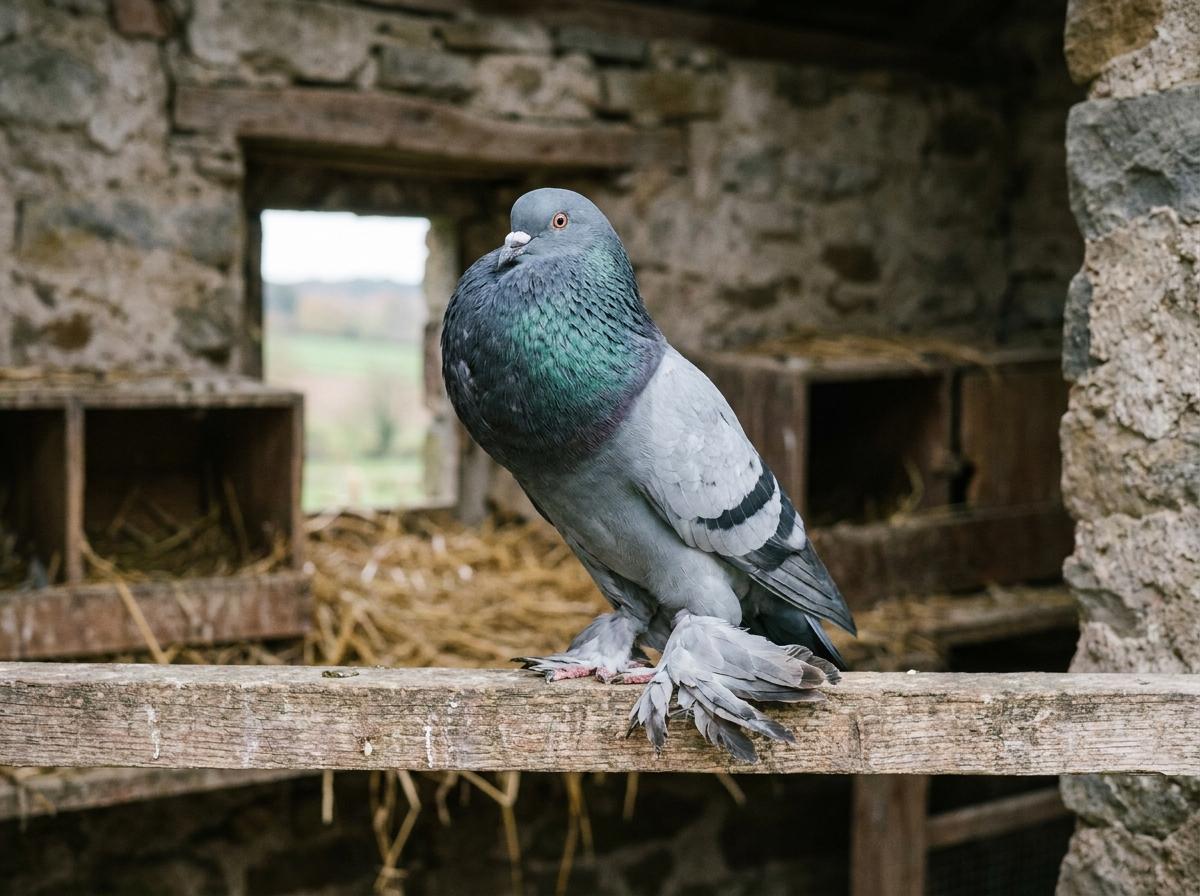
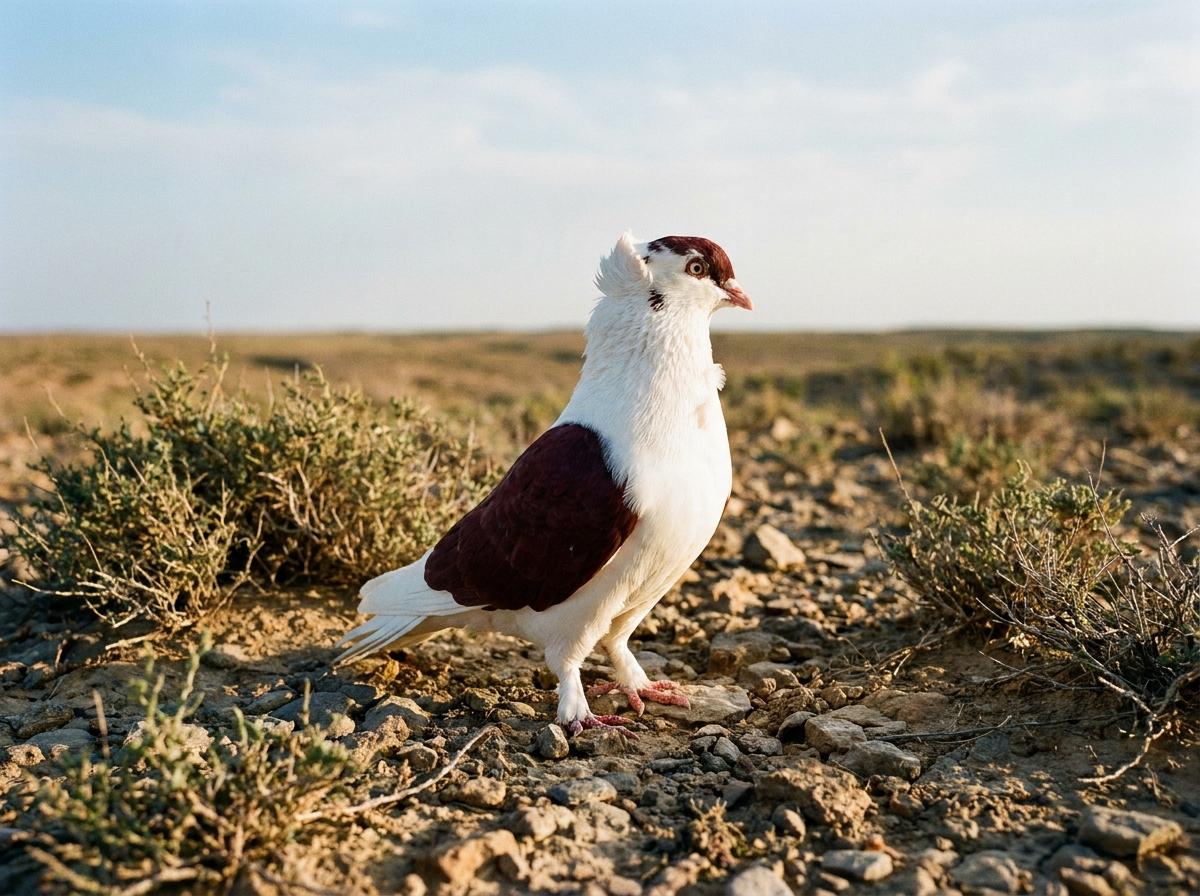
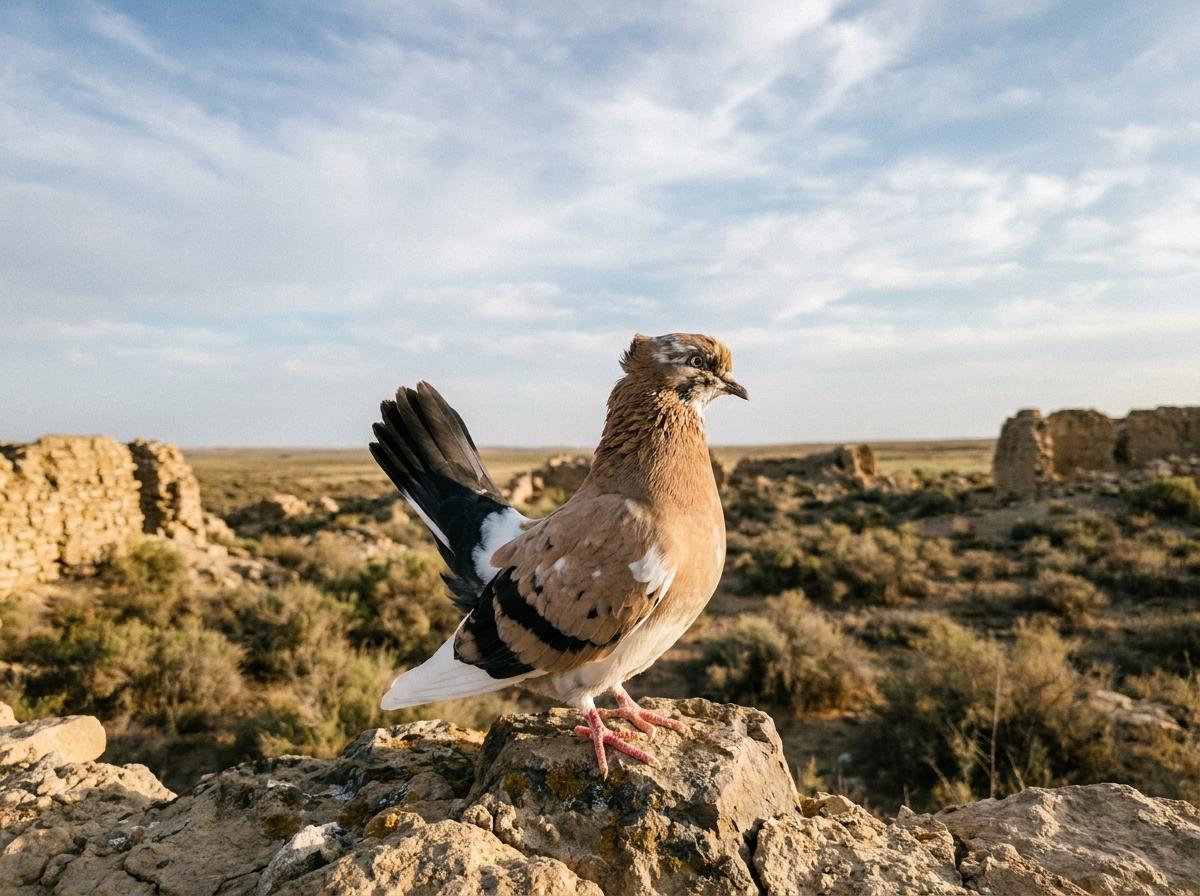
- Wings carried below an upturned tail. The single most recognizable trait. A typical pigeon rests its wings on top of or level with the tail; the Oriental Roller drops its wings low and holds its tail high and slightly arched, giving it an upright, almost showy stance. Show breeders specifically prize those dropped wings and upright tail, and the carriage is obvious in a bird standing at rest.
- Extra tail feathers. Most pigeons have twelve. The Oriental Roller usually carries fourteen to sixteen, and some birds have up to twenty, which fills out the higher tail. Countable, not a matter of impression.
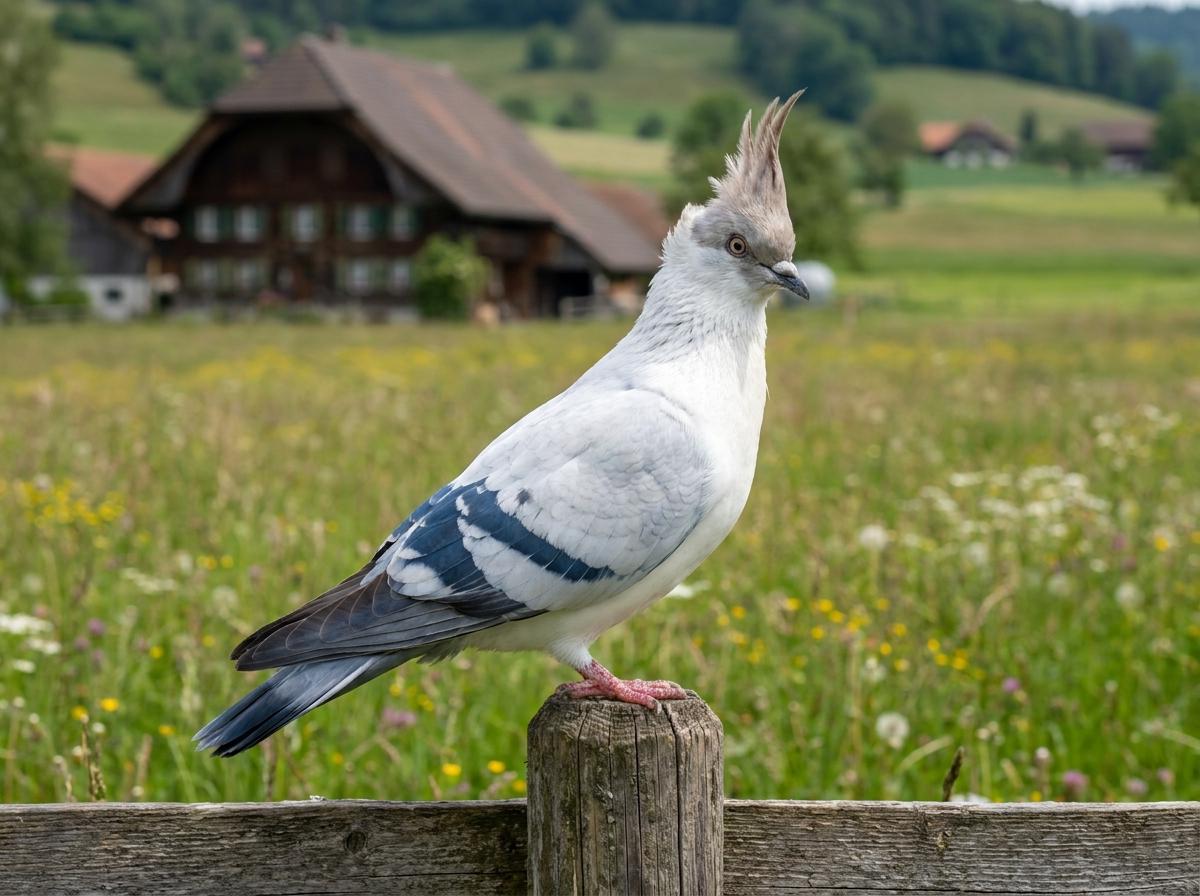
- A long, plain head with a straight beak. The head is fairly long and smooth, without a crest or frill, and the eyes run pale or white in many strains. Legs are clean, meaning free of feathering.
- No oil gland. Most birds have a uropygial (preen) gland at the base of the tail that produces oil for conditioning feathers. The Oriental Roller lacks it, which leaves it looser feathered than harder feathered breeds like the Birmingham Roller. Breed accounts describe the bird compensating with oil quills distributed through its plumage, so a bird that gets plenty of outdoor exercise and sun can hold good feather condition despite the missing gland. The trait shows up early: squabs hatch with little to no down.
- A medium to large, athletic build. Note that the breed has two live standards and they differ. The UORA SHOW standard sets weight at 12 to 16 ounces for cocks and 9 to 13 ounces for hens (roughly 340 to 450 g and 255 to 370 g). The UORA FLYING standard is lighter and narrower: cocks 12 to 14 ounces, with hens a little less. Neither gives a height; the show standard asks instead that all features be in proportion rather than meeting some absolute size. Either way the Oriental Roller is a bigger, heavier bird than the compact Birmingham Roller.

Colors and patterns
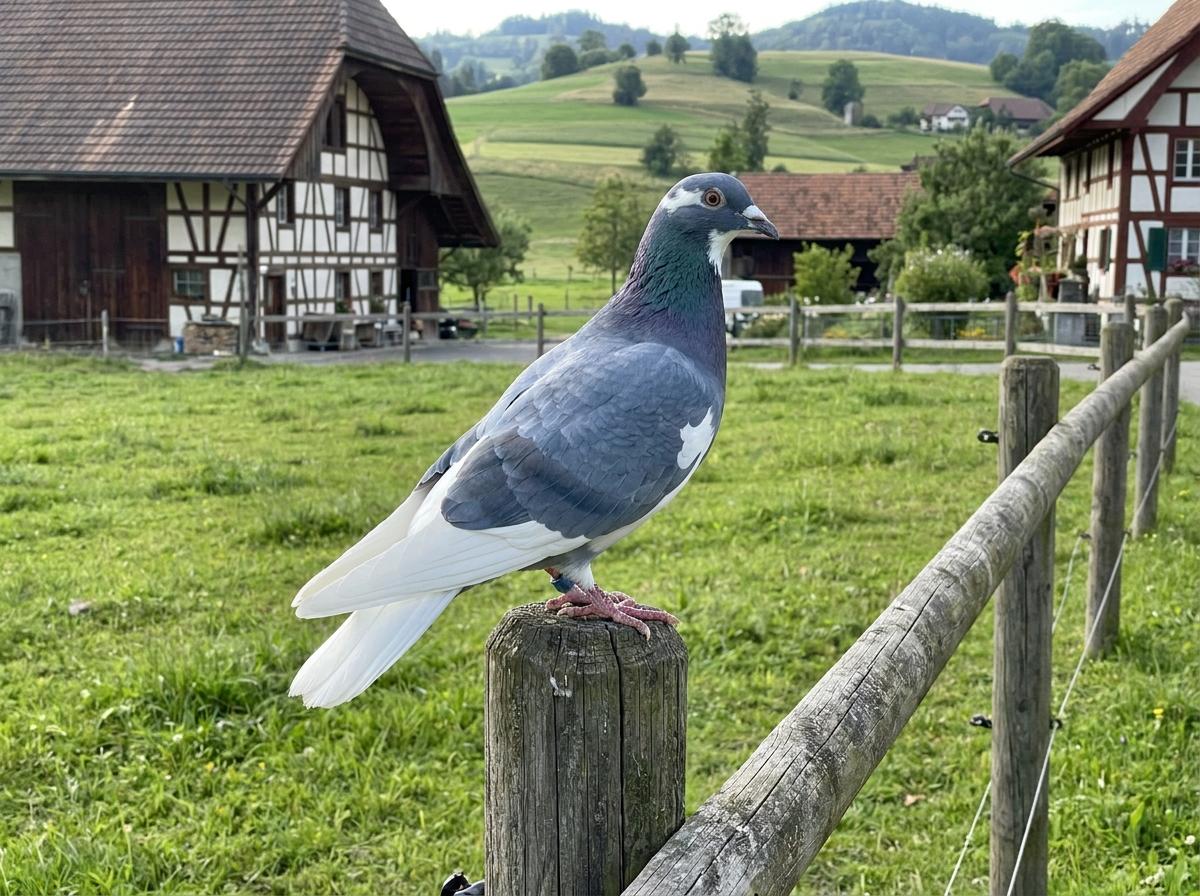
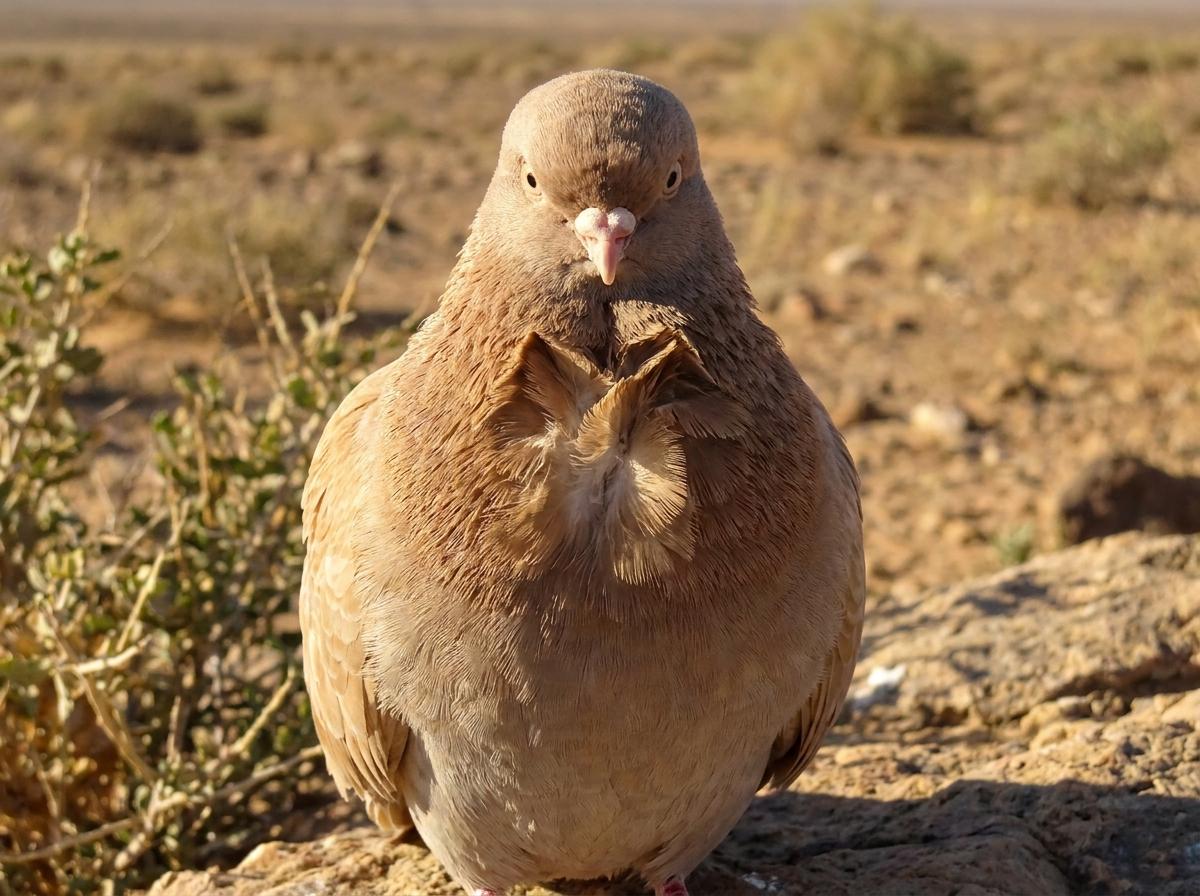
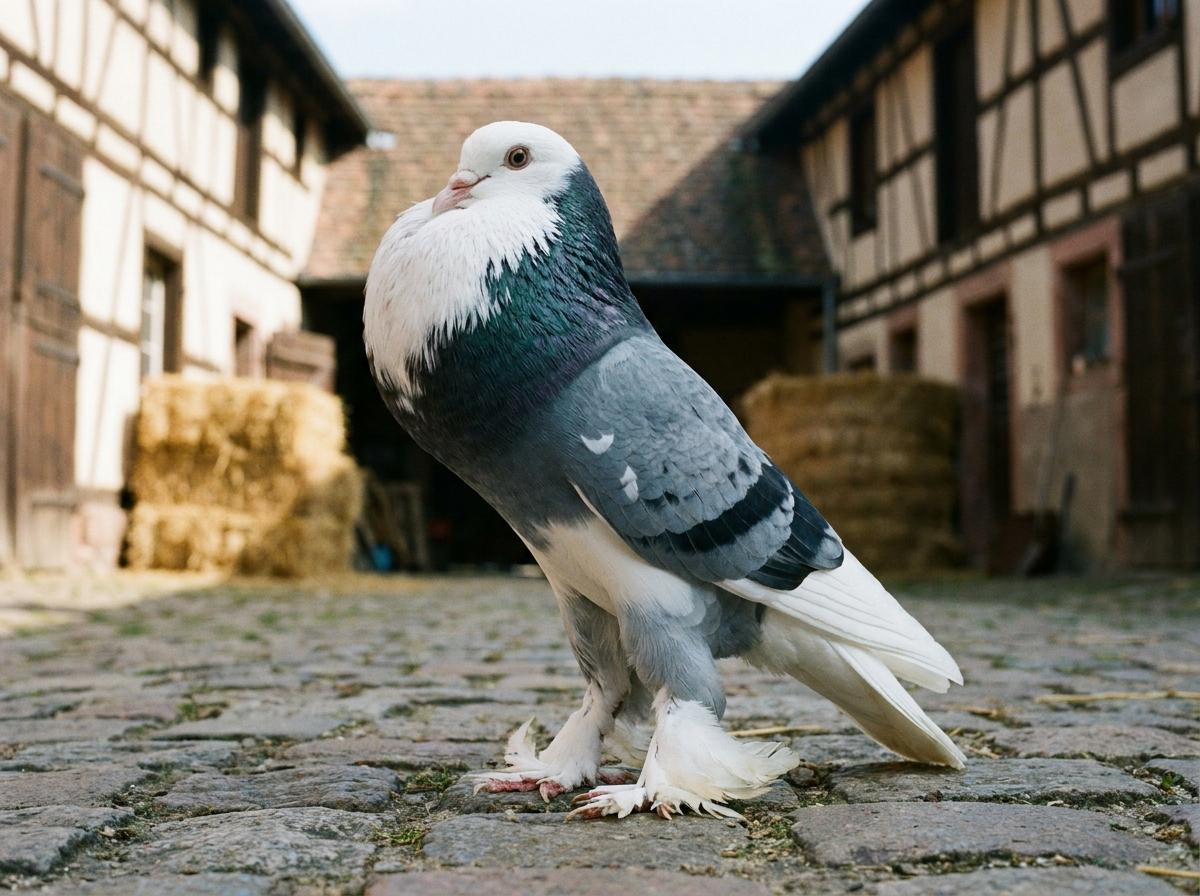
The show form was historically exhibited in a narrow set of colors, usually described as black and white, with almond also cited though less firmly. In the United States the breed is now accepted and shown in essentially all colors. Many birds carry rich bronze and kite patterning, where the plumage takes a warm, metallic sheen over a checked or barred ground, and the dilution factor produces softer versions such as yellow, silver, and buff. The iridescent green and bronze wash on the neck and breast is typical and shows best in good light.
Color and pattern in pigeons follow well understood genetics, so breeders can plan pairings for a target color. Keep records of what each pair produces and you will read the inheritance in your own loft far more clearly than memory allows.
Flight and the rolling performance
The reason the breed exists is what it does in the air. An Oriental Roller flies up, then performs a backward somersault, rotating heels over head one or more times before recovering. Skilled birds string these together and add spinning drops, open winged rotations, nose dives, and sudden changes of direction. The most prized performers execute deep spinning descents, dropping a good distance while they spin before pulling out.
A few points set expectations honestly.
It is individualistic, not synchronized. This is the key difference from the Birmingham Roller, which is bred and flown as a “kit” bird that rolls together with its flock in tight formation on cue. Oriental Rollers perform as individuals. They will fly in groups, but they do not kit in the Birmingham sense, and they typically do their best rolling later in a flight. Want a flock snapping into a synchronized roll together? That is the Birmingham specialty. Want to watch individual acrobats work the sky? The Oriental is your bird.
Depth of roll varies. Good performers roll or spin through descents that cover a meaningful distance before recovery, and depth and clean rotation are exactly what serious fliers select for. Not every bird will be a strong roller. Performance quality is heritable, which is why flying breeders track and pair their best performers deliberately.
Rolling has limits and risks. Any roller breed can throw a bird that rolls too deep or too often and strikes the ground or a structure, a known hazard in roller pigeons generally. Responsible flying means training gradually, flying in suitable open space, and not pushing young or over enthusiastic birds beyond safe limits.
If you fly your birds, a simple flight log is one of the most useful habits you can build: who flew, for how long, and how they performed. Over a season that record tells you which birds to breed from far more reliably than impressions do.
Care and housing
Despite the exotic flight, day to day care of an Oriental Roller runs much like keeping any domestic loft pigeon, with a couple of breed specific wrinkles.
The loft
Oriental Rollers need a clean, dry, draft free loft with good ventilation, secure protection from predators and rodents, and enough space that birds are not crowded. Perches, nest boxes, clean water, and dry flooring or bedding are the basics. Ventilation buys you respiratory health; dryness buys you feather and foot condition.
The missing oil gland deserves a specific note. Because the breed cannot preen oil from a gland in the usual way, keepers report that it relies on oil quills plus outdoor exercise, access to sunlight, and occasional bathing to keep plumage in condition. Birds kept in poor, damp, or dirty conditions show feather quality problems more readily than harder feathered breeds would, so hygiene and access to the outdoors are not optional extras here. Give this bird real flying time and a clean, dry environment rather than a cramped, humid space.
Feeding
A quality pigeon grain mix, appropriate grit, fresh clean water, and access to minerals cover the core of the diet. Performing and breeding birds have higher energy needs than idle ones, so feed birds in hard flight training or feeding squabs accordingly. Avoid sudden diet changes and never offer moldy or spoiled feed. If you are unsure how to balance a ration for a flying loft, an avian veterinarian or an experienced local fancier beats generic advice.
Handling and temperament
The Oriental Roller has a reputation as a calm, confident, human friendly pigeon that tames readily and is not especially flighty once it knows its keeper. Many birds learn to return for food and can be trained to settle and trap (enter the loft) on cue, part of what makes them rewarding to fly. Temperament still varies with how much gentle, consistent handling a bird gets, especially when young.

Health
Oriental Rollers face the same common health problems as other domestic pigeons, none of them breed exclusive. The point of listing them is so you know what to watch for and when to call a veterinarian, not so you can treat serious illness at home.
- Trichomoniasis (canker). Caused by the protozoan parasite Trichomonas gallinae, this is one of the most common and important pigeon diseases. According to the Merck Veterinary Manual, it typically produces caseous (cheesy) accumulations in the mouth and throat, usually accompanied by weight loss, and it is more prevalent in pigeons and doves than in domestic fowl. It spreads readily, including from parent to squab. Treatment is antiprotozoal medication under veterinary guidance, so do not improvise dosing.
- Pigeon paramyxovirus (PMV-1). A serious, contagious viral disease of pigeons, and a host-adapted variant of Newcastle disease virus. Vaccines exist and many fanciers vaccinate their birds; timing and product should follow your veterinarian’s guidance and any local requirements. This is a notifiable or regulated disease in some places, so learn the rules where you live.
- Respiratory disease, worms, coccidiosis, and external parasites (mites and lice) round out the routine list. Good loft hygiene, quarantine of new or returning birds, and regular observation prevent far more trouble than they cost.
Two habits make health management much easier: quarantine any new bird before it joins your loft, and keep dated records of health events, treatments, and vaccinations for each bird. When something goes wrong, an accurate history is exactly what a veterinarian needs, and every diagnosis and medication decision belongs to one who can examine the bird. Treat anything sudden, such as a bird that is fluffed up, not eating, or losing weight, as a reason to seek help rather than wait.
Where the breed fits among pigeons
If you are weighing the Oriental Roller against other breeds, it helps to place it. This is a performance and exhibition breed first, not a utility or squab breed, so it is a different proposition from a large meat pigeon like the King. Keepers drawn to strong visual character sometimes also look at the Archangel for its metallic sheen or the Modena as a stout show breed, though neither is an aerial performer. The closest comparisons are the Birmingham Roller and other tumblers such as the Russian Tumbler, and that is where the Oriental Roller’s individualistic, deep spinning style really distinguishes it.
Understand the show versus flying split before you buy. Over the decades some lines were selected mainly for cage type and color and others mainly for air performance, and a bird bred to win in the show cage is not guaranteed to be a strong roller, or the reverse. Decide which you care about and buy from someone breeding for that goal.
One traditional breed carrying both a working performance line and a separate show line is a pattern that runs across livestock and companion animals. Heavy horses like the Brabant saw working and show types diverge, and old working dogs like the Bergamasco Sheepdog carry a practical herding heritage alongside a modern show presence. Know which version of the breed you are actually looking at.
Acquiring an Oriental Roller
Oriental Rollers are far less common than street pigeons or racing homers, but they are a well established fancy breed with active clubs, so a determined buyer can find them through breed associations, pigeon shows, and breeders who specialize in performing pigeons. Prices swing widely with quality, lineage, and whether a bird is a proven performer, a show winner, or a young unproven youngster, so there is no single meaningful price to quote. A well bred bird from a serious flying or show line costs more than a common youngster, and that premium usually reflects real, heritable quality.
A few things to check before you commit:
- Buy for your goal. Decide whether you want fliers or show birds, then buy from someone breeding specifically for that. Ask to see the parent birds fly, or to see show results, depending on what you are after.
- Ask about performance and health history. For a flying line, ask how the bird’s parents and siblings perform. For any bird, ask about vaccination status (particularly PMV) and the loft’s health practices, and quarantine anything you bring home.
- Inspect the bird in person where you can. Look for clean, bright eyes, good feather condition (this breed leans on exercise and hygiene for it), sound legs and feet, and the correct wing under tail carriage.
- Confirm what you are buying. The name overlaps with the Birmingham Roller and with the unrelated Oriental Frill, so make sure the bird is genuinely an Oriental Roller and, ideally, from a documented line.
You can look for Oriental Rollers and other pigeons on the Creatures marketplace and search for breeders and lofts in the Creatures directory. Good birds do not come up constantly, so a saved listing alert (set one below) is a practical way to catch one when it appears.
Frequently asked questions
Are Oriental Rollers and Birmingham Rollers the same breed?
No. They are related, and the Birmingham Roller was developed in England partly from Oriental Roller stock, but they are distinct breeds. The Oriental is older, larger, and flies as an individual with deep spinning drops; the Birmingham is a smaller breed bred to roll in tight, synchronized kits.
Why does the Oriental Roller have no oil gland?
It is a fixed trait of the breed. Most birds have a uropygial gland that produces preening oil, but the Oriental Roller lacks it and, according to breed accounts, compensates with oil quills spread through its feathers. So the breed depends more than most on regular exercise, sunlight, bathing, and a clean, dry loft to keep its plumage in good condition.
How many tail feathers does an Oriental Roller have?
More than a normal pigeon. A typical pigeon has twelve, while the Oriental Roller usually carries around fourteen to sixteen, and some birds have up to twenty. Those extra feathers produce the breed’s characteristically full, high tail.
Can Oriental Rollers be kept as pets?
Yes. The breed is known for a calm, confident, human friendly temperament and tames readily, so it makes a rewarding loft pigeon even for keepers who are not competitive fliers. It still needs proper housing, exercise, and routine health care like any pigeon.
Do Oriental Rollers make good beginner pigeons?
They can, with realistic expectations. Basic care matches other loft pigeons and the temperament is forgiving. What beginners should respect is that this is a performance breed that does best with real flying time and a scrupulously clean, dry loft because of the missing oil gland. It is not a bird to shut away and neglect.
How long do Oriental Rollers live?
No breed specific authority covers lifespan, so treat it as the general domestic pigeon expectation. Well kept pigeons are commonly cited at around ten years or more, and some live longer with good care, protection from predators, and prompt attention to illness, while many live shorter lives.
Do this next on Creatures
Researching the breed, hunting for good stock, or already flying a loft of Oriental Rollers? Creatures is the records, marketplace, and directory layer for all of it in one place.
Find birds. Browse Oriental Rollers on the marketplace and search trusted breeders and lofts in the Creatures directory. New to searching? See saving searches and using your watchlist.
Get alerted. Good Oriental Rollers do not appear every day, so set a free Oriental Roller listing alert and we will tell you when one is posted. No account needed to start.
Add your bird. Already keeping Oriental Rollers? Create a free animal profile in a few minutes. The walkthrough is in adding an animal to Creatures.
Log flights and health. Keep flight logs, breeding notes, and health records on Creatures. The record sheet opens for any visitor to look around, and you will need a free account to save what you enter. See adding a record and health and medical records for the how-to.
Stay on top of care. Set vaccination and loft-care reminders so nothing slips. See reminders and upcoming care.
List your loft. Breeding Oriental Rollers? Create a loft or breeder profile so fellow fanciers searching for the breed can reach you.