



Modena
Author: Elliott Garber, DVM · Updated
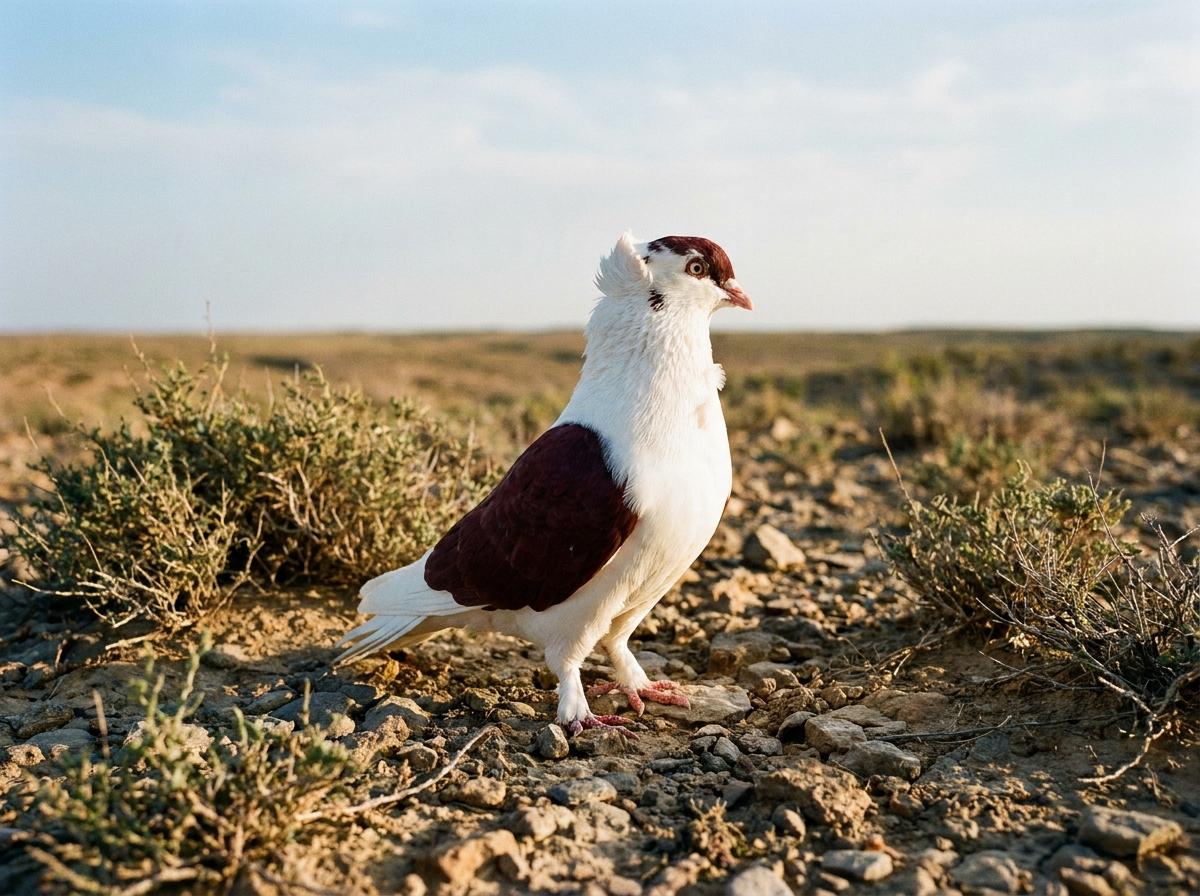
The Modena is a short, round, upright exhibition pigeon from the northern Italian city of Modena, and it is well enough established on both sides of the Atlantic that its North American specialty club calls itself the largest speciality pigeon club on the continent. Two things define it. The first is body type: a very short cobby body, a broad chest carried high and forward, a proud erect stance, and a short tail held clear of the ground. The second is marking, and this is where new keepers most often get turned around. Schietti birds are self coloured, one solid colour with no white. Gazzi birds are the opposite arrangement: a white body carrying a coloured head, a coloured wing shield, coloured flights and a coloured tail.
If you found this page because you saw one and wondered what it was: it is a show bird. Modenas are not homing or racing pigeons and they are not high fliers. The short wings and deep round body that win them prizes are the same features that make them ordinary fliers, which is the point of the breed rather than a knock on it. You can see what is currently offered on the Creatures pigeon marketplace or browse the wider pigeon species page.
Everything below is checked against the two clubs that publish a Modena standard, in North America and Great Britain. On one real point they disagree, and this page says so rather than picking a side.

| Also called | English Modena. The older Italian bird is the Triganino Modenese |
|---|---|
| Origin | The city of Modena, northern Italy. The modern show form was developed in Britain, with a separate North American standard since |
| Kept for | Exhibition. Not a racing, homing or high flying breed |
| Show group | Form pigeon, meaning it is judged mainly on body shape and carriage |
| Two divisions | Schietti (self coloured, no white) and Gazzi (white body with coloured head, wings, flights and tail) |
| Ideal size | About 10 inches tall and 7 inches long, so the bird is taller than it is long (National Modena Club standard) |
| Legs | 2 to 2.25 inches, very straight, bright red, completely free of feathering |
| Scale of points | Body shape 20, station 20, head neck and eye 20, colour and markings 20, legs 10, condition 10 |
| Colours | Unusually large range: three pigments and four wing patterns, plus modifiers including grizzle, almond, mottle, argent, opal and recessive red |
| Weight | Not specified by the National Modena Club standard, which judges by measurement and overall balance instead |
| Lifespan | No published breed specific figure. Well housed loft pigeons commonly live well into their teens |
Browse listings, public profiles, breeders, or add your animal.
Schietti and Gazzi, the right way round
This is the most commonly inverted fact about the breed, so it is worth being exact.
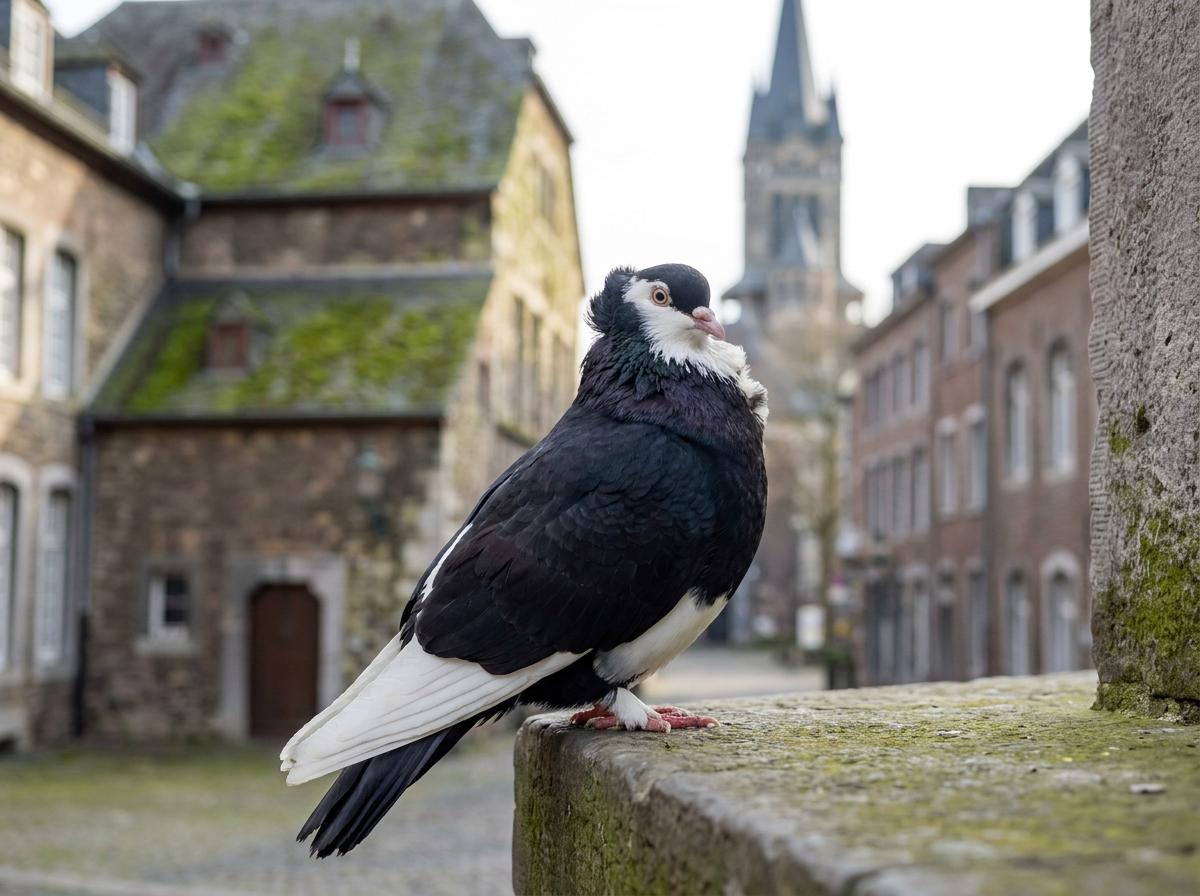
Schietti (from the Italian for plain or pure) means a self coloured bird, defined in the National Modena Club glossary as a “Modena not showing Gazzi markings.” One solid colour from beak to tail. White anywhere counts against it: white on the belly is a moderate fault on any Schietti except a white bird, and white flights or tail support feathers are a disqualification.
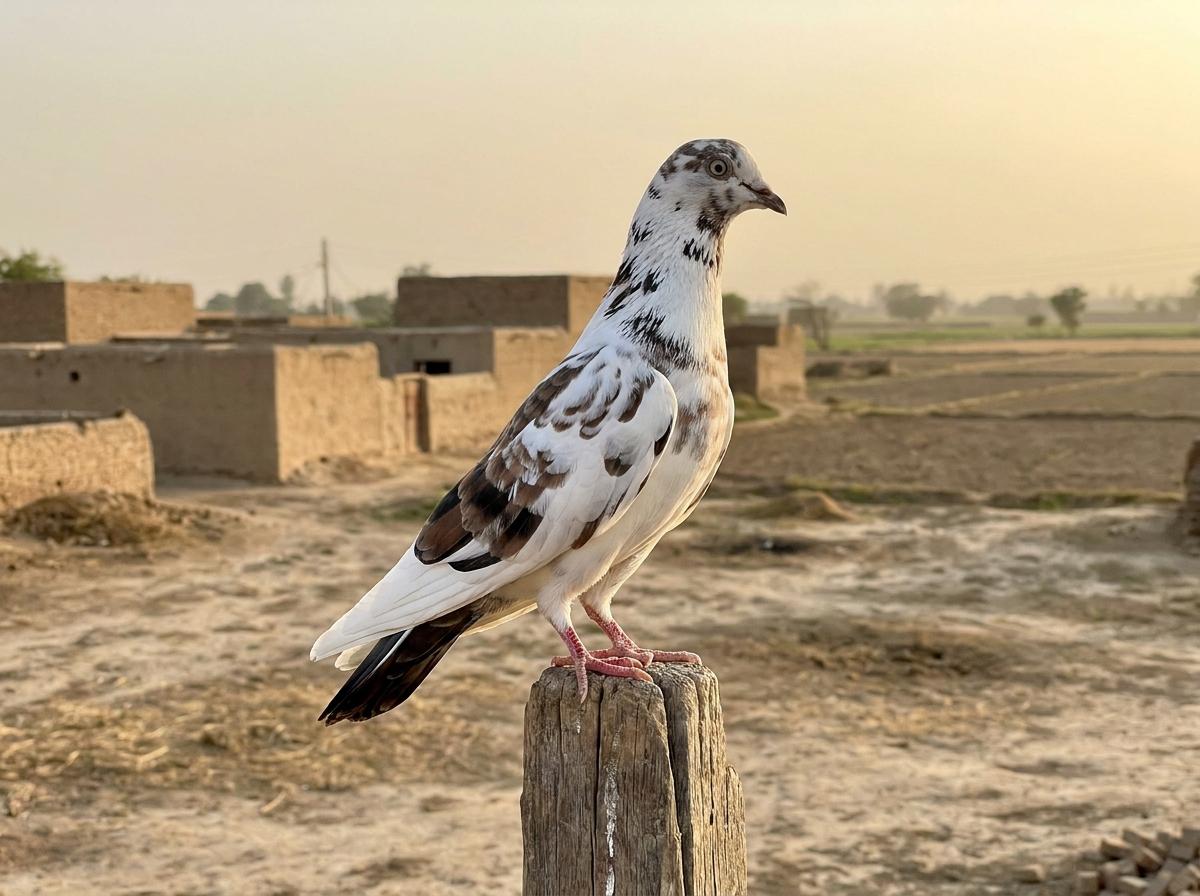
Gazzi (from the Italian for magpie, which tells you a lot) means a pied bird with a very specific arrangement. The same glossary defines it as “a marked Modena with a white body, colored head, tail and wings.” The coloured areas are the head and upper throat, the folded wing shield, the flights and the tail. Everything else, the neck below the bib, the breast, belly, flanks, back, rump and thighs, is white, and coloured feathers on any of it are a fault.
If you remember one sentence, make it this one: in a Gazzi the wing shield is coloured and the body is white, not the other way round.
Two details are worth stressing because they are widely got wrong online. The flights are coloured, not white: white flights or tail feathers are a disqualification in anything but a white or a mottle, so a description telling you a Gazzi’s flights should stay white is describing a disqualified bird. And the back of a Gazzi should be white, along with the legs and hocks.

The British standard adds the detail a judge uses at the pen. The head colour ends at the back of the skull, and the line of demarcation runs in an even curve about a finger’s breadth below the eye down to the upper throat, forming a bib that should read as a clean egg shape from above, even on both sides of the face and rounded rather than pointed. Too deep a bib counts against the bird, and white feathers under the tail are a bad fault.
One genetic note that matters for pairings: Schietti is dominant over Gazzi. A Schietti bird can carry Gazzi without showing it, which is why marked youngsters turn up in nests where neither parent is marked.
What about Magnani?
Here the two standards genuinely differ, and any page that gives one answer without the other is oversimplifying. The British standard treats Magnani as a third marking division, listing the breed as divided into “Gazzi or Pied, Schietti or Self-coloured, and Magnani or Harlequin.”
The North American standard does not. It runs the whole colour chart across two divisions, Schietti and Gazzi, and files Magnani under colour classes as the almond factor on a T pattern bird in any pigment: feathering broken up with flecks of at least three colours, evenly spread, which breeders call “break.” So in North America a Magnani can be either Schietti or Gazzi, while in Britain the word names a marking group of its own.
A related correction, because it circulates widely: Magnani is not the same as mottle. Mottle is a separate recognised class, ideally about half white and half base colour and evenly distributed, recognised in both Schietti and Gazzi.
Body type: what a judge is actually looking at
Modenas are judged as Form pigeons, the group for breeds assessed on the shape and carriage of the body rather than on feather ornaments or flying ability. The National Pigeon Association in the United States places the breed in its Form group and the British standard records it the same way, and both split 100 points almost identically. North America: shape of body 20, station 20, head, neck and eye 20, colour and markings 20, legs 10, condition 10. Britain uses “carriage” for station and “size and shape of body” for shape, with the same weighting. The lesson for a buyer falls straight out of that scale: colour and markings are 20 points, shape and station together are 40. A stunning colour on a poorly built bird loses to a plain colour on a well built one.
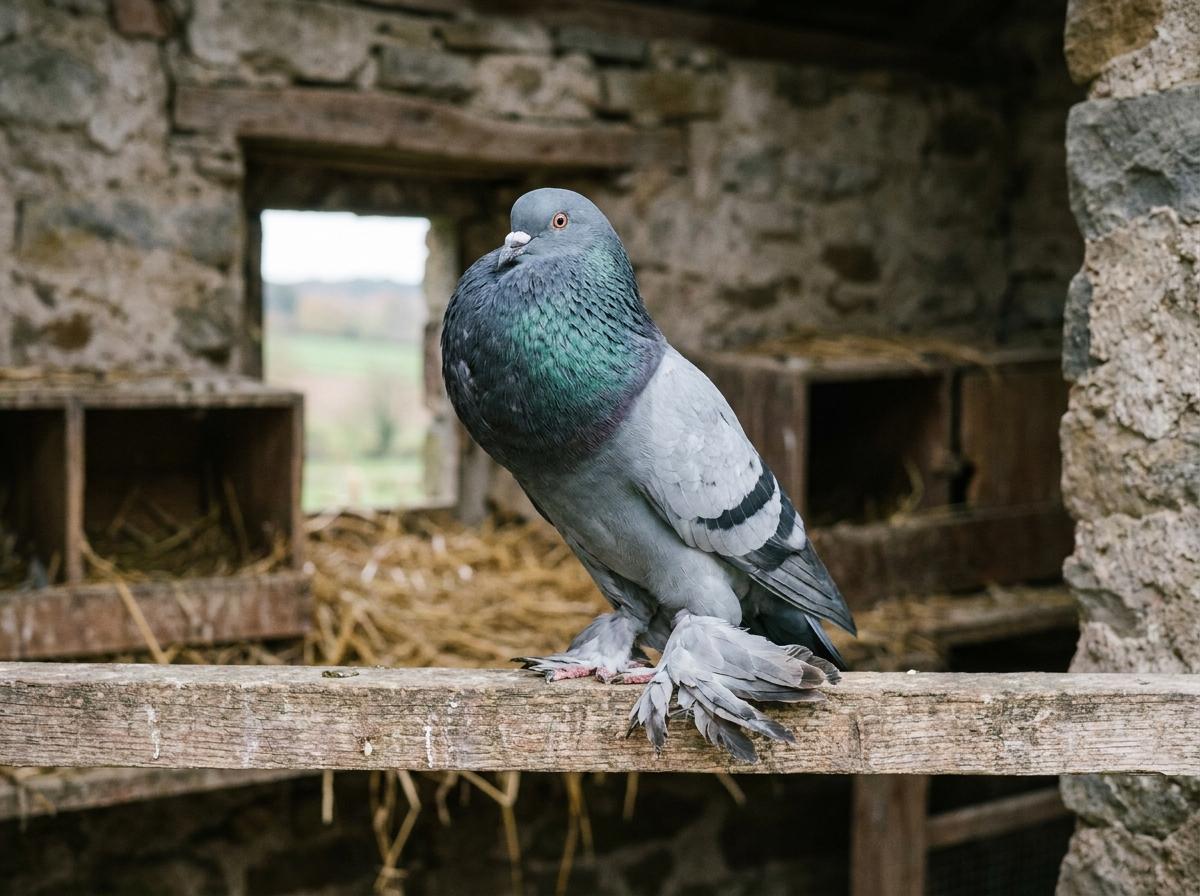
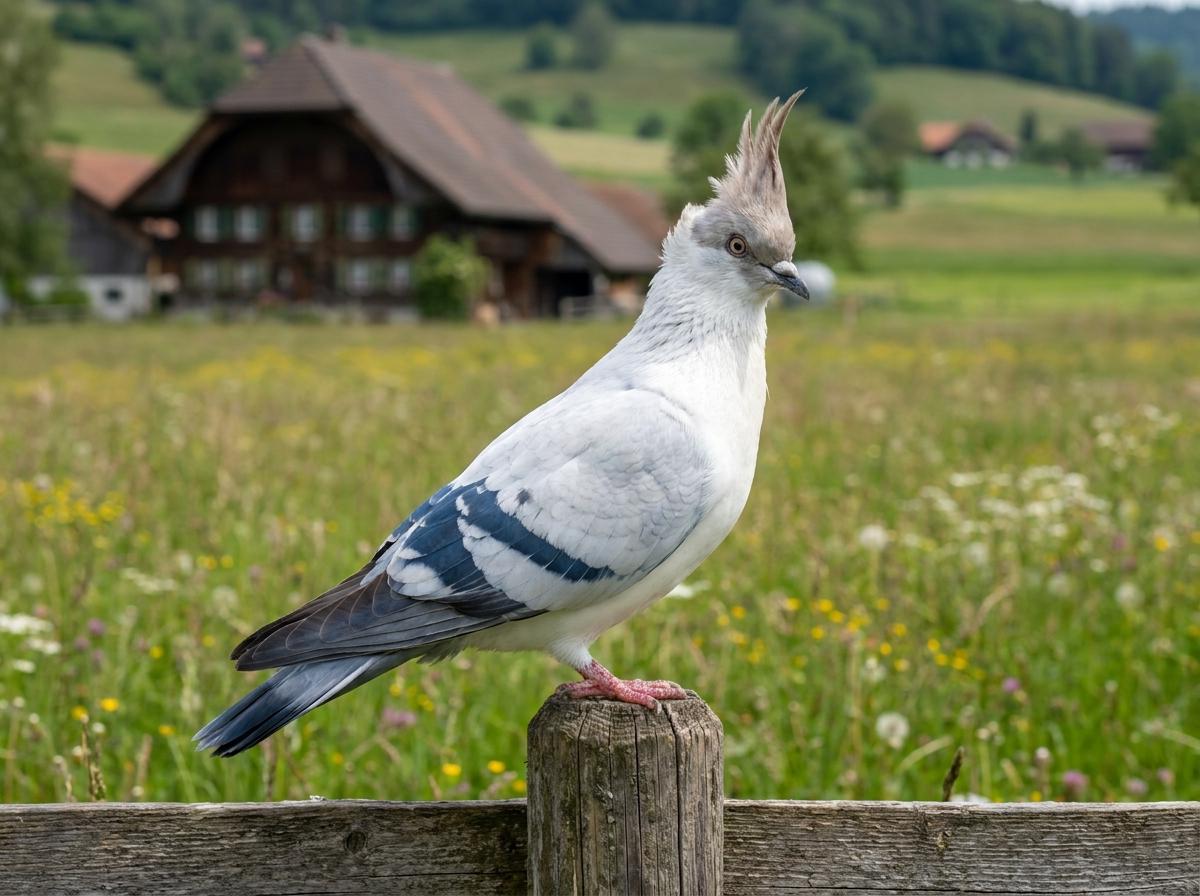
Shape. Chest broad, round and prominent. Back wide at the shoulders, short and well rounded, never flattened. The body deep, short, broad and cobby, with a rump broad enough to support the wings, reading as a graceful curve from any angle, and the legs set in the direct centre of the profile. The British standard puts it in three words: the English Modena is “a bird of curves.”
Station. The word for how the bird stands, and it carries the same weight as body shape. The standard asks for a proud, erect bird with the head held high but not strained, the eye and the wing joint on the same vertical line, and the tail curved upward at an angle that would bring it level with the bird’s neck, roughly an inch and a half above the low point of the back. In plain terms: the bird stands tall and tips slightly back, and the short tail is cocked up and carried clear of the floor rather than trailing.
Measurements. The North American standard is unusually specific. It gives ten inches as the ideal height and seven inches as the ideal length, the fastest way to picture the breed: a Modena is taller than it is long. Ideal width is five inches, the body about 4.75 inches deep, and the legs 2 to 2.25 inches with the thighs well shown. It then adds the sentence that keeps all of this sane: “overall balance shall be more important than the exact measurements.”
The British standard takes the opposite approach and gives almost no numbers. It asks for a bird “medium in size, and as short as possible,” and says that a medium bird lacking type and stoutness should be placed below a larger bird of more cobby build, because style always takes precedence.
Head, neck and wings. A well rounded skull, never flat topped. The neck is short and thick with no distinct gullet, tilted slightly back; the standard calls the “stout bull neck” most desirable and marks down neck shaking or overstyling. Wings short, deep and tightly folded, carried well cocked up with the tips lying on the tail, which is very short, broad webbed, and about a quarter inch longer than the flights.
Eyes and disqualifications. The iris should be bright and lustrous, orange to orange red; whites may have bull or orange eyes, and a bull eye anywhere else is disqualified. Both standards also disqualify white flights or tail feathers on a coloured bird, and Britain adds crooked legs and cow hocks. The buying checklist further down lists the rest.

Why the colour range is so large
Few pigeon breeds carry as many recognised colours, and the reason is structural. The colour chart is built from three basic pigments, blue, brown and ash red, crossed with four wing patterns: barred, checked (also called tri marked), T pattern, and barless, which exists but is rarely seen. Within each pigment the ground colour darkens as you move from bar to check to T pattern, and dilute and spread factors produce further named classes. That grid alone gives the blue family (blue, bronze tri, bronze, black, silver, sulphur, dun), the brown family (silver dun, russet, brown, silver cream, ochre, khaki) and the ash red family (mealy, red checked, cream, yellow checked).
On top of the grid sit the modifiers: recessive red, gold and yellow, lavender, andalusian, grizzle, almond (Magnani), mottle, argent, opal, reduced and white. Members can formally propose a new colour class to the club’s standard revision committee, which is why the list keeps growing.
A colour name on its own therefore tells a buyer very little. “Blue Gazzi” describes a pattern and a marking, not the quality of the bird underneath. Judge the body first.
Where the breed came from
The Modena takes its name from the city of Modena in Emilia-Romagna, where a distinct local pigeon has been recorded for centuries. The Italian bird is the Triganino Modenese, which fancier histories date to around the fourteenth century, and it was not an ornament. The Triganino was the bird of a regional flying game, in which keepers (the triganieri) flew their birds to lure and win over neighbouring birds, and the same pigeons are said to have carried short and medium distance messages into the early twentieth century. Both of those are breed tradition rather than anything we could trace to a document, and they are worth repeating on that footing rather than as dated fact. Italian breeders still keep it, and it remains a separate thing from the exhibition Modena.
The export chapter begins in the 1870s, when Modenas reached Germany. Fancier histories credit Professor Paolo Bonizzi of Modena with sending stock north in 1878; treat the numbers usually quoted alongside that story as breed lore rather than documented fact. German breeders developed a smaller, slimmer bird from those imports, the German Modena. British breeders, working from Italian and German stock, went the other way and produced a larger, rounder, cobbier pigeon: the English Modena, which nearly every modern show Modena descends from. As it got rounder and deeper its flying went the way you would expect, and the breed moved decisively into the show pen.
The British standard credits a group of breeders led by W. F. Holmes with fixing the type and writing the standard the National Modena Club of Great Britain adopted. One caution on dates: the club’s own published standard says this happened “in the early years of the nineteenth century,” which sits awkwardly with everything else known about Holmes, who was active in the early twentieth century. Other accounts place the work in the early 1900s, so treat the decade as unsettled rather than repeating either version as fact.
So “Modena” covers three related lines differing mainly in size and type: the Italian Triganino, the German Modena, and the larger English Modena the standards on this page describe. If a seller just says “Modena,” ask which one they mean.
The clubs and standards, by name
Getting the governing bodies right matters here, because two separate organisations share almost the same name.
- National Modena Club (North America). Founded in 1936, the breed’s specialty club in the United States and Canada, and, by its own description, the world’s largest Modena club. It publishes the standard used across North America, currently a revision dated August 2023, downloadable from the club’s member resources page. Membership and shows are on its about page, which describes it as the largest speciality pigeon club in North America.
- The National Modena Club (Great Britain). Founded in 1910 and described in the National Pigeon Association club directory as the premier breed club in Great Britain, with promotion of the English Modena as its object. It publishes the English Modena standard, last amended at its 2014 annual general meeting. Its former website domain has lapsed, so the standard text quoted here is cited from an archived copy of the club’s standard page.
- National Pigeon Association (Great Britain) is the governing body for fancy pigeons in Britain, controlling ring issue, championship shows and exhibiting. Its United States namesake is the all breeds body there.
A British judged English Modena and a North American judged Modena are the same breed, but only the North American standard holds the bird to specific measurements.
Keeping Modenas: what to actually expect
Modenas are calm, easy to handle and undemanding by pigeon standards. They are also poor fliers, which changes how you house them.
Loft space. Extension guidance for pigeons in small and backyard flocks suggests roughly 27 cubic feet of space for every pair, with extra planned in during breeding season. Treat that as a floor. A heavy bodied bird that does not fly much needs room to walk and stay fit rather than merely heavy, and crowding is the fastest route to feather damage, fighting and disease.
Dryness before warmth. Pigeons tolerate a wide temperature range but not damp, and a damp loft is where respiratory disease starts. Prioritise a sound roof and ventilation without a draught blowing across perching birds.
Flooring. A solid dry floor you can scrape, with a light litter of clean shavings if you like, and no bare wire mesh. Modena legs and feet are judged and must be bright red and unfeathered, so a damp or dirty floor shows on a show bird’s feet before it shows anywhere else.
Perches. More perches than birds, one each plus spares, so nobody has to fight for a place. Individual box style perches work well; the extension guidance describes compartments about 10 inches high by 12 inches wide. Because Modenas fly poorly and land heavily, keep perches at moderate heights with clear approaches and landing boards.
Water. Clean fresh drinking water every day, in a fountain or bowl the birds cannot foul or perch over. Offer a shallow bath once or twice a week; the extension guidance suggests pans two to three inches deep for about two hours, then removing them. A bird that can bathe holds its plumage better, and condition is 10 points on the show card.
Grit and feed. Pigeon grit is not chicken grit. It should carry salt, iodine, trace minerals, sulphur, iron, bone meal for calcium and charcoal along with oyster shell and granite, and be available free choice. Feed a mixture of several grains rather than one, with corn, wheat, sorghum, oats and barley all in common use, and use well aged grain. Watch condition rather than the scoop: a show Modena should feel firm and well filled, not soft and fat.

Handling and shows. Modenas take handling well, one reason the breed is often recommended to young fanciers. If you plan to show, get birds used to being lifted and standing in a pen long before the first show: a bird that will not settle cannot demonstrate its station.
Breeding
Modenas breed like other domestic pigeons. Pairs form and stay together, both parents share incubation, and both feed the young on crop milk produced during brooding. Young birds are called squabs and leave the nest at roughly 26 to 30 days, which is also the marker for when a Modena youngster is ready to wean.
A few breed specific points:
- Make nest boxes roomy and easy to step into. A short legged, deep bodied bird is not an agile climber, so low open fronted boxes with a landing ledge beat tall awkward ones.
- Band young birds on time. Seamless bands go on in a narrow window while the foot is still small. The British club records a 9 mm ring for the English Modena (UK size C); confirm the size with whoever issues your rings.
- Expect Gazzi from Schietti pairs. Because Schietti is dominant, marked youngsters appear from unmarked parents carrying the gene. Record what each pairing produces and you will know which of your Schietti birds carry Gazzi within a season or two.
- Breed for body first. Pairing two beautifully marked birds with mediocre type reliably produces mediocre type.
Honest breeding records are the difference between a stud that improves and one that drifts. Log each pairing, each clutch, band numbers and how youngsters placed. That is what a free animal profile on Creatures is built for, and the same record carries a bird’s health history alongside its pedigree.
Health and condition
Nothing about Modena health is exotic. The routine concerns are the routine pigeon concerns: respiratory disease in damp lofts, canker, coccidiosis, worms, and external parasites such as lice and feather mites. Quarantine any new bird before it joins the loft and keep water and feeders clean. Medication decisions belong with a veterinarian who can examine the bird, not with guesswork.
Two breed specific things are worth watching. Feet and legs first: bright red, straight, unfeathered legs are part of the standard and the first thing to suffer on a wet or dirty floor. Condition second: a heavy bodied bird that does not fly much can put on soft weight, and an out of condition Modena loses points as well as fitness.
What Modenas cost, and how to buy well
There is no published price index for the breed, and any single figure online is one seller’s asking price rather than a market rate, so this page will not invent one. The shape of the market is reliable enough. Pet quality and surplus young birds change hands cheaply, often within a club or at a show. Proven breeding stock and birds from winning lines cost considerably more, and the premium tracks the seller’s show record rather than colour rarity. Bands, shipping and travel to shows add up to more than people expect.
Before you buy:
- Ask which line and which standard, Triganino, German or English, British judged or North American. Then ask to see the bird handled rather than photographed, because photographs flatter station.
- Judge body before colour. Shape and station are 40 of the 100 points.
- Check the legs, feet and eye. Legs straight, bright red and unfeathered with the thighs well shown; iris bright orange to orange red. The two standards differ here and it is worth knowing which one you are being judged under. Britain disqualifies crooked legs and cow hocks, and disqualifies split, bull and pearl eyes with no exception attached. North America disqualifies a bull eye except on whites.
- Run through the other disqualifying faults: missing flights, scissor beak, white flights or tail feathers on a coloured bird, both wings carried below the tail.
- Ask about the parents and hatch records. A seller who can give you the pairing, the hatch date and the band number keeps records, and that correlates with everything else about the birds.
If you are new to the fancy, buying at a show beats buying from a photograph: you can see birds in the pen and watch how a judge places them.
If the Modena’s body type appeals but you want the alternative, the Archangel pigeon sits at the other end of the fancy: a slimmer bird whose whole appeal is metallic bronze and gold plumage rather than silhouette. The same split runs through cage birds, where the Gloster canary is judged on head and crest much as the Modena is judged on body and station.
Frequently asked questions
How big is a Modena pigeon, and how much does one weigh?
The North American standard gives ten inches as the ideal height and seven inches as the ideal length, so the bird is taller than it is long. It sets no weight at all, asking instead for a body “well filled with firm flesh.” Published weights online disagree by a wide margin, so judge by feel and measurement rather than by a number you read.
What is the difference between an English Modena and a Triganino?
The Triganino Modenese is the older, smaller, more athletic Italian bird bred for a regional flying game. The English Modena is the larger, rounder exhibition bird developed in Britain, and it is what most modern show Modenas are.
How long do Modena pigeons live?
There is no reliable breed specific figure. Well housed domestic pigeons kept dry, clean and safe from predators commonly live well into their teens, far longer than birds living wild. Be sceptical of precise lifespan numbers quoted for this breed.
Do this next on Creatures
Whether you are researching the breed, hunting for stock, or already keeping Modenas, Creatures is the records, marketplace and directory layer to do it in one place.
Add your bird. Already keeping Modenas? Create a free animal profile and record the band number, division, colour class and pairing in a few minutes. No account needed to start. The walkthrough is in adding an animal to Creatures.
Keep the records that matter. Add a record for each clutch, band, treatment and show placing. The record sheet opens for any visitor to look around, and you will need a free account to save what you enter. See adding a record and health and medical records.
Get alerted when one appears. Good Modenas move quietly between fanciers, so set a free Modena listing alert and we will tell you when one is posted. No account needed to start. See saving searches and using your watchlist.
Browse what is listed now. Check Modena pigeons on the marketplace and search trusted breeders and lofts in the Creatures breeder directory.
List your loft. Breeding Modenas yourself? Create a free breeder or loft profile so buyers searching for the breed can find you. No account needed to start. Read getting listed in the breeder directory and, if you run your loft with others, creating an organization and adding your team.
Compare the breed. Read the Archangel pigeon guide for the colour side of the fancy, or start from the pigeon species page.