

Archangel
Author: Elliott Garber, DVM · Updated
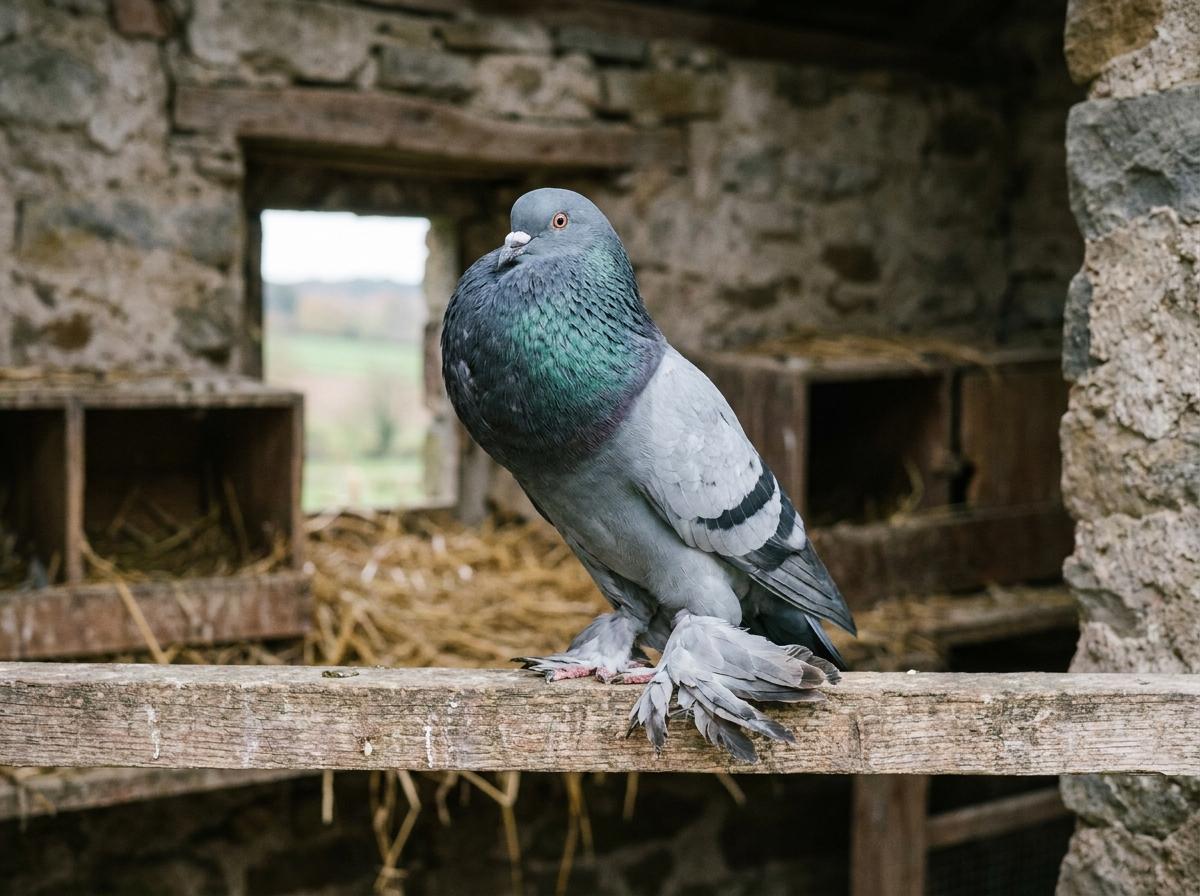
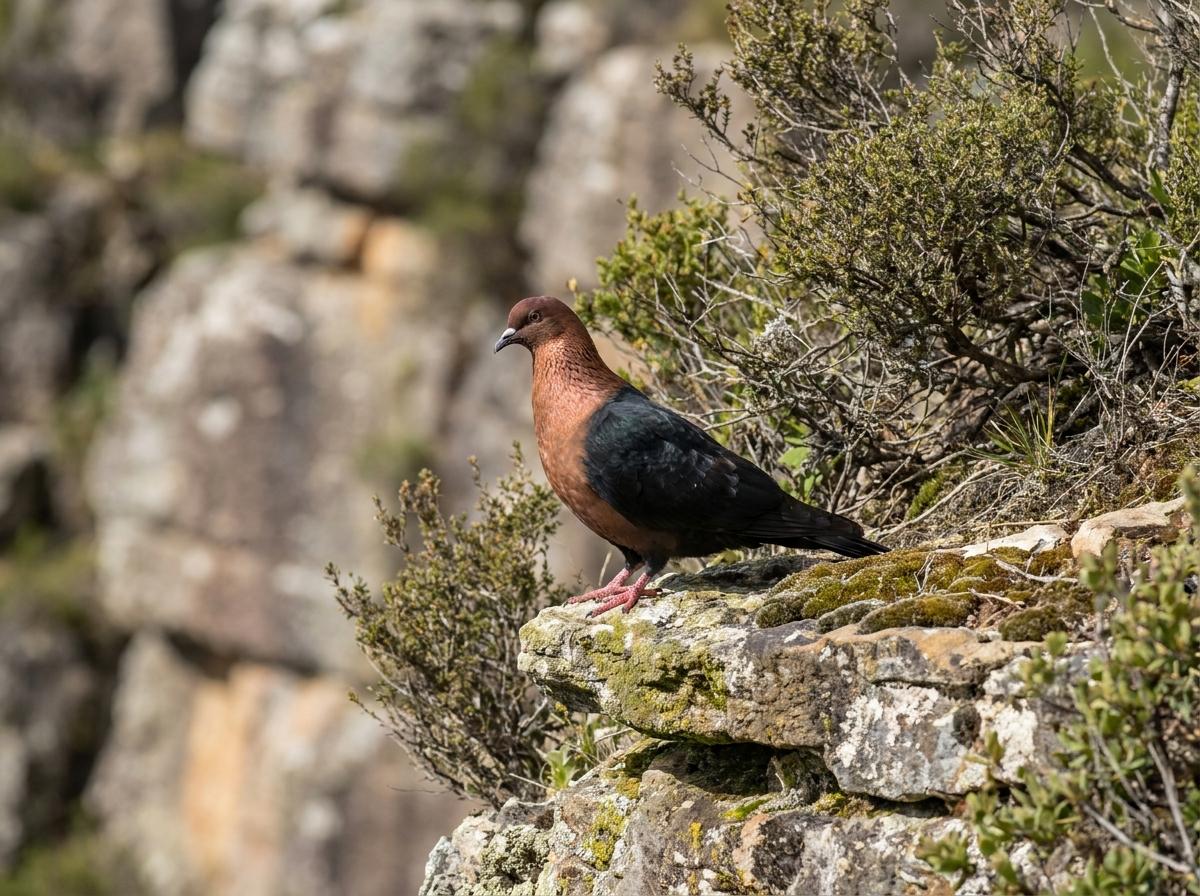
The Archangel is a small ornamental pigeon that looks like it was cast in metal. Head, neck, breast and belly are a burnished copper or gold that flares to bright fire wherever light catches it, and the wing behind that is a hard contrasting block of black, blue or white. German fanciers call the breed the Gimpel, after the bullfinch, and the fancy still uses that name. Nobody keeps Archangels for racing, homing or the table. They are kept for what they do in sunlight.
That lustre is the entire point of the breed, and it is not a trick of photography. The American Archangel Club, which writes the standard used in the United States, tells judges to put 80 percent of their assessment on colour and 20 percent on structure. What follows is the breed at reference altitude: which colours and head types the standard actually recognises, how much of the origin story is documented, and what really sets the price. For a step-by-step walkthrough of keeping and evaluating birds, the Archangel pigeon breed guide goes through it in order. You can also browse pigeons listed on Creatures and see related breeds on the pigeon species page.

| Also called | Gimpel, Gimpeltaube (German) |
|---|---|
| Classification | Fancy pigeon, shown in the Colour group by the National Pigeon Association in the United States |
| Ground colours | Copper bronze and gold bronze, on head, neck, breast, belly, shanks and under-tail wedge |
| Wing (base) colours | Black, blue, white, plus an any-other-colour class |
| Head | Peak crested or plain headed, both fully accepted |
| Legs | Clean legged, no feathering below the hocks, coral red to brown |
| Eyes | Dark orange, bright and lively. Bull eyes are a fault except in monk marked and priest marked birds |
| Size | A slim, medium sized pigeon with a fairly broad chest tapering to the tail. The standard sets no weight |
| Judged on | 80 percent colour, sheen and demarcation, 20 percent type |
Browse listings, public profiles, breeders, or add your animal.
What actually makes an Archangel look metallic
Two separate things happen on the same bird.
The first is a pigment pattern the fancy calls Archangel bronze, laid over the bird’s base colour across specific areas: head, neck, breast, belly, shanks and the wedge of feathering under the tail. Everything else, meaning wing shield, back, rump and tail, stays the base colour. That is why an Archangel reads as two birds joined at the shoulder. The American Archangel Club standard asks for a clearly defined line where the two zones meet, and says it should still look clean when you lift the wing and check where the hackle meets the shoulder.
The second is lustre, the part that photographs badly and sells birds in person. Each bronze feather carries a bright shining edge. In a good bird that edge runs deep enough into the feather that the fire is continuous across the whole bronze area, with no dark bands between feathers. In a poor bird the shine sits only on the tips, so the bronze breaks into spangles and the metal effect collapses. The standard is blunt about it. Discussing the white wing variety it says birds without fire are worthless and should be judged as such, and the same posture runs through the whole document, which puts colour at 80 percent and says poorly coloured birds of any colour will be heavily faulted.
Black-winged birds add a third effect, a structural iridescence on the shield, back and rump that the standard calls beetle green and wants as much of as possible. The finished bird is fiery copper in front and green-shot black behind, which is harder to hold together than it sounds.
One detail catches newcomers out. In an ordinary pigeon, green iridescence on the neck is normal and rather pretty. In an Archangel it is a fault, because the neck, sides and under-tail wedge are supposed to be pure fiery copper or clean gold. A neck that flashes green instead of fire is not a bonus feature. The standard grades it rather than banning it outright, and the grading runs by variety: on a copper blue wing a breath of green on the upper neck is tolerated, and deep green is treated as the more serious fault of the two when weighed against diminished fire underneath; on a copper white wing a small amount is, in the standard’s own careful wording, still accepted for now; on a gold blue wing it is entirely unacceptable.
The colours and wing combinations that are recognised
There are two ground colours, three named wing colours, and a catch-all class.
Copper is deep, brilliant copper-bronze, evenly coloured with no fading on the belly and as much fire as the bird can carry. Greenish, yellowish, sooty or plum tones are faults. Gold is an even golden yellow across the same areas, and neither a lighter nor a darker tone is preferred so long as it is uniform. Green, violet, purple or sooty casts are faults.
Those grounds combine with the base colour of the wing:
Black wing. As deep and dense a black as possible on shield, back, rump and tail, free of slating, checking or bronzing, carrying as much beetle green sheen as the bird can manage. Spread the wing and the flights should show rich bronzing on the inner webs of a copper bird, chestnut on a gold bird. Blue in the tail is a major fault.
Blue wing. An even, pure pigeon blue, with dark flight tips and a blue bar in the tail. The standard notes honestly that most birds carrying really good copper also show some cloudiness in the blue, which is the trade-off breeders live with.
White wing. Pure white shield, back, rump and tail. Light flecking that shows only on a spread wing or tail is not a fault. Worth knowing before you buy one: on white-winged birds the copper runs darker and more brownish red and shows a little less fire, because the lustre edge on the feather is less deep. A white-winged bird that looks less molten than a black-winged bird is not a poor bird. That is what the variety is supposed to look like.
Any other colour. Other base colours and modifiers are accepted, provided the bird still carries the Archangel bronze pattern and the colour is rich and even.

Wing shields may be barless, barred, chequered, T-pattern or solid. White markings appear as well, and the standard names them as one family rather than three: white flight, where between five and ten outer flight feathers on each wing are white; white flight with priest head, which adds a white cap whose demarcation runs straight through the centre of the eye; and white flight with monk head, where that white cap extends below the beak too. Both head-marked forms are white-flighted birds and both are specified as carrying a coloured tail, so neither is a pattern that stands on its own.
One geographic wrinkle trips people up reading British and American sources side by side. In the United States all these forms are shown as Archangels. In Great Britain the name has traditionally attached to the black and copper birds specifically, with the wider family treated under the Gimpel name, so a British breeder saying something is not an Archangel may just be using the narrower definition.
Crested or plain headed
Both head types are correct, and neither is a lesser bird.
A peak-crested Archangel carries a crest that starts at the back of the shoulders, runs up the neck as an even ridge, and finishes in a sharp conical point on the head. The standard wants that ridge unbroken, the point set high, and the peak symmetrical. A useful check it gives judges: draw a line from the centre of the beak through the pupil, and it should strike the crest ridge about halfway up. Crooked peaks, gaps in the ridge and shell-shaped crests are faults. A plain-headed Archangel simply has no crest.
Because the breed is judged so heavily on colour, the standard explicitly warns judges not to prefer a flawless crest on a flawed-colour bird over flawless colour on an imperfect crest. Crest quality in this breed, it reasons, is already generally good. Colour is where the difficulty sits.

The name, the origin, and how much of it is documented
The German name is Gimpeltaube, and Gimpel is the German word for the Eurasian bullfinch, a small bird with a glowing rose-red breast. It is the older of the two names and an apt one.
Archangel is an English addition. A widely circulated transcription of a National Pigeon Association (United States) standard, dated 1993 by the transcription itself rather than by the NPA, says so plainly: the name was given to this Gimpel variety by the British, and the Archangel is no doubt the peak-crested variety of the dark bronze, black-winged Gimpel. Treat that as a transcription rather than as a page the registry publishes today, because the NPA sells its current book of standards and hosts no 1993 edition. The name pulls the imagination towards the Russian port of Arkhangelsk, but the documented account is the simpler, British one.
Some of the record is firm. The Archangel Club in Great Britain was founded in 1884 and is still an affiliated breed club of the National Pigeon Association GB. In the United States the National Pigeon Association shows the Archangel in its Colour group, and the American Archangel Club records that it was reformed in 1993 by a small group of breeders and that it sponsors national meets at four shows: the National Young Bird Show, Des Moines, Reading and the NPA Grand National.
Where the breed came from before that is genuinely unsettled. The account you meet most often places its roots in Dalmatia and Illyria on the eastern Adriatic, usually traced back to Wendell Levi’s reference work The Pigeon. Others name southern Germany, Austria, Italy, or that Russian port. None rests on a document a reader can go and check, so treat the pre-1800s history as tradition rather than record. Better supported is that most of the modern colour work happened in German-speaking central Europe, which is why the German name persists in the fancy.
Temperament, and whether they suit a beginner
Plenty of writing online describes Archangels as serene and gentle. The breed’s own standard says something different. In its section on type it notes that Archangels tend to be flighty, and that in the show pen they should nonetheless station properly rather than crouching or leaning back on the tail. Flighty is the word the people who judge them chose.
In practice that means a lively, alert bird that is not naturally a lap pigeon. They are not aggressive and they settle fine into a mixed loft, but a bird that has not been handled regularly will not stand quietly for you, so handle young birds early and get them used to a show pen well before their first show.
So are they a good beginner breed? For keeping, yes, easily. They are hardy, clean legged, ordinary in size, they fly properly, and they rear their own young without the interventions that short-faced and heavily structured breeds often need. No foot feathering to keep out of the mud, no exaggerated head structure creating feeding problems.
Breeding them to standard is another matter. The standard acknowledges that colour in this breed presents many difficulties and points of criticism, and asks for leniency with hens because they typically do not reach the colour depth cocks do. Easy to keep, hard to perfect, is the fair summary.
Flying, exercise and the loft
Archangels are full-flighted and fly well, but they are not a performance breed. There is no Archangel flying competition, no roll, no homing selection behind them, so nobody has bred them for navigation, and letting unsettled birds loose over open country is a good way to lose expensive stock. Most keepers give them flight inside a roomy loft or attached aviary. Exercise is not a luxury here either: a bird carrying loose muscle and dull feather does not show the sheen, and the standard grades birds down for poor condition, missing feathers, moult and soiled feathering.
For housing, Jacquie Jacob of the University of Kentucky, writing for the national Cooperative Extension poultry resource on raising pigeons in small and backyard flocks, suggests around 27 cubic feet per pair, which is a floor rather than a target. Beyond space:
- Dry and ventilated without draughts. Damp ruins both feather quality and respiratory health.
- Individual perches, one per bird plus spares. Shared perches cause squabbles and soiled tails, and a soiled tail is a wrecked show bird.
- Nest boxes for breeding pairs, roughly 10 inches high by 12 inches wide with a lip along the bottom so nesting material stays put.
- Clean drinking water in a fountain the birds cannot foul.
- Grit and calcium free choice. The same guidance describes a pigeon grit of salt, iodine, trace minerals, sulphur, iron, bone meal for calcium and charcoal, with oyster shell and granite, and notes a pair gets through roughly 6 pounds a year.
Then the bath, which matters more for this breed than for most, because bathing is what keeps the lustre alive. The extension guidance suggests bath water once or twice a week in shallow pans two to three inches deep, left about two hours, then removed so it does not become a contaminated water source. Feathers that never get washed go dull and stay dull, and on a breed judged 80 percent on colour that is a direct loss.

Feeding
Archangels eat like ordinary pigeons, which means a mixed grain diet rather than a single seed. The Cooperative Extension guidance lists corn, wheat, sorghum, oats, barley, rye, rice, buckwheat, legume seeds, peas, soybeans, vetch and peanuts as suitable components, and advises feeding only what the birds clear in one sitting, since grain left standing draws vermin and goes mouldy. The MSD Veterinary Manual notes that commercial pigeon pellets around 2 mm in diameter are an alternative, formulated to roughly the requirements of growing chickens at 6 to 12 weeks.
Grit and a calcium source are not optional, because pigeons grind food in the gizzard and laying hens draw heavily on calcium reserves. Keep grit and oyster shell or a cuttlebone permanently available, and lift protein through the breeding season, since a pair rearing two squabs is doing a lot of work in a short window.
Breeding and rearing
Archangels breed readily and rear their own young, which is one of the strongest arguments for them as a starter fancy breed.
A pair lays two eggs. Both cock and hen incubate, splitting the day between them, and hatching comes at roughly 18 to 19 days according to the Animal Diversity Web account of Columba livia. Both parents then produce crop milk, which the MSD Veterinary Manual describes as rich in fat and protein, free of carbohydrate, low in pH and carrying Lactobacillus species. Regurgitated seed starts getting mixed in within about four to seven days, and youngsters are generally out of the nest at around four weeks.
Two things are specific to this breed. First, colour is the hard part and you cannot judge it in the nest. A promising squeaker can come through its first moult dull, green in the neck, or with a broken line where bronze meets base colour, so judge your own youngsters after the moult and buy other people’s after the moult too. Second, hens are graded a little more leniently in the show pen precisely because they typically do not reach the colour depth cocks do, so do not write off a hen for failing to look like a cock.
Either way, write down what each pairing produced rather than trusting memory across seasons, because colour work here is slow and the value is in the pattern across several rounds. On Creatures you can create a free animal profile per bird and keep pairings, hatch dates and moult notes attached to the right animal, and the guide to your animal’s profile tabs explains what each section holds.
Health and lifespan
Archangels are not a fragile breed. They get what any loft of pigeons gets, and ordinary hygiene prevents most of it. Treatment decisions belong with a veterinarian who can see the bird, and several of the drugs below are prescription medicines.
Canker (trichomonosis) is the one to understand first, because it interacts directly with breeding. The Merck Veterinary Manual explains that pigeons and doves pass Trichomonas gallinae to their young in contaminated crop milk, so chronically infected adults infect the squabs they rear. Affected birds develop yellowish caseous lesions in the mouth and throat that can enlarge and block the oesophagus, and young birds can go downhill within days. Merck’s prevention advice is direct: clean feeders and waterers frequently, and keep chronically infected birds out of the breeding team.
Coccidiosis and worms are the routine internal parasite load of any loft with a floor. Faecal testing through a vet beats blanket dosing on a calendar.
Pigeon paramyxovirus is a serious contagious disease of lofts. Vaccination is standard practice among fanciers in many countries, but availability and the rules differ by country and sometimes by state, so ask your veterinarian or national pigeon association what applies where you live.
External parasites deserve a specific mention here. Feather lice and mites chew up feather structure, and on a bird whose value is the condition of its feather edges that is not cosmetic. Check birds in the hand and keep the loft dry.
Domestic pigeons are long-lived for their size. A bird kept dry, fed properly and not bred year round can be expected to live well into its teens, and Animal Diversity Web records a captive maximum of around 35 years for Columba livia. Treat that as a record, not an expectation. Because so much of this breed’s value sits in feather condition, logging moult dates and treatments is worth the effort, and the health and medical records guide covers how that works on Creatures.
Price and availability
There is no published price index for fancy pigeons, so any single national figure you are quoted is a guess. The shape of the market is clearer. Pet-quality and starter birds from a hobby loft are among the more affordable ways into fancy pigeons, usually a modest sum per bird. Well-marked show-quality birds cost substantially more, and the best birds in the country tend to move privately between established breeders rather than appearing in public listings at all.
Price tracks colour, in the same proportion the standard uses: depth and evenness of the bronze, how far the lustre edge runs into the feather, how clean the line is where bronze meets base colour, and whether the neck is free of green and smut. Crest quality moves the price less than newcomers expect.
Two costs get forgotten. Shipping live birds by air is often a large fraction of the price of the bird, so a cheap bird two states away may not be cheap. And one bird is rarely the real purchase, because pigeons are social and you will want at least a pair.
Three things worth doing before you hand over money:
- Buy after the moult. Colour and demarcation cannot be judged fairly on a bird still in moult, and the standard grades moulting birds down for exactly that reason.
- Look at the bird in good white light. The standard tells judges that sufficient white light, and holding the bird correctly relative to it, is required to recognise colour properly. The same applies to you, and a phone photo taken in a shed tells you almost nothing.
- Buy at a show if you can. You see the bird in the flesh and the rest of what that breeder produced, you skip the shipping, and you can ask why it was graded the way it was.
The Creatures breeder directory lists trusted breeders and lofts you can contact directly, and the pigeon marketplace shows what is currently listed. Archangels are not always available, so a saved alert usually beats checking back.
Frequently asked questions
Is there a green Archangel pigeon?
No. Green is a fault, not a variety. What people are usually seeing is the beetle green iridescence on the black wing shield, which the standard actively wants. Green in the bronze areas, especially the neck, counts against the bird.
What is the difference between an Archangel and a Gimpel?
The same family of birds under two names. Gimpel is the older German name for the whole group, Archangel the English name applied by British fanciers.
Are Archangels doves?
No. Like every domestic pigeon breed, the Archangel is a form of Columba livia, the same species as the feral city pigeon and the racing homer. Dove and pigeon are not scientific categories, so the words get used loosely, but no separate species is involved.
What else should I look at if I like this breed?
If it is shape and carriage that appeal rather than colour, the Modena is worth a look, and there are more breeds on the pigeon species page. If what draws you is a small ornamental bird bred to a very specific standard, the Gloster canary sits in the same corner of the hobby.
Do this next on Creatures
Whether you are researching the breed, trying to find good stock, or already keeping Archangels, Creatures is the records, marketplace and directory layer for it.
Go deeper on keeping them. The Archangel pigeon breed guide walks through housing, diet, showing and evaluating birds step by step.
Find birds. Browse Archangel pigeons on the marketplace and search trusted breeders and lofts in the Creatures breeder directory. New to it? Read saving searches and using your watchlist.
Get alerted. Archangels are listed in small numbers, so set a free Archangel listing alert and we will tell you when one is posted. No account needed to start.
Add your birds. Already keeping Archangels? Create a free animal profile for each bird, which takes a few minutes. The walkthrough is in adding an animal to Creatures.
Track moults, pairings and health. Add a record for a treatment, a hatch or a post moult colour note. The record sheet opens for any visitor to look around, and a free account saves what you enter. See adding a record and health and medical records.
List your loft. Breeding Archangels and selling youngsters? Create a free breeder or loft profile so buyers searching this breed can reach you. No account needed to start. Read getting listed in the breeder directory and, if you run your loft with others, creating an organization and adding your team.