


Groninger Slenke
The Groninger Slenke is a rare Dutch fancy pigeon from the province of Groningen, best known for one startling trait: a neck that curves so far backward that the head is carried down over the bird’s own back, almost resting on it. It is one half of the old Dutch “Slenke” family, alongside the Gelderse Slenke. A flying and display breed, it performs a ringbeating (ringslag) action, clapping and jerking its wings above and below the body, and it comes in a small set of warm red and yellow colors. Today it is kept mostly for exhibition and is officially listed as a critically endangered breed. This page covers what the breed actually is, where it came from, how to tell it apart, what keeping one is like, and the honest reality of finding one, especially outside the Netherlands.
| Also called | Groninger Slenk, Groningen Slenke; part of the Dutch Slenke family with the Gelderse Slenk |
|---|---|
| Origin | Groningen, in the northern Netherlands |
| Group | Classed among the Dutch highfliers and tumblers; performs a ringbeat (ringslag) wing-clapping display |
| Signature trait | Extreme backward-curving neck, head carried low toward the back; short, broad, strongly sloping body |
| Eye | Small pupil ringed by a white or pearl iris, grading to orange-red toward the rim |
| Colors | Red and yellow based, barred or chequered; white also occurs |
| Size | A medium pigeon, the shorter and broader of the two Slenke varieties; no reliable published weight |
| Primary use today | Exhibition and preservation; historically a display flier |
| Conservation status | Critical (Stichting Zeldzame Huisdierrassen, the Dutch rare-breeds foundation) |
| Lifespan | No breed-specific data; the general pigeon expectation is roughly 10 to 15 years with good care |
Browse listings, public profiles, breeders, or add your animal.
What is a Groninger Slenke?
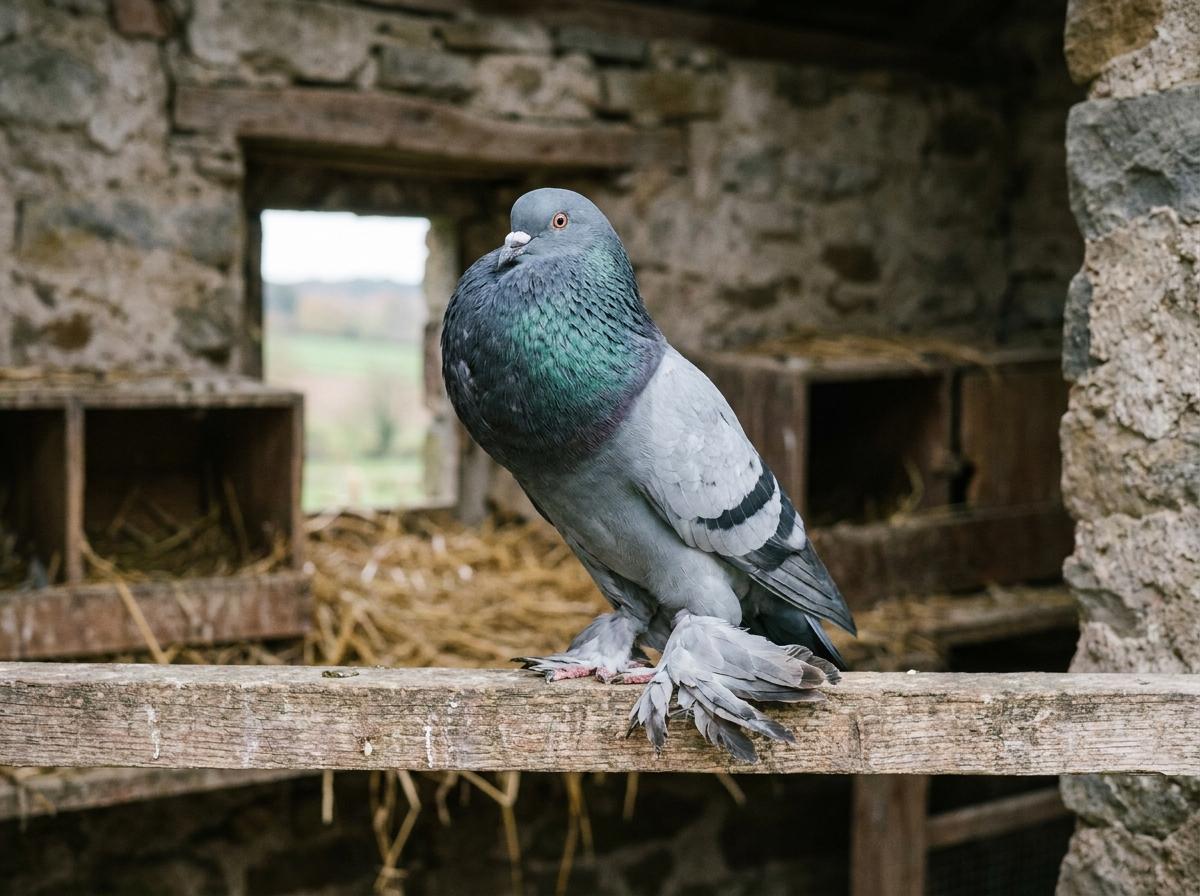
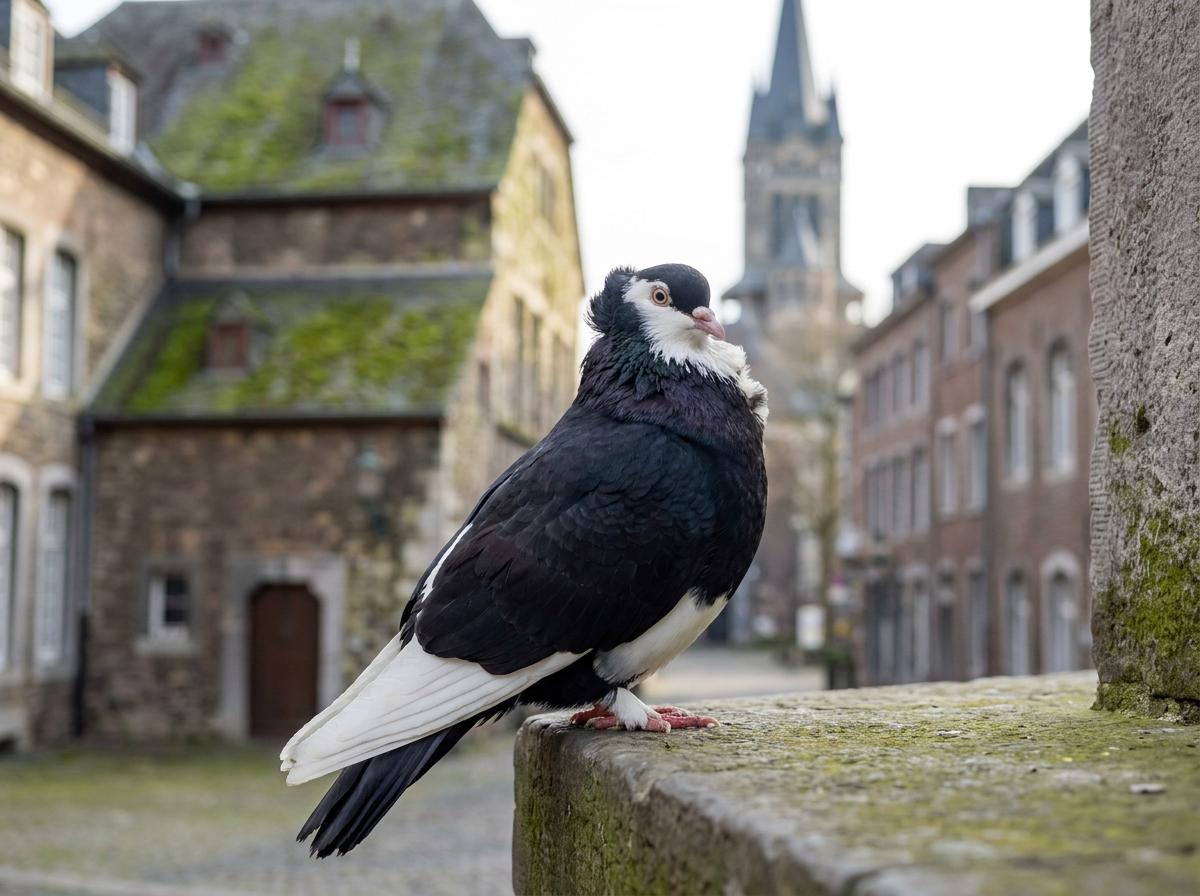
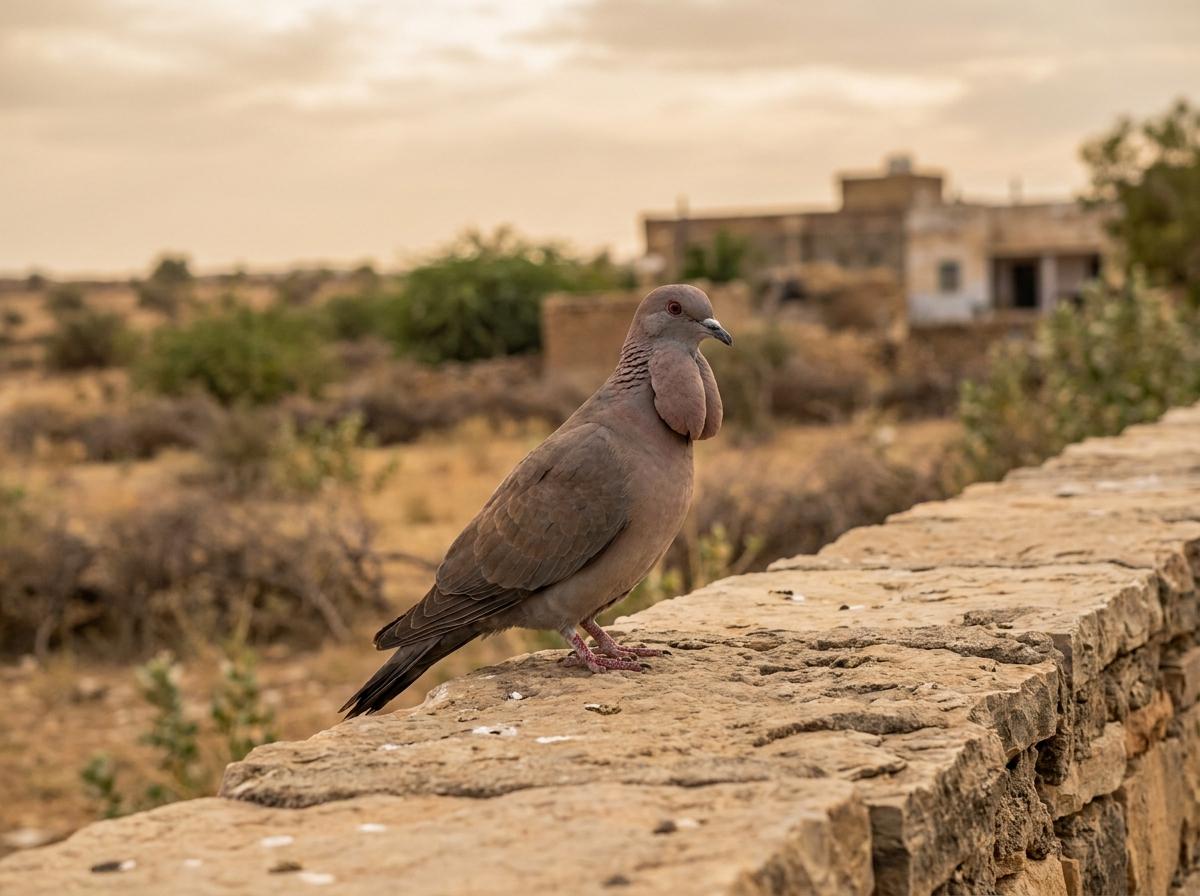
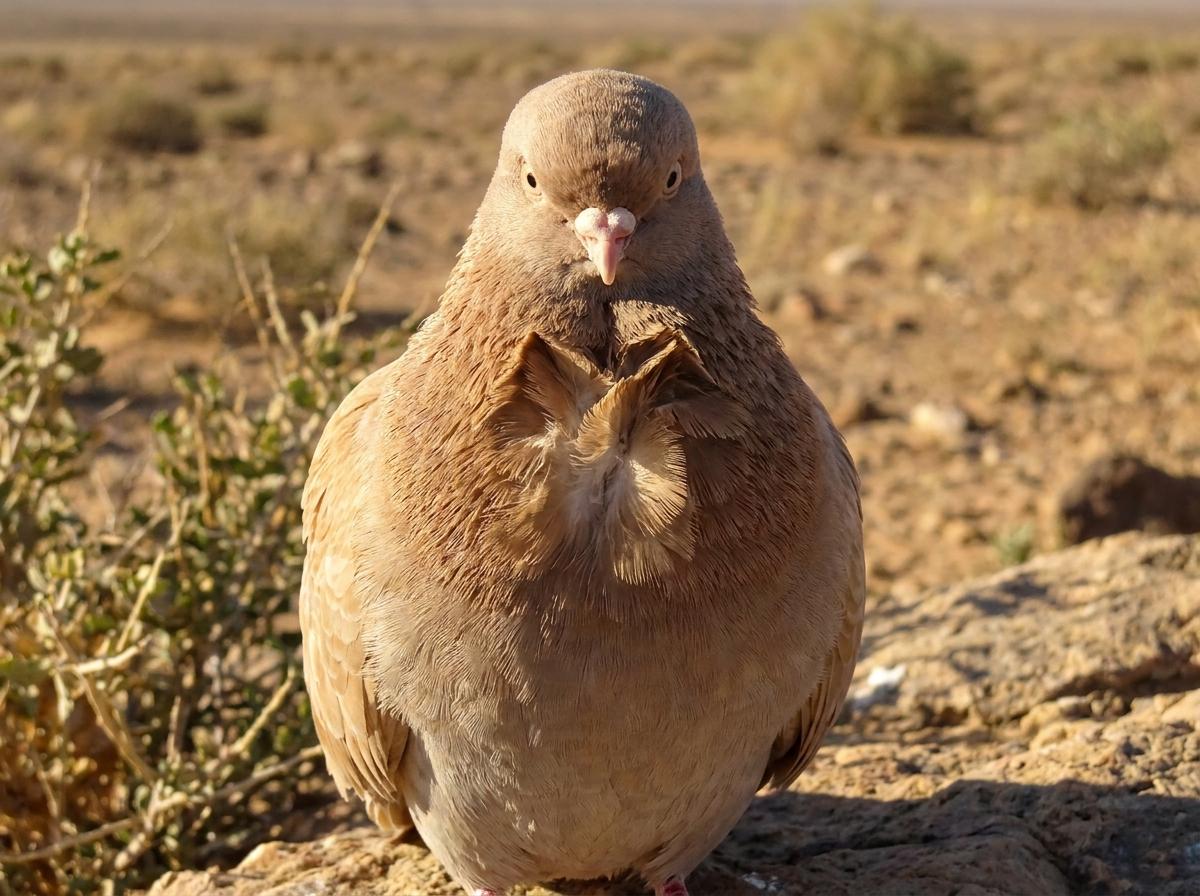
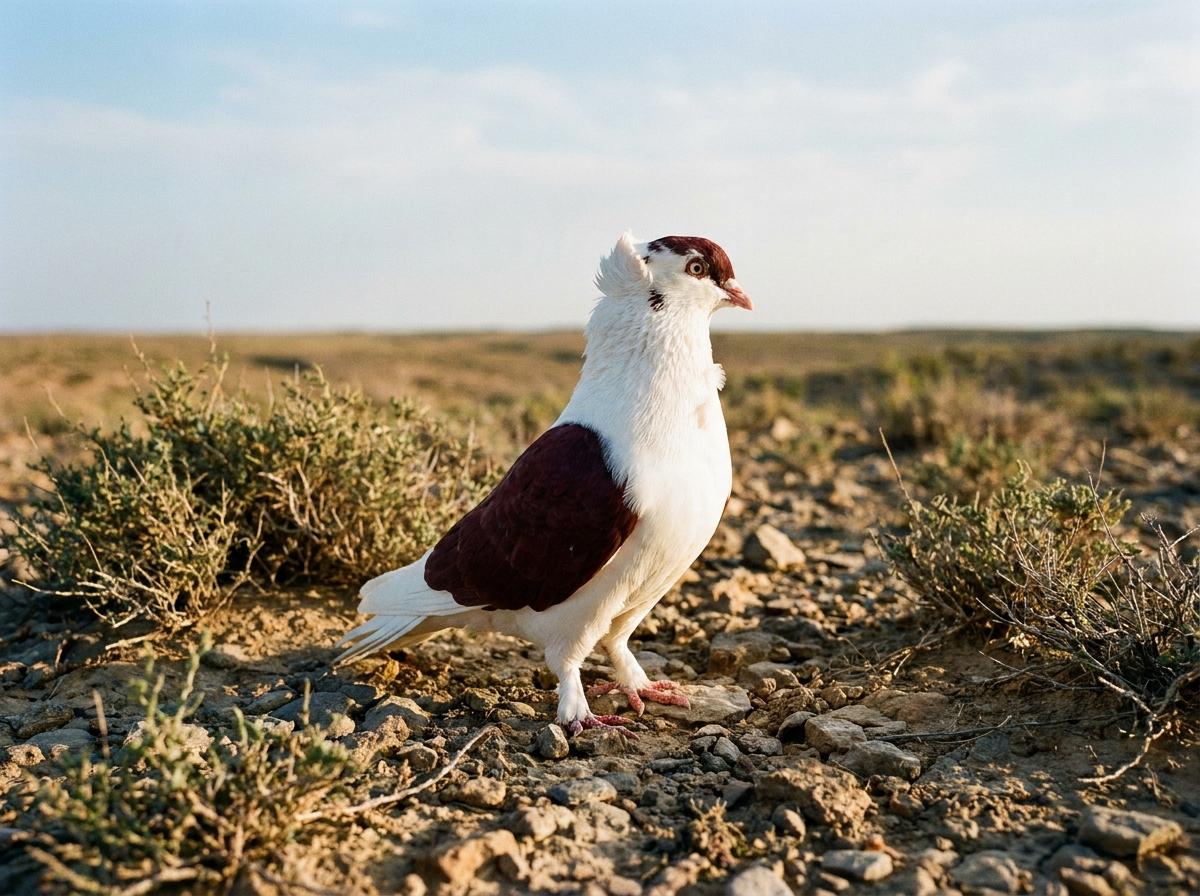
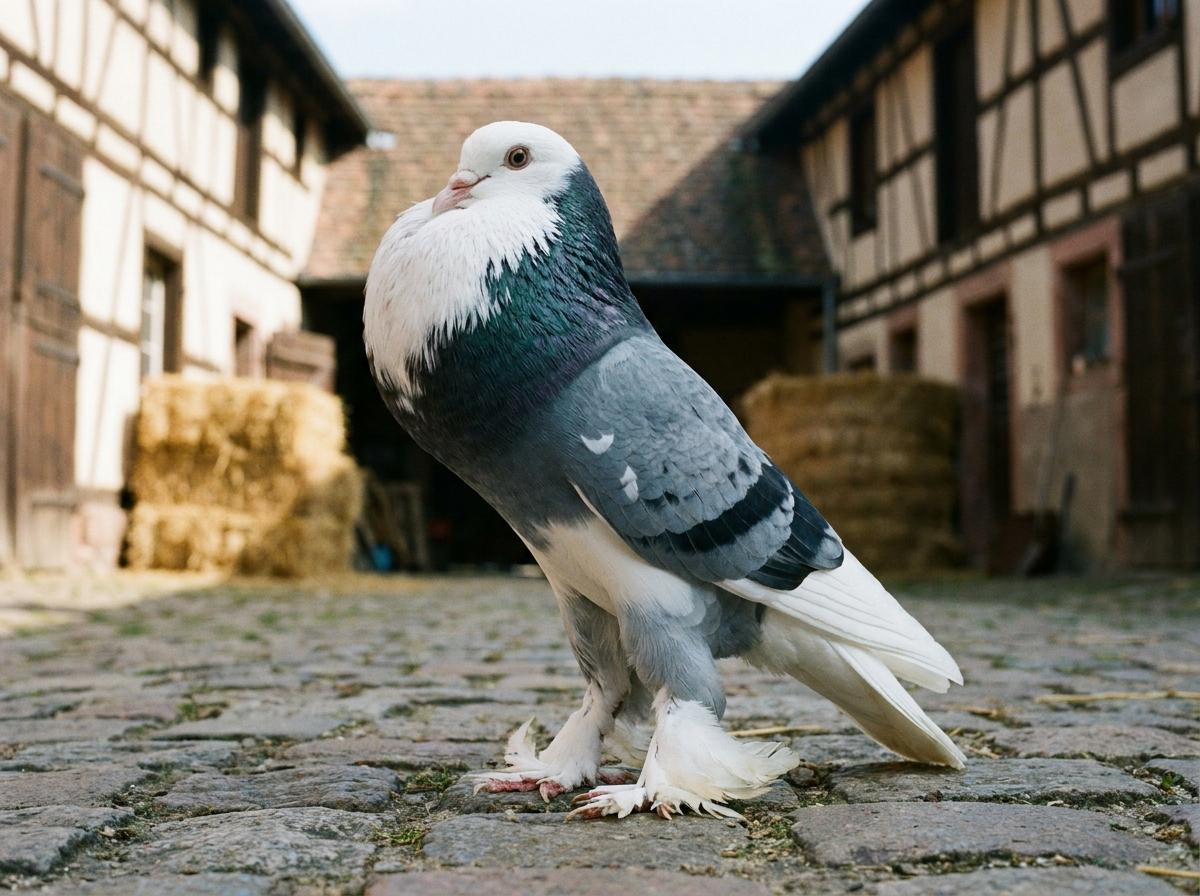
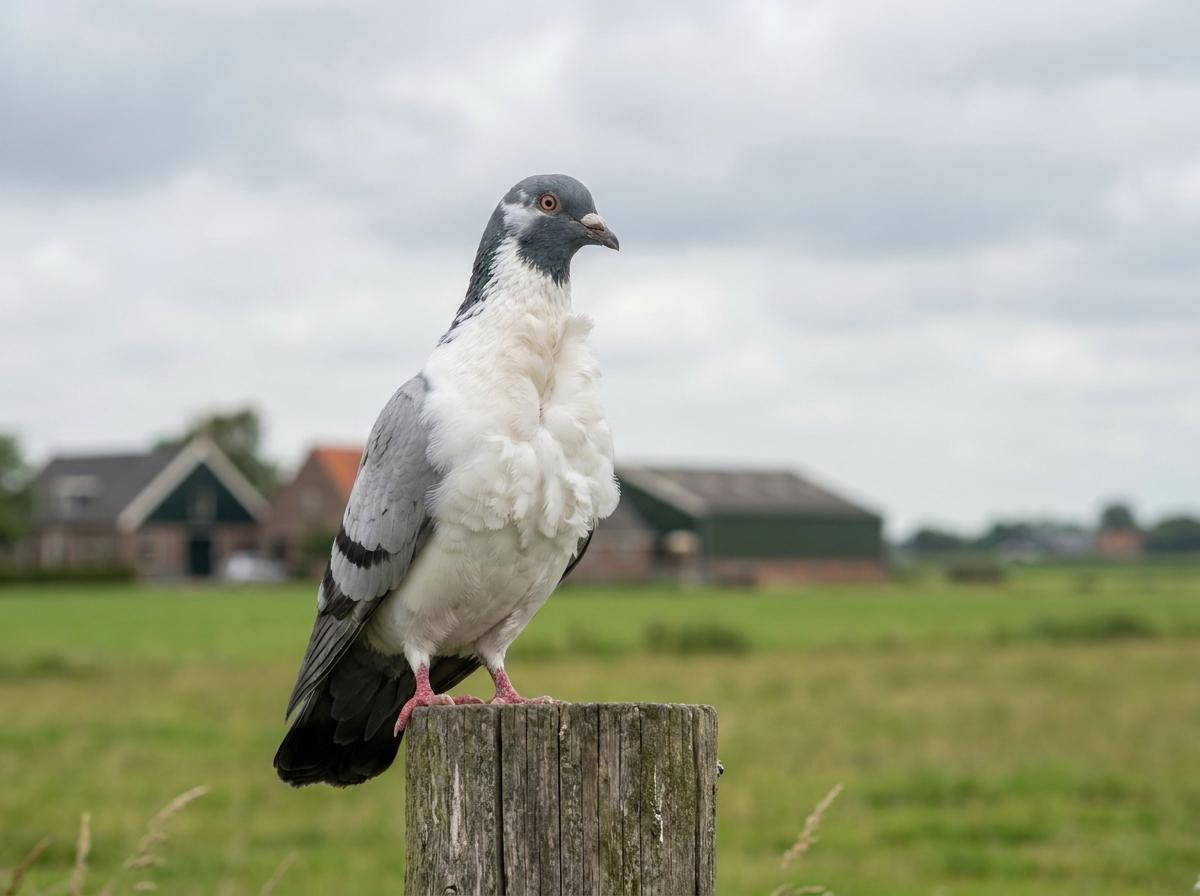
A Groninger Slenke is a domestic fancy pigeon, a selectively bred descendant of the same rock dove behind every city pigeon and racing homer. What sets it apart is posture. A relaxed Slenke sits upright with its chest lifted, and when it comes into its display “action” the very mobile neck rolls back so far that the head is carried down over the back. In the most extreme birds the head almost lies against the back and the broad tail drops toward the ground. Dutch fanciers around Nijmegen summed up the Groninger with a single comparison: it is built like a Belgian draft horse, short and broad.
The word Slenke points to this movement rather than to a place. The breed performs a ringbeat (ringslag), a jerky, wing-clapping display in the air and on the perch, and in the Dutch show world it is classed among the highfliers and tumblers. So the Groninger Slenke is not a utility bird. Nobody keeps it for meat, for eggs, or to race. It is a heritage show and display breed, and increasingly a bird that people keep simply to stop it from disappearing.
If you are comparing pigeon breeds more broadly, the Creatures pigeon species page is a good place to see where an ornamental breed like this one sits next to homers, tumblers, and the larger fancy breeds.
Where the breed comes from
The Slenke has been kept in the northern Netherlands for a very long time. Records place Slenke-type pigeons around the city and province of Groningen well before 1800, and one suggestion (unproven) traces their deep ancestry to cropper pigeons brought north during the Spanish Netherlands period. Take the oldest origin stories as tradition rather than documented fact, because the paper trail only firms up in the 1800s.
For most of its history the Slenke was a single breed. It gradually split into two regional varieties around the turn of the twentieth century, the shorter, rounder Groninger in the north and the longer, taller Gelderse from Gelderland further south. The two were shown side by side as early as an 1899 exhibition in Nijmegen, and a combined breeders’ club has carried the name of both varieties since that year. The Groninger was the first to be pinned down on paper: it has had a written breed standard since the 1920s (the breed historian Pieter Jansma dates the Groningen standard to 1922, and it has, in his words, “hardly altered” since). The Gelderse Slenke was only formally recognized as a separate breed in 2010.
The breed also went through a genuine near-death experience. By around 1970 the Groninger Slenke was in real trouble as a flying bird, and in 1971 a dedicated Groninger Slenken club was founded specifically to revive interest in its original flight behavior. That rescue is a recurring theme with this breed: it has survived on the attention of a small number of committed fanciers rather than on any commercial value.
How to recognize a Groninger Slenke
If you can only remember one thing, remember the neck. A handful of other features separate the Groninger from its Gelderse sibling and from ordinary pigeons.

The neck and the “grollen” action
The defining trait is a very supple neck that curves backward, held at an obtuse angle to the backline. In display, the neck shows a slight S-shape and a fine trembling motion that Dutch fanciers call “grollen.” A stiff, straight neck is a serious fault, described in the fancy as the bird having “a stick in the neck.” The Groninger carries its neck further back than the Gelderse, and breed writers note that the extreme, head-down-on-the-back carriage became more pronounced after the 1970s. When the neck rolls back, it pulls the whole body more upright, which is why a bird in action looks so different from one sitting quietly.
Eyes, head, and body
The eye is a real breed point and has been in the Groninger standard since 1922: a rather small pupil ringed by a white or pearl iris that grades to orange-red toward the outer rim. That white ring around the pupil is specifically called for in the Groninger standard, and it is one of the features that separates the Groninger from the Gelderse Slenke, whose eye tends to run more yellow to orange-red. The eye ceres, the fleshy rims around the eye, are fine and smooth rather than heavily wattled.
The body is the other half of the “Belgian horse” comparison. Compared with the Gelderse Slenke, the Groninger is markedly shorter in the back and tail, smaller overall, and lower in stance, with a strongly sloping backline. The overall impression is a compact, broad, powerful little pigeon rather than a long, elegant one. There is no reliable published weight or measured morphometric study for the breed, so treat any exact gram figure you see elsewhere with caution; the good sources describe the Groninger’s size in relative terms (a medium pigeon, and the smaller of the two Slenke varieties) rather than in numbers.
Colors and markings
The Slenke color palette is small and warm. The two foundation colors are an intense red and a yellow (the yellow being the dilute, or “dun,” of the red), carried in barred and chequered patterns. Dutch breed listings recognize a modest set of varieties built from these, including red, yellow, their paler “mealy” forms, and the chequers (in Dutch, the spar patterns), and a white also occurs. This is not a breed of endless color novelty. If a bird is presented to you as a Groninger Slenke in some flashy pattern well outside the red-and-yellow family, that is a reason to ask questions about its breeding.
The ringbeater flight, and why it faded
The Groninger Slenke earned its name in the air. As a ringbeating breed it flies with a distinctive repertoire: a “jump” driven by a sharp downward beat of the wings that lurches the body upward, a “pulling” style that holds height on angled wings, and a “sailing” glide with the wings carried high over the back. On the perch and in courtship the cock birds throw their wings in the clapping ringbeat display, which is where the whole group of breeds gets its name.

Here is the honest part. The breed still has real flying ability in its blood, but over the last century selection shifted toward the show pen, and it is now considered more of a display and exhibition pigeon than a working flier. That is exactly the trend the 1971 club set out to fight. If you specifically want a Slenke that flies its historic action rather than one bred only for a show-cage pose, that is worth raising with a breeder directly, because not every line is still selected for it.
Temperament and what they are like to keep
There is very little formal literature on Slenke behavior, so treat temperament notes as the observations of keepers rather than studied fact. In general, fancy pigeons kept in a well-managed loft become calm and tolerant of their keeper, and a heritage exhibition breed like this one is typically handled often, which tends to produce steady, manageable birds. As with any pigeon, cocks in breeding condition are more assertive and territorial than hens or out-of-season birds.
What a Groninger Slenke is not is a low-attention ornament. It is a rare breed maintained by hobbyists who show, keep records, and breed deliberately, and it rewards that kind of involvement rather than benign neglect.
Housing and care
Day-to-day, a Groninger Slenke needs what any pigeon needs: a dry, draft-free, predator-proof loft with clean perches, good ventilation without direct drafts, and enough room that birds are not crowded. Provide a balanced pigeon diet (a grain mix appropriate to pigeons plus grit and a source of minerals), clean water changed daily, and access to a bath, which pigeons use readily. Because this is an upright, display-necked breed, give it perches and a loft layout that let it hold its natural posture comfortably.
Two management points matter more for a rare exhibition breed than for a flock of ordinary pigeons. First, keep good individual records. Knowing each bird’s parentage, hatch date, pairings, and any health events is the difference between real preservation breeding and just keeping pigeons, and it is what lets you avoid pairing close relatives (more on that below). You can keep those notes for each bird with Creatures records, so a bird’s identity, lineage, and history stay in one place. Second, quarantine any new arrival before it meets your existing loft, since pigeons share a number of contagious diseases and a rare breed is not a flock you want to gamble with.
For anything medical, from suspected canker or coccidiosis to respiratory illness or a bird that is simply “off,” work with a veterinarian, ideally one comfortable with birds. Do not reach for medications or dosing from a forum. An avian vet who knows your loft is the right call for diagnosis and treatment.
Health and the small-population problem
The single most important health fact about the Groninger Slenke is not a disease. It is the size of the gene pool. When a breed is down to a very small breeding population, the practical risk is inbreeding, and keepers of the breed have flagged that Slenken can be somewhat less robust than more numerous pigeons, most likely a consequence of that narrow base. That does not make them delicate pets, but it does put a real responsibility on anyone breeding them.
In practice this means keeping the widest possible pedigree spread, cooperating with other breeders to swap bloodlines rather than closing your loft, and tracking relatedness carefully across generations. This is one place where careful record keeping stops being administrative and becomes the actual conservation work. A shared, durable record of who is related to whom is worth far more to this breed than any single prize bird.
How rare is it, and can you get one?
This is where expectations need managing. The Dutch rare-breeds foundation Stichting Zeldzame Huisdierrassen (SZH) lists the Groninger Slenke as “critical,” its highest-risk category, and the Dutch national gene-resources center reached the same conclusion in its 2017 assessment. SZH’s own breed profile puts the breeding population at only around sixty hens with a declining trend. You will find other headcounts floating around (older SZH signage cited roughly 200 birds, and some listings say about 80 females), which is exactly why the safe way to describe this breed is by its official status, critical, rather than by any single precise number. Whatever the exact figure this year, the summary is plain: there are very few of these birds, and they live almost entirely in and around the Netherlands.
For someone in the Netherlands or nearby, the route in is the fancy-pigeon world: the dedicated Groninger and Gelderse Slenke club, national and regional fancy-pigeon exhibitions, and other breeders. Expect a waiting list rather than a shelf of available birds, and expect to be asked about your loft and your intentions, because people keeping a critical breed care where their birds go.
For anyone outside Europe, and North America in particular, treat this as a bird you will rarely if ever see for sale. Live pigeons crossing borders face avian-health import rules (in the United States, live-bird imports run through USDA APHIS and are tied to disease-control requirements such as avian influenza and Newcastle disease controls), and there is no established pipeline of Groninger Slenke genetics into the Americas the way there is for popular fancy breeds. If you are set on the breed from outside its home range, the realistic plan is a long one: connect with European breeders, understand the import rules before you fall in love with a bird, and be patient.
You can watch for any pigeon listings on the Creatures pigeon marketplace, and because a breed this rare almost never appears on demand, a saved listing alert (below) is the practical way to be told if one ever does. To connect with people who keep pigeons, browse the Creatures breeder directory.
How the Groninger Slenke compares to other rare breeds
Rarity and heritage status are not unique to pigeons. If you are drawn to breeds that survive mainly on the care of dedicated keepers, two other Creatures pillar pages cover animals in a similar position: the Chimera axolotl, a striking split-colored form of an amphibian that is endangered in the wild, and the Juliana pig, a small, colorful pig breed maintained by a devoted community of owners. Different animals, same underlying story: a distinctive breed kept alive by people who value it for what it is rather than for what it produces.
Frequently asked questions
Why does a Groninger Slenke hold its head over its back?
It is the breed’s defining, selectively bred trait. A very supple neck curves backward at an obtuse angle to the body, and in display it rolls back so far that the head is carried low toward the back, with a fine trembling motion Dutch fanciers call “grollen.” A stiff, straight neck is considered a fault.
What is the difference between the Groninger Slenke and the Gelderse Slenke?
They descend from one older Slenke breed that split into two regional varieties around 1900. The Groninger (from Groningen in the north) is shorter, smaller, broader, and lower, with a more extreme backward neck. The Gelderse (from Gelderland) is longer in the back and tail and taller. The Groninger was standardized first, in the 1920s; the Gelderse was recognized as a separate breed in 2010.
What colors do Groninger Slenken come in?
The core colors are an intense red and a yellow (the dilute of red), carried in barred and chequered patterns, with paler “mealy” forms and a white also recognized. It is a deliberately small palette, not a rainbow breed.
Can Groninger Slenken still fly well?
The breed is a ringbeater with real flying ability in its history, including a jumping, wing-clapping display flight. Over the past century, though, selection moved toward exhibition, so many birds today are kept for show rather than flight. If you want a genuine flier, ask a breeder about their line specifically.
Are Groninger Slenken rare?
Yes. The Dutch rare-breeds foundation SZH classifies the breed as critical, with a breeding population in the low dozens of hens and a declining trend, and it is concentrated almost entirely in the Netherlands. Outside Europe it is very seldom available.
Can I buy a Groninger Slenke in the United States?
Realistically, almost never. There is no established supply of the breed in North America, and importing live pigeons involves USDA APHIS avian-health rules. Anyone determined to keep the breed from outside Europe should plan on working with European breeders and researching import requirements well in advance.
Do this next on Creatures
Whether you keep Slenken, want to help preserve a critical breed, or are just fascinated by that impossible neck, Creatures is the records, marketplace, and directory layer to do it in one place.
Add your bird. Keep Slenken already? Create a free animal profile in a few minutes. The walkthrough is in adding an animal to Creatures, and your animal’s profile page explains the tabs.
Track lineage and health. For a critical breed, records are the real conservation work. Add pairings, hatches, and health records. The record sheet opens for any visitor to look around, and you will need a free account to save what you enter. See adding a record and health and medical records for the full how-to.
Watch the marketplace. Browse pigeons on the marketplace, and because this breed almost never appears, set a free Groninger Slenke listing alert so we can tell you if one is posted. No account needed to start. New to alerts? Read saving searches and using your watchlist.
Find and connect with keepers. Search trusted breeders and clubs in the Creatures directory.
List your loft or club. Preserve the breed with others? Create an organization profile so fellow keepers can find you, and read getting listed in the breeder directory to be found by people searching for this breed.