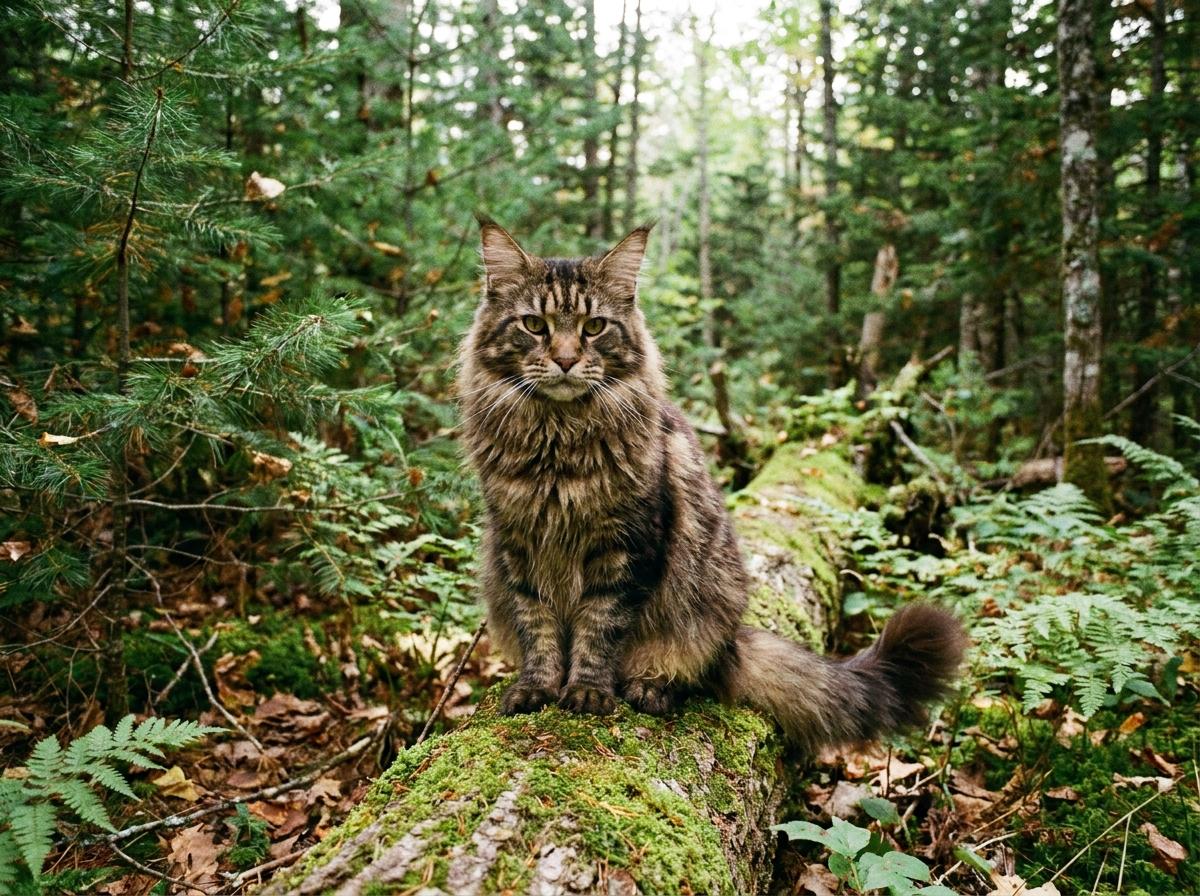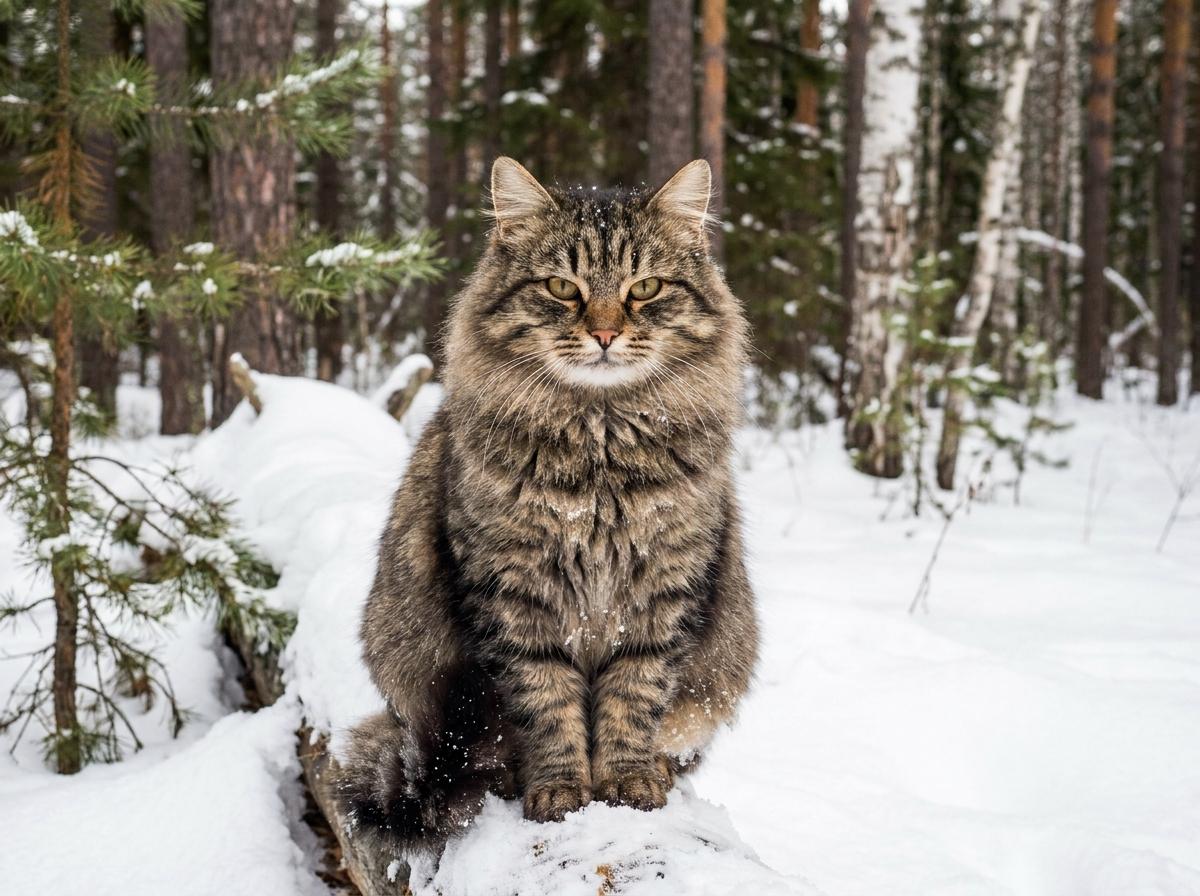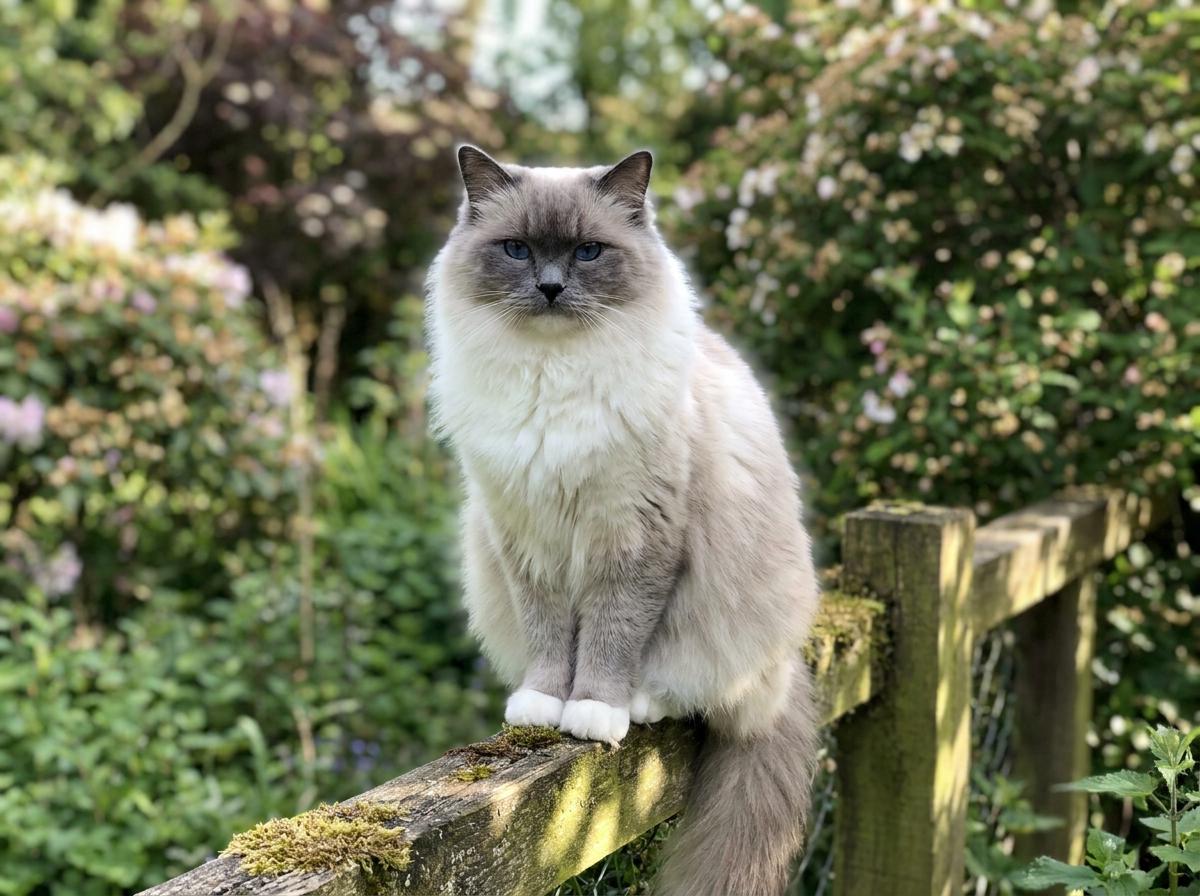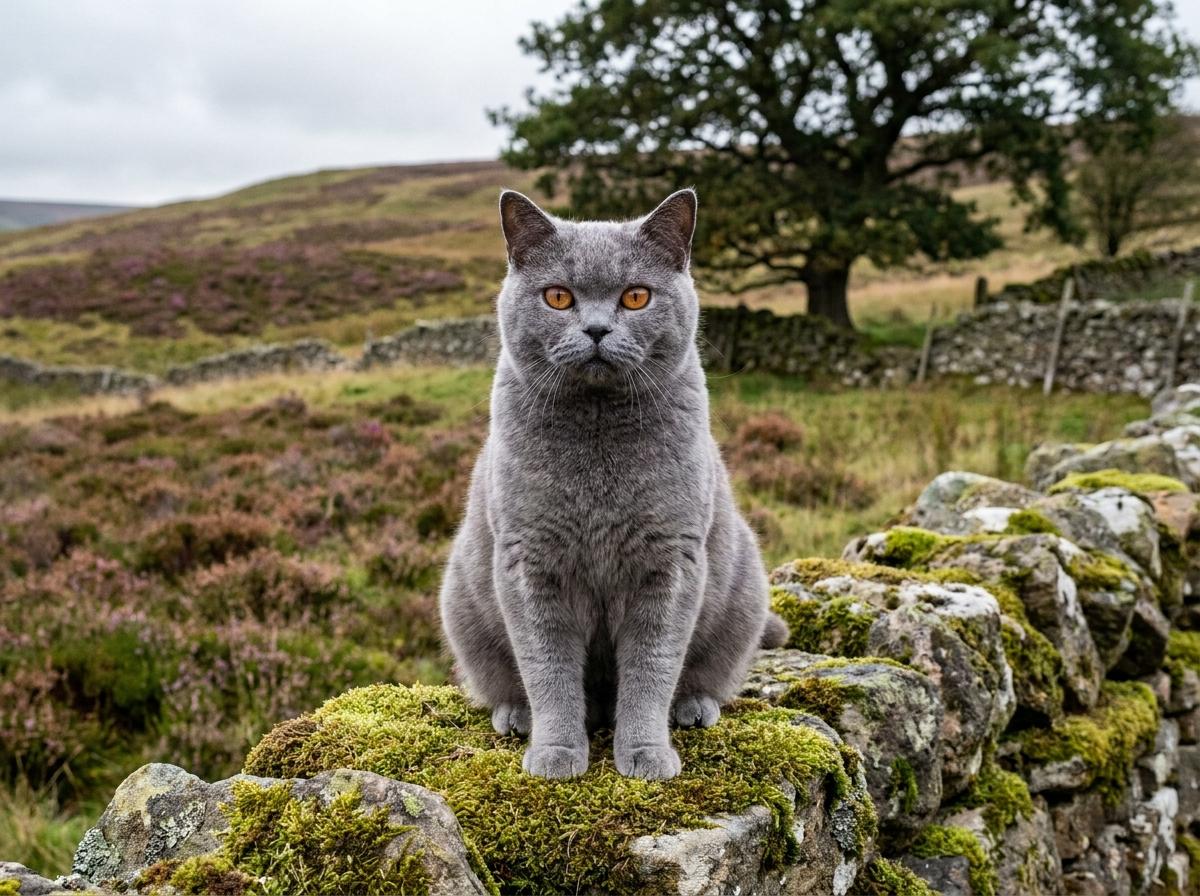
Selkirk Rex
Author: Elliott Garber, DVM · Published
The Selkirk Rex is a medium to large, heavy-boned cat with a soft, curly coat that comes from a single dominant gene, in both a shorthair and a longhair form. It traces back to one curly kitten born in Montana in 1986, and both major North American registries recognize it: the Cat Fanciers’ Association (CFA) gave it championship status in 2000, and The International Cat Association (TICA) shows it under a Selkirk Rex Breed Group standard last revised in May 2024. It is not hypoallergenic, and its curls are looser and plusher than the tight waves of the Cornish or Devon Rex.
Selkirk Rex kittens are rarely listed anywhere at once, and none are listed on Creatures today, so the most useful first step for a buyer is a free Selkirk Rex listing alert, which emails you when one is offered. If you already share your home with one, you can start its free profile and keep its registration, health checks and weights in one place. Other curly, round-faced and longhaired breeds are on the Creatures cat breed index for comparison.

| Origin | Spontaneous curly-coated kitten born in Montana in 1986 (CFA) |
|---|---|
| Coat gene | Dominant; research suggests incompletely dominant, so one copy gives the preferred loose curl |
| Coat lengths | Shorthair and longhair, both curly; curl strongest on the neck, belly and tail |
| Size | Medium to large with heavy boning; CFA gives 12 to 15 pounds for adult males, females smaller |
| Colors | Any genetically possible color or pattern in the CFA show standard, though CFA registration rules exclude cinnamon and fawn; all colors in TICA |
| Recognition | CFA registration 1992, championship 2000; TICA Breed Group standard dated May 1, 2024 |
| Health checks to ask about | PKD, HCM and blood type, per CFA’s breed profile |
| Allergies | Not hypoallergenic; no registry makes that claim |
Browse listings, public profiles, breeders, or add your animal.
Where the Selkirk Rex came from
The breed began with a single curly kitten. According to the CFA breed profile, a spontaneous mutation turned up in a litter born in Montana in 1986, and one curly-coated female from that litter, Miss DePesto, was adopted by the Persian breeder Jeri Newman. A 2012 genetic study gives a slightly different account, a curly female kitten born to a domestic shorthair rescued from a shelter in Sheridan, Montana, in 1987, and notes that it relies on breeder accounts (Filler and colleagues, 2012). Newman named the new breed after her stepfather’s family name, Selkirk, according to CFA.
The first breeding settled the genetics question quickly. When Miss DePesto was bred to a black Persian male, three of her six kittens were curly. A curly kitten from a cross to a straight-coated cat is what you expect from a dominant gene, where one copy is enough to show the trait. That separates the Selkirk Rex from the Cornish Rex, whose curly coat is a fixed recessive trait (Gandolfi and colleagues, 2013), and the Devon Rex, whose cats carry two copies of a recessive variant in the KRT71 gene (Gandolfi and colleagues, 2010). Those breeds need a copy from each parent; the Selkirk Rex needs only one.
Because the founder carried the curl in one copy, early breeders could widen the gene pool by crossing her descendants to established breeds. Persians, Exotics and British Shorthairs were the main partners, which is why a Selkirk Rex today looks more like a round, sturdy British or Persian-family cat with a curly coat than like a slender rex. A 2012 genetic study in the Journal of Heredity placed the Selkirk Rex within the Persian family of breeds, closest to the British Shorthair, Persian, Exotic Shorthair and Scottish Fold, and found high genetic diversity with a low average inbreeding coefficient (Filler and colleagues, 2012).
The curly coat, and why kittens look so different
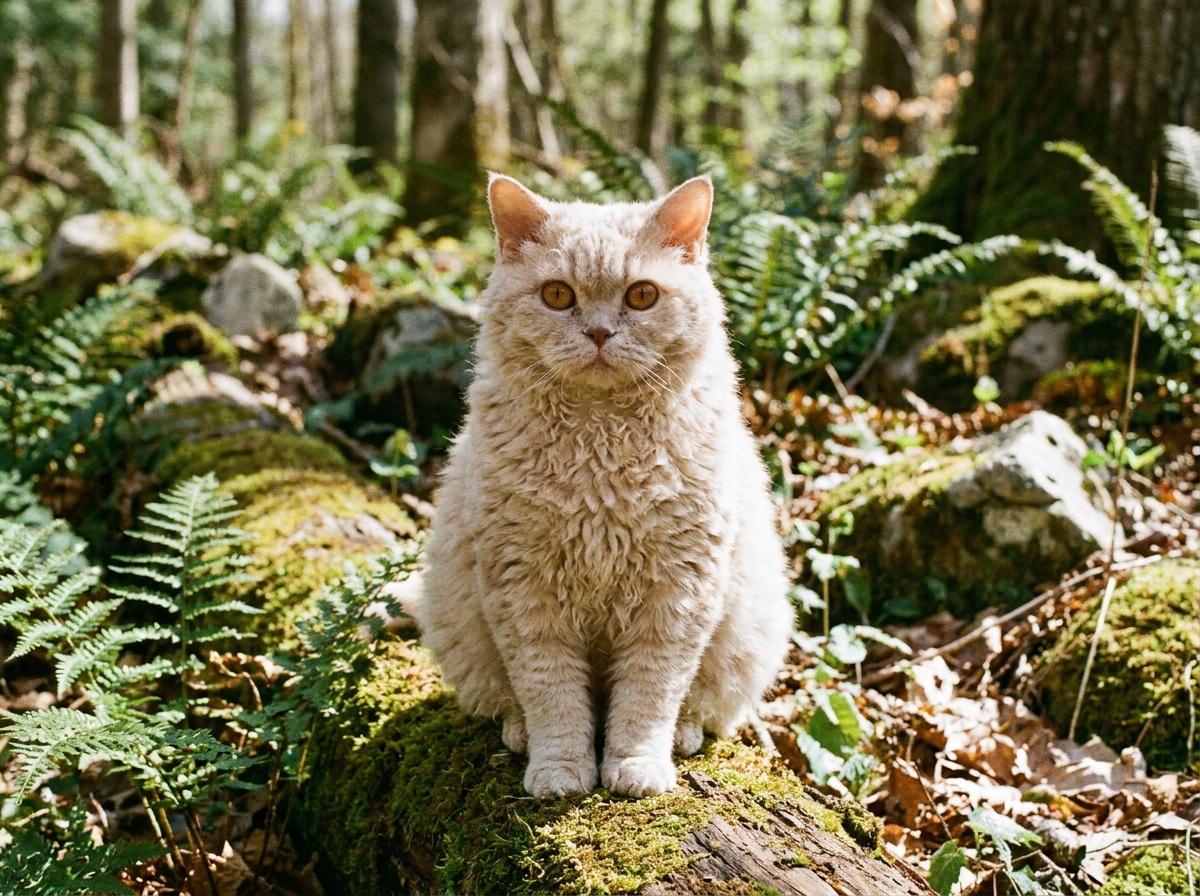
The coat is the breed. CFA’s Selkirk Rex show standard describes a dominant mutation that gives every hair, guard, down and awn, a gentle curl, and asks for a coat that is “random, unstructured,” in loose individual curls that look like clumps rather than an all-over wave. TICA’s Selkirk Rex Breed Group standard says the same in its own words: curly whiskers and eyebrows, coarse-textured guard hairs, but a coat that is dense and overall soft and plush.

Two coat lengths. Both registries recognize a shorthair and a longhair. In CFA’s standard the difference shows most on the tail and ruff: a shorthair’s tail hair is about 1 to 2 inches, the same as the body coat, with plush curls lying close around the tail, while a longhair’s tail curls are plumy and stand away from the tail and its longer ruff frames the face. TICA lists the shorthair as SR and the longhair as SRL, and asks that longhair curls stay loose and random rather than forming “dreadlocks.”
Where the curl shows most. Both standards note that curl is most obvious around the neck, on the tail and on the belly. The curl on the back and sides varies with climate, season and hormones, which TICA says is especially noticeable in cats that are not spayed or neutered.
The coat changes as a kitten grows. This is the part that surprises new owners. TICA’s standard says kittens are curly at birth, may lose their coat and begin to grow the adult curly coat at 8 to 10 months, and keep developing it until about 2 years old. CFA also tells judges to allow for less curl in kittens and young adults. A Selkirk Rex kitten that looks wavy, patchy or almost straight in its first year is usually behaving normally. A photo diary is a good way to watch it: add a dated photo and a weight to its profile every month or two and you can see the coat come back.
One copy or two. The 2012 study supported an autosomal, incompletely dominant pattern. Cats with one copy of the gene had the full, random curl breeders prefer. Cats thought to carry two copies had a tight, soft, wavy coat closer to a Cornish Rex, tended to lose their coat as kittens, and were described as slimmer with larger ears. The authors assigned two-copy status by appearance and breeder reports rather than a DNA test, so treat that as a likely pattern, not a rule (Filler and colleagues, 2012). In practice, when a curly cat with one copy is bred to a straight-coated outcross, each kitten has about a 50 percent chance of being curly. Most such litters are mixed, as Miss DePesto’s first litter was, though a small litter can come out all one type by chance. A parent with two copies passes the gene to every kitten: in the study, three matings with a presumed two-copy parent produced 10 curly kittens and no straight ones.
Colors. CFA’s standard accepts “any genetically possible color or combination of colors” and any eye color, though CFA’s registration rules say cinnamon and fawn are not accepted and may not appear in a cat’s background, and TICA’s standard accepts all colors, categories and divisions, with eye color independent of coat color except for blue or odd eyes outside pointed and white cats. If you are trying to name a kitten’s color for its registration, our cat coat colors guide explains the tabby, tortoiseshell, calico, point and dilute patterns in plain terms.
Body, head and size
Under the curls is a substantial cat. CFA’s standard calls for a medium to large cat with heavy boning that “gives the cat surprising weight,” a muscular, rectangular torso with a slight rise to the hindquarters, and large, round, firm feet. Females may be less massive than males but should not look dainty. TICA describes a semi-cobby, muscular torso with shoulders and hips the same width, and adds that both sexes may have definite jowls.

The head is round and full-cheeked, with large, round eyes set well apart and medium ears that fit the round outline of the head. Both registries want a visible muzzle and a nose stop, not a flat Persian face. CFA disqualifies an extreme nose break and a lack of visible muzzle, and TICA penalizes “excessive resemblance to Persian or Exotic type” and disqualifies a nose break and prominent facial skin folds. That matters for health as well as looks, because the breed’s Persian outcrosses brought in the flat-faced trait the standards now select against.
For weight, the CFA breed profile gives 12 to 15 pounds for adult males, with females somewhat smaller. TICA’s standard notes that the coat keeps developing until about two years of age. If you are following a kitten’s growth, our sister guide to the kitten growth chart explains how to use weights and body condition scoring for a breed that is still filling out at a year old.
Temperament: what living with one is like
CFA describes the Selkirk Rex as affectionate and attention-seeking, fond of a warm lap, intelligent and playful, more interactive than athletic, and generally not very vocal, though it will answer when spoken to. CFA also calls the breed good with children and other animals, with the reasonable caveat that children need to handle it gently. CFA’s show standard sums the personality up as “sweet and endearing,” and TICA’s standard asks for a “sweet and loving” temperament.
Those are breed tendencies, not guarantees. Temperament depends heavily on the individual and on how kittens are raised, so meet the kitten and, ideally, its mother. A breeder who handles kittens daily and can describe each one’s personality is giving you better information than any breed description.
Grooming the curls
The Selkirk Rex coat is easier to keep than it looks, as long as you work with the curl rather than against it. CFA’s profile says no special tools are needed, that gentle finger scratching fluffs the curls, and that the coat does not mat easily, though combing once or twice a month helps remove dead hair. Longhairs may benefit from a wide-toothed comb or hair pick to separate large clumps of curls.

A few practical points that follow from the standards and CFA’s advice:
- Comb and fluff rather than brush flat. CFA’s tools are a comb and your fingers, which work with the loose curl the standards ask for.
- Check the curliest spots. The standards put the strongest curl on the neck, belly and tail, so those are the places a longhair’s curls are most likely to clump.
- Expect seasonal change. Both standards say curl and density vary with climate, season and hormones. A sparse or patchy coat that does not fit that pattern deserves a vet visit, because the 2012 study notes occasional bald patches, seborrheic dermatitis and yeast overgrowth in the breed.
Keep a short note each time you groom or notice coat change. It sounds fussy, but a dated record of “sparse on the flanks in July, full again by October” is exactly what helps your veterinarian decide whether a thin coat is normal for that cat.
Health and screening
CFA’s breed profile says the Selkirk Rex is known for robust health with no breed-specific problems, but it also points out that, because British Shorthairs and Exotics were used to build the breed, breeders typically screen for polycystic kidney disease (PKD), hip dysplasia and hypertrophic cardiomyopathy (HCM). It adds that blood type incompatibility can occur, so most breeders blood-type cats before breeding.
The 2012 Journal of Heredity paper reaches a similar view. It found no direct harm from the curly coat itself, listed periodic bald patches, seborrheic dermatitis and excess yeast as problems seen in the breed, and recommended monitoring for HCM, PKD and problems linked to a flat face because of the breed’s Persian background (Filler and colleagues, 2012).
What that means for a buyer:
- Ask what the parents were tested for, and ask to see the written results with dates rather than a verbal “all clear.” Ask which test was used for each condition and who performed it.
- Ask about blood type if you plan to breed. CFA notes that blood type incompatibility can occur and that most breeders test before breeding.
- Look at the face. A visible muzzle and open nostrils are part of the standard, and they are also what you want for easy breathing.
Your veterinarian is the right person to interpret any result and to advise on screening for your own cat. Keep copies of every test with the cat’s records so they travel with it if it is ever rehomed or bred.
Registration, outcrosses and pedigrees
Outcross rules are where the two registries differ most, and they change over time, so check the current rules with the registry before planning a litter.
- CFA. CFA accepted the breed for registration in 1992, provisional status in 1998 and championship in 2000. CFA’s Selkirk Rex registration rules (revised February 2023) list Persian as an allowable outcross for kittens born before January 1, 2020, Exotic before January 1, 2025, and British Shorthair before January 1, 2035, after which only Selkirk Rex parents are allowed. So for kittens born now, British Shorthair is the only CFA outcross left in the rules document. The CFA breed profile page summarizes the British Shorthair cutoff as 2025, which conflicts with the rules document, so ask CFA directly if a planned breeding depends on that date.
- TICA. TICA’s 2024 standard lists the permissible outcrosses as the American Shorthair, the British breed group and the Persian breed group. It withholds all awards from a cat with no evidence of curl on the coat or whiskers.
An outcross litter is usually a mix of curly and straight kittens, unless the curly parent carries two copies, and how a straight-coated kitten is registered depends on the registry. That is one more reason to keep a clean written record of each litter: parents, registration numbers, coat type of each kitten and who went where. Our guide on how to check cat pedigree papers explains how to read CFA and TICA certificates and spot gaps. To turn those papers into a shareable family tree, the free cat pedigree chart maker builds a printable chart with no account needed.
If you plan to show, our guide to cat shows explains how TICA and CFA classes and titles work. Remember that the curl is still developing in a young Selkirk Rex, which both standards take into account when judging kittens.
Breeding Selkirk Rex: litters and records
Breeding any pedigree cat is a commitment to health testing, registry rules and finding good homes, and most Selkirk Rex owners will have their cat spayed or neutered. For pet cats, that is the default our guide to the cat in heat recommends, and it explains what a queen’s cycle looks like if you are deciding.
For breeders, the planning steps are the same as for any cat:
- Mating to due date. The free cat gestation calculator turns a mating date into a due date and planning window, and our guide to how long cats are pregnant covers the weeks in between.
- Litter size. Selkirk Rex litters are not separately documented in the sources we checked; the general picture for cats, and what changes it, is in our guide to how many kittens a cat can have.
- Kitten care. The kitten vaccination schedule explains the core vaccines and timing to discuss with your veterinarian before kittens go home.
On Creatures, a breeder can record the mating on the queen’s profile, record the birth to create a litter with each kitten linked to both parents, and then log each kitten’s weights and vaccinations. See recording a breeding and recording births and creating a litter.
Buying a Selkirk Rex kitten
Selkirk Rex breeders are few, so expect to wait and to travel or arrange transport. We have not found a reliable, dated price source for the breed, so we are not quoting one; prices vary with registration, show quality and region. Our general guide to how much a cat costs covers the first-year and ongoing costs that apply whatever you pay for the kitten.
Questions worth asking any breeder:
- Which registry are the parents and kittens registered with, and can you see the parents’ certificates?
- What health tests have the parents had (PKD, HCM screening, blood type), and when?
- Is the kitten shorthair or longhair, and curly or straight? A straight-coated kitten from a Selkirk litter can be a lovely pet, but it should be described honestly.
- What does the adult coat look like in this line? Ask to see the parents or older siblings, since a kitten’s coat can change a lot before age two.
- What vaccinations and vet checks will it have before it goes home, and what is the contract on spay or neuter and returns?
Two claims to treat with caution. “Hypoallergenic” is the first: neither CFA nor TICA describes the Selkirk Rex that way, and a curly coat does not remove the proteins people react to. If you have allergies, spend time with adult cats of the breed before committing; our Siberian cat guide looks at how allergy claims are made for another popular breed. The second is “rare color” pricing: CFA’s show standard accepts almost any color (registration rules exclude only cinnamon and fawn), so color alone is not a reason to pay more.
Frequently asked questions
Is the Selkirk Rex hypoallergenic?
No. Neither registry claims it, and a curly coat does not stop a cat producing allergens. People with cat allergies should meet adult Selkirk Rex cats before buying.
Are all Selkirk Rex kittens curly?
No. The curl gene is dominant, so one copy makes a curly kitten. When a curly cat with one copy is bred to a straight-coated outcross, each kitten has about a 50 percent chance of being curly, and two one-copy curly parents can still have straight kittens. A parent with two copies passes the gene to every kitten, so all of its kittens are curly. A cheek-swab DNA test from the UC Davis Veterinary Genetics Laboratory reports whether a cat has no copies, one or two. Even curly kittens may lose much of their curl in the first year, then grow the adult coat from about 8 to 10 months, according to TICA’s standard.
How big does a Selkirk Rex get?
CFA’s breed profile gives 12 to 15 pounds for adult males, with females somewhat smaller. Both standards describe a medium to large cat with heavy boning.
How is the Selkirk Rex different from the Cornish Rex and Devon Rex?
The Selkirk Rex curl is dominant, so one copy is enough, while the Cornish and Devon coats are recessive. The Selkirk Rex is also a heavier, rounder cat with a fuller, plusher coat, closer in build to a British Shorthair.
Do Selkirk Rex cats need a lot of grooming?
Less than most longhairs. CFA’s profile suggests combing once or twice a month and fluffing the curls with your fingers; no special tools are needed.
Which registries recognize the Selkirk Rex?
CFA recognizes it with championship status since 2000, and TICA has a current Selkirk Rex Breed Group standard dated May 1, 2024. Outcross rules differ between them.
Do this next on Creatures
Whether you are waiting for a kitten or already living with a curly cat, these are the most useful next steps. More breeds and guides are on the Creatures cat page.
Hear about Selkirk Rex kittens first. Set a free Selkirk Rex listing alert and Creatures emails you when one is listed. No account needed to start, just an email. See saving searches and using your watchlist.
Browse what is listed now. Check Selkirk Rex listings on the marketplace and look up trusted catteries in the Creatures breeder directory.
Start your cat’s profile. Add your Selkirk Rex with photos and its registration number; no account needed to start. The adding an animal guide walks through it.
Log weights, coat changes and vet visits. Add a record such as a weight, test result or vaccination. The form opens for visitors, and a free account saves it. See adding a record and health and medical records.
Breed Selkirk Rex? Create your cattery profile, no account needed to start, so kitten buyers can find you. Then read getting listed in the breeder directory and creating an organization.