


Lambkin
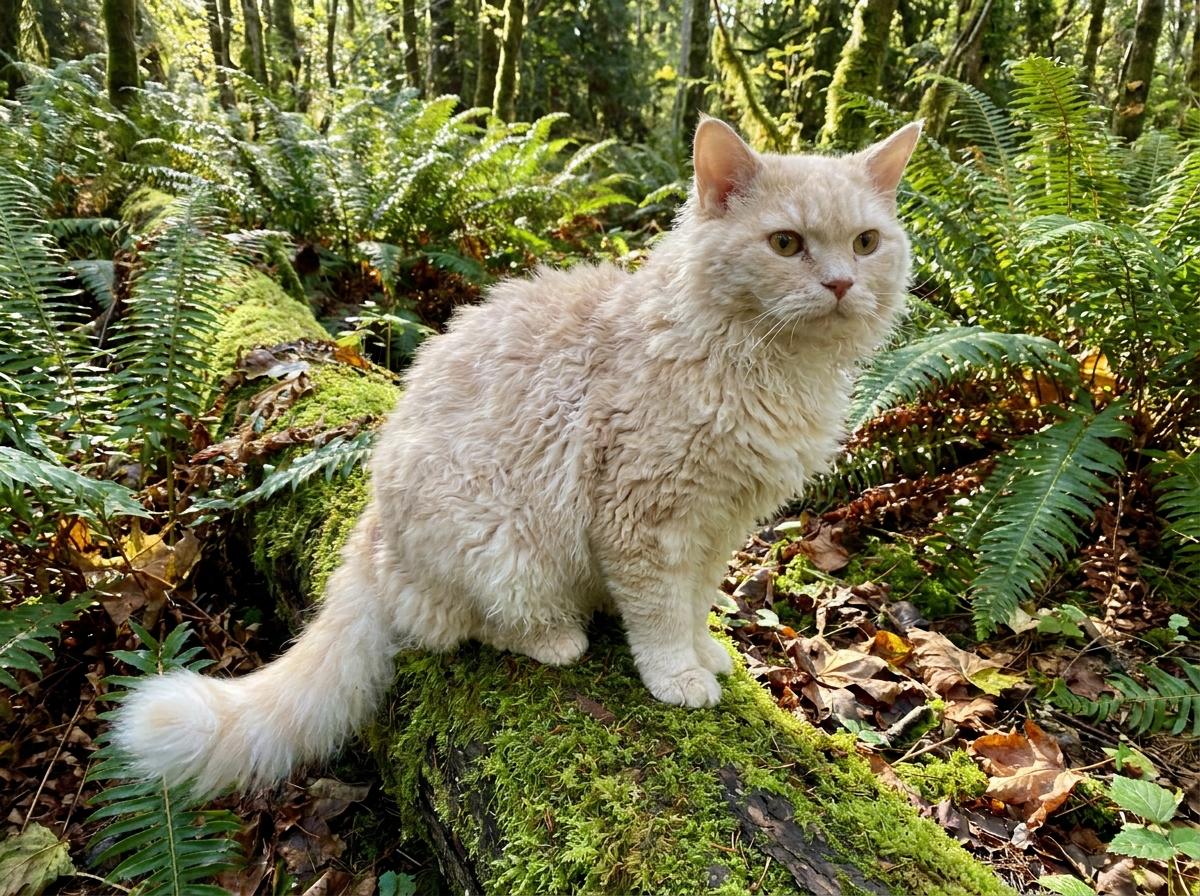
The Lambkin is a rare designer cat, a deliberate cross between the short-legged Munchkin and the curly-coated Selkirk Rex. The result is a small, sturdy cat with stubby legs and a soft, crimped coat that gives the breed its name, since kittens can look a little like tiny lambs. It is also one of the least common cats you will ever come across, it has no championship recognition from the major registries, and it carries real inherited health questions from both parent breeds. Here is where it came from, how to recognize one, what living with it is actually like, and what to check before you go looking for a kitten.
Browse listings, public profiles, breeders, or add your animal.
What is a Lambkin cat?
A Lambkin is a hybrid cat that combines two mutations from two established breeds. From the Munchkin it inherits short legs, the product of a form of dwarfism. From the Selkirk Rex it inherits a thick, curly coat. Put those together and you get a low-slung cat wearing a woolly, crinkled coat, which is where the name comes from. You will also see the breed written as Nanus Rex, from the Latin nanus for dwarf.
Be clear from the start about what the Lambkin is not: an ancient breed, a natural landrace, or a widely recognized show cat. It is a modern, intentionally bred cross, and a genuinely rare one. Because it sits at the intersection of two mutation-based breeds, the Munchkin and the Selkirk Rex are the real sources of almost everything you need to know about it, from coat behavior to health screening. Plenty of solid, breed-specific information simply does not exist yet, and this guide says so where that is the case.
If you are still comparing curly or short-legged cats, the broader Creatures cat species page is a good place to look at the parent breeds side by side, and we link to both of them below.
Where the Lambkin comes from
The Lambkin is usually credited to Terri Harris, an American breeder who set out to combine the Munchkin’s short legs with the Selkirk Rex’s curly coat. Sources differ on the exact year, with the late 1980s and the early 1990s both commonly cited, so the breed was established in the United States somewhere around that window rather than on a single documented date. Treat any precise founding year you see quoted elsewhere with a little caution.
Both parent breeds are themselves recent and both trace back to a single spontaneous mutation. The Munchkin’s short legs come from an autosomal dominant mutation that causes chondrodysplasia, a form of disproportionate dwarfism affecting the long bones of the legs. (This is distinct from osteochondrodysplasia, the separate cartilage-and-bone disorder tied to the Scottish Fold; the two are often confused but are not the same condition.) The Munchkin was accepted into TICA’s new breed development program in 1994 and granted full championship recognition in 2003, a process that drew criticism from the outset over health and mobility concerns. The Selkirk Rex began in 1987 when Montana breeder Jeri Newman bred a curly-coated feral kitten named Miss DePesto to a black Persian; three of the resulting six kittens were curly, which showed the curl was caused by a dominant gene, according to TICA’s breed history. Persians were used in the Selkirk Rex’s development, and that ancestry matters for health, as we cover below.
Two young mutation-defined breeds, crossed to bring their signature traits into one cat: that lineage, rather than any long working or regional history, is the whole story of where the Lambkin comes from.
What a Lambkin looks like
There is no official breed standard for the Lambkin because no major registry judges it, so appearance is best described through the parent traits it is bred to combine. A typical Lambkin shows several of the following.
- Short legs. This is the Munchkin contribution and the single most defining feature. The legs are noticeably shortened, and the front legs are often a little shorter than the hind legs, which can give the cat a slightly sloped, low-to-the-ground stance.
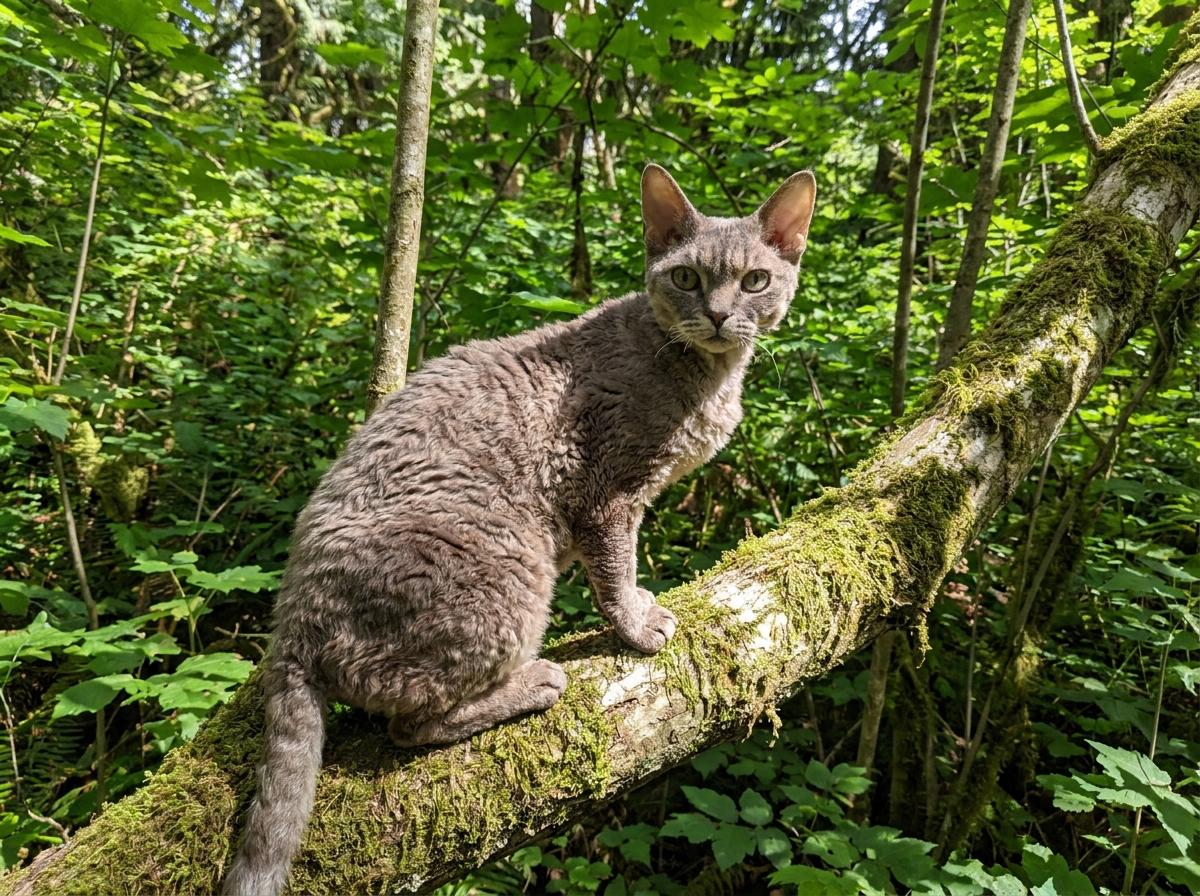
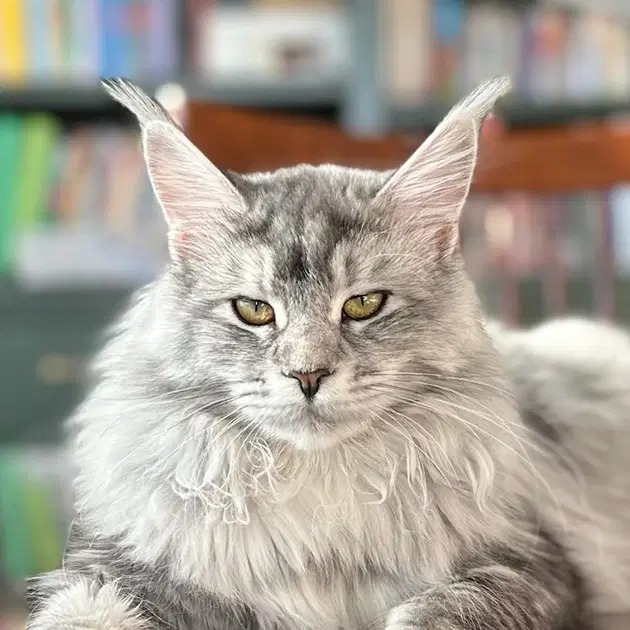
- A thick, curly coat. This is the Selkirk Rex contribution. The coat is dense and crimped rather than sleek, with a soft, plush, slightly woolly texture. It is the trait that earns the breed its lamb comparison.
- Curly, fragile whiskers. Rex-coated cats characteristically have whiskers that curl and are brittle enough to break off easily, and the Lambkin is no different. An occasional broken whisker is normal here, not a sign of illness.
- A rounded head and large, round eyes. The overall impression is soft and open-faced. Eye color varies, since there is no standard fixing it.
- A small to medium, sturdy body. The Lambkin is not a large cat. Its short legs sit under a compact, reasonably solid body.
On size, be skeptical of any confident weight range you see attributed specifically to the Lambkin. No formal standard defines one, and the breed is too rare to have reliable measured data. What can be said fairly is that the short-legged Munchkin frame it is built on is generally a small to medium cat, with vet-reviewed references putting typical Munchkins in the range of roughly 5 to 9 pounds. A Lambkin is likely to sit in a similar small to medium bracket, but that is an inference from the parent breed, not a measured breed figure.

The curly coat, and how it changes with age
The curly coat is not static through kittenhood, a behavior inherited from the Selkirk Rex. TICA’s Selkirk Rex description spells it out: kittens are curly at birth, may lose that curl and go through a straighter or patchy phase, then begin developing the adult curly coat at around 8 to 10 months of age, with the coat continuing to develop until roughly two years old.
In practical terms, that means a Lambkin kitten’s coat can look quite different at eight weeks, four months, and a year, and a temporarily straight-looking juvenile is not necessarily going to stay that way. If curl is the whole reason you want the breed, it is worth understanding this timeline before you judge a young kitten’s coat, and worth asking a breeder what the coats of related adult cats actually look like.
Temperament and household fit
Lambkins are consistently described by owners as affectionate, gentle, tolerant, and people-oriented cats that get along well with children and other pets. That reputation fits both parent breeds, since the Selkirk Rex in particular is known as a patient, easygoing lap cat. It is fair to pass that along, but with a clear caveat: because the Lambkin is so rare, this temperament picture comes from owner and breeder observation rather than any formal behavioral study, and individual personality always varies with genetics, early socialization, and how the cat is raised and handled.
The short legs shape day-to-day behavior more than personality does. Munchkin-type cats are active, playful, and famously fast in a low, scampering way, and many manage stairs and moderate jumps perfectly well. They just do not have the vertical reach of a long-legged cat, so lower perches, ramps, or steps up to favorite spots suit them better than a home that assumes a cat can launch itself to the top of a tall bookshelf. This is a cat that appreciates its world being a little more horizontal.

Health and responsible breeding
This is the section that matters most, and the one where the honest answer is more useful than the cheerful one. Because the breed combines two mutation-based breeds, it can inherit the health concerns of both, and those concerns are why many cat authorities decline to recognize breeds like this at all. None of what follows is a reason to panic about an individual cat, but all of it is worth understanding before you buy, and every specific medical decision belongs with a veterinarian who can examine the animal.
From the Munchkin side: the effects of dwarfism. The short legs come from chondrodysplasia, and the breed is reported to have an increased incidence of a few skeletal issues. These include lordosis, an excessive inward curve of the spine, and pectus excavatum, a hollowed or sunken chest where the breastbone and ribs are malformed; in more severe cases pectus excavatum can press on the heart and lungs and cause real problems. Shortened limbs can also raise the long-term risk of osteoarthritis, because they change how the cat moves and loads its joints. The dwarfism gene is homozygous lethal: kittens that inherit two copies are not viable and are lost early in pregnancy. A short-leg to short-leg mating is therefore expected to lose about 25 percent of the litter to that homozygous outcome, which is why published breeding policies discourage continuous Munchkin-to-Munchkin breeding and why breeding short-leg to normal-leg is the recommended way to avoid it. Such matings do occur, but the recommended practice, and the one that sidesteps the lethal outcome, is short-leg to normal-leg.
From the Selkirk Rex side: inherited conditions from Persian ancestry. Because Persians were used to build the Selkirk Rex, some lines can carry polycystic kidney disease (PKD), caused by an autosomal dominant mutation in which a single copy causes the disease, along with the hypertrophic cardiomyopathy (HCM) risk seen in several pedigree cats. The important, hopeful part here is that PKD has a well-established DNA test, so responsible breeders can and do screen breeding cats to keep it out of their lines.
The welfare debate you should know about. Breeds founded on shortened limbs are controversial. The Governing Council of the Cat Fancy (GCCF) in the United Kingdom states plainly that it will not grant recognition to any new breed based on a harmful genetic mutation or where a structural anomaly such as shortened limbs is the breed’s key feature, and Munchkin-type breeding is restricted or banned in some countries. You do not have to resolve that debate to be a good owner, but you should go in aware that it exists and that reasonable, welfare-minded people disagree about breeding cats this way.
All of this adds up to one practical point: the breeder matters enormously. Ask what health testing the parents have had, ask specifically about PKD DNA testing on the Selkirk Rex side, ask to see or hear about the health of related adult cats, and be wary of anyone selling short-legged kittens who cannot or will not talk about any of it. Keeping clear health records from day one also helps your own veterinarian spot changes early, and Creatures gives you a place to do that (more on that at the end).
Grooming and everyday care
The curly coat needs a bit more thought than a standard shorthair, but it is not high-maintenance in the way a long-haired Persian is. Gentle, regular brushing, roughly weekly, helps distribute the natural oils and keep the curl looking its best without stripping it, and it removes loose hair before it mats. Over-brushing or aggressive combing can actually work against a rex coat by pulling out the curl, so the goal is light and regular rather than hard and frequent. Remember those brittle whiskers too, and handle the face gently.
Otherwise a Lambkin needs the same core care as any cat, with a couple of short-legged adjustments. Keep it at a lean, healthy weight, since extra pounds are harder on the joints of a cat already carrying an unusual skeletal build. Give it litter boxes with a low entry side so it can get in and out easily, and low perches and steps so it can reach the places it wants to be without risky jumps. Stay on top of routine preventative care, dental care, parasite control, and vaccinations on your veterinarian’s schedule, and given the inherited-condition picture above, do not skip regular check-ups. Recurring reminders for grooming, weigh-ins, and vet visits are an easy way to keep a curly-coated, short-legged cat on track.
Recognition, rarity, and what “Lambkin” really means
If you want a cat with papers from one of the big registries, the Lambkin is not it. It has never been accepted for championship status by the Cat Fanciers’ Association (CFA) or by TICA. Over the years it has been recorded only by small designer-cat or dwarf-cat registries, several of which are no longer operating, so registry documentation for the breed is thin and inconsistent. That is not a knock on any individual cat, but it does mean “Lambkin” is a loosely applied label rather than a tightly governed pedigree. When someone offers you a Lambkin, the useful questions are about the actual parents (a Munchkin and a Selkirk Rex, and what those cats’ health testing looked like), not about a championship title that does not exist for this breed.
Rarity compounds this. The Lambkin is frequently described as one of the rarest cat breeds, and because so few exist, there is very little reliable breed-specific data on almost anything, a proper lifespan figure included. Where you see a lifespan quoted, it is generally the standard healthy domestic-cat expectation of about 12 to 15 years borrowed from the parent breeds, not a survival figure measured on Lambkins. We would rather tell you that gap exists than invent a number to fill it.
Cost and finding one
Because the breed is so uncommon, there is no dependable published price for a Lambkin, and we are not going to invent one. What is realistic to expect is a very small pool of breeders, long waits, and a premium price that reflects scarcity rather than any registry prestige. The practical challenge is less about affording a Lambkin and more about finding a genuinely well-bred one at all.
That makes the sourcing questions more important than the sticker price. Look for a breeder who is transparent about the parent breeds, screens the Selkirk Rex side for PKD, is candid about the welfare debate around short-legged cats, and lets you meet or at least see the parents and their living conditions. If short legs are being sold to you as pure novelty with no mention of health, that is a signal to keep looking. It can help to compare the parent breeds directly, so it is worth reading up on the Munchkin and the Selkirk Rex before you commit, since a Lambkin is essentially the two of them combined.
You can browse any current cat listings on the Creatures marketplace and look for trusted breeders in the Creatures directory. Given how rarely this breed appears, a saved listing alert (below) is usually the most practical way to hear about one when it does.
Frequently asked questions
What is a Lambkin cat a mix of?
A Lambkin is a cross between a Munchkin, which contributes the short legs, and a Selkirk Rex, which contributes the thick, curly coat. It is also sometimes called the Nanus Rex.
Are Lambkin cats recognized by any cat registry?
Not by the major ones. Neither the CFA nor TICA recognizes the Lambkin for championship status. It has only been recorded by small designer or dwarf-cat registries, some of which no longer exist, so pedigree documentation is limited.
Why does my Lambkin kitten’s coat look straight?
The curly coat is inherited from the Selkirk Rex, whose kittens are curly at birth, often go through a straighter phase, and then develop their adult curly coat starting around 8 to 10 months, with the coat still filling in up to about two years. A temporarily straight juvenile coat is normal.
Are Lambkin cats healthy?
They can inherit health concerns from both parent breeds, including skeletal issues linked to Munchkin dwarfism (such as lordosis, pectus excavatum, and a higher long-term arthritis risk) and conditions from the Selkirk Rex’s Persian ancestry (such as polycystic kidney disease, for which a DNA test exists). Buying from a breeder who health-tests and keeping up with veterinary care are the biggest things in your control.
How long do Lambkin cats live?
There is no breed-specific lifespan data because the breed is so rare. The figure usually quoted, about 12 to 15 years, is the general healthy domestic-cat range carried over from the parent breeds rather than a measured Lambkin number.
Can Lambkins jump and climb like other cats?
They are active and playful, but their short legs limit vertical reach compared with a long-legged cat. Lower perches, ramps, steps, and a low-sided litter box make life easier for them.
Is it ethical to breed short-legged cats?
It is genuinely debated. Some cat authorities, including the GCCF, decline to recognize breeds founded on shortened limbs, and such breeding is restricted in some places. Anyone considering a Lambkin should understand that debate and prioritize breeders who are open about health and welfare.
Do this next on Creatures
Whether you are researching the Lambkin, hoping to find one, or already sharing your home with a curly little short-legged cat, Creatures is the records, marketplace, and directory layer to do it in one place.
Compare the parent breeds. A Lambkin is a Munchkin and a Selkirk Rex combined, so read up on the Munchkin and the Selkirk Rex, and browse the wider cat species page to see how they stack up.
Find a cat. Browse Lambkin listings on the marketplace and search trusted breeders in the Creatures directory. New to the marketplace? See how a profile page and its tabs work.
Get alerted. The Lambkin is genuinely rare, so set a free Lambkin listing alert and we will tell you when one is posted. No account needed to start.
Add your cat. Already have a Lambkin? Create a free animal profile in a few minutes. The walkthrough is in adding an animal to Creatures.
Track health, and never miss care. Given the inherited-condition picture, records matter. Start a health record (the sheet opens for any visitor to look around, and a free account saves what you enter), read adding a record and health and medical records, and set grooming and vet reminders and upcoming care so a curly, short-legged cat stays on schedule.
Breed or run a cattery? List your cattery in the Creatures directory so people searching for this hard-to-find breed can reach you.
Curious about the rest of this batch of unusual breeds? We have also profiled the Empordanesa chicken and the Pakistani Highflyer pigeon.