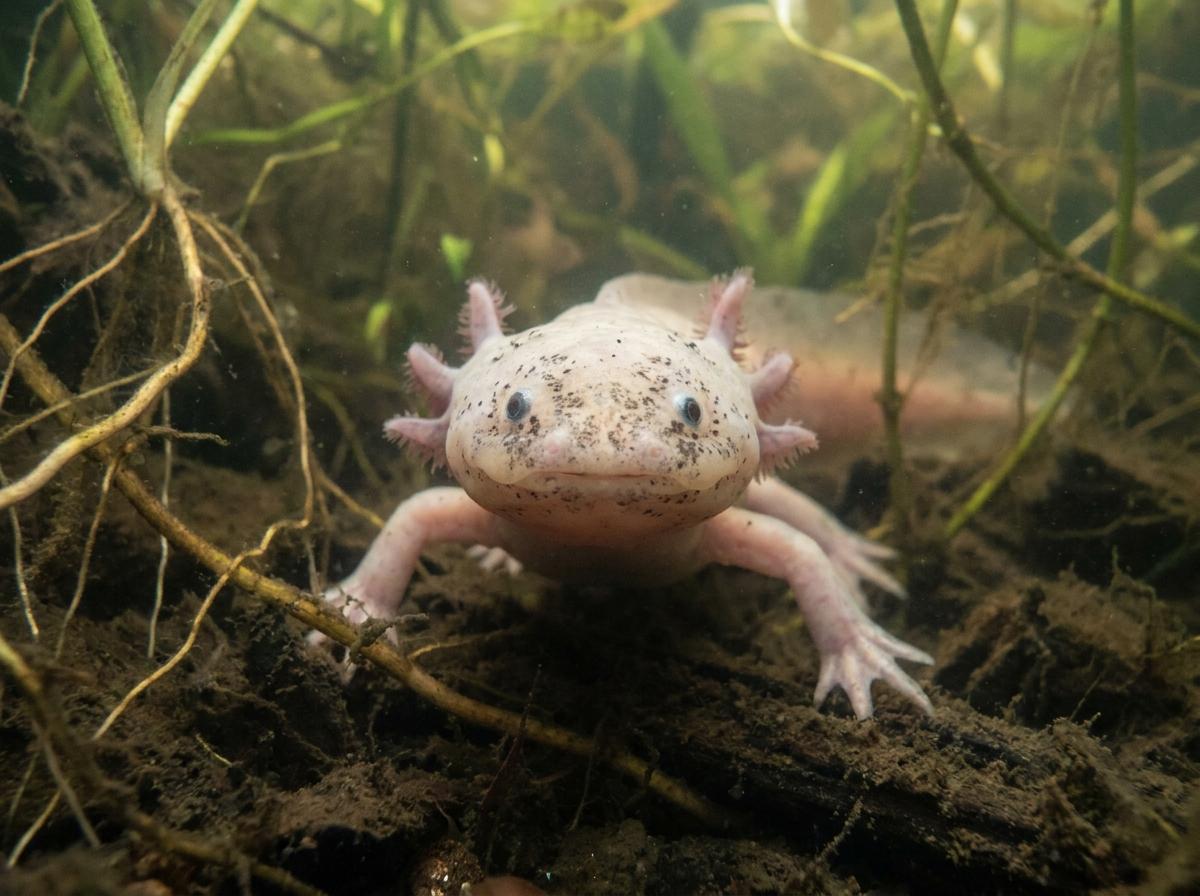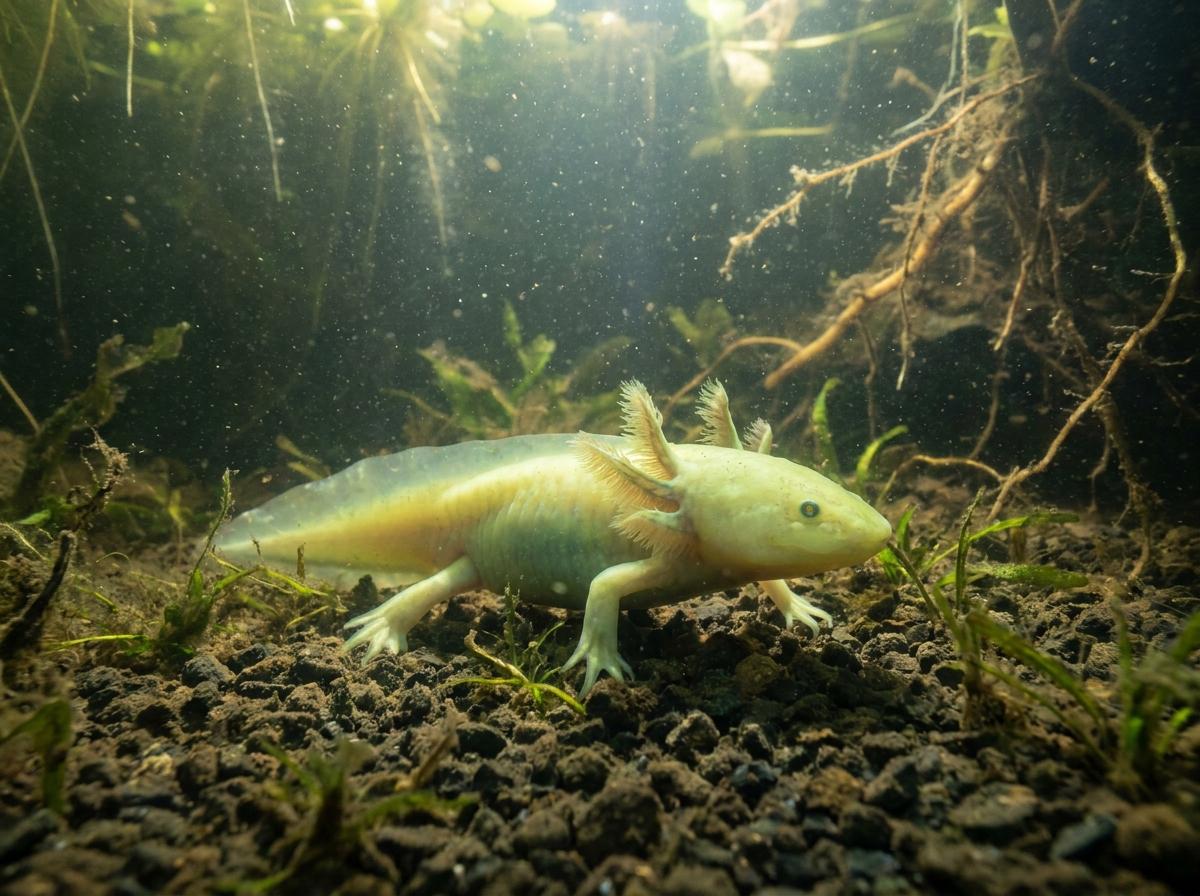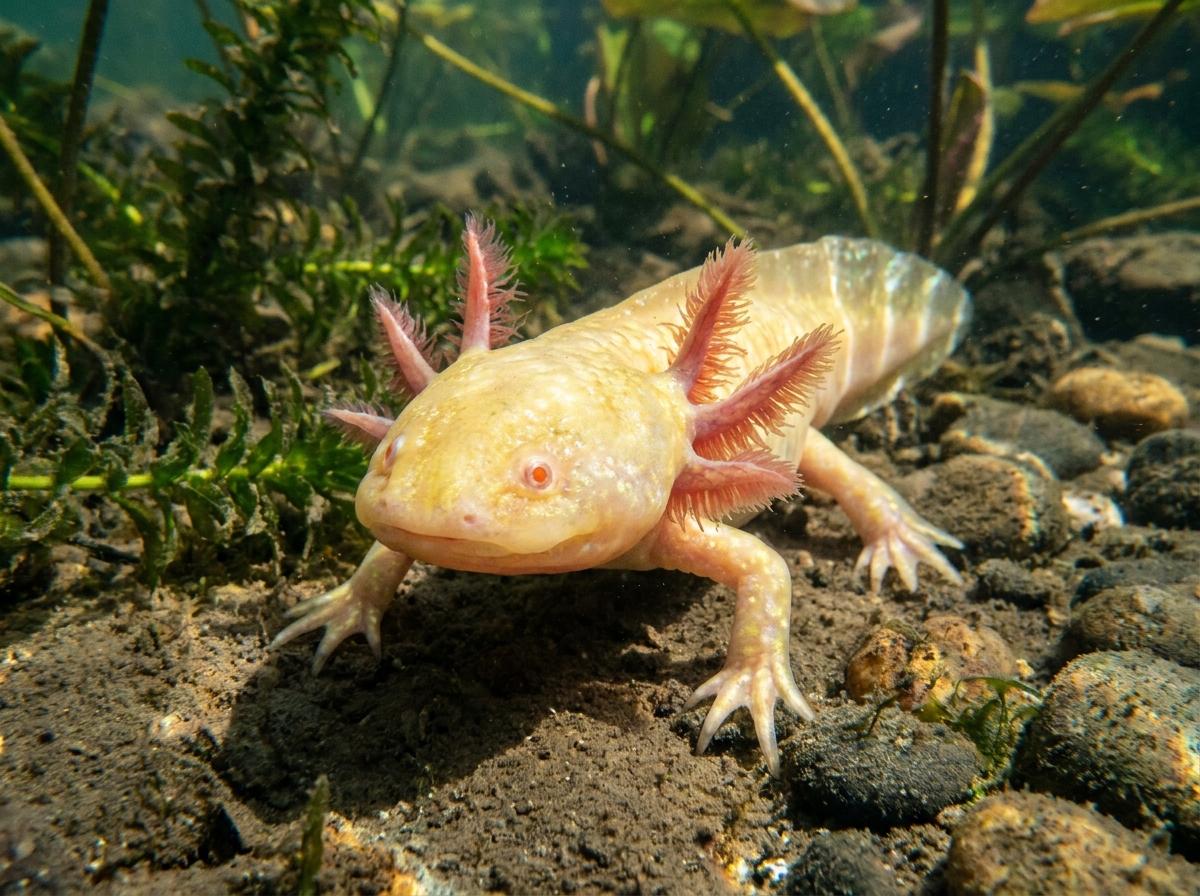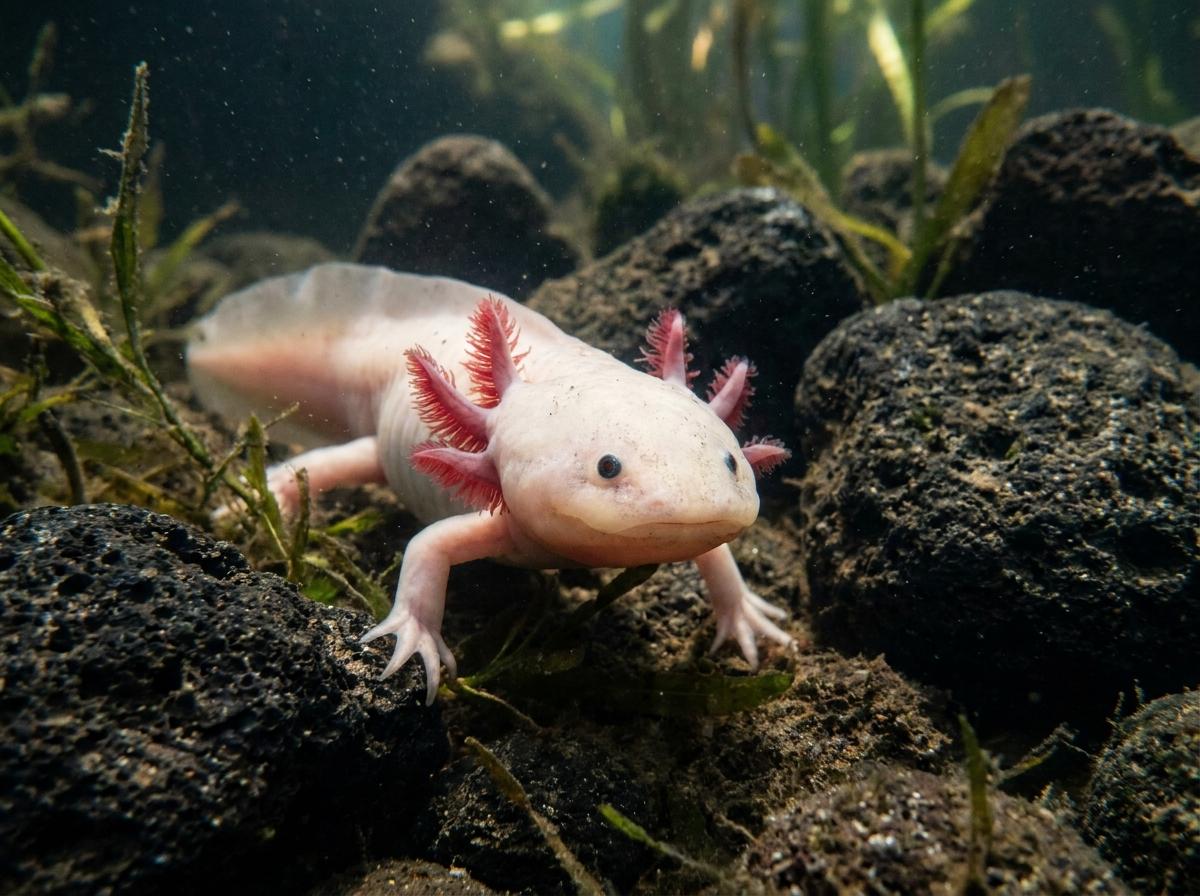
Piebald
Morph
Author: Elliott Garber, DVM · Published
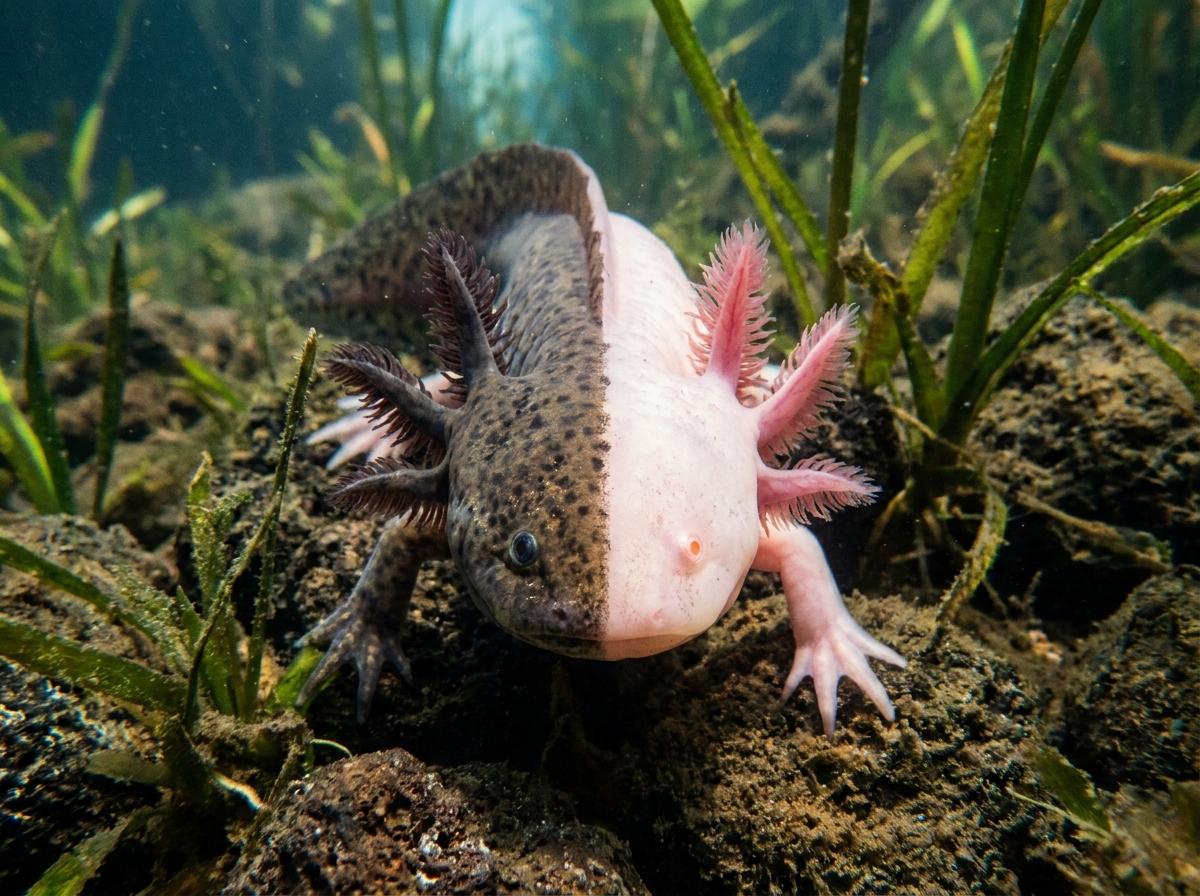
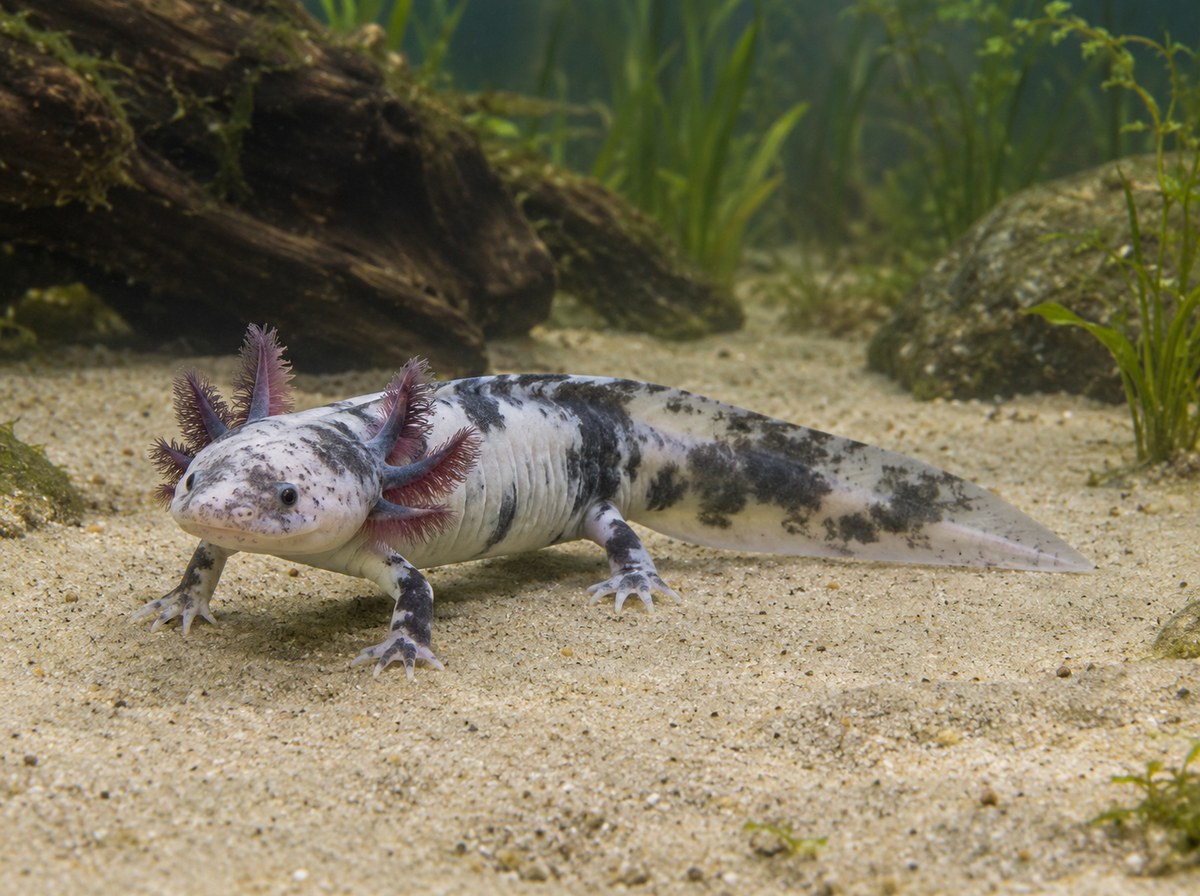
A piebald axolotl is still Ambystoma mexicanum. In pet listings, the name describes a pale animal with irregular dark pigment extending across areas such as the head, back, sides, or tail. It does not, by itself, prove one genotype, a predictable inheritance ratio, rarity, superior health, or higher quality. Start with the Creatures axolotl hub, and use the breeder directory to request parentage, ordinary-light images, water data, and health records instead of paying for a label alone.

| Species | Axolotl, Ambystoma mexicanum |
|---|---|
| Label use | A descriptive pet-trade name for irregular pale and dark pigmentation |
| What a photo shows | Phenotype, meaning visible appearance at that time |
| What it cannot prove | Genotype, developmental mechanism, inheritance, rarity, value, or health |
| Useful evidence | Parent and sibling records, dated neutral-light photos, and accurately labeled lineage |
| Care priority | Stable cool water, gentle flow, safe substrate, shade, suitable diet, and observation |
| Medical boundary | New or changing skin findings need water checks and qualified veterinary assessment |
Browse listings, public profiles, breeders, or add your animal.
A description, not a complete genetic diagnosis
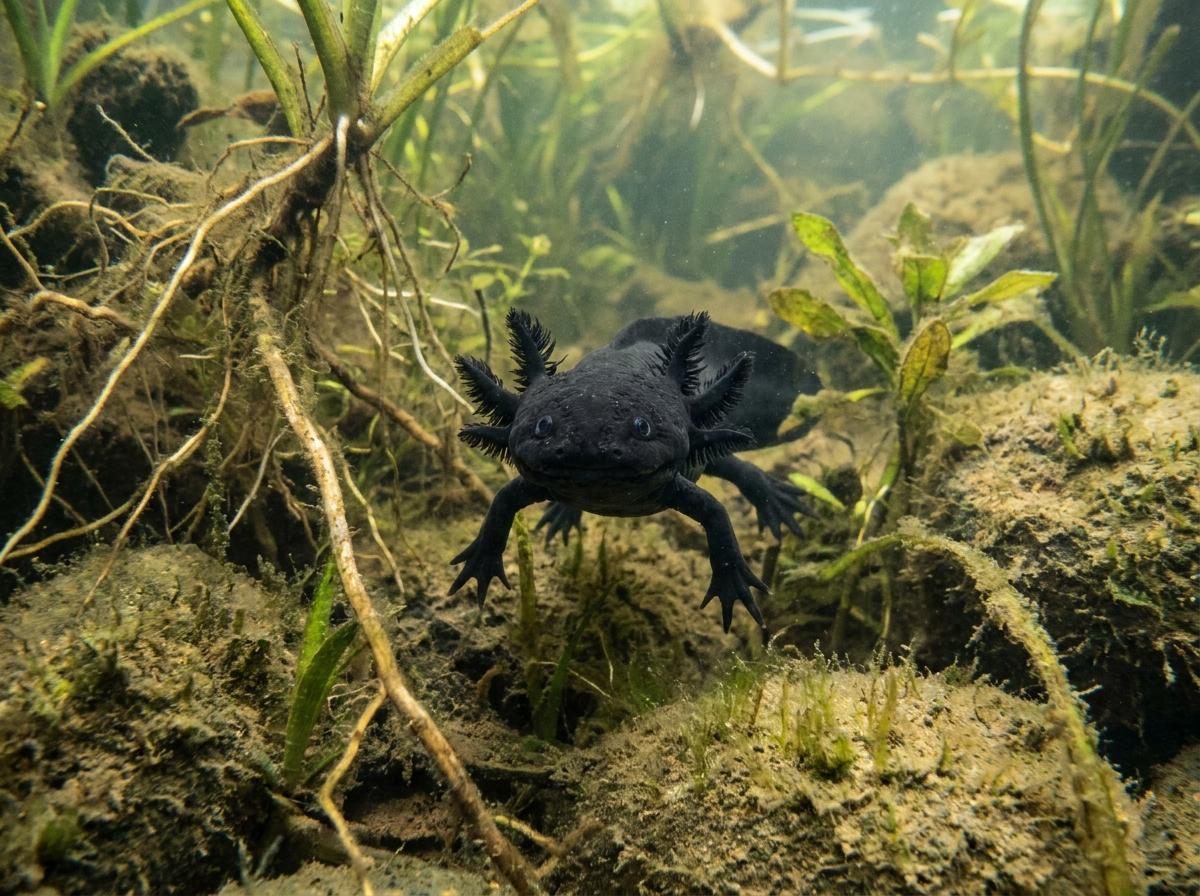
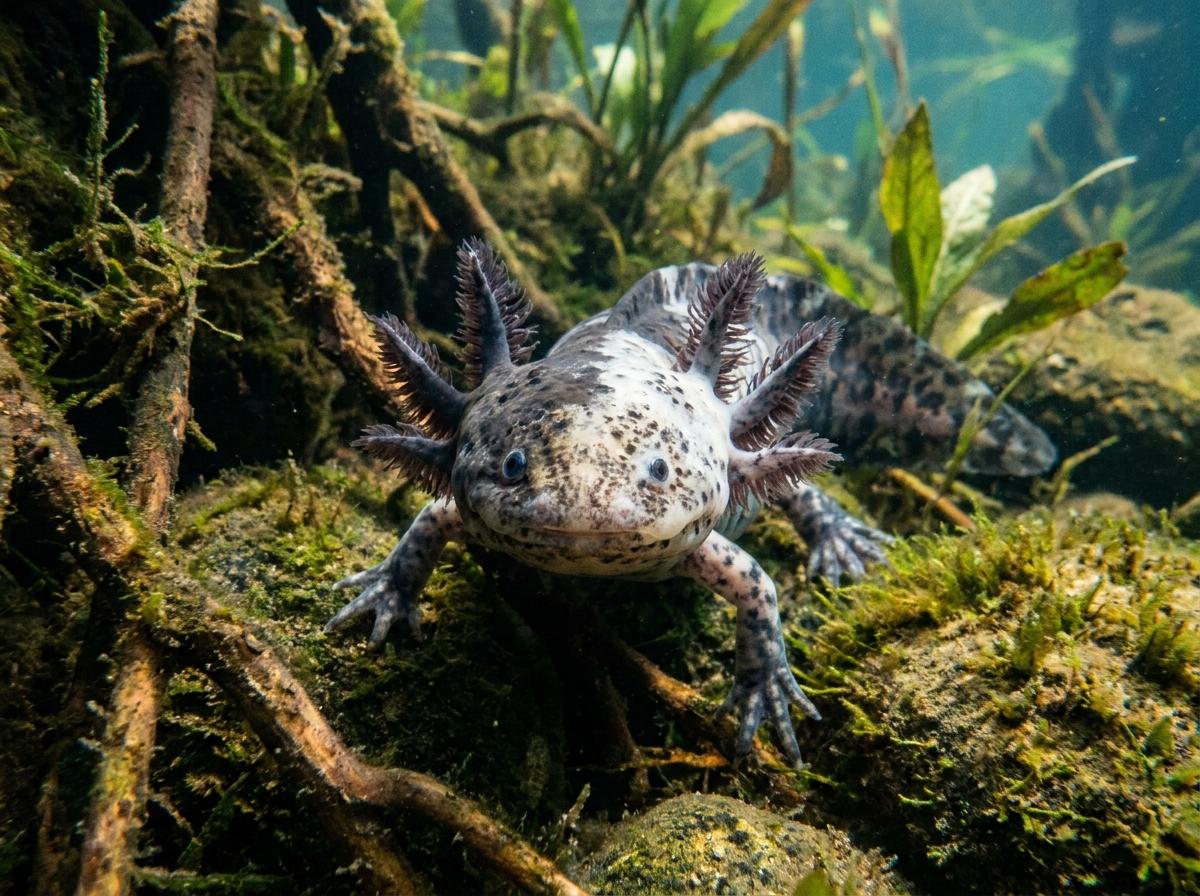
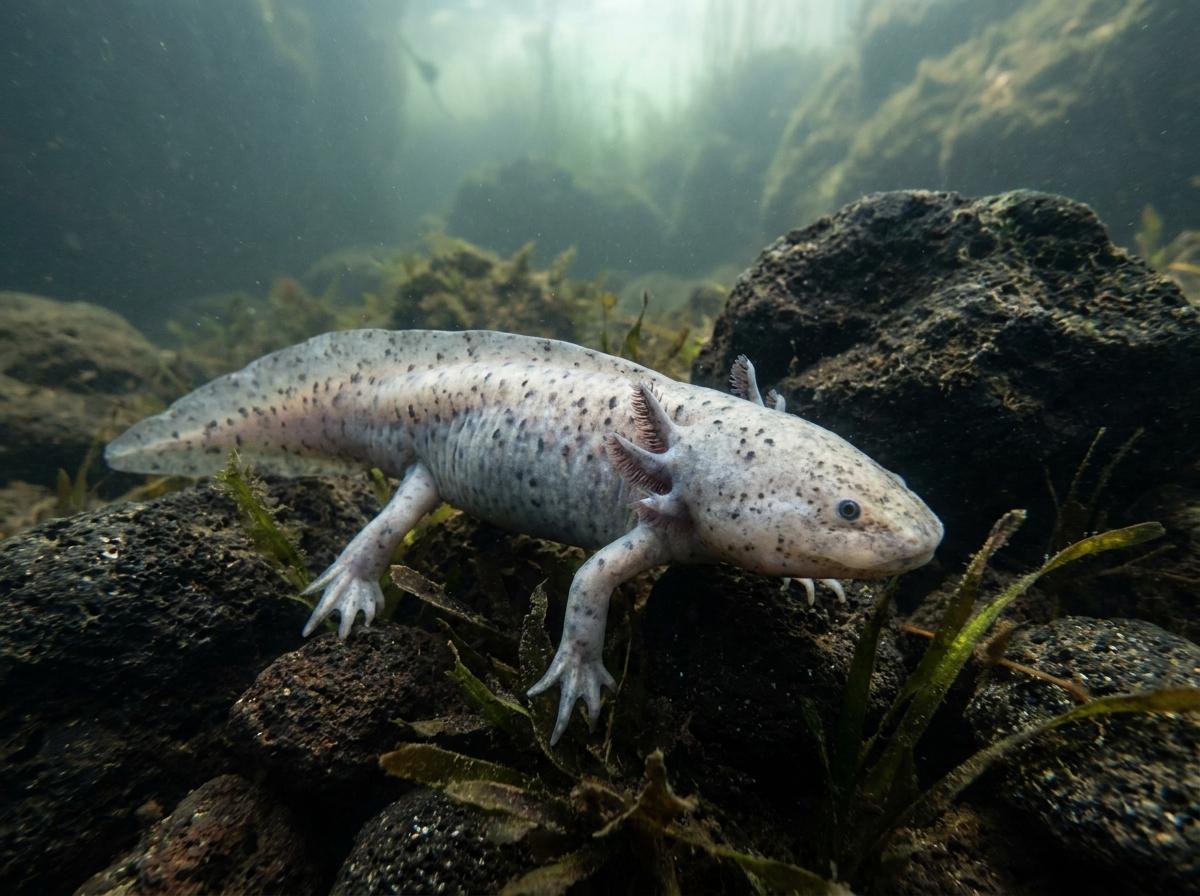
Piebald is useful only when everyone says what they mean. On this page, it describes an axolotl with a pale background and conspicuous irregular darker pigment across more than a few facial freckles. That working description helps compare images. It is not an official strain definition and it should not be converted into a universal breeding rule.
The distinction between phenotype and genotype matters here. Phenotype is what can be seen. Genotype is genetic information. Similar-looking patches can arise through different biological routes, and a picture does not reveal which route produced a particular animal. Even a striking pattern cannot establish whether every relevant cell carries the same variant.
The current peer-reviewed axolotl pigment literature gives much firmer answers for other named traits. A primary study identified the historic white mutant as a defect involving edn3 expression and the albino mutant as a tyr allele. The paper describes white animals as having disrupted pigment-cell development and migration, with some adults reported to develop patches of melanophores. That finding makes a crucial point: visible dark patches on a pale animal do not automatically establish a separate piebald locus. Read the 2017 white and albino gene study for the experimental evidence and its scope.
Later primary work tied the melanoid phenotype to Ltk and the pet-trade copper phenotype to Tyrp1. The melanoid genetics study and copper genetics study show what a supported gene claim looks like: mapped variation, controlled crosses or associated samples, and functional evidence. They do not establish that every label used in sales has an equivalent known mechanism.
How to read the pattern
Describe the individual rather than forcing it into a fixed template. Record where the dark pigment appears, whether the border is sharp or diffuse, and how much pale skin remains. Keep the same lighting, camera position, and background each time. Avoid ultraviolet or highly colored aquarium lights, heavy editing, and camera filters that change contrast.

The image above demonstrates a repeatable overhead record, not a diagnostic test. Its dark pigment is concentrated across the crown, back, and upper tail, with pale areas between patches. Another animal sold under the same label may look different. Pattern coverage can also appear different when the animal grows, changes posture, or is photographed under new lighting.
Keep separate fields for the seller’s label and your observation. For example: “seller label: piebald” and “observed: pale body, irregular charcoal dorsal patches, dated neutral-light image attached.” This preserves useful provenance without presenting an interpretation as fact.
Do not confuse the label with GFP. A GFP axolotl carries a fluorescent reporter, while piebald describes ordinary-light pigment distribution. Do not diagnose mosaicism or chimerism from patches either. The mosaic axolotl and chimera axolotl pages explain why appearance alone usually cannot settle those developmental mechanisms.
Inheritance, rarity, and price
No primary source used for this page validates a universal piebald genotype or breeding ratio for axolotls. That means a seller should not promise a simple percentage from the word alone. Ask for the parents’ identities, dated photos of both parents, clutch counts, sibling outcomes, and records from repeated pairings. A documented line may support a line-specific observation, but it does not become a species-wide law.
Rarity also needs a defined population and count. A dramatic photo, a waitlist, or a high asking price is not population evidence. Price can reflect local supply, shipping, age, seller reputation, record quality, and marketing. None of those variables proves that the pattern is genetically rare.
Avoid pairing animals solely to reproduce a fashionable appearance. A responsible plan must account for relatedness, health history, adult housing, offspring capacity, lawful transfer, and homes for every animal. If a breeder cannot explain the lineage beyond a color name, treat the inheritance claim as unresolved.
Care and health stay species-level
A pigment label does not create different husbandry. The University of Kentucky Ambystoma Genetic Stock Center guide emphasizes water quality, nitrogen-cycle monitoring, low flow, and avoidance of small rocks or gravel that can be swallowed. The Royal Veterinary College axolotl care sheet recommends cool water, shade, smooth hides, minimal handling, and protection from excessive ultraviolet exposure.

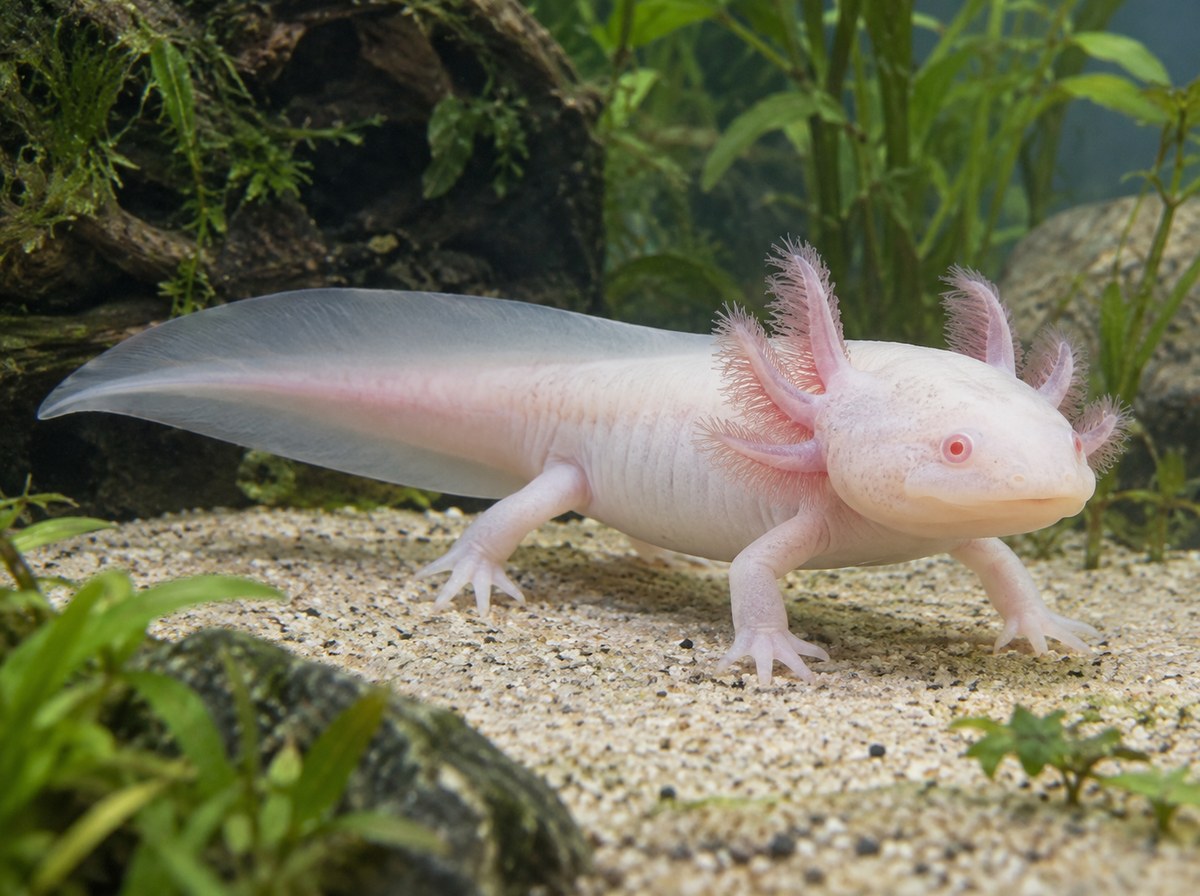
The setup pictured uses fine sand, a broad rounded ceramic tunnel, a secured plant, shade, open floor, and low-flow filtration. It is an example rather than a complete aquarium plan. Return to the live axolotl species hub for species context, and compare the same-round GFP axolotl guide to keep fluorescent-reporter identity separate from ordinary-light pigment labels. No care or lifespan guide is promised here because the previously drafted routes are not live.
Pigment does not certify health. Track appetite, weight or body condition, gill appearance, skin texture, posture, movement, waste, temperature, and water-test results against that individual’s baseline. If a dark or pale area appears suddenly, changes rapidly, becomes raised or fuzzy, ulcerates, or arrives with appetite loss, lethargy, swelling, abnormal buoyancy, or gill deterioration, contact a veterinarian experienced with aquatic amphibians. Do not diagnose a new lesion as a morph and do not apply a fish medication without professional guidance.
Buying and documentation checks
Ask the seller:
- Is piebald your descriptive label, or are you claiming a tested lineage?
- Which dated photos show this individual in neutral light as it grew?
- What did the parents and siblings look like, and how many offspring were actually recorded?
- Are any GFP, white, albino, melanoid, axanthic, copper, mosaic, or chimera claims being made separately?
- What are today’s temperature, pH, ammonia, nitrite, and nitrate readings?
- What are the hatch date, diet, feeding response, growth record, and veterinary history?
- Are possession, sale, and transport lawful at both ends of the transfer?
Request an unedited video in ordinary neutral light. Confirm the animal is eating and the destination aquarium is cycled before transfer. Change as few environmental variables at once as practical, and keep the seller’s label in the source notes instead of overwriting it with certainty.
Frequently asked questions
Is a piebald axolotl a separate species?
No. It is Ambystoma mexicanum with an appearance described by the piebald label.
Is piebald the same as leucistic?
Not as a sales description. Piebald usually calls attention to conspicuous dark pigment extending across a pale animal. Genetic research on the historic white mutant shows that some pale adults can develop melanophore patches, so the visible distinction does not by itself prove a separate locus.
Is the pattern inherited?
A particular lineage may show repeatable pattern outcomes, but the label alone does not establish a universal genotype or ratio. Request parent, sibling, and clutch records.
Are piebald axolotls rare or more valuable?
Those claims need population and market evidence. Appearance and asking price alone prove neither rarity nor quality.
Does extra pigment change care or health?
No special care rule follows from the label. Follow ordinary axolotl husbandry and assess health from the whole animal, its history, and its environment.
Do this next on Creatures
Creatures can preserve what is observed, what the seller claimed, and what remains unknown.
Find an animal. Browse the piebald axolotl marketplace filter or save an alert. See saving searches and using your watchlist.
Research a source. Use the breeder directory, then ask for lineage, dated ordinary-light images, clutch records, water data, diet, and health history.
Track the individual. Create a piebald axolotl profile, with no account needed to begin. Follow adding an animal to Creatures.
Record care and health. Open the record sheet. Visitors can explore it, and a free account saves entries. Read adding a record and health and medical records.
Represent a breeding or education program. Create an axolotl organization profile, with no account needed to start.