Axolotl Colors: Leucistic, Albino, Melanoid and GFP Explained
Author: Elliott Garber, DVM · Published
Axolotl colors include mottled wild type, pale dark-eyed leucistic, golden albino and darker melanoid forms. These pigment descriptions are separate from GFP fluorescence: an axolotl can have a pigment color and also carry a fluorescent transgene.
Start an axolotl profile with neutral-light photographs, the seller’s exact label and any supplied ancestry. A photograph can document appearance, but it cannot reveal every hidden allele or certify a special breeding claim.
| Leucistic or white | Pale body with dark eyes in the familiar form |
|---|---|
| Albino | Melanin absent; appearance can be golden or pale |
| GFP | Fluorescence separate from pigment color |
| Unusual patches | Appearance does not prove developmental cause |
| Care priority | Water quality and no swallowable gravel |
The common axolotl colors
Start with the axolotl species guide, then compare the body, eyes and reflective markings under ordinary white light. The Ambystoma Genetic Stock Center’s strain descriptions distinguish dark wild type, white and albino animals rather than calling every pale animal albino.
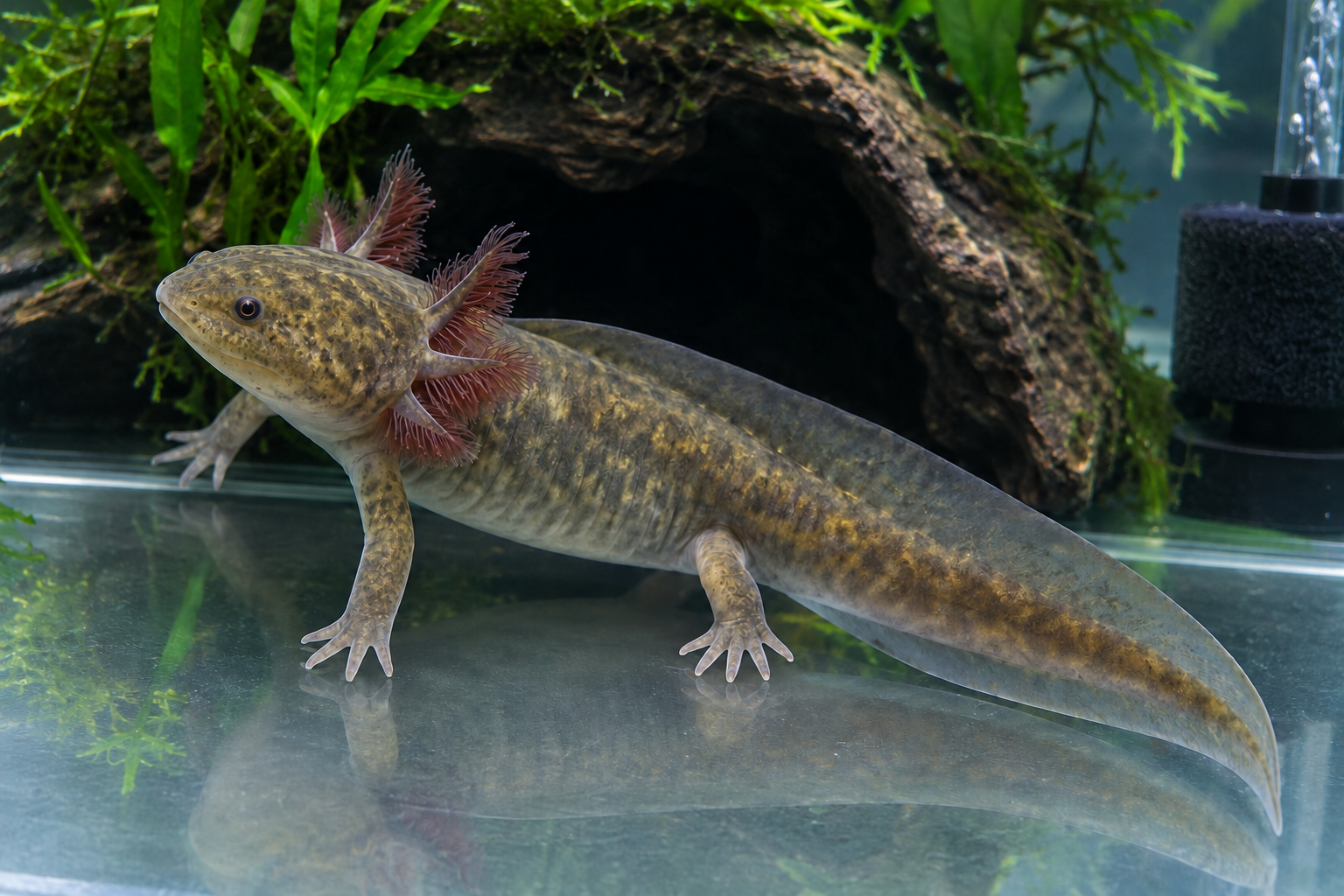
- Wild type: usually a dark mottled appearance with yellowish or greenish tones. This label does not mean a captive animal was taken from the wild.
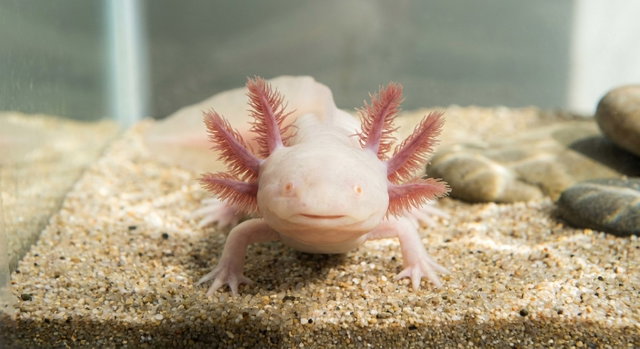
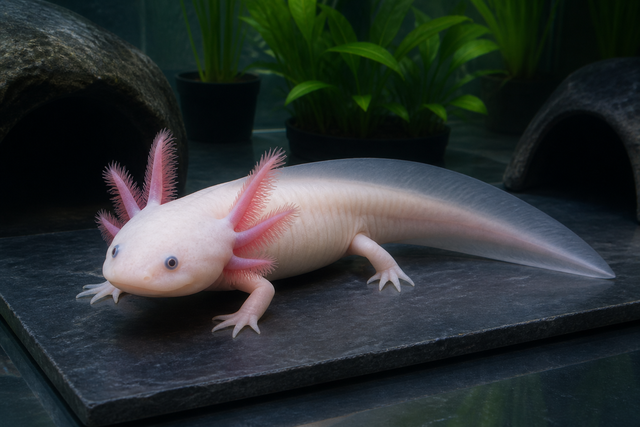
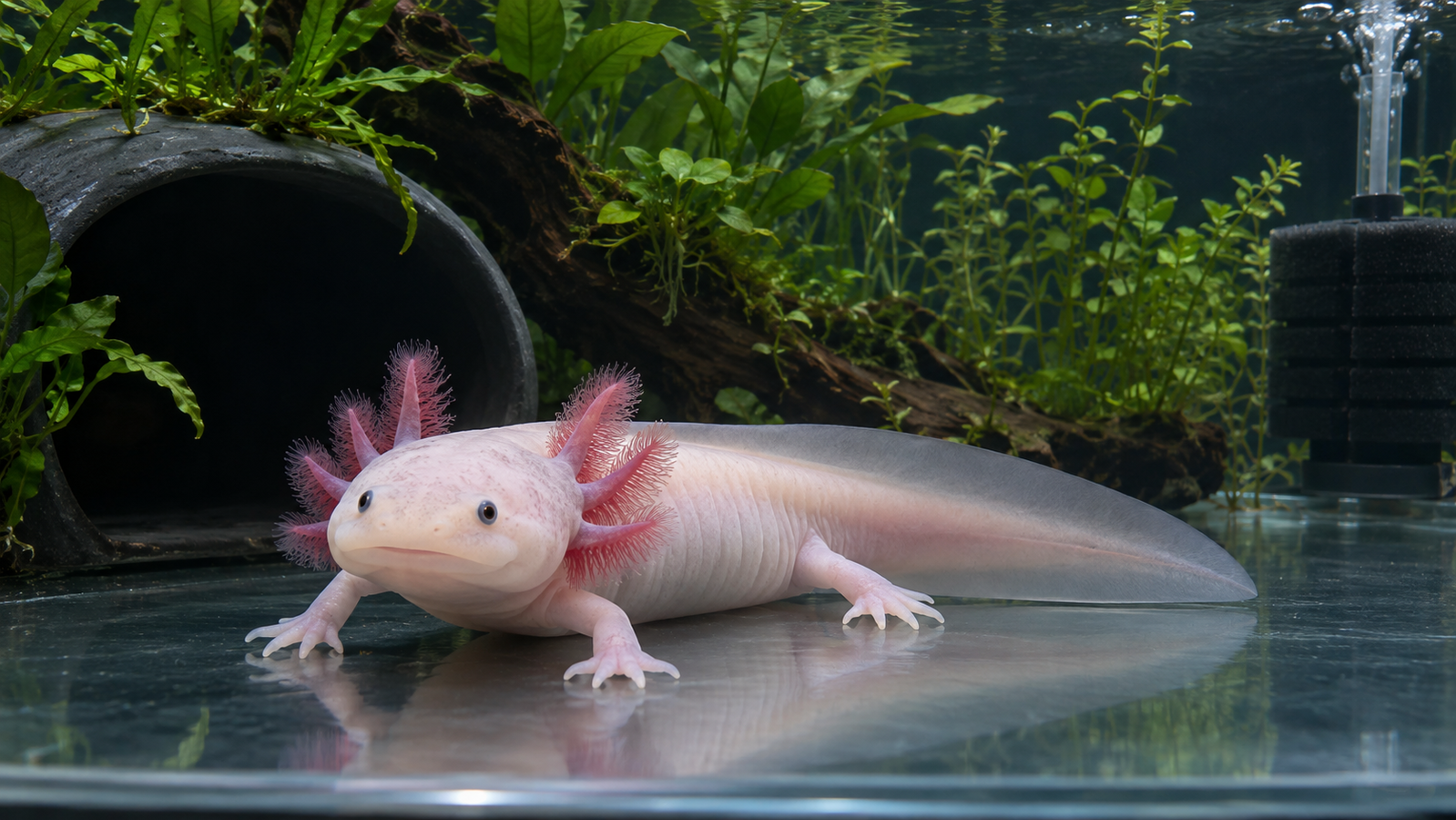
- Leucistic or white: a pale pinkish body with dark eyes in the familiar laboratory white form. Some dark markings may be visible; avoid identifying hidden genetics by counting freckles.
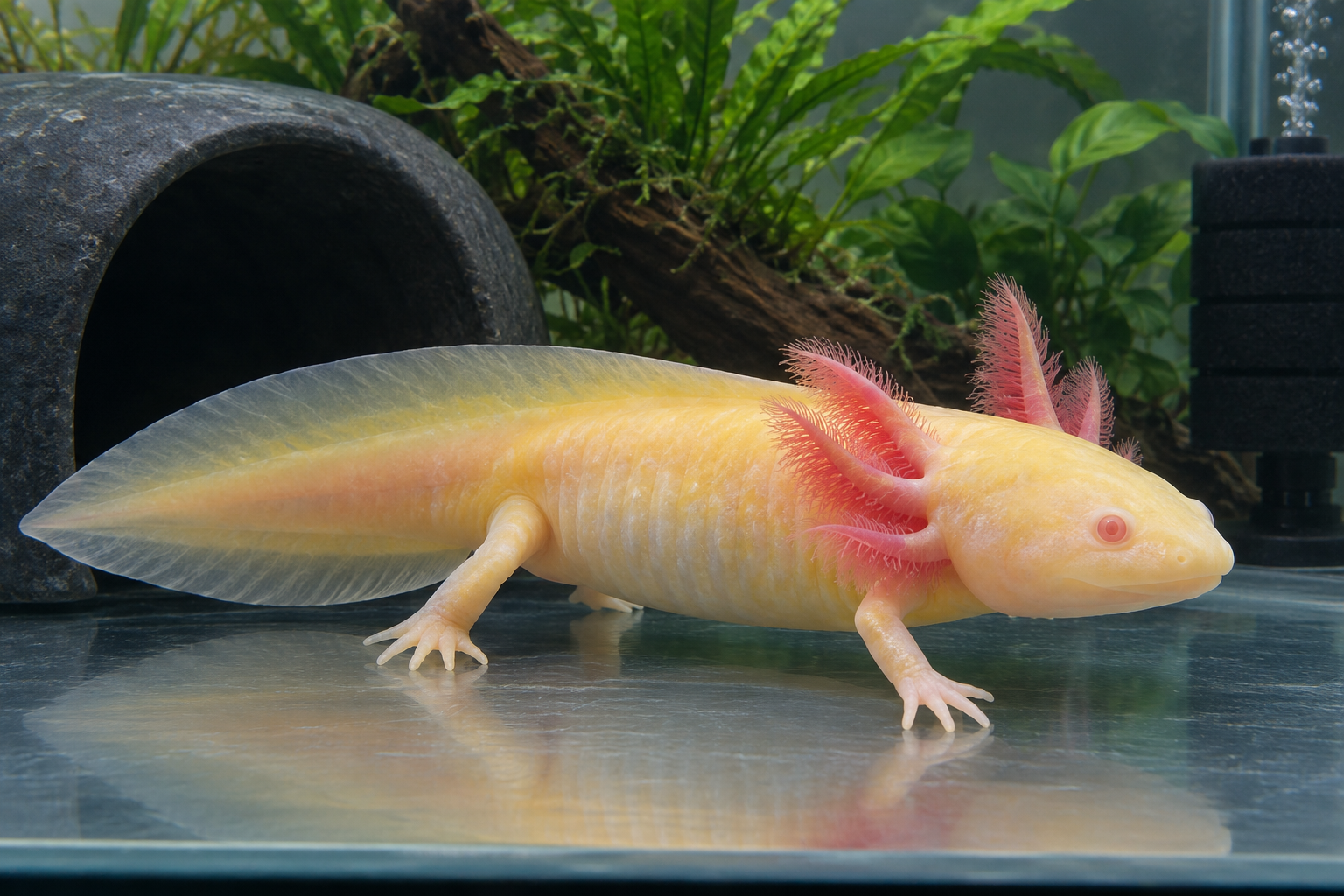
- Golden albino: yellow or golden appearance with the normal black pigment absent. The yellow color is why “albino” does not have to mean an entirely white animal.
- White albino: pale body with pinkish rather than dark eyes. The stock center distinguishes this from its dark-eyed white animals.
- Melanoid: a pigment variant associated with increased dark pigmentation and absent iridophores in the described laboratory form. A merely dark photograph is insufficient to confirm it.
- Axanthic: a pigment label distinct from albinism and leucism. Ask for the stock or breeding evidence instead of assigning it from an unusually gray image.
The stock center’s mutant gene descriptions explain why these terms refer to different processes. Some can occur together, so a single color label need not describe the complete animal.
White and albino are different biological questions
Woodcock and colleagues’ research identified an edn3 transcriptional defect in the studied white animals and a tyrosinase-associated cause of the studied albino form. White affected pigment-cell development; albino animals lacked melanin.
Those findings explain why a dark-eyed pale animal and a pale-eyed albino should not be treated as interchangeable. They do not make a pet photograph a test result. Keep the actual report if a seller says an animal was tested, including the animal identifier, laboratory and variant tested.
GFP is fluorescence, not a new pigment color
GFP means green fluorescent protein. In laboratory axolotls it is used as a transgenic reporter, as described in the published transgenics literature. It is a different layer of information from the animal’s underlying pigment appearance.
An ordinary-light photograph and a fluorescence photograph answer different questions. A fluorescent-looking picture does not show the animal’s normal daylight color, and a green-tinted photograph alone does not establish the transgene. Do not expect an animal to produce its own visible green light in an unlit room.
The GFP axolotl guide covers the distinction in more detail. Do not make prolonged bright-light exposure part of routine display or repeatedly illuminate an animal just for a sales effect. Ask for existing documentation instead.
Before acquiring or moving any axolotl, check with your own wildlife authority and the authorities for its destination. Rules can depend on the animal, location and movement involved. A seller’s color label or shipping offer is not legal clearance; this guide does not provide state-by-state permission.
Piebald, mosaic and chimera: a pattern is not proof of its cause
These names can describe strikingly uneven coloration, but the appearance alone cannot establish a developmental mechanism. The Piebald guide, Mosaic guide and Chimera guide separate the visible pattern from the evidence needed for stronger claims.
Do not assume a split-colored animal can produce the same split in its young, or that a seller can breed a precise patch arrangement to order. Ask what was actually observed, whether the animal’s development was documented and what supports the name. Keep “suspected” when that is the honest description.
Keep a color record on Creatures
A useful entry might read: “pale body and dark eyes in white light; sold as leucistic; GFP claimed by seller, source document attached.” That preserves the appearance, claim and evidence without treating them as interchangeable.
Add comparable photographs with dates and lighting notes. Keep feeding observations, water-quality readings and veterinary documents as dated records. Creatures stores the information you enter; it does not infer an axolotl’s genotype from its photograph or authenticate a breeder’s claim.
Color never replaces the aquarium plan
The stock center’s husbandry guide emphasizes monitored water conditions and warns that axolotls ingest small rocks and gravel during feeding. Avoid swallowable gravel. Provide a clean aquatic home with cover, usable floor space and gentle filtration; these photographs use bare floors.
Budget for the aquarium and continuing care before paying for an unusual appearance. The axolotl cost guide covers that planning, while the lifespan guide explains the value of a known age and continuous records. A sudden change in appearance with illness signs needs a veterinarian who treats amphibians, not an online morph identification.
Common questions
Is a pink axolotl always albino?
No. Pale dark-eyed white animals and pale-eyed albinos are distinct in the stock center’s descriptions. Use the eyes and body as observations, then keep the genetic claim qualified.
Is GFP a separate species?
No. It describes fluorescent-protein expression in an axolotl, separate from its pigment background.
Does Creatures have an axolotl color calculator?
No supported axolotl color calculator is linked here. Keep photographs, observations and original documents in the animal’s records.
Do this next on Creatures
- Add your axolotl and keep its identity and photographs together. You can start without an account. See how to add an animal.
- Add a record for a dated observation, original document or veterinary result. It opens for visitors; a free account saves it. The record guide explains the flow.
- Set a listing alert if you are looking for an animal. An alert does not promise current stock; see saved searches.
- Browse the filtered marketplace and ask sellers for the evidence behind a named trait.
- Use the breeder directory to find people to question about their animals and records. A directory entry is not genetic verification.
- If you keep a breeding program, create an organization profile to describe it. This is a guest-capable starting flow.