Author: Elliott Garber, DVM · Published
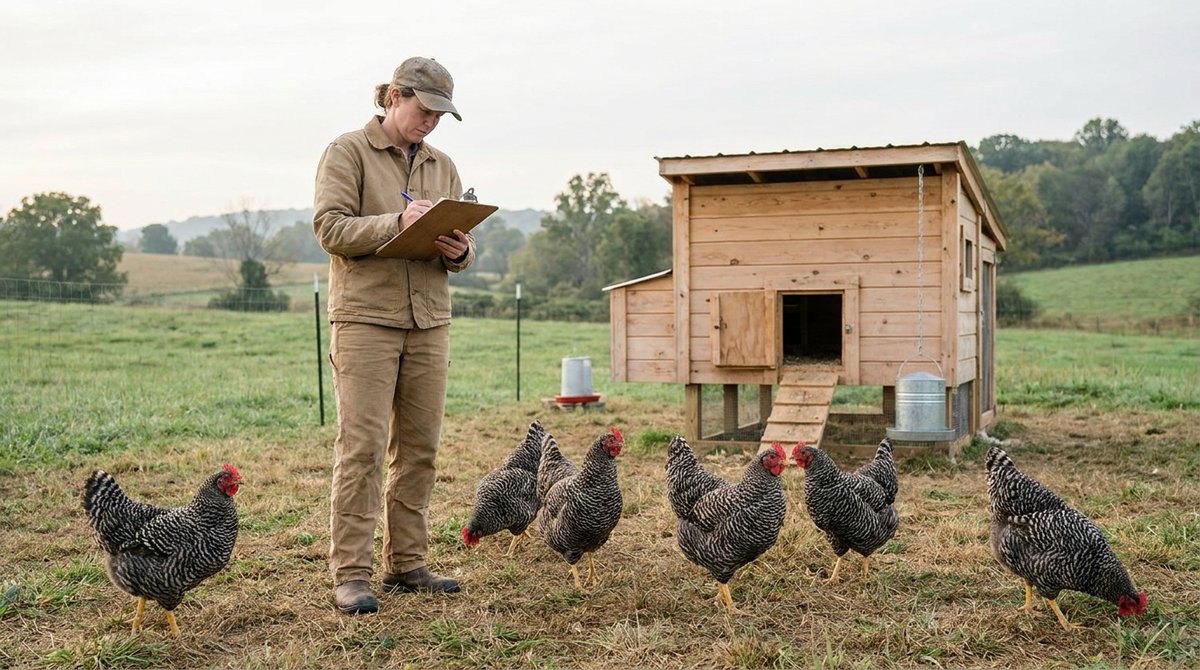
NPIP certification means your flock is enrolled in the National Poultry Improvement Plan through your state’s Official State Agency and has passed the testing for at least one official classification, almost always U.S. Pullorum-Typhoid Clean first. To get NPIP certified, you contact the Official State Agency for the state where your birds live, sign its participation agreement, have the flock tested by a state inspector or authorized tester, and receive your participant number and classification when the results come back clean.
That is the short version, and it is the same for a hatchery shipping thousands of chicks and a breeder hatching a few dozen show bantams in the spring. The details that trip people up sit underneath it: which classification a buyer or show actually asks for, how often each one has to be retested, and what you need to keep on paper to stay in good standing. Once you have a certificate, keep its number, issuing agency and renewal date on each breeder bird as a Certification record on Creatures, so the date you need to retest is in front of you instead of in a drawer.
Sources checked November 14, 2026: the NPIP regulations in 9 CFR part 145 on eCFR, the National Poultry Improvement Plan’s own site at poultryimprovement.org and the APHIS NPIP reference guide. Your Official State Agency sets the practical details (fees, testing appointments, paperwork) inside that federal framework, and it may set higher standards than the federal minimum. Creatures keeps your records; it does not enroll flocks, test birds, issue NPIP numbers or verify anyone’s status.
| What it is | A voluntary federal, state and industry testing and certification program for poultry breeding flocks, hatcheries and dealers |
|---|---|
| Who runs it in your state | The Official State Agency (OSA) for the state where the birds are kept |
| First classification | U.S. Pullorum-Typhoid Clean, the base the other disease programs build on |
| Pullorum-Typhoid retest | Usually an official blood test within the past 12 months for hobbyist and exhibition flocks; your OSA confirms which pathway applies |
| Avian influenza clean | At least 30 birds tested negative, retested at 180-day intervals |
| Cost | Set by each state; ask your OSA |
| Records to keep | Testing reports, sales reports, set and hatch records, egg receipts and invoices, held for 3 years |
What NPIP is, and what it is not
The National Poultry Improvement Plan began in the 1930s, and APHIS dates its operation to 1935, to stop pullorum disease spreading through hatcheries. Pullorum, caused by Salmonella Pullorum, passes from hen to chick through the egg, and the Merck Veterinary Manual on pullorum disease describes mortality that can approach 100 percent in young chicks and poults. Merck notes it has been eradicated from commercial poultry stock in the US but can still turn up in small backyard and hobby flocks. That is exactly the population most hobby breeders buy from and sell to, and it is why the program still matters to them.
The regulation describes the plan as a cooperative federal, state and industry program that identifies states, flocks, hatcheries, dealers and slaughter plants meeting specific disease control standards. USDA sets the standards and the Official State Agency administers them in each state under an agreement with USDA. The OSA is not always a state office: the current list (dated November 9, 2026) includes state departments of agriculture, a state poultry federation and a university laboratory, depending on the state. The Official State Agencies list on poultryimprovement.org tells you which one covers your state.
Three things NPIP is not, because buyers and new breeders often blur them:
- It is not a certificate for an individual bird. The classification belongs to the flock (or hatchery, or dealer), and to the eggs and chicks produced from it while they stay with participants. The regulation says products lose their identity under plan terminology once they are bought for resale by, or consigned to, a nonparticipant.
- It is not a general health guarantee. Each classification covers named organisms. Pullorum-Typhoid Clean says nothing about Marek’s disease, coccidiosis or the Salmonella types that make people sick.
- It is not a health certificate for travel. Some movements need a certificate of veterinary inspection as well; the livestock health certificates guide explains what a CVI is and who issues one.
The NPIP classifications, in plain terms
Your flock’s “subpart” decides which rules apply. NPIP sorts participants by bird type and business model in 9 CFR parts 145 and 146: egg-type and meat-type chickens, turkeys, waterfowl, game birds and others each have their own subpart. Most small breeders of standard and bantam chickens, ducks and geese enroll under subpart E, hobbyist and exhibition poultry and raised-for-release waterfowl, and the common testing pathways below come from that subpart. The regulation also lists other qualifying paths for some flocks, so your OSA decides which one applies to yours. If you raise turkeys, game birds or a commercial meat or egg flock, your subpart’s numbers differ, so read your own section or ask your OSA.
| U.S. Pullorum-Typhoid Clean | Usual path: officially blood tested within the past 12 months with no reactors, or reactors that fail to isolate S. Pullorum or S. Gallinarum on further testing. The rule lists other qualifying paths for some flocks |
|---|---|
| U.S. M. Gallisepticum Clean | Usual path: birds tested when older than 4 months or at sexual maturity, then retested at intervals of not more than 90 days. Some multiplier breeding flocks have a separate path with laboratory testing every 30 days |
| U.S. M. Synoviae Clean | Same pattern as MG Clean, for Mycoplasma synoviae: on the usual path, retests at intervals of not more than 90 days |
| U.S. H5/H7 Avian Influenza Clean | A minimum of 30 birds tested negative when older than 4 months, then at least 30 retested every 180 days |
| U.S. Salmonella Monitored | A sanitation and testing program for hatcheries and breeder farms aimed at Salmonella in hatching eggs and day-old birds |
Pullorum-Typhoid Clean is the gate. The NPIP site says flocks must at minimum show freedom from Salmonella Pullorum and Salmonella Gallinarum before other disease classifications are available. The regulation also protects the small participant: the state cannot make you qualify for any other classification as a condition of getting Pullorum-Typhoid Clean. So a backyard breeder can hold Pullorum-Typhoid Clean alone, and many do.
Avian influenza clean status is the one buyers ask about more each year, and it carries its own sampling rule. The regulation allows fewer than 30 birds to be tested at one time if all pens are equally represented and 30 birds in total are tested within each 180-day period. If your whole breeding flock is smaller than that, ask your OSA how it applies before you assume you cannot qualify. Turkey breeders have a further program, Mycoplasma meleagridis, under the turkey subpart.
Two words you will see on certificates and hatchery invoices: National Plan Hatchery and National Plan Dealer are the designations for participating hatcheries and dealers. APHIS describes three types of participant, independent flocks, hatcheries and dealers, and your OSA will tell you which fits a breeder who sells their own hatching eggs or chicks.
How to get NPIP certified, step by step
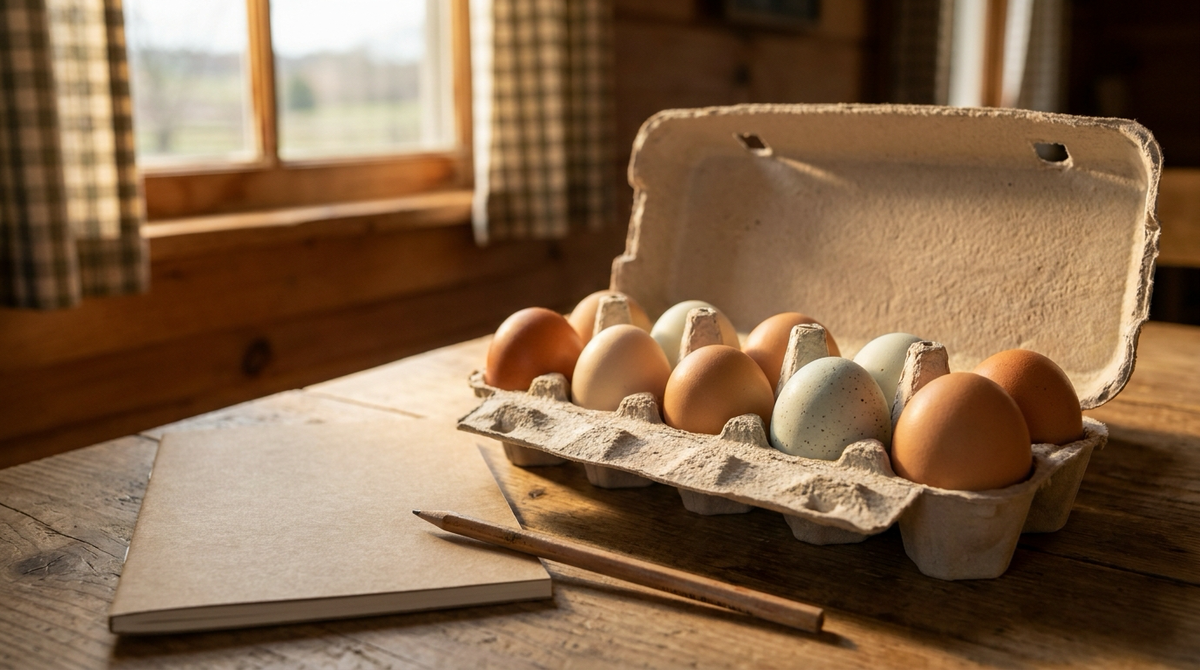
- Find your Official State Agency. Use the OSA list and contact the agency for the state where your birds are physically located, not where you live if those differ. The NPIP site is direct about it: reach out to the OSA, and the OSA will talk with you about the program’s requirements.
- Ask which subpart and classifications fit your birds. Tell them what species you keep, roughly how many breeders, whether you sell hatching eggs, chicks or started birds, and whether you ship across state lines or show. That decides your subpart and whether Pullorum-Typhoid Clean alone does the job or you also want avian influenza or Mycoplasma clean status.
- Sign the participation agreement. Under 9 CFR 145.3, a person can participate once they have shown the OSA that their facilities, personnel and practices are adequate for the plan, and have signed an agreement to comply with it and with any state regulations. Some states run an inspection of the premises at this point.
- Report the breeding flock. The regulation asks participants to report each breeding flock to the OSA on VS Form 9-2, or another approved route, before the birds reach 24 weeks of age, with the flock’s location, type, breed or variety, the source of the males and females, the number of birds and the intended classification. Have those details written down before you call; it makes the appointment faster.
- Get the flock tested. The OSA employs or authorizes state inspectors to do qualification testing, and can designate Authorized Testing Agents to collect samples and run the pullorum blood test. Some states train private testers through short blood-testing courses, so a nearby poultry keeper may be the one who comes out. Testing is a job for a trained tester working under your OSA, not something to improvise from a video.
- Receive your number and classification. When the flock tests clean, the OSA issues your participation paperwork with your NPIP number and the classifications you qualified for. The regulation lets participants use the official classification terms and the plan’s illustrative designs only for products that have met every requirement of that classification.
- Keep it current. Participation runs through the OSA’s operating year. Retest on the interval your classification requires, keep your records ready for the annual review, and renew when the state asks.
The plan’s own site answers the cost question in one line: the price varies by state, so ask your OSA. How fees are structured differs from state to state, so the OSA’s answer is the only reliable one for your flock.
What NPIP status does for you when you sell or show
The NPIP home page lists the practical benefits: you know your flock’s health status, buyers can rely on your testing, it can be used for interstate movement in some cases, many destination states require pullorum-typhoid testing and avian influenza monitoring, current testing may serve as proof for shows, swaps and exhibitions depending on subpart, and maintaining participation may allow indemnity if an outbreak is confirmed.
Shipping chicks or hatching eggs across state lines. The APHIS NPIP reference guide says most states restrict poultry shipments that are not pullorum-typhoid clean, and that poultry moving between states generally needs to come from a U.S. Pullorum-Typhoid Clean participant or test negative before leaving its home state. Each destination state sets its own import rules, and NPIP keeps a state importation requirements document on its site. Check the destination state’s current rule with its state veterinarian’s office before you ship, every time, because those rules change during avian influenza outbreaks.
Shows and swaps. Many fairs and poultry shows accept birds that come from a U.S. Pullorum-Typhoid Clean flock or that tested negative for pullorum-typhoid within a set window before the show; the regulation’s own wording for states with full pullorum-typhoid programs uses 90 days before public exhibition. Your show’s premium book and your state’s exhibition rules are the authority, and an NPIP certificate in your show box saves a lot of last-minute testing. The chicken shows guide covers entries, classes and judging.
Buyers. When you sell, give buyers your NPIP number and the classifications you hold, and expect good buyers to ask. The where to buy chickens guide teaches buyers to ask for exactly this, so a clear answer at the start of the conversation builds trust. Say what the status covers and what it does not; a buyer who understands that Pullorum-Typhoid Clean is a flock classification, not a guarantee against every illness, is a buyer who will not feel misled later.
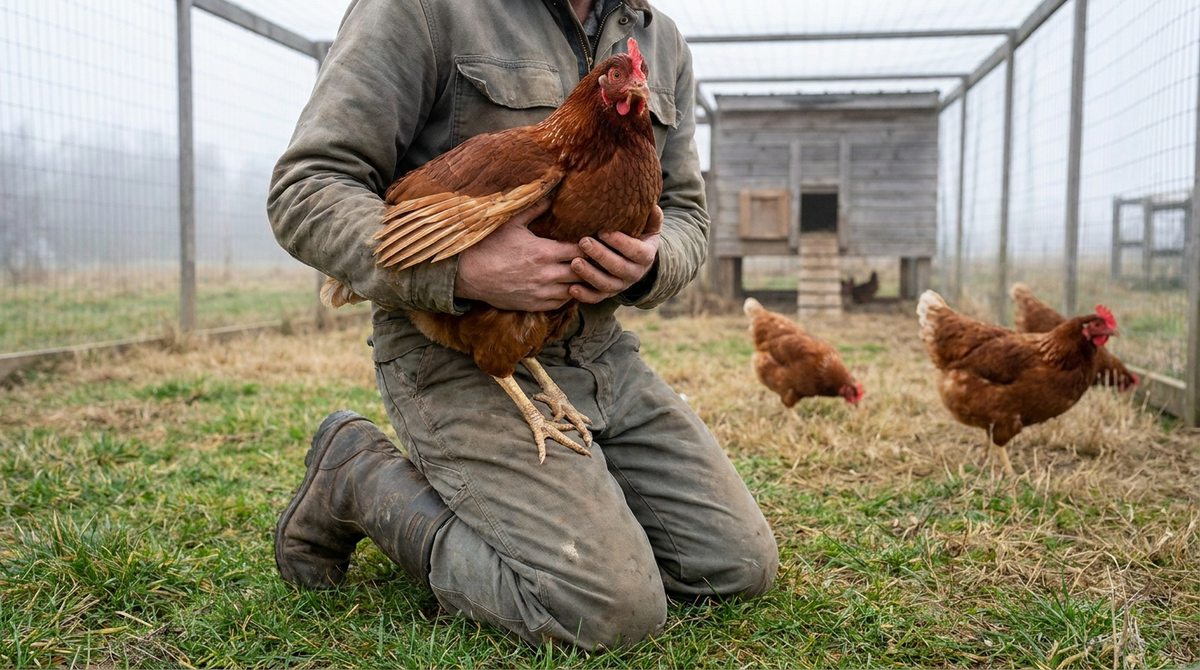
Birds coming into your flock. Adding birds from a non-participating flock can put your classification at risk, and the regulation’s pullorum language is about the whole flock. Buy breeding stock from NPIP sources where you can, quarantine every newcomer as the guide to adding new chickens to a flock describes, and talk to your OSA before you bring in birds of unknown status. If birds sicken or die, use the common chicken illnesses guide to recognize warning signs and call a veterinarian or your state diagnostic lab promptly; a poultry vet can be hard to find in a hurry, so line one up early with the guide to finding an avian vet.
The records NPIP expects you to keep
The plan runs on paper. Under 9 CFR 145.3, participants must maintain records that show they follow the disease control programs they are enrolled in. Under 145.12, the records of flocks kept mainly to produce hatching eggs are examined annually by a state inspector, and they include the VS Form 9-2 flock selecting and testing report, the VS Form 9-3 report of sales of hatching eggs, chicks and poults, set and hatch records, egg receipts, and egg or chick orders and invoices. Those records are kept for 3 years.
For a small breeder, that comes down to four habits:
- File every test report the day it arrives, with the date the samples were collected, which birds or pens were sampled and the result.
- Write down every set and every hatch: date set, number of eggs, which pen they came from, how many hatched. The chicken hatch records guide shows how to keep one batch connected from eggs to identified chicks, and the egg candling guide covers the checks in between.
- Keep a copy of every sale: buyer, date, what was sold and how many. If you ship interstate, your OSA will tell you whether it wants VS Form 9-3 or an approved invoice form, and the regulation spells out what a 9-3I invoice must carry, including your NPIP numbers and the classification the product qualifies for.
- Track flock changes: birds added, where they came from, birds culled or lost. If you do not want to name every hen, the chicken flock count records guide shows how to track a flock as a group.
Keeping NPIP records on Creatures
Creatures is the records layer for this, not the certifying body. Here is how the pieces fit, using only what is live today.
The certificate itself. On each breeder bird’s profile, add a Certification record: certification name (for example “NPIP U.S. Pullorum-Typhoid Clean”), certificate number, issued by (your OSA), issue date, expiration date, a URL if your state posts participant lists, and notes. A Certification record can be added to several animals at once, so one entry covers a pen of breeders. When a Certification or Test Result record carries an expiration date, Creatures creates a renewal reminder within the 90 days before it, so the next test date shows up in your upcoming care rather than the week of a show. The care, growth and identity records guide explains how identity records sit on the profile.
Each test. Log each pullorum-typhoid or avian influenza test as a Test Result record: test category, date of sampling, date of report, result and an expiration date if your classification runs on a fixed interval. The health and medical records guide covers test results and attachments.
Sets and hatches. Clutches (signed in, for birds and reptiles) follow a set from the day the eggs go in through candling, lockdown and first pip to the hatch, with a fate for every egg (hatched, clear pulled, stopped developing, failed after or without pipping, broken, assisted) and chick profiles for the birds you keep. That is your set and hatch record, dated and per batch, without a separate notebook.
Selling. When you list chicks or started birds, state your NPIP number and classifications in the listing description so buyers do not have to ask; the fixed-price listing guide walks through creating one. Hatching-egg listings have their own seller-declared NPIP field. Whatever you enter is your declaration: Creatures shows it as you wrote it and does not check it with any state, so keep it accurate and update it when a classification lapses.
Your public profile. A breeder profile is where buyers look first. Put your NPIP status in its description and read getting listed in the breeder directory.
Animal profiles and records are free and unlimited. Recording a certificate on Creatures never enrolls a flock, certifies a bird or replaces the paperwork your OSA issues; keep the original documents where your state inspector can see them.
Frequently asked questions
Do I need NPIP certification to sell chicks or hatching eggs?
Federally, participation is voluntary. In practice, selling across state lines usually requires pullorum-typhoid clean status or a negative test, because most states restrict poultry imports that do not meet it, and many shows and buyers ask for it. Rules for sales inside a state are set by that state. Ask your OSA and, for shipments, the destination state’s veterinarian.
How long does it take to get NPIP certified?
It depends on how quickly your OSA can schedule testing and when your birds can be tested. The age or stage for a first test differs by classification and testing pathway, so ask your OSA when yours can be done. Call early, before hatching season or show season, rather than the month you need the certificate.
How often do I have to retest?
On the usual path for hobbyist and exhibition flocks, Pullorum-Typhoid Clean means an official blood test within the past 12 months, Mycoplasma clean status means retests at intervals of not more than 90 days, and H5/H7 Avian Influenza Clean means retests every 180 days. The regulation lists other qualifying paths for some flocks, and other subparts and some states differ, so ask your OSA which pathway and schedule apply to your flock.
Does NPIP cover ducks, turkeys and game birds?
Yes. The plan covers chickens, turkeys, waterfowl, pheasants, quail, peafowl, guineas, chukars, grouse and ratites, each under the subpart that fits. See the duck, turkey and quail pages for species care, and the regulations library for related paperwork.
If I buy NPIP chicks and resell them, are they still NPIP?
Not under plan terminology. The regulation says products lose their identity under plan terms once bought for resale by, or consigned to, a nonparticipant. You can tell a buyer where the chicks came from, but only a participant can describe its own products with the classification.
Can I keep my NPIP paperwork only on Creatures?
Keep the originals your OSA issues and the forms the state inspector reviews. Use Creatures to keep the numbers, dates, results and reminders attached to the right birds, and to answer a buyer’s question in seconds.
Do this next on Creatures
You are setting up, or keeping up, a tested flock. Start with the birds you breed from, then make your status easy for buyers to find. Animal profiles and records are free and unlimited; a free account saves your work.
- Add your breeder birds so each certificate and test sits on the bird or pen it belongs to. See adding an animal to Creatures.
- Add a record for your NPIP certificate or latest test, with its expiration date so the renewal reminder appears. The form opens for visitors; a free account saves it. Follow adding a record and reminders and upcoming care.
- Add your farm or breeder profile and state your NPIP number and classifications where buyers read them.
- Explore the breeder directory to see how other poultry breeders present their programs, and ask any breeder you contact for their NPIP number and classifications.
- Create a listing alert for chickens, so you hear when new birds are listed and can ask sellers for their NPIP status.
- Browse chicken listings and ask each seller for their NPIP number and classifications before you buy.
For more on your birds, start at the chicken species page.