Candling Eggs: How to Candle, What You See Day by Day, and What to Record
Author: Elliott Garber, DVM · Published
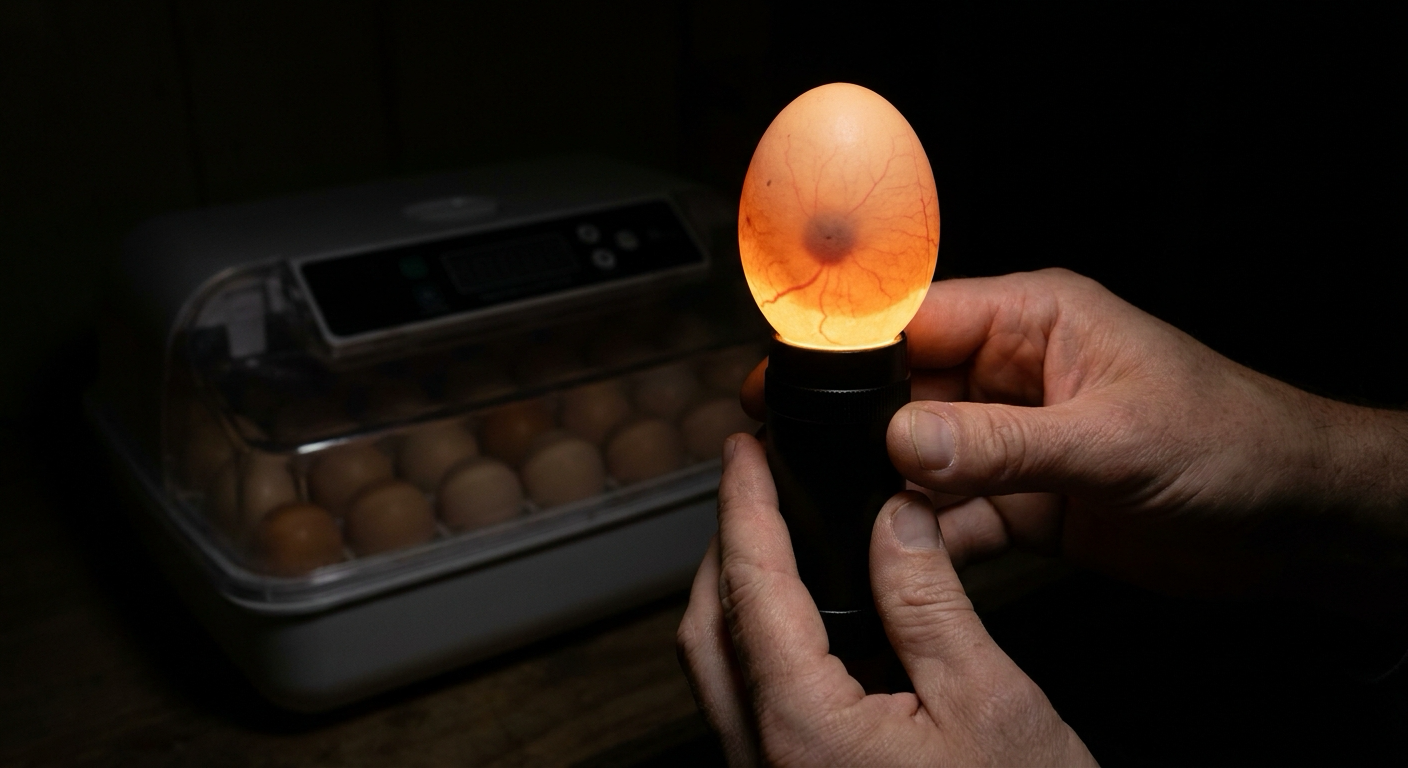
Candling eggs means holding an incubating egg against a bright, focused light in a dark room so you can see whether an embryo is growing inside. For chicken eggs, do the first check around day 7 (white shells can show development a few days earlier, brown shells a little later), a second check around days 14 to 16, and finish before lockdown on day 18. A developing egg shows a dark spot with blood vessels spreading from it; a clear egg shows only a faint yolk shadow; a ring of blood means the embryo has died.
Candling is only useful if you write down what you saw. Each check is a count of developing, clear, dead and uncertain eggs, and those counts are what explain a good or bad hatch later. You can log a candling result as a breeding record on Creatures with Add record (it opens for visitors; a free account saves it), or set the whole batch as a clutch so the checks are scheduled for you. The chicken hatch records guide shows how that batch connects to the chicks afterward.
This guide covers the candling job itself: the light, the method, what each stage looks like, what a bad result is telling you, and how to keep the record. For temperature, humidity and turning settings, use the companion guide on hatching eggs in an incubator.
| What it is | Shining a bright light through the shell in a dark room to see inside |
|---|---|
| First check | Around day 7; white shells from about day 3, brown shells from about day 5 or 6 |
| Second check | Around days 14 to 16 |
| Stop candling | At lockdown, day 18 for chickens |
| Developing | Dark spot with blood vessels spreading out like spider legs |
| Clear | Only a faint yolk shadow: infertile or died before growth was visible |
| Blood ring | Embryo died after it started; remove the egg |
| Time out of the incubator | No more than 5 to 10 minutes per batch of eggs |
What you need to candle eggs
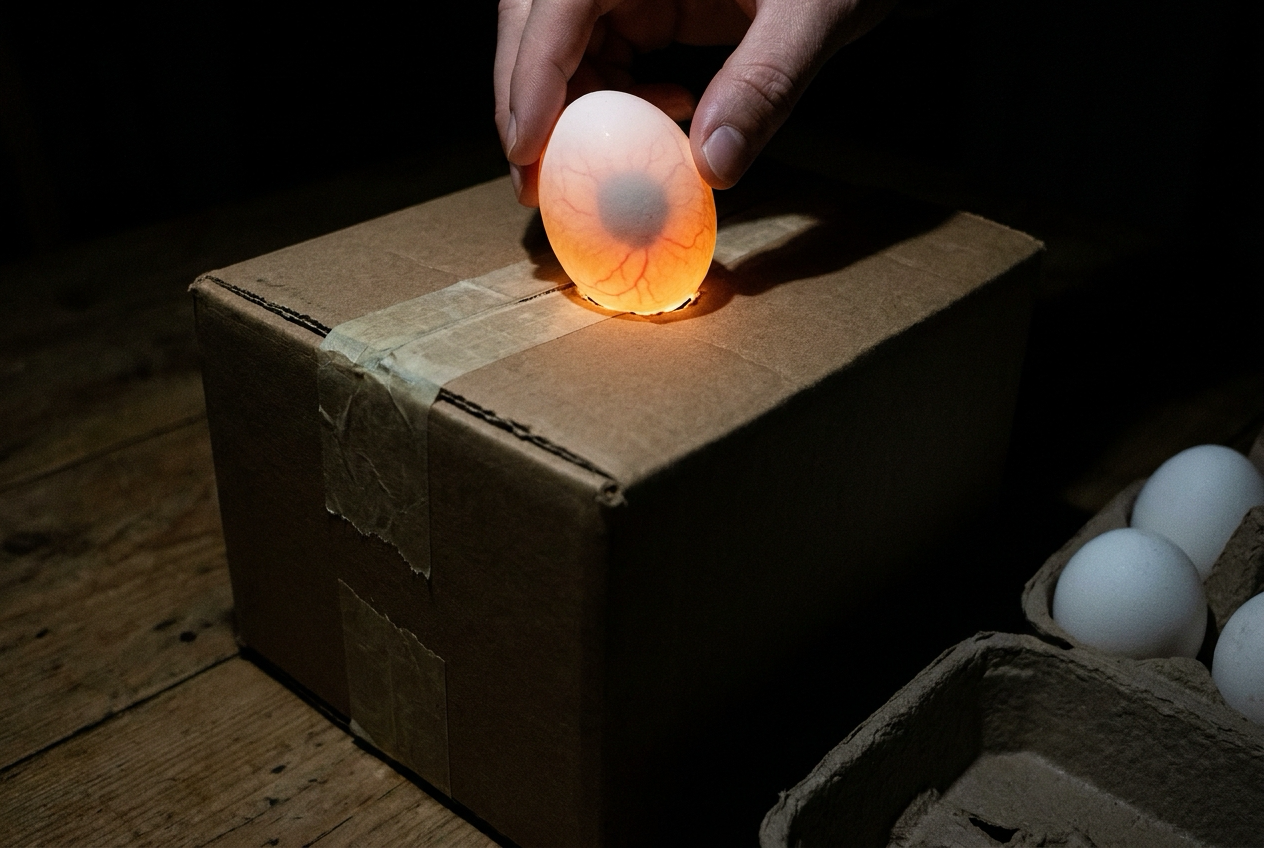
You need a light that is brighter than the room and narrow enough that it passes through the egg rather than around it. A purpose-made handheld LED candler does this well. So does the older extension method: Mississippi State University (MSU) Extension describes a bulb inside a cardboard box with a small round hole cut for the beam. A bright flashlight works in a pinch if you cup your hand around the egg to block the spill.
The room matters as much as the light. Candle at night or with the curtains closed and the lights off. University of Illinois Extension suggests setting a box-style candler on a table about 38 to 44 inches from the floor so the light is not shining into your eyes, and holding the egg at a slant with the large end against the opening.
Two habits protect the eggs while you work:
- Take out a few at a time. Illinois Extension’s embryology Q&A suggests no more than 5 to 7 eggs at one setting, out of no more than 5 to 10 minutes at a time. Put them in a clean egg carton, large end up, while they wait.
- Wash your hands first. Penn State Extension’s 4-H embryology guidance advises washing your hands before and after handling incubating eggs. Oils and dirt on the shell do the eggs no favors.
According to Mississippi State, the test itself does not injure young embryos. The risk comes from cooling, dropping and rough handling, so keep sessions short and steady.
How to candle an egg, step by step
- Darken the room and switch on the candler before you open the incubator, so the eggs spend as little time out as possible.
- Lift out a small batch and set them in a carton. Note which eggs they are if you mark them with a soft pencil.
- Hold one egg large end against the light, tilted slightly. The air cell sits under the large end and should show as a pale, defined pocket.
- Look past the shell to the contents. You are looking for a dark spot with vessels, a clear yolk shadow, a blood ring, or a dark mass that fills most of the egg, depending on the day.
- Turn the egg gently in your fingers to see all sides. Development is easy to miss if the embryo is on the far side.
- Sort it into one of four piles: developing, clear, dead, or not sure. Write the count down before the next egg, not from memory at the end.
- Return the batch to the incubator in the same orientation and get the next few out.
When you are not sure, put the egg back. When in doubt, the MSU advice is to return a questionable egg and retest it later; Penn State adds that dead embryos stop growing, so they become obvious when you candle at regular intervals. A slow developer that you threw out on day 7 is a chick you lost to impatience.
Egg candling chart: what you should see, day by day
The days below are for chicken eggs in a normal 21 day incubation. Treat them as a guide: shell color, shell thickness and your light change what you can see, and embryos do not all keep exactly the same pace. The development notes come from Mississippi State University’s publication The Avian Embryo; the candling windows come from the Illinois and Mississippi State extension pages cited in this guide.
| Day 1 to 2 | Nothing useful to see; the heart starts beating during day 2 |
|---|---|
| Day 3 to 4 | White shells: a small reddish spot with fine vessels may show |
| Day 5 to 6 | Brown shells: the same spider pattern becomes readable |
| Day 7 | Main fertility check: clear dark spot with vessels spread across the yolk |
| Day 10 to 13 | Embryo larger and darker; beak starts hardening and scales appear |
| Day 14 to 16 | Second check: dark mass fills most of the egg, one or two light spaces with vessels, movement possible |
| Day 17 | Beak turns toward the air cell |
| Day 18 | Lockdown: stop turning, raise humidity, close the lid; any last look comes before the lid closes |
| Day 20 to 21 | Beak breaks into the air cell, then the chick pips and hatches |
Illinois Extension times the first fertility test at day 3 for white eggs and day 5 or 6 for brown, because the embryo is hard to see through a brown shell before then. The MSU window is 4 to 7 days, with a second test at 14 to 16 days. Illinois’s Q&A puts the useful range at about day 5 through day 17. Day 7 suits most mixed batches because nearly every viable egg is readable by then, white or brown.
At the late check, a live embryo fills so much of the egg that MSU describes seeing only one or two small light spaces filled with blood vessels, and the chick may move against the light.
Reading each result and what to do with it
| Spider pattern | Developing. Back in the incubator, recheck at the next candling |
|---|---|
| Clear, yolk shadow only | Infertile or died before growth was visible. Remove at a confident check |
| Blood ring or streaks | Dead embryo. Remove |
| Dark, still, no vessels at the late check | Likely stopped developing. Recheck if unsure, remove if confirmed |
| Cannot tell | Return it and look again in a few days |
| Cracked, leaking or bad smelling | Remove promptly |
Developing. MSU describes a live early embryo as spider-like in appearance, the dark spot as the body and the vessels as legs. Illinois uses the same picture.
Clear. A clear egg shows nothing but the yolk shadow. Here is the part people get wrong: MSU points out that a clear egg includes eggs that started developing and died before growth was visible. So “clear” and “infertile” are not the same claim. If you want to know which it was, the honest answer needs a broken-out egg, not a guess. Count it as clear at candling.
Blood ring. A ring or streak of blood around a faint embryo is what Mississippi State calls a dead germ: an embryo that died after it was visible, with the blood pulling away from it after death. Illinois says to remove clear eggs and eggs with blood rings or streaks.
Why removal matters. Illinois notes that embryos that die early decompose and can look like rotten eggs. A spoiling egg left in a warm incubator can leak or burst and soil the eggs around it, which is why the incubator guide treats pulling duds as a safety job, not just a space saver. Removing them also frees room, as Mississippi State notes.
The air cell is your humidity gauge
Every time you candle, look at the air cell under the large end as well as at the embryo. The air cell grows through incubation as moisture leaves the egg through the shell. The MSU embryo publication calls candling an excellent way to check that humidity is right, and its troubleshooting guide lists checking air cell size as an indicator for adjusting humidity.
A practical reading: an air cell that is noticeably small for the day suggests the eggs are losing too little moisture, so run a little drier; one that is large for the day suggests too much loss, so run a little wetter. Compare against the same eggs at each check rather than against a single photo, because shell and breed vary. Keep your adjustments small and note them. The humidity targets themselves are in the incubator guide.
When candling shows a lot of clears or dead embryos
One clear egg in a dozen tells you little. A pattern across a whole set tells you where to look, and that is the real value of writing the counts down. Mississippi State’s incubation troubleshooting guide groups the usual causes like this:
- Many clears: a fertility or egg handling problem. Too few, old or undernourished roosters, crowded breeders, sick birds, eggs damaged before collection, or eggs stored too long or too warm. The same page recommends storing hatching eggs at 50 to 60 degrees F and about 60 percent relative humidity and setting them within 7 days of lay.
- Many blood rings: storage, incubation temperature, breeder nutrition or fumigation problems.
- Many early deaths: most often an incubator running too hot, plus turning problems, poor ventilation, inherited low hatchability, disease or poor breeder nutrition.
So the candling count points you in different directions. A set that is mostly clear at day 7 sends you to the rooster and the egg storage. A set that was developing on day 7 and full of quitters on day 14 sends you to the incubator thermometer. Check the incubator with a separate calibrated thermometer before you blame the eggs.
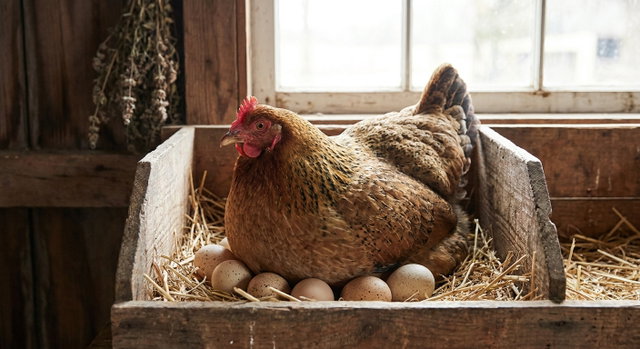
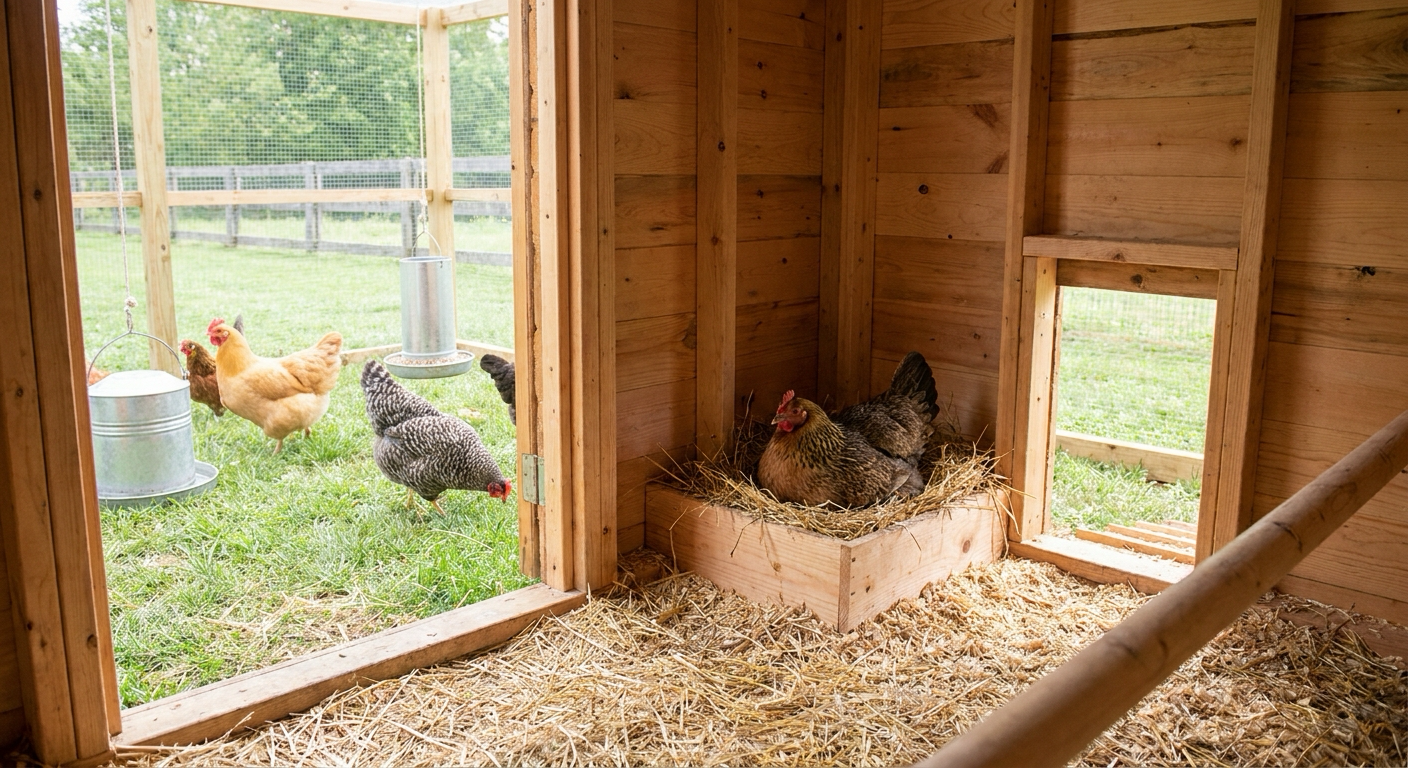
If you hatch under hens rather than a machine, the same reading applies; candle quickly in a dark room near the coop and return the eggs to the nest. The broody hen guide covers managing a sitting hen.
Candling duck, turkey, quail and pigeon eggs
The method is the same for other birds; the calendar and the shell change. Mississippi State’s incubation table lists chickens at 21 days, turkeys and most ducks at 28, Muscovy ducks at 35 to 37, geese at 28 to 34, coturnix quail at 17 and pigeons at 17, with turning stopping about three days before hatch (earlier for Muscovy ducks and geese). Scale your checks to that length: one early fertility check once vessels are readable, one later check, and nothing after lockdown.
- Ducks, turkeys and geese: longer incubations give you more room between checks. See how long duck eggs take to hatch, turkey eggs and goose eggs for the day by day timelines.
- Quail: speckled shells are hard to read, and the short incubation leaves little time; a bright, tightly focused light helps. Timings are in how long quail eggs take to hatch.
- Pigeons: the eggs are small and thin shelled and a pair is sitting on them, so keep any check brief and gentle. The pairing and nest side is covered in pigeon breeding.
Keep the candling record with the clutch
The strongest candling record is a count against the eggs you set, saved on the day you looked. On Creatures, a batch of incubating eggs is a clutch. When you set eggs from a hen, a flock or bought eggs, Creatures counts the days and plans the checks for the species. For chickens it schedules a first candling on days 7 to 10, a second candling and lockdown on day 18, and an expected hatch window; ready checks show up on your Today page. If you did your second check on day 14 to 16, log it against that step; otherwise candle quickly on day 18 just before you close the lid for lockdown. The set a clutch of eggs guide walks through it.
Choosing Candle the eggs asks for exactly the four piles from the method above: eggs looked at, then developing, clear, early dead and uncertain, which should add up to the eggs you looked at. You enter how many you pulled out, and you tick that pulled clears were infertile only if you actually confirmed it, which keeps the “clear is not proof of infertile” distinction in the record. For chickens around days 7 to 10 the form shows a simple reference sketch of vessels, clear and can’t assess. A missed check can be skipped or rescheduled, and the change stays in the clutch history.
Candling does not change your egg totals; the outcome of every egg is settled when you record the hatch. That step takes hatched and assisted chicks plus clear eggs pulled, eggs that stopped developing, failed after or without pipping, and broken eggs, then shows your hatch rate of the eggs set. Two more rates appear when your records support them: the rate of the eggs that were developing, once you have saved a candling check that covered every egg still in the incubator, and the rate of the fertile eggs, once your records contain a fertility assessment, such as a candling check that covered every egg you set, and every clear egg you pulled has been confirmed infertile. The record a hatch guide covers it. Those rates are why the candling counts matter. A low hatch of eggs set beside a good hatch of developing eggs tells you to look closer at what happened before that candling check: infertility, embryos lost early, or how the eggs were stored or incubated in the first days. The rates alone cannot tell you which, so read them alongside your candling notes and your incubator and storage records.
Clutches also appear on the breeding dashboard under Egg clutches. When chicks hatch, they stay together as a brood until you give individuals profiles; the chicken name generator helps with call names, and the raising baby chicks guide picks up from there.
If you sell chicks or hatching eggs, buyers ask about fertility and hatch rates, and a run of saved candling counts answers that with your own numbers. Sellers of hatching eggs and chicks should also read about NPIP certification, and exhibitors hatching show stock can read how judging and classes work in chicken shows.
Questions people ask about candling eggs
Can candling hurt the embryo?
Extension guidance from MSU says the test itself does not injure young embryos. The risks are chilling, dropping and handling too long, so take out a few eggs at a time and keep them out for no more than a few minutes.
How many times should I candle?
Twice is enough for most chicken hatches: once around day 7 for fertility and once around days 14 to 16 to catch quitters. Candling every few days is fine if you are learning or teaching, as Illinois suggests, as long as each session is short. Stop once the lid closes for lockdown.
Why can’t I see anything in brown or dark eggs?
Pigment blocks light. Wait until day 5 or 6 or later, use a brighter, tightly focused light, and make the room fully dark. Mark the egg uncertain rather than guessing.
Is this the same candling used to grade eggs for eating?
Same light, different question. Illinois Extension describes candling table eggs to check the air cell, the white and for blood or meat spots. Hatching egg candling is looking for an embryo.
Should I throw out a clear egg at day 7?
If it is clearly clear on a white egg at day 7, most keepers remove it. On a dark shell or when you are not sure, put it back and check again at the next candling. Removing an egg is permanent; waiting a few days rarely costs anything.
For more on keeping birds, start at the chicken hub.
Do this next on Creatures
You have a set of eggs going and want the checks and results kept with the batch. Start with the birds that laid them, then the record.
- Add your hen or flock so a clutch has a source. A flock can be tracked by head count; the adding an animal guide walks through the form.
- Record a candling result or hatch as a breeding record. The form opens for visitors; a free account saves it. See the adding a record guide.
- Create your farm profile if you sell chicks or hatching eggs. It has a guest signup path, and the breeder directory guide explains the listing.
- Save a chicken listing alert to hear when new birds are listed, if you are adding breeding stock.
- Browse chickens for sale and ask sellers for their own hatch and fertility records.
- Browse the breeder directory to find trusted poultry farms and contact them directly.