



Oriental Frill
The Oriental Frill is an ornamental Turkish pigeon prized for a soft frill of feathers running down the front of the neck and breast, a needle point peak crest, and heavily feathered “muffed” feet. It is a small, cobby show and pet pigeon with a famously calm disposition, not a racing or utility bird. The names cause most of the confusion. The birds hobbyists keep and love as gentle house pigeons are the Classic (Old Fashioned) type, which can still raise their own young; the Modern Oriental Frill is a more extreme show form bred to such a short beak that many pairs cannot feed their squabs without help. This page covers where the breed comes from, how to recognize it, the two lines you will run into, what it is like to keep, and what to check before you buy.
Browse listings, public profiles, breeders, or add your animal.
What is an Oriental Frill pigeon?
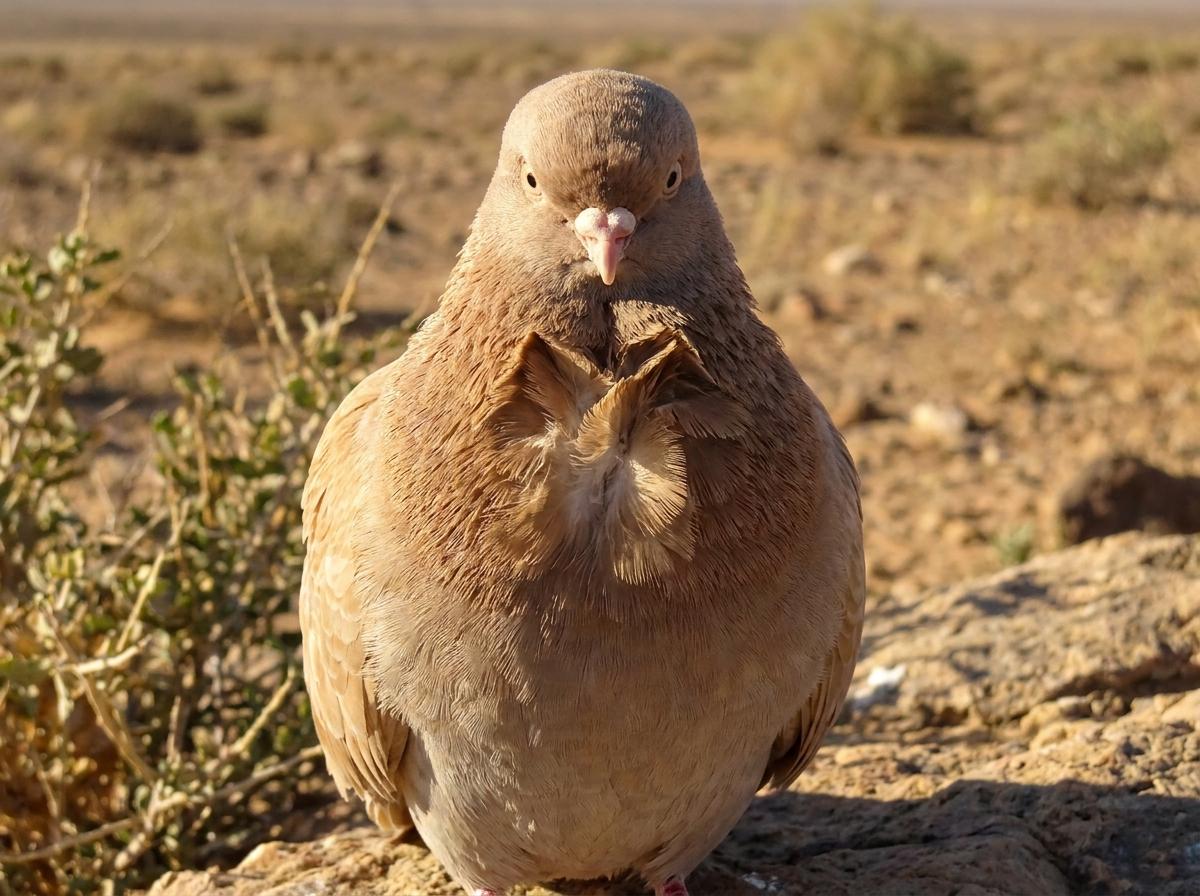
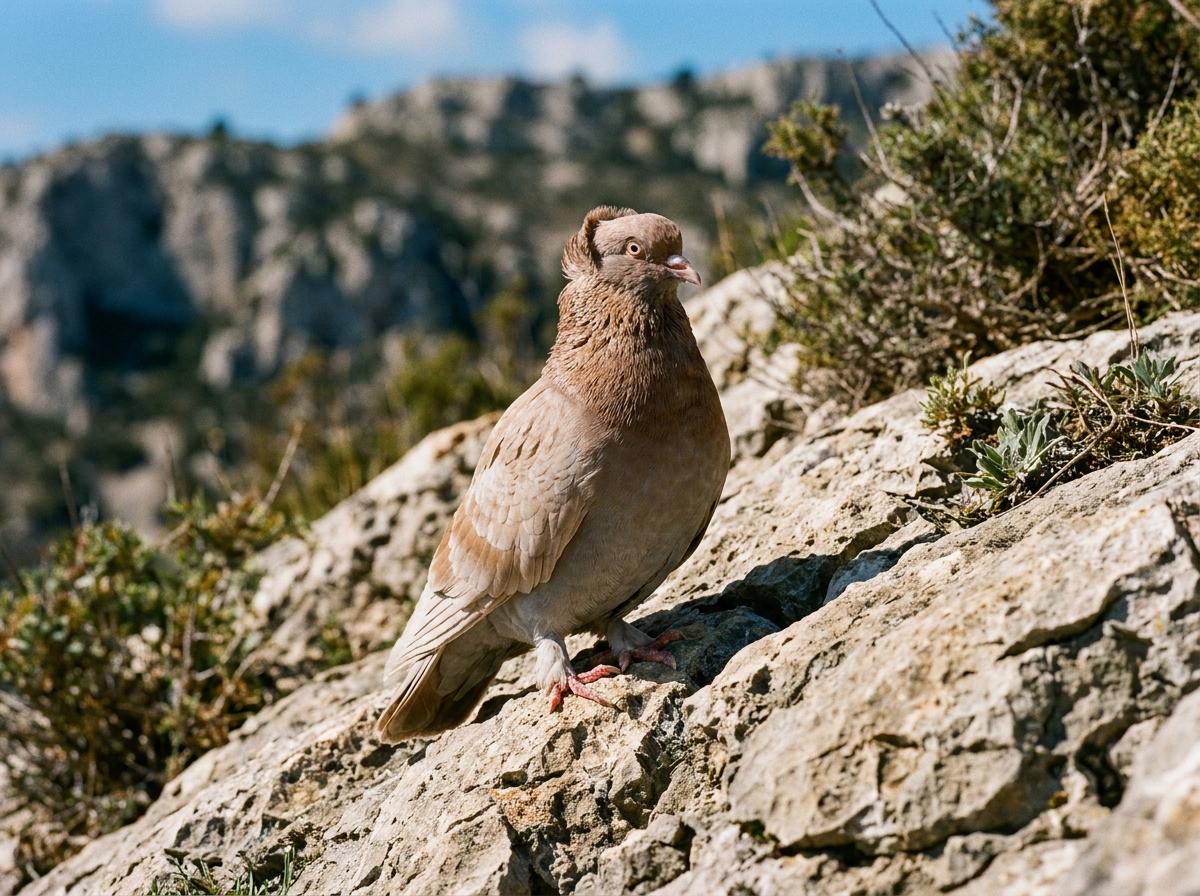
The Oriental Frill is a fancy pigeon, kept for its looks and the show bench and increasingly as a companion bird, not for racing or the table. It belongs to the wider frilled and turbit family of ornamental pigeons and is one of the most decorated of them. The trait that gives the breed its name is the frill: a run of feathers along the front of the neck and breast that curl outward instead of lying flat, a bit like ruffles down the front of a dress shirt. Add the upright crest and the feathered feet and you get a bird considerably more elaborate than the feral pigeons on a city ledge, though it is the same species underneath.
If you are comparing crested and feather footed fancy pigeons, the Creatures pigeon species page shows the Oriental Frill alongside relatives such as the Fantail and the crested Jacobin. What sets it apart from those is the combination: the frill plus the peak crest plus the muffs, on a small, rounded, cobby body.
The name trips up almost everyone new to the breed, so settle it up front. “Oriental Frill” gets used loosely for the whole breed, but in practice there are two distinct lines with very different care implications, the Classic (Old Fashioned) and the Modern. We cover that split in detail below, because it decides whether the birds can raise their own young.
Origin and history
The Oriental Frill is a Turkish breed. In its homeland it is known as the Hünkari, roughly “the bird of the sultans,” and tradition holds that it was developed for the Ottoman court, with the Manisa region of western Turkey named as its cradle (the Classic Frill Club records the Manisa Palace connection). The courtly origin story is part lore, as these things usually are, but the Turkish provenance is well established, and the breed carries clear marks of the region’s frilled and turbit type pigeons.
The arrival in the West is easier to pin down. According to the Classic Frill Club, the Oriental Frill was imported into England in 1864 by H. P. Caridia, brought from Izmir (the port long known as Smyrna) on the Turkish coast. It reached North America not long after, first exhibited in the United States in 1879, and the American Oriental Frill Club was organized in 1893. The breed had a serious following on both sides of the Atlantic well over a century ago.
A piece of breed vocabulary survives from all this. The small white spots that appear on the tail of many birds are traditionally called “the seal of the sultan,” a nod to the palace legend. The markings carry the story of where the bird came from.
What an Oriental Frill looks like
The Classic Frill Club publishes the breed standard that show judges score against, and it is the most reliable description of what the breed should be. Birds are judged on general impression, body form, head and beak, crest, neck and frill, markings, and color, so the ornamental features carry real weight on the bench. The diagnostic traits, drawn from that standard:
- The neck and breast frill. The signature. The standard asks for the frill to run from the middle of the gullet down into the breast, ideally about two inches in length, with the feathers curling outward. Breeders favor a short, profuse, dense frill over a long, sparse one.
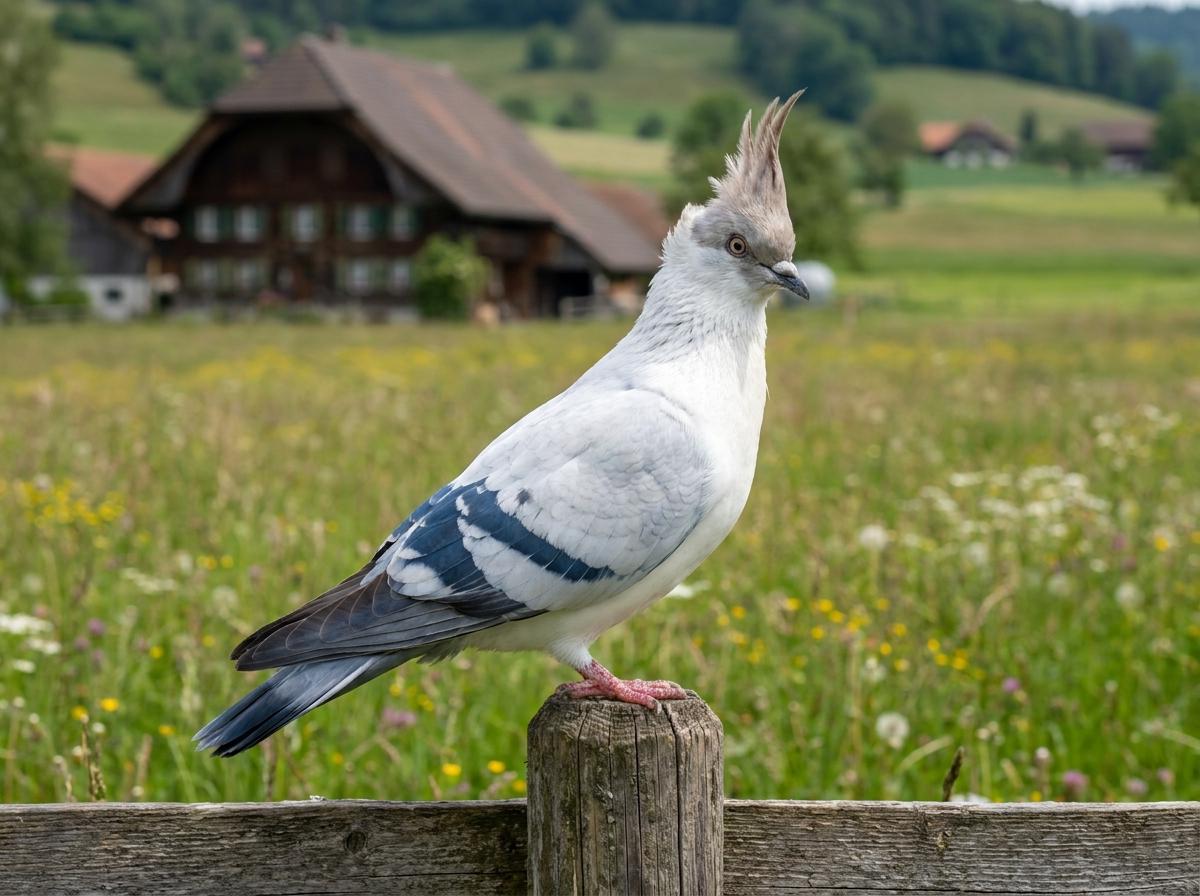
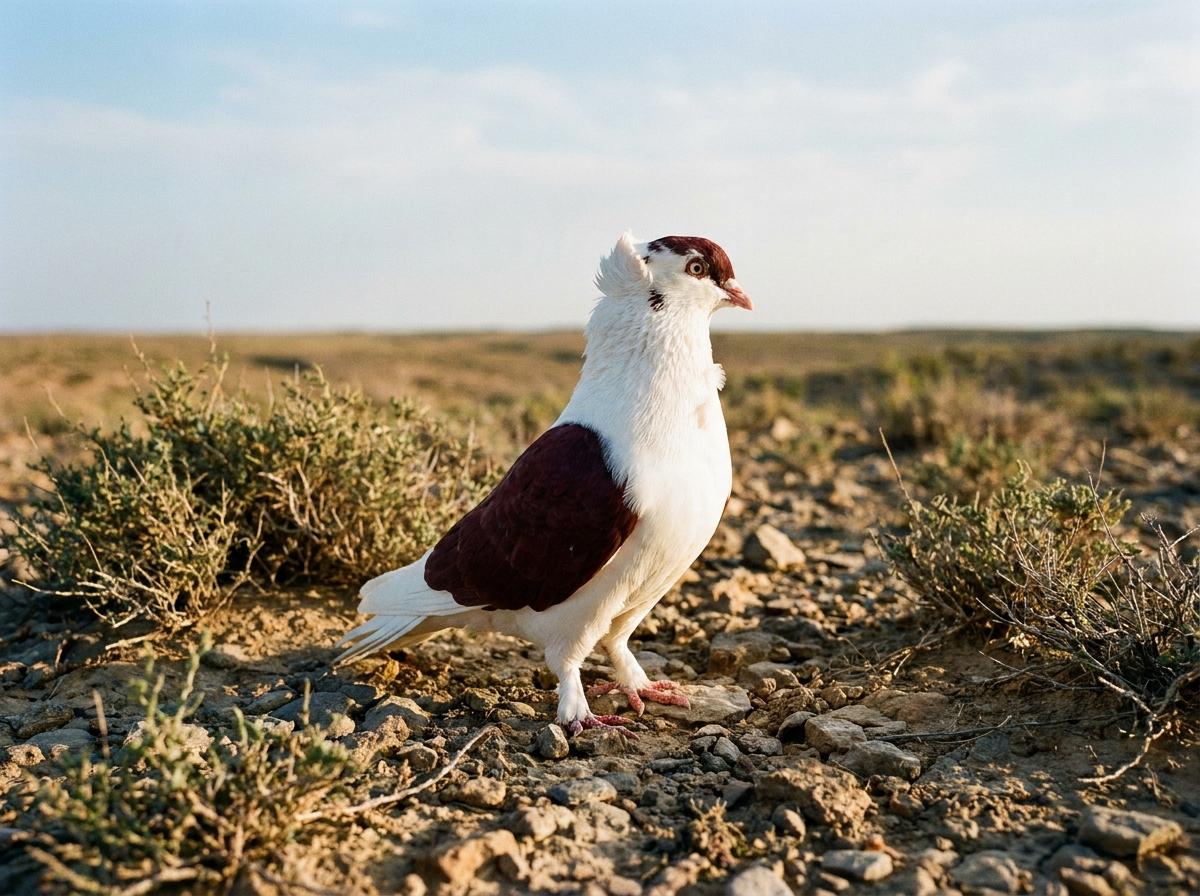
- A needle point peak crest. A single upright peak at the back of the head, central and pointed, which the standard says should rise at least as high as the highest part of the head. A sharp peak, not the shell or mane crests you see on some other breeds.
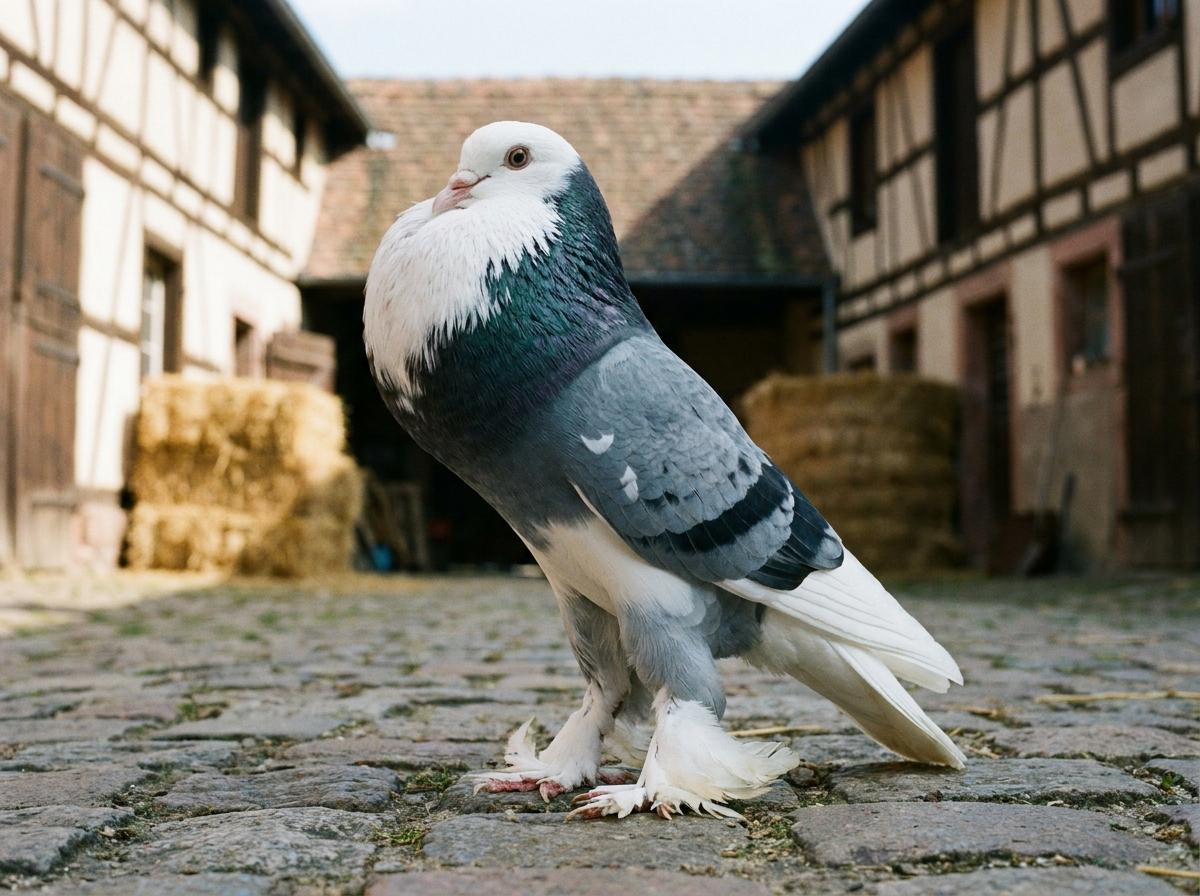
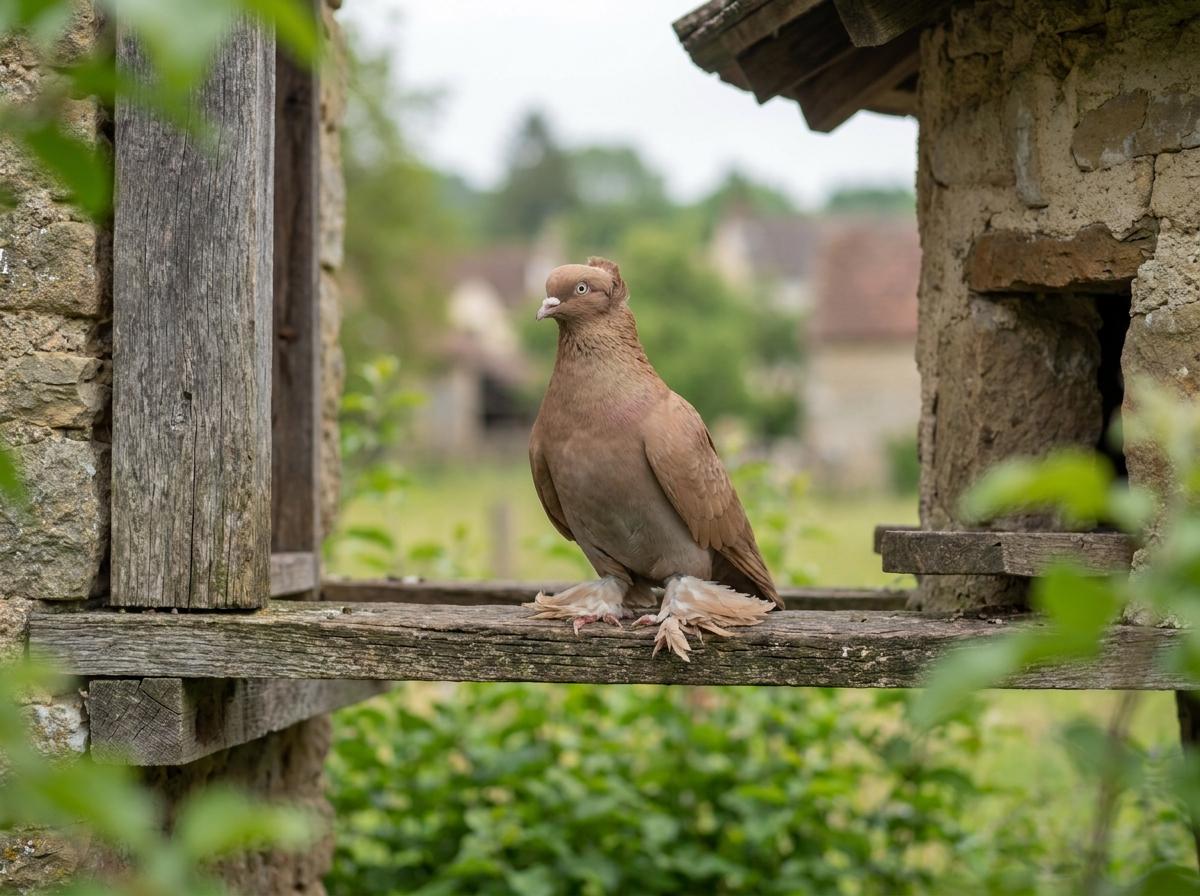
- Grouse muffed feet. The legs and feet are heavily feathered right down to the toenails, the “grouse muff” look. Well grown muffs flare out at the bottom and count in the show picture.
- A short, thick beak that blends into the head. In the Classic type the beak is medium short and substantial, and the standard prizes a smooth, uninterrupted curve running from the tip of the beak up over the forehead to the tip of the crest, with no obvious break in that line.
- A small, cobby body with an upright stance. Compact, rounded birds, not long and racy. The standard describes a station at close to a 45 degree angle with the tail tip just clearing the floor. Average weight runs about 11 to 12 ounces, roughly 310 to 340 grams.
- A round head and large, bright eyes. The head is roundish to slightly oval, substantial, and wide, with large prominent eyes. In Satinettes the eye is dark (a “bull” eye), a detail judges look for.

Classic versus Modern Oriental Frill
This is the most important practical distinction in the breed, and it is easy to miss if you only read the headline name. Both lines descend from the same Turkish stock, but decades of show selection pulled them apart.
The Classic Frill, also called the Old Fashioned or Old Style Oriental Frill, keeps a medium short beak. That extra length matters. Pigeons feed their newly hatched young on “crop milk,” a rich secretion both parents produce, delivered by the squab reaching into the parent’s mouth, and a Classic Frill has enough beak to do it. A pair can hatch and raise their own babies without help. This is the type most people keep as pets, and the type the Classic Frill Club exists to preserve.
The Modern Oriental Frill has been bred for a much shorter, blunter beak as an exaggerated show trait. Breeders document the trade off plainly: many Modern pairs physically cannot feed their own squabs, so keepers rely on “foster feeders,” usually homing pigeons or other longer beaked breeds that hatch and rear the frills’ young for them. That means keeping a second set of birds to run a nursery, and it is the single biggest thing to weigh before choosing between the lines. If you want pigeons that raise their own families with minimal fuss, buy Classic.
Colors and markings
Color is half the fun of this breed, and the pattern vocabulary is specific. The two headline groups are Satinettes and Blondinettes. According to the Classic Frill Club, a Satinette is essentially white except for a colored shield (the wing coverts) and a colored tail, usually with white bars or lacing on the shield and moon spots or lacing on the tail. A Blondinette carries the same style of markings on a whole colored bird, with no solid white feathers, so the plumage is toned rather than white bodied.
Underneath those pattern groups sit the base colors. The club’s recognized color chart includes blue, silver, brown, khaki, ash red, ash yellow, black, dun, lavender, recessive red, and recessive yellow, plus an “any other color” class for less common genetic factors. So a bird might be a blue laced Satinette, or a black Blondinette. Nobody expects you to memorize the chart on day one; the variety within this one breed is the point, and learning to see it is a good part of the hobby.
Temperament
Oriental Frills have a reputation as one of the gentler pigeon breeds, and it is deserved. Keepers consistently describe them as calm, docile, and affectionate, quieter than many breeds, quick to settle with regular handling. That easygoing nature, plus the small size and the ornamental looks, is why so many people keep them as companion birds rather than purely for show.
Two honest caveats. Pigeons are flock animals and do not thrive alone, so a single bird kept as a pet needs plenty of daily interaction or, better, a companion of its own kind. And temperament varies with the individual and with how much gentle handling a bird got when young: a frill raised with regular, calm human contact will be far tamer than one that never was. Treat “docile breed” as a strong starting tendency, not a guarantee about any particular bird.

Keeping Oriental Frills
None of what follows is exotic. Oriental Frills are kept much like other fancy pigeons, with a few extra considerations that come from the frill and the feathered feet. Take this as the structure of good management rather than an exhaustive manual, and lean on a veterinarian who sees birds for anything medical.
Housing
Frills need a dry, draft free loft with good ventilation, secure against predators and vermin, with perches, nest boxes, and clean feeding and watering stations. Footing matters more for this breed than for a clean legged pigeon: heavily muffed feet pick up damp and droppings, and the foot feathers break or foul on wet or dirty flooring. Keep bedding clean and dry, and give the birds room so the muffs and the frill stay in good condition. Most keepers house these ornamental birds in an aviary or loft rather than flying them loose the way racing pigeons are exercised.
Feeding
A pigeon diet is straightforward: a good quality mix of grains and legumes, constant access to clean fresh water, and grit, which pigeons need to grind their food. Many keepers also offer a mineral or “pigeon pick” supplement, especially through breeding season when parents are producing crop milk and feeding squabs. Nothing about the ration is breed specific; these birds are small, so they eat modestly.
Breeding
Here the two lines diverge sharply, so decide which you are keeping before you pair birds up. Classic Frills pair off, build a nest, and raise their own young like any self sufficient pigeon, both parents sharing incubation and feeding. Modern Oriental Frills, with their very short beaks, frequently cannot feed their squabs and need foster feeders standing by, which means running additional pairs of a longer beaked breed and managing the fostering. Even with Classic birds, the crest and heavy muffs can make some pairs clumsy at the nest, so clean, roomy nest boxes and attention through hatching help. Keep records of pairings, hatch dates, and which parents reared well. That history is what lets you make breeding decisions instead of guesses.
Health
Routine pigeon health care applies: keep the loft clean and dry, provide grit and clean water, watch for the common pigeon ailments (respiratory infections, canker, worms, and external parasites among them), and build a relationship with an avian or exotics veterinarian for diagnosis and any medication. Do not treat by guesswork. Leave drug choices and dosing to the vet, since many products sold for pigeons are easy to misuse. Only two things to watch are breed specific: foot and muff condition, which follows from damp or dirty housing, and in short faced Modern birds the feeding limitation already described. Good records of health events and treatments make it far easier to spot a pattern and to give your vet an accurate history.
Size, weight, and lifespan
The Classic Frill Club standard puts average weight at about 11 to 12 ounces (roughly 310 to 340 grams), which makes this a small to medium pigeon, compact and rounded rather than large. Individual birds vary, and the figure describes the show ideal rather than a hard limit.
Lifespan is harder to state precisely, and there is no formal breed specific survival study for the Oriental Frill. Domestic pigeons in good care generally live on the order of a decade, some individuals considerably longer, and hobby sources commonly cite roughly 7 to 12 years for this breed. Treat that as a general expectation shaped by diet, housing, protection from predators, and veterinary care rather than a guaranteed breed number. A well kept pet frill can be a companion for many years.
Cost and availability
The Oriental Frill is an established fancy breed with a dedicated club and a steady following, so it is not rare in the way an endangered landrace is, but you will not find one at a pet store either. Birds come from hobby breeders and fanciers, often through breed clubs, pigeon shows, and word of mouth within the fancy.
Prices vary widely with quality, set by the individual bird’s conformation, markings, color, and show record, so there is no single reliable public figure and we will not invent one. Ordinary pet quality birds change hands for modest sums typical of fancy pigeons; top show birds from proven lines command a good deal more. What matters more is that this is a relationship driven hobby. Getting a fair price and a healthy, correctly typed bird has more to do with finding a reputable breeder than with hitting a specific number.
Buying considerations
Because the breed’s name hides a real split, and because ornamental features can mask health issues, buy on evidence and ask questions.
- Decide Classic or Modern first. This is the whole game. If you want birds that raise their own young with normal effort, buy Classic (Old Fashioned) stock. Only take on Modern Oriental Frills if you are prepared to keep and manage foster feeders.
- See the bird feed and move. In a young bird, watch that it eats well on its own and moves soundly on those muffed feet. A frill that struggles to pick up grain is a warning sign, especially in short faced lines.
- Check condition, not just markings. Bright eyes, clean nostrils, smooth breathing, and a full, firm body matter more than a perfect shield. Damaged or dirty muffs and a bedraggled frill point to poor housing.
- Ask about the line and its history. A good breeder can tell you the bird’s color and pattern, its parents, whether the line self feeds, and what it has been shown as. That conversation tells you as much as the bird does.
- Buy from someone reachable. Fancy pigeons are a long game, and a breeder you can go back to with questions is worth a premium over an anonymous seller.
You can look for pigeon listings and breeders through the Creatures marketplace and the Creatures directory. Because good frills tend to move within the fancy rather than sit in open listings, a saved listing alert (below) is often the most practical way to catch one when it is posted.
Frequently asked questions
What is the difference between an Oriental Frill and a Classic or Old Fashioned Frill?
They are the same breed at root, but two lines. The Classic (also called Old Fashioned or Old Style) keeps a medium short beak and can feed its own young. The Modern Oriental Frill has been bred for a much shorter beak as a show trait, and many pairs cannot feed their squabs without foster feeders. For a self sufficient pet, choose the Classic type.
Are Oriental Frills good pets?
Yes, for the right keeper. They are small, calm, and among the gentler pigeon breeds, and they tame well with regular handling. Like all pigeons they are social and should not be kept entirely alone without lots of daily interaction or a companion bird.
Can Oriental Frills feed their own babies?
Classic Frills can, because they retain enough beak length to deliver crop milk to their squabs. Many Modern Oriental Frills cannot, and their keepers use foster feeders such as homing pigeons to raise the young.
How big do Oriental Frills get?
Small to medium. The breed standard puts average weight at about 11 to 12 ounces (310 to 340 grams), on a compact, cobby body.
What are Satinettes and Blondinettes?
They are the two main marking groups. A Satinette is largely white with a colored wing shield and colored tail. A Blondinette carries the same style of markings but on a whole colored body, with no solid white feathers.
Why is it called the bird of the sultans?
The breed is Turkish and is known in its homeland as Hünkari, “the bird of the sultans,” from a tradition that it was developed for the Ottoman court in the Manisa region. The white tail spots are still nicknamed “the seal of the sultan.”
Do this next on Creatures
Whether you are researching the breed, hunting for good stock, or already keeping frills, Creatures is the records, marketplace, and directory layer to do it in one place.
Add your bird. Already keeping Oriental Frills? Create a free animal profile in a few minutes. The walkthrough is in adding an animal to Creatures.
Track pairings and health. Keep breeding, molt, and health records on Creatures. The record sheet opens for any visitor to look around, and you will need a free account to save what you enter. See adding a record and health and medical records for the full how to, and your animal’s profile page to see where everything lives.
Find stock. Browse pigeons on the marketplace and search trusted breeders and lofts in the Creatures directory.
Get alerted. Good frills often move within the fancy, so set a free Oriental Frill listing alert and we will tell you when one is posted. No account needed to start.
List your loft. Breed frills yourself? Add your loft as an organization and get listed in the breeder directory so buyers looking for this breed can reach you.
Explore more breeds. Compare relatives on the pigeon species page, and browse further afield on Creatures, from the Large White (Yorkshire) pig to the hinny.