National Swine Registry: How to Register a Purebred Litter
Author: Elliott Garber, DVM · Published
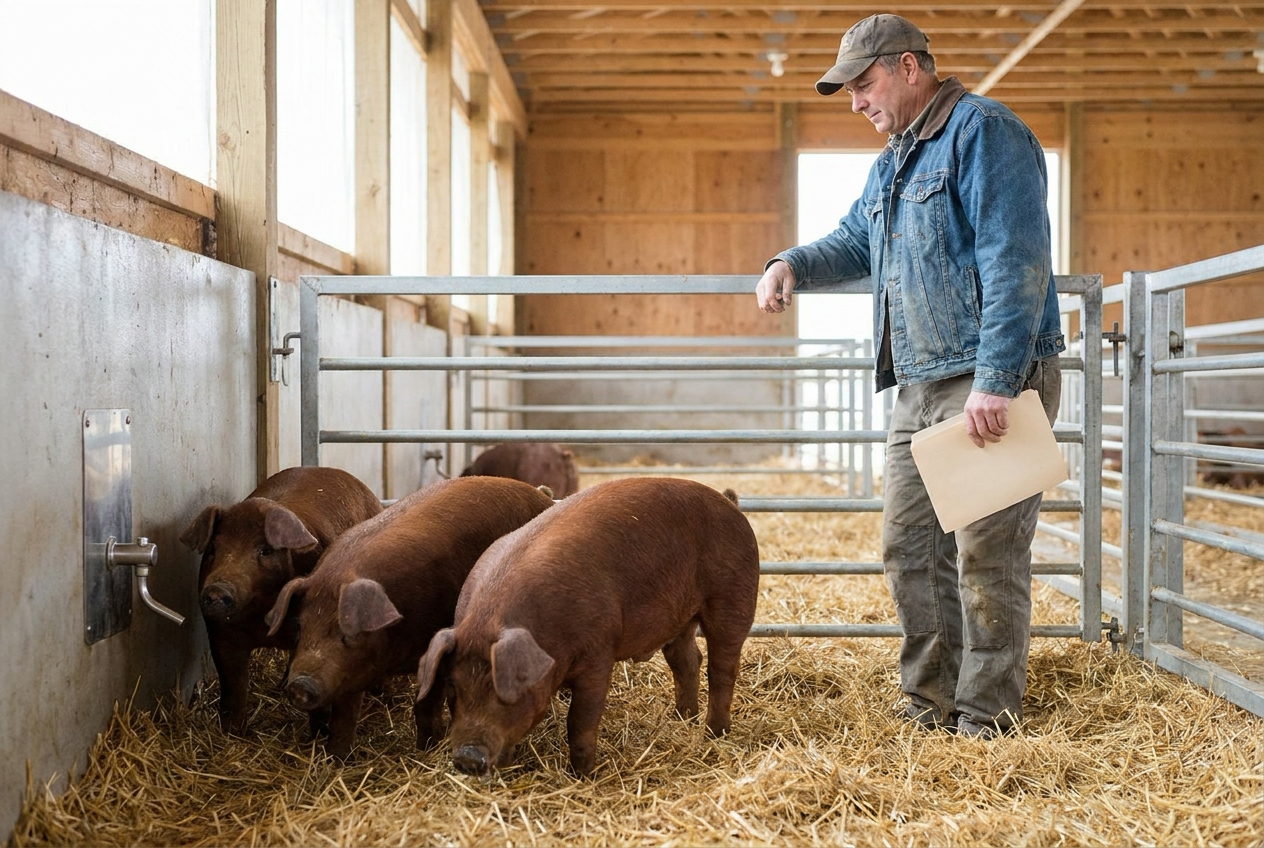
The National Swine Registry (NSR) is the pedigree association for purebred Duroc, Hampshire, Landrace and Yorkshire pigs in the United States, run from one office in West Lafayette, Indiana. It registers pigs by the litter, so the paperwork starts before farrowing: you need an NSR membership and herdmark, ownership of the dam, and a sire whose DNA, stress status and breed profile test are already on file.
That last requirement is the one that catches breeders out, because the sire DNA work takes weeks and the cheapest registration window closes when the pigs pass 90 days of age. Count forward from the service date with the free pig gestation calculator and you can see how much time you have to get the boar’s results back before the litter is due.
Rules and fees checked November 14, 2026 on the NSR’s own pages: litter registration, fees and rates, DNA policies, breed eligibility and the transfer form. The fee page itself says prices took effect in March 2023 and are subject to change, so recheck it before you send money.
| Breeds | Duroc, Hampshire, Landrace and Yorkshire |
|---|---|
| What is registered | A litter and its eligible pigs, by the owner of the dam |
| Before you apply | Membership and herdmark, sire DNA banked, stress negative and breed profile tested |
| Sire test turnaround | About 6 to 8 weeks, per the NSR |
| Identification | Universal ear notches: right ear for the litter, left ear for the pig |
| Cheapest window | Online, member, pigs 90 days of age and under |
| How to submit | Online account set up by phone, or the mail-in application |
| Checked | November 14, 2026 |
What the NSR covers, and what it does not
According to the NSR’s history page, the registry formed in 1994 when the American Yorkshire Club, the Hampshire Swine Registry and the United Duroc Swine Registry consolidated, and the American Landrace Association joined in January 1998. The four breed associations still exist and still set their own breed rules; the NSR runs the shared office, litter registrations, transfers, performance pedigrees and STAGES, its Swine Testing and Genetic Evaluation System. The NSR says these four breeds make up 87 percent of the purebred hog population in the United States.
If your pigs are Duroc, Hampshire, Landrace or American Yorkshire, this is the office that issues their papers. Other breeds go elsewhere. Our Chester White guide explains why Chester White papers come through Certified Pedigreed Swine rather than the NSR, and the Berkshire guide covers the American Berkshire Association. A pig with papers from the wrong office for its breed is worth a phone call before you buy it.
What you need before you register a litter
The NSR’s one-page checklist, What is Required to Register My Purebred Litter, boils down to five things. Get them lined up while the sow is bred, not after the piglets arrive.
- Membership and a herdmark. The fee schedule lists a one-time senior membership of $10 per breed and a maintenance fee of $75 a year per breed, which includes the Seedstock EDGE subscription. Junior membership, for members 21 or under as of January 1 of the current year, is free.
- Registered ownership of the dam. You must be the registered owner of the sow or gilt whose litter you are registering. If you bought her, finish her transfer first.
- A sire that meets the DNA rules. He needs a DNA sample banked with the NSR (blood, semen or hair on a DNA card), a verified stress negative status and a passed breed profile test. The NSR warns this can take about 6 to 8 weeks.
- An AI certificate when you used someone else’s boar. If you bought semen from a stud or another breeder, the boar’s owner requests the AI certificate for your herdmark and sends it directly to the NSR. You still write the sire’s ear notch and registration number on your application. A bred gilt bought from another breeder needs the same certificate issued to your herdmark.
- A way to submit. To register online, call the NSR to have a username and password set up; the office keeps a credit card on the account. Otherwise print the mail-in application and send it with a check, money order or card details, as the litter registration page describes.
Record the service date the day it happens. Our pig farrowing guide uses 114 days from first service as the planning number, and every registration deadline below is counted from the farrowing date that follows.
Sire DNA rules by breed
The sire requirement has grown in layers over twenty years, and the NSR’s DNA policy page lists each one. All four breeds share two older rules: sires must be DNA banked before any litter farrowed after July 1, 2002 can be recorded, and every sire needs a negative stress status on file, by DNA test, for litters farrowed on or after July 1, 2004. On top of that, each breed now requires a DNA Breed Profile Test.
| Duroc | Boars farrowed on or after November 1, 2017 must pass the Duroc test to sire a registered litter |
|---|---|
| Hampshire | Litters born on or after June 1, 2019 must be sired by a boar that passed the Hampshire test |
| Landrace | Litters farrowed on or after March 1, 2018 need a sire that passed the Landrace test |
| Yorkshire | Required for samples submitted on or after July 1, 2016; sires with a physical test mating on file or earlier recorded litters are exempt |
| What is tested | Breed composition for all four; Yorkshire, Landrace and Hampshire sires must also pass a color component |
| All breeds | DNA banked and stress negative on file; the animal tested must already have an NSR registration number |
Three practical points follow from those rules.
Test the boar before he works, not before the litter is registered. A boar cannot be tested until he has his own NSR registration number, and results take weeks. The NSR explains that samples ship to the lab each Friday and are genotyped in batches of 24, so mail schedules, holidays and sample quality all move the date. Sending the sample when a young boar is selected keeps his first litters from waiting.
Two passing parents can still produce a pig that fails. The NSR says so plainly: littermates inherit different halves of each parent’s genes, so a pig can carry more non-breed DNA than either parent. Treat a pass on the sire and dam as a good sign, not a guarantee for every offspring.
A dead or culled boar has a fallback. Under the NSR’s dead boar policy, when no usable sire sample exists, at least four pigs from the litter are DNA banked and tested to the breed’s current rules, or the whole litter if it has fewer than five head. A sample from the dead boar’s dam can also be tested instead. None of this is fast, so plan show and sale deadlines around it.
The stress rule also follows animals after sale. The NSR says no known stress positive or carrier animal may be exhibited or sold at an NSR-sponsored event, and a Yorkshire, Landrace, Duroc or Hampshire later proven positive or a carrier by a documented DNA test from a certified lab has its pedigree cancelled. AI certificates must state the sire’s stress test status. Your veterinarian is the right person for any health questions behind those results.
Ear notches: the ID the registry reads
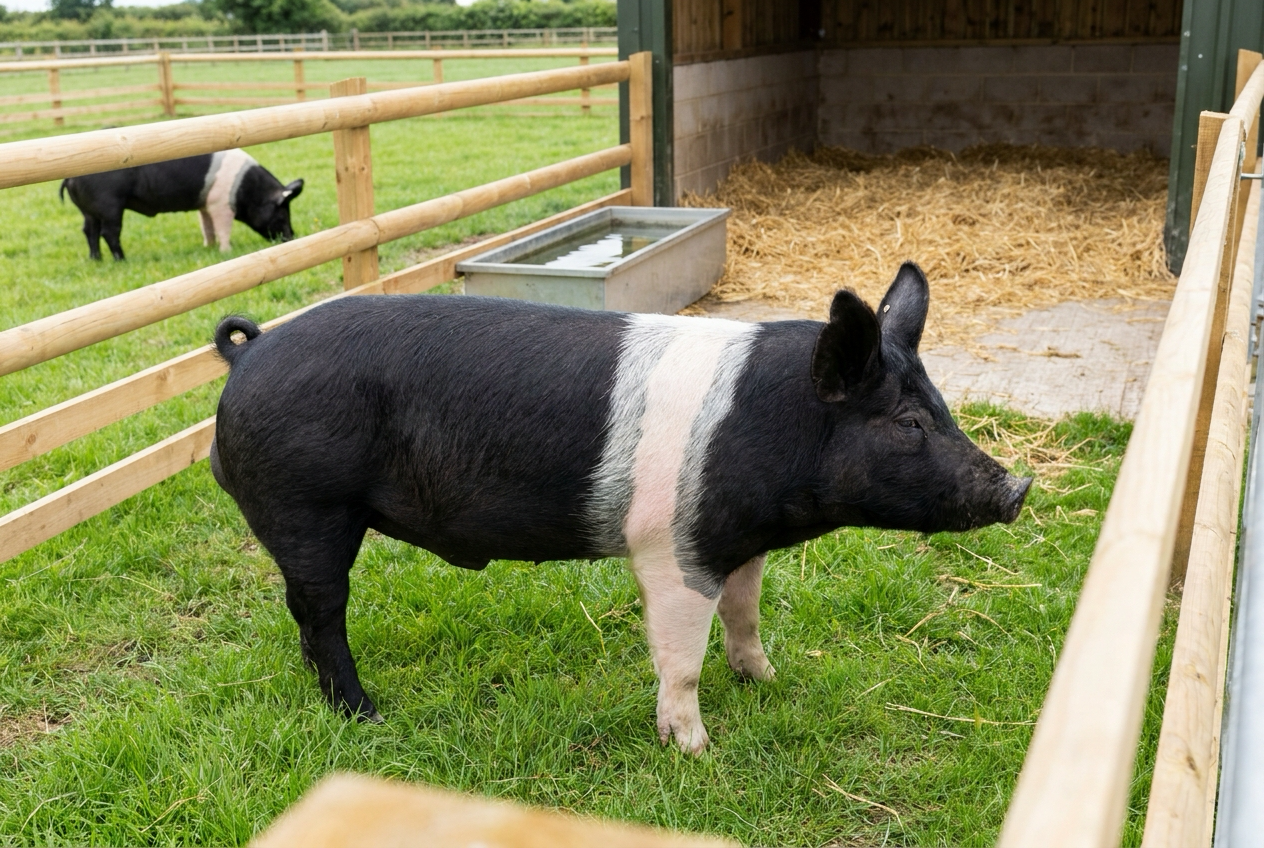
NSR pigs are identified by ear notches, and the application form prints the rules beside the universal notching key. The right ear carries the litter mark, so every pig in a litter has the same right-ear notches. The left ear identifies the individual pig, so littermates all have different left-ear notches. No more than two notches may be made at any position, and only one at the 81 position on the tip of the right ear.
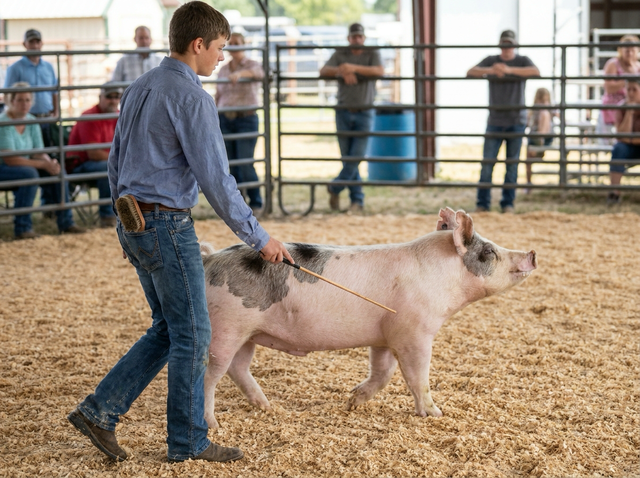
Each breed’s eligibility requirements say pigs must be ear notched within seven days of birth. Learn the technique from an experienced breeder or your veterinarian, and write each pig’s notch on the litter sheet the same day. A notch that does not match the paper is exactly what a careful buyer or show office looks for, and our showing pigs guide explains how fairs layer their own identification rules on top.
What the litter application asks for
The registration application has a row per litter. The starred, required fields are the dam’s and sire’s ear notches and registration numbers, the litter number, the farrow date, total number born, number born alive and each pig’s individual notch, with boars and gilts listed separately. It also has columns for parity, weaning date, estrus date and other sow productivity figures, plus a left and right teat count for each pig. The NSR’s pedigree department enters this kind of data into STAGES, which is why the fee line is called “PureBred Litter Registration and Sow Productivity.”
Teat counts matter because the underline rules decide whether a pig can be recorded or shown as a breeding animal. Per the breed eligibility page, pin teats and inverted nipples are not counted as functional.
| Duroc | May be recorded with fewer than 12 teats; six or more functional teats per side to show as breeding stock |
|---|---|
| Hampshire | May be recorded with fewer than 12 teats; six or more functional teats per side to show as breeding stock |
| Landrace | At least six functional udder sections per side to be recorded and shown |
| Yorkshire | Six or more functional teats per side to be recorded and shown |
The same page sets color, ear set and defect rules for each breed, from the Hampshire belt to spot limits on Yorkshires and Landrace. Read your breed’s section before you decide which pigs to put on the application.
Registration fees in 2026
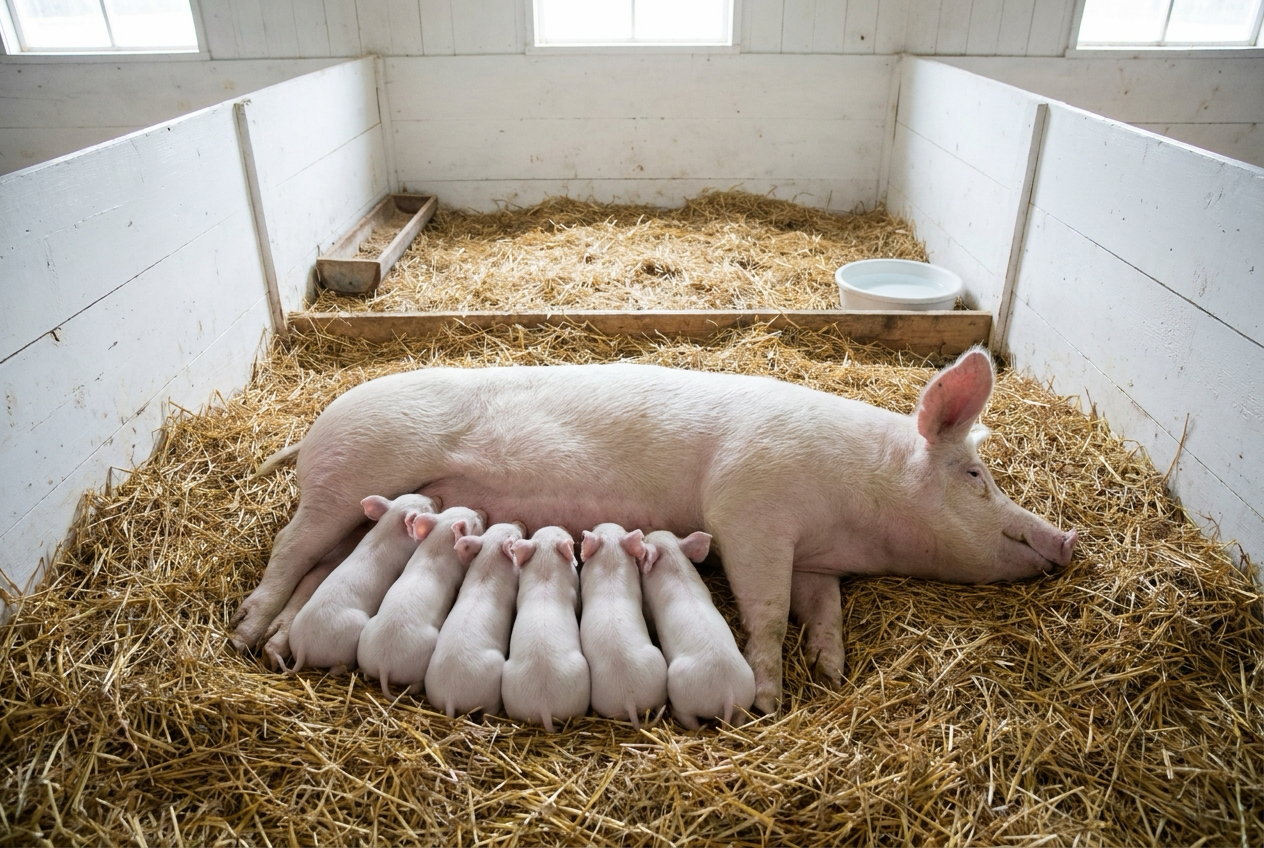
These are the purebred litter rates on the NSR fees and rates page, checked November 14, 2026. Each fee covers a litter and all its eligible pigs, and it rises with the pigs’ age at registration.
| Online, 90 days and under | $20 member, $35 nonmember |
|---|---|
| Mail-in, 90 days and under | $25 member, $40 nonmember |
| Online, 91 to 150 days | $45 member, $85 nonmember |
| Mail-in, 91 to 150 days | $50 member, $90 nonmember |
| Online, older than 150 days | $80 member, $155 nonmember |
| Other published rate, older than 150 days | $85 member, $160 nonmember (NSR’s fee sheet does not say which filing channel this rate is for; call the office before mailing an older litter) |
| Adding a pig to a recorded litter | $5 per pig |
The same page lists the other charges breeders run into most often.
| Transfer, 60 days or less from sale | $10 |
|---|---|
| Transfer, more than 60 days from sale | $20 |
| Junior transfer | $10 |
| Gilt lease | $25 |
| DNA breed profile test | $70 up to 12 months of age, $140 at 12 to 18 months, $210 over 18 months (or by time since purchase) |
| DNA card or DNA banking | $6 each |
| Stress test | $30 |
| Crossbred registration | $20 per boar, $10 per female or barrow |
Two patterns are worth acting on. Registering the litter online while the pigs are 90 days or younger costs a member $20, against $80 or more once they pass 150 days, so a litter you mean to sell as registered stock should go in early. And the breed profile test gets dearer as the boar ages, which is one more reason to test young boars when you select them.
Transfers, leases and buying registered pigs
When a registered pig changes hands, the seller files the transfer form. The NSR marks the form as for seller use only and says buyers must submit pedigrees for transfer of ownership; if you are buying, agree with the seller who sends what before you pay. The form asks for the pig’s ear notch, sex, breed, registration number, sale date and the buyer’s details, and for a bred sow, the boar she was bred to, his registration number and the date bred.
The transfer fee doubles once more than 60 days have passed since the sale date, so file it the week of the sale. Leased show gilts have their own line: the lessor, not the lessee, submits the lease, and the $25 fee covers both the transfer out and the transfer back. The NSR posts a sample show gilt lease on the transfers page.
Before money moves on a registered pig, match three things: the notches on the pig, the notches and number on the certificate, and the sire’s DNA and stress status. Our guide to what a pig costs covers how papers change the price of breeding stock and show prospects.
Keeping NSR papers and litter records on Creatures
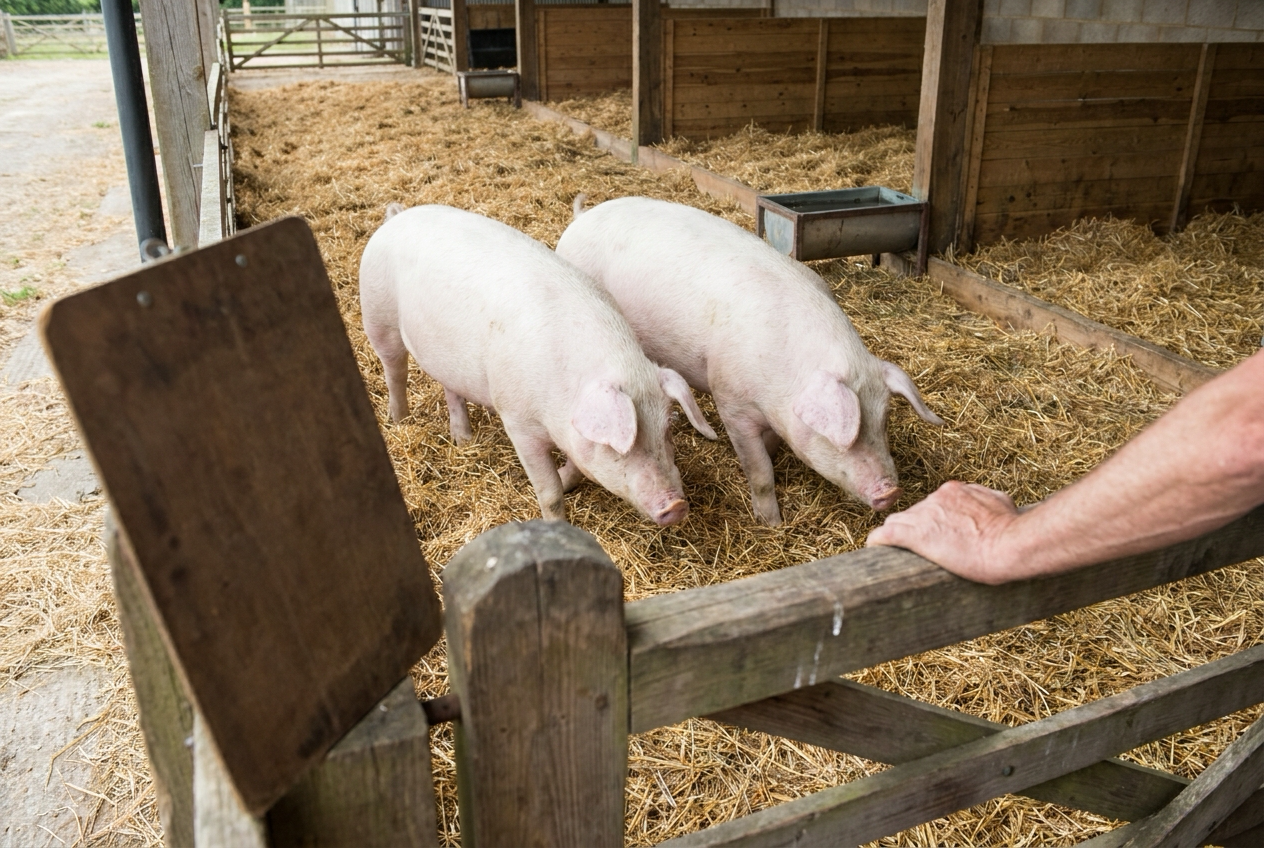
Creatures is where you keep the working records behind the registry paperwork; the NSR is still where pigs are registered and transferred. Adding a registration number or a certificate to Creatures never registers a pig with the NSR or submits anything to it.
Here is how the NSR job maps onto Creatures records:
- The pig and its papers. Add each breeding animal’s profile, then a Registration record. National Swine Registry is an option in the registry picker, with fields for registered name, registration number, a link and notes. The identity records guide covers registration and identifier records together. Creatures has no ear-notch identifier type, so keep the notch with the registration record or as the closest ear ID your farm uses, and match it to the paper.
- The sire’s DNA results. Log the breed profile test and stress result as a Test Result record, with the sampling date, report date and result, so the boar’s status is on hand when you fill in the application. Health and medical records explains the test result form.
- The service. A breeding record takes natural service or artificial insemination, the sire picked from your animals or typed in for an outside boar, and the service dates. Turn on due date tracking and Creatures projects the farrowing date and adds reminders on the Breeding dashboard. The recording a breeding guide walks through it.
- The litter. Record the birth with born alive and stillborn counts and Creatures creates the litter and a profile for each piglet, which is where each pig’s notch and sex go. See recording births and creating a litter.
- The pedigree. With parents linked, each pig has a pedigree view you can export, and the free pedigree chart maker works without an account when you only want a chart for a sale sheet or show entry.
- Show weights. For a quick estimate between scale weighings, the pig weight calculator works from heart girth and body length.
If your existing papers are PDFs or phone photos, sign in with a free account and use Import; the import guide lists the file types and limits, and everything is reviewed before it is saved.
Shows and junior exhibitors
The NSR runs open and junior shows and the National Junior Swine Association. Its DNA page says juniors do not have to test pigs before exhibiting, but champions and reserve champions, including Bred and Owned winners, are tested for parentage, stress and Hampshire color, and since January 1, 2021 must pass their breed’s profile test. Exhibitors who show more than one species will find the same discipline of matching paper to animal at poultry shows, where the standard and the entry rules drive what gets recorded.
On Creatures, show placings can be kept on each pig’s profile as show results. Creatures does not list or take entries for shows.
Questions breeders ask
Can I register a pig I bought as a weaned feeder?
NSR registration happens by litter, through the owner of the dam. If the pig came from a registered litter, ask the seller to file the transfer so it moves into your name. If the litter was never recorded, only the dam’s owner can register it, and the fee climbs as the pigs age.
Does the NSR register crossbreds?
It registers crossbred boars, gilts, sows and barrows through its voluntary CrossCheck program, at $20 per boar and $10 per female or barrow, with optional DNA banking. The CrossCheck page says crossbred litter recording would follow once enough base animals are in the database, while the fee sheet already carries a crossbred sow productivity litter line, so ask the office which applies to you.
What happens if my boar fails the breed profile test?
His litters cannot be registered under the breed rules that apply to them. For Landrace, the NSR states that a sire failing the current test keeps his own pedigree, but his progeny farrowed on or after March 1, 2018 are not eligible. Talk to the NSR before breeding more sows to him.
Is the NSR the registry for Berkshires or Chester Whites?
No. The NSR handles Duroc, Hampshire, Landrace and Yorkshire. Check the breed guides on the pig species page for which association handles each of the others.
Does Creatures send my litter to the NSR?
No. Creatures keeps your breeding, litter, test and registration records together and projects the dates you are working to. The application, transfer and fees still go to the NSR.
Do this next on Creatures
Start with the sow or boar whose paperwork you are working on this month, then build the litter records around her.
- Add your sow or boar with its registered name and ear notch. The adding an animal guide walks through the form.
- Record a breeding. The form opens for visitors; a free account saves it and turns on the farrowing reminders. The adding a record guide covers every record type.
- Create your herd profile so buyers can find your registered stock. There is a guest signup path, and the breeder directory guide explains the listing.
- Save a pig listing alert if you are looking for a registered gilt or boar and want to hear when one is listed.
- Browse current pig listings and ask each seller for the certificate, the ear notch and the sire’s DNA status.
- Browse the breeder directory to contact herds directly about breeding stock.