


Diablo Blanco
Combination
Author: Elliott Garber, DVM · Published
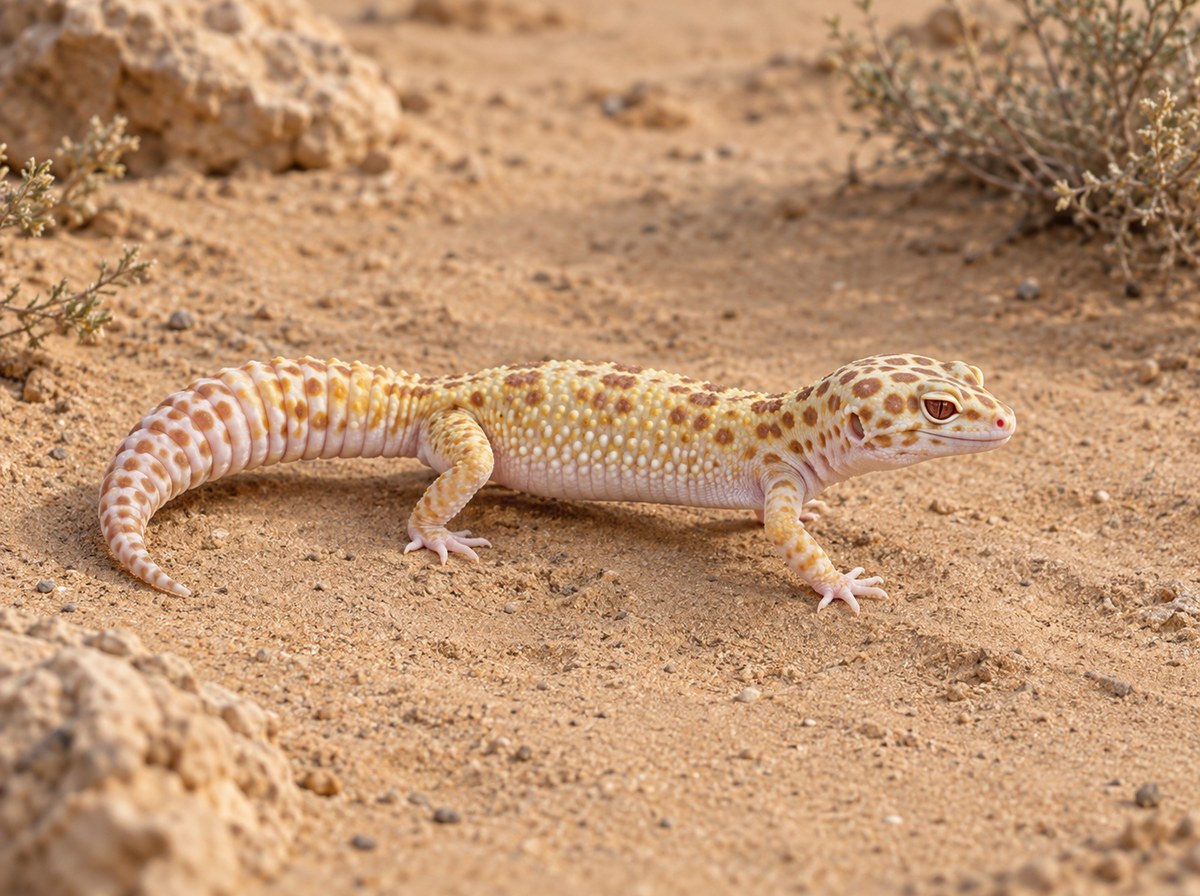
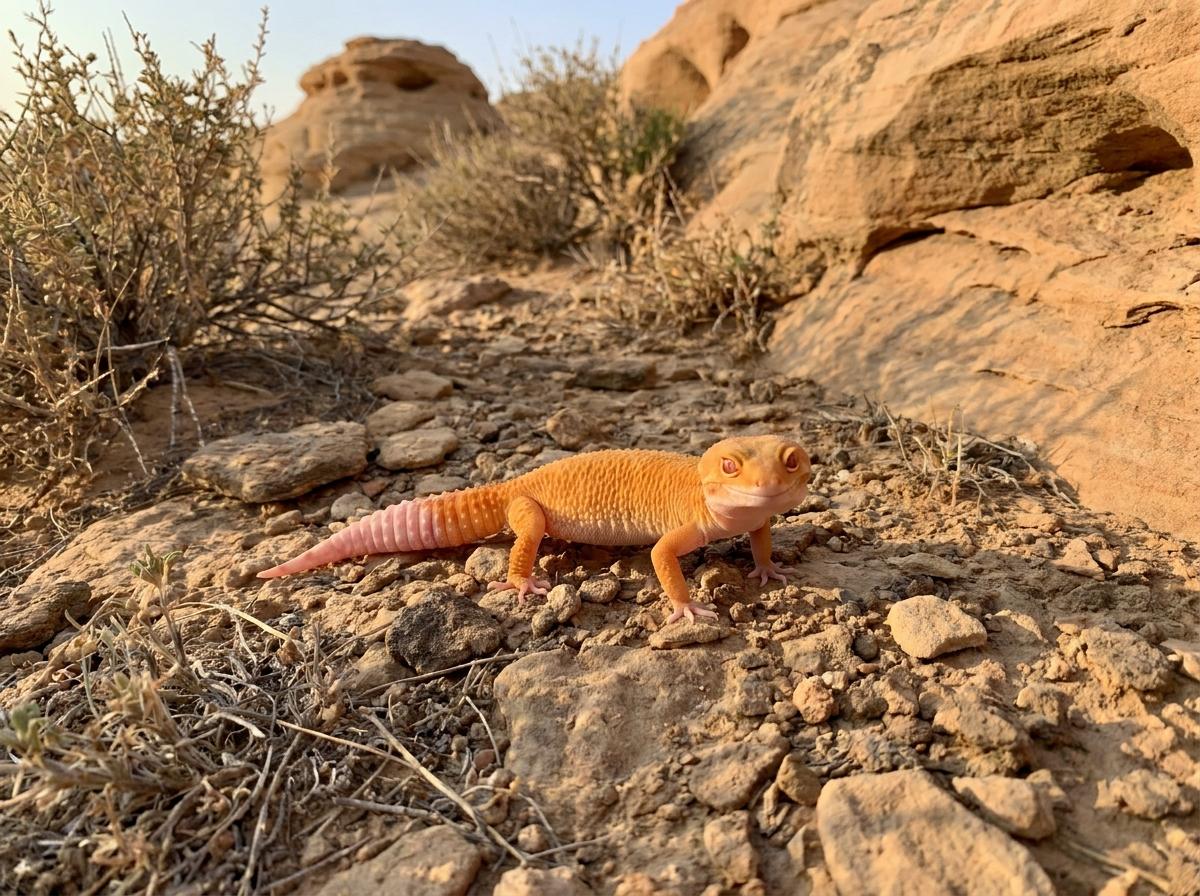
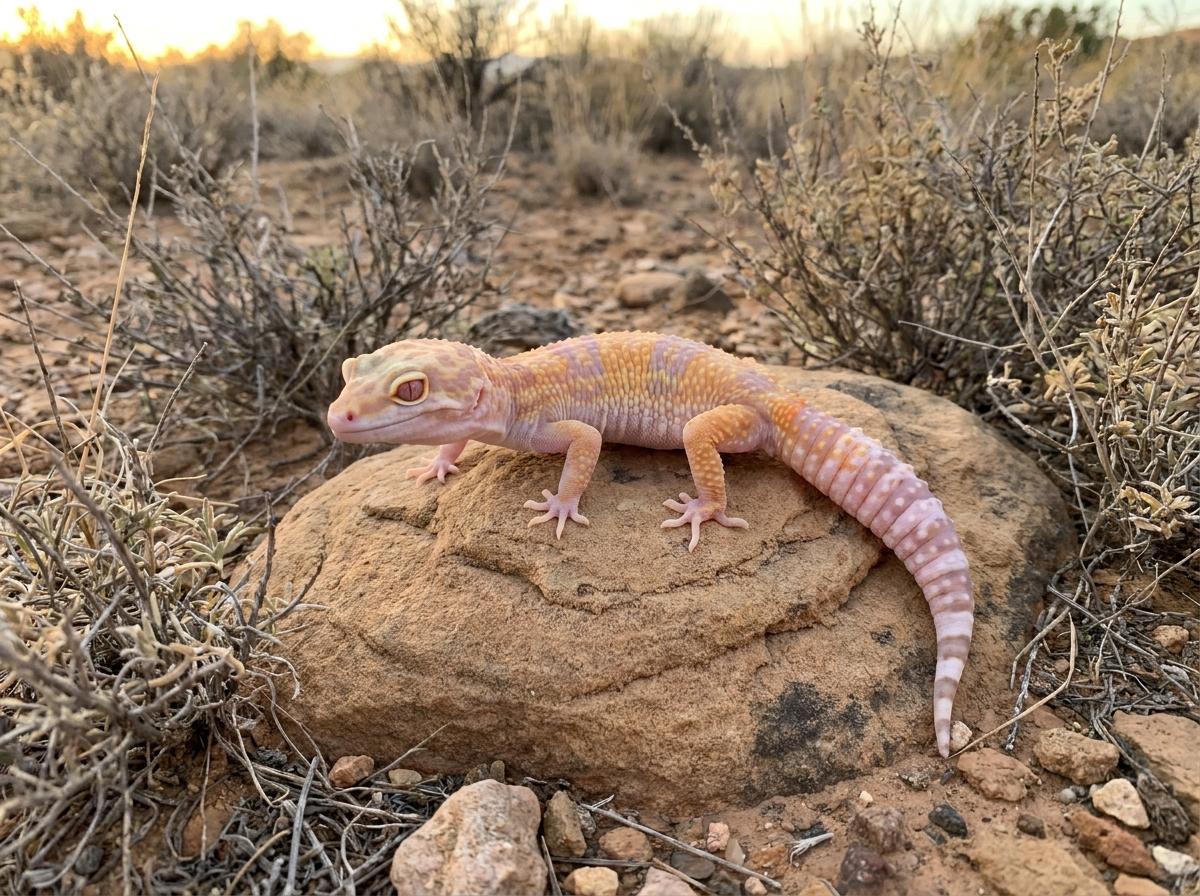
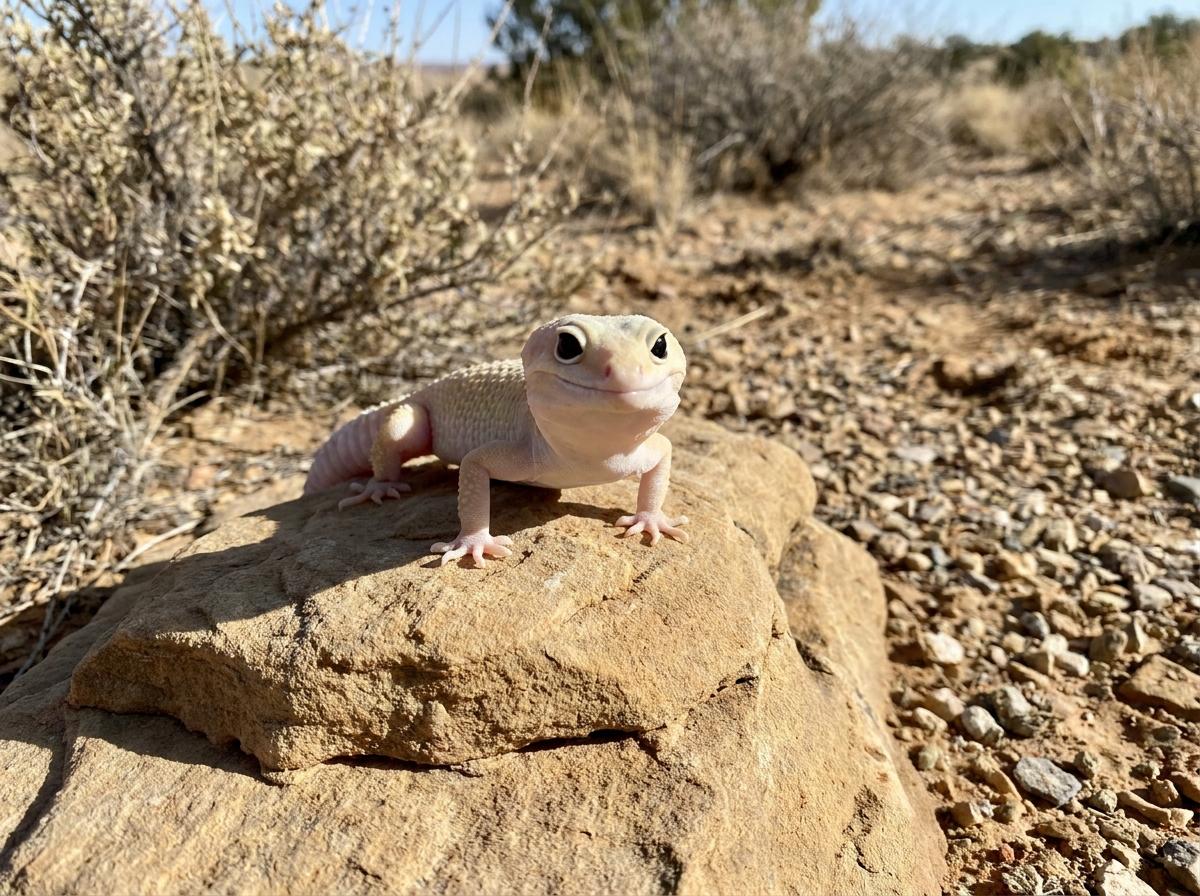
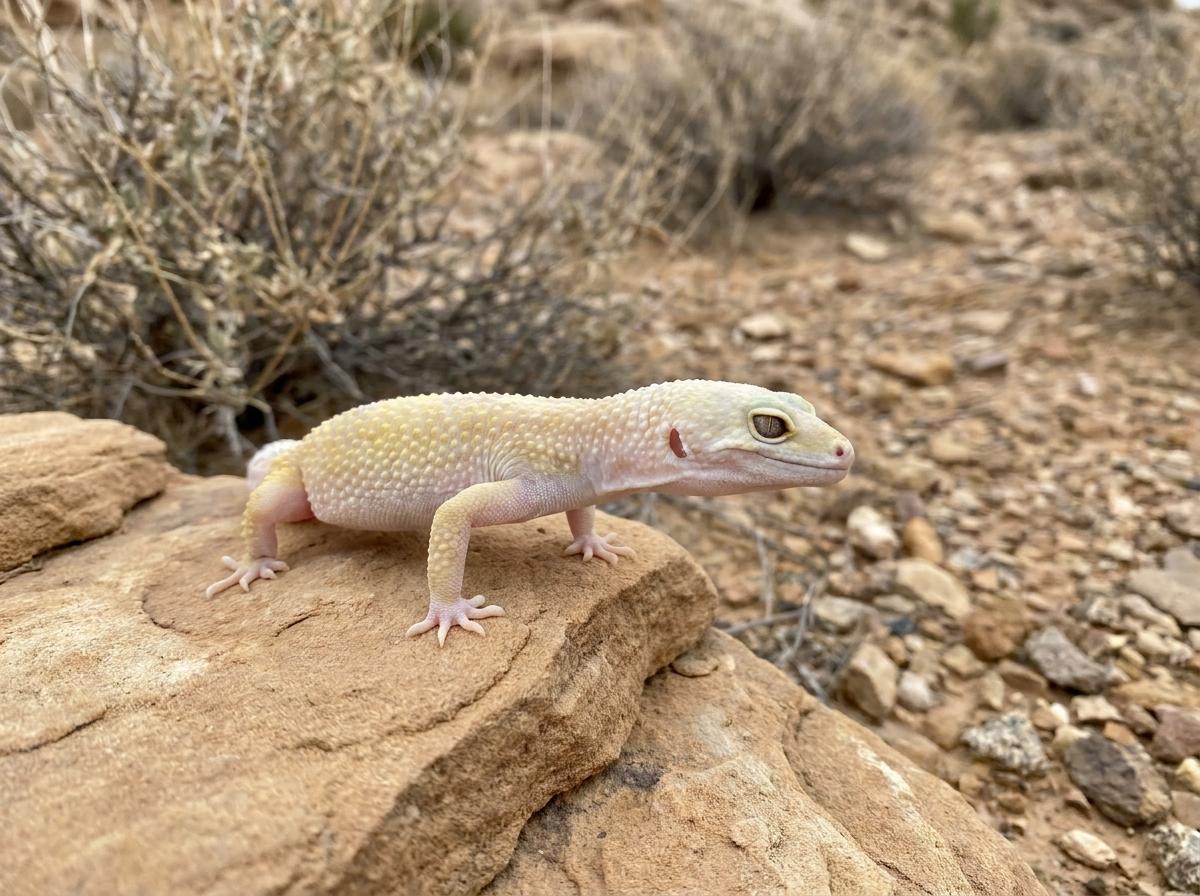
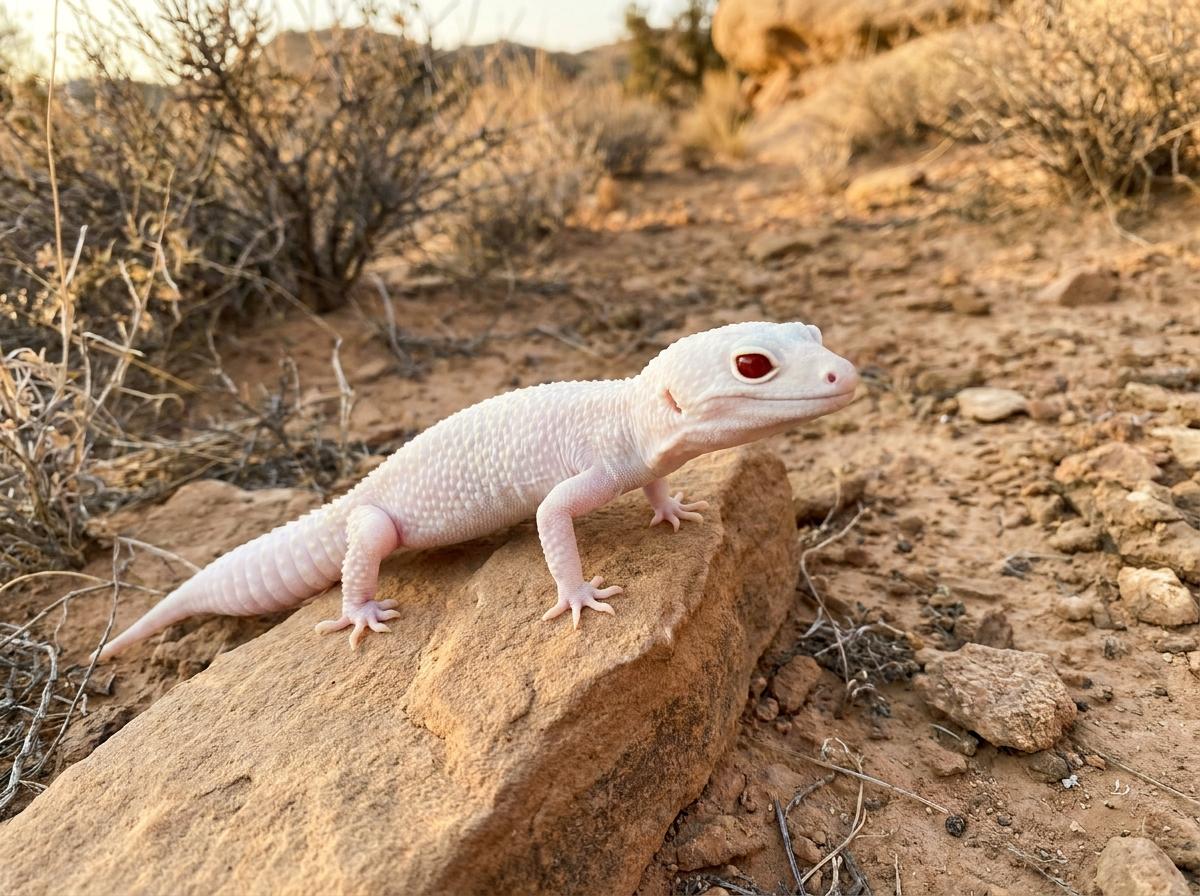
A Diablo Blanco is a leopard gecko combination morph that stacks three recessive genes, Tremper albino, Blizzard and Eclipse, to produce a patternless white gecko with solid red eyes. The name is Spanish for “white devil.” Because all three genes are recessive, a Diablo Blanco shows its look only when it carries two copies of each one, and a gecko that looks white is not proof that it has the right ingredients. The morph traces back to the breeding lines of Ron Tremper in the mid-2000s, and care for it is ordinary leopard gecko care with a little extra thought about light.
This guide explains what goes into a Diablo Blanco, how it differs from a Blizzard and the other white geckos, what the genetics mean when you pair one, the open questions keepers raise about its eyes, and how to set up and buy one well. For the species as a whole, start with the Creatures leopard gecko page, and if you already know this is the morph you want, you can browse Diablo Blanco listings on Creatures as you read.

| What it is | A combination morph of the leopard gecko (Eublepharis macularius), not a separate species or breed |
|---|---|
| Genes | Tremper albino, Blizzard, and Eclipse, all recessive; some hobby sources also count the patternless stripe trait from the RAPTOR line |
| Look | Patternless white to pale cream body, often with a pinkish or faint yellow wash, and solid red to ruby eyes |
| Name | Spanish for “white devil” |
| Origin | Ron Tremper’s lines, mid-2000s (hobby histories give 2006) |
| Diablo Blanco x normal | All offspring look normal and carry all three genes (triple het) |
| Lifespan | Same as any leopard gecko: up to about 20 years in captivity |
| Care notes | Standard leopard gecko setup with a thermostat on every heat source, three hides, and gentle lighting with deep shade |
Browse listings, public profiles, breeders, or add your animal.
What is a Diablo Blanco leopard gecko?
Leopard gecko “morphs” are heritable color, pattern, and eye variants, and most of the fancy names in the hobby are combinations of a smaller number of genes. The Diablo Blanco is one of the best known combinations. It brings together three recessive traits, each of which Creatures also covers on its own page:
- Tremper albino. One of three unrelated albino strains in leopard geckos. It removes most of the dark (melanin) pigment, so browns turn to pale tan, pink, or yellow, and the eye turns pale.
- Blizzard. A patternless trait. A Blizzard has no spots or bands at all, and its body color ranges from white through yellow to a dark grey or purple tone.
- Eclipse. An eye trait. In an eclipse gecko the color of the eye fills the whole eye, so the pupil and iris cannot be told apart. On a normal-pigmented gecko that solid eye is black. On an albino it is red to ruby.
Stack the three and you get the Diablo Blanco look: a Blizzard’s blank, patternless body, lightened further by albinism, with the solid red eye that Eclipse produces on an albino. The Leopard Gecko Wiki, a community reference, describes it as the Blizzard crossed into Tremper’s RAPTOR line, which is why some sources list a fourth recessive trait, patternless stripe. On a Blizzard body that trait has nothing left to change, so in practice the look is set by the three genes above.
One common piece of confusion is worth clearing up. A Blazing Blizzard is a Blizzard combined with an albino, and hobby references note that it can be made with any of the three albino strains. A Diablo Blanco is specifically a Tremper albino Blazing Blizzard that also carries two copies of Eclipse. So every Diablo Blanco is a kind of Blazing Blizzard, but most Blazing Blizzards are not Diablo Blancos.
Origin: Ron Tremper’s lines
The Diablo Blanco came out of the work of Ron Tremper, the breeder whose name is on the Tremper albino. Hobby histories give this sequence, and it is worth reading as breeder tradition rather than documented record:
- 1996: Tremper albino, the first of the three albino strains, is established.
- Mid-1990s: the Blizzard, a separate patternless mutation, appears in another breeder’s collection.
- 2004: Eclipse turns up in Tremper’s albino and patternless lines while he is producing the RAPTOR (the name stands for Red-eyed Albino Patternless Tremper Orange), and it is shown to be recessive.
- Mid-2000s: crossing the RAPTOR line with Blizzards produces the Diablo Blanco. The Leopard Gecko Wiki dates it to 2006. Some accounts say around 2005, and we could not find a primary record that settles the year.
The RAPTOR itself is still widely kept, and it is the easiest way to understand the Diablo Blanco: take a RAPTOR, remove every trace of pattern and most of the orange, and that is roughly what you have.
The three genes, one at a time

Tremper albino
There are three albino strains in leopard geckos, usually called Tremper, Bell, and Rainwater. They look similar, but they are separate genes. A 2025 study in Genetics (Beaudier, Ullate-Agote and Tzika) proposes a different candidate gene for each: a missense mutation in TYR for the Tremper albino, SLC24A5 for the Rainwater and OCA2 for the Bell. The authors treat all three as single-gene recessive traits, and they cite earlier work showing these geckos still make some functional tyrosinase, which is why these “albinos” keep some pigment and are more precisely called hypomelanistic.
That has a practical consequence for breeders. Because the strains are different genes, a Tremper albino bred to a Bell albino or a Rainwater albino produces normal-looking babies that carry one copy of each albino gene. A true Diablo Blanco is built on the Tremper strain, so any albino in its background should be Tremper, and good records should say so.
The same study describes the albino eye in all three strains: the pupil keeps its black color and slit shape but becomes thinner, and the silver iris loses some of its dark flecks. That is the look of an albino without Eclipse. The solid red eye of a Diablo Blanco comes from the Eclipse gene.
Blizzard
Blizzard is a simple recessive trait that removes pattern entirely. Hatchlings have no bands, and adults stay plain. Body color varies between individuals, from near-white to yellow to a darker grey tone, and with albinism added the dark end of that range disappears. Blizzards are sometimes confused with the Murphy Patternless, a different recessive gene that also removes pattern but is not part of the Diablo Blanco recipe.
Eclipse
Eclipse is recessive, and a gecko with one copy has completely normal eyes. With two copies the eye is usually solid, but hobby references agree that expression varies. Some homozygous eclipse geckos have eyes that are only partly filled, which breeders call “snake eyes,” and a pairing of two eclipse geckos can produce both. So even among geckos with the right genes, the eye is not perfectly uniform.
Here is the catch for buyers. The Leopard Gecko Wiki reports that solid or partly solid eyes sometimes appear in Blizzard groups without the Eclipse gene being involved. So a white, red-eyed gecko is very likely, but not certainly, a Diablo Blanco. The eye alone does not prove the genes, which is why the parents and their records matter so much.
Diablo Blanco vs Blizzard and other white leopard geckos
Several morphs can produce a white or near-white leopard gecko. The ones most often mixed up:
- Blizzard. Patternless, but with normal (non-albino) pigment and usually dark eyes. It can look white, yellow, or grey.
- Blazing Blizzard. Blizzard plus any albino strain. Pale, patternless, and usually with the lighter albino eye showing a thin pupil.
- Diablo Blanco. Blizzard plus Tremper albino plus Eclipse. Patternless and pale with a solid red eye.
- Super Snow combinations. The Mack Snow gene is not recessive: one copy lightens a gecko and two copies (the Super Snow) produce a pale body and solid eyes of their own. Albino Super Snow combinations can also look white with ruby eyes, but they are built from different genes and breed differently.
If a listing only says “white leopard gecko” or “red-eyed white,” ask which genes are proven and how. A white gecko from a Super Snow pairing and a white gecko from a Diablo Blanco pairing can look alike in a photo and produce very different babies.
Diablo Blanco genetics, with a breeding example
Because all three genes are recessive, the arithmetic is the same as for any recessive trait, done three times over. A gecko that carries one hidden copy of a gene is called “het” (heterozygous) for it and looks normal for that trait.

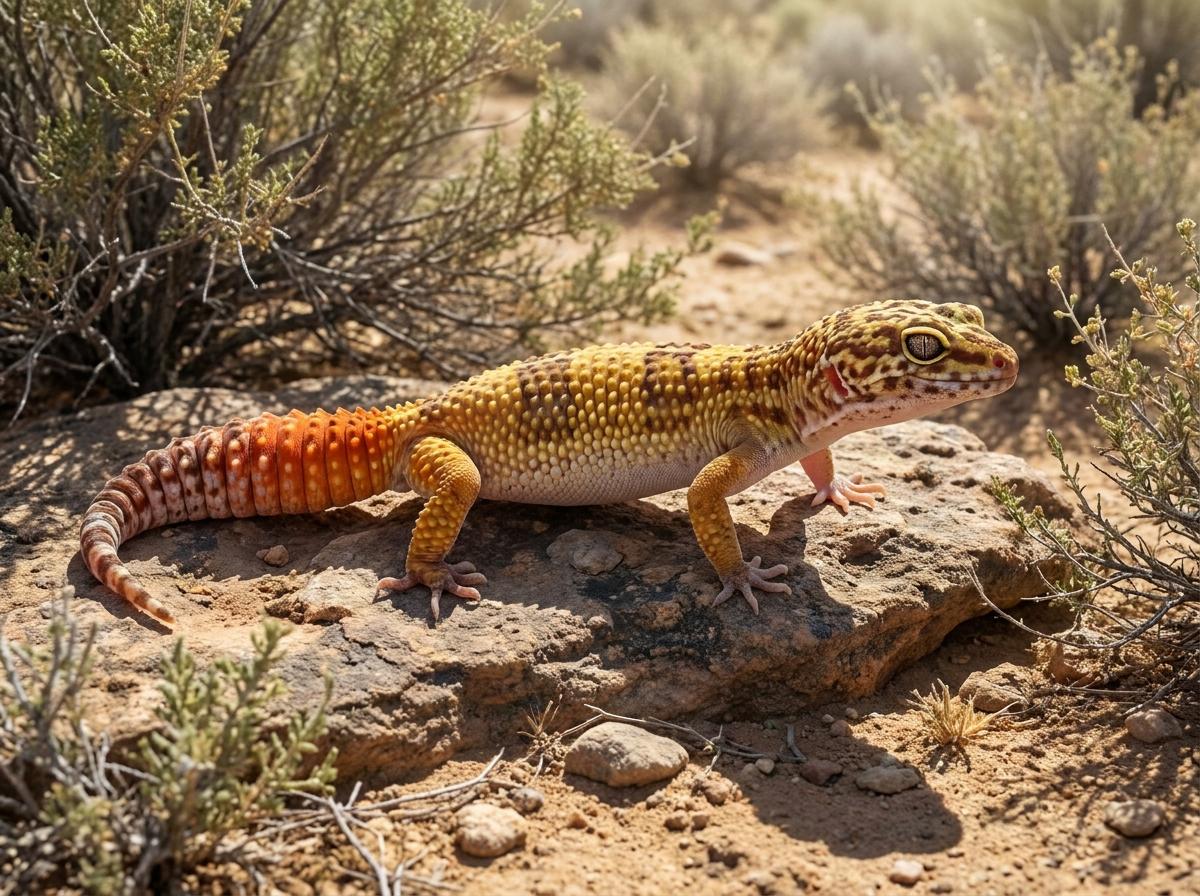
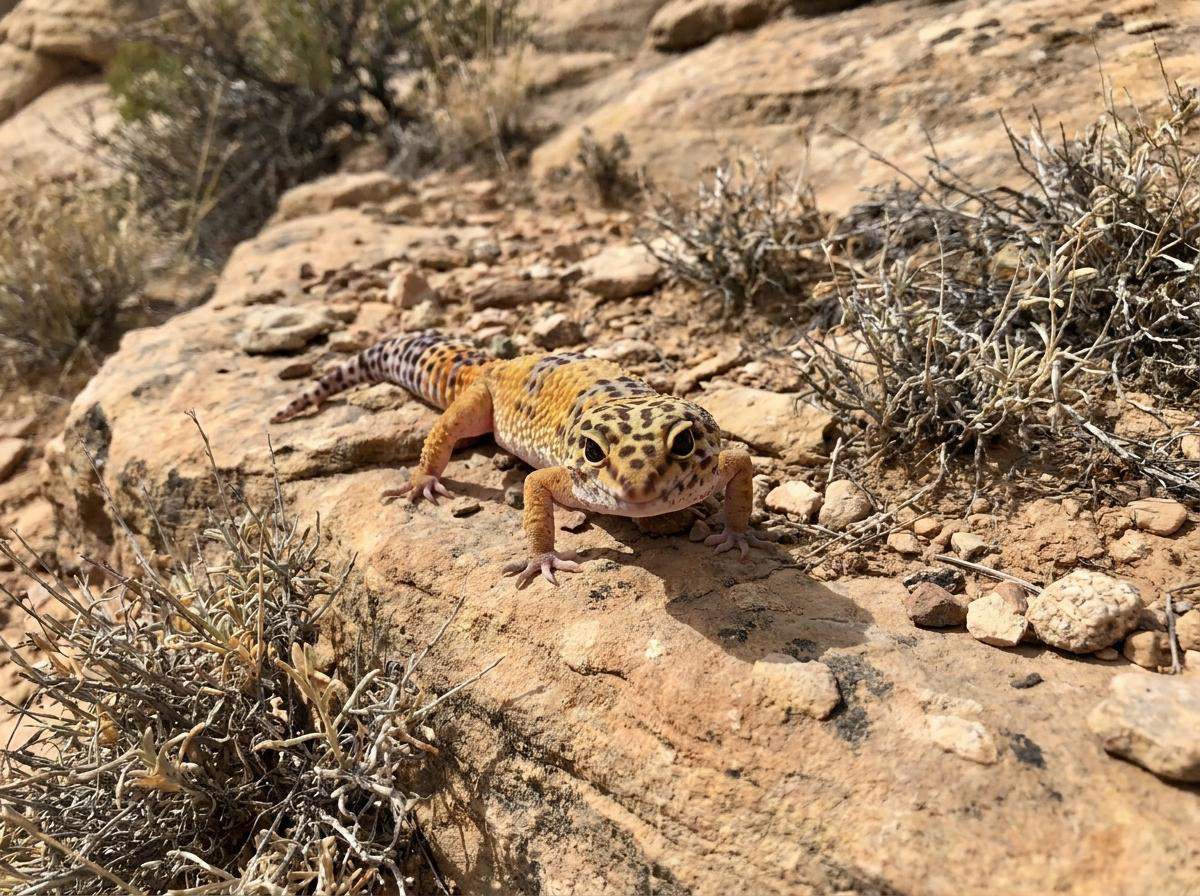
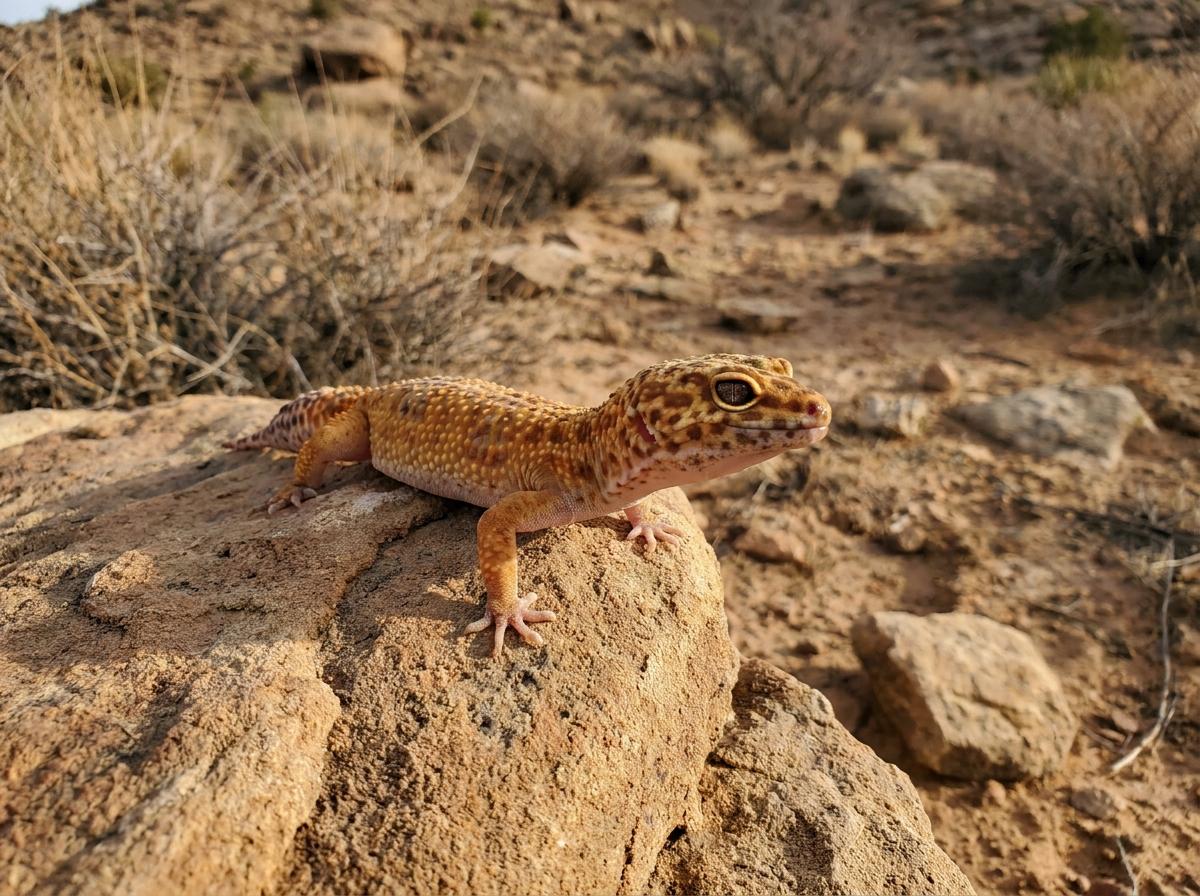
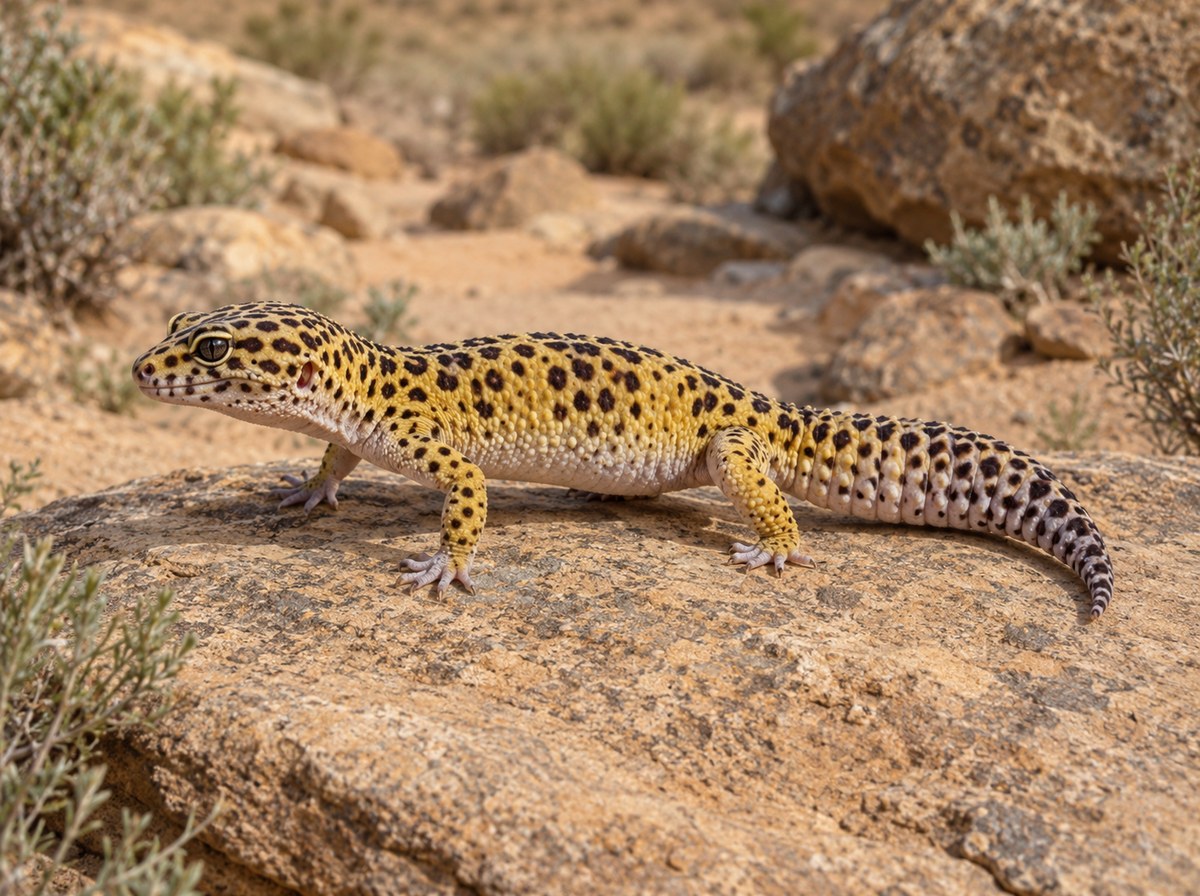
Diablo Blanco x normal. A normal gecko that carries none of the three genes gives each baby one normal copy of every gene, and the Diablo Blanco parent gives each baby one copy of all three. Every baby is therefore a triple het: het Tremper albino, het Blizzard, and het Eclipse. None of them will look like a Diablo Blanco. They will look like ordinary, normally patterned leopard geckos, like the young gecko above, while carrying the whole recipe hidden.
Triple het x triple het. For each gene, two het parents give a one in four chance of a baby with two copies. For all three genes at once, the chance is one in four, times one in four, times one in four, which is 1 in 64 per egg. Leopard gecko clutches are almost always two eggs, so a pairing like this can take a long time to produce a single Diablo Blanco.
Diablo Blanco x triple het. For each gene the odds improve to one in two, so the chance of a Diablo Blanco is 1 in 8 per egg. This is the usual way breeders build numbers.
Diablo Blanco x Diablo Blanco. Both parents carry only the Diablo Blanco versions of all three genes, so every baby is a Diablo Blanco.
You will also see labels like “66% possible het.” That figure comes from pairing two hets: among the babies that do not show a trait, two out of three are expected to carry it, but you cannot tell which ones by looking. A “possible het” is a probability, not a proven carrier. Treat it as such when you price or pair one, and record it as such in its file.
Two practical notes on pairings. First, keep albino strains straight: pairing a Tremper-based Diablo Blanco with a Bell or Rainwater albino gecko will not produce albino babies. Second, breeding is a real welfare commitment for the female, who needs to be mature, at a good weight, and supported with calcium; a reptile veterinarian can advise on whether a particular female is ready.
Eyes, light, and the welfare questions keepers raise
The Diablo Blanco’s red eyes are its most striking feature, and they are also where the most honest questions sit. Here is what the evidence does and does not say.
What is established. Melanin in the skin and eyes absorbs ultraviolet light. A peer-reviewed lighting guide for zoos, Baines and colleagues in the Journal of Zoo and Aquarium Research, says albino and hypomelanistic animals of any species need extra consideration because missing skin and eye pigment lets more radiation into the body. It notes that such animals are often popularly reported to be more sensitive to UV and visible light, may be at higher risk of UV-induced skin damage, and are likely to need much reduced UV exposure. The same paper places the leopard gecko among crepuscular and shade-dwelling species, which already need only low levels of UV.
What is not established. We could not find any published study that measures vision in Eclipse or Diablo Blanco leopard geckos. Keepers sometimes report that red-eyed geckos seem hesitant in bright light or occasionally misjudge a strike at prey, and some breeders prefer to keep eclipse albinos under lower light. Those are observations from the hobby, not findings, and they do not tell you whether any individual gecko sees less well. Be wary of both extremes you will read online, that these geckos are “blind” or that there is “no difference at all.” Neither claim has published evidence behind it.
What that means in practice.
- Give every gecko, and especially a pale, red-eyed one, deep shade: hides at both ends and no bright display lighting pointed into the enclosure.
- If you use UVB (see the care section), choose a low output lamp, mount it over one end only, and make sure the gecko can get fully out of it. The JZAR guidance points albinos toward lower exposure.
- Watch how your gecko feeds. A gecko that repeatedly misses prey, rubs its eyes, keeps its eyes closed, or has cloudy or swollen eyes needs a reptile veterinarian, not guesswork. The Association of Reptile and Amphibian Veterinarians runs a find-a-vet directory.
- Feeding with tongs, or offering insects in a smooth-sided dish they cannot climb out of, makes food easy to find for any gecko that seems to struggle.
Caring for a Diablo Blanco
A Diablo Blanco has no special dietary or temperature needs beyond those of any leopard gecko. Our full leopard gecko care guide goes through every point with its sources. These are the essentials.

Enclosure size
The RSPCA’s leopard gecko guidance sets a minimum of 60 cm long, 40 cm high, and 30 cm deep (about 24 by 16 by 12 inches) for one adult, and says bigger is better. Older veterinary handouts gave 10 to 15 gallons as the minimum for one gecko; current welfare guidance asks for more floor space than that, and the Merck Veterinary Manual’s owner guide to providing a home for a reptile notes that ground-dwelling species usually need more horizontal space. Buy for floor area. The RSPCA also recommends keeping leopard geckos alone, since they do not need company and can be aggressive to each other.
A heat gradient, with a thermostat on every heat source
Leopard geckos regulate their temperature by moving between warm and cool areas. The RSPCA asks for a warm end of 28 to 30 C (about 82 to 86 F) and a cooler end of 24 to 26 C (about 75 to 79 F), and LafeberVet’s veterinary care sheet adds a warm spot on the floor that reaches about 90 F (32 C). Put the heat at one end only, so the gecko can choose.
Every heat source, whether a heat mat or a lamp, must run through a thermostat. Both the RSPCA and Merck say so plainly, and Merck recommends programmable thermostats that switch heat on and off automatically. Merck also advises against “hot rocks,” which heat unevenly and can cause burns. Check temperatures with a digital thermometer at floor level at both ends, rather than trusting a dial.
Three hides, including a humid hide
Give the gecko a hide at the warm end, a hide at the cool end, and a humid hide: a closed box with damp moss inside, which the RSPCA suggests spraying every few days. The humid hide helps with shedding. After each shed, check the toes and tail tip for stuck skin, which is easier to spot against a white gecko but still worth a close look.
Substrate: what the sources actually say
This is one of the most argued topics in leopard gecko keeping, so here is the evidence rather than a slogan. Merck’s owner guidance says sand, gravel, and corncob are generally not recommended because they are easily swallowed and can block a reptile’s gut, and VCA’s veterinary care sheet warns against coarse sand, corncob, and crushed walnut shell for the same reason. The RSPCA takes a middle position: it suggests a mix of about half organic soil and half sand for healthy adults, advises against calcium sand, beech chips and other non-natural loose substrates, and offers slate or clay as safer options.
We could not find a published figure for how often sand impaction happens in leopard geckos, so we will not give you one. The practical answer: solid flooring such as slate tiles or paper towel is the simplest safe choice, and it is the right choice for hatchlings, sick geckos, and any gecko in quarantine. If you want a naturalistic floor for a healthy adult, follow the RSPCA’s soil and sand mix rather than loose sand alone, and never use calcium sand. Feed from a dish or with tongs either way.
Calcium, vitamin D3, and feeding
Leopard geckos eat live insects. Feed gut-loaded insects (VCA advises feeding the insects a good diet for at least 24 hours first) and dust them lightly with a calcium supplement just before feeding. The RSPCA recommends dusting with a vitamin and calcium supplement and also leaving a small dish of plain calcium in the enclosure at all times. How often to use a product with vitamin D3 depends partly on whether you provide UVB, so agree a routine with your veterinarian rather than doubling up on everything.
UVB: a real debate, presented as one
For years the standard advice was that leopard geckos, being active at dusk and night, do not need UVB. That position has softened. VCA says UVB is not required but is recommended, LafeberVet says UVB exposure seems to be helpful, and the RSPCA now asks for a 2 to 5 percent UVB tube over the warm end, covering a half to a third of the enclosure length, with a gradient down to zero in the shade. The JZAR guide concludes there seems to be no reason to withhold low-level UVB from crepuscular species, provided they can retreat from it.
For a Diablo Blanco, the same JZAR paper adds the albino caution above: if you use UVB, use a low output lamp, keep the gradient, and make sure deep shade is always available. Our care guide covers the lamp and replacement details.
Lifespan
A Diablo Blanco’s life expectancy is that of any leopard gecko. The RSPCA says leopard geckos can live up to 20 years, and our guide to how long leopard geckos live looks at what the different veterinary sources say and what affects an individual gecko’s outcome. There is no published lifespan specific to the Diablo Blanco. Plan for a commitment of a couple of decades.
Buying a Diablo Blanco: verify the genetics
A Diablo Blanco’s value to a breeder, and its predictability as a pet, lies in its genes, and genes are not visible in a photo. Before you buy:
- Ask to see both parents, or at least clear records of them. The parents’ own morphs, and how they were proven, are the best evidence you can get.
- Ask which albino strain is in the line. It should be Tremper. A seller who is unsure is telling you something useful.
- Ask how Eclipse was confirmed. A solid red eye is expected, but because solid eyes can appear in Blizzard lines without Eclipse, the parents’ breeding history is what actually confirms it.
- Ask for the hatch date, current weight, recent feeding, and shed history. A healthy young gecko has a well-filled tail, clear eyes, clean vent, and full toes.
- Be careful with “het” and “possible het” labels on the siblings and offspring you are offered. A proven het has produced the trait or has a parent who shows it; a “possible het” is a probability.
- Get the records in writing, and carry them forward. When the gecko comes home, add it to Creatures with its parents, hatch date, and genetics so the history stays attached to the animal, and so anyone who buys its offspring later can see where the genes came from.
Price is set by the individual breeder and moves with size, sex, proven genetics, and demand. A Diablo Blanco usually costs more than a normal leopard gecko, and a proven breeder of either sex from documented parents costs more again. The purchase is also the small part of the budget compared with a good enclosure, a thermostat, lighting, and a veterinary check. Buy from someone who keeps and shows records, and use the Creatures breeder directory to find keepers of the morph near you.
Other combination morphs worth comparing
The Diablo Blanco is a good example of how reptile breeders build a look by stacking recessive genes, and the same logic runs through other species. The Sunglow boa constrictor, for example, combines an albino gene with a hypomelanistic trait to strip dark pigment from a boa’s pattern. In each case the name describes a recipe, and the records behind the animal are what prove the recipe was followed.
Frequently asked questions
What does Diablo Blanco mean in English?
It is Spanish for “white devil,” a reference to the gecko’s white body and red eyes.
What is the difference between a Diablo Blanco and a Blizzard?
A Blizzard carries one recessive gene that removes pattern, and it keeps normal pigment and usually dark eyes. A Diablo Blanco carries Blizzard plus two more recessive genes, Tremper albino and Eclipse, so it is paler and has solid red eyes.
Are Diablo Blanco leopard geckos blind?
There is no published evidence that they are blind, and no study that measures their vision. Albino animals in general are thought to be more sensitive to light, so give a Diablo Blanco deep shade and gentle lighting, and see a reptile veterinarian if it has trouble finding food or shows any eye problem.
What do you get if you breed a Diablo Blanco to a normal leopard gecko?
All the babies look normal and all of them carry one copy of each of the three genes. They are triple hets. Breeding those babies back to a Diablo Blanco gives a 1 in 8 chance per egg of a Diablo Blanco.
How much does a Diablo Blanco cost?
There is no fixed price. It depends on the breeder, the gecko’s size and sex, and how well its genetics are documented. It usually costs more than a normal leopard gecko, and the setup will cost more than the gecko.
How long do Diablo Blanco leopard geckos live?
As long as other leopard geckos. The RSPCA says leopard geckos can live up to 20 years.
Do Diablo Blancos need UVB?
The sources disagree on whether leopard geckos need UVB at all. If you use it, albino geckos such as the Diablo Blanco should get a low output lamp with plenty of shade to retreat to.
Do this next on Creatures
Whether you are still deciding, waiting for the right gecko, or already keeping a Diablo Blanco, Creatures keeps the listings, breeders, and records together.
Learn the ingredients. Read the Tremper albino, Blizzard, and Eclipse pages, and the full leopard gecko care guide.
Find a Diablo Blanco. Browse Diablo Blanco listings on the marketplace and look up trusted keepers in the Creatures breeder directory.
Get alerted. Set a free Diablo Blanco listing alert and we will email you when a new one is posted. No account needed to start. See saving searches and using your watchlist.
Add your gecko. Already have one? Create a free profile for your Diablo Blanco with its hatch date, parents, and genetics, no account needed to start. The walkthrough is in adding an animal to Creatures.
Keep the records. Add weight, feeding, shed, and vet records so changes show up as a trend. The record sheet opens for any visitor, and a free account saves what you enter. See adding a record and health and medical records, and set UVB bulb changes and weigh-ins as repeating reminders with reminders and upcoming care.
Breed Diablo Blancos? Create your breeding profile, no account needed to start, then get listed in the breeder directory so buyers looking for documented Diablo Blanco lines can find you.