Sunglow
Morph
Author: Elliott Garber, DVM · Updated
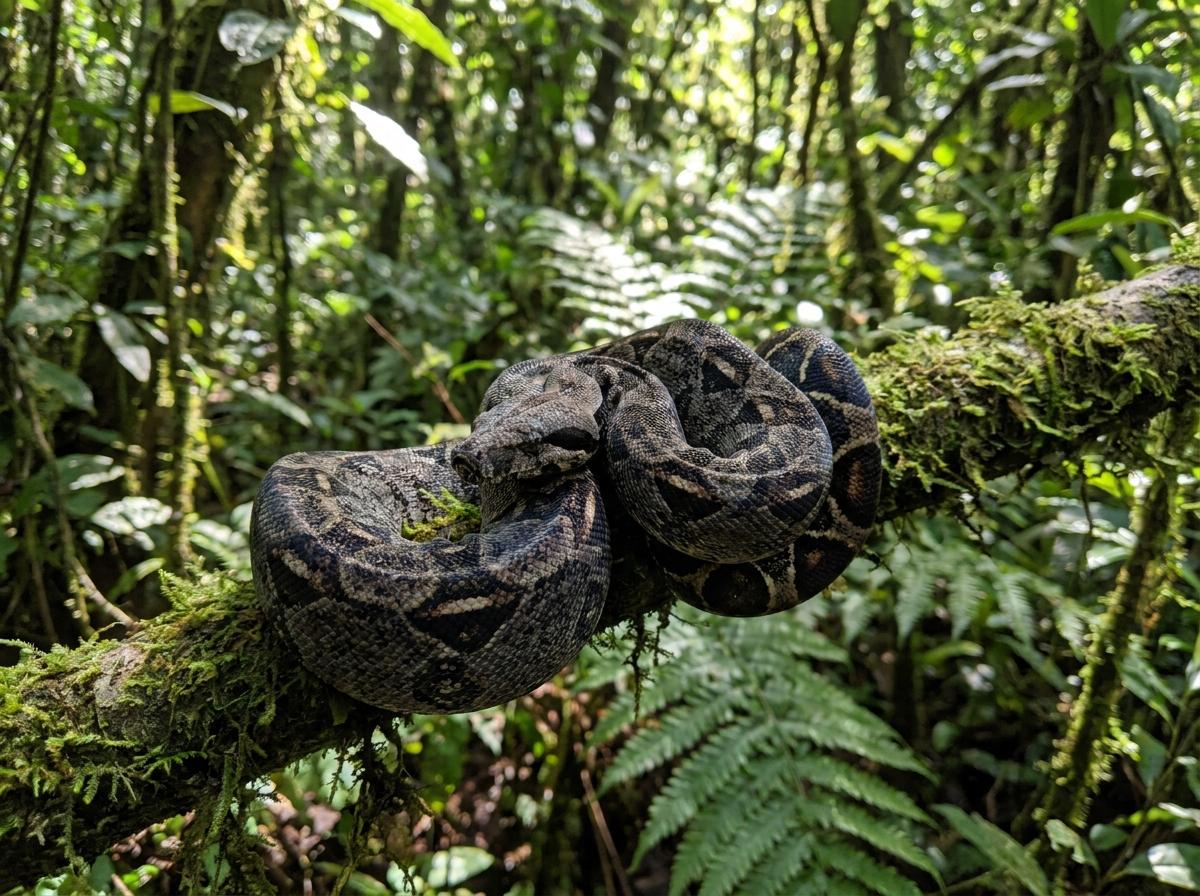
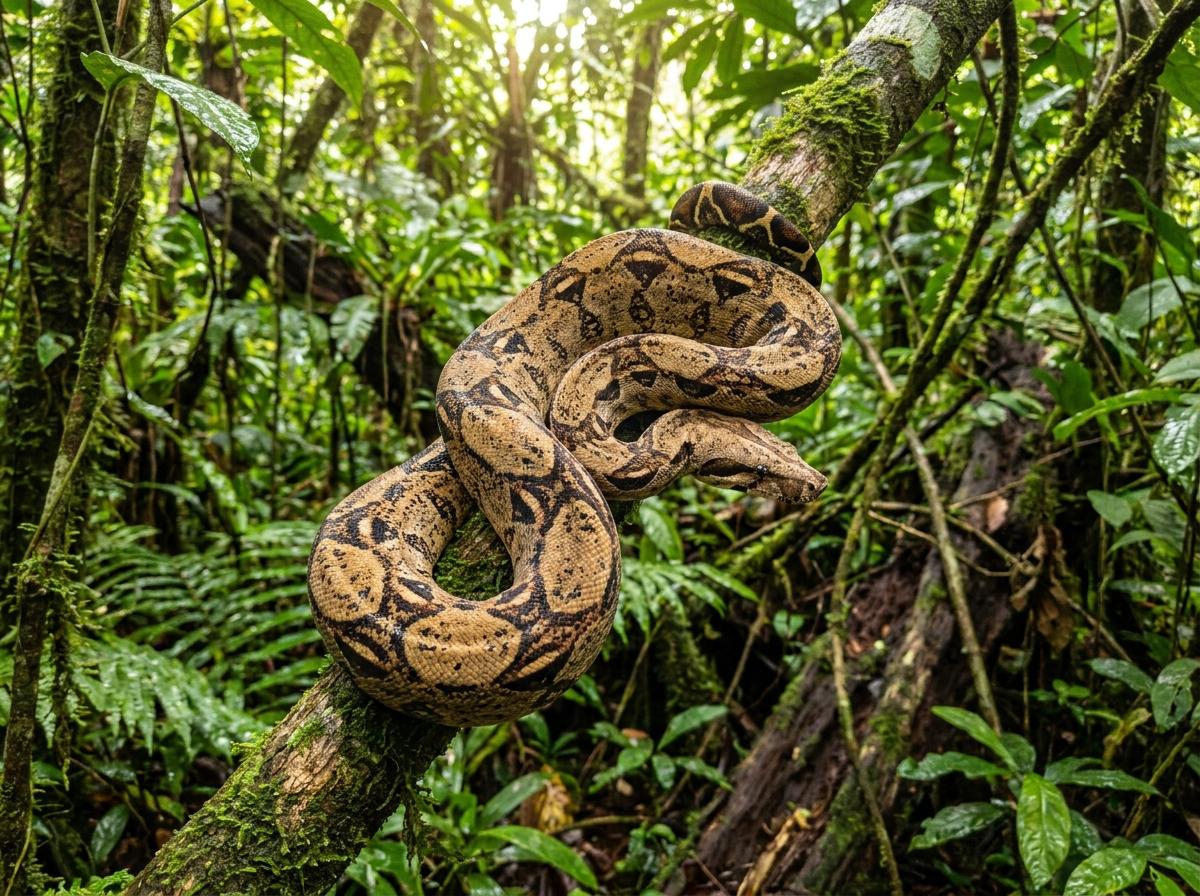
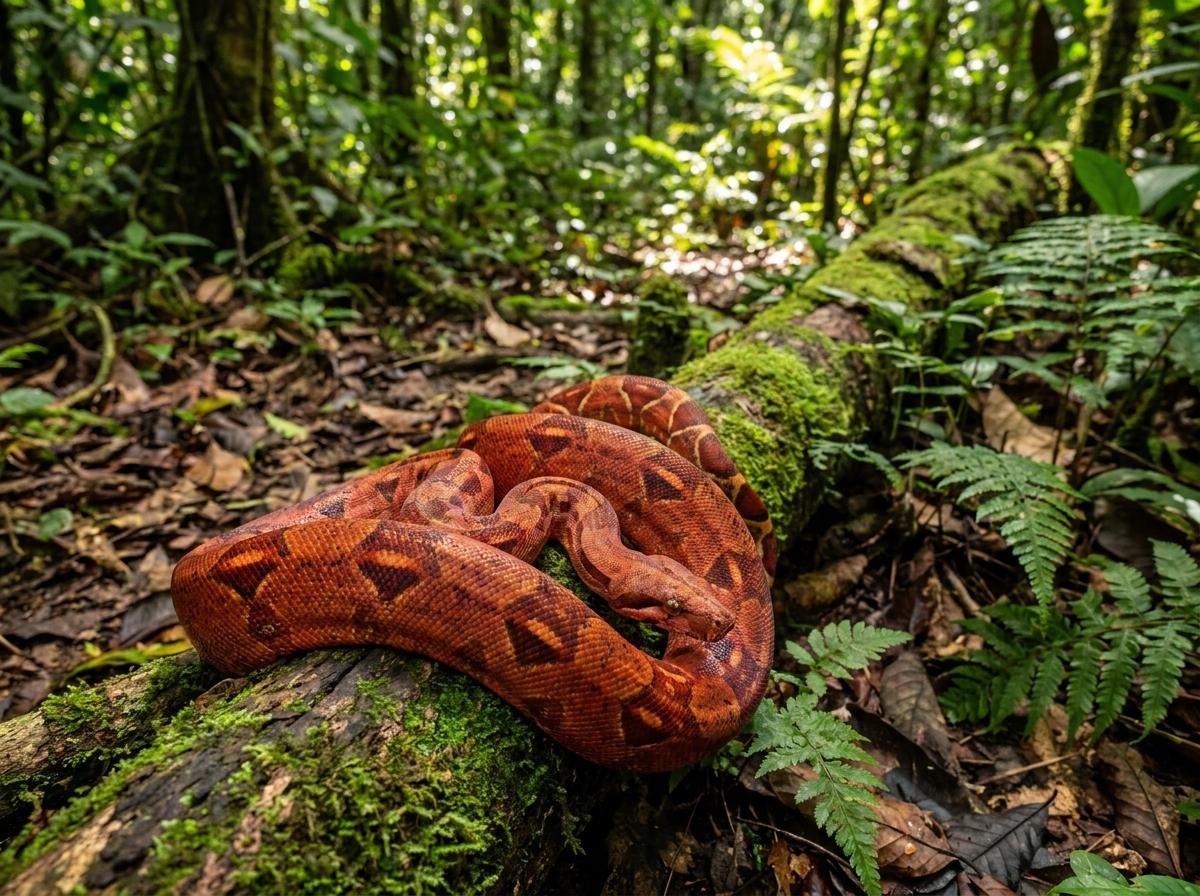
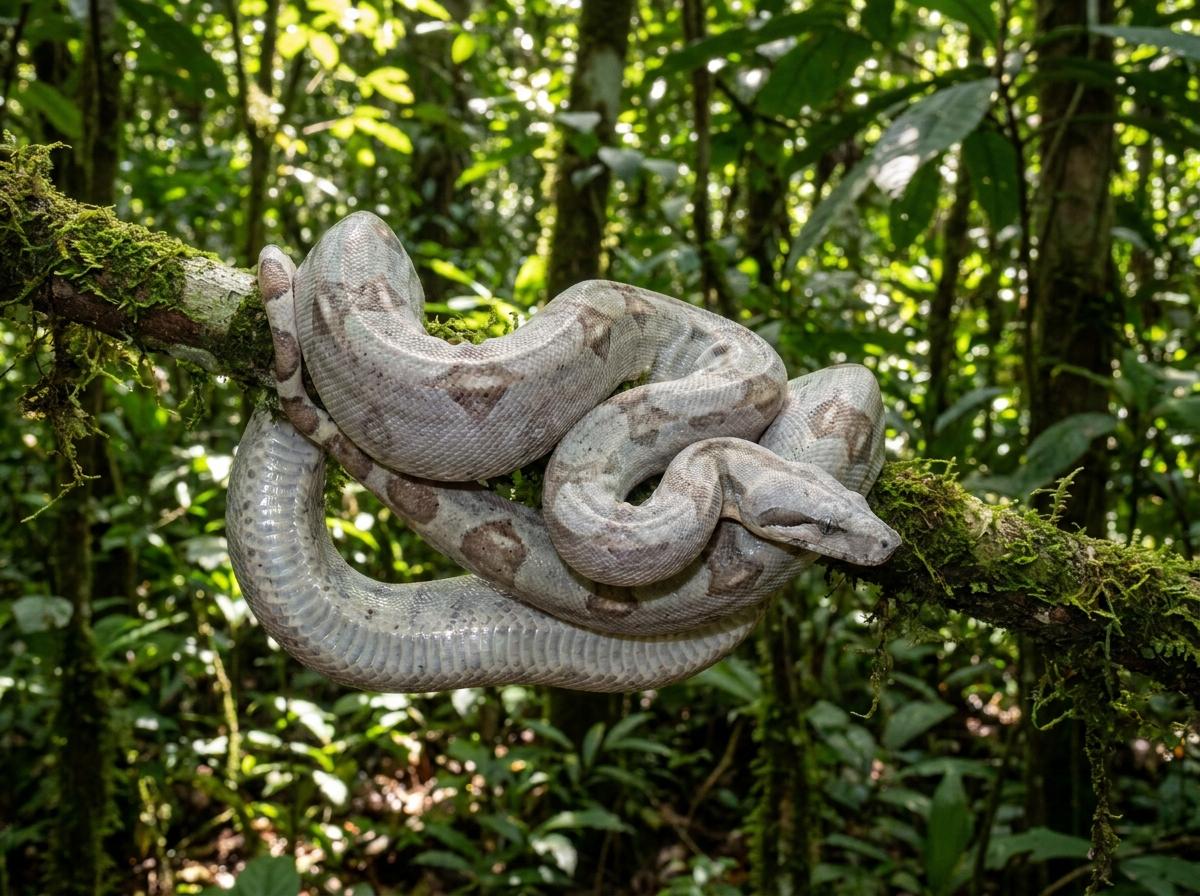
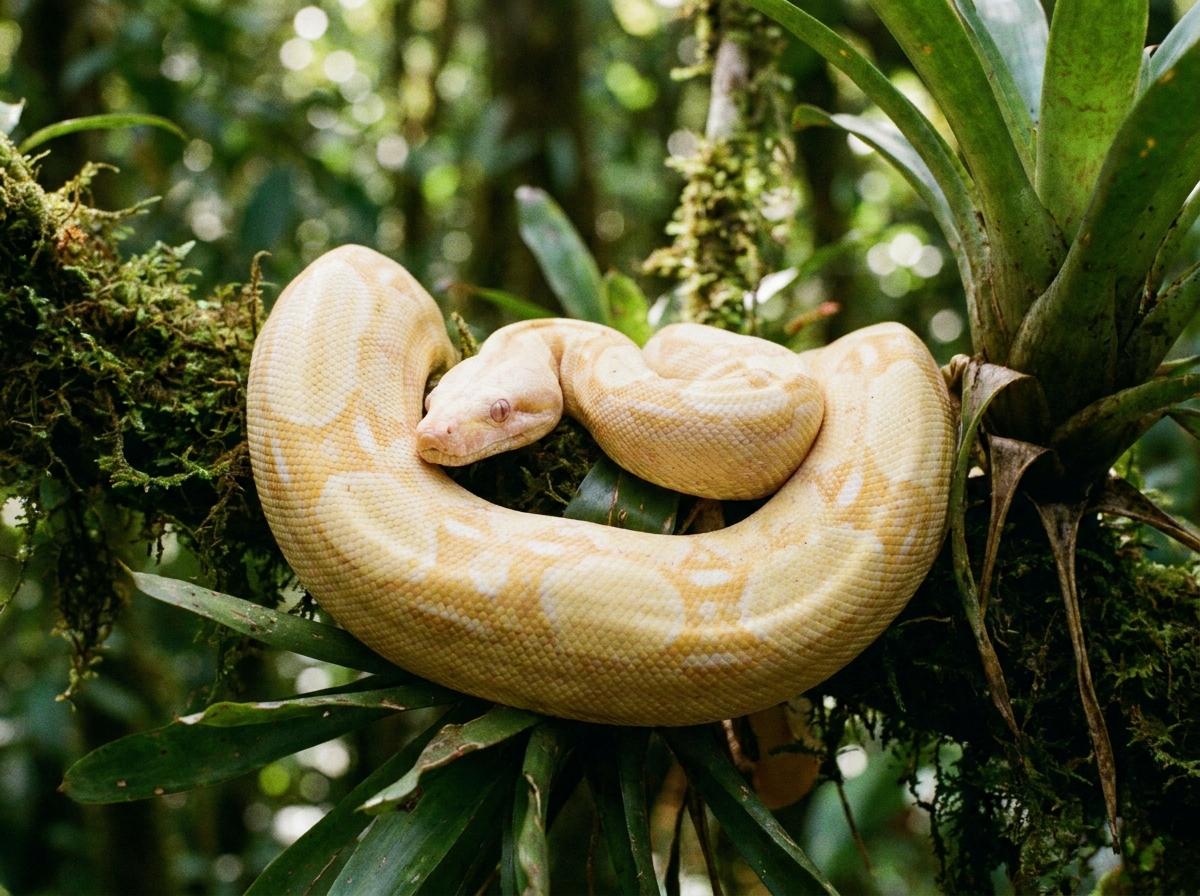
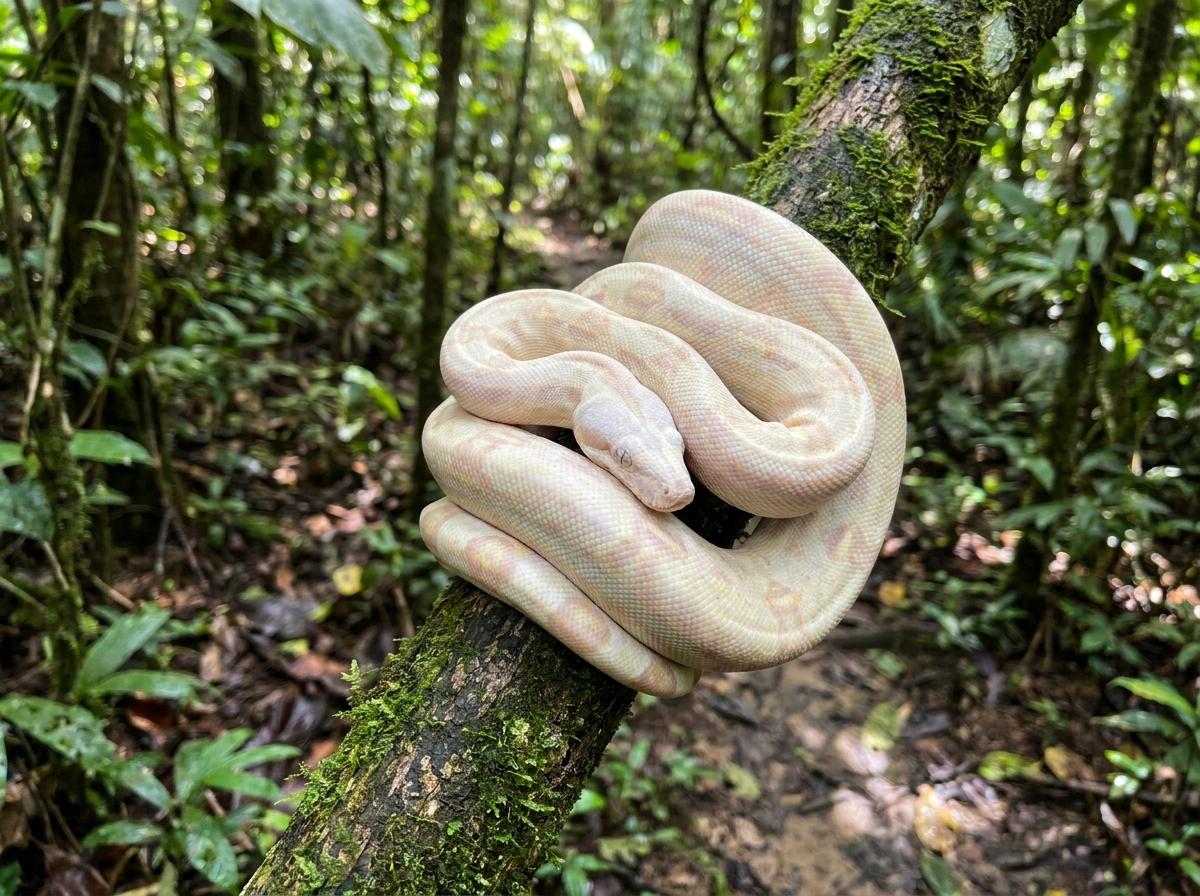
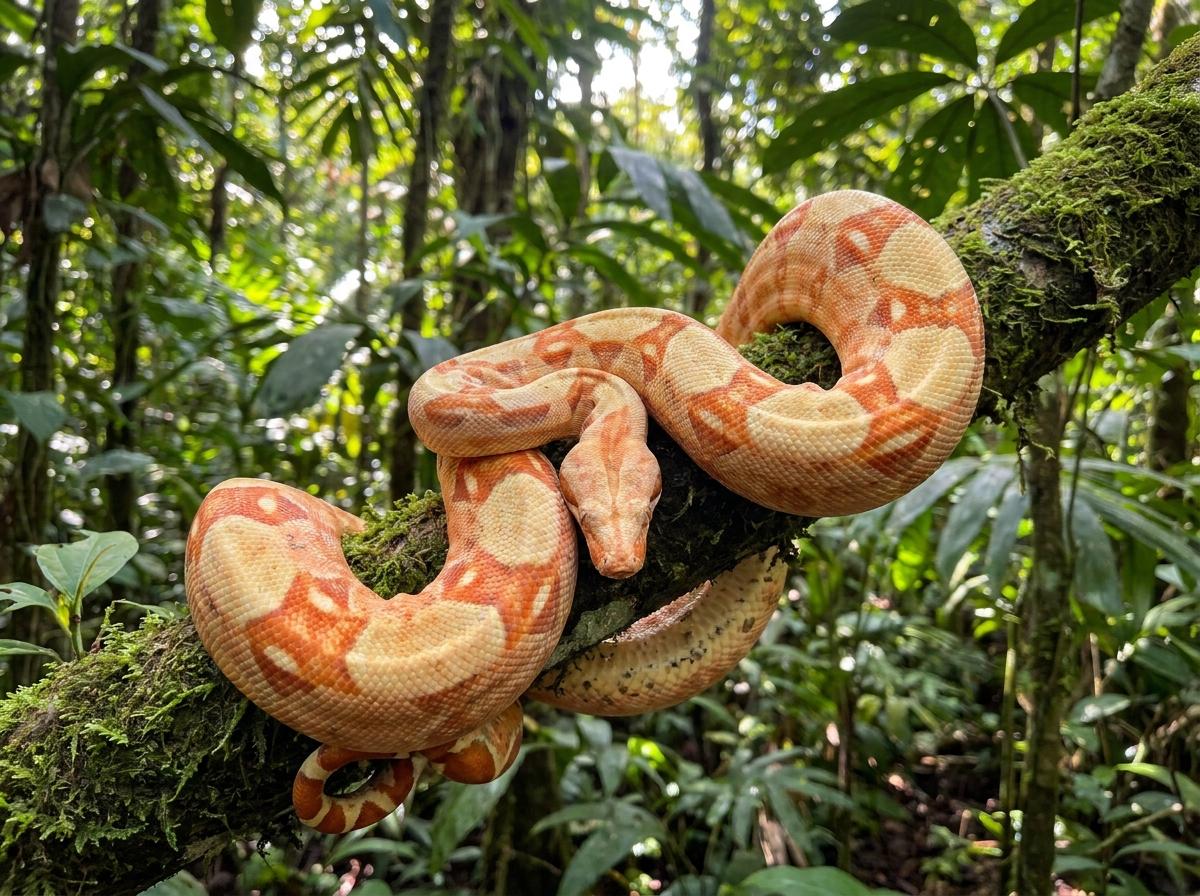
A sunglow boa is a common boa constrictor that carries two color mutations at once: albinism, which removes the black and dark brown pigment, and hypomelanism (“hypo”), which reduces dark pigment and, in breeders’ experience, cleans up and brightens the remaining color. The result is a snake with no black anywhere, a pale cream to white background, bright orange, peach, or coral saddles, a deep orange-red tail, and pink to red eyes. It is a color morph, not a separate species or subspecies, so a sunglow grows to the size of any other boa constrictor, lives as long, and needs exactly the same large, warm, secure enclosure.
This guide explains the genetics in plain terms (including why “sunglow” can mean slightly different snakes depending on the albino line), what to check before you buy one, and what an adult boa actually needs. If you are already shopping, you can browse sunglow boa listings on Creatures while you read, and the breeder directory lists keepers who work with boas.

| What it is | A color morph of the common boa constrictor: albino plus hypo in one snake |
|---|---|
| Genes | Albino is recessive (two copies needed); hypo is described by breeders as incomplete dominant (one copy shows, two copies make a “super”) |
| Look | No black pigment, pale cream to white ground color, orange to peach saddles, orange-red tail, pink to red eyes |
| Albino lines | Usually Kahl albino; Sharp albino sunglows also exist, and the two albino lines are not compatible with each other |
| Adult size | Same as any common boa: most adults about 2 to 3 m (6.5 to 10 ft), females usually larger; island and dwarf localities smaller |
| Lifespan | Often 20 years or more in captivity; the recorded captive maximum is just over 40 years |
| Core care | An escape-proof enclosure at least as long as the snake, guarded thermostat-controlled heat, humidity, hides, a soaking-size water bowl, frozen-thawed prey |
| Legal status | Not a federally listed injurious species in the US; state, city, and county rules vary |
Browse listings, public profiles, breeders, or add your animal.
What a sunglow boa is, genetically
Two terms do most of the work here, and both are ordinary genetics vocabulary.
Albino (recessive). Albinism in snakes is the loss of melanin, the pigment behind black and brown. In boas it behaves as a recessive trait: the NIH’s National Human Genome Research Institute defines a recessive trait as one where both copies of the gene must carry the change for the trait to show, and a single copy produces no visible effect at all. A boa with one albino copy looks completely normal; the hobby calls it “het albino” (heterozygous, meaning it carries two different versions of the gene, as NHGRI’s heterozygous entry explains). Two copies make an albino. The exact mutation behind boa albinism has not, as far as we could find, been identified in published research. In corn snakes, researchers did pin the classic “amel” albino to a disrupted pigment gene, OCA2, in a 2015 Scientific Reports study, which is a useful reminder that “albino” in snakes is a real, single-gene loss of melanin rather than a marketing word. Paired with a second recessive gene, caramel, that same amel gene gives the yellow butter corn snake.
Hypo (incomplete dominant, in breeders’ records). Hypomelanistic means “reduced melanin.” In boas, breeders have long recorded hypo as a trait that shows with one copy, and they call a snake with two copies a “super hypo,” which is typically lighter and cleaner still. Many hobby sources call hypo “codominant.” Strictly, codominance means both versions of a gene are expressed side by side, while a trait whose double dose is a stronger version of the single dose is better described as incomplete dominance. Either way, the practical rule is the same: one copy shows, two copies show more. This inheritance pattern comes from decades of breeding records in the boa hobby rather than from a peer-reviewed genetic study, so treat it as well-tested breeder knowledge, not settled molecular genetics.
Sunglow = albino + hypo. Put both together and you get a snake that has two albino copies and at least one hypo copy. A snake with two albino copies and two hypo copies is sold as a super sunglow (a super hypo albino). The name is a hobby trade name, not a scientific one, and no registry standardizes boa morph names.
Why the albino line matters
Not all albino boas carry the same albino gene. The best known line is the Kahl albino. In the account published by Pete Kahl and Chris Romine, four albino boas were imported from Colombia in 1983, Kahl bought one of the males, produced the first known het albinos in 1990, and in June 1992 produced the first captive-bred albino boas: three albinos in a litter of 22. That account comes from the breeders themselves rather than an independent record, so treat the dates as hobby history. A second line, the Sharp albino, traces to a wild-caught Colombian albino female imported by Brian Sharp in 1991, according to breeders who work the line.
The two lines are not compatible. Breeders report that a Kahl albino bred to a Sharp albino produces no albinos at all, only normal-looking babies that carry one copy of each gene. So a “sunglow” can be a Kahl sunglow or a Sharp sunglow, and those two snakes cannot produce albino babies together. When a listing says “sunglow” without naming the line, ask. Kahl is the default in most of the trade, but you should not assume it. You will also see names like “coral” or “lipstick” used for particular albino lines or color selections; their compatibility with Kahl is argued about in the hobby, so treat those as questions for the breeder, not facts to rely on.
If you want the single-gene versions first, the Creatures pages for the albino boa, the Kahl albino, the Sharp albino, and the hypo boa cover each on its own.
What to expect from common pairings
The numbers below are simple Mendelian odds, assuming albino is a single recessive gene, hypo is a single incomplete-dominant gene, and both albino parents share the same albino line. They are averages across many litters. Any one litter can land well off them, and boa litters are large enough that a surprising split is common.
- Sunglow x normal (no albino genes): no sunglows. Every baby is het albino, and about half are hypo. Those hypo het albinos are the “double hets” that build the next generation of sunglows.
- Sunglow x albino: about half sunglow, half albino.
- Sunglow x sunglow: every baby is albino. About a quarter are super sunglows, half are sunglows, and a quarter are plain albinos.
- Super sunglow x albino: every baby is a sunglow.
- Hypo het albino x albino: about a quarter sunglow, a quarter albino, a quarter hypo het albino, and a quarter normal-looking het albino.
- Hypo het albino x hypo het albino: roughly 3 in 16 babies are sunglows or super sunglows. The normal-looking siblings are sold as “66% possible het albino,” because two out of three of the non-albino babies from a het x het pairing are expected to carry the gene. Nobody can tell which ones by looking.
That last point is why paperwork matters so much with this morph, which we come back to in the buying section.
What a sunglow looks like

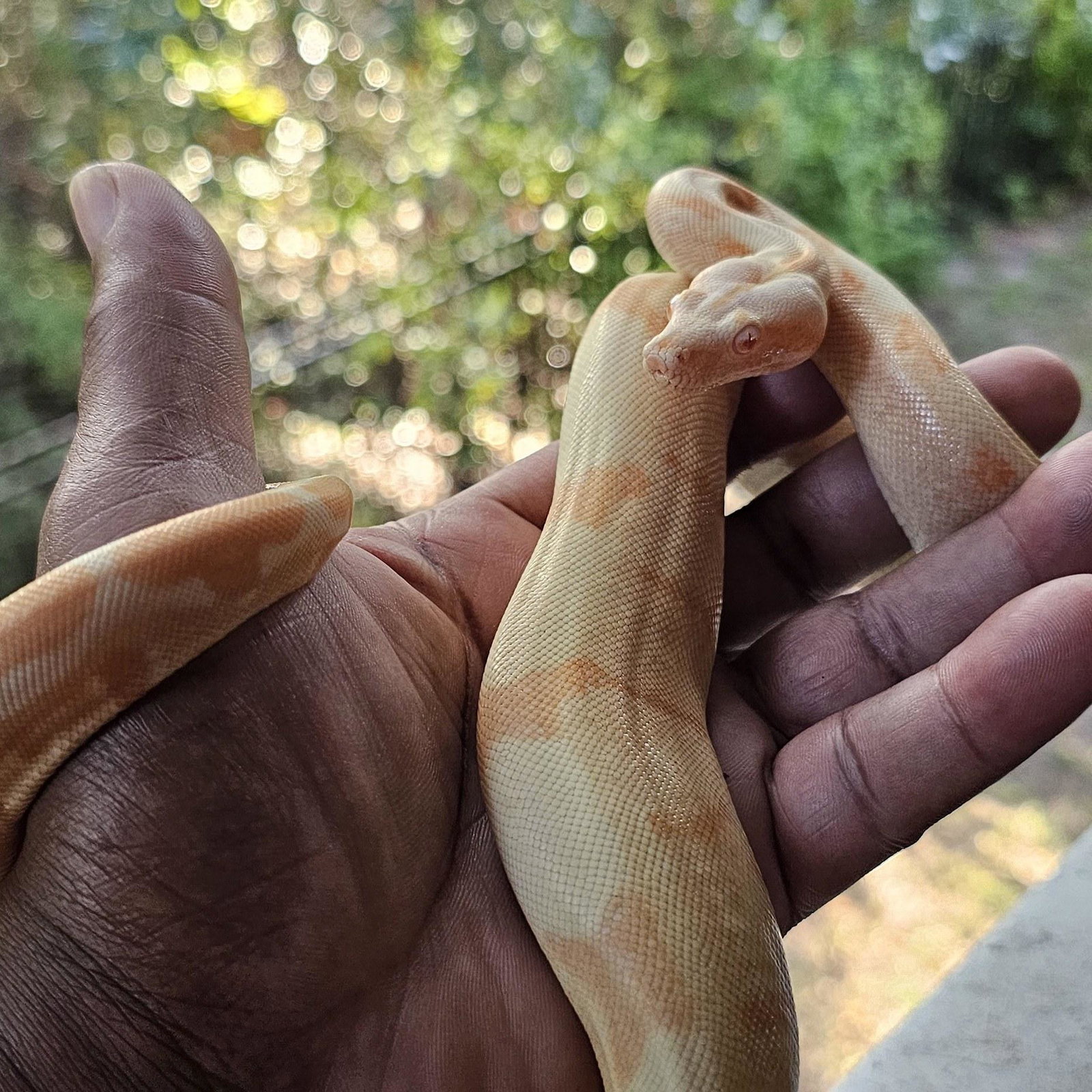
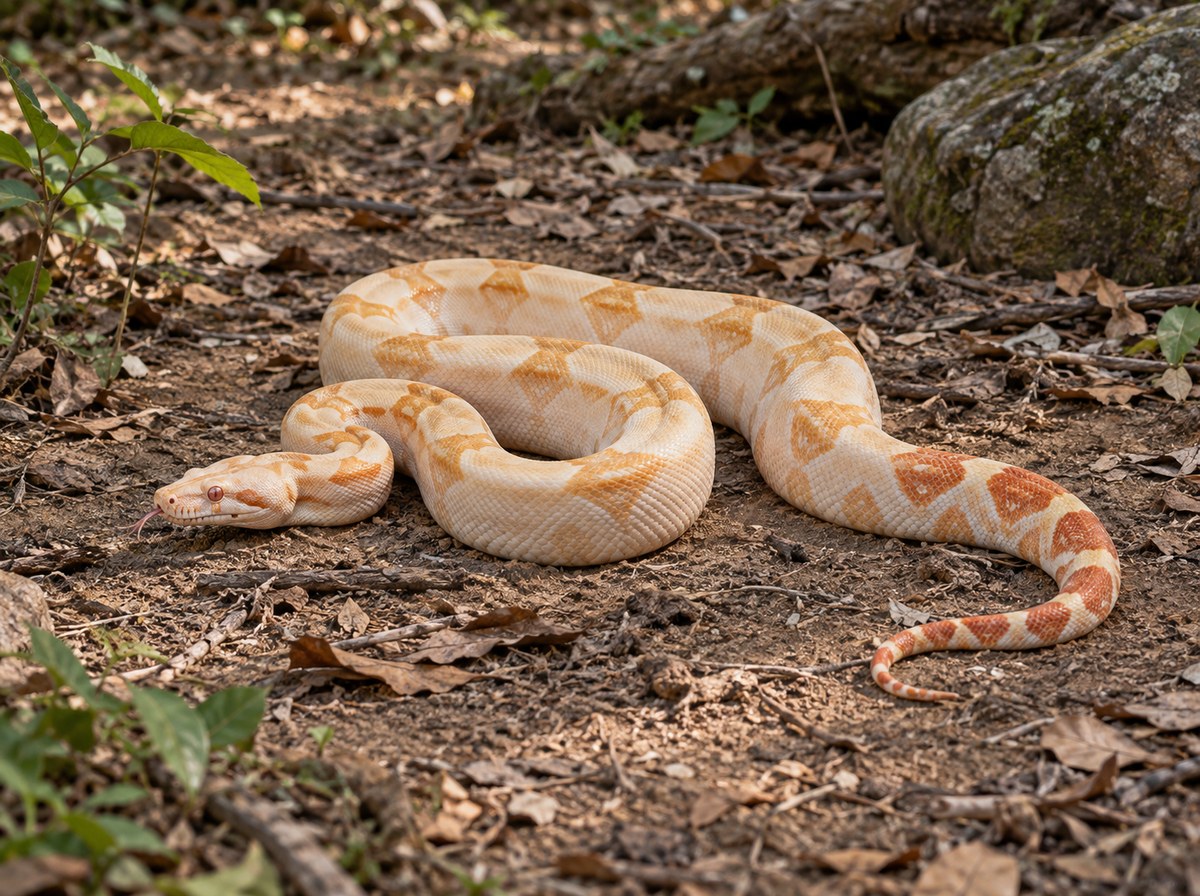
Because albinism removes melanin, a sunglow has no black and no dark brown anywhere. What is left are the snake’s other pigments: yellows, oranges, and reds. A typical sunglow shows:
- Background: pale cream, soft yellow, or nearly white, often with a pink or peach cast.
- Saddles: orange to peach blotches down the back, usually with lighter centers and clean edges, because there is no dark outline around them.
- Tail: the brightest part of the snake, with deep orange to red saddles on a pale ground. In many boas the tail saddles are the reddest markings on the body.
- Head: pale, with orange markings and an orange stripe through the eye.
- Eyes and tongue: pink to red eyes, and a pink tongue, because there is no pigment masking the blood vessels.
Compared with a plain albino boa, breeders describe a sunglow as having a cleaner, lighter background and brighter, more saturated saddles, and a super sunglow as cleaner still. The difference between an albino and a sunglow can be obvious in a good example and subtle in another, especially in a young snake, which is exactly why a visual ID alone is not a genetic guarantee.
Color also changes with age. A Tasmanian government risk assessment for the species notes that boa constrictors can gradually change color over multiple shed cycles, and keepers commonly report that babies of many morphs look different from the adult they become. Ask to see the parents, not just the baby, and if possible older siblings from earlier litters. Any snake also looks dull and milky for a few days before a shed, when the old skin loosens and the eyes turn blue-gray, and brightest right after the shed comes off, so judge color on a freshly shed animal.
Other boa combinations with albino in them look related but are different morphs. The snow boa is albino plus anerythristic (a gene that removes red; see the anery boa guide), and the moonglow boa is a snow with hypo added, which is why moonglows look white to pale lavender rather than orange. For a very different look built on a single gene, see the IMG boa guide. If a combination morph is what draws you, the Diablo Blanco leopard gecko is another example of a trade name built from several stacked recessive traits, and it shows how much a name hides about what is actually in the genes.
Size, lifespan, and temperament
A sunglow is a boa constrictor first. The morph changes pigment, not size, growth, or behavior.
Size. The University of Michigan Museum of Zoology’s Animal Diversity Web puts most boa constrictors at 2 to 3 m (about 6.5 to 10 ft), with island forms commonly under 2 m, and notes that females are usually larger than males. The Tasmanian risk assessment adds that growth generally stops at about three years in males and five years in females, that exceptional adults can reach 5 m, and that such sizes are rare in both wild and captive animals. Plan for a large female until you know otherwise. Taxonomy is also in flux: many of these snakes are now classified by some authorities as a separate species, Boa imperator, and you will see both names on listings. Care is the same.
Lifespan. Animal Diversity Web estimates wild boas average around 20 years and says captive boas tend to live longer, sometimes by 10 to 15 years. The Tasmanian assessment cites a recorded captive maximum of 40.4 years. Buying a sunglow is a commitment of two decades or more.
Temperament. Captive-bred boas are commonly described as calm and tolerant of handling once settled, but that is an average, and individuals vary. They are powerful constrictors with many small hooked teeth. The Tasmanian assessment, summarizing published sources, notes that bites from boas under about 1.5 m are generally about as serious as a cat scratch, while bites from larger snakes can need stitches if the skin tears. Handle calmly, never after handling food, and have a second adult present when you handle a large boa. Supervise children closely around any large snake.
Housing a sunglow boa

Housing is where most boa problems start, and a baby that fits in a small tub now will not fit in it for long.
Size. Enclosure length is the big one. A 2021 review of snake housing recommendations published in Animals (Warwick and colleagues) found that advice to house snakes in enclosures shorter than their own length traces back to old rules of thumb with no scientific support, and concluded that an enclosure that lets the snake fully stretch out is an absolute minimum, not a generous extra. A veterinarian-written boa care sheet provided by the Association of Reptile and Amphibian Veterinarians (Robert Nathan, DVM, hosted by Chicago Exotics Animal Hospital) recommends at least 1.8 m long, 61 cm wide, and 61 cm high (6 by 2 by 2 ft) for adult boas. Treat that as the floor for an average adult, and go longer for a bigger snake: a large female needs an enclosure she can lie straight in, and more room is better.
Security. Boas are strong and persistent, and escapes are a welfare problem and a community problem. Use an enclosure with locking doors or clips, a solid or securely fastened top, and no gaps around cords or vents.
Heat. The Merck Veterinary Manual’s reptile husbandry chapter lists the boa constrictor’s preferred optimal temperature zone as 28 to 31 C (82 to 88 F). The ARAV care sheet gives a daytime range of 80 to 85 F, a basking spot up to about 95 F, and a nighttime range of 70 to 80 F. Put the heat at one end so the snake can move along a gradient. Merck says heaters should be thermostat controlled, screened from the animal, and positioned toward one end, and that “hot rocks” frequently cause burns in larger reptiles and should be avoided. A guarded lamp or radiant heat panel on a thermostat, with a thermometer at each end, is the standard setup.
Humidity. Published ranges differ. Merck’s table lists 70 to 95 percent relative humidity for the species, reflecting its tropical habitat, while the ARAV care sheet recommends at least 50 to 70 percent. In practice, keep the enclosure moderately humid, add a humid hide or raise humidity during a shed, and use a hygrometer rather than guessing. Merck notes that humid microclimates help reduce problem sheds (dysecdysis), even in reptiles from drier habitats. A shed that comes off in pieces, or that leaves retained eye caps, is a sign to check humidity and, if it keeps happening, to see a reptile vet. Avoid a constantly soaked, dirty substrate, which is a different problem from healthy humidity.
Furnishings. Merck calls for a water bowl large enough for the reptile to bathe in and a choice of retreats. Give at least two hides, one at each end so the snake never has to choose between feeling secure and being at the right temperature, plus a sturdy branch or shelf for climbing (young boas in particular climb). For substrate, Merck warns against gravel and pebbles for terrestrial reptiles because they are hard to clean and are often swallowed, risking gut obstruction. Cypress mulch, coconut husk, or a similar loose, moisture-holding substrate works well. The ARAV care sheet cautions that mulches and wood shavings can be swallowed during feeding, so offer food with long feeding tongs over a clear patch or a flat tile, never by hand; paper substrate is the simplest option for quarantine.
Feeding
Boas eat whole prey. Merck advises against feeding live rodents, because a live rodent can seriously injure a snake that is not hungry or is slow to strike, and recommends prey that is freshly killed or frozen and then thawed and warmed. The ARAV care sheet recommends prey no larger than the snake’s girth at mid-body, weekly feeding for juveniles, and every 10 to 14 days for adults.
The common mistake with boas is overfeeding. A captive boa gets little exercise, and a snake fed large meals often can become obese. Adjust meal size and interval to body condition, which your vet can assess, rather than to a fixed chart. A boa that refuses a meal now and then, especially in cooler months or before a shed, is common and usually not an emergency, but ongoing refusal, weight loss, or regurgitation is a reason to see a reptile veterinarian.
Logging feeds and sheds makes these patterns obvious. On Creatures, reptile profiles include Feeding and Shed record types, so you can see at a glance when your snake last ate, what size prey it took, and how its sheds have gone.
Health
We found no published evidence that the sunglow combination itself causes a specific health problem. The health issues that matter are the ones any boa can have, and a reptile-experienced vet should make every medical call.
Inclusion body disease. The Merck Veterinary Manual’s chapter on viral diseases of reptiles describes boid inclusion body disease, caused by a reptarenavirus, as a serious disease of boas and pythons. Merck notes that boas can carry the virus for months to years with few or no signs, that snake mites have been implicated in spreading it, and that selling infected snakes or their offspring has spread the disease worldwide. Signs, when they appear, range from weight loss, regurgitation, and poor shedding to neurological signs such as abnormal tongue flicking, trouble righting itself, and seizures. Diagnosis needs a vet: Merck describes blood smear findings plus PCR testing and biopsy for confirmation.
For a buyer, this is the strongest argument for dealing with breeders who quarantine new animals, control mites, and can tell you whether their collection has been tested. For an owner, it is the reason to quarantine any new snake well away from your existing reptiles and to see a vet for anything neurological.
Everyday checks. Watch for mites (tiny dark specks around the eyes and chin, or in the water bowl), retained shed, mouth or respiratory signs such as bubbles or open-mouth breathing, and changes in weight. Weigh your boa regularly and record it; a trend line catches problems long before they are visible.

Buying a sunglow boa: how to verify what you are getting
Sunglows are an established morph that has been produced for many years, so they are generally easier to find and less expensive than newer multi-gene boa combinations. There is no reliable public price index, and prices vary with the albino line, whether the snake is a super sunglow, what other genes it carries, its sex, its age, and the breeder’s reputation. Expect a sunglow to cost more than a normal or single-gene boa, and expect the enclosure, heating, and first vet visit to be a large part of your first-year budget. Breeders, reptile expos, and online marketplaces, including Creatures, are the usual places to shop.
Because albinism and hypo can be carried invisibly, and because two albino lines exist, the genetics claim on a listing is only as good as the records behind it. Here is what to ask for:
- The albino line. Kahl or Sharp (or something else)? If you plan to breed, this decides which albinos your snake can be paired with.
- Sunglow or super sunglow, and how it was proven. A super sunglow is usually identified by its breeding results. A breeder who says “super” should be able to tell you how they know: from its parents, from the litter it came from, or from test breedings.
- Parents and their genetics. Ask for photos of both parents and their stated genes. A sunglow from a sunglow x albino pairing, for example, should come from parents that are both albino.
- Het status, stated precisely. “100% het” means the breeder knows the gene is there because of the parents (for example, every baby from an albino bred to a snake that carries no copy of that albino gene is 100% het albino, and any non-albino baby with an albino parent is 100% het for that parent’s albino line). “66% possible het” and “50% possible het” are probabilities, not facts. A possible het has not been proven until it produces the trait.
- Birth date, feeding record, and shed history. A healthy young boa should be eating frozen-thawed prey reliably before it goes home. Ask how many meals it has taken and what it eats.
- Health and quarantine practices. Ask about mite control, quarantine of new animals, and any inclusion body disease testing in the collection.
- Who produced it. A snake resold several times can lose its paperwork along the way. Buying close to the source gives you the best chance of accurate genetics.
This is where written records earn their keep. A breeder who keeps each snake’s sire, dam, litter, and genetics on a profile can hand those records over with the animal, and a buyer can keep them going: the feeds, sheds, weights, vet visits, and eventually the snake’s own offspring. On Creatures, every animal profile has a Pedigree tab where the sire and dam can be linked (including “reference” profiles for parents you do not own), and records such as Feeding, Shed, Health Check, and Test Result stay with the snake when it is transferred to a new owner. If you want to see what a lineage chart looks like before you commit, the free pedigree chart maker works without an account.
Is it legal to keep a boa constrictor?
At the US federal level, the boa constrictor is not listed as injurious wildlife. When the US Fish and Wildlife Service listed the reticulated python and three anaconda species as injurious in 2015, it explained that it had removed the boa constrictor from consideration because widespread private ownership and domestic breeding made import and interstate transport bans less effective. That federal decision does not settle the question where you live. Some states, cities, counties, landlords, and homeowner associations restrict or require permits for large constricting snakes, and the rules change. Check your own state wildlife agency and local ordinances before you buy, and keep any permit paperwork with the snake’s records.
Internationally, the boa constrictor is covered by CITES, the treaty on trade in wild species: the species is listed in Appendix II, and the Argentine subspecies (Boa constrictor occidentalis) in the stricter Appendix I, as the Tasmanian assessment summarizes. That mostly matters for cross-border movement, which needs the right permits. Outside the US, national rules differ widely, and some countries restrict boa keeping far more tightly.
Is a sunglow boa right for you?
A quick honest check:
- You can house a 6 to 10 foot snake for 20 years or more. Plan the adult enclosure before you buy the baby.
- You are comfortable feeding whole frozen-thawed rodents and later larger prey, and you have a freezer that can hold them.
- You have a reptile vet within reach, and money set aside for checkups and the occasional problem.
- You can keep the setup safe: locked enclosure, guarded thermostat-controlled heat, and a second adult around for handling a big snake.
- Your local rules allow it, and your household is on board.
If most of that fits, a sunglow is one of the most striking ways to keep one of the most widely kept large snakes. If the adult size is too much, look at smaller locality boas or a different species altogether, and remember that no color morph makes a boa smaller.
Frequently asked questions
What is the difference between a sunglow and an albino boa?
Both lack black pigment. A sunglow also carries hypo, which breeders find gives a cleaner, lighter background and brighter saddles than a plain albino. The difference is sometimes subtle, so records of the parents matter more than a photo.
What is a super sunglow boa?
A snake with two albino copies and two hypo copies, also called a super hypo albino. Bred to an albino, a super sunglow should produce all sunglows.
Are Kahl and Sharp sunglows the same?
They look similar, but the albino genes are different and not compatible. A Kahl albino bred to a Sharp albino produces no albinos, only normal-looking babies that carry both genes.
How big do sunglow boas get?
The same as any common boa: most adults are about 2 to 3 m (6.5 to 10 ft), and females are usually larger than males. The morph does not change size.
How long do sunglow boas live?
Often 20 years or more in captivity, with a recorded captive maximum of just over 40 years.
Do sunglow boas have health problems because they are albino?
We found no published evidence of a health problem specific to the sunglow combination. Care for them as for any boa, and watch for the problems all boas share, such as mites, bad sheds, respiratory signs, and inclusion body disease.
Why are sunglows cheaper than some other boa morphs?
They have been produced for many years, so supply is established. Newer combinations with more genes, or rare lines, usually cost more. Prices vary widely, so compare the genetics and records, not just the photo.
Do this next on Creatures
Whether you are still researching, waiting for the right snake, or already keeping a sunglow, Creatures keeps the listings, breeders, genetics, and records in one place.
Compare the morphs. Read the moonglow boa guide and the IMG boa guide, or start from the boa constrictor species page.
Find a sunglow. Browse sunglow boa listings on the marketplace and look up trusted reptile breeders in the Creatures breeder directory.
Get alerted. Set a free sunglow boa listing alert and we will email you when a new one is posted. No account needed to start. See saving searches and using your watchlist.
Add your snake. Already have one? Create a free profile for your sunglow boa, no account needed to start, and link its sire and dam on the Pedigree tab. The walkthrough is in adding an animal to Creatures, and your animal’s profile page explains each tab.
Keep the records. Add feeding, shed, weight, and vet records so problems show up as a trend. The record sheet opens for any visitor, and a free account saves what you enter. See adding a record and health and medical records, and set feeding days as repeating reminders with reminders and upcoming care.
Breed boas? Create your breeding operation’s profile, no account needed to start, then get listed in the breeder directory so buyers looking for documented sunglow lines can find you.